TODAY’S ZAMAN / ANKARA-A .police investigation into the deadly Iran-backed Tawhid-Salam terror network has uncovered that Turkey’s defense secrets were handed over to Iranian agents.
A flash drive seized from the prime suspect in the case, Hüseyin Avni Yazıcıoğlu, revealed detailed intelligence reports gathered on Turkey’s defense projects.
A document pulled from the flash drive on Dec. 2, 2010, revealed that Yazıcıoğlu had collected sensitive defense industry data from advisers to ministers whom he met in Ankara. Some of the projects mentioned in the document are listed as follows:
Altay project, which began in 2008 as Turkey’s first domestically manufactured, new-generation tank, the national warship project (Milgem), the ATAK helicopter project by Turkish Aerospace Industries (TAI), a Vessel Integrated Warfare Management System and a C4I project known as Genesis by Turkish defense software company Havelsan, long-range anti-tank missiles (UMTAS) developed by Roketsan as well as other projects.
The document also included the name of defense companies in Turkey in addition to the names of countries that they export to and what quantities they sell to BMC, FNSS, Koluman, Mercedes Benz Türk, Nurol Machinery, Otokar Koluman Kögel, Hema Industry, Adik, Dearsan, Desan, RMK Marina, Alp Aviation, Delta Eko, Global Teknik and Tusaş.
Another document from the investigation file, numbered 23, includes instructions to Yazıcıoğlu by his Iranian handlers on various matters. The examination of the document led investigators to conclude that Yazıcıoğlu had prepared reports on Turkey’s Alevi community, civilian-military relations, opposition parties and other issues.
Iran Managing Confrontation with Enemy – Lieutenant Commander of the Islamic Revolution Guards Corps (IRGC) Brigadier General Hossein Salami downplayed enemies’ threats, and said the country has managed to confront the enemy in a vast stretch of land upto the Eastern Mediterranean.
IRGCCommander: Iran Managing Confrontation with Enemy throughout Region
“We have now managed to extend the confrontation front with the global powers to the Eastern Mediterranean and we are also managing the battle there which shows the divine power and fake nature of the enemy’s power,” General Salami said, addressing a conference in the Eastern city of Mashhad on Wednesday.
He noted that Iran has learnt that it should not rely on the oppressors, and said, “We have gone as far as the Mediterranean, but our movement differs from the enemy’s.”
Meantime, General Salami pointed to the US failed strategy in the region, and said, “One day they support Daesh (the Islamic State of Iraq and the Levant) against Syria and the other day they are forced to confront Daesh due to their wrong strategy.”
He reiterated that the entire world knows that the demise of the US is imminent and this is while Washington intended to conquer the world with (its mottos about) democracy, human rights and freedom.
“What has defeated the West today is our logic and faith not the hardware,” General Salami added.
In April 2013, General Salami announced that the country has stretched its security borders to the East Mediterranean.
“We have extended our security borders to the East Mediterranean and their (the enemies’) deceptive ploys failed to stop our movement,” the IRGC commander said at the time.
August 27, 2014: The Iranian government continues to criticize the United States for not doing enough to fight ISIL (Islamic State in Iraq and the Levant) . In the past Iran had condemned U.S. bombing missions against Sunni Islamic terrorists in Iraq, but now they want more of it. Iran would also like to see the Americans bomb ISIL in Syria and thus ease the ISIL pressure on pro-Iranian Syrian dictator Basher Assad. Sunni rebels in Syria, most of them non-ISIL, have been fighting Assad since 2011 but all this year these rebels have been fighting ISIL as well. ISIL and the other rebels cannot agree on a lot of things and ISIL began trying to settle the issue by force in late 2013. The Iranians appear to believe that the U.S. air strikes and all the military aid (from Iran, the U.S. and seven other NATO nations) going to the Iraqi Kurds, plus a new government in Iraq, will be able to deal with ISIL in Iraq.
If You Are Going To Lie, Do It Right
Iran has been very active in supporting the Shia Arab government in Iraq against ISIL, but not very public about it. This is because many of the things that ISIL is hated for (restrictions on women and on what people drink and do for entertainment) are the same things that have long been enforced in Iran. It is possible for Iran to condemn the ISIL tendency to slaughter lots of people just for being different (not Islamic or not Islamic enough) but they are reluctant to go into much detail, as least in the media. Iran would like ISIL to just go away, permanently and with great violence if necessary. Meanwhile Iran has other religious problem in Iraq. Although Iran has considerable influence over the Iraqi government, the same cannot be said for the Shia clergy in Iraq. While the Iranian Shia clergy have long believed in clerical control of the government, the Iraqi Shia clergy have not. This dispute became public in 2013 as Iranian Shia clergy issued fatwas (religious rulings) calling on Shia men to volunteer to fight for the pro-Iranian (and minority Shia) government in Syria (where the Sunni majority have been rebelling since 2011). The Iraqi Shia clergy were not nearly as united or enthusiastic about that sort of thing. The basic truth in the region is that ethnicity (Arab versus Iranian) is stronger than religion (Shia versus Sunni). One of the few things Saudi Arabia and Iran can agree on is that ISIL must be destroyed. Both Saudi Arabia and Iran are already quietly tending to that common goal. Without getting too chummy the U.S. and Iran have been trying to work out some rules for each other’s use of UAVs now operating over Iraq. Iranian UAVs have been seen flying over Iraq since late June, apparently with the approval of the Iraqi government (and quiet assent of the Americans, who already had F-16s and UAVs over Iraq). Between the U.S. and Iran there are often fifty or more UAV sorties over Iraq on some days. While Iraq is a big place, the UAVs from each country will often be seeking pictures of the same area at the same time. There have been no UAV collisions and few sightings by each other’s UAVs. Apparently the two nations have quietly agreed to leave each others UAVs to go about their business of supporting the Iraqi government in its fight against advancing ISIL Islamic terrorists. It’s unclear if there has been any sharing of information.
The current war between Hamas and Israel as, like the two previous conflicts, brought out a lot of pro-Arab (if not pro-Hamas) hackers to attack Israeli Internet operations. This time around the attacks, while low level (defacing websites and trying to shut down sites with DDOS attacks) were more intense. Most were from Moslems far from the Palestinian territories who had acquired some hacking skills. While the Moslem nations have lower percentages of Internet users and Internet experts, that is slowly improving every year. More worrisome to Israel is the apparent growing of Cyber War operations in Iran. All this increased hacking against Israeli targets is no surprise and it has been developing since September 11, 2001. Israel also now accuses Iran of using Cyber War operations to aid all Moslem anti-Israel groups. This support does not include high grade stuff, which only Iranian hackers are allowed to handle, but training and hacker software that many eager Moslem amateurs were not aware of or felt capable of using.
The Iranian government is upset about the refusal of women to respond to calls to have more children. In response it recently enacted laws that prohibit many forms of contraception and make it illegal for doctors and other medical experts to provide contraceptive services for women. The government also wants fewer women in universities and is trying to persuade women to have more children as an alternative to education. That is not working either. The government also wants fewer urban reform activists. Many of these are university students and more than half are women. Decades of living under a religious dictatorship has produced rising unemployment and less optimism among most Iranians. That has led to a plunging birth rate. The government is ignoring its role in all these problems, mainly because the ruling clerics see themselves as on a Mission From God and beyond criticism. That has not helped solve a major long-term problem; the declining birthrate. Since the beginning of the 21st century the birthrate has rapidly declined and is now below the replacement rate. The population is 75 million (double what it was when the Shia clerics took over in the 1980s) and most Iranians are under 35. Too many younger Iranians are unemployed and unhappy with the government. The clerics encouraged births during the 1980s war with Iraq, but now most (over 70 percent) Iranians live in cities where it’s impossible to support a family if you don’t have a job. Younger Iranians don’t want to have kids while the country is ruled by a corrupt and inefficient religious dictatorship. Few of these young Iranians want to return the countryside and subsistence farming. Alarmed at the sharp slowdown in the population growth rate over the last decade, the government is trying to eliminate birth control and is offering cash bonuses for new babies. The government wants to double the current population, to 150 million so that Iran will be a stronger military power. That does not seem likely to happen.
As if the government didn’t have enough problems with the sanctions, ISIL, disobedient women and the economy there is also a continuing drought. If heavy rains do not arrive by the end of the year about a third of the population will be facing severe water supply problems.
August 26, 2014: The commander of the Quds Force (similar to the U.S. Special Forces, but which specializes in supporting Islamic terrorists not fighting them) has been fired and replaced by his deputy. The ousted commander was expected to do what needed to be done to get pro-Iranian Iraqi prime minister Maliki a third term. But Maliki was widely believed responsible for the current ISIL crises and the collapse of the Iraqi security forces. He has been replaced on August 11 by a man (Haider Al Abadi) more acceptable to anti-Maliki Iraqis and, worst of all for Iran, the United States. Iran had already sent hundreds of advisors and some senior members of the Quds Force to Iraq to assist the large embassy staff. Quds was long responsible for developing a pro-Iran attitude in Iraq but because of the general Arab mistrust of Iranians that Quds effort has not worked as well as was expected. A new head of Quds is not likely to change that much.
The autonomous Kurds in northern Iraq openly thanked Iran for being the first country to supply them with weapons and equipment to battle ISIL. The U.S. had been sending the Kurds such gear but it had been done via the Iraqi government and for months that government was holding up those shipments as part of a dispute with the Kurds over who controlled oil fields in Kurdish territory. The U.S. eventually began direct shipments to the Kurds as did Germany and six other NATO nations that had long supported the northern Iraq Kurds.
August 25, 2014: Today was the deadline to answer a list of questions from IAEA (International Atomic Energy Agency) about the Iranian nuclear program. The government refused to answer all the questions and is apparently playing hardball with the IAEA. The government has been telling Iranians that tactics like this will defeat the sanctions, but that has not happened yet. The next sanctions negotiations deadline is in November.
August 24, 2014: The Iranian government said an Israeli UAV had been shot down near a nuclear research facility. Video of the wreckage was broadcast and there were no indications (markings or shape of the wreckage) that the downed aircraft was definitely Israeli. Iran then claimed that it was a Hermes 800 UAV, but was quickly forced to acknowledge that this model of the Israeli built Hermes did not have the range to reach Iran from Israel. It was then claimed that the Hermes 800 was launched from somewhere else that was closer to Iran (implying it was an Arab Gulf state that hosted American warplanes). All this appears to be another Iranian Information War operation that blew up in their faces over the next few days. If you are going to lie, do it right.
Iran also announced that, in retaliation for the Israeli UAV violation of Iranian air space Iran would now arm Palestinians in the West Bank as well as provide training. Iran has been trying to do this for years, without much success. Apparently the decision has been made to be more aggressive about it. Iran has already declared that Hamas has won the current war with Israel. Hamas likes to get support from Iran but most Hamas members (and most Palestinians) see Iran as an enemy of the Arabs.
The Iranian government also announced a new Ghadir anti-ship missile (with a range of 100 kilometers) and several new UAVs. Such announcements are common but many Iranians note that few of these new weapons developed and manufactured in Iran ever make it into regular use by the Iranian military. Also announced were denials that any Iranian troops were fighting in Iraq, despite growing evidence that this was happening and there were hundreds, if not several thousand, Iranian troops operating in Iraq. Many of these may not be fighting, but they are in Iraq.
August 23, 2014: The Iranian government would not allow UN IAEA inspectors to visit a military base outside Tehran. IAEA was told that they had visited the base before 2005 and found nothing and that there was no need to inspect it again. The IAEA is really suspicious now.
August 22, 2014: Several hundred Iranian troops crossed the border to assist Iraqi Kurds in halting the advance of ISIL forces. This Iranian force did not immediately attack but unexpectedly pulled back towards the Iranian border. There appears to be some disagreement in the Iranian leadership about what exactly is to be done to aid Iraq against ISIL. Iran later denied that this troop movement had occurred, but there appear to have been plenty of witnesses on the Iraqi side of the border.
August 21, 2014: The Iranian government said it was willing to do more to assist in eliminating ISIL in Iraq but only if some of the economic sanctions on Iran are lifted. When pressed by the UN Iran later backed off from this demand. Apparently there is some disagreement in the Iranian leadership about how to handle the ISIL situation and the continuing damage the sanctions are causing.
August 16, 2014: The Iranian government has ordered all its An-74 transports grounded. Some of these have been involved in accidents in the past. The An-74 is a 19 ton, twin engine military transport made in Russia. This grounding order is a result of the recent grounding of An-140s. The main cause of these crashes are the economic sanctions which have produced a shortage of aircraft replacement parts. Rather than ground a lot of aircraft the government allowed a bad maintenance situation to develop. That resulted in a sloppy attitude towards aircraft safety. In some cases nearly two percent of large aircraft (especially transports) have been lost in one year. That is an incredibly bad safety record. As recently as the 1980s Iranian civil aviation was one of the safest in the world. The clerics running the country as a religious dictatorship blame the aviation disasters on the United States and Israel. Secret agents and all that. Some Iranians believe that, but by now most do not.
August 14, 2014: The Iranian government confirmed that the economy had shrunk by two percent in the last year, although many Iranians believe that number is too optimistic. The government is predicting growth in the economy during the next year, of one or two percent.
August 13, 2014: Iran’s supreme leader (a senior cleric) said that despite the cooperation with America in defending Iraq from ISIL there would be no direct talks with the United States.
August 11, 2014: Iran ordered all of its An-140 aircraft grounded because another one of them crashed yesterday killing 39 people (another nine survived). The 19 ton An-140 is a twin turboprop aircraft designed in Ukraine and usually built in Russia. Since introduced in 2007 it has been used mainly as a civilian aircraft (it can carry 52 passengers). The An-140s sold to Russia are modified for military use. The civilian version sells for about $9 million each, but the militarized version (sturdier landing gear, more electronics, configured to carry five tons of cargo) increases the price to about $12 million. This is about half the price of a similar Western aircraft. That economy comes at a cost, as six of the 40 An-140s delivered so far have crashed. However, three of those were An-140s built under license in Iran. Thus Iran suspects there are not only problems with the basic design of the An-140 but also with how they were built in Iran.
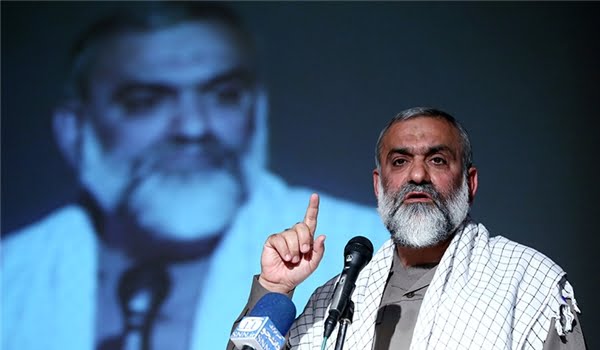
Commander of Basij (volunteer) forces Brigadier General Mohammad Reza Naqdi took the US and certain European states responsible for providing logistics for the terrorist Islamic State of Iraq and the Levant (ISIL) to find an alibi to boost its buildup in the region.
Basij Commander Blames US for Supporting ISIL to Bolster Presence in Region
“American’s intangible presence in the region has been a major cause for the creation of the terrorist Daesh (ISIL) group,” Naqdi said, addressing people in a city near Tehran on Tuesday night.
He also condemned the US Congress for approving an aid budget for the ISIL, and said, “The European countries, including France, arm the ISIL and the US and the West’s attempts are not aimed at any goal but getting closer to Iran” borders.
Elsewhere, Naqdi said given the US crimes and meddling in different world states, it has today turned into the most hated country in the world and today people in different states hold rallies against the US president’s visit to their country.
In relevant remarks earlier this month, Secretary of Iran’s Supreme National Security Council (SNSC) Ali Shamkhani took the US and reactionary regional states for supporting the crimes committed by the terrorist ISIL in Iraq and other countries of the region.
“The SNSC secretary said that the US, the regional reactionaries and some other states are supporting the ISIL terrorist group and they seek to create instability in the region and therefore we are witnessing unrests in Syria, Iraq, Lebanon and Egypt,” member of the parliament’s National Security and Foreign Policy Commission Javad Karimi Qoddousi told FNA, quoting Shamkhani as saying in a closed-door parliament meeting in Tehran.
Shamkhani blasted the US and its allies’ attempts to sow discord among the Muslims, and underlined that the regional people’s vigilance can turn this threat into an opportunity, Karimi Qoddousi added.
“Shamkhani said that the political atmosphere in Iraq will not witness much tension from now on and unity and integrity among the Shiite streams, the Sunnis, Kurds and minorities has been established due to their concerns about the ISIL’s actions (in Iraq),” the Iranian MP said.
After the recent terrorist attacks by the ISIL many Iranian officials have blamed the western powers, specially the US, for the crisis in Iraq.
Also in June, Supreme Leader of the Islamic Revolution Ayatollah Seyed Ali Khamenei took the US and other western powers responsible for the current crisis in Iraq, and voiced opposition to any foreign intervention in the Muslim country.
“In Iraq’s issue, the hegemonic western powers, specially the US, are seeking to misuse the ignorance and bias of a number of elements with no decision-making power,” Ayatollah Khamenei said in a meeting with Iran’s Judiciary Chief Sadeq Amoli Larijani and other high-ranking Judiciary officials in Tehran at the time.
The Leader stressed that the enemies aim to deprive the Iraqi nation of their achievements gained after the US forces’ withdrawal from the country, the most important of which, he said, has been a democratic system.
“The US is displeased with the current process of election with the people’s high turnout and election of people’s choices because the US intends to dominate Iraq and bring to power those who obey it.”
Ayatollah Khamenei referred to the US officials’ remarks who are trying to display the conflict in Iraq as a sectarian war, and said, “What has happened in Iraq is not a war between the Shiites and Sunnis and the main elements behind the seditions in Iraq are hostile to the faithful Sunnis and those who believe in Iraq’s independence as much as they are hostile to the Shiites.”
He voiced Iran’s opposition to the foreign intervention in Iraq, and said, “We believe that the Iraqi government and nation and the country’s religious leadership are able to end the sedition and God willing, they will end it.”
Iran will replace the military officer leading its response to the crisis in Iraq, a leading figure in Iraq’s biggest political bloc told Asharq Al-Awsat on Monday.
Iran replaces Revolutionary Guard commander in Iraq
A senior member of the Shi’ite-led National Alliance, which includes parties with close links to Tehran, said that Qassem Suleimani, the notorious commander of Iran’s elite Quds Force, would be replaced by his deputy Hossein Hamadani for failing to obtain a third term in office for outgoing Iraqi prime minister Nuri Al-Maliki.
The Quds Force is an elite sub-unit of Iran’s paramilitary Islamic Revolutionary Guard Corps (IRGC), originally set up to spread the country’s Islamic revolution abroad. Today, it trains and advises regional allies, such as Lebanon’s Hezbollah, and pro-government militias in Syria and Iraq.
Its leader Suleimani has been in charge of Iranian security policy in Iraq since the fall of late dictator Saddam Hussein in 2003. He has recently been advising the Iraqi government in its efforts to combat the advance of the Islamic State of Iraq and Syria (ISIS).
The National Alliance member, speaking on condition of anonymity, said Suleimani’s biggest success in Iraq was elevating Maliki to the premiership and keeping his rival Iyad Allawi out of office, firstly in Iraq’s parliamentary elections in 2005, and again in 2009, despite Allawi’s bloc winning the largest number of seats in parliament.
Following inconclusive parliamentary elections at the end of March, Suleimani failed to persuade members of the National Alliance to agree to a third term as prime minister for Nuri Al-Maliki, leading to the decision to replace him, said the source.
“Appointing Hamadani means the closure of the Suleimani era in Iraq and the start of a new era coinciding with the appointment of Haider Al-Abadi as prime minister, and that the issue is not a reprimand for Qassem Suleimani, who is credited with many achievements in Iraq,” he added, though went on to speculate that ISIS’s seizure of Mosul and swaths of Iraqi territory in June may have reflected badly on Suleimani.
Hamadani is one of the founders of the IRGC in Iran’s Hamadan Province in 1980, and went on to serve in the Corps during the Iran–Iraq War.
Until 2009, he was assistant to the commander of Iran’s volunteer Basij militia, Hossein Taeb, but was soon promoted to commander of the IRGC in Tehran after his role in suppressing the public protests that erupted in the capital that year following Mahmoud Ahmadinejad’s victory in the presidential elections.
After the Syrian revolution erupted in 2011, Hamadani, acting as Suleimani’s deputy, was sent to supervise the defense of the Syrian capital, and is credited with saved Syrian President Bashar Al-Assad’s rule in 2012.
In May 2012, he announced the creation of a “second Hezbollah in Syria” in the form of a number of new militias to fight alongside Assad’s forces.
The National Alliance source told Asharq Al-Awsat: “Hamadani visited Iraq on a number of occasions and all his visits were secret, and some of the visits were made through Najaf [International] Airport as a Shi’ite pilgrim, under false names.”
“I met him once in the home of one of the leaders of the National Alliance where he wanted to listen to our views on the next government before the last elections,” he added. The source described Hamadani as “no less cunning than Suleimani, if not more so, because he was sharper and more extreme,” and said he was “known for his excellence in forming militias and armed groups.”
The Iranian Cyber Offensive during Operation Protective Edge – Although the IDF’s abilities to handle the rocket and attack tunnel threats have garnered most of the attention during the latest campaign in the Gaza Strip, it is now clear that Israel was also forced to confront cyber challenges during Operation Protective Edge.
The Iranian Cyber Offensive during Operation Protective Edge
A senior officer in the C4I Corps noted that in the course of the campaign Iranian elements launched a widespread cyber offensive against Israeli targets, including attempts to damage security and financial networks. While these attempts were neutralized relatively easily and quickly by Israeli cyber defenses, it seems that Iran is investing heavily in the development of effective offensive capabilities against infrastructure systems, and might present a serious challenge to Israeli defenses within the foreseeable future. In 2013, a series of attacks on the websites of major US banks and financial institutions was attributed to Iran. An information security expert described these attacks, which included sophisticated techniques and demonstrated an ability to act in significant scope against high quality targets, as unprecedented in degree and effectiveness.
Attacks on a nation’s financial infrastructures have serious repercussions, liable to result in heavy financial damage as they disrupt routine financial activity of commercial enterprises and households alike. However, the focus of the cyber offensive during Operation Protective Edge was the civilian internet. Iranian elements participated in what the C4I officer described as an attack unprecedented in its proportions and the quality of its targets. The attack targeted IDF websites such as the Home Front Command and the IDF Spokesperson’s Unit, as well as civilian internet infrastructures. The attackers had some success when they managed to spread a false message via the IDF’s official Twitter account saying that the Dimona nuclear reactor had been hit by rocket fire and that there was a risk of a radioactive leak. Some of the attacks against Israel were attributed to the Syrian Electronic Army (SEA), a group of Assad-supporting hackers that in recent years has developed significant attack capabilities and described by Michael Hayden, former Director of the CIA and the NSA, as a veritable Iranian proxy.
An analysis of Iran’s cyber activity during Operation Protective Edge indicates growing maturity in the Islamic Republic’s operational capabilities and shows that it is capable of conducting an extensive military cyber operation against a range of targets using a wide spectrum of methods. Moreover, Iran’s focus on cyberspace during Operation Protective Edge may indicate the start of a process in which cyberwar replaces classical terrorism as the main tool in Iran’s doctrine of asymmetrical warfare. Cyberwar, which offers the attacker distance and deniability, two features the Iranians consider extremely valuable, enables serious damage to the civilian front of an enemy enjoying military and geostrategic superiority. Thus far Iran’s cyberspace capabilities remain inferior to Israel’s and to those of the leading technological powerhouses, but it is rapidly and efficiently closing the gap.Cyber attacks on Israeli targets accelerated as the military operation expanded on the ground. If, during the early part of the operation, there was marginal, unorganized attack activity by pro-Palestinian elements, the ground incursion in the Gaza Strip prompted, according to the IDF’s chief of cyber defense, a significant leap in the scope of attacks on Israel and often in their sophistication as well. The attacks peaked on July 25, 2014 – the last Friday of Ramadan, observed in Iran as “Jerusalem Day” and dedicated to resistance against Israel and Zionism, when Iranian elements, together with hackers from all over the world, launched a widespread attack against many Israeli websites in order to block access for a long period of time. Joint efforts of the IDF and the General Security Service (GSS) were prepared for the cyber onslaught in advance and successfully thwarted the attack.
Israeli cyber defenders succeeded in foiling the Iranian attack, but there is no certainty they can repeat the feat in the future. Israel has yet to establish a comprehensive preparedness approach or name the agency that will take command of the defense against extensive cyber attacks. Israeli cyberspace has a host of institutional players: the IDF, the GSS, the Mossad, telecommunications companies and providers, the Bank of Israel and commercial banks, government ministries, the Israeli Police, civilian security companies, and others. The absence of a ranking of authority in defensive and preventive efforts is liable to create holes in the digital Iron Dome defending the country and allow enemies to cause severe damage.
The success scored in preventing the recent attack is more indicative of cooperation and coordinated work at the professional level rather than a mapping of authority among the various organizations, and Israel cannot rest on these laurels. Iran’s cyber force buildup and attacks are progressing apace, and Iran is liable to challenge Israel’s defensive capabilities to a larger extent than ever before. It is therefore imperative that Israel sees to the organizational aspect of the nation’s cyber defense as soon as possible, and determines the interrelationships among the various institutions operating in the field. Furthermore, defensive measures are not enough, and therefore Israel must launch preemptive and retaliatory strikes as well. There is no reason that Israel’s long arm should not reach the hands of those who are intent on injuring Israel in cyberspace.
Iran strongly rejecting IRGC presence in Iraq, An advisor to the Islamic Revolution Guards Corps (IRGC) commander described a recent proposal made by French Foreign Minister Laurent Fabius on cooperation with Iran in quelling anti-security moves in Iraq as a new plot being hatched by the West against Tehran.
Iran strongly rejecting IRGC presence in Iraq
Brigadier General Khosro Orouj’s remarks came after the French foreign minister called for collective cooperation to fight terrorism in Iraq.
“The proposal by the French foreign minister which asks for Iran’s interference in the war against Daesh (the Islamic State of Iraq and the Levant or ISIL) is a new plot by the global arrogance (a term used in Iran for referring to the US, Israel and their european allies),” General Orouj said on Tuesday.
He said Iraq needs no military interference by any country, and stressed that the religious authority is the strong point of the Iraqi nation which can lead the country towards victory in Jihad (Holy Defense) against ISIL Takfiri terrorists.
General Orouj reiterated that the ISIL and the regional Takfiri groups are under the command of the US and the arrogant powers, and said, “Today God willingly and under the Jihadi management of the Islamic authority, the Takfiri groups are facing strong popular resistance.”
Meantime, the IRGC commander’s advisor pointed to the prepared of the Iranian armed forces to confront foreign threats, and said, “Iran’s Armed Forces are always prepared to defend the country’s borders and they will resolutely and powerfully respond to any aggression.”
In relevant but not quite parallel remarks on Monday, Iranian Deputy Foreign Minister Hossein Amir Abdollahian welcomed Paris decision to cooperate with Iran in the war on terrorism in Iraq, although he lamented that the decision has been made rather “late”.
“The decision by Paris and certain European states for fighting terrorism in Iraq is late, but considerable,” Amir Abdollahian told FNA.
He underlined that war on terrorism should receive attention in the entire region and the world.
His remarks came after Iraqi Foreign Minister Hoshyar Zebari announced on Sunday that Tehran and Baghdad have been cooperating in the campaign against the ISIL terrorist group.
Zebari made the remarks in a joint press conference with his Iranian counterpart Mohammad Javad Zarif who arrived in Iraq on Sunday to meet the country’s new prime minister and other high-ranking officials.
He also appreciated Iran for its cooperation in the fight against terrorism in different parts of Iraq, and said, “At present, a new reality has emerged in the region, and the international community has come to feel the danger of ISIL.”
“We have demanded international support for our war on terrorism, which is a normal move in the contemporary world. When we asked for international support against the ISIL, we didn’t want military forces since there are no deficiencies in the number of Iraqi army forces and the peshmerga (the Iraqi Kurdish fighters),” the Iraqi prime minister said, implying that cooperation with Iran does not include presence of Iranian soldiers in his country.
Zarif, for his part, told reporters in the same press conference that Iran’s anti-terrorism cooperation with Baghdad does not include deployment of troops in the crisis-hit country.
On Saturday, Iranian Defense Minister Brigadier General Hossein Dehqan rejected media reports on the presence of the country’s military forces in Iraq to fight the ISIL, saying that Baghdad does not need assistance of Iranian troops in its combat against the terrorist group.
“We have made official announcements that we would not spare any effort to assist and back up the Iraqi government and nation in grounds of combat against terrorists, but when it comes to military assistance we believe that there is no need to Iran’s direct presence in Iraq to confront Daesh (ISIL) as the Iraqi nation and government, relying on the central role of the religious authority, are able to confront it,” Dehqan said in a press conference in Tehran.
He described the ISIL as a terrorist group at the service of the Zionist regime, and said, “Those who supported them yesterday and support them today too have now come to realize the correctness of Iran’s words that they (the ISIL members) contribute to insecurity in the region.”
“Today the US and France should take action to compensate for their supports (for the ISIL) and become united against Daesh,” Dehqan said.
Late in June, Iraqi Ambassador to Tehran Mohammad Majid al-Sheikh rejected certain media claims about the presence of Iranian military forces and Commander of Iran’s IRGC Quds Force General Qassem Soleimani in Baghdad.
The US Wall Street Journal in a report in June claimed that Tehran has sent two elite units of its IRGC to Iraq to fight against the ISIL terrorists – an Al-Qaeda offshoot.
Upon arrival in Iraq on Sunday, the Iranian foreign minister renewed Tehran’s support for the Iraqi people’s fight against terrorism.
“The Islamic Republic of Iran has always stood and will stand beside the Iraqi people (in their campaign against terrorism),” Zarif told reporters.
He said the Iraqi people have felt the serious threat of terrorist groups to their country, adding that the nation sees this threat not “as a sectarian strife among different tribes or religious groups but as a major danger to all Iraqi people which needs to be confronted by all”.
Zarif expressed the pleasure that the wave of terrorist attacks has been controlled in Iraq by the help of religious leaders, and said, “We hope that this danger will be obviated with solidarity and coordination among all Iraqi groups, and that peace and tranquility will return to Iraq again.”
The investigation into an Iran-backed deadly terrorist organization in Turkey has uncovered the organization’s connection to the failed bombing attack against an Israel Embassy staff member in the Georgian capital of Tbilisi on Feb. 2012.
Iran-backed group implicated in attack on Israel embassy in Georgia
According to information gathered in the comprehensive three-year probe into the Tawhid-Salam cells working for the Iranian Revolutionary Guard Corps’ (IRGC) Quds Force in Turkey, Naser Ghafari, one of the commanders assigned to Turkey by the IRGC, instructed a key suspect in the Tawhid-Salam organization to conduct surveillance in Tbilisi.
Naser Ghafari operates under the cover of a diplomatic passport attached to the Iranian Consulate in Istanbul.
According to the case file, Ghafari gave the order to Hüseyin Yazıcıoğlu, a Turkish citizen who has been working for Iranian intelligence, on Oct. 15, 2011. Acting on instructions from an Iranian handler, Yazıcıoğlu booked a flight to Tbilisi scheduled for Nov. 14, 2011. The flight was later rescheduled for Nov. 30 and again rescheduled for Jan. 4.
With a court-approved surveillance order, Turkish investigators also gained access to the email account of Yazıcıoğlu and discovered a series of photos sent to him on Oct. 18, 2011 by Turkish citizen Erol Ünaldı. The photos showed landmark places in and around Tbilisi such as the park across from the Radisson Blue hotel and metro stations, among others.
In one of the pictures sent to Yazıcıoğlu’s email, police were able to identify the license plate of Ünaldı’s car. The car, with the license number 34 BJ 4352, was logged by customs officials at the Artvin Sarp border crossing, and the record indicated that Ünaldı entered into Georgia on Nov. 2, 2011 and exited Georgia on Nov. 13, 2011. The investigators concluded that Ünaldı had scouted targets in Tbilisi to identify meeting points with Yazıcıoğlu.
All this activity had been recorded before the foiled bomb attack in Tbilisi on Feb. 13, 2012, when a bomb was found under the car of a Georgian employee of the Israeli embassy in Tbilisi. The car was located near the embassy and police defused the explosive without incident. The same day, in a separate incident, the wife of an Israeli diplomat was injured in a car bomb explosion in New Delhi. Israeli Prime Minister Benjamin Netanyahu accused Iran of being responsible for both incidents.
Turkish police discovered that the attack targeting the Israeli Consulate General in İstanbul’s Etiler neighborhood in May 2011 — which resulted in serious injuries but no fatalities — was also staged by the Iran-backed terrorist group. Using street camera recordings, police were able to trace a bomb-laden bike to a storage unit in İstanbul’s Fatih district that had been rented using a false identity by Rezazadeh Metin, an Iranian with the Quds Force.
The bomb in Etiler was supplied by Abdurrahman Çelik, who had previously been convicted of killing two opponents of the Iranian regime in Turkey and given a prison sentence of 12-and-half years, though he was released in 2004 following an amnesty agreement by Erdoğan’s government.
In his testimony, Çelik admitted that he had been trained in Iran to stage attacks in Turkey and conduct intelligence operations on behalf of Iran for over two months. He also acknowledged that the Iran-based Quds Force had obtained bombs from him and had staged attacks in Georgia and Thailand.
The Tawhid-Salam network allegedly reaches higher-ups in the Turkish government. The politically motivated witch hunt against police investigators who uncovered highly secretive cells in the network publically revealed damaging details from the prosecutors’ confidential investigation files. Embattled Prime Minister Recep Tayyip Erdoğan tried to downplay the significance of the revelation as his government attempted to cover up the investigation by reshuffling police investigators and prosecutors assigned to the case.
Tawhid-Salam was designated a terrorist organization in Turkey by higher courts. Several members of the organization — which was charged for killing leading intellectuals and attacking Western, Israeli, Arab and other diplomatic targets in Turkey — were sentenced to prison terms in early 2000.
It appears that sleeper cells were reactivated in Turkey starting in 2008. The names of a number of Turkish and Iranian suspects, some of whom hold high positions in Erdoğan’s government, have been revealed in recent media reports and put the government in a difficult position.
Iranian-backed Hezbollah terrorist organization- The Egyptians are hot in pursuit of a Hezbollah cell of about a dozen militants currently in the Sinai attempting to infiltrate Gaza with the goal of accelerating Hamas’s ability to reproduce rockets, a senior Egyptian official told WND.
Iran terror forces to bolster Hamas’ dwindling rocket reserve
The Israel Defense Forces estimates Hamas has 4,000 to 6,000 long-range rockets remaining in its arsenal, enough for 40 to 60 days of sustained attacks against Israel if it launches about 100 rockets per day.
With the borders to Gaza currently closed, Iran is concerned Hamas might not be able to keep up a sustained rocket war against Israel if such a lengthy conflict is necessary, said the Egyptian official, who spoke on condition of anonymity. Hamas has some capacity to produce rockets inside the Gaza Strip, but Israeli military operations have greatly minimized the rocket-building infrastructure.
Besides sending cells to the Sinai with the goal of infiltrating Gaza to aid in the rocket production effort, WND reported last week the Iranian-backed Hezbollah terrorist organization is sending cells to the Egyptian Sinai Peninsula to possibly open a new front against the Jewish state.
Last weekend, at least five rockets were launched from the Hezbollah stronghold of Syria into the Israeli Golan Heights, signaling another possible front from the north.
Middle Eastern security officials said Hamas believes Israel does not want a full-blown war, betting Prime Minister Benjamin Netanyahu will agree to a ceasef-fire before Israeli schools re-open in two weeks. Hamas believes the Israeli public will be less supportive of a war with children returning to the classrooms, the officials said.
However, in the case of a longer conflict, Hezbollah is prepping cells in the Sinai Peninsula capable of launching its own rocket war and possibly widening the front against Israel, said the officials.
The officials said there is information Hezbollah cells could even launch attacks from the Sinai in the coming days, perhaps to signal to Israel what is in store without a truce.
Commander of Basij (volunteer) Force Brigadier General Mohammad Reza Naqdi said the Iranian Armed Forces have seized a large number of the spy drones !
Basij Commander: Iran Has Large Collection of Foreign Spy Drones
“Our Armed Forces have a big collection of drones made by the devil forces, but they will not announce it due to security reasons,” General Naqdi told reporters on Monday.
The Basij commander that the Iranian Armed Forces are much more powerful than what Israel and the US think.
“The Zionists should pack up and go because the crimes committed by them and the fiasco that they have created has made their supporters leave them deserted,” General Naqdi added.
He stated that those who are still supporting the Zionist regime are a bunch arrogant powers who are seen as Zionists themselves.
“This mischievous attempt once again made the adventurous nature of the Zionist regime more evident and added another black page to the dark record of this fake and warmongering regime, which is full of crimes and wickedness,” the statement added.
The IRGC further warned that it “preserves the right of response and retaliation for itself”.