Home Blog Page 337

Information Warfare: Iranian Hackers Step Up

0

Iranian Hackers Step Up

The current war between Hamas and Israel as, like the two previous conflicts, brought out a lot of pro-Arab (if not pro-Hamas) hackers to attack Israeli Internet operations.
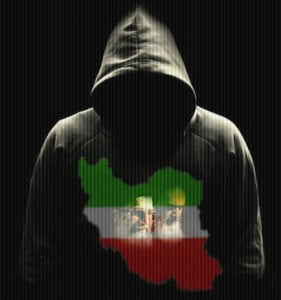
Iranian Hackers Step Up, Hamas and Israel, Iran, Hackers, Cyber, Iran Cyber, Cyber war, Israel, Iranian attacks, Arab, Arab Country, terrorism, software attacks, U.A.
Iranian Hackers Step Up

This time around the attacks, while low level (defacing websites and trying to shut down sites with DDOS attacks) were more intense. Most were from Moslems far from the Palestinian territories who had acquired some hacking skills. While the Moslem nations have lower percentages of Internet users and Internet experts, that is slowly improving every year. More worrisome to Israel is the apparent growing of Cyber War operations in Iran. All this increased hacking against Israeli targets is no surprise and it has been developing since September 11, 2001. Israel also now accuses Iran of using Cyber War operations to aid Moslem anti-Israel groups. This support does not include high grade stuff, which only Iranian hackers are allowed to use, but training and hacker software that many eager Moslem amateurs were not aware of or felt capable of using.

Israel has been making preparations and some have been made public. In 2013 Israel revealed that it had activated new military Cyber War units dedicated to monitoring networks for Internet based attacks and organizing a quick response. Photos of the operations center for this new unit were shown. At the same time Israel is trying to restrain its many freelance hackers from retaliating against pro-Arab hackers who have been making low-level attacks (grabbing credit card info from poorly protected online merchants and staging denial of service attacks on prominent websites). Israel does not want to reveal its Cyber War prowess unless it’s an emergency. It also does not want to see a lot of innocent third-parties suffer damage from a hacker war. The Israeli hackers can do a lot more damage, and garner a lot of bad publicity for Israel. Israel is also reluctant to put too many of its Cyber War resources into this, as the hacker community will simply develop new methods to evade detection, once they have seen what the Israelis can do. Meanwhile, Israel is using the situation to encourage Israeli firms and government agencies to increase their Internet security.

In 2012 Israel admitted it (and much of the Middle East) was increasingly being attacked by Iranian (or Iranian backed) hackers and that Israel is increasing its Cyber War defenses to deal with the problem. While Israel is the most vulnerable nation in the region (because of the number of PCs and networks), it is also the best protected. The 2012 surge of Iranian attacks did much less damage in Israel than in Arab countries. At the same time Internet security researchers revealed that a new Cyber War class computer program has been unleashed in the Middle East. Similar to Stuxnet and Duqu (both created by a joint U.S.-Israeli effort for use against Iran), the new bit of malware was called Gauss, and it is being used to monitor Hezbollah financial activity. Gauss was apparently unleashed in 2011 and had already done its job. It is tools like Gauss that make Israeli so confident when they accuse of Hezbollah of specific terrorist attacks.

The U.S. and Israel have not provided any details about their Cyber War activities, although for a long time rumors about this have been in circulation. The U.S. and Israel were long suspected of being responsible for the appearance of “weapons grade” computer weapons. Both nations had the motive to use, means to build, and opportunity to unleash these powerful Cyber War weapons against Iran and others that support terrorism.

Iran has responded to these attacks. Although not a serious Cyber War threat to the United States, Iran was trying to build nuclear weapons and apparently Israel had already been looking into using a Cyber War weapon to interfere with that. Given the nature of these weapons, which work best if the enemy doesn’t even know they exist, don’t expect many details to be released about this Cyber War program. What is known is that the Cyber War weapons unleashed on Iran were designed to concentrate only on very specific targets. So far, only a few of these weapons are known. One (Stuxnet) was designed to do damage to one specific facility, the plant where Iran produced nuclear fuel for power plants and atomic weapons. That one worked. The other two (Duqu and Flame) were intelligence collection programs. They also apparently succeeded, remaining hidden for years and having lots of opportunity to collect enormous quantities of valuable data.

The U.S. and Israel have been successful with “software attacks” in the past. This stuff doesn’t get reported much in the general media, partly because it’s so geeky and because there are no visuals. It is computer code and arcane geekery that gets it to its target. The earlier attacks, especially Stuxnet, Duqu, Flame and Gauss, spread in a very controlled fashion, sometimes via agents who got an infected USB memory stick into an enemy facility. Even if some copies of these programs get out onto Internet connected PCs, they do not spread far. Worms and viruses designed to spread can go worldwide and infest millions of PCs within hours.

Despite all the secrecy, this stuff is very real and the pros are impressed by these high-grade Cyber War weapons, even if the rest of us have not got much of a clue. The demonstrated capabilities of these Cyber War weapons usher in a new age in Internet based warfare. Amateur hour is over and the big dogs are in play. Actually, the Cyber War offensive by the U.S. and Israel appears to have been underway for years, using their stealth to remain hidden. There are probably more than three of these stealthy Cyber War applications in use, and most of us will never hear about it until, and if, other such programs are discovered and their presence made public. Iran is trying to respond and is looming as the most serious threat from the Islamic world. So far the Iranians have not been able to score a significant win, but they are making rapid progress.

Iran is funding terrorism in Syria

0

Iran is funding terrorism and massacres being perpetrated by Bashar al-Assad’s regime in Syria, a member of the Syrian opposition has told a conference held at the Geneva offices of the United Nations.

Dr. Haitham Maleh, Iran is funding terrorism in Syria, IranBriefing, Iran Briefing, Iran, Syria, Terrorism, Terrorist, Dr. Haitham Malah, IRGC, Bashar al-Assad, IRGC commander, mullah, Mullah regime, ISIS, Human Rights
Dr. Haitham Maleh, Iran is funding terrorism in Syria

Dr Haitham Maleh, president of the legal section of the Syrian coalition, the democratic opposition to the Syria’s dictatorship, accused Iran of helping fund the murders of up to 250,000 Syrian civilians since the conflict began.

He said: “The mullahs’ regime has paid the Syrian regime $12 billion dollars cash and pays them $500 million monthly and sends forces, ammunitions and weapons for them.

“The IRGC commander is leading the conflicts in Syria. They have brought in 27 organizations including Hezbollah of Lebanon, Iraqi armed groups, Houthis in Yemen, Pakistanis and Afghans which now number 60,000. They are fighting beside the Syrian regime.”

Dr Maleh added: “The Syrian people are facing a defenceless world. Of course, the people of Syria have light weapons but they don’t have planes, missiles and tanks but they are resisting and fighting with perseverance. 250,000 civilians have been killed in Syria so far.

“We have one million people who are under the siege and are facing the risk of death through starving.”

He said 2,082 massacres had been carried out, including the deaths of 12,077 women and 12,186 children. There are also 300,000 prisoners in Syrian regime’s prisons, Dr Maleh told the conference.

Representative of the Syrian opposition added: “Most of schools in Syria have been destroyed. Half of the hospitals and clinics have been demolished. There are 4,072 destroyed schools. There are 2.8 million children who are out of school. Three million children are out of Syria. 5.5 million children are in need of support and 4.3 million from them are inside Syria. 1.2 million children are among the refugees as well.

“The statistics are horrible. We are facing a humanitarian catastrophe in Syria. There are three million destroyed houses. Ten million Syrians are displaced. Children are starving to death, without food and milk. Where is the international community? Where is the United Nations? Where is the Human Rights Council?”

And he said of Iran: “The regime put the so-called ISIS in front lines. ISIS is influenced by the regime. The regime released fundamentalist inmates from prisons to lead a war against the Syrian people.

“Respecting the Human Rights Council and respecting the international community, I ask them from this podium to immediately interfere. If they don’t, this revolution and this situation in Syria will burn the whole region.”

Mohammad Hossein Kadah, Deputy Chair of the Syrian National Coalition, also told the conference: “The photos that one of the officers by the name of Qaisar has leaked out of the prison and has documented the execution of more than 11,000 tortured prisoners, is a shocking sample of the scope of barbaric crimes that Assad’s forces are committing on the citizens in regime’s prisons and dungeons.

Addressing the international community on the current situation in Syria he said: “Torture and crime is taking place in Syria but the international community still hesitates. They are divided in their statements and are unable to end these violations.

FM: No Iranian IRGC Boots on Iraq’s Soil

Iranian Foreign Minister Mohammad Javad Zarif strongly dismissed western media claims about the presence of Iranian forces in Iraq to help the country’s government in the fight against terrorists and said No Iranian IRGC Boots on Iraq’s Soil.

Iranian Foreign Minister Mohammad Javad Zarif, No Iranian IRGC Boots on Iraq's Soil, Iran, Iran Briefing, IranBriefing, Iranian Foreign Minister, Mohammad Javad Zarif, IRGC, IRGC Commander, Iraq, U.S., Europe, ISIL, Iranian Defense Minister, Hossein Dehqan, terrorist, Zionist, Qassem Soleimani, Quds Force
Iranian Foreign Minister Mohammad Javad Zarif, No Iranian IRGC Boots on Iraq’s Soil

“We believe that our Iraqi brothers, including Kurdish and Sunni brothers, are capable of defending themselves and Iraq does not need Iran to defend it,” the Iranian foreign minister said in a joint press conference with his Iraqi counterpart Hoshyar Zebari in Baghdad and in response to the question if recent media reports on the deployment of Iranian soldiers in Iraq were true.

The US Wall Street Journal in a report in June claimed that Tehran has sent two elite units of its IRGC to Iraq to fight against the Islamic State of Iraq and the Levant (ISIL, also known as ISIS) terrorists – an Al-Qaeda offshoot.

The Iranian foreign minister pointed to Iran-Iraq bilateral ties, and said, “The Islamic Republic of Iran defends the territorial integrity, development and security of Iraq and sees it as a priority of its foreign diplomacy.”

He pointed to Iran-Iraq economic relations, and said, “We consider economic ties with Iraq as long-term and strategic relations, specially with regard to the fact that the two neighbors share common history.”

On Saturday, Iranian Foreign Ministry Spokeswoman Marziyeh Afkham also rejected claimed about the present of Iranian forces in Iraq.

Afkham made it clear that Iran has not dispatched any troops to Iraq and has no plans to do so.

Also yesterday, Iranian Defense Minister Brigadier General Hossein Dehqan rejected media reports on the presence of the country’s military forces in Iraq to fight the Islamic State of Iraq and the Levant (ISIL), saying that Baghdad does not need assistance of Iranian troops in its combat against the terrorist group.

“We have made official announcements that we would not spare any effort to assist and back up the Iraqi government and nation in grounds of combat against terrorists, but when it comes to military assitance we believe that there is no need to Iran’s direct presence in Iraq to confront Daesh (ISIL) as the Iraqi nation and government, relying on the central role of the religious authority, are able to confront it,” Dehqan said in a press conference in Tehran on Saturday.

He described the ISIL as a terrorist group at the service of the Zionist regime, and said, “Those who supported them yesterday and support them today too have now come to realize the correctness of Iran’s words that they (the ISIL members) contribute to insecurity in the region.”

“Today the US and France should take action to compensate for their supports (for the ISIL) and become united against Daesh,” Dehqan said.

Officials both in Tehran and Baghdad have repeatedly rejected the reports on the deployment of Iranian troops in Iraq after such reports appeared in some western media outlets.

In June, Iraqi Ambassador to Tehran Mohammad Majid al-Sheikh rejected certain media claims about the presence of Iranian military forces in Iraq to help the Iraqi government in the fight against terrorists.

“These are just the rumors of biased and despiteful media which are seeking to sow discord among the regional states, specially Iran and Iraq,” Majid al-Sheikh said, addressing a conference in Tehran.

“Iraq doesn’t need any country neither for weapons nor for the military forces at all; hence, I emphasize that neither General (Qassem) Soleimani (Commander of Iran’s Islamic Revolution Guards Corps (IRGC) Quds Force) nor any other (Iranian) figure is in Iraq,” he reiterated.

Referring to the recent surge in the terrorist attacks in Iraq, Majid al-Sheikh said the parliamentary election in Iraq was a shocking event for the terrorists, certain regional states and their western supporters, and that they have resorted to terrorist attacks to attain their ominous goals when they came to face their failure in the election.

ISIS is Just Like Iran and Every Other Islamic Terrorist Group

0

While many analysts still refuse to see the commonalities among radical Islamic terrorist groups, the horrific image of the beheading of American journalist James Foley should serve as a wake-up call. The radical ideologies of Hamas, Hezbollah, Iran, ISIS, and al-Qaeda should be seen together as one common threat. It’s time for the enlightened world to wake up to the danger and understand that it’s all the same madness, the same barbarism.

ISIS is Just Like Iran and Every Other Islamic Terrorist Group, Iran, IranBriefing, Iran Briefing, IRGC, Terrorist, Terrorist Group, Islamic, American journalist, Middle East, Ayatollah Khomeini, Hamas, Hezbollah, ISIS, al-Qaeda, Israel, U.S.
ISIS is Just Like Iran and Every Other Islamic Terrorist Group

Further, Middle East terrorist groups and Iran (the world’s leading state sponsor of terrorism) have a lot more in common than is generally understood.

First, they share a fundamental intolerance of the other: Baha’i, Christians, Jews, and Yazidis, not to mention gays and lesbians and countless others.

Secondly, there is the shared goal of imposing Sharia law on society. For Islamic fundamentalists, the idea of separation of church and state is not only wrong, it is evil.

Third, there is the idea of waging Jihad to spread ideas. Ayatollah Khomeini, the founder of the Islamic Republic of Iran said, “We shall export our revolution to the whole world. Until the cry `There is no God but God` resounds over the whole world, there will be struggle.”

Finally, Islamic fundamentalists have repeatedly shown a willingness to cooperate in the pursuit of larger goals, such as striking at the U.S. and Israel. Look at Iran’s support for the Palestinian terror groups Hamas and Islamic Jihad. For two decades, Iran has supplied weapons, funding, and training to Palestinian terrorists. This is not the only example of cooperation between Iran and terrorists (even if they happen to be Sunni).

In the 1990s, Iran and Hezbollah provided training for al-Qaeda operatives that led to th  1998 twin bombings of American embassies in Kenya and Tanzania that killed more than 200 people.

In 2011 U.S. District Court Judge John Bates issued a 45-page decision in which he wrote, “… the government of Iran aided, abetted and conspired with Hezbollah, Osama Bin Laden, and al Qaeda to launch large-scale bombing attacks against the United States by utilizing the sophisticated delivery mechanism of powerful suicide truck bombs.”

Our inability to see the commonality of evil amongst all Islamic fundamentalists endangers us all.

Are the suicide truck bombings of American embassies or Iranian rockets that target Israeli civilians any less barbaric than the beheading of an American journalist?

Since its founding in 2008, our advocacy group United Against Nuclear Iran (UANI) has been making the case that Iran’s support for terrorists and abuse of the human rights of its own citizens is both barbaric and unacceptable. Recently, we have documented this in our new VERITAS Project. The enormity of human suffering caused by the brutal Iranian regime is shocking.

And now with the shocking footage of the beheading of the American journalist, we ask this question: If ISIS was a country, would it be acceptable to do business with it?

The CEO’s of hundreds of multinational companies doing business in Iran should be asking themselves a very similar question. We who buy the products of these companies, and invest in them, should also be asking questions.

In his recent his recent op-ed, Israeli Cabinet Minister Yair Lapid wrote, “…good people always refuse to recognize the totality of evil until it’s too late.”

We must wake up and recognize “the totality of evil” – we must understand that when it comes to Hamas, Hezbollah, Iran, ISIS, and al-Qaeda, it’s all the same madness- the same barbarism. And we must act.

Iranian Christian’s Family Under Pressure

A detained Iranian pastor faces charges of “waging war against Allah” and is pressured to falsely confess that his evangelical church movement is involved in anti-government activities, Christian rights activists say.

Iranian Christian’s Family Under Pressure, Iran Briefing, Iran, IranBriefing, Iranian Christian, arrested, Iranian pastor, Tehran, Church of Iran, Farshid Fathi, Karaj
Iranian Christian’s Family Under Pressure

Pastor Abdolreza “Matthias” Ali-Haghnejad, a leader of the Church of Iran in Karaj city near Tehran, was arrested July 5, after Iranian security forces raided his Karaj home, said advocacy group Christian Solidarity Worldwide (CSW).

Another Christian, identified as Fatemeh Torkajouri, was reportedly tried in absentia in Tehran on August 6 for “action against national security” because of her ties with the Church of Iran.

Pastor Haghnejad was charged with “Moharebeh”, the word used for warring with Allah, on August 3 following a two-hour interrogation by Judge Mohammad Yari of the Sixth Branch of the Revolutionary Tribunal, fellow Christians said.

He also spent a week in solitary confinement in a Ministry of Intelligence and National Security VEVAK) detention centre in Karaj, as part of efforts to make him confess to his denomination’s alleged “anti-government political activity,” CSW added.

MORE CONCERNS

The detention raised concerns that he may face a similar fate as Fatemeh Torkajouri who was detained in August 2010 and spent some two months in Tehran’s notorious Evin Prison before leaving Iran in 2011.

She is the wife of Church of Iran pastor Behrouz Sadegh-Khandjani, who was detained in 2010 on charges of blasphemy and allegedly suffered mistreatment while in prison.

Torkajouri was eventually released on bail and also left the country in 2011. Iranian authorities already pressure Torkajouri’s family to ensure her return, though an official verdict against her is yet to be issued, Christians said.

If she does return, Torkajouri could face violence with Iranian human rights organisations reporting that Ward 350 of Evin Prison, which housed political prisoners, has been closed down following a raid by security services on August 12.

Security agents allegedly beat and injured several prisoners and destroyed or confiscated property. A similar violent raid on the ward reportedly took place in April this year.

CHRISTIANS MOVED

Following the the raid several Christian and other inmates were either transferred to other wards within Evin Prison, or to prisons elsewhere. Among them is Farshid Fathi, an Assemblies of God (AoG) church leader, who reportedly moved to Rajai Shahr Prison in Karaj.

CSW’s Chief Executive Mervyn Thomas told BosNewsLife in a statement that his group is concerned about the crackdown on Christians and the “continuing harassment” of leaders such as “Pastor Matthias and the undue pressures being placed on the family of Fatemeh Torkajouri.”

Thomas said attempts by Iranian authorities to justify “the charge levelled against the pastor by eliciting a false confession merely underline the fact that his detention is unwarranted and unjust.”

Additionally, “Iran’s continuing insistence on classifying normal Christian behaviour in national security terms is giving rise to confused and convoluted verdicts of questionable legality,” Thomas added. “For example a group of Christians convicted in [the city of] Shiraz in 2013 was found guilty of acting against “cultural national security.”

EMBRACING CHRISTIANITY 

Iranian Christians and church groups have linked the crackdown to the increasing number of Muslims who turn away from their religion, embracing Christianity instead.

Others seen as a threat to the Islamic state are also targeted. Hundreds of Iranian journalists, lawyers, political activists and ethnic and religious minorities have been sentenced to lengthy prison sentences, lashes and even execution on what their supporters call “false charges” allegedly without a fair trial.

Iranian human rights groups recently identified six judges who regularly hold trials behind closed doors lasting only a few minutes and without essential legal procedures, Thomas noted.

They “intimidate defendants, breach judicial independence by acting as prosecutors themselves and deprive prisoners of access to lawyers,” he said.

“It may be time for the international community to consider targeted sanctions against identified judges who are found to have been responsible for major miscarriages of justice that breach the fair trial principles outlined in the Iranian constitution and in international statutes to which the nation is party.”

Iran’s government has defended its policies, saying it protects national security and fights attacks against the Islamic state.

Iranian Political prisoner denied access to medical care

0

NCRI – Iranian political prisoner Arzhang Davoodi who has been recently sentenced to death after nearly 11 years in prison, has not been receiving medicine as he suffering from diabetics.

Iranian Political prisoner denied access to medical care, Iran, Iran Briefing, IranBriefing, Political, Political prisoner, Iran Human Rights, Human Rights, Arzhang Davoodi, Mojahedin Organization , United Nations, sentenced to death
Iranian Political prisoner denied access to medical care

Mr. Davoodi learned from his lawyer on 20 July 2014 that he had been sentenced to death for his alleged membership and support for People’s Mojahedin Organization of Iran (PMOI/MEK), Amnesty International said in an Urgent Action on 24 July 2014.

The rights group said: “The sentence was imposed despite an apparent lack of evidence and after grossly unfair proceedings.”

Amnesty said: “He is believed to have been accused of having ties with the PMOI (MEK) merely because in prison he insisted on calling PMOI by its official name, Mojahedin, rather than by the term used by the Iranian authorities, Monafeghin (hypocrites).”

Mr. Davoodi, wrote a letter in July to the United Nations Secretary General demanding the UN to investigate his death sentence.

Mr. Davoodi wrote: “The sentence in all these court cases that have been lead to this unjust sentence are in contradiction to the United Nations Charter and also the regime’s constitution. Therefore I would like the impartial international jurists review them as an example so that once again be clearly proven that to what extent the words and actions of the ruler’s in Tehran contradict each other.”

United Nations human rights expert said on August 8: “Mr. Arzhang Davoodi was recently sentenced to death on the charge of ‘Moharebeh’ (enmity against God), in connection with his alleged membership and support to an Iranian dissident group, an allegation based on a comment he made about the group.”

“It is completely unacceptable that an individual be sentenced to death on charge of Moharebeh for merely speaking one’s opinion,” a UN expert said on August 8.

Mr. Davoodi, 61, from the city of Abadan and an engineer from University of Texas, was arrested in November 2003

DM: No Need to Iran’s Deployment in Iraq to Fight ISIL

Iranian Defense Minister Brigadier General Hossein Dehqan rejected media reports on the presence of the country’s military forces in Iraq to fight the Islamic State of Iraq and the Levant (ISIL), saying that Baghdad does not need assistance of Iranian troops in its combat against the terrorist group.

DM: No Need to Iran's Deployment in Iraq to Fight ISIL, Iran, IranBriefing, Iran Briefing, IRGC, IRGC commander, Iran Defense Minister, IRGC Navy, enemy, Iraq, U.S.
DM: No Need to Iran’s Deployment in Iraq to Fight ISIL

“We have made official announcements that we would not spare any effort to assist and back up the Iraqi government and nation in grounds of combat against terrorists, but when it comes to military assistance we believe that there is no need to Iran’s direct presence in Iraq to confront Daesh (ISIL) as the Iraqi nation and government, relying on the central role of the religious authority, are able to confront it,” Dehqan said in a press conference in Tehran on Saturday.

He described the ISIL as a terrorist group at the service of the Zionist regime, and said, “Those who supported them yesterday and support them today too have now come to realize the correctness of Iran’s words that they (the ISIL members) contribute to insecurity in the region.”

“Today the US and France should take action to compensate for their supports (for the ISIL) and become united against Daesh,” Dehqan said.

Officials both in Tehran and Baghdad have repeatedly rejected the reports on the deployment of Iranian troops in Iraq after such reports appeared in some western media outlets.

In June, Iraqi Ambassador to Tehran Mohammad Majid al-Sheikh rejected certain media claims about the presence of Iranian military forces in Iraq to help the Iraqi government in the fight against terrorists.

“These are just the rumors of biased and despiteful media which are seeking to sow discord among the regional states, specially Iran and Iraq,” Majid al-Sheikh said, addressing a conference in Tehran.

“Iraq doesn’t need any country neither for weapons nor for the military forces at all; hence, I emphasize that neither General Qassem Soleimani (Commander of Iran’s Islamic Revolution Guards Corps (IRGC) Quds Force) nor any other (Iranian) figure is in Iraq,” he reiterated.

Referring to the recent surge in the terrorist attacks in Iraq, Majid al-Sheikh said the parliamentary election in Iraq was a shocking event for the terrorists, certain regional states and their western supporters, and that they have resorted to terrorist attacks to attain their ominous goals when they came to face their failure in the election.

IRGC Commander: Enemies Deeply Fearful of IRGC Navy’s Solidness

Commander of the Islamic Revolution Guards Corps (IRGC) Navy Rear Admiral Ali Fadavi said preparedness, might and power of his forces has intimidated Iran’s enemies so deeply that they do not dare to even think of adopting hostile policies against the country.

Iran, Iran Briefing, IranBriefing, IRGC, Hassan Rouhani, IRGC Commander, IRGC Navy, Defense Ministry, Ali Fadavi , U.S. aircraft
Commander: Enemies Deeply Fearful of IRGC Navy’s Solidness

Speaking during a visit to the different parts of the specialized logistics center of the IRGC Navy in the Southern province of Fars on Saturday, Fadavi said as a result of the struggles and round-the-clock efforts made by the IRGC naval forces, “the Islamic Republic of Iran’s naval defense structure has grown so powerful that it has discouraged the enemy from even thinking about hegemony or bullying against Iran in the Persian Gulf and the Strait of Hormuz region”.

He said that the moves made by the IRGC Navy, which started in the Iraqi-imposed war (1980-1988), the war of oil tankers in the Persian Gulf and the direct confrontation with the US Navy and continued with assymetric tactics in recent years, have contributed much to Iran’s deterrence power in recent years and sow fear in the heart of the enemies.

In relevant remarks in May, Fadavi said that his forces have been drilling how to destroy US warships for the last several years, underlining that the IRGC Navy can sink a US aircraft carrier in less than a minute.

Speaking in an exclusive interview with FNA, he said the US air combat power overseas is totally dependent on the fighter jets flying from its aircraft carriers, and this has made these vessels a natural and high value target for the IRGC Navy in any possible war.

The Admiral said his forces have, thus, been conducting routine drills on how to sink US vessels in any potential combat, specially in the Persian Gulf, adding that they have gained good knowledge of the “design, construction and structure of the US warships”.

He said Iran has produced “replicas of the US aircraft carriers” for IRGC Navy drills. The Admiral, then, pointed to a CNN report in mid-March that Iran is building a replica of a US nuclear-powered aircraft carrier, and said “the US media and research centers commented on the revelation very simplemindedly”.

“They (Americans) know nothing. We have been making and sinking replicas of US destroyers, frigates and warships for long years, and we have sunk the replica of their vessels in 50 seconds through a series of operational measures,” added Fadavi.

DM: Flight Time, Ceiling No Problem for Iran-Made Drones

Iranian Defense Minister Brigadier General Hossein Dehqan underlined Iran’s self-sufficiency in the marine industry, and said the country’s home-made drones are faced with no limitation in their flight time and ceiling.

DM: Flight Time, Ceiling No Problem for Iran-Made Drones, Drones, Iran, Iran Briefing, IranBriefing, IRGC, Hassan Rouhani, IRGC Commander, Missile, Cruise Missiles, Mersad Air Defense Missile, ballistic missile, IRGC Navy, Defense Ministry
DM: Flight Time, Ceiling No Problem for Iran-Made Drones

“We can design 500-ton submarines from top to toe and we are moving towards new propulsion systems to decrease the noise and increase their durability in water,” Dehqan said, addressing a ceremony to unveil two new home-made cruise missiles and two new drones in Tehran on Sunday participated by President Hassan Rouhani and other senior officials.

He further pointed to Iran’s capabilities in building Unmanned Aerial Vehicles (UAVs), and said Iran’s pilotless planes have been designed and built on the basis of three features, “flight ceiling, flight durability and defeating enemy’s electronic warfare”.

“We don’t have any problem with regard to the first two issues and God willing we are trying resolve the remaining problems in area of electronic warfare,” he added.

Dehqan also elaborated on Iran’s capabilities in building ground-to-ground missiles, and said, “In this field, we have high capabilities (in area of missile production) in different ranges both with solid and liquid fuel (propulsion systems), and we have been seeking to increase the range, destruction power, preciseness and maintenance time and reduce the launch time.”

He further explained that Iran has achieved all the above-mentioned goals with regard to various types of missiles, adding that the defense industries are now just trying to maximize “the precision capability of long-range missiles” as the only remaining goal.

He underlined the Iranian defense industry’s focus on the sonar systems, and said, “Today, our cruise missiles also have a 300-km range, enabling us to enjoy much capability on the scene of the seas.”

The defense minister pointed to the country’s aviation industry and the efforts made to prolong the life-time of Iran’s air fleet, and said, “We have close cooperation with the Armed Forces in this field and for instance, we have managed to design and build defense systems, avionics systems and life-time prolonging system in F4 fighter jets through conceptual designing taken from similar systems.”

Iran has recently made giant advancements in aerospace industries, specially in designing and manufacturing pilotless drones.

In September 2012, Iran announced that it has started using UAVs in its air defense units as part of its broader plans for strengthening the country’s air defense capability.

In December 2013, Commander of the Islamic Revolution Guards Corps Major General Mohammad Ali Jafari said the IRGC is capable of mounting guided missiles and bombs on its drones.

“We have recently acquired the capability to mount guided and precision-targeting missiles with pinpointing capability and bombs on drones, which is actually among branches of advanced hi-tech in this field,” Jafari told reporters in Tehran in December.

He referred to Iran’s latest achievements in building drones, and said, “Our latest achievement in this regard is a drone which can fly for 30 hours and high-speed engines can increase its range.”

Also in November, Dehqan announced that Iran’s new drone enjoys unique strategic capabilities, including 30-hour-long flight durability, and has been developed for combat and surveillance missions.

Dehqan said the new drone, ‘Fotros’, has been designed and built by the Iranian Airplane Manufacturing Industries Company affiliated to the Defense Ministry’s Aviation Industries in cooperation with knowledge-based companies and academic centers and on the basis of the needs of the country’s Armed Forces.

“This strategic drone has an operational range of 2,000 kilometers, and can fly to a ceiling of 25,000 feet in altitude for 16 to 30 hours, and these specifications enable it to conduct combat missions in addition to surveillance and reconnaissance missions,” Dehqan said addressing a ceremony held in Tehran to unveil the new drone.

The minister said Fotros can be armed with various types of “air-to-surface missiles and rockets”.

He underlined that the reliability test of the drone has been successfully conducted in the country’s laboratories and test centers, including standard international land tests at low, medium and high speed, adding that test results have been even better than what was expected.

The minister further pointed to the missions which could be done by Fotros in detail, and said the drone can be used for “protecting land and sea borders, monitoring oil pipelines, telecommunication lines and road traffic control, monitoring affected areas during earthquakes, blaze and floods, and environment protection”, adding that it can send “real-time photos and images while it is on a missions”.

He reiterated that Iran’s Defense Ministry has become self-sufficient in designing and manufacturing different kinds of defensive, offensive and surveillance drones.

General Dehqan underlined that Iranian researchers were then working on various models and designs of drones according to the country’s defensive needs.

Also in September 2012, Iran announced that it has started using UAVs for its air defense units as part of its broader plans for strengthening the country’s air defense capability.

Speaking to reporters on the occasion of the National Day of Air Defense here in Tehran on September 3, 2012, Commander of Iran’s Air Defense Unit Brigadier General Farzad Esmayeeli said Iran has equipped its air defense units with Haazem drones. Haazem is a drone designed and manufactured by Iranian air defense experts in three short, mid and long range models and for air defense missions.

The drone can be used as a target for air defense systems and also for reconnaissance missions.

The UAV can also be equipped with missiles and used for aerial bombardments as well.

Iran Unveils New Cruise Missiles, Drones

The Iranian Armed Forces unveiled their latest indigenized achievements in building cruise missiles and Unmanned Aerial Vehicles (UAVs) in a ceremony in Tehran on Sunday participated by President Hassan Rouhani and Defense Minister Brigadier General Hossein Dehqan.

Iran Unveils New Cruise Missiles, Drones, Iran, Iran Briefing, IranBriefing, IRGC, Hassan Rouhani, IRGC Commander, Missile, Cruise Missiles, Mersad Air Defense Missile, ballistic missile, IRGC Navy, Defense Ministry
Iran Unveils New Cruise Missiles, Drones

The new defensive products include two cruise missiles named Qadir and Nasr-e Basir as well as an interceptor drone, Karrar 4, and another drone used by photogrammetry missions called Mohajer 4.

Qadir is a new generation of cruise missiles capable of destroying marine targets with high precision and power within the range of 300km. It can be fired from coasts and vessels both.

Nasr-e Basir marine cruise enjoys high agility and operational power with its central explorer warhead finding targets through a smart program, and it conducts its mission noise-free.

Karrar 4 is a new generation of Iranian drones equipped with jet engines which can intercept hostile aircraft and the Iranian Armed Forces say that it increases their air defense power in high altitudes.

Mohajer 4 is an advanced drone used for photogrammetry (the science of making measurements from photographs) providing operators with aerial maps with military and civilian applications.

In recent years, Iran has made great achievements in the defense sector and gained self-sufficiency in essential military hardware and defense systems.

The country has repeatedly made it clear that its military might is merely based on the state’s defense doctrine of deterrence and that it poses no threat to other countries.

In March, the Iranian defense ministry started the mass-delivery of different ballistic missiles, including Qadr, Qiam, Fateh 110 and Khalij-e Fars missiles, as well as Mersad air defense system to the IRGC and Khatam ol-Anbia Air Defense Base.

“The honorable specialists of the Defense Ministry’s Aerospace Organization displayed the defense industry’ power and capability in providing the Armed Forces’ needs to the most advanced missile equipment by supplying them with Qadr, Qiam, Fateh 110 and Khalij-e Fars (Persian Gulf) ballistic missiles and Mersad air defense system and showed that the different and comprehensive sanctions of the enemies imposed strictly and specially on our defense sector have totally failed to undermine their resolve and determination,” Dehqan said at the time, addressing a ceremony held to mark the delivery of the new missile systems to the IRGC and Khatam Ol-Anbia Air Defense Base.

“These missiles can strike and destroy enemy targets with a high precision capability and provide for a wide range of the Armed Forces’ needs to missiles with different ranges,” he added.

Dehqan underlined that all these missiles have been built by Iranian specialists, and said, “Today the Armed Forces enjoy such a high degree of defensive capabilities that they can counter back any kind of threat posed from beyond the borders of the Islamic Republic of Iran.”

He also described enemies’ threats of military action against Iran as media hype for internal use.

Qadr is a 2000km-range, liquid-fuel and ballistic missile which can reach territories as far as Israel. Qiam is also a new type of surface to surface and cruise missile.

The Fateh-110 is a short-range, road-mobile, solid-propellant, high-precision ballistic missile with advanced navigation and control systems.

The Fateh-110 has been designed and developed by the Iranian experts in the Defense Ministry’s Aerospace Organization and has not been modeled on any foreign product.

The supersonic Khalij-e Fars (Persian Gulf) missile, which carries a 650-kilogram payload, is smart and immune to interception, and features high-precision systems.

The supersonic ballistic missile is the most advanced and most important missile of the IRGC Navy.

The distinctive feature of the missile lies in its supersonic speed and trajectory. While other missiles mostly traverse at subsonic speeds and in cruise style, Khalij-e Fars moves vertically after launch, traverses at supersonic speeds, finds the target through a smart program, locks on the target and hit it.

The range of the solid-fuel missile is 300km and it can be fired from triple launchers.

The missile could successfully hit a mobile target one-tenth of an aircraft carrier in its early tests.

Also, Mersad Air Defense Missile System is a completely indigenized system developed by the Iranian experts and technicians to promote the country’s combat power.

The system has already passed field tests and is used as part of the country’s integrated air defense network.

The Mersad system equipped with Shahin missiles is capable of tracing and targeting any enemy aircraft at 70 to 150km altitude and is considered as a mid-altitude system among the country’s missile shields.