Home Blog Page 338

IRGC’s Influence in Syria and Bashar Al-Assad chemical attack Massacre

0

The United Nations Secretary General Ban Ki-moon conveyed his deepest condolences to families who lost loved ones at the chemical weapons attack in Ghouta, Syria, which is entering its one year anniversary.

Ban called on the international community to remember those who perished in this inhumane act.

Bashar Al-Assad chemical attack , Iran, Iran Briefing, IranBriefing, chemical attack, IRGC, IRGC Commander, Syria, Iraq, U.S., Bashar Al-Assad, Ban Ki-moon, enemy, Lebanon
Bashar Al-Assad chemical attack Massacre in Syria

The chemical weapons attack, carried out with sarin gas, took place in the suburbs of Damascus, known as Eastern and Western Ghouta, on Aug. 21 last year and a U.S. investigation found it killed more than 1,400 people. Survivors say the destruction of the Syrian chemical arsenal is no consolation for the loss of loved ones or the harsh, ongoing military siege by Assad’s army.

The Aug. 21, 2013, attack was almost certainly the single deadliest event in Syria since the people’s uprising against the Syrian dictator Bashar al-Assab began in March 2011.

However, Ban who had described the attack the “worst use of weapons of mass destruction in the 21st century,” said: “the Syrian conflict not only continues unabated, but it has spilled over into neighboring countries, sparking a humanitarian catastrophe and fuelling further human rights violations and crimes against humanity.”

A lack of international action to the chemical attack in Syria sent wrong message to dictators particularly the mullahs in Iran and its puppet Nouri al-Maliki in Iraq.

The Iranian regime considers its military support for the Syrian dictatorship to be part of its ‘war against America’, a senior Revolutionary Guards commanders said in May.

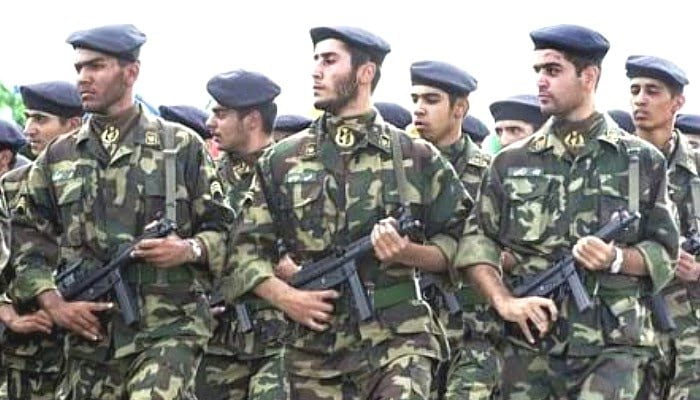
Colonel Mohammad Eskandari, an IRGC commander in city of Malayer, said: “IRGC commanders have prepared and equipped 42 divisions and 138 battalions in Syria, and are fully prepared militarily to fight the enemy.

“Today’s war in Syria is really our war with US.”

Hamedan Province Deputy IRGC Commander Mazaher Majdi added: “Iran’s front line is in Syria and Lebanon, and this is a religious duty for us.

“If we do not defend them today, the enemy’s trench will be beside our border.”

When in June the world leaders described the “election” under Assad in Syria as “a grotesque parody of democracy” and “a great big zero”, Hassan Rouhani, the alleged ‘moderate’ president of the clerical regime congratulated Assad and described it as a “significant and hope-inspiring event, which is in line with democracy.”

Killing of the American journalist James Foley by the ISIS in anniversary of the chemical attack more than ever underscores the need for a firm regional and international policy against the extremism and fundamentalism under the cover of religion.

Major crimes by the Iranian regime’s Revolutionary Guards Corp (IRGC) and its affiliated terrorists in Iraq and Syria, and the massacres of the people in both these countries allowed for the growth of groups such as ISIS, who have diverted the people’s resistance against dictatorship to the benefit of Iranian regime’s Supreme Leader Ali Khamenei and Bashar al-Assad.

Terrorism and fundamentalism under the name of Islam is an ominous phenomenon which has turned to a global threat in contemporary history since the inception of the rule of the religious fascism in Iran and will not be uprooted as long as this regime is in power.

The eviction of the Iranian regime from the countries of the region, particularly from Iraq, Syria and Lebanon, is indispensable to ending such terror and horror in the Middle East and the world.

Prisoner’s four fingers amputated in public

NCRI – An Iranian man’s four fingers amputated in public in city of Abarkooh in southern Iran, a commander police in the southern province of Yazd has declared, state-run Tabnak website reported on Friday.

Prisoner's four fingers amputated in public, Iran, IranBriefing, Iran Briefing, Human Rights, Iran Human Rights, Yazd, Prisoner, President Hassan Rouhani, executed,
Prisoner’s four fingers amputated in public

Colonel Ahmad Gholamzadeh said the four fingers of the right hand of a prisoner were amputated at the presence of State Security Forces and judicial authorities in the city.

He said: “The prisoner, M.N. (identified by his initials), had been sentenced to amputation of four fingers in public, one year imprisonment and payment of fines for illegitimately obtaining property.”

He added: “The amputation of the prisoner’s right hand four fingers were carried out outside the city’s detention center in public using a guillotine machine.”

The Iranian regime unveiled a machine last year terrifying device Iran uses to chop off fingers. The device looks like something devised for a grisly horror movie operates as a circular saw that guillotines prisoners fingers.

During the first year of Hassan Rouhani’s presidency over 800 have been executed and hundreds more have been subjected to degrading and inhumane punishments such as amputation, flogging in public and being paraded in streets.

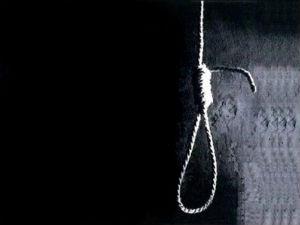
On August 6, a 27-year-old prisoner was hanged in public but before hanging the victim, the henchmen flogged him 100 times as the crowd watched in shock.

At least 200 people were flogged last month in the Iranian province of Qazvin allegedly for eating in public during the holy month of Ramadan.

Qazvin official Ismail Sadeghi-Niaraki acknowledged the scale of medieval punishments now being carried out within the regime under the rule of so-called ‘moderate’ Hassan Rouhani.

He said: “Exceptional measures were taken by the judiciary in Qasvin province.” Over a month period ” 400 people were arrested and some were given warnings. Another 200 had their cases reviewed by the judiciary and the flogging sentence was carried out within 24 hours of their arrest.”

The Iranian Resistance has repeatedly condemned the carrying out of medieval punishments by the clerical regime in Iran and has called for referral of the regime’s violations of human rights record to the United Nation Security Council.

Iranian Commander: Our Fingers Ready to Pull Trigger to Kill Any Threat

0

Iranian Commander of the Army Ground Force Brigadier General Ahmad Reza Pourdastan underlined the Iranian Armed Forces’ full preparedness and vigilance to confront and kill any enemy which threatens the country’s security and territorial integrity instantly.

Iranian Commander: Our Fingers Ready to Pull Trigger to Kill Any Threat, Iran, Iran Briefing, Iran Briefing, Iran Commander, Ayatollah Seyed Ali Khamenei, Zionist, IRGC commander, IRGC, Israel, U.S., Army
Iranian Commander: Our Fingers Ready to Pull Trigger to Kill Any Threat

“Today, the fingers of the Armed Forces are on the trigger and the Bajij (volunteer) forces, the Islamic Revolution Guards Corps (IRGC), the Army and the Law Enforcement forces are now enjoying the highest level of might and readiness,” Pourdastan said, addressing people in the Northern province of Mazandaran on Friday evening.

Stressing that the Armed Forces monitor all threats and are prepared to give a crushing response to any possible aggression, he said, “The Armed Forces, which enjoy a huge capacity and are equipped with all state-of-the-art weapons of the world, are ready to defend the country and they do not allow the slightest harm to the country.”

In relevant remarks in November, Supreme Leader of the Islamic Revolution Ayatollah Seyed Ali Khamenei warned Iran’s enemies to avoid even thinking of any aggressive move against the country, stressing that the Iranian Armed Forces are ready to give such a crushing response to any threat that aggressors will never forget.

Addressing 50,000 Basij (volunteer force) commanders in Tehran, Ayatollah Khamenei pointed to the preparedness of Iran’s military forces, and said, “The response of the Iranian nation to any foreign aggression will be regrettable for the enemy.”

The Supreme Leader underlined that the increasing threats by the enemy show that the US-led western sanctions have not been effective and they have understood it themselves.

Addressing the arrogant powers, Ayatollah Khamenei said, “Instead of threatening other countries, go and deal with your wretched economic conditions and think of you debts.”

The Supreme Leader underlined that the Zionist regime has been imposed on the region, “Anything that is gained with force will not last long and this regime will not last either.”

Also in December, Commander of the Islamic Revolution Guards Corps (IRGC) Major General Mohammad Ali Jafari underlined that Iran will give a crushing response to any possible aggressor.

Major General Jafari deplored the US repeated rhetoric of “military option against Iran is on the table, as “ludicrous” and said, “Repetition of such an absurd sentence by the officials of the US and the fake and evil Zionist regime (of Israel) sounds funny to the Iranian nation.”

The IRGC commander went on to say that the US or Israeli officials are totally incapable of taking any military action against Iran, but at the same time affirmed that any “stupid measure” by the enemies would compel Iran to consider the options it has on the table.

“Lots of options are on the table for Iran, and they (enemies) will receive crushing responses, one of which would be elimination of the Zionist regime,” he warned.

Defense Minister: Iran Set to Unveil New Defense Products

0

The Islamic Republic will on Sunday unveil four new defensive products, including one in the field of missile capabilities, the country’s defense minister announced.

Defense Minister: Iran Set to Unveil New Defense Products, Iran, IranBriefing, Iran Briefing, War, IRGC, IRGC Commander, military , Defense, Defense Minister
Defense Minister: Iran Set to Unveil New Defense Products

Speaking to reporters during a press conference on the occasion of the National Day of Defense Industry (which fell on August 22), Defense Minister Brigadier General Hossein Dehqan said the brand-new products are employed in the area of missiles, aerial industry and topography.

He said the products will be displayed at an exhibition in Tehran, to be inaugurated by President Hassan Rouhani on Sunday.

Moreover, the minister noted that Iran has “470 new achievements” in the arena of defense industry that are awaiting to be unveiled.

In the latest development, Brigadier General Dehqan on August 21 inaugurated the production line of manufacturing advanced military batteries used in missile systems.

“By launching this production line, we have been able to develop advanced products and managed to be self-sufficient in producing raw materials needed in missile, areal, naval and ground defense systems,” said the minister at the time.

In recent years, the Islamic Republic of Iran has made great achievements in its defense sector and has attained self-sufficiency in producing essential military equipment and systems.

Tehran has repeatedly assured other nations that its military might poses no threat to the regional countries, saying that the Islamic Republic’s defense doctrine is entirely based on deterrence.

IRGC Commander: US Seeking to Wear Off Iran’s Influence through ISIL Proxy War

0

Commander of the Iranian Ground Force Brigadier General Ahmad Reza Pourdastan blasted the crimes committed by the Islamic State of Iraq and the Levant (ISIL) in different regional countries, and said they are the US proxy force fighting to wear off Iran’s influence in the region.

IRGC Commander: US Seeking to Wear Off Iran's Influence through ISIL Proxy War, Iran, IranBriefing, Iran Briefing, U.S., Iraq, ISIL, War, IRGC, IRGC Commander, military, Commander of Iran's Basij, Basij
IRGC Commander: US Seeking to Wear Off Iran’s Influence through ISIL Proxy War

“Today, the enemy is seeking to overthrow the Islamic Revolution through different threats, soft wars, economic sanctions and proxy wars,” Pourdastan said, addressing a gathering near the Northern city of Amol on Friday evening.

Noting that the US has waged a proxy war in the region, he said, “By killing people, the ISIL forces in the Arab states and al-Nusra Front in Syria are fighting for the US in a proxy war.”

Many Iranian officials and military commanders have blamed the US and its regional allies for the recent insecurities in the countries neighboring Iran, specially in Iraq.

Lieutenant Commander of the Islamic Revolution Guards Corps (IRGC) Navy General Alireza Tangsiri warned in June that the US and other enemies of Iran who have failed in their plots against the country are now trying to disturb security in the region to push back the Islamic Revolution.

“Today, our enemies led by the US have resorted to seeking excuses, fabricating deceitful and unreal images and undermining security to confront the influence of the Islamic Revolution,” Tangsiri said in Tehran.

He underlined the necessity for maintaining unity and increasing knowledge and wisdom against enemies’ plots which he said emerge in a new shape and form each day.

Also in June, Commander of Iran’s Basij (volunteer) Force Brigadier General Mohammad Reza Naqdi condemned the crimes committed by the terrorist Takfiri and Salafi groups in the region, and said these crimes are supported by the western states and certain oil-rich Arab countries.

“These (Takfiri) streams that introduce Shiites as infidels, issue decree for their killing, commit crimes and massacre innocent people under the pretext of (obeying) Islam and differences (between Shiite and Sunni Islam) in their fatwas (religious decrees) say nothing but lies,” Naqdi said in the Southeastern province of Sistan and Balouchestan.

He said that the Takfiri groups commit crimes in line with the ominous goals of the arrogant powers and obey the western and Israeli think tanks as they are supported by certain regional Arab countries’ petrodollars.

Defense Minister: Iran’s Missiles Not Negotiable

0

Iran’s Defense Minister Brigadier General Hossein Dehqan reiterated that any information about the country’s missile industry and scientists are highly confidential and would never become a topic of talks between Tehran and the world powers.

Defense Minister: Iran's Missiles Not Negotiable, Iran, IranBriefing, Iran Briefing, Defense Minister, Missile, UN, U.S., war
Defense Minister: Iran’s Missiles Not Negotiable

“The missile issue has not been raised in the negotiations and Iran’s missile power will never be an issue for negotiations with anyone,” Dehqan told reporters in a press conference in Tehran on Saturday.

Asked if Tehran has permitted the International Atomic Energy Agency (IAEA) to visit its military site in Parchin, near Tehran, he said, “The Agency has visited Parchin several times and taken samples; therefore, this is not an issue for discussions now.”

Dehqan stressed that Iran would never provide anyone with “information about its defense scientists”, and added, “This issue is not acceptable to us.”

Asked if the UN nuclear watchdog has raised new questions on Iran’s use of Exploding Bridge Wire (EBW) detonators, he said, “The Agency hasn’t raised new questions and they were the same old questions which had already been answered and no new ambiguities were raised.”

He added that Iran has presented detailed response to the IAEA’s questions about EBW detonators during the recent visit to Tehran by IAEA cheif Yukiya Amano.

The US officials have stated several times that they intend to include Iran’s ballistic missile technology in the nuclear talks, while Tehran has repeatedly stressed that it would not allow inclusion of any other topic in the negotiations but those related to its nuclear program.

Iranian Foreign Minister and top negotiator in talks with the world powers Mohammad Javad Zarif had also stressed earlier that Iran’s defensive missiles is no topic for the ongoing negotiations between Tehran and the sextet of powers.

“It will be wrong to assume that the only application of Iran’s defensive missiles that have not and will not be the subject of any negotiations is carrying unconventional weapons,” Zarif said in a joint press conference with his Austrian counterpart Sebastian Kurz in Tehran earlier this year and in response to a question by an Austrian reporter who asked if Iran did not have a nuclear weapons program then why it produced ballistic missiles which have Europe within their range.

The Iranian foreign minister underlined that such wrong assumptions were based on certain media hypes.

Zarif reiterated that the Iran-world powers talks would never deal with subjects other than the nuclear issue.

“Iran’s nuclear program will always remain peaceful and in this case no one can claim that Iran’s missiles will carry nuclear weapons, because Iran does not produce nuclear weapons to be carried by missiles or any other delivery system,” the Iranian foreign minister said.

In February, Zarif dismissed media reports that Tehran and the Group 5+1 (the US, Russia, China, Britain and France plus Germany) would discuss Iran’s missile program in their talks in Vienna, and said the country’s nuclear program has no military dimensions.

“Iran’s nuclear program is not related to the military issues and our military program is not related to the current negotiations,” Zarif told reporters after meeting EU foreign policy chief Catherine Ashton – who presided the G5+1 delegations in talks with Iran – in Vienna for a working dinner on February 17.

Tehran launched an arms development program during the 1980-88 Iraqi imposed war on Iran to compensate for a US weapons embargo. Since 1992, Iran has produced its own tanks, armored personnel carriers, missiles and fighter planes.

Yet, Iranian officials have always stressed that the country’s military and arms programs serve defensive purposes and should not be perceived as a threat to any other country.

Iran-backed terrorist network in Turkey

0

Operatives of a secretive Iran-backed terrorist network in Turkey scouted the area hosting a radar site in Malatya’s Kürecik district that is part of a NATO early warning radar system, an ongoing investigation has revealed.

Iran-backed Tawhid-Salam network targeted NATO radar base in Turkey, Iran, IranBriefing, Iran Briefing, NATO, Turkey, Network, Terrore
Iran-backed Tawhid-Salam network targeted NATO radar base in Turkey

According to an 854-page police investigation on the Tawhid-Salam terror network obtained by Today’s Zaman, witness testimony provided to the İstanbul Chief Prosecutor’s Office on March 22, 2013 indicated that suspects tied to Iranian intelligence had collected information about Kürecik. The witness said many front companies with the cover of legitimate businesses such as real estate agencies or bookstores had been established in Malatya by people with ties to Iran in order to gather intelligence on the NATO radar base.

Iran held the top spot on the list of foreign countries establishing companies in Turkey in 2011, and the number of Iranian-owned firms rose steadily each month in 2012. Observers have repeatedly pointed out concerns in Ankara that some of the Tehran-backed businesses may be front companies set up to finance terrorist activities as well as to circumvent United Nations and United States-sponsored sanctions on Iran.

The Turkish Union of Chambers and Commodity Exchanges (TOBB), an organization that tracks foreign firms, reported that Iranians set up 111 companies in Turkey between January and June of 2014. The number of Iran-funded companies set up in 2013 was 280.

The secret witness was identified in the case file with the code name “Şafak.” He also claimed that some of the protests held about Kürecik were organized by people linked to Iran who the Tawhid-Salam terror network paid in cash for their services.

Turkey hosts an early warning radar system as part of a NATO missile defense system to protect its European allies. The X-band AN/TPY-2 radar was deployed at a military base in Kürecik, and has been operational since January 2012.

The system is designed to prevent an Iranian missile threat, as explicitly stated by US officials on several occasions.

Then-Pentagon spokesman Col. Dave Lapan stated in September 2012 in Washington, “We have made no secret of the fact that Iran’s missile program is a reason for concern,” referring to the Kürecik radar’s potential focus on Iran.

Turkey’s decision to host the radar base has strained Turkish-Iranian ties. “We are closely monitoring relations with Turkey in the national security commission in [the Iranian] parliament. Iran has warned Turkey before that the deployment of the system will have grave consequences,” said Hossein Ibrahimi, the vice president of the Iranian parliament’s National Security and Foreign Policy Commission, in December 2011.

Pentagon leak reveals worries over Iran military activity (IRGC-QF)

The report also touches on Iran’s covert operations abroad, citing that the Islamic Revolutionary Guard Corps-Qods Force (IRGC-QF) along with the Lebanon-based Hezbollah have been actively fighting in Syria and neighboring Iraq.

Pentagon leak reveals worries over Iran military activity (IRGC-QF), Iran, IranBriefing, Iran Briefing, Iran military, IRGC, IRGC-QF, Pentagon, Hassan Rouhani
Pentagon leak reveals worries over Iran military activity (IRGC-QF)

A classified assessment by the US Pentagon has claimed that Iran is increasing its military capabilities, exercisesand buildup of weapons in and near the Strait of Hormuz

According to the summary, a copy of which was obtained by Bloomberg News, the Iranian government “has adjusted some of its tactics” to achieve core objectives such as preserving the rule of Supreme Leader Ayatollah Ali Khamenei.

“Tehran’s strategic messaging about its military capabilities through the mass media has been less strident since (Hassan) Rouhani took over,” claimed the reported, which was submitted to lawmakers on July 7.

The leaked report also suggests that Iran is “quietly fielding” increasing numbers of anti-ship ballistic missiles, “small but capable” submarines, coastal missile batteries and attack craft and is conducting major exercises out of view of the media.

Iran possesses “a substantial inventory of missiles capable of reaching targets throughout the region, including Israel,” claimed the report, which was provided with a cover letter written by US Defense Secretary Chuck Hagel containing an analysis of Iran’s conventional, unconventional and nuclear weapons capabilities in addition to the “intelligence gaps the Department.”

The report also touches on Iran’s covert operations abroad, citing that the Islamic Revolutionary Guard Corps-Qods Force (IRGC-QF) along with the Lebanon-based Hezbollah have been actively fighting in Syria and neighboring Iraq.

Abuse of Human Rights in Iran

In the past, the United States has raised human rights issue as a propaganda tool to promote its own political objectives in Iran.  In 1977, President Jimmy Carter took stance against Mohammad Reza Shah’s human rights records.  However, after the fall of the Shah in 1979, under the succeeding Islamic government, abuse of human rights in Iran worsened, thousands of political prisoners were executed, but the US officials remained silent.  In April, 1995, President Bill Clinton imposed a set of economic sanctions against Iran. The reasons for imposing the sanctions were Iran’s continued support for terrorism, pursuit of access to nuclear weapons, and supporting groups that used violence to oppose the Middle East peace process. Surprisingly, the US did not include the clerical regime’s abuse of human rights as one of the reasons for imposing the sanctions. The Iranian political groups and the human rights organizations criticized the US for ignoring human rights violations in Iran. As a result, in 2002, President George W. Bush added the abuse of human rights as another reason for imposing the sanctions.  President Barack Obama further tightened the sanctions and began a covert war to sabotage Iran’s nuclear installations. Since 2009, the US has begun face-to-face negotiations with Iran to curb its nuclear program, which Iran claims is for peaceful purposes.

Abuse of Human Rights in Iran, Iran, Iranbriefing, Iran Briefing, Human Rights, Iran Human Rights, Arrested, Executed, U.S., Abuse, political, Journalists, nuclear, UN Human Rights, Women, Iranian, Religion
Abuse of Human Rights in Iran

In March 2012, the former US Secretary of State Henry Kissinger, in an interview with Fareed Zakaria, said diplomatic negotiations with Iran would only work if the United States was willing to give the Islamic Republic security guarantee that it would survive.  Kissinger suggested that the US should ignore the Islamic regime’s human rights abuses and guarantee to protect the regime against threats in exchange for concessions to abandon its nuclear activities. It seems Obama’s administration has pursued that policy in the past two years. Therefore instead of the regime change policy that had been pursued by the Bush administration and the covert war policy that had been going on previously, Obama wants to engage with the clerics in Tehran. He wants to resolve the nuclear standoff by continuing the negotiations without discussing human rights issue.  Yet in July 2014, a group of US congressmen led by Representative ED Royce who currently heads the House of Representatives Foreign Affairs committee has demanded Iran’s ballistic missiles should be included in the negotiations. While they did not mention the human rights issue in their letter, the congressmen have said any deal with Iran should be in consultation with the Congress before lifting the sanctions.  Obama has the authority to lift some of the sanctions imposed under the US presidents’ executive orders. Some other sanctions imposed by the Congress need the congressional approval to be lifted. Under US pressure since 2006, Europeans have cooperated with the US by imposing their own sanctions on Iran. However, they now are anxious to lift the sanctions because of losing lucrative business with Iran.

Canada drafted a resolution for condemning Iran in the United Nations for cruel and unusual punishments, tortures, and practice of amputations and floggings. The UN General Assembly Third Committee passed the resolution in November 2010.  On June 17, 2011, the UN Human Rights Council named the former Maldivian Foreign Minister Ahmed Shaheed as its human rights investigator on Iran.  However, the regime in Tehran has not permitted Shaheed to enter Iran.

Under the pro-West administration of President Hassan Rouhani human rights abuses by the regime have worsened.  Rouhani has a weak political base and is unable to improve the situation. Since taking office more than a year ago, he has been dependent on the West and on the Supreme Leader Ali Khamenei for political support.

The Obama administration favors to support the pro-West clerics to rule Iran. But major Iranian opposition groups are against the totality of the hierocracy rule in Iran and want to change the regime. That requires a new constitution which preserves the sovereignty of the Iranian people that has been stolen from them by the ruling clerics.

It appears the US and its Europeans allies’ strategy is now to preserve the regime in Tehran with some cosmetic changes because its collapse could strengthen the secular political factions in Iran and result in Iran’s stronger ties with the US regional competitors such China and Russia.  However, human rights abuse in Iran does not improve by cosmetic changes in the regime. The solution to human rights violations in Iran is to abolish the existing clerical constitution because it suppresses human rights.

The Constitution Suppresses Human Rights

The constitution of the Islamic Republic of Iran is a source of human rights violations because it ignores the sovereignty of the Iranian people.  The United States want to tolerate the Islamic regime if it makes some cosmetic changes to become democratic. However, the regime in Tehran is a hierocracy and cannot be changed to a democratic government. Human rights will not be respected until the constitution of the Islamic Republic is abolished. The reason is the constitution gives supreme power to the clerics to rule Iran instead of the Iranian people representatives.

The constitution has woven religion into its text in a way that it gives power to the clergy to deny the Iranian people their fundamental rights. It gives the Guardianship of the Jurist, the leading Islamic cleric, supreme power to rule over all important organs of the government.  The result has been a government by the clerics and for the clerics that disregards the fundamental rights of the Iranian people.

Here are some examples of the articles in the constitution which are unreasonable. Article 1 necessitates submission of all Iranians to the leading clerics’ interpretation of Koran and beliefs of Sharia law.  The Article incorrectly states 98.2% of people who had the right to vote, voted for the constitution. The percentage given is doubtful and the wording is missleading. It should have said 98.2% of the participants in the referendum, even though some of them were under-aged.  Many adults boycotted the referendum.  Article 2 is strictly based on submission to commands of God and accepting their interpretation by the clerics. Article 4 requires all laws and regulations; civil, criminal, financial, economic, and administration to be based on Islamic principles that shall be decided at the discretion of the Islamist Jurists of the Guardian Council.

Articles 13, 21, and 26 suppress the fundamental rights of the Iranian people.  Article 13 does not allow the right to equality of religion, it only recognizes the religion of the “book” (Zoroastrian, Judaism, and Christianity), and therefore the members of other faiths are subject to discrimination. Article 21 requires women’s compliance with Islamic standards. That violates equal rights for women on obtaining professions and engagement in social activities. Article 26 provides no freedom for establishing political parties because it requires them not to contradict the Islamic principles and the foundation of Islamic republic. Based on this article the regime can outlaw any party that it considers a threat to its existence. The regime suppresses the sovereignty of people because its elections’ regulations do not allow the candidates from the opposition political groups to stand for elections. For this reason a large portion of the electorate does not exercise its voting right. Article 67 put protection of Islamic domain before protection of the peoples’ rights.

In the reign of this clerical government the direction of legal reform has been reversed. The clerics reversed the progressive reforms that had been achieved before their takeover of the government in 1979.  The pre-revolution reforms were annulled and the Iranian people fundamental rights were ignored. The clerics have devised laws with the intention to increase their own power at the expense of the Iranian citizens’ fundamental rights. Currently, two brothers who even were not born in Iran are the heads of two branches of the government (the judiciary and legislative). The candidates for presidency and the parliament are screened by the Guardian Council. That prevents people to have their candidates on the ballot. Furthermore, the president’s power is very limited and can be dismissed by the supreme jurist. There are 290 representatives in the parliament, forty of whom are clerics and 25 members are close relatives of the Majles President, and some others have close relations with the clerics.

The West favors the clerics to rule Iran and at the same time it pays lip service to protect human rights in Iran.  That is hypocrisy; abolishing the existing clerical constitution and writing a new one for establishing a secular government is the only way to preserve human rights in Iran.

An Execution Wave Against Iranians LGBT

President Barack Obama has long depicted himself as a defender of women’s and LGBT rights not only in the United States but across the world as well. Yet, where is his voice when it comes to the growing number of executions and the persecution of the gay and lesbian community as well as the repression of women in the Islamic Republic of Iran? In addition, why has the LGBT movement not criticized the Obama administration or made a movement over these injustices, egregious actions, and human rights violations committed in the Islamic Republic against the gays and lesbians?

An Execution Wave Against Iranians LGBT, Iran, Iran Briefing, IranBriefing, Excution, LGBT, Human Rights, Iran Human Rights
An Execution Wave Against Iranians LGBT

As the Obama administration continues to communicate and diplomatically negotiate with Iranian officials in Vienna, New York, and elsewhere, President Obama has not even slightly expressed his concern about the unfair actions, executions, discriminations and prosecutions of LGBT individuals, as well as the increasing repressions of women under the Rouhani administration. Where do the Islamic Republic’s human rights abuses belong on President Obama’s agenda?

Two weeks ago, two Iranian men, Abdulla Ghavami Chahzanjiru and Salman Ghanbari Chahzanjiri, were executed in the southern part of the Islamic Republic for reasons that included “consensual sodomy.”  According to the Daily Beast, “Their deaths are part of a wave of executions in Iran, with more than 400 in the first half of 2014 alone, according to the NGO Iran Human Rights.” One of the Iranian sources pointed out that Chahzanjiru and Chahzanjiri were executed in order to “promote community safety” as well as to “reduce the suffering of the victims.”

Under the Islamist and Sharia law of Iran and Iran’s Penal Code, the punishments for homosexuals range from lashings to executions. For example, article 109 of Iran’s Islamic Penal Code states, “In case of sodomy both the active and the passive persons will be condemned to its punishment.”

Article 110 of Iran’s Islamic Penal Code emphasizes on killing homosexuals, “Punishment for sodomy is killing; the Sharia judge decides on how to carry out the killing.” Article 111 adds, “Sodomy involves killing if both the active and passive persons are mature, of sound mind and have free will.”

According to other articles of Iran’s Islamist Penal Code, even kissing or standing naked under one roof are considered crimes and subject to punishment. For example, article 124 asserts: “If someone kisses another with lust, he will be subject to Ta’azir of 60 lashes.” Article 123 mandates: “If two men not related by blood stand naked under one cover without any necessity, both of them will be subject to Ta’azir of up to 99 lashes.”

Mosaheqeh (lesbianism) Under the Islamist Sharia law of the Islamic Republic

When it comes to laws regarding women and lesbianism, the same Islamist laws apply. For example, article 134 states, “If two women not related by consanguinity stand naked under one cover without necessity, they will be punished to less than [one] hundred (100) lashes (Ta’azir). In case of its repetition as well as the repetition of punishment, [one] hundred (100) lashes will be hit the third time.”

It is crucial to point out that these Islamist and Sharia laws apply not only to Muslims but also to non-Muslims, “In the punishment for lesbianism there will be no distinction between the doer and the subject as well as a Muslim or non-Muslim.”

More fundamentally, these executions, discriminations, prejudices and punishments with regards to the LGBT community in the Islamic Republic have created a tremendous sense of fear, horror, and panic among the gay and lesbian community through the imposition of Islamist laws that criminalize sexuality.

Although Iranian LGBT individuals have been living underground for many years, there always exists the fright and likelihood that they will be arrested by the Islamic Republic’s Revolutionary Guard Cops, the Islamist religious police, the moral police, or some state’s affiliated militia groups such as the Basij, and then be persecuted, lashed and executed by Iran’s Islamic Judiciary system.

The discrimination against the LGBT community in the Islamic Republic is solely anchored on the basis of their gender orientation.

When it comes to LGBT rights in the Islamic Republic, two crucial issues should be discussed. First of all, on the one hand, the Islamist and Shari’a law of the Islamic Republic clearly does not grant gays and lesbians equal rights and does not treat them as human beings.  But more fundamentally and egregiously, the Islamic Penal Code of the Islamic Republic sentences people to death based on sexuality.

Finally, while the Obama administration is highly concentrated on striking a final and comprehensive nuclear deal with the Iranian regime, President Obama should not turn a blind eye to these executions, human rights abuses, prejudices and punishments imposed by Iran’s Islamist laws against the LGBT individuals in the Islamic Republic.

Indeed, it is the obligation of every state and the international community– which is negotiating with the Iranian officials on nuclear issues— to bring the human rights of the Iranian LGBT community, its persecution, and the increasing repression of women, to the attention of Iranian ruling authorities.