
Home Blog Page 359

IRGC leader: ‘We own this technology as well’


BY: Adam Kredo| Washington Free Beacon

A top Iranian military leader announced late Tuesday that Iran has developed “indigenous” ballistic missile technology, which could eventually allow it to fire a nuclear payload over great distances.Revolutionary_Guards_Khamenei
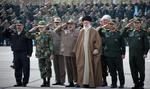
Brigadier General Hossein Salami, the lieutenant commander of Iran’s elite Islamic Revolutionary Guard Corps (IRGC), made the critical weapons announcement just days after Iran and the West signed a deal aimed at curbing the country’s nuclear activities.

Salami claimed that “Iran is among the only three world countries enjoying an indigenous ballistic missile technology,” according to the state-run Fars News Agency.

“Many countries may have access to cruise missiles technology, but when it comes to ballistic missiles, I am confident that only the U.S. and the [former] Soviet Union could master this technology, and now we can announce that we own this technology as well,” Salami told Fars.

The IRGC leader said that Iran is quickly developing advanced military know-how.

“While we did not have any knowledge about drones, we have developed and acquired drones that travel 2,000 kilometers, conduct their operations, and then land in our desirable regions,” he was quoted as saying.

Iran’s claim to ballistic missiles would be a major development for a country known to use its military machinery as a means of intimidating its regional neighbors.

Former U.S. Ambassador to the United Nations John Bolton said Iran’s ballistic missile announcement is no surprise.

“Iran’s ballistic missile program has always been to provide the delivery vehicles nor nuclear warheads,” Bolton said. “The timing of the IRGC announcement is no coincidence.”

As Iranian President Hassan Rouhani and other officials celebrate the recently announced nuclear accord, Tehran’s military leaders have adopted a harsh line on the West.

Another IRGC leader said on Tuesday that Americans only understand “the language of force.”

“The U.S. has double-standards towards social issues of nations and the language that Americans understands is the language of force,” General Ramezan Sharif, Head of the IRGC’s Public Relations Department, said on Tuesday.

U.S. power is growing weaker every year, he said.

“The pillars of the U.S. strength have become seriously shaky in the world, especially in the Middle-East,” according to Sharif.

Other Iranian military officials claim that Tehran no longer needs to import key weapons as they once did.

“Today, we are honored that we have been able to grow needless in the defense equipment sector with the help of our young scientists and thinkers and now we provide all the needs of the Armed Forces with the best quality,” Iranian Deputy Defense Minister Brigadier General Aboutaleb Shafaqat said on Tuesday.

In addition to installing a new air defense system reportedly capable of destroying high-altitude targets, the Iranians claim to have built a highly advanced unmanned drone that is capable of flying for 30 hours straight.

Former Pentagon adviser Michael Rubin said that the United States is not paying great enough attention to Tehran’s military advancements.

“Perhaps, [Secretary of State] John Kerry believes that Iran only wants ballistic missiles for peaceful purposes,” said Rubin, author of Dancing with the Devil: The Perils of Engaging Rogue Regimes.

“The fact of the matter is that Kerry and crew left both ballistic missiles and the nuclear warhead trigger experimentation at Parchin [military site] off-the-table” during talks in Geneva, Rubin said. “It’s the diplomatic equivalent of installing a burglar alarm system in your house but leaving the keys in the door.”

State Department Spokesperson Jen Psaki was asked on Tuesday about a Monday Free Beacon report that Iran does not need to freeze its nuclear program until final details pertaining to the recently announced nuclear pact are hashed out.

The six-month nuclear enrichment freeze negotiated under the deal will not actually begin until Iran and Western powers finalize the deal at a later date.

“It has not” yet begun, Psaki told reporters. “The next step here is a continuation of technical discussions at a working level so that we can essentially tee up the implementation of the agreement, so that would involve the P-5 plus one—a commission of the P-5 plus one experts working with the Iranians and the” International Atomic Energy Agency (IAEA).

Psaki said she did not know when the actual deal will be finalized and go into effect.

“Obviously, once that’s—those technical discussions are worked through, I guess the clock would start,” she said.

Psaki added that the U.S must put its faith in Iran upholding the spirit of the deal in the interim.

“In terms of what the Iranians are or aren’t doing, you know, obviously, our hope would be, given we are respecting the spirit of the agreement in pressing for sanctions not to be put in place and beginning the process of figuring out how to deliver on our end of the bargain, that the same would be coming from their end in the spirit of the—of the agreement,” she said.

Iranian MP: Nasrallah believed Assad would fall


BEIRUT: Hezbollah leader Sayyed Hasan Nasrallah told Iran’s supreme leader in 2011 that he believed Bashar Assad’s government would fall, a former Revolutionary Guard general and MP has said.228537_mainimg

Recounting his meeting with Nasrallah in Beirut six months ago, MP Mohammad Esmail Kowsari, a member of Iran’s National Security and Foreign Policy Commission and retired Revolutionary Guard general, told a gathering of Basij members that the Hezbollah leader visited Supreme Leader Ayatollah Ali Khamenei eight months after the outbreak of the Syrian crisis in 2011.

The Basij is a paramilitary force made up of civilian volunteers that operates under the command of the Revolutionary Guard.

“Nasrallah told me, ‘We went to the sayyed [Khamenei] and we reported to him that it seems that Bashar Assad and his government in Syria is finished. But the sayyed said, ‘No it’s not true. We must just do our duties. If we do our duties, Assad and Syria will be stable,’” Kowsari told the Basij gathering, according to his personal website.

“After more than two years, we see that the Syrian government and Bashar Assad remain and are stable.”

Kowsari also defended the Revolutionary Guard against accusations that its forces were playing a major role in combat operations in the war-torn country and referred to videos of Iranian soldiers in Syria that had been posted on Syrian opposition websites.

The rebel Dawud Brigade obtained the videos, which were recorded by Iranian national Hadi Baghbani, after an Aug. 19 ambush in Aleppo that killed the filmmaker as well as Revolutionary Guard commander Esmail Heydari. The brigade has since then been releasing the footage to opposition websites and news outlets.

“It’s natural that a few men be there [in Syria] to understand what’s going on and transfer technology,” Kowsari said. “But why doesn’t anyone ask why the British or Americans are in Middle Eastern countries?

“If really we want to do a military operation, it needs just two days to get these terrorists [opposition forces] out. But as our strategy, each nation has to rely on itself.”

Read more: http://www.dailystar.com.lb/News/Middle-East/2013/Nov-28/239187-iranian-mp-nasrallah-believed-assad-would-fall.ashx#ixzz2lwGyabqA
(The Daily Star :: Lebanon News :: http://www.dailystar.com.lb)

IRGC Commander: Iran Among Rare World States with Ballistic Missile Technology.


IRGC Commander: Iran Among Rare World States with Ballistic Missile Technology.(fars).now-just-imagine-a-nuclear-payload-on-this-obama-israel-ira-politics-1330930164

Lieutenant Commander of the Islamic Revolution Guards Corps (IRGC) Brigadier General Hossein Salami said Iran is among the only three world country enjoying an indigenous ballistic missile technology.

Many countries may have access to cruise missiles technology, but when it comes to ballistic missiles, I am confident that only the US and the (former) Soviet Union could master this technology, and now we can announce that we own this technology as well,” General Salami told FNA on Tuesday.
He pointed to Iran’s capabilities in the field of Unmanned Aerial Vehicles (UAVs), and said, “While we did not have any knowledge about drones, we have developed and acquire drones that travel 2,000 kilometers, conduct their operations and then land in our desirable regions.”
Earlier this month, General Salami said the precision targeting of IRGC’s ballistic missiles has been improved to have a margin of error near zero.
Our situation has improved now because our ballistic missiles margin of error (in precision targeting) is near zero now,” General Salami said in a ceremony held in Tehran to commemorate the martyrs who were killed in a blast at the IRGC base on November 12, 2011, including General Hassan Tehrani Moqaddam who was in charge of the IRGC’s Arms and Military Equipment Self-Sufficiency Program.
He pointed to the role played by the late commander and head of the IRGC Missile Research Center, Martyr Major General Tehrani Moqaddam, in the designing and production of high-precision ballistic missiles, and said, “Due to such attempts the precision of Iran’s ballistic missiles has approached (a) zero (margin of error) and our ballistic missiles target moving vessels on the sea and they operate against (enemies’) command and control centers.”
“Martyr Tehrani Moqaddam led us to self-sufficiency in area of ground-to-ground missiles and his ideas resulted in the development of an innovative missile power for Iran,” he added.
Earlier this year, Commander of the IRGC Aerospace Force General Amir Ali Hajizadeh said that Iranian experts at the IRGC Aerospace research center have increased the precision capability of the ‘Persian Gulf’ supersonic ballistic missile to a maximum margin of error of 8.5 meters.
Hajizadeh said the late commander and head of the IRGC missile research center, Martyr Major General Tehrani Moqaddam, played a major role in the designing and production of the Persian Gulf Missile.
“When in its second test the Persian Gulf missile hit a moving vessel with 30m precision, we felt to have made a great success,” Hajizadeh said in June.
“When we explained the achievement to the Supreme Leader, His Excellency voiced pleasure in the increased precision of the missile, but demanded us to increase its precision capability to less than 10-15 meters,” he added.
“Less than 6 months later, our experts improved the precision capability of this missile to less than 8.5m,” General Hajizadeh continued.
“And when the Persian Gulf missile came into operation in the IRGC Navy, the countdown started for the trans-regional countries to end the mission of their warships,” the IRGC Aerospace commander stressed.
The supersonic projectile, which carries a 650-kilogram payload, is smart and immune to interception, and features high-precision systems.
The Persian Gulf supersonic ballistic missile is the most advanced and most important missile of the IRGC Navy.
The distinctive feature of the missile lies in its supersonic speed and trajectory. While other missiles mostly traverse at subsonic speeds and in cruise style, the Persian Gulf moves vertically after launch, traverses at supersonic speeds, finds the target through a smart program, locks on the target and hit it.
The range of the solid-fuel missile is 300km and it can be fired from triple launchers.
The missile could successfully hit a mobile target one-tenth of an aircraft carrier in its early tests.
In early 2011, Iran started the mass-production of the Persian Gulf anti-ship missile which is designed to destroy targets and hostile forces at sea.
In April 2012, Hajizadeh noted the production of the Persian Gulf ballistic missiles, and said, “The research and testing phase of the Persian Gulf missile ended last year, and it is now being mass produced by the Defense Ministry.”
Also in the same month, IRGC Navy Commander Rear Admiral Ali Fadavi underlined Iran’s high defensive capabilities and power, and said the newly developed ‘Khalij-e Fars (Persian Gulf)’ missile would make the enemies change their equations and calculations due to its unusual and unique features.
“The Persian Gulf missile has been developed somehow different from the usual trend and can change the equations on which the enemy most relies,” Fadavi said at the time.
Referring to Iran’s missile power, he said that Iran is now in possession of home-made missiles with the range of over 200km which can be mounted on Iranian high-speed boats.
In July 2012, Iran’s Persian Gulf missiles displayed their 100 percent precision capability after hitting and destroying the specified targets in the last phase of the Payambar-e Azam 7 (The Great Prophet 7) drills.
“The Persian Gulf missile precisely hit and destroyed the target which was several times smaller than the marine targets which can pose a threat,” Commander of the IRGC Aerospace Force said at the end of the last phase of the wargames on July 4, 2012.Hmmm…..So far from The ‘moderate, peacefull’ Iran Obama’s newest BFF.
mfs-theothernews

After Iran-U.S. deal, a changing of the Guards?


DUBAI, United Arab Emirates, Nov. 25 (UPI) — One of the big questions raised by the ground-breaking rapprochement between Iran and the West, and the diplomatic triumphIran_USA_Flags of Iran’s new reformist president, is how the Revolutionary guards, the country’s elite military force, will take to the move away from decades of ideological hostility toward the West.

At first glance, the Islamic Revolutionary Guards Corps, known as Pasdaran in Farsi, has been one of the main targets of Western sanctions because it is seen asa major supporter terrorism and runs Iran’s nuclear and ballistic missile programs, which lie at the heart of international economic crackdown that began in 2010.

Any deal that eases those punitive measures would presumably be welcomed by Iranians.

But the IRGC has long espoused unremitting enmity toward the West, the United States in particular.

Any political detente that erodes that doctrine, as espoused by the late Ayatollah Ruhollah Khomeini who founded the Islamic Republic in 1979, would run counter to the corps’ ideological roots — and its vast institutional interests.

The Pasdaran has led the opposition within Iran to the efforts of President Hassan Rouhani, elected June 14, to defuse the conflict with the West, largely by moderating Iran’s contentious nuclear program, which hardliners see as an emblem of Iran’s revolutionary might.

But the IRGC has been relatively quiescent, presumably because Rouhani clearly has the blessing of Iran’s supreme leader, Ayatollah Ali Khamenei, to seek an end to the sanctions that have throttled Iranian oil exports and crippled the republic’s economy.

Analysts worry the surprising absence of major displays of opposition suggests the commanders of the Revolutionary guards, founded by Khomeini himself to protect the Islamic purity of the revolution from just such liberal threats as this, are biding their time since most Iranians appear to be behind Rouhani’s initiative.

“Since hostility toward the United States is as old as the Islamic Republic itself, many within the regime question whether Iran can be a truly revolutionary state, in line with the vision of its founders, if it normalizes relations with Washington,” the U.S. global security consultancy Stratfor observed.

“All the pillars of power in Tehran are struggling with the change in tack, but the IRGC in particular fears that its institutional interests could be sacrificed. …

“However, the corps realizes that talks are necessary for the future well-being of the regime, and thus does not oppose dialogue outright. Instead, it wants to ensure that its status as a major center of power in the Islamic Republic is not compromised.

“For this reason it has been campaigning to limit the scope of the diplomatic engagement with the United States,” Stratfor noted.

“Its efforts have not gone well, given that most of the regime power centers are in favor of pursuing the diplomacy, and that its 34th anniversary of the U.S. Embassy hostage crisis demonstrations drew a crowd of only about 30,000.”

The corps won nationwide respect during the 1980-88 war with Iran because of its troops’ suicidal courage and human-wave attacks.

But that’s been tarnished as it built up a vast commercial empire, with all the corruption and abuse of power that goes with such an undertaking.

Over the last decade alone, the IRGC and its associates have amassed at least $120 billion from so-called privatisations to acquire core national assets, The Financial Times reported.

Indeed, even before Rouhani embarked on his detente diplomacy, he was starting to move against the Pasdaran’s business operations that allow it control much of the economy, hogging major energy and construction projects.

“The guards’ economic interests have become too big and out of control,” a senior government adviser said.

“It’s almost impossible to estimate the force’s total wealth because of its opacity,” analyst Najmeh Bozorgmehr said. “Nevertheless some reckon the guards’ companies and banks generate income of about $100 billion a year.”

Rouhani was elected despite reported efforts by the guards to block his victory at the polls and that, Bozorgmehr noted, “could prove costly for the corps.

“The new government seems determined to reduce the guards’ influence and carve out space for private companies that have been suffocated by its operations … Rouhani’s government has sensed that economic revival will require an attempt to curtail the influence of the guards.”

Read more: http://www.upi.com/Top_News/Special/2013/11/25/After-Iran-US-deal-a-changing-of-the-Guards/UPI-26631385401068/#ixzz2llSu9rjN

Iranian denies plan to attack Israeli embassy in Azerbaijan


(Reuters) – An Iranian man arrested on suspicion of planning an attack on the Israeli embassy in the former Soviet republic of Azerbaijan denies the allegation, an Iranian diplomat said on Thursday.embassy

Hassan Faraji, 31, is the latest in a number of Iranians to be accused of criminal plots in recent years in Azerbaijan, which has tense ties with its larger southern neighbor.

Faraji was detained near the Israeli embassy in the capital Baku on October 31 but his arrest was made public on Wednesday, when state TV showed footage of police raiding an apartment.

“Faraji had a detailed plan of an attack on personnel of the Israeli embassy…He put up a resistance to the police during a detention,” police said in a statement.

A court in Azerbaijan sentenced him to one month pre-trial detention, while Azeri and Israeli media reported that he had connections with Iran’s Revolutionary Guards, an allegation an Iranian official denied.

“This information does not correspond to the reality,” the Iranian embassy spokesman, who did not want to be named, told Reuters.

Iranian embassy officials met Faraji in custody.

“He denies all charges and believes that his innocence will be proved during an investigation,” he said.

The case is a part of wider diplomatic tensions between the neighbors, which share a religion but have sharply different political systems.

Some 15 percent of Iranians are ethnic Azeris and there are strong linguistic and family ties straddling the border, adding another strain to ties.

Iran has accused Azerbaijan of assisting Israel in the killing of Iranian nuclear scientists.

Azerbaijan, for its part, has arrested dozens of people last year on suspicion of connections with Iran’s Revolutionary Guards, and of plotting attacks, including on the Israeli ambassador to Baku.

Iranian citizen Phaiz Bakhram Hassan was sentenced last month to 15 years in prison for an attempt to attack the Israeli embassy in Baku. He was arrested last year.

Iran closed two check-points on the border with Azerbaijan this month in response to the closure of another border check-point by the Azeri side after a gunman opened fire from the Iranian side of the border on a tractor, officials said.

(Additional reporting and writing by Margarita Antidze; Editing by Angus MacSwan)

Revolutionary Guards commander: Sanctions increase regime’s support

0


Maj.-Gen. Muhammad Ali Jafari, the commander of Iran’s Revolutionary Guards, said on Sunday that sanctions have only increased the peoples’ support of the regime.Mohammad-Ali_Jafari

“They suppose that they can force the Iranian nation to surrender by doing so, but the outcome of all these sanctions has been the massive presence of the people in the rallies and at the ballot boxes as well as [their growing] support for the Islamic establishment and its noble objectives,” he said according to a report in Iran’s Fars News Agency.

“The enemies are orchestrating many plots against Iran, and they are trying to meddle in the country’s affairs through political and security issues in a bid to divert the revolution from its path, and because their [previous] moves in doing so have failed to make any success,” he said.

Meanwhile, the head of Iran’s Basij forces, Brig.-Gen. Muhammad Reza Naqdi, said that the US claim that all options are on the table is a bluff.

Referring to US President Barack Obama’s comment that a military option is still possible against Iran, he said: “These are just boastful remarks and bluffing, because the US army and its economy are weak and their people do not accept to go to [another] war.

“The US does not have a strong logic and reasoning, and it is thus forced to always resort to the language of force,” he said.

The major P5+1 powers (the five permanent UN Security Council members plus Germany) will continue negotiating with Iran over its nuclear weapons program later this week.

J.Post

Obama’s Disastrous Iranian Deal

0


The headline of the lead, page one article in The Wall Street Journal on Friday, November 8 was “U.S., Iran Close In on Nuclear Deal” with a sub-headline “West Set to Ease Some Obama_IranFinancial Sanctions in Exchange for Tehran Freezing Most Advance Work.’ Secretary of State John Kerry cut short a visit to Middle East states, including Israel, returning to Geneva, where the deal was reportedly close to being signed.

Shades of “Munich” and the infamous 1938 deal with the Nazi regime that a British Prime Minister promised would bring “peace in our time.” That level of naiveté resulted in World War Two, which began a year later when Germany invaded Poland after negotiating a non-aggression pact with the Soviet Union that was itself later invaded.

You don’t make deals with rogue nations. They never keep their word. One example is North Korea, a nuclear nation. Another is Iran, which intends to be a nuclear nation.

It’s not as if Americans and the rest of the world don’t already know that Barack Obama’s word is as worthless as his Iranian counterparts, or that Iran does not already have a long record of aggressive behavior. They just celebrated the 34th anniversary of their hostage-taking of U.S. diplomats in 1979, complete with crowds in Tehran shouting “Death to America.”  Not even the Geneva negotiations were reason enough to throttle back on the public display of their hatred of the U.S.

For reasons known only to Obama, he has wanted to conclude a deal-any kind of deal-with the Iranians since taking office. And by “Iranians,” I mean the two centers of power: Ayatollah Ali Khamenei, the Supreme Leaders, and the Islamic Revolutionary Guard Corps (IRGC). The latter is utterly opposed to any slowdown in the pursuit of nuclear weapons.

In 2009 when protesters filled the streets of Tehran to resist the totalitarian regime, President Obama choose to remain on the sidelines, saying he saw no point in “meddling” in Iran’s affairs while the protesters shouted, “Obama, are you with us or against us?”

One expert on Iran, Ali Alfoneh, advises that the most dangerous approaches to take with IRGC commanders are “compromise and silence.” He cited the 2007 seizure and detention of British soldiers off the Iran-Iraq coast, to which I would add the seizure of three American hikers in 2009 who were held for two years. Then there was the 2011 attempted assassination of the Saudi ambassador in Washington, D.C., all of which were largely met with silence from the West.

Currently, Saeed Abedini, an Iranian-born U.S. citizen, has been imprisoned in Iran since his arrest in June 2012 during a visit. He is a convert to Christianity and, in Iran, a Muslim who converts to another faith can face the death penalty.

Joining the U.S. in the current negotiations are foreign ministers from Britain, France, and Germany. Writing in the November 7 National Review Online, Benjamin Weinthal, a fellow of the Foundation for Defense of Democracies, noted that “From the beginning of Iran’s nuclear talks with the U.S. and Europe, the country has managed to win delays and move their weapons program closer to the point of breakout. A deal that does not fully remove Iran’s capability, including its 18,000 centrifuges, to produce a nuclear weapon will endanger U.S. security.”

It poses an even greater threat to Israel as well as Saudi Arabia and the entire Middle East region, none of whom want to deal with a nuclear Iran. The current negotiations and any deal that results from them would signal, says Weinthal, “the withering away of our opposition to the regime due to fatigue.”

Fatigue may be a factor, but there was a time when the U.S. waged the Cold War with the then-Soviet Union from 1945 until its collapse in 1991. We could surely hold out against Iran if we had a President with the will and the wisdom to do so. We don’t.

Just as virtually every domestic and foreign effort and policy by the Obama administration has met with failure, I sense that the U.S.-Iran deal stems from Obama’s strong desire to withdraw from having to deal with any of the Middle East nations as if they were an irritant that he wants to ignore. A deal, however, would give Obama a “success” of any kind to divert attention from the Obamacare debacle.

The U.S. withdrawal from Iraq has been a disaster for that nation. The withdrawal from Afghanistan is scheduled to be complete in 2014. Obama’s “red line” with Syria disappeared with his empty threat to bomb that nation following its use of poison gas; only Russia’s intervention made possible the destruction of those weapons. Meanwhile, Iran continues to provide conventional weapons to Syria’s regime and to maintain two anti-Israel Palestinian groups, Hezbollah and Hamas.

A deal with Iran, filled with concessions to a nation desperate to get various international sanctions removed, may yet–as of this writing–fall through. The French are reportedly not enthusiastic, and the Iranians are reportedly putting forth demands that are not likely to be met. It is sufficient to say that it would be impossible to confirm any compliance from the regime.

Writing in the Ottawa Citizen on November 5, Sheryl Saperia, the Director of Policy for Canada at the Foundation of Democracies, advised that “The first step to maintain and even strengthen sanctions against the regime. Tighter sanctions could slow down the rate at which Iran is acquiring breakout capability and provide more time for the West to construct a coherent plan. In the best-case scenario, increasing sanctions would cause enough economic pain to compel the Iranian regime to surrender its nuclear program outright.”

Last Thursday, speaking of the Geneva accords, Israeli Prime Minister Benjamin Netanyahu said that “adopting them is a mistake of historic proportions.”

History is often a record of mistakes made in the face of aggression and evidence of duplicity. The Geneva accords with Iran would fulfill Netanyahu’s warning.


This commentary originally appeared at AIM.org and is reprinted here with permission. 

Read more at http://www.westernjournalism.com/obamas-disastrous-iranian-deal/#12wO8gQelFylolGu.99

IRGC Disperse Attempt to Stage Demonstration in Nowsoud


Residents of the Kurdish town of Nowsoud planned to stage a demonstration on Saturday, November 9, in protest against Iran’s Islamic Revolutionary Guard Corps (IRGC) killing of a Kurdish youth on November 8. But the IRGC did not allow the demonstration to take place.kordestan

IRGC soldiers opened fire on two Kurdish youth in the town of Nowsoud. One of the Kurdish youth, Ehsan Payam, died due to the gunshot wounds, while the other, Kawan Haidari, was seriously injured.

Residents planned to stage a demonstration on Saturday to protest the killing but the IRGC brought in a large force that dispersed even small gatherings of people. In response, storeowners and residents of the town shut down all stores and shops in Nowsoud.

Witnesses stated that the Revolutionary Guard Corps and the intelligence services were dispersing even small gatherings of people and videotaping all movement and gatherings in order to prevent the demonstration that was to take place on Saturday.

Witnesses further stated that “we came here to take part in the demonstration that was supposed to take place today, but couldn’t due to the heavy presence of the intelligence agency and revolutionary guards in the city”.

pdki

IS IRAN SERIOUS ABOUT A DEAL?

0


November 12, 2013 · in 
It is nuclear negotiating season and the P5+1 and Iran are once again exciting the foreign policy community with hints of what could be. Many see these talks as a turning point in Iran’s relations with the West and a clear signal that thinking in Tehran has changed. 5+1 kongereBut critics, who are weary of Iran’s intentions, have warned against compromise, dismissing Iran’s diplomatic overtures as little more than a calculated attempt to buy time.

What has brought Iran to this point? While opinions differ on Iran’s end game, its short-term goal is apparent: sanctions relief. Since increasingly severe sanctions began to hit in 2010, Iran’s oil production, oil export revenue, and gross domestic product have all declined. Banking sanctions have made it nearly impossible for certain Iranian industries to do business outside of the country. International pressure has forced traditional partners like United Arab Emirates to drastically reduce economic interaction with Tehran and cut ties with numerous Iranian businesses. Petroleum, the pillar of Iran’s “resistance” economy, is now being sold at discounted rates, or traded to India and China for rupees and renminbi instead of U.S. dollars.

But sanctions aren’t the whole story. Several factors have combined to weaken Iran and cause a shift in its strategic calculus. The most significant challenges (outside of sanctions) facing Iran have been caused by the Arab Spring and its political and strategic reverberations in the Middle East. Iran has witnessed popular, pro-democracy uprisings—not unlikethose that followed its 2009 presidential election—topple longstanding regimes with the support of Western powers. Iran’s closest ally, Bashar al-Assad, has been engulfed in a civil war fueled by outside financial and materiel support. In backing Assad, Iran has found itself fighting a war against both Syria’s Sunni population and their supporters, from Saudi Arabia and Qatar to Al Qaeda, the Muslim Brotherhood, and Hamas—Iran’s erstwhile ally. This has magnified the already stark sectarian dimensions of Syria’s civil war and put Iran firmly in opposition to its Sunni neighbors.

Syria’s civil war has also put Iran’s chief strategic assets in jeopardy. Iran has long considered the United States and Israel to be the biggest threats to its theocratic system. To deter an attack or overt regime change efforts, Iran has partly relied on its ability target Israel by proxy. Its relationships with Syria, Hezbollah, Hamas, and other Palestinian organizations, have been Iran’s main (non-conventional) points of leverage. If Iran were to lose its Syrian ally, the main conduit for its support to Hezbollah would be lost. Backing from Damascus has enabled Hezbollah to maintain a dominant position in Lebanon, which would likewise be put at risk should Assad fall. The war has compromised Iran’s ties to Hamas and likely degraded Tehran’s influence in Gaza as a result.  Even if Assad should stay in power, he will be severely weakened and his strategic value for Iran will have been eroded.

Shared antipathy for Iran has pushed Saudi Arabia and Israel closer together. Saudi Arabia sees Iran as an interloper in Arab affairs with a strongly pro-Shiite agenda. It points to ongoing unrest in Bahrain, protests among Shiite youth in Saudi Arabia, the marginalization of Sunnis in Iraq, and the Syrian conflict as direct outgrowths of this agenda. Countering Iranian influence has become a focal point in Riyadh’s strategic policy and might have led it to a covert working relationship with Tel Aviv. At least from Iran’s perspective, Saudi Arabia and Israel are seen as fellow conspirators in a number of efforts aimed at undermining its security. Iran has hinted at a Saudi role in the string of assassinations of its nuclear scientists in 2010-12—incidents it directly blamed on Israel. It has also suggested that Saudi Arabia and Israel have both aided Sunni Islamist insurgents in Iran’s largely Baluch southeastern province, and supported other anti-regime organizations like the Mojahedin-e Khalq.

Regardless of the facts, Iran perceives Saudi Arabia and Israel to be actively engaged in covert operations against it. Iran has responded with covert operations of its own. The best known of these have been glaring failures: Iran’s plot to assassinate the Saudi ambassador to the United States in Washington D.C., which was discovered early in the planning process by federal agents; and the failed bombings of Israeli diplomatic targets in Tbilisi, New Delhi, and Bangkok (an operation exposed after an accidental explosion in an apartment led to the arrests of three Iranian operatives). Iranian operatives have also been connected to a plot against Israeli targets in Kenya and the murder of a Saudi diplomat in Karachi.

Iran is thus facing a bleak reality: it has become increasingly alienated in the region, its strategic investments in the Levant and main sources of leverage against Israel are at risk, it faces an escalating covert conflict with Saudi Arabia and Israel, its reputation as an effective covert actor has been tarnished, and its economy is in shambles with no clear solution except relief from sanctions. Meanwhile, Iran remains vulnerable to domestic unrest, which, given the experience of countries such as Libya, could become a casus belli for foreign intervention against the regime.

It is likely that the election of Hassan Rouhani and the regime’s initial backing of his diplomatic overtures are aimed at addressing some of these issues. The election has so far reintroduced hope in Iranian domestic politics and momentarily allayed many of those advocating for greater freedoms. Diplomacy with the West enables Iran to regain agency over its own affairs, and if it results in a solution to its nuclear dilemma and the end of severe sanctions, then Iran will have emerged from a vexing period largely intact.

The caveat—and there is always a caveat—is that it is unclear to what extent hardliners in Iran (especially regime heavyweights in the Iranian Revolutionary Guard Corps (IRGC)) are willing to back compromise with the West. Hardliners have been at the forefront of Iranian strategic policy for the last decade and are responsible for their country’s current troubles. That Rouhani’s diplomatic efforts have been able to continue unhindered suggests that there is some degree of buy-in from key hardline stakeholders and especially from the IRGC’s top brass. Yet, if their rhetoricis to be believed, hardliners might not be willing to give in on certain matters that the P5+1 would likely require for a broader deal to endsanctions. Hardliners believe that deterrence against the United States and Israel could still be achieved through a combination of military and covert capabilities. Just as hawks in the United States, France, Israel, and Saudi Arabia might want to scuttle a potential détente between Washington and Tehran, hardliners in Iran could try to play spoiler if their demands are not met.

Try as it may, Iran cannot reengineer the political dynamics of the Middle East. Iran is not likely to reverse course in Syria, and with the political cover provided by Russia, it probably won’t need to. Iran’s tensions with Saudi Arabia and Israel will likely continue, and perhaps could even grow should they remain opposed to compromise between the P5+1 and Tehran. Thus, the most obvious path to alleviate the bulk of this pressure is for Iran to cut a deal with the United States that ends sanctions. Making such an agreement would not only restore viability to Iran’s economy, but also eliminate (or at least reduce) the potential military threat posed by the United States.

In other words, Iran is probably serious and willing to compromise (to an extent). Sanctions have hurt and it is clear that Iran wants sanctions relief. But, it would be an oversimplification to suggest that sanctions alone brought Iran to this point. The impact of sanctions cannot be disaggregated from the impact of the Arab Spring. Rather, it has been the confluence of these pressures that have made Iran feel assailed on all fronts and led to a shift in its strategic thinking. However, the timeline to cut a deal is finite, and if negotiations drag on more opportunity will arise for hardliners in Iran and other third parties to undercut diplomatic efforts. Thus, if a deal is to be made, it behooves Iran and the P5+1 to move quickly and make it happen.


Afshon Ostovar is a senior analyst at CNA and the author of a forthcoming report on the impact of sanctions and the Arab Spring on Iranian strategy. He is a contributor at War on the Rocks.

 warontherocks

Photo credit: U.S. Mission Geneva

Iran Pours Troops Into Syria, Complains about Sectarian Strife in Syria


The BBC yesterday posted quotes from Iranian Foreign Minister Mohamed Javad Zarif describing sectarian strife between Sunnis and Shiites as – per the outlet – “probably the most serious threat to world security.”Iran-Syria

Zarif’s assessments come a week after the BBC posted footage captured from an Iranian cameraman who had been embedded with a unit of Iranian Revolutionary Guard Corps (IRGC) fighters in Syria. The war-torn country has become a battlefield for a regional proxy war pitting Sunnis against Shiites, and support from Iran and its Lebanese proxy Hezbollah has been critical in enabling the Bashar al-Assad regime to survive. The footage documents extensive Iran’s participation in the sectarian conflict.

BBC experts verified the video, which included interviews with a top IRGC figure explaining that he viewed the war as one between “Islam and the infidels,” and describing how domestic and foreign fighters had been trained in Iran before being dispatched to Syria.

Iranian leaders are not the only ones from the Iran/Hezbollah/Syria camp to complain – some observers might suggest to risibly complain – about sectarian fighting and the presence of foreign fighters in Syria. Late in October Assad himself complained to Lakhdar Brahimi, the United Nations’ special envoy to Syria, about the same ssue:

President Bashar al-Assad of Syria told the United Nations special envoy, Lakhdar Brahimi, on Wednesday that no political solution could be reached in Syria without an end to international support for the fighters battling his government… “Only the Syrian people are authorized to shape the future of Syria,” Mr. Assad said.

It is not known whether Brahimi or any other official queried Assad about the crucial assistance provided to the regime by Iran and by Iran’s Lebanese proxy Hezbollah. About a week later, however, UPI published an extensive piece unpacking the degree to which Iran now controls the Syrian regime:

The recent killing of an Iranian Revolutionary Guards general in Syria’s civil war underlines what analysts say is Tehran’s growing military presence in supporting its embattled ally, President Bashar Assad, with some saying the Iranians now control the regime’s military campaign. Brig. Gen. Mohammad Jamali-Paqaleh, a veteran of Iran’s 1980-88 war with Iraq, is at least the senior Guards Corps officer to be slain in Syria this year…

Suleimani, who was also a decorated hero of the 1980-88 war, is skilled in counter-insurgency warfare. Western and Arab intelligence services say he took command of Assad’s military operations against the disparate rebel forces, at Tehran’s behest, earlier this year and swiftly reversed the regime’s fortunes on the battlefield.

Thetower