Home Blog Page 362

Report: Rebels in Iran Kurdish area kill 5 Revolutionary Guard troops

0


An Iranian semi-official news agency is reporting an armed group has killed five members of the elite Revolutionary Guards in a Kurdish area near the Iraqi border.sepahG

The Thursday report by Fars quotes an unnamed official as saying two other members of the Guards were wounded in the midday clash with “counterrevolutionary armed guerrillas” near the Kurdish town of Baneh, some 305 miles (488 km) west of Tehran.

The report did not name any group but the area is scene of occasional clashes between government forces and rebels.

This was the most serious incident between the two sides since April 2012, when four troops from the Guards were killed in clashes with rebels in the Kurdish area.

FOXNEWS

Insiders: Iran Willing to Bargain About Its Key Nuclear Efforts

0


Iran appears poised to offer key curbs to its nuclear activities that could be used to develop weapons — including freezing generation of uranium that it could quickly convert into bomb fuel — during negotiations with world powers next week, government insiders told the Wall Street Journal for a Tuesday report.Iran_Nuclear-Sites

Tehran also may offer, during the Oct. 15-16 negotiations in Geneva, to send its stored 20 percent-enriched uranium to another nation, according to Western officials who spoke with staffers for Iranian Foreign Minister Mohammad Javad Zarif. In return, Iranian delegates would seek initial relief from financial and petroleum sanctions imposed by nations that suspect Tehran’s atomic efforts are aimed at a capability to produce weapons.

Iran’s top lawmaker on Wednesday said a potential halt to producing the uranium that could be turned into bomb fuel will be on the agenda at next week’s discussion with the five permanent U.N. Security Council member nations and Germany, the Associated Press reported.

“We have some surplus [enriched uranium] that we don’t need. But over that we can have some discussions,” Ali Larijani, a former lead Iranian nuclear negotiator, added in an interview.

The Iranian proposal also would “include limits on the numbers of centrifuges operating [and] enrichment amounts,” a one-time Western official told the Journal. The source reportedly conferred on the offer with high-level Iranian envoys.

However, Iran would demand a green light to still be able to enrich uranium to lower levels, the newspaper reported. That call could create a schism between Washington and regional partners such as Saudi Arabia and Israel, which have pressed to completely halt Iranian uranium refinement, according to U.S. and Middle Eastern government insiders.

The United States sought to reassure Israel in a Tuesday meeting between their defense chiefs, Defense Department spokesman George Littlesaid.

U.S. Defense Secretary Chuck Hagel “noted that … we remain clear-eyed about the challenges ahead,” Little said.

Insiders said it was less clear whether Iran plans next week to offer a possible pause or end to uranium refinement at its Qum bunker complex, one of several steps the “P-5+1” countries demanded of the Persian Gulf power earlier this year, the Journal reported. Washington is unsure whether Iran’s Foreign Ministry-led negotiating team can bargain over the facility, which is under the Iranian Revolutionary Guard’s jurisdiction.

Iran’s unfinished Arak heavy-water reactor could pose another obstacle to a deal, the Journal reported. That site could generate bomb-usable plutonium following its launch scheduled for the second half of next year.

High-level Obama personnel said they do not know if Iran would allow a long-sought investigation into whether it conducted past studies relevant to nuclear-weapons development.

Iran’s top diplomat, though, could be intent on communicating his seriousness about improving ties with Washington. In fact, Zarif said he was so upset about an alleged misquote in a Tuesday press report about Iranian-U.S. relations that he ended up in a hospital for treatment, Reutersreported.

Zarif said a conservative Iranian newspaper erroneously quoting him criticizing a recent landmark telephone call between the U.S. and Iranian presidents, as well as the length of his own meeting with U.S. Secretary of State John Kerry.

“This morning, after seeing the headline of one newspaper, I got severe back and leg pain. I couldn’t even walk or sit,” he wrote in a Facebook comment.

Back in Washington, Representative Trent Franks (R-Ariz.) has drafted a bill authorizing a U.S. miltiary strike against Iran and has been trying to garner support from other members of Congress, Foreign Policy magazine reported.

Foreıgn Polıcy

Lebanese Officials Say Iranian Revolutionary Guard Corps Has Trained 30,000 Hezbollah Fighters


RIYADH, Saudi Arabia, Oct. 9 (UPI) — Iran’s Revolutionary Guards have trained more than 30,000 Hezbollah fighters in Iran and Lebanon since the 1980s, Lebanese officials said.

IRGC: Rape, Sex, Drug, Terrorism, and Moral Decay

Citing Lebanese sources, a report in the Saudi newspaper al-Watan Wednesday said Hezbollah fighters underwent “intensive training” in military camps set up in Lebanon with the aim of protecting Iranian interests in the region under the pretext of fighting Israel.

Hezbollah fighters were trained in guerrilla warfare, and also the use of “sophisticated” weapons, the report said.

One of the main military bases set up by Iran’s Revolutionary Guards is in Baalbeck in Lebanon and is known as the Sheik Abdullah barracks, the report said. Fighters started training there and finished in Iran.

Some of the Iranian-trained Hezbollah fighters who belong to elite units were deployed to Syria to repel efforts to remove President Bashar Assad from power, the report said.

Earlier this week, Lebanese Member of Parliament Khaled Daher told the newspaper Iran’s Revolutionary Guards constructed underground bunkers and storerooms in Lebanon to house long-range missiles capable of carrying chemical warheads that Hezbollah received from Syria.

matthewaid

Iranian Revolutionary Guards’ Commander General Suleimani And His Role In Iraq, An Interview With The New Yorker’s Dexter Filkins


The Iranian Revolutionary Guards Qods Force Commander General Qasim Suleimani is a rather infamous figure in Iraq and the Middle East. The general has been blamed forQassem_Soleymani organizing attacks upon American forces when they were in Iraq, helping to put together new governments in Baghdad, and now he’s running Iraqi fighters into Syria. The man is a jack of all trades involved in espionage, covert operations, and power politics. He’s rarely talked about in public however, which was why Dexter Filkins’ recent article for the New Yorker profiling the general was quite revealing. Here now is an interview with Filkins about General Suleimani’s role in Iraq.

1. General Qasim Suleimani was an early supporter of Ayatollah Khomeini, which led him to join the Iranian Revolutionary Guards in 1979. The next year he was fighting in the Iran-Iraq War where he eventually rose to be a division commander. He witnessed hundreds of his friends and comrades die in that conflict. Do you think that gave him a life long interest in Iraq, and a desire to not see that country become a threat again?
I think that’s right. Suleimani, but Iran more broadly, were deeply traumatized by the Iran-Iraq war, and they vowed never to allow anything like that to repeat itself.
2. Suleimani seemed to follow a two-track policy in Iraq after the fall of Saddam Hussein. Overall, what did he want to do to the American occupation, and what were his goals with the new Iraqi government?
I think Suliemani—after concluding the Americans were not going to invade Iran—decide to bleed the Americans as much as he could. At the same time, he worked to ensure that the Shiites succeeded in Iraq. I think this made for a sort of yin-yang policy that was sometimes at war with itself. But I think it’s safe to say that Suleimani helped kill a lot of Americans.
3. One example of his political strategy was his involvement in the Iraqi Governing Council (IGC). After the Coalition Provisional Authority took over responsibility for Iraq in 2003 it created the IGC. You discovered that it was actually put together through negotiations between the State Department’s Ryan Cocker and Suleimani. How did the two work out the Council members, and what was each hoping to achieve?
It’s pretty amazing; the IGC was essentially the product of a joint American-Iranian negotiation. Ryan Crocker was at the center of it; he told me never gave the Suliemani veto power; for instance, the Iranians didn’t want Ayad Alawi. But he sometimes agreed to Iranian requests if their objections involved someone the Americans regarded as non-essential.
4. On the military front, the Qods Force began supporting a number of Shiite militias against the Americans. Many in the U.S. believed that Moqtada al-Sadr was Iran’s main proxy, but Suleimani actually didn’t like working with him. Can you explain his dislike for Sadr and what alternatives that led the Qods Force Commander to search out to confront the Americans?
This one’s pretty easy, I think. Muqtada is a very independent leader, and I think this frustrated Suleimani. The result were what the Americans called “Special Groups,” i.e., militias that were under more direct Iranian control.
5. One tactic that Suleimani unsuccessfully employed to undermine the U.S. occupation was to encourage the flow of Islamist militants into Iraq via Syria. This seemed to blowback upon the general in two ways. First, what did the Islamists end up doing in Iraq, and what are they doing in Syria now?
Well, I think the real crazies started blowing up Shiite mosques and the like—the very people the Iranians were supporting. They made a sectarian war in Iraq. They are now doing the same in Syria.
6. Washington knew about all of the general’s machinations in Iraq, and finally decided to retaliate starting in December 2006. What kind of operations did the U.S. forces launch against the Qods Force, and how did Suleimani retaliate?
U.S. Special Forces captured five Quds Force officers in Erbil. I think the evidence suggests pretty conclusively that Suleimani retaliated by ordering an Iraqi militia (a Special Group) to kidnap and kill five Americans in Karbala less than a week later.
7. That was quite an escalation form arresting Qods Force membersto them killing U.S. soldiers. Did the Americans consider raising the stakes after that, perhaps a cross border raid into Iran or anything like that?
Yes, they did. But they figured in the end that it would be too easy for the Iranians to escalate the war, which they didn’t need.
8. General Suleimani seemed to like the overt and covert battle with the U.S. in Iraq, and there was some indirect communication between the two via intermediaries and text messages. What were some of the more notorious comments the general made to the Americans?
Well, I think the most colorful one came in 2006, when Sulimani appears to have sent a note to the American command, following the war between Israel and Hezbollah: He said: “I hope you have been enjoying the peace and quiet in Baghdad. I’ve been busy in Beirut!” A sense of humor, you might say.
9. Many Iraqis believe that Suleimani is involved in all the major negotiations between the ruling parties in the country. That actually seemed to be true after the 2010 parliamentary elections. The winning lists were deadlocked for months in talks over whether Prime Minister Nouri al-Maliki would return for a second term. What role did the general play in breaking this stalemate?
Suleimani himself broke the stalemate between the Iraqis, by persuading Muqtada al-Sadr’s coalition to join Maliki’s government. That clinched it.
Suleimani helped convince Sadr to support Maliki after the 2010 elections assuring him of a 2nd term (AP)
10. Now that the American military has withdrawn from Iraq many in the West believe that Iraq has fallen in with Tehran. That’s not quite true as shown in the relationship between Premier Maliki and Suleimani. What do the two think of each other?
I think they do not like each other, but at the same time I think Maliki feels compelled to do many things the Iranians tell him to do.
11. Today the general’s main concern is Syria. You wrote that he has a command post set up in Damascus where he orchestrates part of the war. He has drawn on his ties in Iraq to varying degrees of success to help with this. One major project is ferrying weapons and supplies from Iran to Syria through Iraq. Who did Suleimani contact in Iraq to help him, and who answered his call?
Good question. I am not sure. Essentially, the Maliki government allows the Iranian planes to fly over Iraqi airspace unimpeded. One crucial figure in all this is the Transportation Minister, Hadi Al-Ameri. For years, Ameri was the head of the Badr Brigade, a Shiite militia with very close ties to Iran—so close that Badr fought on the Iranian side during the Iran-Iraq war.
12. Just as important is that Iran is bringing in its allies to support the Assad regime, which includes Iraqis. What kind of command and control does Suleimani exercise over them, and what are they doing in the war?
The exact command relationship is not clear, but it is quite clear that Iran is instrumental in the recruiting, training and moving of the militias into Syria. So I think the Iranian role is substantial.
SOURCES
Filkins, Dexter, “The Shadow Commander,” New Yorker, 9/30/13

Could Revolutionary Guards sabotage Iran-U.S. thaw?

0
The IRGC generals lack sufficient political power to override the Supreme Leader, Alex Vatanka says


Editor’s note: Alex Vatanka is an adjunct scholar at the Middle East Institute in Washington D.C., specializing in Middle Eastern affairs with a particular focus on Iran. He is also a senior fellow in Middle East studies at the U.S. Air Force Special Operations School and teaches at The Defense Institute of Security Assistance Management. He has lectured widely for both governmental and commercial audiences.

(CNN) — On September 27, Iran’s President Hassan Rouhani had a 15-minute phone conversation with U.S. President Barack Obama. This was a historic moment, breaking a 34-year spell, and roundly applauded in Washington and Tehran. There was, however, one notable exception.

Mohammad Ali Jafari, the head of the elite Islamic Revolution Guards Corps (IRGC), promptly called the Obama-Rouhani phone conversation a “tactical mistake.” The Iranian president, according to Jafari, should have waited to make such a call until after “America’s sincerity” in negotiating with Iran “can be proven,” as he put it.

Alex Vatanka

Alex Vatanka

Many in Tehran interpreted Jafari’s comment — not as goodhearted advice on foreign policy strategy — but as a slap on the wrist on President Rouhani. Anxious supporters of Rouhani now wonder if the Revolutionary Guards will soon have an open season against the eight-week-old Rouhani administration and kill off any hope for U.S.-Iran détente before it is given a proper shot. After all, the IRGC generals see themselves as the epicenter of anti-Americanism in the Islamic Republic.

Look at the Iranian political formation and you will see that when Jafari speaks it matters. He is the top general in Iran’s top military-political force. He answers directly to Iran’s Supreme Leader, Ayatollah Ali Khamenei, who appointed Jafari back in 2007. And on Jafari’s watch, the Revolutionary Guards have entered the realm of politics as never before. These days the IRGC generals regularly face off all other factions in Iran’s Byzantine bureaucratic setup.

Green movement

Just take developments since 2009 as an illustration. During the heyday of Iran’s Green opposition movement, triggered by the disputed presidential elections in June 2009, won by the incumbent Mahmoud Ahmadinejad, the IRGC took the lead in cracking down on the anti-regime — and anti-Ahmadinejad — protesters.

In the months that followed, hundreds of protesters were arrested and scores allegedly killed in the clampdown.

The IRGC generals went out of their way to brand the leaders of the Green movement as traitors, as foreign agents and spearheads of “seditionists.”

To the generals it mattered little that these Green leaders had at one point been pillars of the same Islamist system. Now that they were questioning the wisdom of the regime’s policies they had to be punished, and harsh punishments were duly handed out. The two main Green leaders, Mir Hossein Mousavi, a former prime minister, and Mehdi Karroubi, a former speaker of the parliament, have been under house arrest since February 2011.

But while the IRGC’s brutal intervention in 2009 secured Ahmadinejad’s second term as president, they soon turned on him too. As Ahmadinejad began to wander off on his own political path, the IRGC by late 2010 began to denounce him as an imposter. He was denounced as the head of the “Deviant Current,” a catchall phrase that IRGC gladly now applied to the supporters of the same Ahmadinejad they had gone out of their way to keep in the presidential palace.

Ahmadinjead hit back and famously labeled the top IRGC generals as his “smuggler brothers,” a jab at the illicit economic activities of the IRGC cartel, and ask them to stay out of politics.

But the already unpopular and now weakened Ahmadinejad could not outshine the senior men from the Revolutionary Guards. Not while they still had Khamenei’s blessing. On August 3, Ahmadinejad left the presidential palace but the IRGC generals are still looming large.

‘Heroic flexibility’

But not even Ayatollah Khamenei, Iran’s utmost power, is immune to IRGC’s predatory ways. On September 17, Khamenei told a group of IRGC commanders that he is not against “heroic flexibility” when confronted by adversaries.

Everyone understood this phrase to mean that Tehran should now be open to serious negotiations over its nuclear program. Rouhani shortly after flew to New York, emboldened that he had Khamenei’s full backing to open a new round of talks with the Americans and the other nations in the P5+1 group.

But not everyone in Tehran was on message. Two days before Rouhani’s much-anticipated U.N. speech, an IRGC general sought to throw some cold water on the buzz around Rouhani and his mission of seeking détente with the United States.

In a statement that seemed to question Khamenei’s directive from a week earlier, the general said Iran “will not make any heroic exercise in regards to [its] nuclear rights.” The man behind those words is General Hossein Salami, the second-in-command in the IRGC.

Salami and his boss Jafari and the other IRGC generals know better than openly defy the wishes of Khamenei. This is why they go about it cautiously. They do not explicitly condemn Rouhani for talking to Obama, but call it a “tactical mistake.” They don’t say Ayatollah Khamenei’s idea of “heroic exercise” is a bad one, but say it cannot apply to the one topic that matters, Iran’s nuclear program.

If Khamenei wants to instil “heroic flexibility” in Iranian diplomacy, simply because the sanctions are bleeding Iran and his regime to death and he needs a way out — then the IRGC generals do not have it in them to shoot down the trial balloons that he has launched. The IRGC generals are politically not that powerful that they can override the Supreme Leader.

But it is very obvious that the IRGC generals do not like any thawing in Iran’s strained relations with the United States. They are principal stakeholders in the Iranian regime and fearful they will lose out if the status quo is somehow transformed.

The question is whether the generals will sit fuming at the sidelines and limit themselves to critiquing attempts to overhaul Iran’s foreign policy or actively look for ways to sabotage it.

Supporters of Rouhani and his foreign policy agenda suspect sabotage and even violence. As Rouhani returned from New York, his motorcade came under attack by hardliners just as he was leaving Mehr Abad Airport in Tehran. This could be a harbinger of more to come.

This week former President Mohammad Khatami warned about the return of “terror” of the 1990s when reformist candidates were frequently hounded and sometimes assassinated. “These are not random but organized operations, he warned. There is no doubt that he had the IRGC generals in mind too when he said that.

Sanctions

In the fast unfolding saga of U.S.-Iran relations, the IRGC generals can be expected to play the role of a spoiler for some time to come. This reality no doubt disheartens the supporters of Rouhani. But the IRGC generals are just that, namely spoilers. They have not presented a single credible blueprint for Iran’s to come out of international isolation and ways to stop the plummeting economic conditions. They have put on the old mantle of the armed defender of Iranian nation but no foreign armies are lining up to invade.

The IRGC generals still look for legitimacy by pointing back at the role they played in defending Iran against Saddam Hussein’s invading army during the 1980-1988 Iran-Iraq War. But Iran’s conflict today is not comparable to the circumstances of the Iran-Iraq War.

Iran is bleeding today because there is a global economic sanction regime against it, backed by a strong international consensus.

Ayatollah Khamenei, certainly never a fan of the West or the United States, grasps the difference. That is why he conceded to the need for “heroic flexibility” and looking for ways to break the stalemate.

That is why Rouhani says he has the Supreme Leader’s full backing to negotiate with the world. And unless the IRGC generals can come up with an alternative narrative for the way forward for Iran, then all they can do is sabotage Rouhani’s efforts and hope that they can get away with it.

CNN

Iran’s Revolutionary Guard not happy about historic Rouhani-Obama phone call


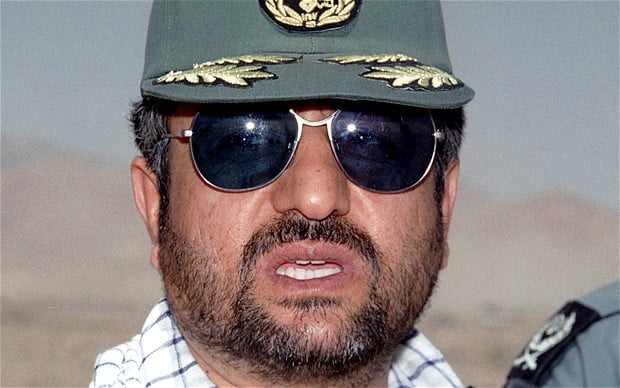
The commander of Iran’s elite Revolutionary Guards said Monday that President Hasan Rouhani should have refused to take last week’s historic telephone call from US Sardar_Jafaricounterpart Barack Obama.

It was the first public criticism by a senior Iranian official of Friday’s landmark first contact between leaders of the two countries since the rupture of diplomatic relations in the aftermath of the 1979 Islamic revolution.

“The president took a firm and appropriate position during his stay” in New York for the United Nations General Assembly, General Mohammad Ali Jafari said in an interview with the Tasnimnews.com website.

“But just as he refused to meet Obama, he should also have refused to speak with him on the telephone and should have waited for concrete action by the United States.”

The government can make “tactical errors” but these can be “repaired,” said Jafari

“If we see errors being made by officials, the revolutionary forces will issue the necessary warnings,” he added.

The public criticism came despite appeals earlier this month by both Rouhani and supreme leader Ayatollah Ali Khamenei for the Guards, who have long seen themselves as guardians of the values of the revolution, to steer clear of politics.

Jafari said Washington should respond to the good will shown by Rouhani in New York by “lifting all sanctions against the Iranian nation, releasing Iranian assets frozen in the United States, ending its hostility towards Iran and accepting Iran’s nuclear programme.”

The commander of the Guards air wing General Amir-Ali Hadjizadeh told the corps’ own sepahnews.com website that “US hostility can’t be forgotten with a phone call and a smile”.

On September 17, Khamenei said it was “unnecessary” for the Guards to get involved in politics.

The previous day, Rouhani called on the Guards to “stand above political tendencies”.

Rouhani’s contact with Obama was broadly welcomed in the Iranian press as well as abroad, but a small group of hardline Islamists protested outside Tehran’s Mehrabad airport on his return.

A shoe was thrown, as the protesters chanted: “Death to America,” a slogan that was long a ritual refrain at official rallies.

RAWSTORY

Report: Iran’s cyberwar commander assassinated

0


The commander of Iran’s cyberwar program has been shot dead in an apparent assassination, a British newspaper reported Wednesday.

(Photo: Atta Kenare, AFP/Getty Images)

Mojtaba Ahmadi, who specialized in computer defense, was found dead in woods near Tehran with two bullets in his heart, The Telegraph said, citing a website linked to the powerful Iranian Revolutionary Guard. He was last seen Saturday leaving for his job at the Cyber War Headquarters, according to the site, Alborz

The police commander in Karaj, northwest of the capital, reported that the killing was carried out by two men on a motorcycle.

In January 2012, Iranian nuclear scientist Mostafa Ahmadi-Roshan was blown up when two men on a motorbike attached a magnetic bomb to his car while he was sitting in Tehran traffic.

Since 2007, five Iranian nuclear scientists and the head of the country’s ballistic missile program have been slain. Iran has blamed the Israeli intelligence agency Mossad. Israel has denied the allegations.

On its Facebook page, the Cyber War Headquarters confirmed Ahmadi had been a commander and posted condolences, the newspaper wrote. The Revolutionary Guard said Ahmadi’s death was being investigated and warned against speculating “prematurely about the identity of those responsible for the killing.”

Western intelligence officials are evaluating the report, the Telegraph said.

Iran-affiliated hackers have been looking for system weaknesses to disrupt U.S. power grids, financial systems and other key infrastructure, a cybersecurity expert said in August.

“The only thing now that stands between us and a big attack is the goodwill of the Iranian Revolutionary Guard,” James Lewis, of the Center for Strategic and International Studies, told Bloomberg News.

The Revolutionary Guard has also been lending its expertise to hackers supporting Syrian President Bashar Assad in his government’s civil war against rebels.

A group calling itself the Syrian Electronic Army attacked The New York Times’ site in late August, and in April hacked the Associated Press’ Twitter account to falsely report an explosion near the White House, which temporarily rocked the U.S.stock markets.

USA TODAY

Iran’s Revolutionary Guards unveil own attack drone

Iran's Revolutionary Guards with what they claimed to be a captured US RQ-170 Sentinel drone in 2011. Photograph: AFP/Getty Images
Iran’s Revolutionary Guards with what they claimed to be a captured US RQ-170 Sentinel drone in 2011. Photograph: AFP/Getty Images


Iran‘s Revolutionary Guards have unveiled an attack drone, capable of carrying missiles and described as the unit’s most sophisticated so far.

According to their website, sepahnews.com, General Mohammad Ali Jafari unveiled the drone on Friday.

He was quoted as saying the Iranian-made drone was a strategic asset in protecting the nation’s borders.

The drone, called Shahed-129, or Witness-129, can fly up to 1,700km (1,000 miles), the website said, which puts much of the Middle East within its range.

It added that the drone had a 24-hour non-stop flight capability, could carry eight bombs or missiles, and could hit both fixed and moving targets.

Iran has claimed to have captured several US drones, including an advanced RQ-170 Sentinel CIA spy drone in December 2011 and at least three ScanEagle aircraft.

GUARDIAN

Shin Bet arrests Iranian spy allegedly sent to Israel by Revolutionary Guard


An Iranian agent was sent to Israel to set up a base for Iranian intelligence and terrorism networks, security forces announced on Sunday.

The Shin Bet [Israel Security Agency] said the 55-year-old suspect had been recruited by Iran’s Qods Force, the extraterritorial unit responsible for special operations, terrorism, and subversion, and run by the Iranian Revolutionary Guards Corps (IRGC).Photo of US Embassy in Tel Aviv taken by alleged Iranian spy (Courtesy Shin Bet)

The suspect was found with photographs of the US embassy in Israel.

“During questioning, the suspect, Ali Mansouri, described entering Israel under a Belgian identity using the alias Alex Mans, as well as his recruitment and activation process by Iranian intelligence elements,” the Shin Bet said.

Iran offered him a million dollars in exchange for his activities.

Mansouri answered directly to the Qods Force, which is led by Khamed Abdallahi and Majid Alawi, both of whom are subordinate to the unit’s notorious commander, Qassem Suleimani, the Shin Bet added.

“This special operations unit is tasked with, among other things, carrying out terror attacks against Israel – both abroad and in Israel – and against other targets that Iran works against in the West and Middle East,” it said.

He visited Israel on three separate occasions, and attempted to forge links with business owners in Tel Aviv. The suspect was arrested by the Shin Bet and the Israel Police’s National Unit for the Investigation of International Crimes at Ben-Gurion Airport as he tried to board a flight from Israel to a European destination on the evening of September 11.
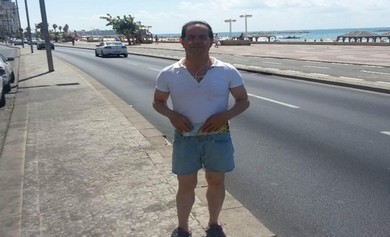
Alleged Iranian spy Ali Mansouri on Tel Aviv beach promenade (Courtesy Shin Bet)

The Shin Bet suspects that Mansouri was building up a business network as a front for an extensive Iranian intelligence and terrorism network in Israel.

It provided a detailed biography of the suspect’s life. Born in Iran in 1958, Mansouri lived in the Islamic Republic  until 1980, before moving to Turkey, where he stayed until 1997. It was then that he entered the world of business, and received a visa that allowed him to reside in Belgium.

A decade later, in 2006, Mansouri received Belgian citizenship, and changed his name to Alex Mans to cover up his Iranian identity, the investigation revealed.

In 2007, he returned to Iran, from where he tried to broaden his business activities in the three countries he knew best, Iran, Belgium, and Turkey.

He continued to travel between the three states, married an Iranian woman (a second marriage), and allegedly drew the attention of Iranian intelligence recruiters due to his international business background.

Mansouri specialized in selling windows and roofing solutions to stores and restaurants, and attempted to sign supply contracts with potential customers in Tel Aviv. He presented himself as a Belgian businessman, and could refer others to websites and Facebook accounts that documented his business activities.

In 2012, the Qods Force asked him to work for them in Israel, the Shin Bet said.

He visited Israel in July 2012, Janauary 2013, and most recently, on September 6, a visit that ended in his arrest.

Security forces found in his possession many photographs of sites in Israel, some of which are of interest to Iranian intelligence agencies, such as the US embassy building in Tel Aviv.
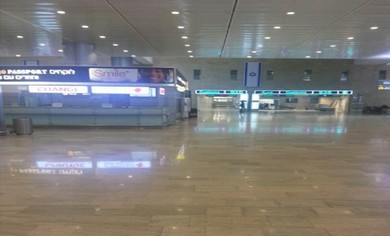
Photo of passport control at Ben-Gurion Airport taken by alleged Iranian spy Ali Mansouri (Courtesy Shin Bet)

During questioning, Mansouri revealed information about his handlers, divulging information about Haji Mustafa, a senior Qods Force headquarters operative, who met with Mansouri and received updates about his missions in Israel, Hajai Hamid Na’amti, a liaison man, and Mahdi Hanababai, who guided Mansouri during his time in Israel.

Mansouri described how he was ordered by his handlers to cover up his visits to Iran, where he would fly to after his visits to Israel, for debriefings and receiving new instructions.

Public defense lawyers representing Mansouri said that their client is a Belgian businessman who is not motivated by any pro-Iranian agenda.

The attorneys, Michael Orkavi and Anat Yaari, said their client had been denied access to a lawyer for nine days. They added that a more complex picture exists than the one being presented by security forces, and that the full details would emerge in court after Mansouri is charged.

Israel views the Qods Force as being responsible for the terrorist attack on the vehicle of the wife of an Israeli diplomat in Delhi, India, in February 2012, which seriously injured the woman. During the same month, there were additional botched attacks attributed to the Qods Force on Israeli targets in Thailand and Georgia.

The Qods Force is also behind attempted attacks on Israeli targets in Azerbaijan, Kenya, and Nigeria that were foiled in recent years, security forces said.

An official traveling with Prime Minister Binyamin Netanyahu as he is set to meet with US Barack Obama in the US, said that the incident is further proof that Iran’s word can not be trusted.

“While the Iranian president sweet talks the West, the Ayatollah’s Revolutionary Guards continue in their attempts to hurt Western interests in the Middle East as is evidenced by the fact that the Iranian spy that was caught gathered intelligence on the US Embassy in Israel.”

JP

Iran’s radical Revolutionary Guard wary of US negotiations

0


Reuters:

Iran’s elite Revolutionary Guard has warned of the dangers of dealing with U.S. officials, ahead of expected diplomatic sepahcontacts, underlining the internal challenges President Hassan Rouhani could face to improve ties with the West.

Rouhani is expected to pursue a charm offensive in the coming week while in New York for the U.N. General Assembly in order to set the right tone for further nuclear talks with world powers which he hopes will bring relief from sanctions, according to diplomats and analysts.

Hours before leaving for New York on Sunday, the new Iranian president said that Tehran was ready for negotiations with Western powers provided they set no pre-conditions. He also said the world needed to accept Iran’s right to enrich uranium.

The Islamic Revolutionary Guard Corps (IRGC) military force was established to safeguard Iran’s revolution in 1979 and has since influenced political, social and economic affairs.

“Historical experiences make it necessary for the diplomatic apparatus of our country to carefully and skeptically monitor the behavior of White House officials so that the righteous demands of our nation are recognized and respected by those who favor interaction,” an IRGC statement said.

It added the IRGC would support initiatives that were in line with national interests and strategies set forth by Iran’s theocratic leader and highest authority, Ayatollah Ali Khamenei.

This looks more like a warning to Rouhani not to give up their nuclear weapons program that they deny having.   They may be prepared to remove him if he makes too many concessions.  At this point there is little reason to expect much more than further attempts to stall the West while the weapons programs go forward.  Those in charge of Iran have been acting in bad faith at negotiations for years, and Rouhani was one of their past negotiators.