Home Blog Page 368

The Military Threaten Presidential Candidates

0

Warnings on Post Election Spanks to Reexamination of Qualifications

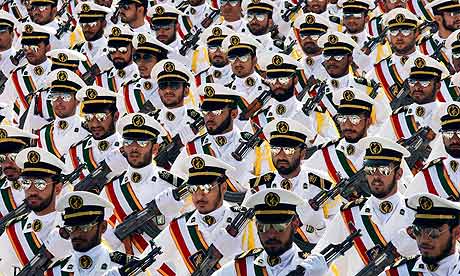
With only a few days left for the eleventh presidential elections in Iran, verbal attacks by military men and some appointees of the supreme leader of Iran on the qualified presidential candidates are on the rise so much that they have been accused of “exaggerating” the situation in the country through their criticism. Some even said it was not possible to not act against these “violations” and threatened to take action against the candidates after the elections on June 14th.  At the same time, some news reports also surfaced about a re-examination of the fitness qualifications the regime enforced to run for the presidency for Hassan Rowhani, the candidate who is loosely associated with the reformists.
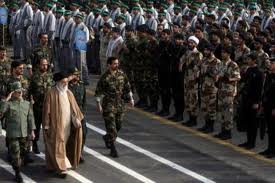
The Basij and public relations deputy at the supreme command of Iran’s armed forces made remarks that were widely published by media under the control of the Revolutionary Guards (IRGC) and said, “We had also warned in the past that it would be best if the respected candidates constrained their talks to the authorities of the president and refrain from making comments on the armed forces which are directly related to questions of defense and national security.”

Guards general Masoud Jazaeri also spoke of confronting candidates after the elections. “We reserve the right to legally confront those candidates who have disregarded these constraints and have engaged in spreading un-true information or in games, and leave this to post election time,” he said.

This is not the first time such threats are made. In early May, the public relations headquarters of the supreme defense command headed by Guards general Jazaeri issued a statement asking presidential candidates to “behave in such a manner in their debates and campaign activities that does not allow the enemy to misuse the situation to engage in propaganda against the country and the armed forces.”

Such a direct threat to confront presidential candidates after the election by a senior military officer comes at a time when other offices and appointees of the supreme leader too have increased their attacks on the candidates.

On June 8th, IRGC general Hamid-Reza Moghadamfar, the cultural deputy of the force claimed that some candidates engaged in fabrications while their videos create despair for people. These gentlemen must be told you they themselves live in the dust so why do “you make accusations against the country. They say the country is in a cold winter while they themselves have been frozen.”

While this officer did not name any one, he was directly referring to the remarks that Hassan Rowhani had made earlier when he compared the country’s situation to a “cold winter.”

At the same time, Guards general Mohammad Ismail Kowsari, the former commander of the Sarollah base and a current member of the national security council in the Majlis also warned the presidential candidates for their criticism of the current conditions in the country. “Criticism should not result in wickedness because past administrations each had strong and weak points and the candidates should indicate their strong features as well. The candidates should also be aware that a day may come when they themselves will be critiqued and so would they like their actions be treated wickedly,” he said. He did not stop there and threatened that the Guardian Council would reexamine Hassan Rowhani’s credentials because of his criticism of the current conditions in the country and Ahmadinejad’s administration, the nuclear dispute with the West and the reasons for the international sanctions. He claimed that the “GC had the authority to do that and that the candidates had been told that their remarks, actions and analysis were under the purview of the Council.

In addition, the mouthpiece of the political organ of the Revolutionary Guards, Sobh Sadegh published an article in which it accused two of the presidential candidates, Mohammad-Reza Aref and Hassan Rowhani, of being deceitful and exaggerating problems. It characterized some of the remarks and criticism of the candidates as “unforgivable.” The article concluded that the candidates were resorting to any action to win attention and votes. In addition to strongly criticizing Rowhani, it also said some of the candidates proudly mentioned the names of the reformist leaders who the regime has put under house arrest since early 2011.

Another general, Yadollah Javani, the former head of the political office of the IRGC whose name is on the blacklist of the UN international sanctions also criticized the candidates and belittled the campaigns and practices of the candidates by calling them Western in style. He wrote that ridiculing others was a Western campaigning method, not Islamic. “If economic problems currently exist, such as inflation, unemployment and price hikes, these should not be made the focus of attention and progress too should be mentioned,” he said. Javani also accused the candidates of disregarding the advice of the supreme leader. It is worth noting that on June 4th, ayatollah Khamenei had told the eight presidential candidates not to ridicule what had been accomplished while adding that it was alright to criticize.

Source: Insideofiran

Arash Sadeghi’s hunger strike continues

0

Political prisoner Arash Sadeghi has been on hunger strike since June 1, 2013.  Locked up in Ward 209 of Evin Prison, Sadeghi went on hunger strike after being beaten by prison guards.

According to a report, Sadeghi is a student activist expelled from Allameh Tabatabai University (ATU) in Tehran.  He has been behind bars since Jan. 15, 2012.

Sadeghi, who was a member of Mir Hussein Mousavi’s presidential election campaign, was first arrested on July 9, 2009.  After spending 53 days in prison, Sadeghi was released on bail.  On Dec. 27, 2009, he was arrested again while attending demonstrations to protest the election results and subsequently released in March 2010.

On July 9, 2009, when security agents raided Sadeghi’s house to arrest him, his mother suffered a heart attack and passed away.

Source: HRANA

Families of political prisoners subjected to intrusive body searches

0

Families of political prisoners have been subjected to intrusive body searches while visiting their loved ones in Evin Prison.

According to a report by Kaleme, female visitors including women and young girls have reported and objected to manual body searches performed on Sunday, June 9, 2013.  Female visitors felt humiliated and extremely uncomfortable.  Among the victims was Nasrin Sotoudeh’s daughter who continued to cry non-stop while visiting her mother.

Families of political prisoners have reported that prison officials intentionally made the visit unpleasant for everyone.  Faced with the objection of the families, security agents said that they were told to perform intrusive body searches.  Since Ali Ashraf-Rashidi became the warden, the horrific conditions in Evin Prison have further deteriorated.  Families of political prisoners plan to take actions against such searches and stop visiting their loved ones until the issue is addressed.

Source: HRANA

Raids and harassment of activists continue in last week of election

The Iran Human Rights Documentation Center (IHRDC) has received confirmation of reports that offices belonging to the Shiraz branches of the campaigns of Hassan Rowhani and Mohammad Reza Aref were raided by plainclothes operatives on Sunday, June 9, 2013.

Rowhani and Aref are the two moderate/reformist candidates in the upcoming presidential election in the Islamic Republic of Iran (IRI) although as of yesterday, Monday, June 10, Aref is reported to have withdrawn from the race. Initial reports indicated that the raids on these local campaign branches were carried out by “rogue forces.”

After one raid against the office of a local committee supporting Rowhani, however, several members of the candidate’s campaign staff, including the head of his youth organization, were summoned to the building Pelak 100 in Shiraz, where both the Ministry of Intelligence and National Security (MOIS) and the Islamic Revolutionary Guard Corps (IRGC) Intelligence Division have local offices, for questioning. The raids reportedly followed several warnings by the authorities in recent days.

Events in Shiraz underscore the increasing authoritarianism that has characterized the IRI’s actions in the lead up to the presidential vote on June 14, even as political activists from the 2009 post-election protests still face government reprisals for their activities four years ago. In early May, Akbar Amini, a former Green Movement activist and member of the civil society group Saray Ahl Ghalam (House of Writers), was sentenced to five years’ imprisonment and prohibited from engaging in political activity, appearing in media, and blogging for an additional five years. Amini’s sentence came more than two years after his arrest following a protest on February 14, 2011. Amini has spent much of the time since his arrest in detention in Ward 350 of Evin Prison, which is under the control of the MOIS.

Informed sources have reported to IHRDC that Akbar Amini was arrested again in Tehran on June 7, 2013. In a similar case Omid Abdolvahhabi, a sociology student and political activist, was also recently detained in Tehran. The whereabouts and charges against both individuals are unknown, and it is reported that Abdolvahhabi’s family is under severe pressure not to reveal anything regarding his case to the outside world.

Political tensions in the presidential campaign have grown as arrests of activists and other pressures against moderate and reformist political organizations have continued apace. Video footage of a campaign rally for now former candidate Aref in the central city of Yazd shows audience members chanting slogans in support of Mir Hossein Mousavi and Mehdi Karroubi, the former reformist candidates from Iran’s last presidential election in June 2009 who have both been under house arrest since February 2011. A Rowhani campaign event and the funeral of a dissident cleric last week were both attacked by authorities after activists began chanting slogans to the same effect.

Source: Iranhrdc

Iran Accelerates Crackdown on Media and Dissidents Prior to Election

Iranian authorities should immediately stop censoring newspapers and news websites, arresting political activists, and muzzling foreign journalists within the country, ahead of the June 14 presidential election, the Campaign for Human Rights in Iran said today.

“If there was any doubt that the authorities plan to engineer this election to make sure a regime favorite ends up in office, it has now become crystal clear,” said Hadi Ghaemi, executive director of the Campaign. “The authorities are not only preventing a number of candidates from expressing their ideas, but are also pressuring their own supporters to make sure the hardliner candidates remain unchallenged.”

Yesterday, June 9, Brigadier General Seyyed Masoud Jazayeri, Deputy Chief of Joint Armed Forces Headquarters, threatened “a few of the candidates,” alluding to the two reformist candidates in the race, Mohammad Reza Aref and Hasan Rohani.

“We have warned before that it’s better that candidates express their opinions within the framework of presidency’s authority, and avoid entering in those issues related to security or the armed forces,” said Masoud Jazayeri, who also heads the Defense Propaganda Headquarters, adding that the IRGC will confront those candidates “who have spread untrue information and painted a black picture [of the regime], after the election.”

Since the beginning of June, several political activists and campaign workers have been arrested at political rallies, at their work places, and at their homes. In addition, journalists and activists who had been imprisoned after the 2009 elections and were later released on furlough have been recalled to prison in the month leading to the election.

On the threshold of the Iranian presidential election, pressure on families of Radio Farda employees in Iran has increased severely, Radio Free Europe/Radio Liberty reported. According to Radio Farda’s director Armand Mostofi, over recent weeks, security forces have summoned family members of Radio Farda staff in at least nine separate incidents, interrogating them about the activities of Radio Farda employees and urging them to tell the journalists to sever their professional activities with Radio Farda or covertly cooperate with Iranian security organizations. Mostofi also said that the journalists have been targets of cyber attacks seeking access to their personal information.

“The Iranian regime won’t even tolerate the political activities allowed by its own laws, not even by those people approved by the selective Guardian Council,” Ghaemi said.

On June 4, during the funeral procession of former Isfahan Friday Imam Ayatollah Jalaleddin Taheri, thousands of people marched and chanted anti-government slogans, including “Death to the dictator,” according to Radio Farda, a US-owned Persian-language news outlet.

That same day, security forces arrested four political and cultural figures close to the reformist National Religious Group—Reza Aghakhani, Nasrollah Lamshani, Alireza Akbarzadeh, and Hossein Bahirai—at their work places and searched their homes, Nationalist Religious Website reported. No charges or reasons for the arrests were announced.

Intelligence Ministry forces arrested four campaign workers from disqualified candidate Akbar Hashemi Rafsanjani’s campaign at their homes on June 2, after searching the premises and seizing computers and notes. Seyed Ziaeddin Reza Tofighi, the head of Hashemi Rafsanjani’s campaign in Kokiluyeh and Bouyerahmad Province; Seyed Reza Askari; Ghasem Yazdani; and Seyed Askar Erfanizadeh were all arrested.

During a June 1 political rally for presidential candidate Hassan Rohani in Tehran, security forces reportedly arrested several youth campaign workers after slogans were chanted supporting the detained 2009 election opposition candidate Mir Hossein Mousavi. Saeed Allahbadashti, Mojtaba Hashemi, Mohammad Parsi, Shirin Mirkarami, Mohsen Rahmani, and several others were among those arrested. According to a statement on candidate Rohani’s website, most of those arrested were released after negotiations, and “nonstop efforts by Dr. Rohani and his campaign staff for the release of the remaining friends continues.”

In addition to these new arrests, several journalists and political activists who had been arrested in the aftermath of the 2009 election and released on furlough have been recalled to prison in recent weeks. Journalists Ahmad Zeidabadi, Bahman Ahmadi Amouee, and Massoud Bastani, as well as political activist and blogger Hossein Ronaghi Maleki, were all recalled to prison in the fourth week of May.

“By arresting political activists, the authorities are trying to prevent anything unscripted from happening, but they’re also hedging their bets and silencing the press to make sure that if something does happen, no one will hear about it,” Ghaemi said.

While the Intelligence Ministry ramps up arrests of political activists and journalists, the Criminal Content Work Group, which determines illegal Internet content, has been blocking the websites of licensed media outlets.

“According to the Parliament resolution, news websites and news agencies are included in the press law and their violations must be reviewed in the presence of the press jury,” Member of Parliament Ali Motahari told the Iranian Parliament News Agency. As the Parliament’s representative to the Press Oversight Committee, Motahari criticized the security approach to the news websites and called the blocking of news websites and news agencies by the Criminal Content Work Group “illegal.”

The Work Group blocked conservative Serat News website on May 24, and on June 3 the Internet service provider for semi-official Mehr News Agency was ordered to block access to its website after Mehr News published a critical interview with the managing editor of Serat News. Furthermore, Branch 76 of Tehran Penal Court ruled for a six-month ban on Iran Newspaper for “publishing falsehoods” on June 2.

There have been widespread reports of choking of Internet access throughout Iran. Following reduced Internet speeds and widespread public outcry about lack of access to Internet over the past month, a government official dismissed the claims of suppressing the exchange of information between Iran and the rest of the world as rumors.

“That is absolutely not true, and delusions of a group of people who want to create doubt in the health of the elections. People know themselves that there is no problem in Internet communications and that they have access to all the permitted websites,” Alireza Shah Mirzaei, a member of Iran’s Supreme Council of Cyberspace, told IRGC-related Tasnim News website.

Iran’s Ministry of Culture and Islamic Guidance has also been preventing foreign media from filling the information gap.

“Not only is this not a free election, but journalists and news media are not even free to report on these unfair elections,” Ghaemi said.

A foreign journalist currently in Tehran told the Campaign that reporters are facing severe restrictions on their movement. The Ministry of Culture and Islamic Guidance has appointed “minders” to accompany all foreign journalists, he told the Campaign, requesting anonymity for fear of losing his reporting visa.

On May 30, Iran’s Minister of Culture and Islamic Guidance told Mehr News Agency that “security and oversight organizations must pay close attention and inform us, and we will issue them permission to enter Iran and report the news.” Director of Foreign Press of Iran’s Ministry of Culture and Islamic Guidance Mohammad Nasser Haghighat told Fars News Agency that “more than 200 foreign reporters from 105 media outlets and 26 countries have applied for visas to travel to Iran” to cover the elections.

In the first few months of 2013, as Iranian authorities launched a renewed crackdown on journalists, their accusations of collaboration with foreign organizations created a chilling effect on media reporting. Many publications preemptively closed down so as to avoid targeting by officials.

Source: Iranhumanrights

Iranian election: do the Revolutionary Guards have a candidate?

0

There are two frontrunners – both hardliners who favour support for Assad, repression of dissent and pressing on with Tehran’s nuclear programme.

The Revolutionary Guards Corps has enough power to block major initiatives and promote its own hardline agenda. Photograph: Reuters

While many people wonder which of the eight candidates for the Iranian presidency will appeal most to voters, the more pressing question is which will be most favoured by the ruling establishment’s power brokers, such as the powerful Revolutionary Guards.

The Islamic Revolutionary Guards Corps (IRGC) has been a dominant player in Iranian politics since the revolution. Its broad-ranging influence transcends that of an exclusively military institution. The organisation does not directly dictate policy or single-handedly choose presidents, but it has enough power within the regime to block major initiatives and promote its own hardline agenda.

Former presidential candidates such as Akbar Hashemi Rafsanjani and Mehdi Karroubi directly blamed the IRGC for influencing the results of past elections, and its weight is likely to be felt again this 14 June.

The IRGC maintains no official position in election contests. Instead, the organisation offers general guidance to its members, highlighting the personal attributes and political positions of an ideal candidate. In 2005 and 2009, the IRGC and the Basij militia it supervises used this approach to support Maxhmoud Ahmadinejad.

This year, the IRGC message has been more muddled. While we will probably gain more clarity as the election draws closer, so far there are two frontrunners for an unofficial IRGC endorsement: Mohammad Bagher Ghalibaf and Saeed Jalili. Ghalibaf and Jalili are both stalwarts of the regime, loyalists of the Supreme Leader, Ayatollah Ali Khamenei, and IRGC war veterans.

These two were also seen as the most popular candidates in a poll by the Guard-controlled Fars news agency that was reported on by other IRGC media outlets this last week.

Having commanded both the IRGC air force and the national police, Ghalibaf has a significant security résumé, and he has in effect managed Iran’s largest city, as the mayor of Tehran. In his first run for president, in 2005, he attempted to widen his base beyond hardline constituencies by appearing as a modern, tech-savvy candidate. Though this may have broadened his appeal, it also dampened the trust of establishment insiders, including many in the IRGC and Basij, who instead backed the comparatively modest Ahmadinejad.

Perhaps fearing a similar result, Ghalibaf has changed tactics this time around. He has made an effort to court the hardliners he alienated in 2005, touting his credentials as a tough, anti-reformist official. In a recent speech to a Basij audience, he took credit for harsh crackdowns on pro-democracy activists in 1999 and 2009.

His standing among IRGC commanders might also carry some weight. Murky reports have come out claiming that he has been endorsed by Ghasem Soleimani, the head of the IRGC’s covert Quds Force and an influential figure in the regime.

Saeed Jalili is a first-time candidate. In contrast to Ghalibaf, there are few questions regarding his motivations. As an ardent supporter of war veterans, and an injured veteran himself, Jalili has endeared himself to the IRGC and its Basiji base.

He is seen to have unwavering loyalty to the system and Khamenei. He has earned an endorsement from Ayatollah Mohammad Taghi Mesbah Yazdi, Iran’s most prominent extremist senior cleric, and he holds inflexible views on foreign policy and the country’s nuclear programme. His campaign slogan could hardly be more blunt: “No compromise. No submission. Only Jalili.”

In the latest issue of the IRGC weekly, Sobh-e Sadegh, the deputy representative of the Supreme Leader to the organisation, briefly describes the ideal candidate: “The president of the republic should want to truly be the servant of the people and not just [claim he is as as] a popular slogan. He should resist the enemy, not be passive and afraid.”

The organisation wants to be unchallenged in the areas it cares about, and it wants an unflinching commitment to “resistance”. Whether supporting Assad in Syria, not compromising on the nuclear programme, or repressing any pro-democratic dissent, the IRGC wants a president it can work with – and one who, above all else, won’t get in its way. Jalili may well be that guy. But don’t count Ghalibaf out just yet.

Source: Guardian

Iranian police arrest supporters of reformist presidential candidate

Campaigners for Hasan Rowhani are held as police chief promises to confront ‘counter-revolutionary behavior.’

Iranian police have arrested several people campaigning for a reformist candidate in this month’s presidential election, an aide said on Sunday, as a senior official pledged to impose ideological limitations on the race.

The Iranian presidential candidate Hasan Rowhani at a campaign event on Saturday night, after which some supporters were arrested.

Police picked up several supporters of Hasan Rowhani after he delivered a speech on Saturday night, his campaign manager, Mohammad Reza Nematzadeh, told the semi-official Mehr news agency.

“Some people were detained on the street after leaving the meeting,” he said.

The 14 June election is to choose a replacement for Mahmoud Ahmadinejad, who cannot run for a third term as president. Authorities have already pared down the list of candidates to eight, disqualifying Ahmadinejad’s top aide and a former president who could have galvanised opposition to the harsh clerical system.

That was a clear indication that Iran’s rulers did not want an open contest that could end up in a disputed outcome of the type that set off widespread riots when Ahmadinejad was re-elected in 2009.

On Sunday, after the arrests, a top official warned that Rowhani and others would be limited in their election drive.

“Police will confront individuals who have counter-revolutionary behaviour” during campaigning, said the Iranian police chief, General Ismail Moghadam, according to the police website. “It is natural that police have carried out their tasks.”

An exile-based Iranian opposition website reported that authorities had arrested at least seven people who attended Rowhani’s campaign appearance.

It said the arrests were made after participants chanted slogans calling for the release of Mir Hossein Mousavi, an opposition leader and candidate in the disputed 2009 election, who has been under house arrest for more than two years.

A council of advisers to the influential former reformist president Mohammad Khatami has urged Rowhani to unite with the other major reform-leaning candidate, Mohamed Reza Aref.

A statement on Khatami’s personal website expressed hope that the two could form a “united front” to field a single nominee.

Nematzadeh, Rowhani’s spokesman, said the two candidates had not met to discuss the possibility.

Aref’s star has been rising since his performance in a Friday debate of the eight candidates, restoring some energy to the reform movement after their main candidate, the former president Akbar Hashemi Rafsanjani, was disqualified.

Also on Sunday, four aides to another candidate, Saeed Jalili, were injured in a road accident. Jalili, Iran’s chief nuclear negotiator, is considered a frontrunner in the campaign.

Iran is among the world’s leaders in the number of road accidents per capita. More than 20,000 people are killed on the roads there every year.

Source: Guardian

Four Baha’i citizens were tried and sentenced in Mashhad

Four Baha’i citizens were tried and sentenced to prison in Mashhad.  Nika Kholoosi, Nava Kholoosi, Adib Sho’aie and Mahsa Mahdavi received sentences ranging from eight months to six years.

According to a report by Human Rights Activists News Agency, these prisoners of conscious were tried in the 3rd branch of Revolutionary Court in Mashhad.  Judge Soltani presided over the trial during which the defenders were charged with promoting the Baha’i religion, propaganda against the Islamic regime and membership in Baha’i groups.

Nika Kholoosi was sentenced to six, Nava Kholoosi to four and a half, and Adib Sho’aie to one and a half years.  Mahsa Mahdavi was sentenced to eight months.

Source: HRANA

Blogger Kaveh Taheri sentenced to three years

The Iranian blogger Kaveh Taheri has been sentenced to 3 years in prison for propaganda against the regime.  In a separate charge, a bail approximately equivalent to $50,000 has also been set for him.

According to a report by Human Rights Activists News Agency, Taheri is being held in Adel Abad Prison in Shiraz.  Presiding over the first branch of the Revolutionary Court, Judge Mahmoud Sadati handed down the maximum penalty allowed, sentencing Taheri to three years in prison on charges of insulting the Supreme Leader and propaganda against the regime with the intent to benefit the opposition groups.

Taheri’s lawyer has appealed the ruling, and the case will be sent to the higher court soon.  Three days ago, the court issued another ruling, setting Taheri’s bail on a separate charge of blasphemy.

Taheri was arrested on September 23, 2012 by security agents.  His house was searched, and his personal belongings such as his computer, notes and laptop were seized.

Source: HRANA

As Elections Approach, Iran Remains Silent on Arrests of Journalists

Iranian officials should break their silence about the status of Baztab Emrooz’s managing editor Ali Ghazali and the news website’s founder Foad Sadeghi, both arrested in the last month in relation to their media activities, and ensure they receive due process while in custody, including access to a lawyer, the International Campaign for Human Rights in Iran said today.

There has been no information about their conditions since their arrests on April 27 and May 18, respectively, and given the recent escalation of media censorship in the lead-up to the election the Campaign is concerned they may be mistreated.

“This election is taking place under the most restrictive and repressive climate of any previous election. Iranian authorities are targeting journalists and treating them as enemy number one because of their ability to shed light on the realities on the ground,” said Hadi Ghaemi, executive director of the Campaign.

“The total lack of information about these two detainees is very worrisome,” he added.

As the June 14 presidential elections approach, Iranian authorities have been clamping down on news and information in various ways. Internet speeds have slowed to a crawl and services have been stopped several times; critical websites and blogs have been banned; and several journalists temporarily released on furlough have been recalled to prison facilities. The Ministry of Culture is seeking tighter restrictions on foreign journalists, and jamming of satellite broadcasts, a standard practice by the Iranian government, has also intensified since March.

Since January 2013, Iranian officials have arrested more than 20 reformist and conservative journalists, releasing many without charges. Several publications, including Aseman weekly, Tajrobeh monthly, and Mehrnameh monthly, preemptively closed their operations until after the election; initial reports stated that Iranian officials had shut them down.

At a meeting of the Isfahan Friday Imams held March 14, Iran’s Intelligence Minister Heydar Moslehi said the recent arrests are related to the upcoming elections. “Our aim is to prevent the emergence of a sedition prior to the elections,” he said.

Following threats and orders not to engage in media activities until after the elections, Baztab Emrooz’s founder Foad Sadeghi was arrested on May 18, after appearing in response to a summons by Tehran Prosecutor Jafari Dolatabadi. According to a report, Sadeghi had been planning rejected candidate Akbar Hashemi Rafsanjani’s media campaign for the upcoming presidential election.

A seasoned conservative journalist, Sadeghi established the Baztab Emrooz website in 2002, and later founded the Tabnak and Ayandeh news websites. He is best known for his investigations into allegations of financial corruption and embezzlement in the Ahmadinejad cabinet.

Iranian officials arrested managing editor Ali Ghazali on April 27, just hours after Baztab Emrooz website published an article about a recording known as “the eight million tape,” an alleged audio recording in which, the article claimed, “Mahmoud Ahmadinejad emphasizes to the officials to announce his actual votes [in the 2009 disputed presidential election], which were 16 million, and not to announce the inaccurate vote count. The remainder of the tape recording is of Ahmadinejad’s calls to various state officials, in which he asks them not to announce the unreal vote count and [to announce] the same 16 million vote count.”

An informed source told the Campaign that Ghazali’s mother was told “not to have any hopes of seeing your son outside of prison for a few years,” and that Ghazali has been charged with “creating public anxiety through repetition of claims of election fraud in the 2009 election.” His arrest was allegedly ordered by Mr. Naimi, the Intelligence Ministry’s Deputy for Culture and Media. The Campaign has been unable to independently confirm his charges. Ghazali has not been released, and there has been no information about his judicial case since his arrest.

Prior to Sadeghi’s arrest, Sadeghi said in a May 4 interview with Bahar News website, “News about the audio tape was received from a source close to Mr. Ahmadinejad, who has in the past given us correct information.” Sadeghi added that he had been summoned and interrogated by security forces several times.

The Iranian Judiciary has consistently charged journalists and bloggers with national security crimes and denied them fair trials with a jury. National security charges expose journalists to interrogations and mistreatment by intelligence forces, numerous counts of which have been documented, including most recently the death of blogger Sattar Beheshti during an interrogation in November 2012.

Iranian censors have blocked several pro-Ahmadinejad news websites and blogs in recent weeks. According to the semi-official Iranian Student News Agency, at a May 28 Media Oversight Committee meeting, six newspapers and publications received warnings, and Dolat-e-Bahar website, which is close to President Mahmoud Ahmadinejad, was blocked. Earlier, several websites and blogs run by Ahmadinejad supporters, including Meyar News, Roshanaee, Baharna, Bahar Online, Bardasht News, Emtedad-e-Mehr, Taffakor Imani, Armanshahr, and Shafiee Kia, were also blocked. Serat News, a conservative news website, was also blocked on May 25.

“Today, no journalist, regardless of conservative, reformist, or independent leanings, is safe from the sword of repression. Freedom of expression is in a very sorry state in Iran,” Ghaemi said.

UPDATE May 30, 2013: The Campaign has confirmed that the security forces who arrested Ali Ghazali and Foad Sadeghi were from the Iranian Judiciary’s Intelligence Unit. Since their arrest, Ghazali and Sadeghi have had brief contact with their families confirming that they are alive and in custody, but they gave no details about their charges nor their conditions, a source with knowledge of the situation told the Campaign.

Source: Iranhumanrights