Home Blog Page 369

Student Activist Forcefully Arrested to Serve Prison Sentence

Security forces stormed the home of Ashkan Zahabian, a former Mashhad University student and member of the Daftar Tahkim Vahdat Student Organization General Council, arrested him, and transferred him to Babol’s Mati Kola Prison on May 27, a source told the International Campaign for Human Rights in Iran. According to the source, the security forces introduced themselves as employees of the Electricity Company and asked to enter the home. Once inside, brandishing guns and threatening Zahabian with physical abuse, they pulled him out of his bed, refused to allow him to get dressed, and took him away.

“The confrontation was so brutal, it seemed strange for just taking him in to start serving his prison sentence. Instead of judicial officers from the [Judiciary’s] Sentence Enforcement Unit, Intelligence forces engaged in the sudden arrest of the student activist. After the family appeared in court, the Sentence Enforcement Unit officials told them that they had sent three summonses. The family, however, stated that no summonses had been served to them and that this claim was untrue and the arrest had taken place in the absence of due process and serving of requisite summonses,” said the source.
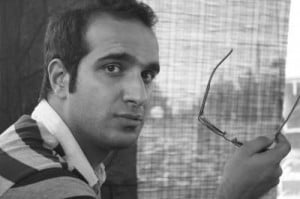
The arrest of the student activist was intended to enforce his eight-month prison sentence from his 2011 case, according to Babol Court authorities, on charges of “acting against national security through propaganda against the regime.” Judge Bagherian had issued the ruling in July 2011. “It should be noted that in Ashkan Zahabian’s case, the alleged manifestation of the propaganda against the regime charges was ‘meeting with Grand Ayatollahs in Qom,’ and according to the attorney, there was no evidence to prove this charge in the case,” the source close to Askhan Zahabian told the Campaign.

Ashkan Zahabian was a chemistry student at Ferdowsi University in Mashhad and a member of the university’s Islamic Association. In 2008, he was suspended for one academic term because of his student activism. Four days after the disputed election of 2009, he was arrested by the Intelligence Ministry. Plainclothes forces known as Ansar-e Hezbollah severely beat him during his arrest. During Student Day protests on November 4, 2009, he was arrested for the second time. A Revolutionary Court in Babol sentenced him to six months in prison in his absence. In February 2009, while still suspended from the university, he was banned from continuing his education based on an Intelligence Ministry decision, and was expelled just one term shy of graduating. Zahabian was arrested for the third time on May 2, 2011, and after spending 43 days in solitary cells at Sari’s Shahid Kachooei Prison under interrogation, he was transferred to Babol’s Mati Kola Prison.

“His charges for the third arrest in 2011 were stated as ‘acting against national security through propaganda against the regime.’ However, according to Zahabian’s lawyer, there is no evidence or documents in his case file to prove such charges. After spending more than half of his six-month prison sentence at Babol’s Mati Kola Prison, Zahabian embarked on a hunger strike to protest his illegal continued detention inside a ward where dangerous criminals were kept. His health conditions deteriorated, but he was transferred to solitary confinement where he received no attention from prison physicians and officials, leading to a loss of consciousness. Ashkan Zahabian developed speech, stomach, and liver problems as a result of the pressure he experienced in prison during his interrogations and hunger strike, and remained under the care of physicians for some time after his release,” the source told the Campaign.

Source: Iranhumanrights
Namegh Mahmoudi was beaten on the way to hospital

One of the prison guards beat Namegh Mahmoudi, a Kurdish political prisoner, as he was being transferred to the hospital.

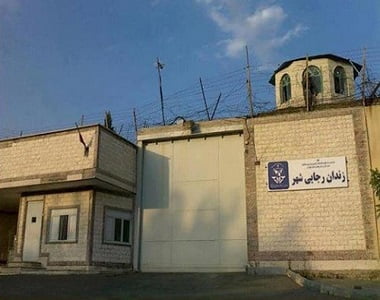
According to a report, Namegh Mahmoudi, 62, is locked up in Ward 12 of Rajai-Shahr Prison and suffers from severe eye problems.  This Kurdish political prisoner was beaten and battered by a prison guard on the way to the hospital.

“On Sunday, May 26th, prison officials finally let Namegh Mahmoudi go the hospital after blocking his transfer for a long time,” a prisoner in Rajai-Shahr said.  “He was placed in handcuffs and shackles and forced to wear a prison uniform.  As they were taking him to the hospital, a prison guard, Mahdi Mokhtarifar, found out Mahmoudi had brought his calling card with him.  So the guard kicked him in the stomach.  When Mahmoudi returned, he informed the prison officials and formally complained about the assault.  He received an eye exam at the hospital in preparations for his eye surgery.”

Mahmoudi was arrested on April 5, 2012 together with three of his children.  The Intelligence Agency originally kept him in a prison in the city of Sanandaj, Kurdistan Province.  He was later taken to Ward 209 of Evin Prison where he was interrogated.  Eventually, he was transferred to Rajai-Shahr Prison.

Mahmoudi has been charged with the crime known as Moharebeh [Waging War Against God] through collaborating with a Kurdish party and is being detained under temporary status.  His three children were released last October.

Source: HRANA

Iran offers Syria $4 billion credit line, central bank says

0

Iran has opened two lines of credit totalling $4 billion to Damascus and expects to open up a third to counter the effects of an international embargo, Syria’s central bank said on Monday.

“Iran continues to support Syria, by opening one line of credit worth a billion dollars to finance the import of different items and another line of credit worth three billion dollars to finance the purchase of petrol and associated products,” central bank governor Adib Mayale said, quoted in the government daily Tishreen.

He said Iran was considering an additional loan totalling another $3 billion to bolster the struggling Syrian economy, which is dealing with the economic impact of a war and international sanctions.

In January, Syrian state news agency SANA said Iran and Syria had signed a deal that would see Tehran extend a billion-dollar line of credit to Damascus.

There have also been multiple unconfirmed reports Tehran is offering Syria loans, as it haemorrhages foreign reserves amid its relentless civil war.

Mayale also said the central bank was taking measures to “defend” the Syrian pound against speculators and ensure sufficient reserves to allow continued imports of materials needed by industry.

The currency has lost three-quarters of its value since the beginning of the Syrian conflict in March 2011, falling from 50 pounds to the dollars to 150 pounds to the dollar.

Source: Alarabiya

Ashkan Zahabian arrested for fourth time

Ashkan Zahabian, student activist in the Green Movement and member of Tahkim-e Vahdat (Student-Alumni Association) was arrested at his parental home this morning Monday May 27th.

According to news provided to CHRR, this morning Security Ministry agents raided the home of Ashkan Zahabian’s parents, aggressively arrested and transferred him to an undisclosed location. In 2009, Zahabian served as a student volunteer at the Babol campaign headquarters of presidential election candidate, Mehdi Karoubi.

The Kaleme website reports that Ashkan Zahabian, Mashhad Ferdowsi University student barred from continuing his education, was previously detained for a third time in April 2011 when per a summons he showed up at the Sari Intelligence Office. His first arrest was in June 2009 only four days after the contested election results, at a Mazandaran University student protest. He lost consciousness during the violent arrest by plainclothes officials and Intelligence Ministry agents detained him.

In February 2009, Zahadian was banned from continuing his education because of his activism and was expelled from university one term shy of graduating. In November 2009, he was arrested again and the Babol Revolutionary Court sentenced Zahabian to 6 months in prison stemming from his student activism. He was deprived of his right to an attorney and was not allowed to defend himself in court. At Babol’s Matikola Prison, his health deteriorated and he endured solitary confinement while on hunger strike in protest of being held in a facility among criminals, and being denied needed medical treatment.

The new charges against Ashkan Zahabian stem from his meeting with the Grand Ayatollah Sanei, Grand Ayatollah Vahid Khorasani, and other clerics in the city of Qom.

Source: CHRR

Reformist slams Supreme Leader’s “absolute monarchy”

0

Political prisoner Mostafa Tajzadeh, a top reformist figure, announced in a letter from jail that the establishment has left no alternative for reformists but to boycott the elections.

Tajzadeh writes that the disqualification of Akbar Hashemi Rafsanjani, Esfandiar Rahim Mashai and other volunteers for the presidential race has simply “left the road open for the victory of the Supreme Leader’s chosen candidate… which means Iran’s political system has been turned into the absolute monarchy of the clerical leader.”

Tajzadeh’s letter was published on the Norooz website, which is linked to the banned reformist group the Islamic Iran Participation Front. He writes: “In view of the calamities that the establishment has brought upon our country, creed and people, we expected that with an apology to the people, they would take the path of recovery by allowing a free, legal and conclusive election so that a window of hope out the current dismal situation would appear.”

Iran’s Guardian Council disqualified Akbar Hashemi Rafsanjani, the top candidate for the reformists, and Esfandiar Rahim Mashai, the candidate endorsed by Mahmoud Ahmadinejad and his supporters. The final eight candidates approved by the council are basically figures that will act in complete obedience to the wishes of the Supreme Leader.

Tajzadeh, who was involved in the Interior Ministry in the reformist government of Mohammad Khatami, was arrested immediately after the presidential elections of 2009, as allegations of vote rigging in favour of Mahmoud Ahmadinejad sparked major street protests across the country.

Tajjzadeh predicts “a decline in public participation in the election, especially compared to 2009; widespread problems in economic leadership, government corruption, growing fissures between the conservatives, growing pressures of international sanctions and ever-increasing public discontent will bring the absolutist system into crisis sooner that they think.”

He adds that since the election is “engineered and illegitimate” and the ruling conservatives have stolen the “right of free elections” from the people; therefore, there is no alternative but to boycott the elections.

Source: Radiozamaneh

Authorities deny medical treatment to Mohammad Reza Pour-Shajari

0

Although doctors have recommended urgent medical treatment for Mohammad Reza Pour-Shajari, the authorities are preventing his transfer to a hospital outside the prison.  Pour-Shajari (Siamak Mehr) is a imprisoned blogger and a political activist.

According to a report, two doctors, Gholizade and Nejadbahram, at Karaj central prison have recommended Pour-Shajari to be hospitalized immediately because of his serious breathing problems since two weeks ago.

The authorities have not allowed his transfer so far although he has written many letters and tried to follow up on his requests.  He had an angiography almost nine months ago.

Pour-Shajari was arrested on September 21, 2010 at his home in Karaj and was locked up in solitary confinement in Rajai Shahr Prison for seven months.  As a result of prolonged torture, his health has deteriorated seriously.  Now he suffers from several medical conditions such as heart disease, poor eyesight, back ache, kidney disease, stomach ache and malnutrition.

Source: HRANA

IAEA confirms: Iran expanding uranium enrichment program

0

The UN atomic agency has described “rapid” progress by Iran in developing its uranium enrichment facilities, just weeks after a report suggested the Stuxnet worm that first hit the country in 2009 had increased the country’s nuclear strength.

In a report obtained by The Associated Press, the International Atomic Energy Agency (IAEA) said as many as 700 new and more sophisticated centrifuges had been installed since the attack, increasing Iran’s stock of low-enriched uranium by eight per cent to nearly ten tons in the last three months alone.

The progress was not limited to centrifuges. Tehran had also “advanced” in building a plutonium-producing reactor in Arak, central Iran, capable of producing “several bombs a year,” the report said.

Stuxnet, a computer worm designed to cause the centrifuges that separate isotopes in a reactor to spin at dangerously high speeds, is believed to have infected the Iranian nuclear enrichment facility at Natanz in 2009 and 2010.

It was discovered by the Iranians in 2010, and is alleged to have originated in the US or Israel.

A study published in the Royal United Services Institute journal (RUSI) earlier this month and based on IAEA data claimed the worm had exposed vulnerabilities in Iranian enrichment facilities that would otherwise have gone unnoticed, and that production actually went up after it was discovered.

The RUSI report also said uranium enriched to a higher concentration was also likely to be produced in greater quantities by Iran, a factor confirmed as a possibility in the IAEA’s latest report with the installation of powerful new centrifuges.

The 700 IR-2m centrifuges are of particular concern to those worried Iran may want to make nuclear arms, because they are believed to be able to enrich two to five times faster than Tehran’s old machines.

Dr Thomas Rid, Reader in War Studies at King’s College, London, told the Telegraph that Stuxnet had given Iran a “major incentive” to review its enrichment programe.

He said: “Stuxnet was a psychological operation, and the goal was to essentially make Iranian engineers think they [were] incompetent.

“By finding out they were attacked they had a major incentive to go back to drawing board and look at the vulnerability of their system.

“If you think you’re the problem you’re likely to give up, but if you think it’s the software you can fix it”.

Iran’s nuclear spokesman Fereidoun Abbasi had already confirmed earlier this year that more than 3,000 new high-tech centrifuges would phase out its older-generation enriching machines at Natanz.

Iran denies that either its enrichment program or the reactor will be used to make nuclear arms. Most international concern has focused on its enrichment program at Natanz, because it is further advanced than the Arak reactor and already has the capacity to enrich to weapons-grade uranium.

Elsewhere in the report, the IAEA inspectors said they have found evidence that Tehran routinely attempts to flout the sanctions applied against Iran over its nuclear program, which Western powers and their allies suspect is aimed at producing weapons but the Iranians say is for peaceful electricity generation.

Source: Telegraph

Increased IRGC Forces Create Security State Atmosphere in Border Regions

At least 100 new IRGC forces have been stationed in the Kurdish border regions in Western Iran in recent weeks, a local source told the International Campaign for Human Rights in Iran. The forces are engaged in patrolling the area and setting up inspection posts, which have limited local traffic into the mountain regions, as well as monitoring the comings and goings of the livestock owners and farmers of the region.

According to the local source, over the past few weeks, these IRGC forces have been set up in the border areas of Marivan, Hooramanat, Sardasht, Piranshahr, and Maku. Along with local IRGC forces, they patrol the mountainous and border areas. On May 19, a group of IRGC forces in the Jandaran region near the township of Sardasht confronted forces from the Party of Free Life of Kurdistan (PJAK). The confrontation led to the deaths of two IRGC local forces, Kamel and Mohammad Shamsi.

The local source told the Campaign that after this confrontation, the IRGC forces attempted blind firing of cannons into the mountainous region. The region had previously been evacuated of farmers who live in this area or herders transferring their livestock. “Over the past few days, IRGC Air Force helicopters transferred many forces to the border heights in the Ghandil Mountain region. These forces have limited the comings and goings of herders and farmers who live in this region and the atmosphere is one of a severe security state now,” said the source.

According to the source, in July 2011, aiming to clear the Sardasht Border Region from PJAK forces, IRGC forces began widespread operations against them, which led to losses by both sides. Approximately one month later, the confrontations ended with the announcement of a ceasefire. “The confrontations between the IRGC and PJAK forces had practically ended until last week, but recently there have been several entanglements in the Sardasht and Maku regions during which several IRGC forces have been killed,” the source added.

Source: Iranhumanrights

Activist arrested in Iran’s West Azerbaijan Province

A member of the Islamic Iran Participation Front (Mosharekat) has been detained, opposition sources say.

According to the Jaras website, Esmail Ali Mirzaei was arrested at his home in Iran’s West Azerbaijan Province. His family still have no information about the details of the arrest.

Recently, Ali Mirzaei was reportedly harassed by the security bodies over his calls for former presidents Mohammad Khatami and Akbar Hashemi Rafsanjani to participate in the upcoming presidential election on 14 June.

On Monday, the Islamic Iran Participation Front (IIPF) as well as the Mujahedin of the Islamic Revolution Organisation (MIRO), two prominent pro-reform parties, released separate statements endorsing Hashemi Rafsanjani’s candidacy. Following the widely contested 2009 presidential election, many of the two groups’ members were arrested, paraded in televised show trials and sentenced to lengthy jail terms.

Esmail Ali Mirzaei is also a former governor of Sardasht, a small city in West Azerbaijan Province.

Source: Irangreenvoice

New Wave of Summons, Return of Prisoners to Prison and Executions

With less than 4 weeks left till election day, Iran is witnessing a new round of summons of civil and political activists to Iran’s ministry of intelligence, non-extension of prison leaves and mass summons of prisoners on leave. In addition, two women political prisoners, whom Tehran’s prosecutor’s office called Mossad and CIA spies, were executed last week.

While some in Iran expected that the political atmosphere would open up as election day approached, what in reality has happened is a tightening of the screws on political and civil activists. Tehran’s public prosecutor openly told prisoners who were on leave that they had to return to their cells because of the upcoming elections. In a related development, a number of journalists, and political and civil activists were summoned by the ministry of intelligence and interrogated in writing. They were specifically asked about their contacts with the election campaign offices of some of the presidential candidates, including Hashemi Rafsanjani. Among those summoned by the ministry was Fatemeh Mahdiani, the chief editor of ILNA labor news agency. Now, she has been summoned by Evin prison authorities.

Bahareh Hedayat, a student activist who had been on prison leave was denied her request for an extension of her leave and has been specifically told to return to Evin prison immediately. Ahmad Zeidabadi, Masoud Bastani, Bahman Ahmadi Amooyi, Mehdi Mahmoodian, Hossein Rownaghi Maleki, Jhila Karamzadeh Makundi, Shiva Nazar-Ahari and Behnam Ibrahimzadeh are also among political prisoners whose leave extension requests were denied and who were told to return to prison before Tuesday.

Tuesday is the day when the Guardians Council will announce its verdict on the last group of presidential applicants.

To some of the prisoners the request to return was unexpected. Ahmad Zeidabadi for example was in the middle of medical treatment for his eye but has to suspend that because of the request to return to prison before election day. Another political prisoner, Hossein Rownaghi Maleki, a blogger and human rights activist, was also undergoing medical treatment when he was told to report back to prison, as explained by his mother. She added that her son had no activity related to the current elections, yet they asked him to break his medical treatment and return.

Behnam Ibrahimzadeh is another political prisoner who was a labor children’s rights activist who was asked to return to prison while he took care of his 13-year old son who was suffering from cancer. He also has said that he has no interest in engaging in the elections and has stayed away from them. His son Nima was undergoing chemo therapy.

Yesterday, Tehran prosecutor’s office announced that Mohammad Heidari and Kurosh Ahmadi were Israeli and CIA spies and had thus been executed. The office announced that Heidari had on numerous occasions provided various security and secret information to Mossad agents outside Iran for which they had received financial compensation. Ahmadi on the other hand was said to be in contact with CIA agents and gathered information on various subjects and provided them to the US agency.

Ahmadi was a Swiss national. One of his former cellmates told Rooz that when he had asked officials why they did not allow his case to be public, officials had told him that it was because he was a foreign national and if the Swiss embassy found out about his case, they would pursue it. They told him that in that case he would be executed and dissuaded him from contacting anyone, including his family members. According to his cellmate, Ahmadi was a 40-42 year old businessman who sold missile and telecommunications gear and had come to Iran to open an office.

The names of these two individuals were passed on to the media after their executions.

Source: Roozonline