Home Blog Page 370

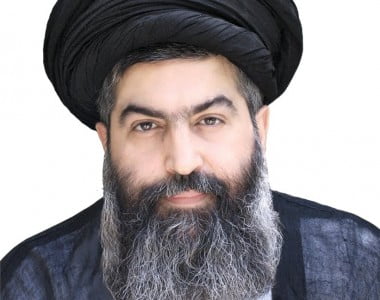
Kazemeyni Borujerdi is transferred to the solitary

0

Hossein Kazemeyni Borujerdi, the political prisoner of the Evin prison has been transferred to the solitaries of this prison.

The security agents of the Evin prison have forced Mr. Kazemeyni Borujerdi the prisoner of the clergy section of this prison to go the solitaries.

According to the human rights and democracy website he has been transferred to the solitaries because of a massage of him in which he wanted the people not to take part in the elections.

This political prisoner who was prevented from even medical vacation in the last 7 years is suffering from heart disease, Parkinson, diabetes, kidney disease, joints pain and poor eyesight.

Source: HRANA

Shiva Nazarahari returned to prison

Shiva Nazarahari, human rights activist, founder and former head of Committee of Human Rights Reporters, returned to Evin prison today May 2, 2013.

Nazarahari who had not requested prison leave was arbitrarily granted a second furlough on May 1st (mother’s day). She was contacted by personnel from the judicial authority and required to present herself back at Evin prison today.

This member of CHRR was first granted temporary release on March 13 for the Nowruz holidays after enduring 184 days behind bars without furlough. She returned to Evin prison after one month.

On December 20, 2009, Shiva Nazarahri was arrested while she was on a bus with other activists intending to attend the funeral of the late dissident cleric Ayatollah Montazeri. She was handed a 4-year prison sentence and 74 lashes on the charges of “moharebeh” (enmity with God), “propaganda against the regime,” and “illegal gathering with the intent of disturbing national security.” She turned herself in at Evin prison to serve her prison sentence on September 8, 2012.

In the past days, a number of political prisoners who had been on furlough were summoned back to prison. Bahare Hedayat, women’s and student rights activist turned herself in at Evin prison to serve the remaining of her 9.5-year prison sentence. Journalists Masoud Bastani and Bahman Amouie were summoned back to Rajai Shahr prison and ordered to present themselves at the facility tomorrow. Both of their spouses, journalists Mahsa Amrabadi and Jila Baniyaghoub are held behind bars at Evin prison.

Unconfirmed reports indicate that all political prisoners who were on furlough have been summoned to return to prison. Ahmad Zeidabadi and Mehdi Mahmoudian are among those handed a summons by the judiciary with an order to return to prison in the next few days.

Source: CHRR

Assessment of candidates by opposition leaders claimed false

The families of Iranian opposition leaders under house arrest announced today that statements attributed to their parents in the media is false and that MirHosein Mousavi and Mehdi Karroubi have not made any assessments of the coming election.

Mousavi and Karroubi, candidates in the 2009 presidential elections, have been under house arrest since February of 2011. The two and Zahra Rahnavard who is also under house arrest with her husband MirHosein Mousavi are completely cut off from the outside world and not allowed to communicate with the public.

The families report: “With the limitations and severe security restrictions imposed on them, they have not been able to make any statements about the coming election.”

The message urged the public to only look at “reliable and trustworthy media outlets” for news of the opposition leaders.

In recent  days a number of Iranian media outlets including Mashregh News website and Mehr News Agency have published a number of statements attributed to MirHosein Mousavi. The two websites have claimed that according to Mousavi “bringing Hashemi Rafsanjani to the election scene is the regime’s game” aiming at convincing the public to return to the election process and forget allegations that the 2009 elections were fraudulent.

Mashregh News has written however that Karroubi has supported the candidacy of Hashemi and called for his support in the election.

Ayatollah Hashemi Rafsanjani supported the allegation of fraud in the 2009 elections calling for a recount of the votes. However, his siding with election protesters earned him the fury of the Supreme Leader Ayatollah Khamenei who gradually sidelined him from the political scene.

Hashemi’s candidacy has yet to be approved by the hardliners in the Guardian Council.

Source: Radiozamaneh

Ghasem Shole Sadi is summoned to the intelligence

0

Dr. Ghasem Shole Sadi, one of the candidates of the presidential elections has been summoned to the intelligence.

According to a report, one night after meeting with some journalists and reformist youth and talking with them about the situation in Iran, Ghasem Shole Sadi has been summoned to be in the intelligence office in Araqi street.

Dr. Ghasem Shole Sadi has registered in the elections as an independent candidate.

He had been tried charged with “insulting the Supreme Leader” and “Propaganda against the government” through publishing a letter in 2002 and was in the prison for a while.

Source: HRANA

Iran-based hackers traced to cyber attack on U.S. company

A previously unknown hacking group believed to be based in Iran has started cyber attacks inside the U.S., according to Mandiant Corp., a security company that’s linked China’s army to similar activity.

The Iranian group emerged within the last six months and has infiltrated the networks of at least one U.S. corporation, Richard Bejtlich, Mandiant’s chief security officer, said in an interview in Washington today.

“You’re starting to see the Iranians get more active,” Bejtlich said. “We’ve got at least one case where we think it’s Iran, and we think what they are doing is trying to gain some experience on a live network.”

Bejtlich’s observation backs assertions by U.S. politicians including Representative Mike Rogers, a Michigan Republican and chairman of the House Intelligence Committee, that Iranian groups are behind recent cyber attacks.

Closely held Mandiant, based in Alexandria, Virginia, released a report in February concluding China’s People’s Liberation Army may be behind the hacking of at least 141 companies worldwide since 2006.

Mandiant is investigating the new group’s tactics and hasn’t concluded it’s backed by Iran’s government, Bejtlich said. “We don’t know if it’s the government,” he said. “We don’t know if they’re patriotic hackers.”

The group’s motivation isn’t clear, and Bejtlich wouldn’t name the U.S. company that has been infiltrated or what industry is involved.

“We haven’t seen these guys before,” Bejtlich said. “They are working their way through a network trying to figure out where can they go; who will find them; who will stop them.”

Growing Threat

Allegations that the Iranian government is behind cyber attacks are “baseless,” Alireza Miryusefi, a spokesman for the country, said in an e-mailed statement. Iran has been repeatedly targeted in hacking attacks sponsored by other governments and wants an international legal framework to address issues surrounding cyber warfare, he said.

Mandiant tracks about two dozen groups considered to be the most aggressive attackers, known as advanced persistent threats. The majority of the groups are based in China while others are Russian or Eastern European, Bejtlich said.

Bejtlich said he is increasingly worried about cyber attacks escalating from espionage to sabotage, or the destruction of computer systems.

Persistent Attacks

“No one’s been talking about that previously,” he said. “What I worry about is that someone’s going to make a decision to do that and either not think through the consequences or understand the consequences, or even care about the consequences.”

The House has passed legislation, H.R. 624, that would encourage information sharing about threats between the government and private sector.

Bejtlich said information sharing alone won’t stop cyber attacks. The group in China identified in Mandiant’s February report continues its attacks, for example, he said.

“There are plenty of sites that are still being attacked by the same group using the same methods and the same infrastructure,” Bejtlich said. “It’s clear that even when you make information completely free and just available for download, it’s not going to solve the world’s problems.”

He said legislation is needed clarifying that companies can protect their networks from attacks, and businesses need to remain vigilant.

“We respond to companies that are armed like Fort Knox and it didn’t make a difference,” he said. “If you’re a sufficiently juicy target, they will find their way in no matter what you have.”

Source: Inside of Iran

Stuxnet worm ‘increased’ Iran’s nuclear potential

0

Iran’s nuclear potential may have been significantly increased by the Stuxnet worm that is believed to have infected the country’s uranium enrichment facility at Natanz in 2009 and 2010, new research claims.

The report, published in the Royal United Services Institute (RUSI) journal, claims the Stuxnet worm exposed vulnerabilities in Iranian enrichment facilities that would otherwise have gone unnoticed, and that production actually went up in the year after it was allegedly discovered.

Furthermore, the impression in the West that Natanz was under attack left the Iranians to “progress quietly” with enriching more uranium, hindering diplomatic solutions to reducing the threat of a nuclear Iran.

In an analysis of data collected by the International Atomic Energy Agency (IAEA), Ivanka Barzashka, an academic at King’s College, London, argues that Iran has regrouped and improved centrifuge performance and has started enriching uranium to higher concentrations than before.

Furthermore, since August 2010 the number of operating machines has been “steadily growing” at Natanz.

The Stuxnet worm, which allegedly attacked the Natanz plant by altering the frequency at which motors connected to gas centrifuges that separate uranium isotopes turn, formed part of a wave of digital attacks on the country in 2009 and 2010.

Iran decommissioned and replaced about 1,000 IR-1 centrifuges in the Fuel Enrichment Plant (FEP) at Natanz, late in 2009 or early in 2010.

Barzashka writes that Iran’s ability to successfully operate new machines “was not hindered” and that “Stuxnet’s effects have not simply ‘worn off’.”

“Iran’s uranium-enrichment capacity increased and, consequently, so did its nuclear-weapons potential,” she says.

“Stuxnet was of net benefit to Iran if, indeed, its government wants to build a bomb or increase its nuclear-weapons potential.

“The malware – if it did in fact infiltrate Natanz – has made the Iranians more cautious about protecting their nuclear facilities,” she adds.

Former Foreign Secretary Sir Malcolm Rifkind criticised the report, emphasising that bilateral talks between the US and Iran were the only way to curb Iranian nuclear ambition.

Sir Malcolm, who currently serves as Chairman of the Intelligence and Security Committee, which oversees Britain’s cybersecurity strategy, toldThe Daily Telegraph: “What is undoubted is that it [Stuxnet] significantly slowed down the enrichment process.

“Part of the objective of many people in the international community has been to stop, or if you can’t stop, to slow down the Iranian nuclear programme.

“In so far as Stuxnet may have done that, and I emphasise may have done that, it was a plus.

“The most important diplomatic initiative on the table is the offer by the President of the United States for a direct bilateral discussion between the United States and Iran.”

Source: Telegraph

More pressure on Evin political prisoners

Following the recent protests of the prisoners, there is more pressure been put on the prisoners of section 350 of Evin prison.

According to a report, after the protests of the political prisoners in the section 350 of Evin prison which resulted transfer of 10 of them to solitaries for 10 days, an intelligence agent who has introduced himself as “Abbasi” is in this section some days during each week, calling the prisoners and threatening them not to participate in any kind of protest.

A relative of one of these prisoners said to HRANA: “One the ways to put pressure on the prisoners is to prevent them from any medical treatment. Some prisoners suffering from this are: Nasour Naghi Pour, Mohammad Saemi, Mohsen Danesh Pour Moghadam, Abdollah Momeni, Asghar Ghatan, Asadollah Hadi, Gholam Reza Khosravi, Ali Moezzi, Said Abedini etc.”

“The doctors of the prison are ordered not to recommend any kind of treatment which is needed out of the prison and just give some simple medicines to the prisoners.”

Source: HRANA

Nigeria Convicts Iranian Of Arms Smuggling

Acourt in Nigeria has sentenced an alleged member of Iran’s Islamic Revolutionary Guards Corps to five years in prison for arms smuggling.

The Lagos court handed down the sentence on May 13 to Iranian citizen Azim Aghajani and his Nigerian accomplice, Ali Abbas Jega.

The two men were detained in 2010 at the Lagos port after officials found that 13 containers labeled as construction materials actually contained mortars, rifle ammunition, and other weaponry.

Aghajani was added to a UN blacklist last year as a Revolutionary Guards member tied to Iranian support for terrorism.

He has also been listed by the United States. Aghajani denies any association with the Revolutionary Guards and insists he was in Nigeria as a private businessman.

Two opposition activists detained in Behbahan

Two political activists have been detained in the southern city of Behbahan.

According to opposition site Kaleme, Javad Abu-Ali and Mohammad Danaei were arrested on 25 April and 9 May respectively. The charges against the men and their place of detention are still unclear.

Javad Abu-Ali had previously been imprisoned for “propaganda” against the state.

Source: Irangreenvoice

Political Prisoner Transferred to Undisclosed Location

Habibollah Golparipour, a Kurdish political prisoner on death row, was summoned by the Semnan Central Prison officials on May 9 and informed that he must prepare himself for transfer to an undisclosed location, a local source told the International Campaign for Human Rights in Iran. Golparipour was not informed of the reason for his transfer. The source told the Campaign that considering the political prisoner’s death sentence has been finalized by the Supreme Court, there is concern that his sentence may be carried out imminently.

In an interview with the Campaign, a member of Golparipour’s family confirmed this news and added that Habibollah Golparipour called his family on May 9 and told them during the short telephone call from Semnan Central Prison that he must prepare his belongings and prepare for transfer on Friday, May 10.

The political prisoner’s family told the Campaign that Golparipour did not know the reason for the transfer nor the location, and their attempts to find information about his status on Friday were unfruitful. His family are unable to travel the long distance between their residence of Sanandaj in Kurdistan Province and his location in Semnan.

Mahabad IRGC Intelligence forces arrested Habibollah Golparipour on September 27, 2007, just outside Mahabad and imprisoned him at security detention centers in Mahabad, Orumiyeh, and Sanandaj. Sources close to his family told the Campaign that while in detention, he was “subjected to the most severe physical and psychological torture, to the point where his arm and leg were broken under torture.” The prisoner was then transferred to Mahabad Prison and sentenced to death by Branch One of Mahabad Revolutionary Court on March 14, 2010, in a minutes-long trial on charges of “membership in PJAK,” the Party of Free Life of Kurdistan. Golparipour embarked on a 15-day hunger strike on May 12, 2010, to protest his death sentence. However, Branch 31 of the Supreme Court upheld his death sentence.

In an open letter in March 2012, Habibollah Golparipour wrote about the psychological and physical torture he endured in the Intelligence Office detention centers in Orumiyeh and Mahabad. “In my long-term detentions and physical and psychological torture, I almost died. I filed a grievance explaining the details and sent it to various government organizations, but in this country, our voices don’t even pass through our prison cells, let alone finding an audience,” Golparipour wrote.

According to sources close to Habibollah Golparipour, he was transferred to the Central Prison of Orumiyeh on December 3, 2010, and on March 15, 2012, he was abruptly transferred from Orumiyeh Prison to the Central Prison of Semnan, where he has been kept among regular prisoners.

Source: Iranhumanrights