Home Blog Page 381

Concern grows for missing jailed activist

An opposition website reports concerns over the whereabouts of jailed student activist Zia Nabavi, who after being summoned to court last Tuesday was not returned to his cell.

The Kaleme website reports that Zia Nabavi was taken to court from Ahvaz Prison, where he is serving a 10-year prison sentence, and he has not been returned to prison since. The report indicates that he is possibly being held in solitary confinement at the Intelligence Ministry office.

Nabavi was sentenced to 10 years in prison by the court for “cooperation with the People’s Mojahedin Organization”, an outlawed dissident group. Nabavi has denied the charge.

The report goes on to add: “In the course of [Nabavi’s] transfer, all of his belongings in jail were searched and some of his writings were confiscated.”

Kaleme adds: “One of the latest writings of Zia Nabavi involves a critical view of the death sentence issued for the peaceful Arab activist Mohammadali Amouri, which could possibly be related to the transfer of the student activist from Ahvaz Revolutionary Court to the Intelligence Ministry office.”

The Iranian judiciary has sentenced Mohammadali Amouri to death together with another four prisoners. They are all members of a cultural organization that goes by the name of Al-Havar (Dialogue) and they were arrested in February of 2011.

Human rights groups claim that the five prisoners were tortured for months under the supervision of the Intelligence Ministry and were finally sentenced to “enmity against God and terrorist activities.”

They have all denied the charges in court and announced that the confessions extracted from them were given under duress and torture.

Source: Radiozamaneh

EU to expand sanctions on Iran over human rights abuses

European governments will impose sanctions next week on nine Iranian officials and other people they blame for human rights violations in the Islamic Republic, EU diplomats said on Thursday.

The United Nations reported last week that Iran has stepped up executions of prisoners including juveniles as well as arrests of dissidents who are often tortured in jail, sometimes to death.

The new EU sanctions are separate from measures imposed on Iran over its nuclear programme which governments in the EU and elsewhere suspect has a covert military dimension.

They extend existing EU measures imposed in the past over human rights violations, which currently target 78 people, including officials such as the head of Iran’s judiciary Sadeq Larijani and the head of the state broadcasting network, Ezzatollah Zarghami.

Foreign ministers of EU governments will give their final approval to the new list on Monday and names will be made public on Tuesday.

The U.N. has listed cases such the house arrest of opposition leaders Mehdi Karoubi and Mir Hossein Mousavi it said were among hundreds of political prisoners held for exercising their right to freedom of expression during protests over alleged fraud in the re-election of President Mahmoud Ahmadinejad in 2009.

Source: Insideofiran

Grieving mother threatens public suicide if justice denied

0

The mother of Sattar Beheshti, the Iranian blogger who was pronounced dead five days after his arrest by the Iranian Cyber Police, has threatened to commit suicide in public if the authorities don’t start proceedings against those responsible for her son’s death.

Gohar Eshghi said in an interview with Saham News, published on Wednesday March 6: “I want justice, nothing else. I urge all human rights bodies, the United Nations and, most important of all, the Iranian government to make every effort to make sure the court proceedings in the case of the unjust murder of my son is public, and I am announcing now that if my request is not heeded, I will commit suicide in front of the court building.”

Sattar Beheshti was arrested last October and died after five days of torture and abuse by the Cyber Police.

Gohar Eshghi stressed that there are no developments in the case of her son’s death, adding that the authorities have given her a six-month time frame. The victim’s mother said, however, that she is worried by delays in the case.

“They keep telling us not to give interviews and that those who are outside the country will not do anything for us, they are only after their own interests,” Eshghi explained: “I was silent for some time but I have now decided that I will not sit down and let it pass. I will not remain silent.”

Eshghi reported that she has been offered blood money for her son but she has refused it, emphasizing that she wants to see the perpetrators of her son’s death tried in an open and legitimate court.

The death of Sattar Beheshti aroused public outrage, which led to the dismissal of the head of the Tehran Cyber Police for “failure in adequate supervision.”

The head of the judiciary, Ayatollah Sadegh Larijani, has recently issued a directive forbidding security forces from having their own detention centres, stressing that all detention centres must be under the supervision of the Prisons Organization. The directive appears to have been a reaction to what happened to Sattar Beheshti.

Source: Insideofiran

Press Crackdown Continues: 3 Publications Banned, 3 Journalists Arrested

Continuing the latest crackdown on journalists that began on January 26, Iranian officials banned three publications in Tehran today and arrested three more journalists this week. No official charges have been issued against the journalists or the publications.

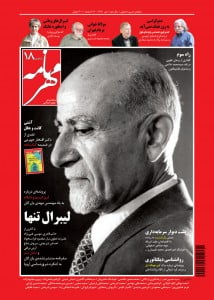
Today, March 6, Iranian officials banned Aseman weekly, Tajrobeh monthly, and Mehrnameh monthly, and security forces entered the Maghreb Newspaper offices and arrested the newspaper’s license holder Mohammad Mehdi Emam Naseri and political desk editor Alireza Aghaee Rad. Earlier this week, on March 3, security forces arrested an editor at the social science monthly magazine Mehrnameh, Mohammad Javad Rouh.

With three months to go before the 2013 presidential election, the Iranian press has been facing immense pressure. At a meeting of the Isfahan Friday Imams on Monday, March 14, Iran’s Intelligence Minister Heydar Moslehi said that the recent arrests are related to the upcoming elections. “Our aim is to prevent the emergence of a sedition prior to the elections,” he said. Heydar Moslehi stated that there are some 600 Iranian journalists, 150 inside Iran, who are “puppets of the arrogant powers,” and the Intelligence Ministry has been able to deal a blow to this group by arresting some of them. According to Moslehi’s presented statistics and analysis, there are still 132 journalists inside Iran who are considered “puppets of the arrogant powers.”

Amir Mousa Kazemi, editor-in-chief of Maghreb Newspaper, told the conservative Tasnim News Agency that the security forces representing the Prosecutor’s Office, “did not state any reasons for the arrests of the license holder and the political desk editor of the newspaper.” Several hours after the incident, Kazemi also told Tasnim, “Several members of the Prosecutor’s Office are still present at the newspaper’s offices.”

Ali Motahari, a Member of Parliament and a member of the Press Supervisory Board, told ISNA that he knew nothing about the publication closures, adding, “The closures must have taken place via direct orders from the Prosecutor’s Office.”

“When an evident crime has taken place, the Prosecutor’s Office can directly take action to ban publications, though we had asked them, to the extent possible, to enter [such situations] through the [Press] Supervisory Board, and that the rulings be issued this way [through the Board],” Motahari said.

In a statement on January 30, the Iranian Intelligence Ministry announced that the arrested journalists were spies and affiliates of the BBC news network and promised further arrests. In its third communiqué about the recent round of arrest, the Ministry claimed on February 19, “Several identified members of the network requested to share and publish their information and experiences about the network, in order to forewarn others.” This claim raised concerns among other journalists and the families of those arrested that the detainees may be under pressure to issue forced confessions.

On January 26, two journalists, Soleiman Mohammadi and Milad Fadi Asl, were arrested. The next day, a Sunday now widely referred to as “The Black Sunday” among journalists, security forces raided the offices of five publications, Shargh, Bahar, Arman, and Etemad newspapers and Aseman Weekly, and arrested nine other journalists. The mass arrests continued into the following days, and security forces are still arresting journalists.

The names of the journalists arrested and released on bail so far are: Motahareh Shafiee, Ali Dehghan, Fatemeh Sagharchi, Javad Daliri, Hossein Haghchi, Keyvan Mehregan, Narges Joudaki, Akbar Montajebi, Rayhaneh Tabatabaee, Milad Fadai Asl, Pouria Alami, Pejman Mousavi, and Soleiman Mohammadi. Yesterday three more journalists, Nasrin Takhayori, Sasan Aghaee, and Saba Azarpeik, were released. Some of the arrested journalists, including Hossein Yaghchi, Akbar Montajebi, and Mohammad Javad Rouh, were active in the publications banned today.

Ehsan Mazandarani, Mohammad Javad Rouh, Mohammad Mehdi Emam Naseri, and Alireza Aghaee Rad remain in detention at this time.

Though the Intelligence Ministry has claimed the journalists are spies, the Judicial authorities have yet to enumerate any charges. It also remains unclear how the judicial cases will be prosecuted.

Source: Iranhumanrights

US accuses Iran of nuke ‘deception and delay’

0

A senior U.S. envoy accused Iran of “deception, defiance and delay” Wednesday in dealing with international concerns about its nuclear program, reflecting frustration over Tehran’s expanding uranium enrichment program and stalled U.N. attempts to determine whether Tehran has worked secretly on nuclear arms.

Joseph Macmanus, the chief U.S. delegate to the International Atomic Energy Agency, also suggested that the U.S. might push for tougher diplomatic action in the coming months.

While not going into details, his comments indicated that America might lobby the IAEA board to ask for a special inspection of Parcin, a facility that the agency suspects was used to test explosive triggers for a nuclear weapon, or that the United States would seek an IAEA resolution critical of Tehran.

International criticism of Iran has been relatively muted since last week’s nuclear talks in which Tehran showed interest in proposals made by the United States and five other world powers. While expressing concern about enrichment and the deadlocked probe, the six powers avoided tough language and mentioned the “useful meetings” that produced the proposals in a joint statement Tuesday to the 35-nation International Atomic Energy Agency board.

By contrast, the comments Wednesday to the same meeting by Macmanus were unusually hard edged, suggesting they were meant to signal that pressure on Iran over its nuclear activities would not diminish.

Without having to pay heed to Russia and China — countries in the six-power group that are traditionally softer on Iran than Washington — Macmanus concentrated on expressing the U.S. view of Iran’s alleged failure to meet its international obligations and diminish concerns that it wants nuclear weapons.

Iran denies any such aspirations. But it hid its enrichment program for years and is rapidly expanding it, prompting suspicions that it was less interested in using it to make reactor fuel and more in its other use — producing fissile warhead material.

The IAEA also suspects that Tehran worked secretly on nuclear weapons, basing its assessment mostly on intelligence from the U.S., Israel and West European nations. Tehran says the intelligence is faked and refuses to allow the IAEA to resume a probe of the allegations until details of how that should proceed are worked out — a stipulation the West dismisses as a delaying tactic.

Repeating that his country had no interest in nuclear weapons, Iran’s chief delegate, Ali Asghar Soltanieh, told reporters that IAEA chief Yukiya Amano was to blame for Iran-related tensions at the agency by issuing reports that “provoke” member states through allegations that his country denies. As for lack of progress in reopening the agency’s probe, “the source of the problem is not Iran” but the IAEA, he told reporters.

Amano was likely to be approved by the board for a second four-year term on Wednesday. Asked about his views on Amano’s handling of Iran’s nuclear file, Soltanieh criticized his “political approach,” adding: “there have been some ups and downs.”

Macmanus, in comments to the closed meeting made available to media, focused on both Iran’s expanding enrichment program and refusal to allow IAEA experts access to sites, officials and documents it wants to probe in its investigations of Parcin and other suspicions of nuclear weapons work.

“We are deeply concerned with what appears to be Iran’s unwavering commitment to deception defiance and delay,” he said. “Iran … has chosen to take further provocative actions.”

Asked about possible requests for a special inspection or an IAEA board resolution in the future, he later told reporters that “some adjustment might have to be made” in ways to address concerns about Iran, adding that will be taken up by the board “over the next several months.”

Iran can refuse a special inspection but that would set it up for referral to the U.N. Security Council. Like others before it, a resolution critical of Iran also would go automatically to the council, adding diplomatic pressure on Tehran.

Diplomats say the proposal made to Iran late last month by the United States, Russia, China, Britain, France and Germany, would obligate Iran to decommission its centrifuge plant at Fordo now making higher-enriched uranium and ship out the approximately 165 kilograms (about 365 pounds) it now has as well as allowing increased U.N. oversight.

With no such material stored and none being made, Iran’s most direct path to quick manufacture of weapons-grade uranium would be eliminated — about 250 kilograms of higher-enriched uranium are needed to be able to have enough material for one nuclear bomb with further enrichment .

In return, the six are offering to help supply and run Iran’s research reactor which is fueled by plates made from higher enriched uranium, coupled with what Iran wants most — relief from sanctions meant to penalize Iran for refusing to heed U.N. Security Council demands to stop all enrichment.

Source: Insideofiran

Concerns grow for life of political prisoner sentenced to death

0

Hooshang Rezaei was transferred from Rajaei Shahr prison to an unknown location, and there is concern that he will be executed. Rezaei was sentenced to death on charges of collaborating with the Kurdish Kumala party in a trial in which he was not allowed to receive legal defense. Rezai was only recently transferred to Rajaei Shahr Prison after six months of solitary confinement.

Source: Iran Daily Brief

Kurdish Prisoner Sentenced for Contacting Foreign Media and UN

A Kurdish prisoner charged with contacting foreign media and the office of the United Nations Special Rapporteur for human rights in Iran has been sentenced to one year in prison in Orumiyeh, a local human rights activist told the International Campaign for Human Rights in Iran. Ali Ahmad Soleiman and four other prisoners were transferred from Orumiyeh Central Prison to the city’s Intelligence Office Detention Center in October 2012.

According to the human rights activist, Ali Ahmad Soleiman was transferred to the Orumiyeh Revolutionary Court earlier this month, where he was put on trial. Last week, ten days after his trial, he was informed that Branch One of Orumiyeh Revolutionary Court had sentenced him to one year in prison. “Without referring to any evidence for this charge, the Revolutionary Court announced its verdict, referring only to his prior record, that in June 2011 Judge Chabok of Branch One of Orumiyeh Revolutionary Court had sentenced him to six months in prison on charges of ‘propaganda against the regime through providing false news to foreign media and human rights organizations,’” the source told the Campaign.

“Five Kurdish political prisoners by the names of Ahmad Tamouee, Yousef Kakeh Meimi, Jahangir Badouzadeh, Ali Ahmad Soleiman, and Mostafa Ali Ahmad, who were transferred from the Orumiyeh Central Prison to the city’s Intelligence Office Detention Center on October 11, 2012, where interrogated and tortured in prison for two months on charges of ‘contact with foreign media and the office of the UN Special Rapporteur,’ and ‘propaganda against the regime.’ On December 11, 2012, Ahmad Tamouee was exiled to Rajaee Shahr Prison in Karaj and the other four prisoners were returned to the Orumiyeh Prison. All five prisoners had been questioned and informed of their charges by Branch of the Orumiyeh Revolutionary Court,” the local activist said.

“Ali Ahmad Soleiman, a Kurdish citizen of Iraq, was arrested in the fall of 2005 in the border region of Targehvar outside of Orumiyeh. He was kept for several months inside the IRGC’s [Islamic Revolutionary Guard Corps] detention center, where he was intensely interrogated and occasionally beaten. Later, Branch One of Orumiyeh Revolutionary Court under Judge Darvishi sentenced him to five years in prison on charges of ‘membership in PJAK [Party of Free Life of Kurdistan]’ and to six months in prison for illegal entry into the country,” the source added.

“The political prisoner has been deprived of phone calls and visits with his family throughout his detention. Over the past several years, he was frequently transferred to the Intelligence Office’s Information Unit detention center, and put under physical pressure to cooperate and provide television confessions. After he finished his prison term in 2011, the Intelligence Ministry prevented his release, claiming he still had an open case. Over the past year, he was summoned to court twice, where the Orumiyeh Prosecutor informed him that his 2005 sentence was insufficient and a request for a retrial and a new ruling for him on the same charge of ‘membership in PJAK,’ had been submitted,” said the source.

Source: Iranhumanrights

Iranian actors banned from leaving Iran

0

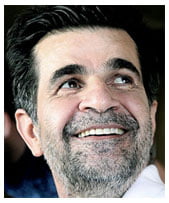
Iranian actors who performed in Jafar Panahi’s film Closed Curtain, Kambozia Partovi and Maryam Moghadam, were prohibited from leaving Iran. The restriction was imposed on the two following their return from Berlin, and they will no longer be allowed to travel overseas to promote the film or to represent the film at international festivals. Closed Curtain is the most recent film made by well-known director Jafar Panahi. Despite its not having been approved by the Ministry of Guidance, the film won the Silver Bear at the Berlin Festival.

Source: Iran Daily Brief

New commander of Khatam al-Anbia

IRGC Commander Mohammad Ali Jafari appointed Ebadollah Abdollahi as Commander of Khatam al-Anbia Construction Headquarters to replace Abolqasem Mozaffari. Khatam al-Anbia, also referred to as GHORB, is the IRGC’s major engineering arm and one of Iran’s largest contractors in industrial and key development projects.

Source: Iran Daily Brief

Journalist MohammadJavad Rouh Arrested

MohammadJavad Rouh, a staff editor at the Mehrnameh monthly magazine, was arrested by Iranian authorities at his home on Sunday March 4.

In the past month, the Intelligence Ministry has ordered the arrest of close to 20 journalists. While some have been released on bail, others remain in custody.

The Intelligence Ministry has announced that it has uncovered a network of anti-regime reporters and journalists whose “central nucleus” is abroad, working in collaboration with Persian-language media based outside Iran.

MohammadJavad Rouh is a former member of the Association for the Defence of Prisoner Rights and the Islamic Iran Participation Front. He has worked with the Iranian Labour News Agency as well as the reformist dailies Norooz and Yas-e No.

The Intelligence Ministry had announced that in the course of its investigations it may arrest more journalists.

Human rights groups have condemned the wave of journalist arrests in Iran. Even Ali Motahari, a conservative MP, has slammed the process, claiming that the sense of insecurity it causes among members of the press is not in the country’s best interests, especially ahead of the fast-approaching presidential elections.

Source: Radiozamaneh