Home Blog Page 446

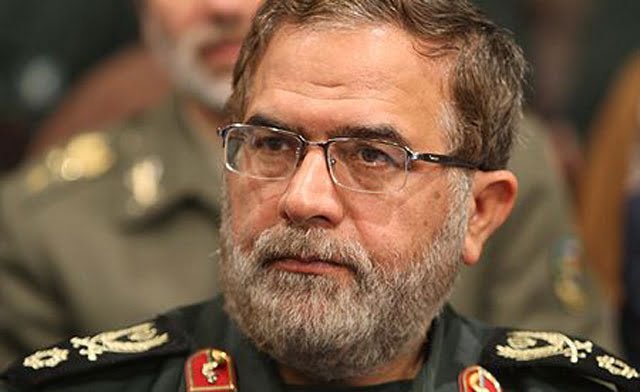
Military strike would be the end of Israel: Iranian general

0

A high-ranking Iranian general said on Saturday Israeli military action against Iran’s nuclear program would lead to the collapse of the Jewish state, Fars news agency reported.

Last week’s round of nuclear talks between Iran and world powers in Moscow failed to secure a breakthrough, heightening fears Israel might take unilateral military action to curb Iran’s nuclear activities.

The two sides agreed to a follow-up meeting of technical experts on July 3, saving the process from outright failure.

“They cannot do the slightest harm to the (Iranian) revolution and the system,” Brigadier General Mostafa Izadi, deputy chief of staff of Iran’s armed forces, told Fars.

“If the Zionist regime takes any (military) actions against Iran, it would result in the end of its labors,” he added.

“If they act logically, such threats amount to a psychological war but if they want to act illogically, it is they who will be destroyed.”

Izadi’s comments are an apparent response to Israeli Vice Prime Minister Shaul Mofaz’s calls for tougher sanctions against Tehran and his indication that military action was still an option.

Analysts say Iranian officials use such rhetoric as a way of stoking Western concerns of chaos in the Middle East and the disruption of oil supplies in the event of military action.

During negotiations in Moscow the six powers – the United States, China, Russia, France, Britain and Germany – demanded Iran scale back its nuclear work and, in particular, stop enriching uranium to levels that could bring it close to making an atom bomb.

The demands included the shutting down of the Fordow underground uranium enrichment facility and the shipping of any stockpile out of the country.

In return, they offered fuel to keep Iran’s medical isotope reactor running, assistance in nuclear safety and an end to a ban on spare parts for Iran’s ageing civilian aircraft.

Iran denies its work has any military purpose and says the powers should offer it relief from sanctions and acknowledge its right to enrich uranium before it meets their demands.

Source: Al-Arabiya

Gravely ill political prisoner denied hospitalization

According to Human Rights Activists News Agency (HRANA), Iranian authorities have denied imprisoned human rights activist Jafar Eghdami the right to hospitalization, even though his medical and judicial reports have been cleared.

Jafar Eghdami, who is currently held in hall 12 of Rajai Shahr prison and suffers from a rare neurological syndrome, is close to the point of the complete paralysis of his body. Even though the imprisoned human rights activist has acquired the necessary documents to allow a transfer to the hospital, prison authorities have stated that it would not be possible until *July 1.

Despite Eghdami’s harsh physical illness and the severe pain he endures, prison authorities will not allow a transfer to the hospital on the pretense that the hospital is unable to accommodate Eghdami due to a shortage of staff, equipment, and supplies.

On June 17, Jafar Eghdami was taken to Rasoul Akram hospital in Tehran for tests and treatment but Iranian authorities refused him entrance inside the building of the hospital. Eghdami’s current physical condition is so dire that he is usually unable to walk or perform personal tasks.

Jafar Eghdami is currently serving his second prison term; on the charge of participating in a ceremony at Khavaran cemetery dedicated to victims of the Iran mass executions of the 1980′s and reciting a poem at the ceremony. He was initially sentenced to five years in prison by the lower court but, in an unprecedented move, an appeals court increased Eghdami’s sentence to 10 years.

Source: Persian2English

Iran to build more ships, boost naval presence

The Iranian navy has announced plans to build more warships and increase its presence in international waters at a time of growing tension in the Middle East over Tehran’s nuclear programme.

Navy commander Rear Admiral Habibollah Sayyari said the deployments would protect Iranian cargo ships around the world, in particular in the Gulf of Aden and the northern part of the Indian Ocean, according to state news agency IRNA.

The navy wanted to guard Iranian ships from Somali pirates, the report said.

IRNA did not mention Israel although the Jewish state has hinted it might take military action against Iran’s nuclear programme.

An Israeli official repeated the veiled threat on Wednesday following the failure of the latest round of international talks to make progress on the issue.

State-owned Press TV quoted Sayyari as saying: “Our presence in international waters is aimed at safeguarding the interests of the Islamic Republic and strengthening military power to defend Iran.”

“So we will multiply our efforts to enhance our military might and have a presence in international waters,” he said.

The navy’s deputy chief for technical affairs said the force planned to build 10 more vessels, including destroyers and missile-launching frigates, Press TV said.

Work on building the ships would start after construction of “Velayat” a Mowj-2 class destroyer is completed. That is due at the end of the Iranian calendar year next March.

Iranian military officials often assert their military strength in the region, particularly in the Strait of Hormuz, the world’s most important oil transit channel carrying supplies from Gulf producers to the West.

Tehran has previously threatened to block the waterway if attacked.

Two Iranian warships entered the Mediterannean through the Suez Canal in February 2011 for the first time, and naval vessels also called at a Syrian naval base this February in a show of support for its ally President Bashar al-Assad.

Source: Reuters

Female Kurdish Prisoner sentenced to 15 years

A local source told the International Campaign for Human Rights in Iran that Branch One of Sanandaj Revolutionary Court under Judge Babaei has sentenced Safieh Sadeghi, 23, a resident of Salmas, to 15 years in prison on charges of “moharebeh” (enmity with God) through membership in the opposition PJAK group.

According to the human rights source, security forces from Sanandaj Intelligence Office arrested Safieh Sadeghi in November 2010. She was transferred to the Intelligence Ministry’s Detention Center in Sanandaj, where she was interrogated for 4.5 months. Sadeghi was denied telephone calls or visitation with her family, and she was kept in solitary cells in order to extract confessions from her. The source further reported that for the first few days after her arrest, Safieh Sadeghi was severely beaten.

The source also told the Campaign that this political prisoner was deprived from selecting her own lawyer, and that her 15-year prison term was a result of a few minutes long court meeting at Branch One of Sanandaj Revolutionary Court. Safieh Sadeghi is currently inside the Sanandaj Women’s Prison.

Source: Iran Human Rights

Despite Shaky Evidence, Hamid Ghassemi Awaits Execution

In an interview with the International Campaign for Human Rights in Iran, sister of Hamid Ghassemi,a prisoner whose death sentence has been sent to the Judiciary’s Sentence Enforcement Unit, reported about her brother’s poor psychological state in prison. “Unfortunately, Hamid is really messed up psychologically. Any moment his sentence may be carried out and we have not been able to do anything effective for him. Hamid says that each time he hears the PA system in the ward, he thinks they are calling his name to go in for his execution. He is really stressed out and worried about his state of limbo. He keeps asking, ‘When will they hang me?’” said Parvin Ghassemi.

The death sentence of Hamid Ghassemi, who is accused of transferring army information to foreign states, was sent to the Sentence Enforcement Unit on 13 April. According to his family, his execution may be carried out at any moment. “No matter how hard we tried to meet with the Tehran Prosecutor or other judicial authorities during this time, it was futile. Our only reprieve is that with the media coverage of his execution sentence, everything has quieted down. But we can’t trust this silence, either,” Hamid Ghassemi’s sister told the Campaign.

Parvin Ghassemi told the Campaign that none of her brother’s charges are true, and that they are all products of his interrogator’s minds. “I would like to ask my country’s judicial authorities to review Hamid’s case one more time in a fair court. If they have any evidence against Hamid, to present it and then carry out his death sentence. By evidence I don’t mean what his interrogators have presented, basing the whole case on it. This evidence is a document that even certified specialists from the Judiciary refuse to validate,” she told the Campaign.

Hamid Ghassemi-Shall an Iranian and Canadian citizen, traveled to Iran to visit with his family on 8 May 2008. Security forces arrested his older brother, Alborz Ghassemi on He was arrested on 13 May 2008. Alborz Ghassemi was a training commander in the Iranian Army’s Naval Force. He had worked in the Army’s Naval Force for 29 years and, according to his family members, he was forced to retire under pressure from the Army’s Intelligence Unit. After his arrest, his brother Hamid Ghassemi visited the Army Intelligence Unit several times to inquire about his brother’s situation. On 14 June 2008, following one of his visits, Hamid Ghassemi was also arrested and transferred to prison.

Captain Alborz Ghassemi was sentenced to death on charges of “passing information to the Mujahedin-e Khalgh Organization.” A year later, on 19 May 2009, he became sick and died in prison. Hamid Ghassemi, 44, was also charged with “passing information to the Mojahedin-e Khalgh Organization,” and in February 2009, he was found guilty of “moharebeh” (enmity with God), and sentenced to death. During an in-person visit with his family on 14 April this year, he was served with papers that confirmed his death sentence has been forwarded to the Enforcement Unit.

Hamid Ghassemi’s sister told the Campaign that the only evidence presented to the court for his “passing information to the Mojahedin-e-Khalgh Organization” was a piece of A4 paper based upon which the death sentence was issued. “The only evidence and document presented at court for Hamid’s espionage was a sheet of paper on which the following line was printed: ‘Hello Dear Alborz. Please send the information for me.’ They court said that according to this paper, Hamid is accused of asking Alborz for information pertaining confidential Army information, which he then passed to foreigners. We requested expert evaluation of the document during the trial, but the court did not allow it. We then sought the opinions of two certified Judiciary experts ourselves, and both of them stated that because of certain signs, this document is not reliable and that this could never have been an email exchange between the two brothers. But they didn’t even accept their own experts’ opinion,” she said.

Ghassemi told the Campaign that her brother has rejected his charges during his entire interrogation and trial stages. “Hamid was under interrogation for six months. He spent 18 months in solitary confinement, but during none of these stages, not even once, did he say that he had taken information or passed it along to foreigners. He refuted these espionage charges in court, too. But in the trial session, even the Judge did not dare speak. The court was entirely under the influence of the case interrogators. The same interrogators who had accused him of espionage based on an A4 sheet of paper, demanding his execution.”

Parvin Ghassemi emphasized that neither one of her brothers were members of the Mojahedin-e Khalgh Organization. “I vehemently deny their membership. Hamid was in no way a member of the M.E.K. and he has not be affiliated with any political groups and has never had any political activities. I ask all those who can help me to do something to stop his execution sentence. There is no reliable document about his charges in his case,” she concluded.

Source: Inside of Iran

Kenyan police arrest Iranians suspected of terror plot

0

Kenyan police have arrested two Iranians on suspicion of planning terrorist attacks in concert with al-Shabaab, the extremist group based in southern Somalia.

One of the suspects led police to a large cache of chemicals on Friday that officers believe could have been used to make explosives. The material was hidden at a golf club in the port city of Mombasa.

A senior anti-terrorism officer told The Daily Telegraph that the two men “were planning to help al-Shabaab carry out revenge attacks in Kenya because of the Kenya Defence Forces’ incursion inside Somalia”. Security sources said the men were suspected of planning attacks in Mombasa or Nairobi.

Last year, Kenya launched a military operation across the border into Somalia to try and crush al-Shabaab, after a wave of kidnappings of foreigners had severely damaged the tourism industry.

Since then, a series of attacks has taken place in Kenyan cities. The latest – a large bomb that exploded in central Nairobi – wounded more than 30 people, one of whom later died.

Police arrested the Iranians on Wednesday in Nairobi, with an official accusing the men of having links to a “wider network of terrorists”, including al-Shabaab.

Who killed Iranian activist Gelareh Bagherzadeh?

Gelareh Bagherzadeh was a gregarious Iranian-born woman studying molecular genetics. She taught children to play the piano and volunteered at her church.

Why on earth would someone want to kill her?

That question has befuddled family, friends and police for five months, ever since Bagherzadeh, 30, was found in mid-January slumped over the steering wheel of her Nissan Altima steps from her home with a single gunshot wound to the head.

“It’s a unique case,” says Houston Police Sgt. J.C. Padilla, the lead investigator on the case. “It’s a senseless crime that happened to a young, intelligent female who had her future taken away from her. Someone out there knows what happened.”

The facts that nothing was stolen from her car and that Bagherzadeh was an outspoken activist against Iran’s Islamic theocracy, championed women’s rights in the Middle East and had recently converted from Islam to Christianity have spawned a host of theories about her murder (everything from an Iranian intelligence agency hit to claims of other foreign government involvement).

Police say they have found no evidence linking the killing to foreign assassins but are still investigating. In fact, they have no leads or suspects. Her family says that’s not enough, and they would like to see participation by federal investigators.

“We believe she was targeted,” says her father, Ebrahim Bagherzadeh. “Why or by whom? We don’t know.”

Last month, Crime Stoppers said it’s offering up to $200,000 for information leading to her killer’s arrest — the highest cash reward ever offered in the organization’s three-decade history amid a rush of private donations.

Thousands of murders go unsolved each year in the USA, and Bagherzadeh’s case has been added to a growing tally of such crimes that wreck families, orphan children and rattle communities from coast to coast. Indeed, of the 14,700 killings in the USA in 2010, 5,100 remain unsolved, according to FBI statistics. It’s the unique nature of this case — the Iranian connection, Bagherzadeh’s activist bent, what appears to be a calculated killing — that have made it resonate well beyond the confines of the nation’s fourth-largest city.

Bagherzadeh (Bah-GER-za-deh) moved from Tehran to Budapest, then, in 2007, to Houston to be near her parents and younger brother, Ali. Her father, a petroleum engineer and researcher who once worked for the government-run National Iranian Oil, had moved to Houston three years earlier to develop several of his patents, he says.

Bagherzadeh settled into her parents’ two-story townhouse off Augusta Drive in a well-to-do section of the city near the Galleria Mall. She volunteered as a Persian-language translator at Second Baptist Church near her parents’ home and spent time teaching children to play the piano, Ali Bagherzadeh, 27, says. She enrolled at the University of Texas MD Anderson Cancer Center, studying genetics. Fascinated by the TV shows CSI and 24, Bagherzadeh wanted to use her genetics training someday in a crime lab, her brother says.

“She always wanted to help people,” Ali says.

She was slated to graduate in August and had already found a job at a genetics research center in Northern Virginia to be near her older brother, Kaveh, who lives in Maryland, her father says. She yearned to live in the cooler climates and changing seasons of the Northeast.

The activist

Bagherzadeh had an activist’s streak. When Iranian presidential elections in 2009 were widely denounced as fraudulent and led to protests in Tehran and other Iranian cities in the “Green Revolution,” Bagherzadeh co-founded the activist group SabzHouston and organized street rallies across the city protesting the Iranian government.

In a videotaped interview with the Houston Chronicle during one protest in 2010, Bagherzadeh appeared on camera to discuss the turmoil in Iran, but she wouldn’t give her full name — identified only as “Gelareh” — “for fear of persecution,” as the reporter described it.

She flew to New York to meet with Iranian activists and wrote essays on her Facebook page denouncing the mistreatment of Iranian women, says Kathy Soltani, the co-founder of SabzHouston. At street rallies, Bagherzadeh’s voice was often the loudest, she says.

“She was very passionate about her Iranian roots and about what’s happening in Iran,” Soltani says.

Her mother, Monireh, says she worried that her daughter’s activism would land her on a watch list that would prevent her from returning to Iran. Her daughter shrugged it off. “There was no fear in her whatsoever,” Monireh says. “She would say, ‘I’m the voice of the youth in Iran.’ ”

In 2010, Soltani and Gelareh led a protest outside Houston’s Al-Hadi Mosque, denouncing the mosque’s alleged ties to the Iranian government. A year earlier, federal prosecutors had alleged a New York-based foundation with ties to the mosque was acting as a front for the Iranian government, according to court documents. No action was ever taken against the Al-Hadi mosque. Mosque officials did not return a request for comment for this story.

Dismayed at the oppression Islamic theocrats imposed in her home country, Bagherzadeh converted to Christianity last year at a ceremony at Second Baptist Church, Soltani says. (In Iran, converts from Islam to Christianity are often executed, she says.) Though Soltani says she thinks Bagherzadeh was targeted by someone, she finds it hard to believe Iranian agents would kill her rather than better-known activists. The lack of suspects or motive in the case has been excruciatingly frustrating, she says.

“It drives us all crazy,” Soltani says. “We can’t come up with any scenario that would explain why this would happen to her.”

On the evening of Jan. 15, Bagherzadeh drove to a classmate’s house in nearby Spring, Texas, to study. Her mother called her around 11:15 p.m. to ask her whereabouts. Bagherzadeh said she was on her way home. Usually bubbly and energetic, Gelareh sounded uncharacteristically calm, Monireh Bagherzadeh says.

Houston police received a call 30 minutes later of shots fired in the complex of the two-story townhouse where Bagherzadeh lived. Officers found her slumped over the steering wheel of her car outside a nearby garage door, the car’s front wheels still spinning, says Padilla, the investigator in the case. Her assailant fired four shots through the passenger-side window. One of them struck Bagherzadeh in the head, killing her instantly, he says. Her purse, jewelry, iPhone and wallet full of credit cards were left untouched in the car.

“Somebody was waiting for her,” Ebrahim Bagherzadeh says. “They had a plan for her.”

Iran’s track record

Foreign-sanctioned assassinations — or attempts — on U.S. soil are rare but do happen, says Juan Zarate, a senior adviser with the Washington-based Center for Strategic and International Studies and former deputy national security adviser under President George W. Bush. He says Iran has been implicated in a number of them, but he does not know all the details of the Houston case to suggest Iranian involvement.

The most recent case of Iranian espionage involves Manssor Arbabsiar, 56, a U.S. citizen living near Austin. In September, federal investigators arrested Arbabsiar — who had an Iranian passport — for allegedly plotting to kill the Saudi ambassador to the United States at a Washington-area restaurant. The criminal complaint named a co-defendant, Gholam Shakuri, allegedly a ranking member in Iran’s elite Revolutionary Guards Corps.

Zarate points out that in 1980, an American Muslim convert allegedly working on the orders of the Iranian government shot and killed Ali Akbar Tabatabaei, a former Iranian diplomat and dissident leader, at his home in Bethesda, Md. The gunman, Dawud Salahuddin, fled to Tehran where he lives today. He is wanted by U.S. authorities.

The Iranian Interests Section in Washington, which acts as the de facto Iranian embassy since the United States and Iran have no official ties, did not reply to a request for comment for this story.

“The Iranians are not shy in using political assassinations around the world to go after Iranian exiles and enemies,” Zarate says. “They’ve proven it throughout their history.”

Ordering the murder of a relatively low-level activist on U.S. soil while Iranian diplomats work to sway United Nations and U.S. officials to ease international sanctions defies logic, says Rasool Nafisi, a U.S.-based Iranian-American scholar who studies the Iranian Revolutionary Guards Corps, an elite paramilitary unit created to guard the regime. He says such a hit would be out of step with Iran’s usual way of doing things.

Nafisi says that although Bagherzadeh’s murder might have the markings of a targeted assassination, Iran — if it were so inclined — would pursue much more important dissidents in New York and Washington before going after her. “To come all the way to Houston to hit a girl who is outspoken is absolutely not the thing they do,” he says.

That hasn’t stopped conspiracy theorists from latching on to Bagherzadeh’s case, despite the fact that police have uncovered no evidence to buttress their claims.

Fred Burton, a senior vice president of private security analysts Stratfor Global Intelligence, told CNN.com in March that the fact that Bagherzadeh traveled frequently to Europe could have made her a target of Iranian intelligence. “The Iranian intelligence service has a very strong network, a very strong collection network in Paris specifically,” he told the news portal. “They are trying to keep tabs on their dissidents.”

Several bloggers have gone even further, floating theories straight from the pages of an international thriller rather than a police blotter.

‘Every morning … Why?’

A week after her death, Second Baptist Church held a memorial service for Bagherzadeh that drew several hundred visitors, Ebrahim Bagherzadeh says. She was buried in a cemetery near her brother’s home in Maryland, fulfilling her wish to be in the Northeast.

Since then, the family has plastered her Crime Stoppers fliers across neighborhood Starbucks and other locales, handed them out to motorists at intersections and created a website for her (www.onlyjustice.org), with directions on how to leave a tip. They’ve met with the mayor and the chief of police, who told the family that investigators are working tirelessly to find the killer.

Though they’re grateful for the work of Houston police, the family hopes federal agents will soon get involved. Special Agent Shauna Dunlap, a spokeswoman with the Houston branch of the FBI, said her office is monitoring the case but won’t get further involved until evidence points to a violation of federal laws. None of it has.

Whether Bagherzadeh’s killing was a botched robbery, a crime of passion or something more sinister, family members say they hope to find an answer soon so they can move on with their lives.

“Every morning, I look at the driveway where it happened and I think, ‘Why?’ ” Ali Bagherzadeh says. “She was just being a normal girl.”

Source: Inside of Iran

Death row political prisoner Yunes Aghayan is awaiting justice

0

Following the news published by some media outlets that Yunes Aghayan, a member of Iran’s Azerbaijani minority and an Ahl-e Haq follower, was executed, Iran Human Rights spoke to a close source to his family for confirmation. The source denied the news that the execution was carried out and insisted on Yunes Aghayan’s innocence. On Thursday, Yunes Aghayan, with his hands and feet shackled, was transferred from Orumiyeh prison to Mahabad prison. According to the source, a trial is set for tomorrow to review the case.

Yunes Aghayan and four others were arrested in 2004. In January 2005, Yunes Aghayan and Mehdi Qasemzadeh were sentenced to death by branch 2 of the Mahabad Revolutionary Court. They were charged with “Moharebeh” (waging war against God). The Supreme Court upheld their death sentences in April 2005. Mehdi Qasemzadeh was executed in February 2009.

According to an urgent action appeal published by Amnesty International in April 2009, Yunes Aghayan was arrested following “at least two clashes in September 2004 between members of a group of Ahl-e Haq members and police. The group had refused to take down religious slogans at the entrance to their cattle farm in Uch Tepe, West Azerbaijan Province. During the clashes, five Ahl-e Haq members and at least three members of the security forces were killed.”

The three other prisoners— Sahand Ali Mohammadi, Bakhshali Mohammadi, and Ebadollah Qasemzadeh— were also sentenced to death but their sentences were overturned by the Supreme Court in September 2007. The three men are currently serving 13-year prison sentences in exile in the Yazd province (central Iran).

Source: Iran Human Rights

Nasrin Sotoudeh vows to launch hunger strike if denied visitation with family

0

From the facebook of Reza Khandan, Nasrin Sotoudeh’s Husband:

We saw Nasrin yesterday at Evin prison from behind a cabin window. Nasrin was extremely angry about the fact that our request to have a face-to-face visitation with her has been repeatedly denied. She said that if her request for a face-to-face visitation with the children and her mother is once again denied next week, she will launch a hunger strike.

I tried to dissuade her but last night when Haniyeh Saneh Farshi– who has been granted a few days of furlough from Evin– explained to me how much pressure Nasrin has been under as a result of not seeing the children and her mother, I realized that– considering her circumstance– she has every right to make such a decision. Yet, [as her husband] I will continue to try to dissuade her if I can.

It has been 10 months since Nasrin’s ailing mother and brother have been banned from visiting her. And, as per the letter issued by the Prosecutor’s office to the visitation room at Evin prison, they remain banned from any visitation with Nasrin; even from behind a cabin window.

Though it is against the norm, our cabin visitation with Nasrin yesterday coincided with the visitation day for the men in Evin’s ward 350 [the general ward for political prisoners]. A number of the prison guards prevented the visiting family members and the other prisoners present from even waving hello to Nasrin; which turned the atmosphere in the visitation area into a heavily secured environment. Standard greetings between prisoners and their family members and loved ones have always been a normal occurrence on visitation days.

Dr. Ali Reza Rajai and one of Nasrin’s former co-workers, Dr. Ghasem Sholeh Sadi, were the only two political prisoners who managed to approach Nasrin and ask her how she was doing.

The family members witnessing the conditions in the visitation room asked in shock, ” Are your visitations always so brutally restricted and laced with such a heavy security atmosphere?”

Source: Persian 2 English

Iran’s brutal attack and arrest of many people from district of the Malashieh

Iranian Security forces, in Ahwaz southwest of Iran attacked the unarmed citizens of the Ahwazi Arabs in the district of the Malashieh and arrested 30 young men and took them to unknown places, after they staged a loud protest on 16th of Jun 2012 in condemnation of the execution against a group of youths from Malashieh Three of them  wrer brothers,namely Abbas Haidarian, Taha Haidarian and Abdarahman Haidarian who had been arrested in April 2011 after a massive demonstration called the Ahwazi Day of Anger.  The “Ahwazi Centre For Human Rights” received the names of a number of detainees and they are,

Nasser Bawie  27 years old son of Habib, married and has two children, Mansour Bawi 22 years old, son of Habib, Ismail Dahimi 23 years old, Rahim ben Haji Chanbar 38 years old, married and has 6 children, and we will continue investigating  the rest of the names.


On the other hand, the Iranian regime in the past few days, repeated commission of various forms of murder against the Arab people of Ahwaz, security elements killing in Sapidar prison prisoner Salem Sawri 28 years old son of Haidar on the last Thursday, 14/06/2012 during a protest of prisoners on the inhuman methods which taken by the security authorities of the prison for the ill-treatment of prisoners and spread news of the intention of  the prison administration in the implementation of the death sentence against 5 of Ahwazi political prisoners.

Later on Monday morning June 18, 2012 security forces carried implemented the execution against four of the political prisoners of Ahwazi Arabs, three of them wrer the brothers namely Abbas, Taha, Abdarahman and the fourth was their friend Ali Naimi (Sharifi).

The Iranian authorities in this criminal act, despite the appeals launched by the European Union and the British Parliament and Amnesty International to abolish the death penalty, issued against those Ahwazi Arabs, but the Iranian authorities secretly executed four or five of them, and there is possibility that executes the another group any later.

The European Parliament has condemned last week the ill-treatment of the Iranian regime against non-Persian peoples in Iran, led by the Arabs of Ahwaz and called the Iranian authorities to abolish the death penalty against Ahwazis.

As a result the number of people killed by the security authorities in Iran reached  six people and some others are awaiting execution and unfair sentences according to “Press TV” broadcast a few weeks ago which interviewed 18 Ahwazi attributed to them different charges the least lead to execution by the Iranian Constitution.

The “Ahwazi Center For Human Rights” condemns these inhuman acts severely and claims all  the international organizations and centers of human rights to continue their campaign to push Iran to stop the implementation of the unfair trials against the people of Ahwaz and warns that absent-mindedness about what is going on prisoners in Iran will lead to a humanitarian disaster, the Iranian regime habituated to commit  in cold blood, and gradually in light of the world’s busyness on other subjects  such as the Iranian nuclear file.

Ahwazi names who are likely to issue a death sentence against them and are now languishing in prison awaiting death:

  1.  Hadi Rashedi 38-year old
  2.  Hashim Shabani Amuri 31-year old
  3.  Rahman Asakereh 33-year old
  4.  Mohamed Ali Amuri 33-year old
  5.  Jabbar Albushoka 27-year old
  6.  Mukhtar Albushoka 25 years old
  7.  Khaled Abideaua 26-year old
  8.  Hassan Abayat
  9.  Eden House cries 37-year old
  10.  Jassim Sawedi
  11.  Ahmed Dabbat 21 years old
  12.  Maher Chabi (Ka’abi)
  13.  Sajjad Beit  Abdullah

Source: Ahwazi Center for Human Rights