Home Blog Page 447

Four more years of prison for Dr. Alireza Rajaei

Four more years of prison for national-religious activist (who will serve a total of seven years in prison)

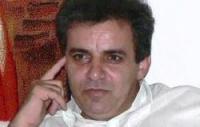
Prominent national-religious activist, journalist and political analyst, Dr. Alireza Rajaei, was sentenced to an additional four years in prison. Rajaei is a member of the Board of Directors of the Iranian Journalists Association. He was arrested one year ago and sentenced to three years in prison. Another four years have now been added to this sentence.

Source: Iran Daily Brief

Human Rights Statement: “Narges Mohammadi’s life is in Danger”

0

Narges Mohammadi, human rights activist and the Deputy Director and spokesperson for the Defenders of Human Rights Center, is in dire physical condition. According to the latest reports from prison, her paralysis has gravely deteriorated to the point that during her last visit with her family she was unable to walk.

Narges Mohammadi was first arrested in June 2010 but was released on bail after 20 days as a result of her preexisting medical condition. Following her release from prison, Mohammadi spent a considerable amount of time in the hospital and under medical supervision. She was eventually sentenced to 11 years in prison by the Revolutionary Court; a sentence that was later reduced to six years by an appeals Court. Mohammadi was arrested by Ministry of Intelligence agents and transferred to Evin prison shortly after being summoned.

In an illegal act, rather than being transferred to Evin prison’s general ward 350, Mohammadi was first transferred to ward 209. After 20 days she was subsequently exiled to Zanjan prison. She was transferred despite the fact that her sentence did not stipulate any exile conditions and she was legally registered as living in Tehran. Zanjan prison is renowned for housing prisoners charged with a variety of crimes including murder, the use of illegal drugs, etc. The detention of Mohammadi under such conditions is therefore a risk to her life.

In recent years and since the Iranian presidential election in 2005, prison officials have repeatedly ignored the rights of political prisoners suffering from physical ailments and medical preconditions. Their refusal to grant medical furlough to such prisoners has led to irreversible and irreparable damage. Narges Mohammadi suffers from a neurological disorder that renders her paralyzed. Her condition deteriorates significantly under harsh prison conditions.

According to prison regulations “prisons and prison officials are responsible for the lives of inmates and must provide the necessary conditions to create a safe environment for all prisoners.”

The Committee of Human Rights Reporters expresses its grave concern regarding Narges Mohammadi’s condition and demands that her medical needs be addressed immediately.

Source : Persian 2 English

HRW condemns Iran’s violation of minorities’ rights

Human Rights Watch have asked the Iranian authorities to provide information regarding the condition and well-being of seven men from the country’s ethnic Arab minority who are known to be in Iranian custody in a press release on June 21, 2012.

The report discloses that Iranian authorities in the southwestern city of Ahvaz may have executed at least four of the seven men in recent days, and have so far refused to hand over the bodies to their families. The report had urged the authorities in Tehran to allow minorities to exercise all rights granted by the Iranian Constitution and international law.

The Ahwazi men were arrested last year during the demonstrations and were charged of killing a security and intelligence officer and wounding another. They were sentenced to death on March 15.

The Iranian constitution formally provides for the fair treatment of ethnic minorities, including their rights to use their language, but in practice ethnic groups, such as Azeris, Arabs, Kurds and Balochs are reportedly discriminated against, especially in political rights and freedom of expression.

Sources close to the families of three brothers – Taha Heidarian, 28; Abbas Heidarian, 25; and Abdul-Rahman Heidarian, 23 – told Human Rights Watch that on June 17 authorities notified the family that the three had been executed. Two weeks ago, prison authorities had transferred the brothers, along with three other prisoners, from Karun prison’s general ward to an unknown location.

Another brother was arrested and also taken to an unknown location when he inquired about their location. The brothers’ families had not received any information since their transfer, raising fears that four of the men, who had been sentenced to death, would be executed within days. The fourth man believed to have been executed is Ali Naami Sharifi.

In a previous interview with Al Arabiya, Kazem Mojaddam, member of the Center against Anti-Arab Racism in Iran, said, “The government of Iran does not allow the Ahwazi people to practice their cultural activities although the Iranian constitution gives this right to all the people of Iran.”

Mojaddam added that the Ahwazi people were being threatened by the Iranian government, “which tries to undermine the Arab identity and culture through imprisonment and killing of Arab artists and writers.”

“The government also does not allow Arab-speaking Iranians to name their children after non-Shiite Arab names,” Mojaddam added.

Khuzestan is the source of 90 percent of Iran’s oil production, but people in the province complain of marginalization, poverty and the lack of adequate social services.

Besides, the province often takes the lion’s share of executions in the country. In 2007, Iranian authorities executed 22 activists in Ahwaz after they were accused to supporting the secession of the region from Iran.

Source: Human Rights Watch

Political activist Amir Shibandizadeh sentenced

Iran Daily Brief: The political activist from Mashhad , Amir Shibandizadeh, was sentenced to five-and-a-half years in exile, in a remote prison in Kerman.

‘Important’ Al-Qaeda Leader Captured Near Iran Border

0

Pakistani security officials say they have arrested a suspected French militant of Algerian origin, whom they claim is an “important” Al-Qaeda leader.

The officials said on June 20 that Naamen Meziche was captured in a raid close to the border with Iran, which would put the capture in Balochistan Province.

No further details about the arrest have been given.

Officials describe Meziche as an Al-Qaeda operative who has links to European-based militant groups believed to have been sheltering in either Pakistan or Iran.

Media reports say Meziche is believed to have worked closely with another Al-Qaeda leader, Younis al-Mauritani, who was captured by Pakistani authorities in September 2011.

That arrest also took place in Balochistan, which borders Iran.

Source: RFE/RL

Jailed activist continues to refuse food

Iranian political prisoner Mohammad Seddigh Kaboodvand is continuing with his hunger strike after more than a month of refusing food, his wife reported after a recent visit with him.

The International Campaign for Human Rights in Iran reports that Parinaz Baghban Hassani said her husband told her that he will not stop his hunger strike until the authorities grant him leave to visit his sick son.

The jailed human rights activist reportedly appeared very sick and weak but he was determined to continue with his protest.

Kaboodvand broke an earlier hunger strike at the urging of authorities, who promised him a furlough, but they broke that promise after he complied.

The family is extremely concerned about the jailed activist’s health and fear that he might suffer a fatal health crisis, as happened to another political prisoner, Hoda Saber, who died from a heart attack while he was on a hunger strike.

Kaboodvand has reportedly been transferred to the infirmary on several occasions.

Kaboodvand’s wife has urged the authorities to comply with the Islamic Republic’s own legal provisions, which allow prisoners to go on leave and visit their families.

The state coroner has already declared Mohammad Seddigh Kaboodvand to be medically unfit to serve out his sentence, but the judiciary has refused to heed the evaluation.

Mohammad Seddigh Kaboodvand was arrested for his human rights and media activities in Kurdistan Province and sentenced to 11 years in prison on charges of “acting against national security” and “propaganda against the regime.”

  Source: Radiozamaneh

Officials confirm execution of political prisoners

The Ahwaz intelligence office has officially announced the execution of four Iranian-Arab political prisoners to their families, a local source reports.

The International Campaign for Human Rights in Iran quoted the source saying the execution of three brothers, Teh, Abbas and Nasser Heydarian, aged 28, 24 and 21 respectively, together with Ali Sharifi Naami, 25, was officially announced to their families by the Ahwaz intelligence office.

The four prisoners were arrested in April of 2011 in the Mollashieh neighbourhood, and the report indicates that they were subjected to severe torture and abuse.

The court had reportedly sentenced the four men to death for the charges of enmity against God and the alleged murder of a security officer.

Amir Moovai and Abbas Heydari, another two Arab political prisoners arrested at the same time, were respectively sentenced to 38 and 18 years in jail in Sari Prison.

So far, the bodies of the executed prisoners have not been handed over to their families.

The Ahwaz Arab community staged demonstrations last year in protest against unfavourable conditions in Khuzestan and discrimination against Arab-Iranians.

  Source: Radiozamaneh

Iran ‘producing enriched uranium at faster pace’

0

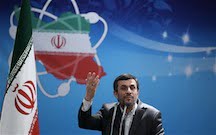
Iran’s uranium enrichment effort has picked up speed and Tehran could produce enough fissile material needed for a nuclear weapon within four months, experts told US politicians on Wednesday.

The rate of Iran’s uranium enrichment has accelerated despite cyber sabotage from the Stuxnet virus in 2009, the experts said.

Based on the findings of the International Atomic Energy Agency (IAEA), “it’s clear that Iran could produce a nuclear weapon very quickly should it wish to do so,” said Stephen Rademaker of the Bipartisan Policy Center in Washington.

Iran has produced 3,345 kilos of uranium enriched to 3.5 per cent, according to the IAEA, which if it was enriched further would provide enough uranium for at least two atom bombs, Rademaker told the House Armed Services Committee.

If the Iran leadership decided to go forward, “it would take them 35 to 106 days to actually have the fissile material for a weapon,” he said.

David Albright, president of the Institute for Science and International Security (ISIS), told the same hearing that “it would take Iran at least four months in order to have sufficient weapon grade uranium … for a nuclear explosive device.”

Prisoner prevented from a meeting his family

0

Authorities at Rajaee Shahr Prison in Karaj did permit political prisoner Bahman Ahmadi Amoui to meet his family who came from Tehran especially to see him. Bahman is one of the journalists arrested during the post-election events, and was sentenced to seven years and four months imprisonment. Bahman took part in the ceremony to mark the death of Hoda Saber in Evin Prison. During the ceremony, he was taken by guards and initially transferred to a isolation cell in wing 240. Then, blindfolded and with his hands and feet shackled, he was illegally transferred to the remote Rajaee Shahr Prison.

Source: Iran Daily Brief

Jailed journalist handed a fresh sentence

0

Issa Saharkhiz, a jailed Iranian journalist, has been handed another sentence as he nears the end of his initial three-year sentence.

Mehdi Saharkhiz, the son of the persecuted journalist, told the International Campaign for Human Rights in Iran that while his father has almost reached the end of his three-year jail term and should have been released soon, it appears that he has been sentenced to another year and a half in prison.

The medical commission has already established that Issa Saharkhiz is not physically fit to serve out his sentence and must be granted sick leave.

The prominent journalist has already suffered a heart attack in jail and has been hospitalized since last March.

Mehdi Saharkhiz reported that the new charge is connected with an earlier case against his father from when he was director of economic news more than 11 years ago. The case seems to have been reopened, and an appeals court has reduced a two-year suspended sentence to one and half years in jail, which he apparently has to serve now.

The jailed journalist’s son reports that, according to the Islamic Republic penal code, prisoners become eligible for parole once they serve one-third of their sentence, and he adds that in the case of his father, who has been severely sick, he should have been released long ago.

He added that while his family has been paying for his father’s hospitalization over the past four months, they are also burdened with the cost of keeping four officers stationed in his room to guard him.

Mehdi Saharkhiz went on to add that his family is paying three million toumans each month, while their income is not even a fifth of that amount.

He claimed the prison system can’t afford to keep the prisoners and, therefore, it is getting prisoners to pay for their own incarceration.

Issa Saharkhiz, a prominent journalist and government critic, was arrested in July of 2009 during the crackdown on election protesters.

He was sentenced to three years in jail for “insulting the leader” and “propaganda activities against the regime.”

Last July, he wrote a letter to Ahmad Shaheed, the UN rapporteur on Iran, urging him to investigate the “catastrophic” situation of prisoners in Iran as soon as possible.

Source: Radio Zamaneh