Home Blog Page 450

Jailed journalist transferred as part of prison crackdown

0

Bahman Ahmadi Amouyi, a jailed Iranian journalist, has been transferred to Rejai Shahr Prison in Karaj.

Advar News reports that after Evin Prison guards attacked section 350 of that prison last night and transferred six prisoners to solitary confinement, at 1 AM they moved Ahmadi Amouyi to Rejai Shahr Prison in Karaj.

Ahmadi Amouyi was reportedly transferred in shackles and was not even allowed to get his belongings from his cell.

The Kaleme website has also reported that Ahmadi Amouyi was insulted and strip-searched at Rejai Shahr Prison and then was transferred to its quarantine section.

The prisoners at Evin were reportedly planning to hold a ceremony on the anniversary of the 2009 election protests and also the death of Hoda Saber, a political prisoner who died last night after going on a hunger strike. The prison officials reportedly halted those plans and transferred six prisoners to solitary confinement and later transferred Ahmadi Amouyi to Karaj.

Source: Radio Zamaneh

After Anniversary Protest in Evin Prison, 6 Prisoners Transferred to Intelligence Ward

On the third anniversary of the disputed 2009 Iranian presidential election, six political prisoners have been transferred to the Intelligence Ministry’s Ward 209 at Evin Prison. Sources told the International Campaign for Human Rights in Iran that they are concerned about the way the intelligence forces may treat these prisoners.

Yesterday, at least 50 prisoners of conscience in Evin Prison refused to appear at the visitation hall in protest to the treatment of prisoners at the prison. Subsequently,Javad Alikhani, Bahman Ahmadi Amouee, Saeed Matinpour, Arash Saghar, Farshad Ghorbanpour and Saeed Jalalifar were all transferred to Ward 209. Since they are all their finalized prison terms, this transfer is considered illegal.

According to several sources, a group of political prisoners inside Ward 350 has been on hunger strike over the past three days in protest to the lack of investigation into the death of Hoda Saber, a political prisoner who died after a hunger strike and subsequent heart attack on 10 June 2011. The Campaign believes his death was a result of the negligence of prison and judicial authorities.

A source close to the families of political prisoners told the Campaign that the “political fasting” among the prisoners may also serve to commemorate the anniversary of post-election public protests known as the “Green Movement.”

The source told the Campaign that the six prisoners were transferred because security authorities thought them influential in holding a ceremony inside Ward 350′s yard, in which political prisoners gave speeches and sang songs. According to these sources, Police Special Forces stormed the ceremony with sticks, ended the ceremony, and transferred the six inmates to solitary confinement in Ward 209.

Marzieh Rahimi, the wife of Abolfazl Ghadyani, a 66-year-old prisoner who has written several critical letters from prison to Supreme Leader Ayatollah Khamenei, confirmed the news and told the Campaign that she was unable to visit with her husband on 11 June:

The atmosphere was very tense, because many families had come to visit their children from other towns, but were unable to visit with them. The prisoners decided to object to the lack of observation of their basic rights in prison, and refused to come to visitation on 11 June. Over the past two years, they have repeatedly asked for their basic rights to in-person visits, telephone calls, medical furlough, and medical attention, but none of these have happened. Therefore, on the anniversary of the election and its aftermath they did this.

Abolfazl Ghadyani was sentenced to five years in prison for “propagating against the state,” and “acting against national security

According to Marzieh Rahimi, prisoners who refused to visit with their families on 11 June included Abolfazl Ghadyani, Mohsen Mirdamadi, Feyzollah Arabsorkhi, Bahman Ahmadi Amouee, Javad Alikhani, Emad Bahavar, and Seyed Alireza Beheshti.

Last week, the families of 46 political prisoners in Ward 350 wrote a letter to Tehran’s Prosecutor, criticizing the lawlessness and deprivation of prisoners; basic rights. “We do not wish for our loved ones privileges beyond the rights other prisoners enjoy, rights that were observed even in this prison prior to your oversight of post-election political prisoners inside Ward 350. Are these too much to ask in a country that claims to implement Islamic justice?” stated the letter.

Bahman Ahmadi Amouee, one of the prisoners transferred to Ward 209, is a journalist and former editor of the economy desk at several reformist newspapers. On 20 June 2009 authorities arrested him at his home and sentenced him to seven years and four months in prison on the charge of writing articles critical of Mahmoud Ahmadinejad’s economic performance. Over the past three years, he was only allowed furlough once in March 2010. He has been deprived of in-person visits for the past year. The Tehran Prosecutor has even refused to allow his transfer to the prison clinic for a teeth treatment.

Ward 350 of Evin Prison is considered a general ward for political prisoners. The ward operates under the oversight of Iran’s Prisons Organization. Ward 209 of Evin Prison, however, illegally operates under the oversight of Iran’s Intelligence Ministry. Most of the cells in Ward 209 are solitary cells. Since neither the Prisons Organizations nor other inspectors or outside organizations are allowed to visit or access this ward, intelligence officers inside the ward are able to mistreat political prisoners. Most reports pertaining to the mistreatment and physical and psychological abuse of prisoners of conscience come from this ward. In Ward 209 of Evin Prison, access to books and newspapers is not allowed, whereas in Ward 350 or other general wards within Evin Prison, prisoners are allowed such access. Ward 2-A of Evin Prison, under the oversight of the IRGC (Islamic Revolutionary Guard Corps), has similar conditions to Ward 209.

Source: Iran Human Rights

Imprisonment and lashes for activists and defenders of The Ouromieh lake

37 defenders of the Ouromieh lake were sentenced to 18 years imprisonment and 1110 lashes. According to HRANA, the activists were sentenced yesterday, 11-06-2012.

Source: Harana

Iranian Kurdish journalist stages hunger strike over ill son

0

Many imprisoned Iranian journalists, stripped of their basic rights by the government, are going on long hunger strikes to draw attention to their plight in a country described by the Committee to Protect Journalists as the “world’s worst jailer of journalists”.

Mohammad Seddigh Kaboudvand, who was named the international journalist of the year at the British Press Awards in 2009, is on his third hunger strike after his 10th request to visit his ailing son in hospital was turned down.

Kaboudvand’s son Pejman was diagnosed with a rare blood condition and has been “gravely ill” in a Tehran hospital for five months, putting the family under immense emotional and financial pressure.

In a letter smuggled out of Evin prison last week, the 50-year-old Kaboudvand said he had been left with no option but to go on hunger strike since the authorities had withheld all news about his son’s condition and continued to deny him temporary leave to visit him.

Speaking by phone from Tehran, Kaboudvand’s wife, Parinaz Husseini, told the Iran Blog she was very worried about her husband’s health and did not understand why the authorities were blocking his request to see his son.

“Maybe the reason for their refusal is his Kurdishness or the fact that he has refused to repent and ask for forgiveness from the authorities,” she said.

Kaboudvand, who himself suffers from multiple serious health problems, is serving an almost 11-year prison term, which began in July 2007, for “acting against national security by establishing the Human Rights Organisation of Kurdistan and proposing a campaign to boycott the 9th presidential election” which brought Mahmoud Ahmadinejad to office in 2005.

He is among many other journalists and political activists in prison who need immediate medical attention. Mohammad Mehdi Zalieh Naghshbandian, a Kurdish activist who spent 18 years behind bars for allegedly co-operating with a Kurdish opposition group, died last week of serious health complications in Rejai Shahr prison, a notorious facility in Karaj, near Tehran.

In January 2009, Human Rights Watch awarded Kaboudvand the Hellman/Hammett grant and described his imprisonment as a “harsh testimony to the plight of journalists, dissidents and other peaceful critics in Iran today”.

After Iran‘s disputed presidential elections in 2009, Kaboudvand’s lawyer, Nasrin Sotoudeh, said his situation was “the most difficult conditions ever imposed on a prisoner”. Sotoudeh has since joined her client in prison, having been sentenced to 11 years for plotting against the national security.

Amnesty International has described the government’s blocking of Kaboudvand’s request to visit his son as “cruel and unjust” and has called on the authorities to allow Kaboudvand “to spend this difficult time with his family in dignity”.

Despite his high profile, it seems doubtful that Kaboudvand will be able to see his son and there is a real fear that he too will end up in hospital if his hunger strike continues for much longer.

Source: Radio zamaneh

Nouri: Mousavi and Karoubi’s Actions Were Legal

As the buzz about reformists’ participation in next year’s presidential elections picks momentum, former president Mohammad Khatami’s interior minister Abdullah Nouri, who was ultimately tried and removed from office, told a group of visiting activists from Fars province that the activities of presidential candidates Mir-Hossein Mousavi and Mehdi Karoubi and Green Movement leaders, both of whom are under house arrest, in 2009 and subsequently were legal. He also said that there was congruity between the Green Movement and the country’s reformers.

Nouri pointed out that the regime’s red line for confronting opponents and critics was not clear and added that this was because of the multiplicity of security agencies in the country. “It is still not clear to us why immediately after the presidential election of 2009 a large group of political, university and media activists, including prominent members of political parties and reformist groups, were arrested through bizarre methods, an atmosphere of terror was created and security approaches were implemented, and why reform leaders continue to remain behind bars three years after those events,” Nouri said. He added that until the day of the 2009 elections the ctivities of reform leaders were within the framework of the law and were aimed at strengthening public participation for the elections.  “At the election headquarters of Messer Karoubi and Mousavi – both reformist candidates approved by the regime – these dear people were doing their normal work when suddenly everything changed the day after the elections and the exciting atmosphere of election campaigning turned to a security atmosphere full of tension to the point that both of these two popular and prominent personalities in the Islamic republic were eventually put under house arrest,” he continued.

In his latest talk to the activists from Fars, Nouri also said there was congruity between the Green Movement and the reform movement on such issues as the centrality of reforms, work within the constitution, the pursuit of people’s rights and freedoms, and the rejection of all forms of violence.

Earlier in March, Nouri had criticized the reform movement for not having a plan and called for the creation of think tanks. In that speech he specifically said, “the biggest problem that current political forces faced because of extremist elements on both sides, was that they did not know what to call so that they would not lose their support base and at the same time create further distrust from the regime.”

Nouri’s recent talks and meetings come as more talk about him emerging as the central reformist personality are heard for next year’s presidential elections. In the 2009 presidential too Nouri was the first presidential choice of such organizations as the Advare Tahkim Vahdat (university students alumni organization), but who did not run because of Mohammad Khatami’s initial candidacy.

Last week’s comments by Mohammad Mousavi Khoeini, a member of the central council of the Majmae Rohaniyun Mobarez (the pro-reformist Association of Combatant Clerics) there has been more talk about the possibility of reformers participating in the next presidential elections. In that talk Khoeini made it clear that reformers had not yet discussed the issue of participating in the next presidential race. He referred to Khatami as the “head of the reformers,” throwing light on the status and popularity of the former reformist president and suggested that he should be talked to regarding the plans of the reform movement.

Khatami participated in the last parliamentary elections -to the surprise and criticism of many – but that event has expanded the talk about the possibility of reformers’ participation in the next presidential talks. For the parliamentary elections, he simply threw in his ballot for the “Islamic republic” rather than any of the candidates. Some of his closest aides then said that he did that to keep the reformers within the regime rather than allowing the regime to label them as outsiders.

Since those elections, a number of names have been flouted as possible presidential candidates from the reform movement which include Mohammad Khatami, seyed Hassan Khomeini, Mohammad-Reza Aref and Abdullah Nouri. Among them only Aref has already created an organization and has started work on the race. Rooz has learned that some members of Khatami’s cabinet had graveled to various cities and towns and discussed support for Aref with local political activists.

In the meantime, one principlist (pro-regime ideologues) website reported that the presence of reformers in the upcoming elections was the policy of the West to make inroads into the Islamic republic. “The West views the reform experience to be the most successful modern political experience in Iran,” it wrote. These comments were posted on Borhan website.

But despite these talks and activities, the reformers in Iran or the Green Movement in particular have not yet formally announced any specific plans regarding the 2013 presidential race. Mousavi and Karoubi supporters have criticized Khatami and other reformers for their participation the last parliamentary elections and argued that while most reform leaders remained behind bars or under house arrest, any participation was wrong.

Nouri however seems to take the line that not participating in the elections may be an extreme measure that can hurt reforms. He has said that at times reformists needed to show courage to choose one of two specific goals that they had been pursuing, i.e., commitment to their principals vs. meeting the calls of the public.

Some pro-reform personalities have completely different views on the presidential elections. University professor Sadegh Zibakalam for example argues that should Tehran’s current mayor Mohammad Bagher Qalibaf run in the presidential race, reformers should throw their weight behind him. The split within the reform movement on whether to participate in the next presidential election or not continues and will be debated more as those elections get closer. Till then, it is wait and watch.

  Source: Rooz Online

Iranian vice-president named in fraud case

0

In the eighth trial session of the insurance fraud case that allegedly involves the Tehran governor’s office, one of the accused claimed that 1.5 billion toumans was given to Mohammadreza Rahimi, chief deputy to President Mahmoud Ahmadinejad.

Iranian media report that that the eighth session of this case was held today, Monday June 11, and the defendant today, who is referred to in the media as the “Black Box” of the fraud case, described details of bribes given to top officials, including Vice-President Mohammadreza Rahimi.

He claimed that the money was directly deposited in Rahimi’s account, and the cheque can be verified through the auditor’s office.

The accused added that Rahimi was angry that the cheque had been sent to the auditor’s office and added that he has already told the judiciary about the involvement of the vice-president and filed a suit against him.

Earlier, another defendant in the same case also mentioned Rahimi’s name in the fraud operation but later withdrew his testimony.

Elias Naderan, a Member of Parliament, has named Rahimi as the head of this fraud case, but Ahmadinejad has rejected the allegations.

On Saturday, Tehran Governor Morteza Tamaddon and Science Minister Kamran Daneshjoo were also named in the case as officials receiving bribes.

The Tehran governor has denied any involvement in the case.

  Source: RadiZzamaneh

Imprisoned journalist begins ‘indefinite fast’ to protest house arrest of green leaders

0

Imprisoned political activist and journalist Mehdi Mahmoudian has begun an indefinite to protest the continued house arrest of opposition leaders Mir Hossein Mousavi and Mahdi Karroubi. Mahmoud has vowed to continue with his fast until the men are released from captivity.

According to opposition website Kaleme, Mahmoudian has announced that he would begin his fast on 22 Khordad (11 June), exactly three years after Iran’s widely contested presidential election.

The imprisoned journalist and member of the Participation Front political party (Mosharekat), was arrested on 16 September 2009. Mahmoudian had been responsible for exposing the abuse that had occurred in Kahrizak Detention Centre.

He was initially held at the notorious Evin Prison, but was later moved to Rajaee Shahr Prison in Karaj. Mahmoudian is currently serving a five-year jail term on charges of “assembly and collusion against the regime.”

After 2 ½ years of imprisonment, Mahmoudian was finally granted furlough during the Iranian New Year (March 2012). During this period, he sought treatment for a number of medical problems caused under harsh prison conditions, including blood pressure fluctuations as well as heart and lung problems.

Recently, political prisoner, Mohammad Reza Motamednia, ended his 42-day hunger strike against the ongoing house arrest of Mir Hossein Mousavi and Mahdi Karroubi. After learning of the strike, and through intermediaries, Mousavi called on Motamednia, who had already been hospitalised, to end his strike.

Mir Hossein Mousavi and Mahdi Karroubi spearheaded the Green Movement until mid-February 2011 when they were placed under house arrest after they had called for protests in solidarity with the Arab Spring on 14 February. The demonstrations were marred by the security forces’ violent crackdowns which left at least two dead.

Since the start of their arbitrary detention, the 2009 presidential candidates have not yet been granted a fair trial. Rights groups say their continued captivity and maltreatment is inconsistent not only with human rights provisions but also with Iran’s own constitution.

Source: The green voice of Freedom

Iran to crack down on web censor-beating software

Iran’s cyber police force is poised to launch a new crackdown on software that lets many Iranians circumvent the regime’s Internet censorship, media reported on Sunday.

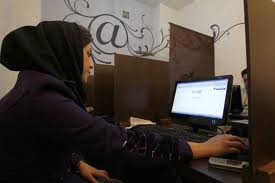
The operation will target VPNs, or Virtual Private Networks, which use a secure protocol to encrypt users’ data, foiling online blocks put in place by Iran’s authorities, according to the head of the specialised police unit, Kamal Hadianfar.
“It has been agreed that a commission (within the cyber police) be formed to block illegal VPNs,” he was quoted as saying in a report originally published by the Mehr news agency.

“About 20 to 30 percent of (Iranian internet) users use VPN,” or more than seven million people out of the country’s 36 million web users, he added.

Legal VPNs would only be used by “the likes of airlines, ministries, (state) organisations and banks,” he said — and even they would be monitored by the commission.

Iran has long tried to stop its population accessing millions of foreign websites authorities see as undermining the Islamic regime, including Facebook, Twitter, the online pages of the BBC and CNN, many torrent sites, blogs, and pornographic hubs.

“Some websites are obscene and others are officially hostile towards the Islamic republic’s system. (Thus), in the interest of the people and in order to prevent the collapse of families… there is blocking of the Internet,” Hadianfar said.

The Islamic republic’s suppressing of the Internet has intensified since President Mahmoud Ahmadinejad was returned to office in a disputed 2009 election that sparked a wave of anti-government protests, mostly organised online.

Many Iranian Internet users are used to getting around the censorship through the use of either VPNs or IP proxy software.

But they are being increasingly hemmed in by more sophisticated measures being deployed by officials, who are planning a closed “Islamic Internet” that some believe could be designed to supplant the world wide web within Iran.

Iran’s telecommunications ministry last month reportedly ordered the country’s banks, insurance firms and telephone operators to stop using foreign e-mail accounts such as Gmail to communicate with clients, and instead adopt e-mail domains ending with .ir, which belongs to Iran.

Authorities have also several times recently slowed connections through VPNs to an excruciatingly slow speed to dissuade their use, and have occasionally halted all access to Gmail, Yahoo mail and other foreign communication services.

Such tactics have drawn criticism, even from within the regime, with politicians lamenting the obstacle they present for import/export merchants, students and researchers.

Iran’s former president Akbar Hashemi Rafsanjani, a sidelined pragmatic figure who now heads an advisory council to supreme leader Ayatollah Ali Khamenei, was quoted two weeks ago by the ISNA news agency as saying Facebook was a “blessing”.

“We see that a Facebook page costing nothing can outstrip several television and radio outlets, and can influence millions of people,” he was quoted as saying.

Trying to block the Internet — and banned although widely-watched foreign satellite television channels — was futile because users will always find ways around, he said.

“People cannot be stopped in their pursuit of information,” he was quoted as saying.

Rafsanjani said some in Iran’s regime may dislike that, “but if we think about the happiness of human beings, we see that if social media did not exist, movements against tyranny and oppression would be endangered.”

The United States, Iran’s arch foe and the genitor of the Internet, is seeking to tear open what President Barack Obama in March termed the Islamic republic’s “electronic curtain”.

He announced measures to encourage US software makers to market communication programmes in Iran. And in April, he ordered new sanctions targeting companies that help Iran and its ally Syria oppress their people with surveillance software and monitoring technology.

The New York Times newspaper reported early this month that Obama had also accelerated cyberattacks on Iran’s nuclear programme, including the Stuxnet virus that destroyed hundreds of uranium enrichment centrifuges in Iran’s Natanz facility.

Iran has said a new computer virus dubbed Flame that hit servers run by its oil sector appeared to be linked to Stuxnet, and it has cast suspicion on the United States as the perpetrator.

  Source: InsideofIran

Scientists protest against prison sentence for Iranian student

Scientific societies and human-rights organizations ask for fair treatment for Omid Kokabee.Iranian PhD student Omid Kokabee has been jailed for conspiring with a foreign government.

O. KOKABEE

The 10-year prison sentence imposed on physics PhD student Omid Kokabee in Iran for conspiring with foreign countries has triggered protests by scientific organizations around the world.The Committee of Concerned Scientists in New York has launched a petition asking the Iranian government to release Kokabee, and Scholars at Risk, another human-rights watchdog in New York, has called for people to send letters, faxes and e-mails to the appropriate authorities requesting a reconsideration of his conviction. And many physics, optics and chemistry societies in Europe and the United States (the American Chemical Society, the American Physical Society, the International Society for Optics and Photonics, the Optical Society of America, and the European Optical Society) have sent, or are drafting, open letters to Iran’s supreme leader Ayatollah Ali Khamen’i, asking that the student be treated fairly.Kokabee’s case has also been highlighted in a declaration by 17 organizations, including Amnesty International and Human Rights Watch that asks Iran to uphold the right to education and to academic freedom. Friends and contacts of Omid Kokabee are promoting an online petition to Amnesty International and related organizations, and human-rights activists have launched a Twitter ‘storm’ aroundanother petition.Kokabee is a 29-year-old experimental-laser physicist who did part of his PhD studies at the Institute of Photonic Sciences in Barcelona, before moving to the University of Texas at Austin in 2010. He was arrested in February 2011 while returning to the United States after a holiday in Iran, charged with communicating with a hostile government and taking illegal earnings. After 15 months of detention, he was sentenced on 12 May to 10 years in prison. Kokabee and his friends say he was not a political activist. In open letters sent from Tehran’s Evin jail, he has claimed that he has not been allowed to talk with his lawyer. Close contacts in Iran have told Nature that the prosecution did not present any evidence during the trial. These people say that Kokabee has appealed the sentence, and has complained to the judge in charge of the trial, Abolghasem Salavati, of unfair treatment, including exposure on television.

Arash Alaei, a doctor who led pioneering AIDS damage-reduction programmes in Iran before being jailed between 2008 and 2011 (see ‘Iranian AIDS doctors continued work behind bars’), spent 8 months in the same prison as Kokabee. “He was under stress, but as well he was one of the most active prisoners in giving English classes to the others,” says Alaei. “Omid’s jailing is a message for other scientists: the government does not like independent researchers that do their job outside of its programmes,” he says.

Mahmood Amiry-Moghaddam, a neuroscientist at Oslo University and spokesman for the non-governmental organization Iran Human Rights, says that it is important for researchers to stand up for Kokabee. “If universities and scientists do not react to this sentence, any Iranian researcher abroad may be accused of spying,” he says.

Kokabee’s story has spread anxiety among Iranian students abroad. An Iranian student in Barcelona, who asked to remain anonymous, says: “Since I found out about his detention I have not gone back to Iran: I plan to reduce my visits to the minimum, to avoid risk.”

 Source: FreedoMessenger

Five Ahwazi arab political prisoners are at imminent danger of execution in Iran

0

According to reports from Iran 5 prisoners are at imminent danger of execution in Iran.

Iran Human Rights asks for the immediate reaction of the international community. “International pressure is the only hope these prisoners have” say the spokesperson of IHR Mahmood Amiry-Moghaddam.

Five Ahwazi Arab political prisoners at imminent danger of public hanging:

According to reliable sources from Iran, Five death row Arab political prisoners have been transferred out of their prison ward to an undisclosed location.

In March this yearIHR and other human rights organizations warned against execution of five Ahwazi Arab prisoners. Iranian authorities informed the families of five prisoners from the Arab-dominated Ahwaz province that their sons will be hanged in public “within days” for allegedly killing a security member and wounding another in 2011, a local human rights activist told Al Arabiya on Tuesday. The detainees include three brothers – Abdolrahman, Taha, and Jamsheed Haidari – and their cousin Mansour Haidari and Amir Moawya. They were arrested under anti-regime protests in Ahwaz in 2011 and were charged with the murder of a security member. Their families say the prisoners confessed to the murder under torture. International attention was probably the reason why they were not executed in March.

Source: Iran Human Rights