Home Blog Page 468

Internet censorship high on Iran’s agenda

The Iranian judiciary has announced the establishment of a centre to process cyber offences and warned that websites that violate the law will be blocked.

IRNA reports that Tehran Prosecutor Abbas Jafari Dowlatabadi warned that the “threat” of internet is reflected both in personal lives and national security alike.

He added that the establishment of the Centre for Cyber Offences is key to identifying and dealing with such offences, emphasizing once more that any site that violates the law will be filtered.

Iranian internet users have great difficulty using the internet due to low-quality services coupled with heavy internet censorship by the government.

Numerous websites are considered inappropriate or seditious by the Islamic Republic authorities and, thus, are blocked. Iranian internet users often use proxies to access news and other websites that cannot be directly accessed in Iran due to government buffers.

The Iranian government has also announced that it is looking at launching a national internet in order to have an alternative “clear internet” that people can use without the fear of so-called threats on the World Wide Web.

 Source: radiozamaneh

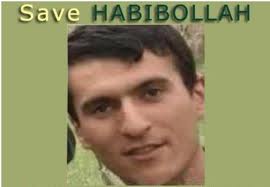
Kurdish Iranian Death Row Prisoner Habibollah Golparipour Transferred to Semnan Prison, Denied Visitation from his Family

As part of its ongoing investigation of human rights abuses against Kurdish activists in Iran, the Iran Human Rights Documentation Center (IHRDC) has received recent reports about the condition of death row prisoner Habibollah Golparipour. Further details about Habibollah Golparipour’s case are available in IHRDC’s recently released report: “On the Margins: Arrest, Imprisonment and Execution of Kurdish Activists in Iran Today”.

A source close to IHRDC has indicated that in the middle of the night on Thursday, March 15, 2012, Habibollah Golparipour was transferred from Orumiyeh Central Prison to Semnan Central Prison. The transfer occurred without any notice . Despite the lack of any mention of exile in the sentence issued against him, Golparipour—who is from Sanandaj, the capital of Kurdistan province—was transferred to Semnan, which is roughly 725 km (450 miles) away.

After inquiring about his son’s whereabouts for several days at court and Orumiyeh Central Prison, Golparipour’s father, Nasser Golparipour, was informed that his son was in Semnan Central Prison. After Nasser Golparipour attempted to follow  up on his son’s condition at Semnan Central Prison, prison authorities told him to return  after the Nowruz holidays.

Now, IHRDC has received reports that last Saturday, April 7 and Sunday, April 8, Habibollah Golparipour’s family attempted to visit their son in Semnan Prison but the prison authorities refused them access on the grounds that Habibollah Golparipour was a “special” case. The authorities further said they could not visit their son without written permission from the local prosecutor. After the Golparipour family went to the Semnan courthouse to seek permission, the judge issued them a written note that granted permission to visit Habibollah.  However, the assistant prosecutor then invalidated the judge’s permission without presenting a reason. Ultimately, despite the substantial distance between Sanandaj and Semnan, and the family’s insistence on being allowed to visit their son, they were not granted access.

Golparipour is currently imprisoned in ward 10 of Semnan Central Prison. His family has still been denied visitation.

 Source: iranhrdc

As Mohammad Davari’s Conditions Deteriorate in Prison, Furlough Continues to be Denied

Judicial authorities have imposed an exorbitant bail on Mohammad Davari, whose conditions continue to worsen in prison. In an interview with the International Campaign for Human Rights in Iran, Bijan Davari, Mohammad Davari’s brother, said his physical and psychological condition is seriously deteriorating.

“Though he exercised in prison and tried to keep up his spirits and when talking to us, he never talked about what he was going through, we can no longer deny that his physical illnesses are pressing him,” Bijan Davari told the Campaign.
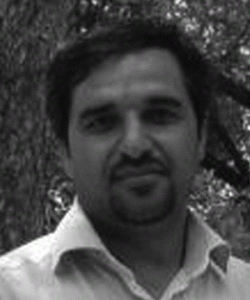
Mohammad Davari is a journalist, former teacher, and former editor-in-chief ofSaham News, a website affiliated with Mehdi Karroubi. He was arrested in 2009 after political opposition leader Mehdi Karroubi wrote a letter to head of the Council of Experts reporting the torture of political prisoners inside Kahrizak Detention Center. Security forces tortured Davari in prison, pressuring him to make televised confessions against Karroubi.

Bijan Davari told the Campaign that judicial authorities asked the family for a $400,000 bail collateral. “Really, even if our entire family came together, we would never be able to raise this amount. We can at best raise $100,000. He says himself, ‘I have not committed a crime. Therefore I will neither request a pardon, nor furlough. I only want my freedom.’ Nonetheless, we did make an effort, but the bail amount is too high. Since his imprisonment in 2009, Mohammad has not been granted even one day of leave. Our old mother travels from Bojnourd to Tehran to visit with him once every month,” he added.

Iranian authorities sentenced Davari to five years in prison, which in 2011 was increased to six years. The last year of imprisonment was added due to Davari’s inability to pay a $5,000 cash fine for a teachers’ protest he attended in February and March 2006. Davari is a union activist and member of the Central Council of the Iranian Teachers Association. He is also a disabled Iran-Iraq War veteran.

“Unfortunately, Mohammad has developed psychological problems. He also suffers from a heart condition and he has had problems with his teeth for a long time.  They told us to provide the name of a doctor so that they would take him there.  We gave the names of several doctors, but they did not agree to those physicians.  But why didn’t they take him to a doctor of their own choice? Is it possible that a huge prison like that does not have a heart specialist? Forget about his teeth that are entirely decayed. Well, when he sees that nobody cares, he endures double psychological pressure. And there is nothing we can do. We don’t know whose advice to seek, whom to tell, and how to tell!  We have no one in Tehran. All of us feel helpless about what to do. Mohammad had a lawyer whose work ended after his verdict was finalized. It is really unbelievable that Mohammad who is innocent should stay in prison for five years,” Bijan Davari told the Campaign.

“If we have freedom of expression and press, why should he be in prison? It is so painful that an innocent Mohammad should spend five years of his life in prison, and on the other hand, his situation is not reviewed. We cannot do anything, just to stand and watch,” he added.

Source: iranhumanrights

Azerbaijan arrests suspects in arms smuggling

0

A group of Iranians and Azeris has been arrested on suspicion of smuggling arms and military supplies from Iran into Azerbaijan, the Azeri National Security Ministry said on Thursday.

“It was a group of seven people, citizens of Iran and Azerbaijan,” Arif Babayev, the ministry spokesman, told Reuters.

Relations between Iran and neighbouring mountainous Azerbaijan have soured in recent months as Tehran accused it of assisting Israeli intelligence in the murder of Iranian nuclear scientists.

The National Security Ministry said the group also smuggled in a large quantity of narcotics from Iran into Azerbaijan.

In a separate incident, Baku arrested 22 Azeri citizens suspected of spying for Iran and plotting to attack Western embassies and companies in March.

Two months earlier, two men were arrested in Azerbaijan on suspicion of plotting attacks on foreigners, including the Israeli ambassador and a rabbi.

Authorities said the two suspects had been helped by an Iranian linked to Iran’s intelligence services, who supplied them with guns and explosives to smuggle from Iran.

Baku traditionally has had cordial ties with Tehran, but has grown increasingly wary of the increasing influence of Iran’s influence in the secular, but predominantly Muslim, former Soviet state.

 Source: insideofiran

Student activist Hossein Taheri arrested


Student activist Hossein Taheri has been in prison since a month ago, according to opposition website Jaras.

Security forces reportedly arrested Taheri at his father’s home on 11 March. He was then taken to Shiraz’s Pelake Sad detention centre and has since been in solitary confinement.

Hossein Taheri is a student at the Islamic Azad University in Shiraz. Thus far, his family have been reluctant to make their son’s story public due to security concerns.

Taheri’s father, a retired teacher, has been making regular visits to the city’s Revolutionary Court in order to obtain more information about his son’s detention, but to no avail.

Iranian songwriter sentenced to jail


Arya Armnejad Iranian singer and songwriter has been sentenced to a year in prison for “propaganda activities against the Islamic Republic regime.”

Armanejad reported in his Facebook page yesterday that the Revolutionary Court has sentenced him to one year in jail on the basis of the article 500 of the Islamic Penal Code which says “whoever engages in propaganda activities against the Islamic Republci regime or in favour of dissident groups will be sentenced to a jail term between three months to a year.”

Aramnejad reports that he was given the sentence based on four pieces of music he had written entitled “In a Hundred Years”, “Nostalgia”, “To Touch Freedom” and “Bitter Song.”

He has also been penalized for visiting with Mohammad Khatami, former Iranian president and top reformist figure, as well as meeting Parvin Fahimi, mother of Sohrab Aarabi, one of the protesters that were shot and killed in the street demonstrations that followed the disputed 2009 presidential elections.

 Source: radiozamaneh

Iranian Activist, 72, Given Three-Year Suspended Sentence

TEHRAN – Iranian pro-democracy activist Kourosh Zaim has been handed a three-year suspended sentence after judges found him guilty of acting against national security and spreading propaganda against the Islamic republic. 

The 72-year-old member of the opposition National Front has been a vocal critic of the regime in Tehran.

Zaim was arrested in February 2011, hours after an interview with RFE/RL’s Radio Farda was broadcast.

In the interview, he said authoritarian regimes in the region would inevitably face “social explosions,” especially due to the fact that the majority of the populations there are young people who have access to information through social media.

It’s not clear, however, whether Zaim’s arrest was connected to the interview.

Source: rferl

Iran threatens to totally cut Web access


Iran may completely cut millions of Internet users in the country off from the Web, and from social networks and e-mail services, analysts said.

In a statement last week, the Iranian minister for Information and Communications Technology said a national intranet would be established within five months in an effort to create a “clean Internet,” the International Business Times reported Tuesday.

“All Internet Service Providers (ISP) should only present National Internet by August,” Reza Taghipour said in the statement.

Web sites such as Google, Hotmail, and Yahoo would be blocked and replaced by government-administered services such as Iran Mail and Iran Search Engine, the IBT report said.

A subsequent IBT story carried an Iranian ministry response calling the report “completely baseless,” CNET.com reported.

“The report is in no way confirmed by the ministry,” the ministry stated, saying the original report came from the “propaganda wing of the West.”

Censorship is nothing new for Iranian Internet users, who found the government had cut off access several times earlier this year.

Taghipour had told the Islamic Republic News Agency in January a firewalled national Internet would soon be in place but gave no specifics of the timing, CNET.com said.

Source: United Press International

‘Pro-opposition students to be barred from entering universities’


Students with ties to Iran’s opposition Green Movement will be barred from entering universities, says the country’s Minister of Science, Research, and Technology.

According to the Islamic Republic’s official news agency Irna, Kamran Daneshjou said that “those active in the sedition” did not have the “right” to attend university.

Authorities refer to the protests that erupted after the 2009 presidential election as “sedition.”

Daneshjoo, who was speaking at an inaugural ceremony in the holy city of Qom, said that the “main problem with the country’s universities is that in some cases, they have a Western approach and are rooted in the West.”

Daneshjoo is a fervent supporter of “Islamising” Iran’s universities. In 2009 he proposed the “segregation of sexes” at universities but was later met with Ahmadinejad’s opposition to the plan.

In early 2010, he said that only those who have proven their commitment to Islam and the country’s leadership could teach or study at universities

He has also announced that his Ministry will cut off bursaries and grants to students associated with the opposition Green Movement.

Since the 2009 protests, university students and professors have become a special focus for the state’s crackdown on dissent. Numerous student activists and dissident professors have received lengthy jail terms, while others have been barred from pursuing an academic career.

Majid Tavakkoli, Majid Dorri, Zia Nabavi and Bahareh Hedayat are just some of the student activists currently serving between six to ten-year prison sentences for their activism.

IHRDC Releases In-Depth Report on Persecution of Kurdish Activists in Iran Today


Today, the Iran Human Rights Documentation Center (IHRDC) released a 70-page report, “On the Margins: Arrest, Imprisonment and Execution of Kurdish Activists in Iran Today,” which details the Islamic Republic of Iran’s on-going campaign of repression against the Kurdish community in Iran. The report is based on direct testimony from more than 50 witnesses including former Kurdish political prisoners, and the cell mates, lawyers, family and close friends and associates of Kurdish political prisoners who have been executed or are currently on death row.

In March 2012, the execution of Kurdish activists in Iran was elevated to an issue of international concern by the United Nations Special Rapporteur on the human rights situation in the Islamic Republic of Iran, as detailed in a report presented at the 19th regular session of the Human Rights Council in Geneva. As of this publication, an estimated 14 Kurdish political prisoners are on death row in Iran and at risk of imminent execution.

“A government’s treatment of its minority communities serves as a bellwether in assessing the overall human rights record of any government,” said Gissou Nia, the Executive Director of IHRDC. “The Islamic Republic of Iran and its treatment of the country’s Kurdish minority is no exception. Today, Kurdish activists are targeted for arrest, and sentenced to imprisonment and even execution on thin evidentiary grounds. The government’s treatment violates protections embodied in both international and Iranian law. Iranians and the international community should continue to monitor this behavior very closely.”

“On the Margins: Arrest, Imprisonment and Executions of Kurds in Iran Today” features previously unreleased testimonies and documents from Kurdish political prisoners, including those currently on death row. The report can be read here.

The report is the second in a series of reports about the Islamic Republic of Iran’s violations of the human rights of the Kurdish minority in Iran. Persian and Kurdish language translations of the report will be released in upcoming weeks. The full testimonies of the witnesses interviewed for this report will be published in a special IHRDC release next month.

Source: iranhrdc