Home Blog Page 471

Iran and the Lebanization of Syria

0


We are now witnessing Iran openly getting involved in the Syrian revolution, after it was previously taking action in secret to support al-Assad with equipment and arms and more. Tehran has today taken the decision to politically involve itself [in the Syrian crisis], warning the international community and regional states against any unilateral intervention in Syria, and even offering the possibility of helping out [in Syria]. Why is Iran doing this now?

The reasons for this are clear; Tehran wants to send a public message to the Turks, prior to the “Friends of Syria” meeting, warning them against taking any practical steps. Iran also wants to send a threatening message to the Gulf States, particularly Saudi Arabia and Qatar, not to physically support the Syrian revolutionaries. The other issue is that Tehran wants to say that it is capable of convincing al-Assad to take action, although this is unclear, for will Iran, for example, convince al-Assad to depart? This is something that is not believable, alternatively have the Iranians truly been convinced that the al-Assad card has been burnt, and they must therefore take action to reduce their losses following his ouster, which means that Tehran must play some role at this present time? Some might say that this is madness, and here the question that arises is: how could Iran dare to say what it said?

The answer to this is also clear, for as much as the Iranians are aware of the intransigence of the Syrian revolution, they do not see any seriousness on the part of US President Obama to intervene in Syria. Tehran believes that the Americans are hiding behind Annan’s mission, which has allowed the Iranians to believe that this is also an opportunity to intervene [in Syria]. The reality is that al-Assad himself spared everybody the pain of saying that his acceptance of Annan’s plan was not genuine, for he himself came out – after he said that he had accepted this – to say that there must be more discussion of Annan’s plan. This led the US State Department to express its disappointment, however the real disappointment is in anybody – regardless of whomever it is – believing in al-Assad’s promises in the first place. Iran’s belief in the lack of seriousness on the part of Obama has caused Tehran to venture to transform Syria into a new Lebanon, in other words that regional powers must sit down at the same table to negotiate the future of Syria, as occurs with the formation of any Lebanese government. However this would be a critical mistake, and responding to this overture would be a crime, for Iran must not be allowed to do this, in the same manner that it was allowed to control Iraq.

What the American must pay attention to can be summarized in the important view put forward by a Syrian army officer defector, who said “as soon as Washington announces the departure of AWACS [Airborne early warning and control system] planes or unmanned drones to fly over Damascus and the rest of Syria, with the objective of monitoring military position that they believe issue orders to target civilians…at this time the world will be shocked by the number of defections from the [Syrian] army” and this may even increase the likelihood of a coup being carried out [against al-Assad]. Therefore Obama, Europe, Saudi Arabia, Qatar and Turkey must publicly announce that al-Assad will not escape in the same manner that he did following the assassination of Rafiq Hariri, and that his departure is guaranteed, whatever happens. At this time, the situation in Syria will begin to accelerate, particularly if we move forward with regards to arming the [Syrian] revolutionaries on the ground; doing otherwise means that we have begun to surrender our Arab states – one after another – to Iran, and this would be a crime against our future and security.


Source: insideofiran

Special Rapporteur Seeks Change in Iran’s Human Rights Conditions


The United Nations Special Rapporteur charged with examining human rights conditions in Iran has told VOA that he has found “no positive change of significance” since he took on the mandate in June 2011.

Ahmed Shaheed said in the interview Friday, he remains concerned about the “continuing deterioration” of human rights in Iran. He named the increasing number of executions, and the targeting of human rights defenders and journalists as his top three areas of focus.

Shaheed said in his report to the U.N. that there was an “alarming increase” in executions taking place in Iran, from fewer than 100 in 2003, to 670 in 2011, many occurring after little or no due process.

He said a number of human rights lawyers have been jailed, that there are at least 45 journalists currently imprisoned in Iran, and that many others have fled the country.

Although the Iranian government has refused to work with the Special Rapporteur or allow him to visit the country, Shaheed said he has interviewed 163 witnesses, “individuals who claim they have had their own rights violated or their family members’ rights violated.” He also has met with members of the diplomatic corps, NGOs [non-governmental organizations] and the Iranian diaspora.

He said of the witnesses, 25 percent live in Iran and included some who are on death row. He did not detail how he was able to speak to people inside Iran, except to say by “electronic means of communication.” He said this way, he was able to speak to some who might otherwise have feared talking to him during an official visit.

Shaheed, whose mandate was extended for another year by the U.N., remains hopeful that the Tehran government will allow him access into the country. He said Iran has “not the closed the door.”

The Rapporteur plans to “widen the areas of engagement” during his second year on the job. He also hopes to examine “some subjects that the government of Iran is quite concerned about.”

He urged Tehran to honor its own constitution and laws, as well as abide by international laws and obligations. He also called for “a moratorium on death penalty,” the “release of human rights defenders” and an examination of laws that adversely affect journalists.

Source: payvand

Ambiguity about soaring government fuel revenues

0


The Iranian Parliament’s research commission reports that in the past Iranian year, the Ahmadinejad administration has taken in revenue of 73.6 trillion toumans from the price of fuel after cutting government subsidies.

In a report published on the Khabar on line website, the amount is said to be 20 trillion toumans higher than had been predicted.

Despite the reported extra income, the administration has said it faces a cash shortage for paying out benefits to families and manufacturers, which is part of the subsidy restructuring.

The Ahmadinejad administration has been paying out cash benefits to households for close to two years to counter the effects of cutting government subsidies.

There have been continuous disputes over the implementation of the restructuring, and most recently the source of benefits paid out to families has come into question.

While the administration has not accounted for the 73.6 trillion toumans of income, which parliamentary reports say it has earned by restructuring subsidies, the Ahmadinejad government has yet to explain why it is running out of cash, even for the current level of benefits, and why it has also failed to deliver promised benefits to production units and factories.

 Source: radiozamaneh

Journalist Massoud Lavasani Under Surveillance After Release

0


Following news of the disappearance of journalist Massoud Lavasani last week, his father told the International Campaign for Human Rights in Iran, “Something terrible happened to my son, but he doesn’t want to say anything out of fear for his family’s security. I am really sorry to live in Iran under these circumstances. I have lived my life and have no fear, but because I am worried for my son, I cannot say anything. Only let everyone know that we are under tight control and we are not safe.”

Massoud Lavasani was arrested on 13 June 2009 on charges of “propagating against the regime.” He was released on 7 September 2011 after serving two years in prison. On 6 January 2012, security forces entered his home and arrested his wife, Fatemeh Kheradmand, also a journalist. Authorities released Kheradmand on 31 January 2012. Since then, both journalists, who have a toddler, have kept complete silence. On 22 March 2012, Kheradmand wrote on her Facebook page that her husband had disappeared, saying, “Massoud left home yesterday to get some fresh air, but he has not yet returned and I have no news of him.”

After his wife’s January arrest, Lavasani told the Campaign, “Our family is under immense pressure and control. All our comings and goings are monitored. They ask our neighbors and neighborhood shopkeepers who has been coming and going to our house.”

Quoting Kheradmand’s Facebook page, Kaleme website wrote, “Apparently, that night [Massoud Lavasani] passed out during a walk, and a well-meaning individual transferred him to the hospital…. Because he did not have an identification card on him, they were unable to inform his family.” The website added, “He regained consciousness today and since an EKG showed his relative recovery, he will soon be released from the hospital.”


Source: iranhumanrights

Iran’s seven Baha’i leaders: 10,000 days in prison


NEW YORK – Sunday 1 April marks 10,000 days that Iran’s seven former Baha’i leaders have spent in prison between them – a period throughout which they have been deprived of the rights accorded to prisoners under Iran’s own laws and regulations.

Prior to their arrests in 2008, the seven were members of an ad hoc national-level group which attended to the spiritual and social needs of Iran’s Baha’i community. They are Fariba Kamalabadi, Jamaloddin Khanjani, Afif Naeimi, Saeid Rezaie, Mahvash Sabet, Behrouz Tavakkoli, and Vahid Tizfahm. Ms. Sabet was detained on 5 March 2008. Her six colleagues were arrested in early morning raids on their homes on 14 May 2008.

Some 20 months after being held without charge in Tehran’s Evin prison, a trial began on 12 January 2010. It consisted of six brief court sessions, all devoid of due legal process. The seven were charged with, among other things, espionage, propaganda against the Islamic republic, the establishment of an illegal administration – charges that were all rejected completely and categorically by the defendants. They were each sentenced to 20-years imprisonment.

The five men are currently serving out their sentence at Gohardasht prison, some 50 kilometers west of Tehran. The two women are in Evin prison after previously being held in Gohardasht and a brief stay in appalling conditions at Qarchak prison.

On Sunday – in an initiative coordinated by human rights group United4Iran – large images of the seven will be displayed on mobile billboards and in other settings in some 12 major cities around the world.

“Those of us with the ability to speak out need to be the voices of those who have been silenced,” said Firuzeh Mahmoudi, United4Iran’s director and founder. “We hope this action will bring worldwide attention to the plight of the seven Baha’i leaders, and also remind us of all other prisoners of conscience who remain behind bars and who need our unwavering support on their behalf.”

Source: payvand

Exclusive: Iran helps Syria ship oil to China

0


Iran is helping its ally Syria defy Western sanctions by providing a vessel to ship Syrian oil to a state-run company in China, potentially giving the government of President Bashar al-Assad a financial boost worth an estimated $80 million.

Iran, itself a target of Western sanctions, is among Syria’s closest allies and has promised to do all it can to support Assad, recently praising his handling of the year-long uprising against Assad in which thousands have been killed.

China has also shielded Assad from foreign intervention, vetoing two Western-backed resolutions at the United Nations over the bloodshed, and is not bound by Western sanctions against Syria, its oil sector and state oil firm Sytrol.

“The Syrians planned to sell the oil directly to the Chinese but they could not find a vessel,” said an industry source who added that he had been asked to help Sytrol execute the deal but did not take part.

The source named the Chinese buyer as Zhuhai Zhenrong Corp, a state-run company hit by U.S. sanctions in January.

A Zhuhai Zhenrong spokeswoman said: “I’ve never heard about this.” She declined further comment.

The U.S. State Department said in January that Zhuhai Zhenrong was the largest supplier of refined petroleum products to Iran, on which the West has imposed sanctions because it suspects Tehran of trying to develop nuclear weapons.

China’s willingness to start importing Syrian oil offers a rare break in the country’s growing isolation.

Syria, a relatively modest oil exporter, has been unable to sell its crude into Europe, its traditional destination until September last year when European and U.S. sanctions halted exports.

The crude oil cargo, worth around $84 million assuming a discounted price of about $100 a barrel, could provide Assad with much-needed funds after another round of sanctions designed to further isolate the country’s ailing economy were imposed by the European last week.

Syria’s Sytrol, which has been on the EU and U.S. sanctions list since last year, referred calls to the country’s oil ministry. No one answered repeated calls by Reuters at the oil ministry. Iranian authorities were not available to comment.

The source added Sytrol had enlisted contacts in Venezuela to help find a vessel that could pick up the cargo. The problem was ultimately resolved by the Iranian authorities, who sent the tanker M.T. Tour to take on the cargo.

The Maltese-flagged tanker is owned by shipping firm ISIM Tour Limited, which has been identified by the U.S. Department of Treasury as a front company set up by Iran to evade sanctions.

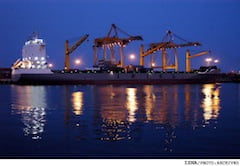
The M.T. Tour reached the Syrian port of Tartus at the weekend, where it loaded the 120,000 metric tonne (132,277 tons) cargo of light crude oil, according to the industry source and shiptracking data.

Satellite tracking showed the vessel was last spotted near Port Said in Egypt, where is was due to arrive on Wednesday. Its final destination was not available but the industry source said the vessel was likely to head to China or Singapore.

“I was asked to provide an option to ship to southern China or Singapore,” the source said.

Source: insideofiran

U.S. Adds Four Iranian Firms, Two Individuals To Sanctions List


The U.S. Treasury Department has added four more Iranian firms and two individuals to its sanctions list, saying they are connected to the country’s Islamic Revolutionary Guard Corps (IRGC) or affiliated with Iran’s national maritime carrier.

The blacklist targets the Iran Maritime Industrial Company SADRA and Deep Offshore Technology PJS, alleging they are owned or controlled by the Revolutionary Guard to generate funds the proliferation of weapons of mass destruction.

The Treasury also designated Modality Limited and Malship Shipping Agency Ltd., which it says are two Malta-based “front companies” of the Islamic Republic of Iran Shipping Lines (IRISL).

In 2008, IRISL was blacklisted for providing logistical support for Iran’s ballistic-missile program.

Two employees of the maritime carrier also added to those barred from using the U.S. financial system.

 Source: payvand

Kuala Lumpur seizes suitcases of counterfeit US dollars traced to Iran

0


Two suitcases crammed with counterfeit $100 bills were seized in Kuala Lumpur this week from two Iranian traders who flew in to the Malaysian capital on direct flights from Tehran. One contained 153,000 forged dollars and the second 203,000. The traders claimed they were issued the bills by tellers at the Iranian central bank CBI to finance their business transactions and had no notion they had not been dealt genuine greenbacks.

DEBKAfile’s sources report that alert local businessmen spotted the fake currency despite its quality workmanship when they used it to pay for their purchases.
According to a Malaysian source, the bills were finely printed on special paper. The initial investigation identified the paper as made in China especially for use in printing currency and a supply recently reached Iran.
Malaysian authorities have not identified the Iranian traders who were taken in custody except by their initials – H.M. and A. G.
Kuala Lumpur finds itself in the middle of an international scandal developing around the affair and involving the US, China and Iran. The Iranian embassy is leaning hard on the government to keep it hushed up, threatening to cut off commercial ties if the story is made public, or if the two traders are forced to stay in the country until the legal proceedings take their course.
Tehran fears the embarrassment attending disclosure of its suspected traffic in counterfeit US currency as the April 13 date approaches for important nuclear negotiations with the six world powers. Iran would find itself badly compromised on world financial markets on top of the difficulties it already faces as a result of the tough international financial sanctions clamped down by America and Europe.
DEBKAfile’s intelligence sources disclose that American undercover agents are in Malaysia trying to get hold of some of the fake bills on order to have them tested in their US laboratories for clues to their provenance. They could then be compared with other forged $100 bills seized last year in several Middle Eastern countries.
Comparison with fake bills impounded recently in Iraq, for example, or in the Persian Gulf countries, might shed light on dark corners of Iran’s industry for the counterfeiting and circulation of American dollars and establish whether it is run by criminal mafias or clandestine elements tied to the Revolutionary Guards Corps.
Chinese secret agents have also arrived to track the paper’s trail to Iran The special paper used for the dollar bills seized in Kuala Lumpur is exported from China only under special license..
Evidence that the Islamic regime of Iran was responsible for the wholesale forgery of the emblematic American dollar would have harsh consequences. Washington would not pull its punches and would convince a widening circle of world governments to step up sanctions against Tehran for the crime of undermining international currency.
Since the international money transfer firm SWIFT severed its ties with most of Iran’s banks, the traders have had to travel abroad in person carrying suitcases full of cash for contracting their business operations.

Five months ago, Western intelligence circles issued a warning that Iran would try and overcome the shortage of available foreign currency reserves caused by sanctions by printing counterfeit $100 bills.

In 2010, when US forces were still present in Iraq, they captured several million American dollars suspected to have been forged in Iran and smuggled into Iraq.
In 2010, the US Federal Reserve Board had a new $100 bill designed to defeat counterfeiters. Its release was delayed by printing defects.

 Source: debka

Iran and al-Qaeda exploit Yemen uncertainty: U.S. Mideast envoy

0


The top U.S. diplomat for the Middle East said Wednesday that Iran and al-Qaeda are exploiting political uncertainty in Yemen and the region as a whole to expand their influence.

“Iran operations are similar to those (of) al-Qaeda,” Assistant Secretary of State for Near Eastern Affairs Jeffrey Feltman told reporters in Sana’a, a day after talks with Yemeni President Abdrabuh Mansur Hadi.

“Iran tries to exploit uncertainty and unhappiness in countries of the region,” he said, adding that al-Qaeda was also trying to “exploit opportunities where there is political chaos.

Feltman said the U.S. views “with concern reports of rising Iranian influence in parts of Yemen,” and that Washington was working with Sana’a and “partners elsewhere in the region to push back against Iranian interference where it occurs.”

Earlier this month, U.S. Central Command chief General James Mattis warned that Iran was “providing more (material support) to include weapons, not just money” to Houthi rebels in northern Yemen, and trying to “influence the non-Houthi tribes” as well.

Feltman acknowledged al-Qaeda’s expansion in Yemen’s mostly lawless southern and eastern provinces, saying he was aware of the “challenges” it posed to the Arabian Peninsula country.

But he added he remains “convinced in the long term, a managed transition plan to a democratic election in February 2014… is the best long-term policy against al-Qaeda.”

Feltman also met Yemeni government officials, activists and foreign diplomats during his visit, just days after a top U.S. counter-terrorism official raised concerns that members of former President Ali Abdullah Saleh’s regime were disrupting the country’s political transition.

Last November, Saleh signed his powers over to Hadi who in February was elected to the presidency in a single candidate vote as stipulated by the U.S.-backed deal, which also calls for the launch of an all-inclusive national dialogue to address Yemen’s long standing conflicts.

The deal also calls for restructuring the country’s divided armed forces, a key to ensuring stability.

Saleh’s sons and nephews still command Yemen’s elite military forces which pro-democracy activists blame for much of the bloodshed during the year-long uprising against Saleh’s rule.

Other units are under the control of Saleh’s opponents who defected in support of the protesters.

“The military reorganization is an essential part of the stability of Yemen,” said Feltman, though he conceded it would likely be a “long process” before it is complete.

Source: alarabiya

Iran flies thousands of pro-Palestinian activists to Syria. IDF fortifies borders

Israel boosted its Syrian and Lebanese border units as special flights carrying thousands of pro-Palestinian activists from Tehran touched down in Damascus Tuesday, March 27 for the international Global March to Jerusalem Friday, March 30. Before taking off, they were split into small groups and tutored by Iranian Al Qods Brigades officers in tactics for breaching Israeli border barriers, bursting through and challenging the Israeli military forces defending the border.

On arrival in Damascus, one group of activists was sent by special bus to Lebanon, where Hizballah officers stood by to lead them to villages close to the Israeli frontier; a second is assigned to face Israeli lines on the Golan.

These anti-Israeli activists from several countries are being planted at strategic points to carry out the plan hatched together by Iran, Syria and Hizballah to ignite Israel’s two northern borders in solidarity with the annual Israeli-Arab Earth Day next Friday.
Earlier reports from Damascus that the demonstrators would keep the Quneitra sector of the Golan and the Lebanese Beaufort were meant to put the Israeli command off its stroke by disguising the real scope of their plans and their objective:  a mass assault on Israeli borders. They are programmed to coincide with the outbreaks the Palestinian Authority is preparing for Jerusalem and the West Bank and Israeli-Arab disturbances inside Israel – all on the same day, as DEBKAfile reported earlier Tuesday.
The Palestinian extremists of the Gaza Strip will certainly not stand aloof.


Source: debka