Home Blog Page 548

Baha’i Citizen Bashir Ehsani Sentenced to 5 Years in Prison

0


His trial was held in August and his charges included disturbing public order and possession of satellites. However, Judge Pirabbas has ignored the report of his interrogator and has changed his charges into gathering and conspiracy to disturb national security.

The interrogator had acquitted him of conspiracy, blasphemy and anti-regime propaganda.

He had been summoned before and was interrogated for hours in one instance.

He was arrested following the Ashura protests and later released on bail. The authorities raided his home in February but were unable to arrest him.


Source

Twenty One Baha’i Citizens Arrested in Esfahan

0


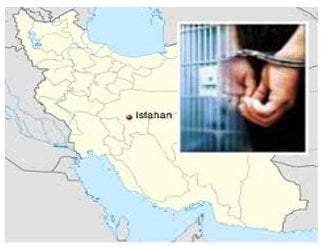
HRANA News Agency – On Thursday, September 29, 2011, twenty one Baha’i citizens were arrested in Esfahan and taken to an unknown location.  Amongst the detainees, there was a 9 year old child.

According to a report by Human Rights Activists News Agency (HRANA), on Thursday, Iranian security agents arrested the following Baha’i citizens in Esfahan:

  1. Anisa Daneshgar
  2. Arman Rahimi
  3. Ataullah Daneshgar
  4. Darab Yazdani
  5. Dariush Dastpiesh
  6. Dina Safarpour (9 years old)
  7. Fardoas Niki
  8. Farid Eshtiagh
  9. Farzad Rohani
  10. Fazel Behnam
  11. Heshmatullah Niki
  12. Laleh Namjoian
  13. Lava Daneshgar
  14. Parisa Rahmani
  15. Roheia Hakimon
  16. Saha Behnam
  17. Samira Ghaneh
  18. Shahla Sanaei
  19. Sohela Davardan
  20. Sohela Vahedian
  21. Taj Almalok Janamian

On Saturday, October 1, 2011, Dina Safarpour, Shahla Sanaei, Fardoas Niki, Saha Behnam, Sohela Davardan, Samira Ghaneh, Sohela Vahedian and Taj Almalok Janamian were released. Thirteen other detainees still remain in custody while their whereabouts are unknown.

After these Baha’i citizens were arrested, the houses of Parisa Rahmani, Farzad Rohani and Ataullah Daneshgar were searched and Baha’i religious artifacts were confiscated.


Source

Ayatollah Boroujerdi Denied Medical Care


HRANA News Agency – On Saturday night, October 1, 2011, Ayatollah Boroujerdi visited the prison clinic in Evin because of heart problems, but prison officials refused to provide medical care for him. Ayatollah Hossein Kazemeyni Boroujerdi is a prisoner of conscience whose pre-existing medical conditions have deteriorated since his arrest on October 8, 2006.

According to a report by Human Rights Activists News Agency (HRANA), last night, Ayatollah Boroujerdi complaining of chest pain visited the clinic in Evin Prison to seek medical care. The medical staff didn’t admit him into the clinic and asked for his immediate transfer to a hospital outside the prison. However, the prison officials have refused to comply with this request.

Ayatollah Boroujerdi suffers from heart problems and lacks the necessary balance to walk independently due to swelling of both feet.


Source

Iranian leader calls for discretion in fraud reporting

0


Iran’s Supreme Leader has advised the media to refrain from stoking the fires of the banking fraud scandal that has made headlines in recent weeks.

On his official website, Ayatollah Khamenei wrote on Monday: “The media must not persist in creating controversy and uproar regarding this matter. Instead, they should allow officials to pursue and investigate the matter with utmost wisdom, strength and precision.”

Speaking in a meeting on Monday, Ayatollah Khamenei referred to his previous recommendations to identify and root out corruption, saying: “While officials welcomed my earlier recommendation to stop economic corruption, if they had truly acted on those recommendations, we would never have faced a matter like the recent bank fraud.”

In 2001, Ayatollah Khamenei issued an eight-article order to officials in the three branches of the government (judicial, executive and legislative) to uproot financial corruption.

The order called on the Ministry of Intelligence to concentrate on “vulnerable points in government economic activities” such as “foreign transactions and agreements, large investments, national development plans and important economic and financial decision-making centres in the country and report to the president.”

Ayatollah Khamenei maintained that his recommendations were not carried out, adding: “Some people are trying to take advantage of the recent events in order to question officials, while [the three branches of government] are trying to carry out their duties.”

He assured the people that the government is intent on dealing with the culprits in the fraud and urged the media to refrain from fomenting controversy.

He said: “Continued controversy and uproar are not advisable, especially when some people are trying to take advantage of this situation, and everyone must be on guard.”

The sensational fraud case centres around the $3 billion fraudulently acquired by an investment company through the sale of false letters of credit. Eight Iranian banks have been implicated in the recently uncovered embezzlement scenario, with the the Bank of Saderat and the Iran Melli Bank playing the biggest roles.

The judiciary has arrested several bank mangers and officials as well as the owner of the accused investment company.


Source

Group rapes in Karaj prison under orders of prison officials


According to reports, three young prisoners were transferred to other prison cellblocks to be group raped by prison gangs.
In the past few weeks, at least three young prisoners who were transferred to cellblocks 1, 4 and 6 on orders of prison officials Mohammad Mardani and Khadem, were tied up by prison gangs and group raped. These three teenagers were hospitalized for a week after this incident and are now suffering from severe physical and psychological problems…
These cases were disclosed because most prisoners were aware of it but there are reportedly high numbers of rape cases which are kept secret. Prison gangs carry out this violent act with assurances from Mardani and Khadem that they will not be prosecuted and punished. Some of these young prisoners are used as sex slaves and are sometimes rented to other prisoners.
Currently, a large number of teenage prisoners and young prisoners are kept with dangerous criminals in cellblocks 1, 3, 4 and 6 and are at risk of sexual assault and being infected with dangerous diseases such as HIV.


Source

Iranian MPs accuse president in fraud case

0


Eleven members of the Iranian Parliament have written a letter to the presiding board of Parliament, calling for President Mahmoud Ahmadinejad to be prosecuted for his alleged involvement in the “great financial fraud in Iranian banks.”

The Mehr News Agency reports that the letter also accuses presidential chief of staff Esfandiar Rahim Mashai, Iranian Central Bank head Mahmoud Bahmani, the central bank’s deputy head, Hamid PourMohammadi, and Finance Minister Shamseddin Hosseiny.

Earlier, Ahmadinejad had dismissed all accusations directed at his government regarding the $3-billion financial fraud case, insisting that his government is “the cleanest government in the country’s history.”

Over the past four years, the AmirMansour Arya Company sold $3-billion worth of fraudulent letters of credit to eight Iranian banks.

The Bank of Saderat and the Iran Melli Bank are said to have sustained the heaviest losses. The Saderat CEO has been dismissed, and the head of the Melli Bank resigned last week, acknowledging that some of his branch managers had “surpassed the limits of their authority.” However, the next day he left the country for Canada, where he holds residency, and has not returned, despite announcements that he was scheduled to return to Iran last Thursday.

The judiciary has urged the senior Iranian banker to return to Iran to refute the accusations against him.


Source

IHRDC Releases Report On The Islamic Republic’s Executions Of Kurds In 1979


NEW HAVEN, CONNECTICUT – The Iran Human Rights Documentation Center today released a report documenting the Islamic Republic’s executions of Iranian Kurds in August and September 1979.

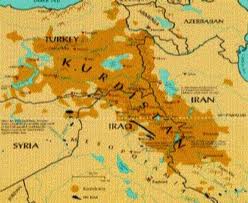
Iranian Kurds, like many ethnic minority groups, supported the 1979 revolution, and sought some form of autonomy in the nascent Islamic Republic. However, in August 1979, only six months after his return to Iran, Ayatollah Ruhollah Khomeini ordered the Iranian military and the newly-created Islamic Revolutionary Guards Corps (Sepah-e Pasdaran) to crush the Kurds and take control of the Kurdish regions in Northwestern Iran. For weeks, government forces waged a brutal campaign, surrounding towns with artillery and tanks, and bombing from the air. By the beginning of September, they controlled the major towns and the Kurdish fighters (peshmerga) had fled into the mountains from where they continued to wage a guerilla campaign.

As an added measure of terror, Khomeini dispatched his long-time comrade Ayatollah Sadegh Khalkhali to summarily try and order the executions of the so-called rebels. Khalkhali, as head of the newly-formed Islamic Revolutionary Court, was already known as “The Hanging Judge” due to his enthusiasm for holding summary trials and issuing execution orders, including one to the exiled Shah.

For several weeks in August and September, as government troops took control of towns in the Kurdish regions, Khalkhali and his deputies conducted trials of men, women and boys who had been arrested without warrants or charges. He and his deputies briefly questioned the prisoners before convicting them of crimes such as “corrupter on earth and at war with God and his prophet” before sending them to face a firing squad. The entire process usually took only a day and sometimes was completed in a matter of hours. While the total number of executions is unknown, it was reported at the time that as many as 80 people were executed in three weeks.

This report captures only one brutal episode among many that the Islamic Republic perpetrated in the Kurdish regions, as well as the rest of Iran. The battles and killings continued in the Kurdish regions, and eventually blossomed into a full-scale war that lasted for years. Iranian Kurds, as well as other ethnic minorities, continued to work to preserve their cultural and political rights, and the Islamic Republic continued to arrest, torture and imprison them.

While these events took place over 30 years ago, they are still relevant today as they turned out to be only a prelude to the Islamic Republic’s regular and persistent suppression of minority voices. The regime continues to violate the human, political and cultural rights of Kurds. Use of Kurdish languages in print and education is discouraged, and Kurdish student, political and civil activists are regularly arrested, detained and imprisoned. It has been reported that there are currently at least fifteen Kurds on death row for political offenses in the Islamic Republic.


Source

Iran welcomes Taliban members

0


San Francisco Chronicle – Iran quietly hosted a delegation of Taliban members in Tehran this month in a powerful and unusual signal of its ambition to shape the trajectory of the Afghan conflict as U.S. troops begin to withdraw.

Iranian officials had apparently hoped to facilitate a meeting between the delegation and Burhanuddin Rabbani, leader of Afghanistan’s reconciliation efforts who was attending the same conference in Tehran. Rabbani was assassinated in Kabul later in the month.

Although the meeting did not happen, the presence of the Taliban members suggests Iran has cultivated deeper ties with the insurgent group than was previously known and is stepping up efforts to influence its eastern neighbor as the U.S. role recedes.

The relationship between Iran and the Taliban’s central leadership has long been deeply fraught; when the Taliban was running Afghanistan in the 1990s, the two countries came to the brink of war.

U.S. officials have for years accused Iran of fueling the Afghan war by providing training and sophisticated weapons to individual insurgent commanders. There have been few signs of senior-level contact between the Taliban and Iran.

Hosting Taliban members at the Tehran conference might have been an attempt by Iranian officials to mend ties as it becomes clear the group will be a major power broker in Afghanistan after the United States withdraws its last combat troops in 2014.


Source

Mystery surrounds suicide of Iranian bloggers

0


Opposition supporters believe young couple were pressured to testify against missing human rights activist Kouhyar Goudarzi.

Two Iranian bloggers have killed themselves after being detained by security officials thought to be from Iran‘s ministry of intelligence.

Opposition activists believe Nahal Sahabi and her partner Behnam Ganji had been under intense pressure to testify against their friend Kouhyar Goudarzi, the prominent human rights activist. Goudarzi was arrested on the same day, 31 July, and remains missing.

At the time, the authorities refused to acknowledge holding them.

A week after the arrests Sahabi and Ganji were released from jail but Goudarzi, a member of the Committe for Human Rights Reporters (CHRR) in Iran is still missing, his lawyer said by phone from Tehran.

Ganji killed himself on 1 September, followed by Sahabi on 28 September, according to an article on CHRR’s website.

The reasons behind the double suicide is unknown but speculation is rife that the pair had been pressured while in jail to testify against Goudarzi.

“She suffered from depression after Behnam had mysteriously committed suicide a couple days after he was released from prison,” said the CHRR article. “Kouhyar Goudarzi is still detained incommunicado.

“There is no information on what happened to Behnam Ganji and Kouhyar Goudarzi in prison. Behnam Ganji’s suicide has raised serious concerns regarding Kouhyar Goudarzi’s unknown situation.”

On her last blogpost, addressed to parents and friends, Sahabi wrote about Ganji and shared a YouTube video of a song by the Greek composer Eleni Karaindrou, called Wedding Waltz.

Goudarzi, 25, was previously arrested in the aftermath of Iran’s disputed presidential elections in 2009.

He was initially accused of moharebeh (waging war against God), which carries a death sentence, but was convicted of “spreading propaganda against the regime” and sentenced to a year in prison.

While there, Goudarzi won the National Press Club award for his human rights work. He was released from prison in December last year.

A day after his arrest in July, Goudarzi’s mother, Parvin Mokhtareh, was detained in the southern city of Kerman. She has been accused of insulting the supreme leader, propaganda against the regime and acting against national security. Amnesty said the charges stemmed from an interview she gave when her son was jailed in 2010 “in relation to his peaceful human rights activities”.


Source

Gonabadi Dervish, Abbas Sharyati, Arrested in Yazd

0


HRANA News Agency – On Thursday morning, September 29, 2011, Abbas Sharyati, a member of Nimatullahi Gonabadi Sufi Sect, was arrested in Yazd. The number of arrests continues to rise as pressure on Gonabadi dervishes increase throughout the country.

According to a report by the Campaign to Protect Dervishes’ Rights, a group of security agents arrested Abbas Sharyati in Yazd and took him to an unknown location. Thus far, the reason for this arrest has not been announced, and Abbas Sharyati’s whereabouts are unknown.

On Wednesday, September 28, 2011, Nusrat Tabasi, another detained member of Nimatullahi Gonabadi Sufi Sect, was transferred from solitary confinement, Ward 209, to the general population in Evin Prison.Nusrat Tabasi is a member of Majzooban Nur, Nimatullahi Gonabadi Order website.


Source