Home Blog Page 549

Ali Ajami in Critical Condition in Rajai-Shahr Prison


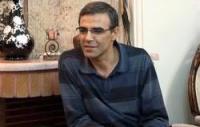
HRANA News Agency – Ali Ajami is an imprisoned student activist who is spending the last days of his two year sentence in Rajai-Shahr Prison. During his incarceration, Ali Ajami has been denied basic rights including access to telephone and furlough granted to political prisoners. Incapable of traveling the long distance between their residence and Rajai-Shahr Prison in Karaj every week, Ali Ajami’s elderly parents see their child every four months.Ali Ajami’s family lives in Sabzevar County in the north eastern province of Razavi Khorasan.

In an interview with Jaras News, Javad Ajami explained his brother’s condition in prison and said, “I saw my brother 20 days ago. Since then, I don’t have any news from him. We live in Sabzevar County and must travel the long distance from home to the city of Karaj for 20 minutes of visit with him. For this reason, we can’t make the trip every week. My parents are old and can’t bear the physical hardship. They came to see Ali three months ago. The officials must understand how difficult it is for my parents and how much they suffer from not being able to see Ali.”

Ali Ajami is a law student at Tehran University, a leftist activist and the editor of a student publication called “A Better World.” Ali Ajami was amongst the students who sustained some injuries when Basij Militia attacked the dormitories in Tehran University on June 14, 2009.

Ali Ajami was arrested on February 10, 2010 at home in Sabzevar County and taken to a detention center in the city of Sabzevar. He was then transferred to a solitary confinement in Ward 209 in Evin Prison where he spent 100 days in a legal state of limbo. On January 26, 2011, Ali Ajami was taken to Rajai-Shahr Prison where he has been forced to tolerate very difficult conditions during the last few months of his sentence. Ali Ajami has less than 3 months left of his prison term.

Judge Abolqasem Salvati presiding over the Revolutionary Court, Branch 15, sentenced Ali Ajami to 4 years in prison on charges of “Propaganda and Conspiracy Against the Regime,” but this verdict was later reduced to 2 years by the Appeals Court of Tehran Province.

Expressing concerns about his brother’s condition, Javad Ajami said, “Ali was studying law, and he had only 3 months left to graduate when they arrested him in Sabzevar. He was transferred to Mashhad Prison first and then taken to Evin when he was convicted. He was sentenced to 4 years in prison, but the Appeals Court overturned this verdict and reduced his sentence to 2 years in prison on charges of Propaganda Against the Regime. He has been in prison one year and 8 months. He has served 8 months in Rajai-Shahr Prison. I swore to God; our predicament is so painful and unbearable that I really don’t know what to say or which pain to describe.”

Yesterday, the families of political prisoners reported that new restrictions had been imposed on the inmates. The families say that prisoners are beaten and battered regularly these days in Rajai-Shahr Prison, and political prisoners are harassed by prison officials and guards for any excuses. Lately, it was reported that Masoud Bastani, an imprisoned journalist, was beaten by the prison guards in Rajai-Shahr Prison in front of his mother and wife. Last week, while Ali Ajami and Jafar Eghdami were being taken to the prison hospital, they were beaten by prison guards, and when the prisoners objected to the beating, both of them were sent to solitary confinement.

Pointing out the horrific conditions in Rajai-Shahr Prison, Javad Ajami added, “The situation in Rajai-Shahr Prison is extremely poor. Since Ali was transferred there, he has been very upset and is under pressure because political prisoners are mixed with ordinary inmates convicted of a variety of crimes. Since then, his physical health has suffered; medical problems aren’t handled in prison, and there is no recourse available. When he was in Evin, conditions were a bit better there. In our last visit, I noticed Ali was ill, had a swelling and wasn’t emotionally well either. Ali didn’t have any physical problems before his imprisonment and was totally healthy.”

Emphasizing that his brother has been denied any rights granted to political prisoners, Java Ajami continued, “During his incarceration, Ali hasn’t been given furlough. No matter how hard he and we have tried, there has been no answer. We wrote letters to the prosecutor’s office but received no reply. We really don’t know what to do and appeal to which government office to ask for our loved one’s basic rights.Ali has been denied the right to have access to a phone, to have in-person visits with his family or go on furlough. During all this time, we have been given the permission to see him in-person only once.”

Addressing government officials, Java Ajami at the end said, “If anyone hears the voices of Ali’s elderly parents and understands their pain, give him a furlough or at least grant us the permission to see him in person once more so that my parents suffer less and experience the joy of embracing Ali in their arms.”

In a letter written to the Head of the Judiciary Branch, a group of political prisoners in Rajai-Shahr Prison have revealed accounts of being insulted, belittled and physically punished by prison officials and have requested a special committee to be appointed to interview the prisoners and investigate all the allegations.

In this letter, political prisoners of Rajai-Shahr Prison wrote, “Only in the last six months, eight political prisoners in Hall 12 have been insulted, belittled and beaten in various ways. Unfortunately, every time one of these prisoners decided to seek justice by protesting against these acts, he was set up by the guards and accused of some sort of crime. Consequently, the prisoners were forced to withdraw their objections fearing new charges that would have increased their prison terms.”


Source

U.S. says Iran is a hypocrite and EU calls for the release of Iranian who became a pastor


The United States said Friday it is “deeply concerned” by what it said is Iran’s harsh crackdown on dissent, minority religious belief and freedom of expression.

The U.S. State Department expressed particular concern about the case of Iranian pastor Youcef Nadarkhani, who faces the death penalty after having refused to renounce Christianity for Islam.

“The United States is deeply concerned by reports of the Iranian government’s continued repression of its people,” the State Department said in a statement.

It accused Iran’s leaders of hypocrisy for “claiming support for the rights and freedoms of Iranian citizens and people in the region,” yet “the government continues its crackdown on all forms of dissent, belief, and assembly.”

The White House on Thursday warned Iran would show “utter disregard” for religious freedom if it carried out a death sentence on Nadarkhani, who became a pastor of a small evangelical community after converting from Islam.

The State Department said the death sentence hanging over Nadarkhani comes “amid a harsh onslaught against followers” of other minority faiths in Shiite-Muslim-majority Iran, including Zoroastrians, Sufis, and Bahais.

It also said “Iran’s government continues to arrest journalists and filmmakers. They are restricting access to information by jamming incoming satellite broadcasts and filtering the Internet…

“We continue to call for a government that respects the human rights and freedom of all those living in Iran,” it said.

Meanwhile, EU foreign policy chief Catherine Ashton on Thursday joined calls for Iran to free the pastor.

“I urge the Islamic Republic of Iran to respect its international human rights commitments, including on freedom of religion or belief, and strongly appeal to Iran not to sentence Pastor Nadarkhani to death,” Ashton said in a statement.

“I call for Mr Nadarkhani’s immediate and unconditional release.”

Nadarkhani, who is in his 30s, became a pastor of a small evangelical community called the Church of Iran after converting from Islam at the age of 19.

Iranian authorities arrested him for apostasy in 2009 and sentenced him to death under Islamic Sharia law.

The pastor was spared by a supreme court appeal ruling in July, his lawyer told AFP, but was again condemned to death after the case was reheard at a court in his home town of Gilan, according to media reports.

The United States, Britain and France are among a host of countries who have previously called on Iran not to carry out the death penalty.


Source

Detained Iranian Lawyer Charged With Accepting Human Rights Award


A prominent Iranian lawyer who was arrested earlier this month is reported to be facing a new charge of accepting an “unlawful” award for his human rights work.

Abdolfatah Soltani, who has represented a number of well-known Iranian political and human rights activists, was arrested by security forces at his office on September 10.

Soltani is one of the cofounders, along with Nobel Peace laureate Shirin Ebadi, of the Defenders of Human Rights Center (DHRC).

He was charged with founding the center; “spreading propaganda against the regime;” and “assembly and collusion against national security.”

A deputy head of the Defenders of Human Rights Center, Narges Mohammadi, was jailed this week for 11 years on similar charges.

In an interview with Radio Farda, Soltani’s daughter, Maede, said his lawyers have been notified of a new charge against him: “accepting an unlawful award,” meaning the Nuremberg International Human Rights Award bestowed on Soltani in 2009.

Maede Soltani said since her father was barred from leaving the country at the time, he could not personally receive the prize.

“My mother [Masoumeh Dehghan] accepted the prize on behalf of my father,” Maede Soltani said, “so she was arrested two months ago and spent six days under difficult conditions in solitary confinement.”

Maede Soltani added that her mother — who was later released on bail — is to appear in court in two months.

Soltani has been detained four times over the past six years.

PEN demands release of Iranian writer, activist


More than 100 writers, poets and women’s rights activists are speaking out against the arrest of Faranak Farid, the Iranian journalist, poet and activist who was arrested on September 3 in Tabriz.

Azar Mahlojian, an expat Iranian writer who heads the jailed writer’s committee of PEN (Poets, Essayists and Novelists) in Sweden, told Zamaneh that at the 77th International PEN congress in Belgrade, 104 participants signed a petition calling for the unconditional release of Farid.

Commenting on the Islamic Republic’s crackdown on writers, poets, journalists, filmmakers and artists, Mahlojian said: “It appears that the Iranian regime has taken advantage of the international focus on the events in the Middle East and increased pressure on writers, artists and those involved in arts and culture.”

She said the Iranian government’s fear of the art and culture community stems from the powerful and lasting effects of its works.

In the announcement at the annual International PEN congress, Faranak Farid is identified as a progressive writer and editor. Her first volume of poetry was published in 2009 with the second one to be published this year.

There has been grave concern regarding her health in prison, and earlier reports indicated that she had been beaten during her arrest.

Farid was arrested during recent protests in Azerbaijan decrying government inaction on the drying out of Lake Oroumiyeh.


Source

Shohreh’s story: How Iran violated a top student’s rights

0


Baha’i World News Service, GENEVA: Like many young people the world over, Shohreh Rowhani grew up with high hopes of a good university education. But now she has run up against a system which – while promising opportunity on the surface – is cruelly designed to block her and other young Iranians from ever getting a degree.

Ms. Rowhani is a Baha’i, and her experience is made all the more unjust by the fact that she is among Iran’s most gifted students; she ranked 151 in the country after passing the national university exam in her chosen field of languages. In other words, her result put her among the top 1% of candidates who took the exam.

Buoyed by her impressive grades, Ms. Rowhani – who comes from the northern Iranian city of Nowshahr – began the online process of selecting her courses. But when the results of those applications were listed, she discovered that her submission had been rejected as an “incomplete file.”

It is a phrase well known to young Baha’is. For several years now, the term has appeared frequently as one among several ruses crafted to prevent them from actually matriculating even if they pass the national university exams.

Undeterred, Ms. Rowhani courageously went to the regional office that oversees the examination process and asked officials to explain what was wrong.

“They told me that this has happened because you are a Baha’i,” she reported in a letter recently sent to several human rights organizations.

“Since you are a Baha’i you do not have the right to enter university,” she was told.

She decided to take her case to the next level, managing to get a meeting with the head of the admissions department.

When confronted, this official simply “expressed his regret for this matter and told me that there is nothing he can do,” said Ms. Rowhani. “He said there is no way out of this and even if you enter university you would be expelled after three or four terms.”

She asked him if the results would have been different if she had said she was a Muslim.

“He said it makes no difference, as they know you,” she wrote. “‘The ministry of intelligence has identified your family and all of the Baha’is already.'”

“They told me that I will not get any result, no matter who I might refer to,” she said.

The experience of Shohreh Rowhani is also a familiar story for thousands of Baha’is in Iran who are barred from higher education on religious grounds.

Even for the fortunate ones who might be offered a place, expulsion often follows during the course of their studies. In recent months, two students at the Isfahan University of Technology were prevented from registering for the next term, also for having “incomplete documents;” a Baha’i studying English literature was thrown out of the University of Kerman; a biomedical engineering student at the University of Sahand was dismissed; and a physics student at the University of Mazandaran was expelled after completing eight semesters on the honor roll and gaining admission to a Master’s program.

Three decades of exclusion

All kinds of methods have been used by Iran since the 1979 Islamic Revolution to prevent Baha’is from attending university – firstly, by expelling them all, and then, imposing an outright ban on their accessing higher education.

In response to international condemnation, the Iranian government changed the rules in 2003, declaring that Baha’is could now take the examination. But when nearly a thousand Baha’is moved ahead in good faith, they encountered new barriers.

At first, exams were returned with “Islam” written in the religious affiliation slot – something unacceptable to Baha’is, who are taught by their faith to tell the truth at all times, especially about their religious beliefs.

So the government indicated that the word “Islam” referred only to the particular sub-test on religion that each applicant is required to take, allowing Baha’is in good conscience to apply for higher schooling. Then, in the mid-2000s, a number of Baha’is successfully entered various universities around the country – only to find that they were then often expelled soon after matriculation.

In March 2007, for example, the Reuters news agency reported that some 70 Baha’i students had been expelled that academic year from universities in Iran. In that report, an anonymous spokesperson for the Iranian Mission to the United Nations was quoted as saying in reply: “No one in Iran because of their religion has been expelled from studying.”

After another international outcry, Iran changed tactics again. Baha’is who took the exam began to find their results were simply being withheld. When they went to the national website to find out their scores, many received the message that they had “incomplete files” – leaving them in a bureaucratic limbo.

“Unjust and oppressive practices”

In an open letter sent last month to Iran’s minister for higher education, the Baha’i International Community called for an end to the “unjust and oppressive practices” that bar Baha’is and other young Iranians from university.

The letter also addressed the government’s crackdown on the Baha’i Institute for Higher Education (BIHE), an informal community initiative run by Baha’is to educate their youth who are barred from university. In May, government agents raided the homes of more than 30 individuals associated with the BIHE and arrested 14 of them. Seven educators have this week appeared in court. Dozens more, including students, have been called in for interrogation – all in an effort to close the project down.

“Such actions, as you know, have been conducted as a matter of official government policy and as part of a systematic campaign to eliminate the Baha’i community as a viable entity in your country,” said the open letter, addressed to Kamran Daneshjoo, the Minister of Science, Research, and Technology.

For Shohreh Rowhani and her co-religionists, the fight for their right to education continues.

In her letter to human rights organizations she has expressed her desire that everyone should “know how senselessly my rights have been violated.”


Source

Internal State Document Exposes the Role of the Iranian TV in the Crackdown on Filmmakers


The International Campaign for Human Rights in Iran – Almost two week after the arrests of documentary filmmakers Naser Safarian, Mojtaba Mir Tahmaseb, Hadi Afarideh, Mohsen Shahrnazdar and Katayoun Shahabi by intelligence and security forces in Tehran, the International Campaign for Human Rights in Iran acquired an internal document from the Iran’s state broadcasting network, Islamic Republic of Iran Broadcasting (IRIB), revealing  the network’s role in the government persecution of independent filmmakers and film critics.

The document describes filmmakers’ participation in film festivals and artistic circles outside of the country as “underground cinema” and a cause for “political-security” concerns.

Various parts of this report indicate that the plan for the crackdown on and intimidation of the independent filmmaker community was initiated in September 2009 not in September 2011, when IRIB had laid the key “theoretical” groundwork for it.

The Young Journalist Club, a semi-official news source connected to IRIB, also provided information prior to the arrests that people would be arrested by Ministry of Intelligence forces, further highlighting the IRIB’s advanced role in the crackdown on independent directors and filmmakers.

The internal document of the Political Division of IRIB, prepared on 21 October 2009, was titled “Film Festivals: the soft war and underground Iranian films.” This document includes the same charges that were brought recently against the documentarians and originally announced last week by the Young Journalists Club, and then by the Ministry of Culture and Islamic Guidance and the Ministry of Intelligence.

The Campaign believes that IRIB’s operations are not only aligned with those of security-intelligence forces, but that the organization acts as the media arm of the Iranian security apparatus. As discussed below, in the past decade the IRIB has time and again, by providing a theoretical framework and justification for the arrests of members of various parts of society, such as these documentarians, or by producing the “Identity” or “Light” television programs, shown itself to be inseparable from the intelligence apparatus.

IRIB conducted similar research two years ago that provided justification allowing for the possibility of a crackdown by security and intelligence forces on political activists and civil society.

The IRIB’s Political Division’s Fabricated Case Against Independent Filmmakers

In this report, the Political Division of the IRIB emphasizes that a cause for concern is using “the magic of motion pictures, along with words and music, to impact human life.” The report underlines that cinema “is an important strategic tool through which one can instill beliefs and thoughts [in others].” Furthermore, the presence of Iranian filmmakers’ works in world film festivals including “Cannes, Berlin, Toronto, Montreal, and the Oscars,” as well as the broadcasting of Iranian independent filmmakers’ films on foreign TV networks, has become a serious worry.

In addition, the report refers to “the BBC Persian television network’s attention” to the works of Iranian filmmakers as a “political action,” “animosity,” and “hostility” towards the Islamic Republic of Iran, stating “some foreign networks including BBC Persian and MBC (Munhwa Broadcasting Center) whose clear hostility towards the Islamic Republic has become known by all … have also fallen into step with the political goals of these festivals and thus notice such underground Iranian films. For example, Hana Makhmalbaf’s film, “Green Days” was broadcast and reviewed on 11 September 2009 and on 15 September 2009 on [BBC Persian’s] program ‘Ekran.’”

Another part of the 21 October 2009 report calls independent filmmakers a part of Iran’s “underground cinema” and alleges that, “nowadays Iranian cinema is witness to the production of underground films that are produced outside of the official system and without government supervision. Filmmakers don’t get official permission to get their films produced and create them secretly and find possibilities of showing the film internationally and by doing so, attract foreign capital; to the point where we can now discuss the formation of an underground cinema in Iran. One of the most important characteristics of this Iranian cinema is its lack of regard for official criteria and rules.”

Expressing concern about the formation of a cinema outside of government supervision, the IRIB Political Division’s report emphasized that “underground cinema, like underground music, literature and other unofficial forms of art and information in Iran, is formed parallel to the production of official films with government ties and provokes the interest of international film festivals.”

The 21 October 2009 report also accuses foreign film festivals that welcome independent and non-governmental films of acting “politically” and causing “political-security” concerns. The report designates independent Iranian filmmakers as “problematic” directors with “[prior] political-security files” and claims that, “more and more, film festivals that appear cultural and artistic have polluted angles to their politics, with one-sided selections, accept underground films that were produced without a license or viewing and through an illegal process … [these filmmakers] some of whom have political-security files, and in some cases have provided a dark image of the country.”

This report accuses independent Iranian filmmakers of “profit seeking under the cover of culture” and alleges that because they lack the “ability to communicate with their fellow citizens, they are targeted and in order to compensate for their weaknesses and interests they associate with the politics of cultural imperialism…”

The report charges Iranian filmmakers with presenting “a dark and disorganized picture of the economic and social conditions of Iran,” “presenting a dark image of the Islamic Revolution,” and claims that “the predominance of political views in international film festivals” and “the focus on underground works with political subjects” is the main reason why film festivals welcome these films.

According to the report, the IRIB’s political division claimed that, because of the rise of independent Iranian films in international film festivals in the past few years, film festivals have rejected “films introduced by the Iranian government organizations.” Through actions the report describes as “un-artistic” and “more political,” the “European film festivals such as Cannes, Berlin, etc have increased their attention to unofficial Iranian film in such a way that this year (2009), the Venice Film Festival awarded a prize to an Iranian-American filmmaker.”

The report comes in the wake of independent Iranian films succeeding official Iranian films in international film festivals. The report mentions examples of these films, such as Hana Makhmalbaf’s “Green Days,” Bahman Ghobadi’s “No One Knows About Persian Cats,” Marjane Satrapi’s “Persepolis,” and Shirin Neshat’s “Women Without Men.” The report describes this change as “the continuation of economic and political sanctions” with the goal of “cultural and political isolation” of the Islamic Republic.

The report also stated that since 2005-2006 the “internal problems of Iranian cinema” have led to the decrease of official Iranian cinema and the increase of underground Iranian cinema in international film festivals. Among the problems mentioned are: “the falling behind of Iranian cinema today from the new trends of independent and cultural cinema of the world,” “lack of government or private producers for making independent and more culturally-oriented films and a general lack of support for such films,” “a decrease in the reciprocal presence of other countries’ cinemas in Iran,” “increasing limitations and pressures on Iranian directors and artists,” “censoring and banning critical films,” and “constricting the filmmaking industry for critical filmmakers.”

A similar report, also acquired by the Campaign, indicates that the Political Division of IRIB regards the banning of the “Iranian Society of Film Critics and Writers” in 2003-2004 in 2003-2004 and detaining several of its members as a positive action.

The report also indicates that another society with the same name, several members of whom are part of the ruling faction, began its activities in 2003-2004.

The IRIB operates under the oversight of the Supreme Leader when it comes to confronting Iran’s civil and cultural activists. These activities started in the mid 1990s, when the television series “Identity” was broadcast as a joint production of Saeed Emami, then-vice president of security at the Ministry of Intelligence and a principle operative for the serial murders of dissidents, and Hossein Shariatmadari, a former member of the IRGC’s Policial Office and the current representative of Ayatollah Khamenei at Keyhan Newspaper. Other programs such as “The Light” and “The Berlin Conference” were also aired as a part of this program.

This report further reflects on IRIB’s successful role, in conjunction with intelligence and security institutions, in the widespread arrests and crackdown on writers and film critics and control of cultural organizations, especially cinema-related institutions. This role began in 2001 and has accelerated since the beginning of the post-election protests. The September 2011 detention of five filmmakers is a complete and documented case of actions planned and implemented in the 2009 IRIB report.


Source

Khandan defends right to seek justice

0


Reza Khandan, the husband of jailed human rights lawyer Nasrin Sotoudeh, reported to Evin Court to present his final defence for having filed a complaint.

In an interview with Zamaneh, Khandan reported that officials have finished investigating the charge laid against him: “publishing falsehoods by writing a letter to Tehran Prosecutor.”

Khandan says he told the court that his letter of complaint, regarding the mistreatment of his wife and family during prison visits, was not published in any media outlet or even online. He had simply written a letter to demand justice from the Tehran Prosecutor.

Khandan indicated that he was only allowed to visit his wife from behind a glass wall, and their children had not been allowed an in-person visit with their mother for more than three months. Sotoudeh had earlier refrained from visiting her family from behind the glass wall on the grounds that they were being mistreated by prison authorities during these visits.

Sotoudeh was sentenced to 11 years in prison and a 20-year ban from practicing law, which was the appellate court reduced to six years in prison.

Sotoudeh is accused of “acting against national security and propaganda against the regime” because of her collaboration with the Human Rights Defenders Centre and her legal defence of several political prisoners.


Source

Narges Mohammadi’s Reaction to Her Conviction for Human Rights Activities


Member of the Defenders of Human Rights Center and Nationalist-Religious activist Narges Mohammadi was sentenced to 11 years in prison by a Tehran court. In an interview with the International Campaign for Human Rights in Iran, Mohammadi called her sentence “an unfair ruling for a human rights activist.”

“In the ruling, my efforts for starting an international campaign for human rights, establishment of the National Peace Council at the Defenders of Human Rights Center, as well as my position as Deputy Chairperson for the DHRC have been counted as ‘security crimes.’ I have been called ‘an overthrower of the regime’ in the ruling, which is very unfair and unjust.  Of course the 11-year prison sentence is also unfair, but to call human rights activities, an internationally-accepted value, as my actions to overthrow my government is most unfair,” Mohammadi told the Campaign.

Branch 26 of Tehran Revolutionary Court sentenced Mohammadi to five years in prison for “assembly and collusion against national security,” five years for “membership in the Defenders of Human Rights Center,” and one year for “propagating against the regime.” “My lawyers had an issue with these charges, in that these three charges are all one in principle. When an individual is a member of a center or society, she would naturally participate in that society. For example, I would organize meetings and conferences, or I was the Center’s Spokesperson for two years, for which I would naturally publish the Center’s news. The court has in effect charged me with membership in the DHRC, and for two other charges that are subsets of the first charge and has sentenced me to six additional years in prison. These are the legal problems with the ruling,” said Mohammadi.

“The DHRC was a civil organization that was established in 2000 by obtaining an operating license from the Interior Ministry. According to the Constitution of the Islamic Republic, activities of parties, societies, and organizations are allowed.  Additionally, Iran has accepted the Universal Declaration of Human Rights and according to Article 9 of Iranian Civil Law, considers international covenants as binding as internal laws. Therefore, according to domestic laws and international commitments, the DHRC was a completely legal organization that performed human rights activities. But in my sentence, this type of activity is referred to as ‘overthrowing activities.’ It is a shame that human rights activities should be considered overthrowing activities for a regime. It is regrettable that such rulings are issued by our courts,” added Mohammadi.

“Since January 2009, when the DHRC offices were shut down illegally and without judicial orders, pressure on its members has increased. I, myself, was barred from leaving the country in May of that year, when I was heading for Guatemala. I was told to stop my human rights activites or else face more deprivation. Several months later, in November of 2009, I was fired from my job for obvious reasons and I was even told during my dismissal that if I continued my human rights activities, I would face more deprivation. After that, I was summoned to Investigative Branch 4. I presented my defense in five sessions and was released on custodianship orders [in lieu of bail]. But 20 days later, in a completely illegal manner, without judicial orders, I was arrested and detained. After I was released, I had two court sessions. Now my sentence which is in continuation of that pressure is very unfair. Instead of valuing human rights activities in our society, this is how they treat the activists. I am concerned that as human rights are taken more seriously in the world, human rights activists will face more prosecution and persecution,” said Mohammadi.

Narges Mohammadi told the Campaign that she would appeal the court ruling within the allotted time. “But I don’t know what decision they will make. The lower court’s decision was unexpected and I didn’t think that they would issue such a sentence for a human rights activist.”

“According to Iranian laws, a copy of the issued ruling must be sent to the lawyer or the suspect, but since a long time ago, they are telling the lawyers to go to the branch and to copy the original ruling by hand, said Mohammadi, adding that, “My lawyers were forced to hand-copy the 23-page ruling yesterday.”

Narges Mohammadi developed a serious illness during her detention in 2010, which required long-term treatment. After security forces stormed her home on 9 February 2010, when her husband was also arrested, she wrote a letter to Tehran’s Prosecutor demanding judicial review of the illegal breaking and entering of her home and the inappropriate treatment of herself and her family by security forces, for which she never received a response from judicial authorities.


Source

Nadarkhani Refuses to Repent; Awaiting Final Ruling on Apostasy Death Sentence

0


In his last court session on Wednesday, 28 September, Christian Pastor Youcef Nadarkhani, charged with apostasy and sentenced to execution, refused to repent of his Christian faith despite the judge’s repeated requests.

Youcef Nadarkhani’s lawyer, Mohammad Ali Dadkhah, expressed hope that the court would eventually declare his client innocent. As he told the International Campaign for Human Rights in Iran, “[Nadarkhani] was brought to court to repent for three days. He denied repentance on all three days. I said in my last defense that his execution is not an appropriate and legal action from the viewpoint of Sharia Law, our own laws, and international laws, and I believe that the court accepted my opinion. I hope the court will vote for his acquittal and he will be released in the coming week. His apostasy charges were eliminated before, and I provided the necessary defense regarding the illegality of repentance.”

Youcef Nadarkhani is a 33-year-old pastor who was born to Muslim parents and converted to Christianity at the age of 19. Prior to his arrest, he was a pastor for the Church of Iran, a 400-person congregation of Christians in the city of Rasht. His death sentence on the charge of apostasy was upheld on 23 August 2010 by Branch 11 of Gilan Province Appeals Court. The death sentence was overturned on 28 June, pending Naderkhani’s repentance. The suspect’s first court date was held on 25 September and continued through three more sessions until Wednesday 28 September.

“The Judge kept asking my client to say, ‘I have renounced Christianity and I recognize Islam as rescinder of all other regions,’ and he kept saying ‘I won’t say that,’” said Dadkhah.

“His Appeals Court death sentence had already been sent to the Supreme Court and as it lacked legal and logical justification, it was eliminated. But the Supreme Court wanted them to get a repentance from him, [stipulating] that if he does not repent, he should be executed. I said in the court that from the point of view of our country’s laws, Islamic spirituality, and jurists such as Montazeri, Ardabili, and Sanei, demanding a repentance is not legally valid. We had solicited these individuals’ specific opinions about this case. I told the court that from the standpoint of international law accepted by our own country, this move is not legal. Unfortunately, in the first session the court did not treat me very well,” continued Dadkhah.

“They thought I had gone there to tell my client not to repent. Otherwise, they said, why would I have gone all this distance to participate in the court session?,” said Dadkhah, adding that, “Or, for example, I was told at the entrance, ‘If you come wearing a tie tomorrow, we won’t let you in.’ I went back wearing a tie.”

“Our legal system, and the list of our crimes, does not include apostasy, and according to the article of the Constitution  governing the legality of a crime and its punishment, the government must insist on safeguaring the people’s rights. Otherwise it is possible for some judiciary staff to follow this precedence,” added Dadkhah.


Source

Iran: Arrests at funeral of activists in Khoy, West Azerbaijan

0


Source: Radio Zamaneh: Iranian security forces have arrested a number of Khoy citizens in northwestern Iran at the funeral for two prominent community activists in Azerbaijan.


The Association Defence of Azerbaijani Political Prisoners (ADAPP) reports that 60 people were arrested at the funeral of Ebrahim Jafarzadeh, his wife Mona Kahrobayi and their daughter Ayla.

The report indicated that the prominent activists and their daughter were killed in a “suspicious accident.”

The detainees reportedly include a number of Azerbaijani civil activists who have records of arrest and imprisonment for their social activities.

In recent months, several civil activists in Azerbaijan have been arrested by the authorities in connection with protests over the drying of Lake Oroumiyeh.


Source