Home Blog Page 58

Mullahs and Taliban; Old Enemies, New Friends

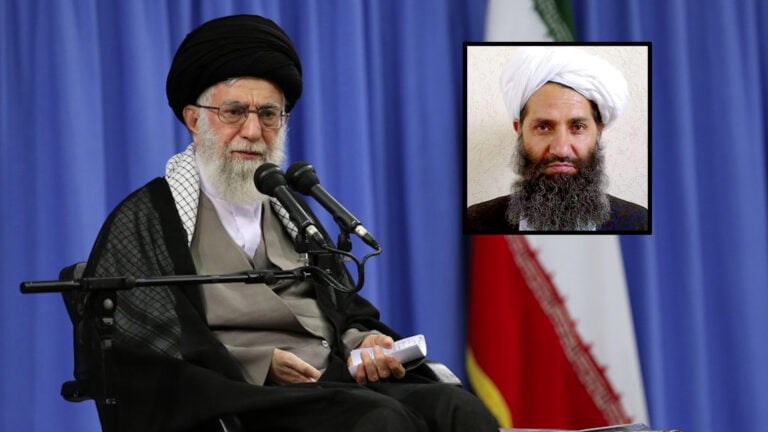
A former senior political adviser to the speaker of the Afghan parliament, said the Taliban relationship with the Mullahs of the Islamic Republic of Iran had changed drastically since the US-led invasion of Afghanistan, ultimately leading to a partnership between the long-time foes.

Baktash Siawash writes that Taliban were hostile towards Iran during their first rule in 1996. This hostility led the Taliban to assassinate Iranian diplomats in Mazar-e-Sharif, and Iran as a result increased its support for the anti-Taliban resistance forces.

The Iranian consulate in Mazar-e-Sharif is the same consulate where Taliban forces entered in August 23 years ago and killed eight diplomats of the Islamic Republic of Iran, as well as IRNA correspondent Mahmoud Saremi. However, the Ministry of Foreign Affairs of the Islamic Republic of Iran did not even mention the name “Taliban” in its statement on the anniversary of the massacre at the Iranian consulate in Mazar-e-Sharif this year.

However, after the US invasion of Afghanistan and the overthrow of the Taliban government in 2001, Iran approached the Taliban since the US was now their common enemy. During this period, Iran supported the Taliban and provided them with the resources needed to fight the central government and US forces, during which time the Taliban leader’s successor frequently met with Iranian officials.

According to Siawash, in addition to fighting a common enemy, the “opium trade” has also strengthened the Taliban’s ties with Iran. Iran’s Islamic Revolutionary Guard Corps (IRGC) Quds Force is a partner in the global drug trade with the Taliban.

Former Iranian President Mahmoud Ahmadinejad once publicly stated that Iranian officials wanted to “censor” him because he criticized “corrupt relations” between Iranian security forces and the Taliban.

The Afghan politician concludes that relations between the Taliban and Iran are merely based on common interests, not a long-term strategy. Although enmity with the United States has been at the heart of this bilateral relationship, there are still fundamental differences between the Mullahs in Tehran and the Taliban that will be tested in the near and distant future.

Source: Al Arabiya
Also read: Iran regime arrest Iranian rapper who criticized the government
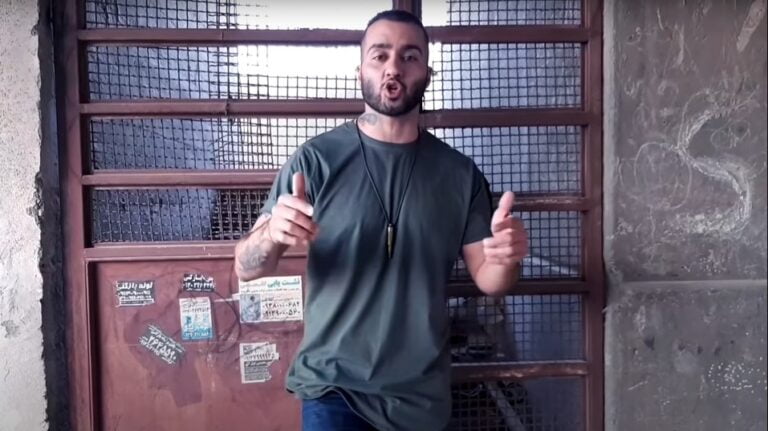
Iran regime arrest Iranian rapper who criticized the government
0

Security agents for the Islamic Republic of Iran in the city of Isfahan arrested the popular rapper Toomaj Salehi for his songs highlighting corruption within Iran’s regime.

Salehi’s uncle, Eghbal Eghbali, announced on Instagram the arrest of Salehi, writing “They arrested my nephew…The Islamic government cannot stand the voice of protest of dissident youth. We will not be indifferent to this dirty action of the rulers.” Salehi wrote lyrics against the Iranian regime in two new songs titled “Normal Life” and “Mouse Hole.”

The arrest of Salehi electrified Iranians and human rights activists on social media, prompting the Twitter hashtag #FreeToomaj.

The UAE-based news outlet Al Arabiya reported that shortly before the rapper was arrested, Salehi wrote on his Twitter account that he faced arrest: “Well, comrades, I keep my phone away because they probably have my location through this. Don’t worry, I won’t let them arrest me because we have a lot to do with them! I will take a secure phone in a few days.”

He wrote in a second tweet, “You should know that I am not afraid of death, imprisonment, and torture. What I fear is to see women sell their bodies out of want and shut my mouth. I am afraid of watching people bend into the trash bin up to their waist [to find food] but remain silent; to see you beat a worker and stay quiet; to witness your killing of a protester and torturing of his justice-seeking family, and shut up… There’s a sea of blood between you and me.”

Sheina Vojoudi, an Iranian dissident who fled the Islamic Republic, told The Jerusalem Post on Thursday “Toomaj Salehi became popular with his rap song about Iran-China 25-Year Agreement. Iranians desperately asked the Iranian artists to be their voice and raise public awareness about this agreement. Toomaj did it with his rap. He rapped the truth and became popular. He continued to be the voice of the oppressed Iranians, especially the political prisoners and impoverished people. In his songs, Toomaj criticized the systematic corruption in the Islamic Republic. He mentioned the exact crimes being committed by the regime and because of the regime’s incompetency such as organ/child trafficking, forced prostitution due to poverty, and the crimes that the regime’s officials and their children commit with Iranians’ stolen wealth.”

Source: The Jerusalem Post

Also Read: Iranian Police Arrest Anti-Taliban Protesters Outside Pakistan Embassy

Hezbollah brings Iran fuel to Lebanon despite US sanctions

0

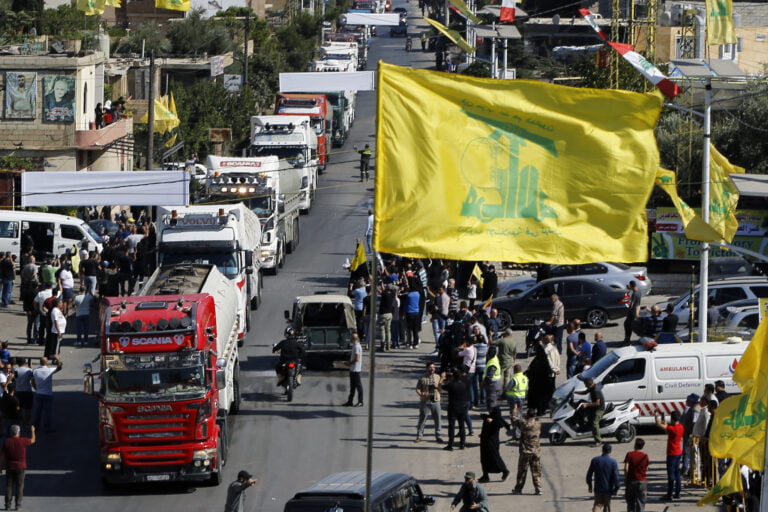
Dozens of trucks carrying Iranian diesel arrived in Lebanon on Thursday, the first in a series of deliveries organized by the militant Hezbollah. The powerful group operates independently from Lebanese authorities, which are struggling to deal with a crippling energy crisis.

The overland delivery through neighboring Syria violates U.S. sanctions imposed on Tehran after former President Donald Trump pulled America out of a nuclear deal between Iran and world powers in 2018.

The shipment is being portrayed as a victory by Hezbollah, which stepped in to supply the fuel from its patron, Iran, while the cash-strapped Lebanese government grapples with months-long fuel shortages that have paralyzed the country.

“This is a very big and great thing for us because we broke the siege of America and foreign countries. … We are working with the help of God and our great mother Iran,” said Nabiha Idriss, a Hezbollah supporter gathered with others to greet the convoy as it passed through the eastern town of Al-Ain.

There was no immediate comment from Lebanese or U.S. officials on the Iranian fuel delivery. Local commentators said Washington, worried about chaos in Lebanon amid raging, multiple crises, may have decided to look the other way.

Hezbollah has portrayed the Lebanese economic meltdown, which began in late 2019, as partly caused by an informal siege imposed by America due to the militant group’s power and influence in Lebanon. The group — designated a terrorist organization by Washington — has been sanctioned by consecutive U.S. administrations.

Lebanon’s crisis is rooted in decades of corruption and mismanagement by the ruling class and a sectarian-based political system that thrives on patronage and nepotism. Severe shortages in fuel have resulted in crippling power cuts. People wait hours in line for gasoline. Protests and scuffles have broken out at gas stations around Lebanon including in some Hezbollah strongholds.

Source: Local 10

Also Read: Iranian fuel shipment to Hezbollah helping the Lebanese or political agenda?

Growing unrest and uprising due to decades of mismanagement in Iran

For the past four decades, the Iranian regime has careened from one crisis to another, while simultaneously creating crises in the region as part of its interventionist foreign policy.

Its chronic mismanagement of the country and its misplaced priorities amount to self-sabotage, observers said, as evidenced by the level of public unrest it has caused.

In recent years, each new crisis has followed directly on the heels of the last, and the situation has now reached the point where the Iranian government is having to deal with several crises at once.

Thousands of Iranians have died from the government’s mismanagement of the coronavirus pandemic. And the current economic crisis has left the country in shambles and its people in need.

The regime’s expansionist policies, spearheaded by the Islamic Revolutionary Guard Corps (IRGC) Quds Force, have led the country to the brink of bankruptcy.

This intervention has resulted in disastrous consequences across the region, as a result of the actions of the IRGC’s proxies in Iraq, Yemen, Lebanon and Syria.

The Islamic Republic also faces major environmental challenges, with severe drought ravaging most parts of the country and devastating farmland.

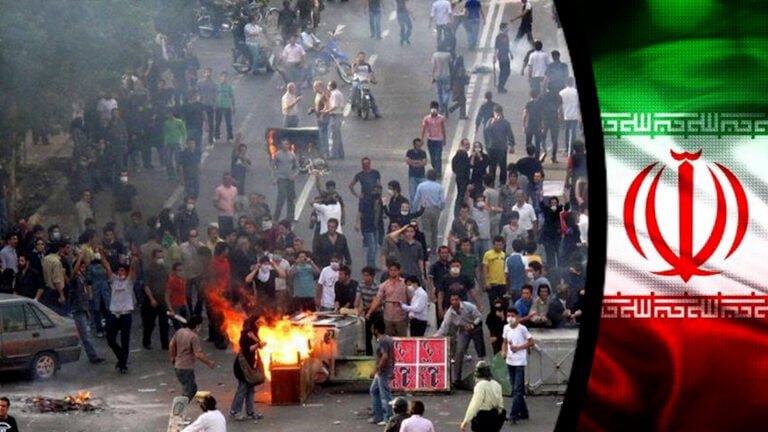
The government’s destructive policies have sparked nationwide protests. Many observers say the resistance movement is getting bolder and that widespread violence against the regime is a real possibility.

Iranians desperately need sanctions to be lifted that will enable Iran’s oil to be sold and address the shortage in revenue. But for that to happen, observers warn, Iran must change its behavior on the regional and domestic fronts.

Source: Al-Mashareq
Also read: Iran president selects hardline cabinet to drive hard bargain with U.S.

Iran president selects hardline cabinet to drive hard bargain with U.S.

0

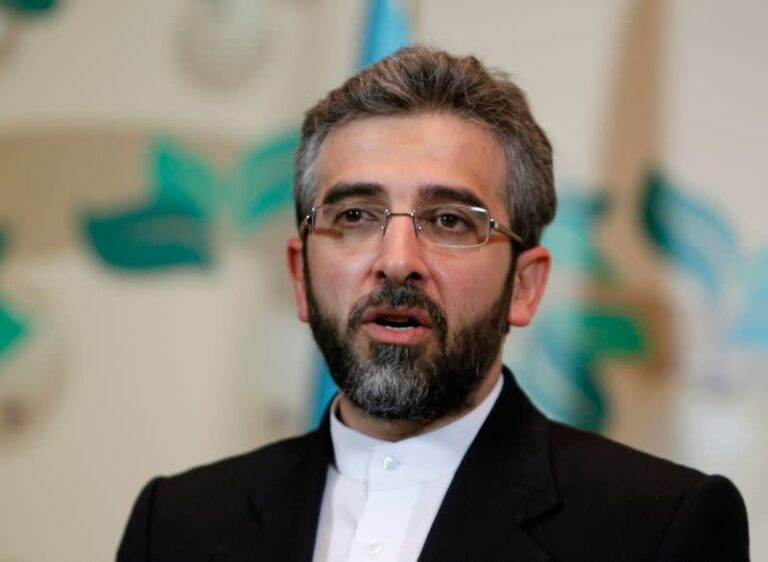
Iran, emboldened by the messy U.S. withdrawal from Afghanistan, is betting that its new hardline cabinet — including Deputy Foreign Minister Ali Bagheri Kani — can force concessions in talks on Tehran’s 2015 nuclear deal with world powers.

Bagheri, a hardline senior diplomat, was named on Tuesday to replace Abbas Araqchi, a seasoned pragmatist diplomat and chief negotiator in the negotiations that Tehran hopes will lead to a lifting of U.S. sanctions.

“Kani is an extension of the hardline deep state that is now in charge across all institutions in Iran and can more readily negotiate with the West as he is not just representing the government but has the empowerment of the inner circle,” said Andreas Krieg, associate professor at the School of Security at King’s College in London.

“It (the U.S. withdrawal from Afghanistan) has given the regime in Tehran more confidence in their regional surrogate warfare approach while showing that the U.S. is on the backfoot in the region.”

Iran has alarmed Washington and its Gulf Arab allies by relying on proxies in Iraq, Yemen and Lebanon, to steadily spread its influence across the Middle East.

Bagheri, who was named deputy foreign minister for political affairs, had been a senior negotiator in the nuclear talks under former hardline President Mahmoud Ahmadinejad from 2007 to 2013. He is a relative of Supreme Leader Ayatollah Ali Khamenei.

Iran’s parliament in late August approved all but one of President Ebrahim Raisi’s big-name nominees for a cabinet of hardliners that will have the task of implementing his plans to ease U.S. sanctions and tackle worsening economic hardship.

Indirect talks between Iran and the United States stopped in June, days after Raisi was elected president of Iran. U.S. Secretary of State Antony Blinken last week said time was running out for Iran to return to the nuclear accord.

Source: Reuters

Also Read: Iran will never obtain a nuclear weapon, should return to JCPOA talks: US official

Amnesty Urges Accountability For 72 Suspicious Deaths In Iran Prisons

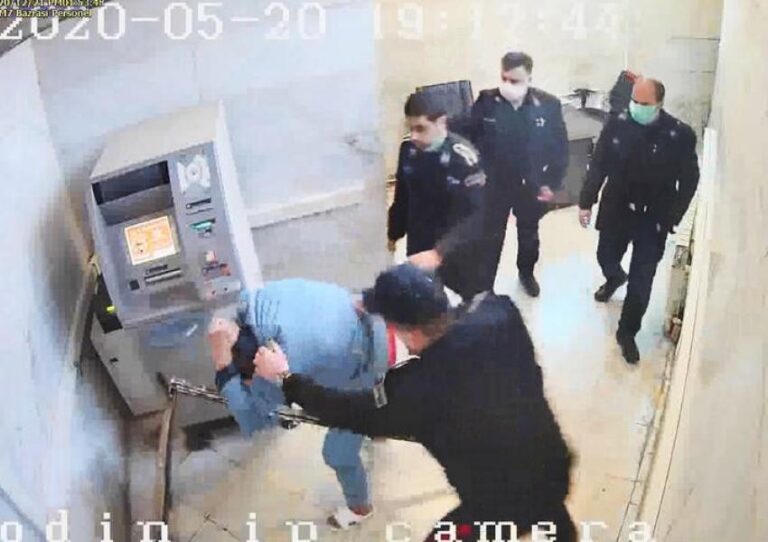
Amnesty International published a list of 72 individuals Wednesday whose deaths in custody since January 2010 it said Iran had not adequately explained despite reports that they resulted from torture and ill treatment, including firearms and tear gas.

“In 46 cases, informed sources including the relatives and/or fellow inmates…reported that the death resulted from physical torture or other ill treatment at the hands of intelligence and security agents or prison officials,” Amnesty said in a report demanding accountability for the suspicious deaths.

The international rights watchdog said its findings were based on research and a review of reporting by credible human rights groups and media outlets. The deaths all occurred in 42 prisons and detention centers, including facilities run by the ministry of intelligence, in 16 provinces across Iran during preliminary investigations or within a few days of arrest.

“Ensuring respect for people’s right to life requires that officials suspected of torturing prisoners to death are criminally investigated, and if enough admissible evidence against them is found, prosecuted,” Amnesty said. “Lack of investigations constitutes in and of itself a violation of the right to life.”

Amnesty International on August 25 issued a statement that surveillance videos from Tehran’s Evin prison circulated by hackers (link is external)were the “tip of the iceberg” of mal-treatment. The hackers said last month they would release further incriminating footage(link is external).

Last week, labor activist and author Sepideh Gholian(link is external), currently on furlough from prison in Bushehr province, made detailed allegation of abuse of prisoners in the prison’s women’s ward.

In previous reports Amnesty International has listed(link is external) beatings, floggings, electric shocks, stress positions, mock executions, waterboarding, sexual violence, forced administration of chemicals, and deprivation of medical care as among the tortures committed by Iran’s police, intelligence and security forces and prison officials against detainees with the complicity of judges and prosecutors.

Source: Iran International 

Also Read: More Brutal Than ‘Godforsaken Hell’: Prisoner Tweets Details Of Iran Prison Abuse 

Iran a month away from producing enough fuel for a nuclear warhead

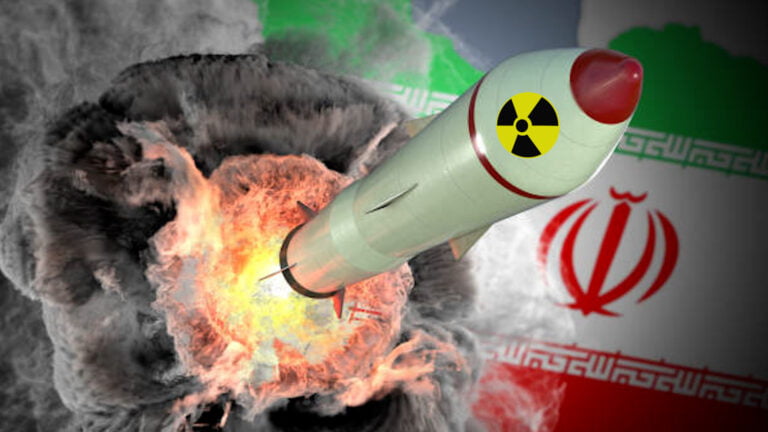
Iran has come within roughly a month of having enough material to fuel a single nuclear weapon with a nuclear warhead, crossing a threshold that may raise pressure on the United States and its allies to improve the terms of a potential deal to restore the 2015 nuclear agreement.

Experts studying new data contained in reports last week by the International Atomic Energy Agency, the United Nations’ atomic inspection group, say that by enriching nuclear fuel in recent months to near bomb-grade levels, Tehran has gained the capability to produce the fuel needed for a single nuclear warhead within a month or so, under the most extreme timeline.

In April, Iran started enriching its uranium stockpile to 60 percent. It takes far longer to get from low-enriched uranium to 60 percent purity than it does to make the last leap to 90 percent, the level ordinarily used in nuclear weapons. That makes the 60 percent level particularly threatening.

Iran’s supply of 60 percent enriched uranium is not yet sufficient for a weapon. But it has spent the summer installing newer, high-performance centrifuges that could quickly bolster its stockpile.

The fuel must be converted to metal and then into a full nuclear warhead. Those steps would take additional months and perhaps years, depending on technical skill.

On Friday, asked about Iran during a trip to Germany, Secretary of State Antony J. Blinken said that “as time goes on and as Iran continues to make advances in its nuclear program, including spinning more sophisticated centrifuges, enriching more material, learning more, there is a point at which it would be very difficult to regain all of the benefits” of the restrictions Iran agreed to six years ago. “We’re not at that point yet, but it’s getting closer,” he added.

Source: The New York Times
Also read: IAEA calls Iran’s treatment of watchdog’s inspectors ‘unacceptable’

Iranian-Americans Urge Biden To Take A Stance On Raisi’s Rights Record

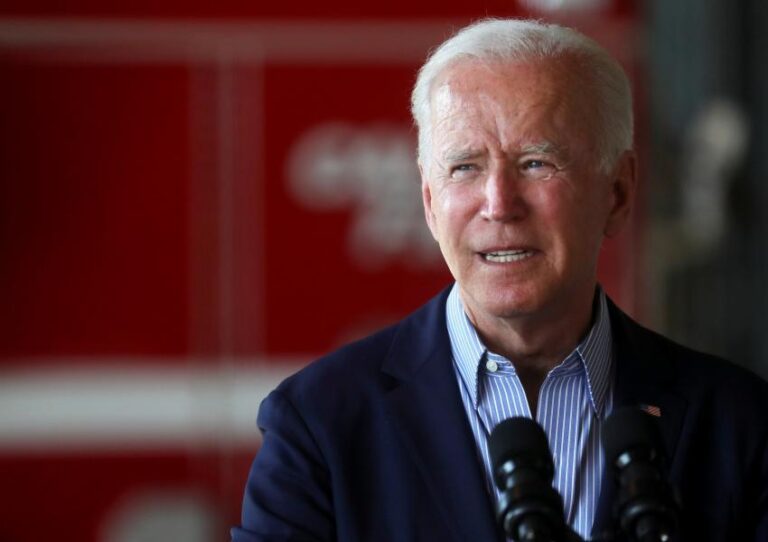
Four hundred prominent American Iranian have written to President Joe Biden on September 14 asking him to take a clear stance regarding the human rights record of the new Iranian president Ebrahim Raisi (Raeesi) as well as come up with a roadmap to counter “Iranian regime’s malign and dangerous expansion of its terrorism globally”.

The signatories who are scientists, scholars, professors, physicians, industry executives and professionals, have appealed to President Biden to include in his remarks to the upcoming United Nations General Assembly (UNGA 76) the views reflected by a large bi-partisan voice in US Congress, UN experts, and the Amnesty International that Raisi should stand trial before international tribunals for crimes against humanity, for his key role in the 1988 massacre of thousands of political prisoners in Iran.

In anticipation of Raisi travelling to New York for the annual UN General Assembly, the signatories tell Biden, “we kindly ask that you echo, in your own address to the Assembly, the Iranian people’s rejection of the Iranian regime, as evident in unprecedented boycott of Iran’s sham elections, and the nationwide and continued uprisings of the Iranian people who seek a democratic, secular, and nonnuclear Republic of Iran.”

There has been a marked shift in policy toward Iran from the Trump to the Biden administrations. While the former president withdrew from the Obama-era nuclear deal with Tehran (JCPOA) and put the Islamic Republic under ‘maximum pressure’ by sanctions, Biden during the campaign clearly rejected this policy and vowed to return to the JCPOA and lift key sanctions, without forcing Iran to negotiate over other issues such as its support for militant groups in the region.

Many American Iranians see Biden’s policy as extending a lifeline to the clerical regime in Iran and possibly preventing the United States from a forceful defense of human rights in their ancestral land.

“Certainly, your words will need to be followed by your administration’s impactful actions directed towards blocking Iranian regime’s violation of human rights, and their export of terrorism in the region and beyond,” the letter to Biden said.

Source: Iran International

Also Read: What will the regime of murderers do to Iran protests after Ebrahim Raisi takes office?

IAEA calls Iran’s treatment of watchdog’s inspectors ‘unacceptable’

0

The U.N. nuclear watchdog on Tuesday described as “unacceptable” incidents in Iran involving its inspectors, in which diplomats say security staff subjected female inspectors to inappropriate searches that the United States is calling harassment.

In a first case this year at the Natanz nuclear site, a female inspector was subjected to an unnecessarily intrusive search by security staff, diplomats who follow the International Atomic Energy Agency have said.

Details of the episode in June remain unclear as does the number of repeat incidents since at Natanz, where an explosion and power cut that Iran has blamed on Israel damaged machines in its main, underground uranium-enrichment plant in April.

“In recent months, there have been some incidents related to security checks of Agency inspectors at one Iranian facility,” the IAEA said in a statement issued in response to a Wall Street Journal report on the episodes.

The IAEA, which treats details of inspections as confidential, did not specify the inspectors’ gender or say what happened.

“The Agency immediately and firmly raised this issue with Iran to explain in very clear and unequivocal terms that such security-related incidents involving Agency staff are unacceptable and must not happen again,” the IAEA said.

“Iran has provided explanations related to reinforced security procedures following events at one of their facilities. As a result of this exchange between the Agency and Iran there have been no further incidents.”

Iran’s ambassador to the IAEA, Kazem Gharibabadi, said on Twitter: “Security measures at the nuclear facilities in Iran are, reasonably, tightened. The IAEA inspectors have gradually come up with the new rules and regulations.”

It is not the first time there have been tensions between the IAEA and Iran over access to Natanz and the treatment of female inspectors.

In 2019, Iran for the first time briefly held  and confiscated the travel papers of a female inspector. Tehran later said it had been concerned she might be carrying “suspicious material”.

Source: KFGO

Also Read: Iran ‘trying to evade sanctions on oil exports’ with night transfers near Malaysia

Iran-backed militias pattern apparent in Iraqi Kurdistan airport attacks

0

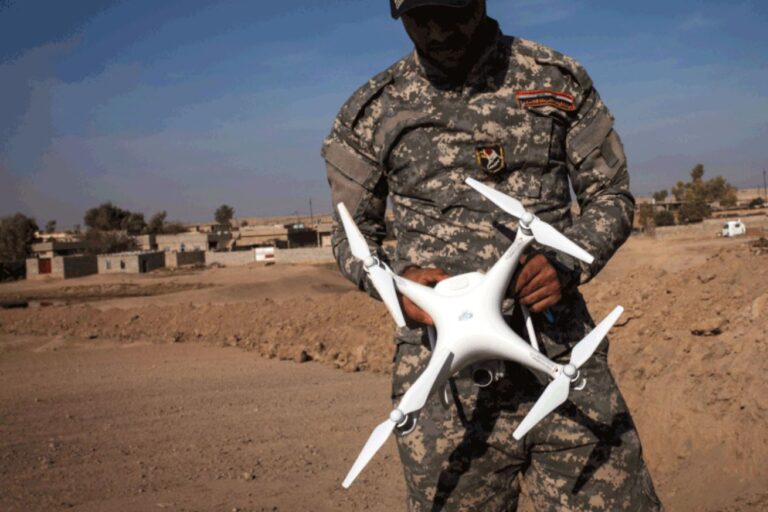
Armed drones attacked Erbil international airport situated near the US consulate in the northern Iraq city, Kurdish security forces said Saturday (September 11), the latest in a series of similar incidents over the past year.

Attacks of this kind, normally targeting US troops or US interests in Iraq, have become common in recent months.

A few weeks earlier, three drones targeted the airport in Baghdad, where US troops are also deployed.

Although typically no one claims responsibility for them, Washington blames Iraq-based militia groups affiliated with Iran’s Islamic Revolutionary Guard Corps (IRGC).

The latest attack came amid reports that the IRGC has set up a new training base in Iraq for members of its regional proxies, with drills focused on launching drone attacks.

Iraqi political analyst Hilal al-Obeidi said last week that Iran has set up a new training camp in Iraq’s Karbala desert for its Iraqi and Syrian militias.

“The IRGC Quds Force, with help from the Lebanese Hizbullah, supervises the camp and provides recruits with courses on drone tactics,” he said.

The establishment of the training camp “comes as part of Iran’s relentless endeavor to produce a generation of experts with experience in launching explosives-laden drones”, he said.

In response to the increasing threat from drones, the United States announced last week it will launch a new task force incorporating airborne, sailing, and underwater drones following maritime attacks blamed on Iran.

On September 12 an adviser to Iran’s supreme leader declared Iraq must disarm Iranian Kurd “terrorists” and expel them from the Kurdistan region.

Iran’s IRGC has been continuously firing artillery shells at Kurdish opposition groups based along the border in recent days.

Source: Al-Mashareq
Also read: Israel’s Gantz says Iran giving militias drone training near Isfahan