Home Blog Page 57

The IRGC locally produced vaccine bluff and theft of $1m from Iranians

0

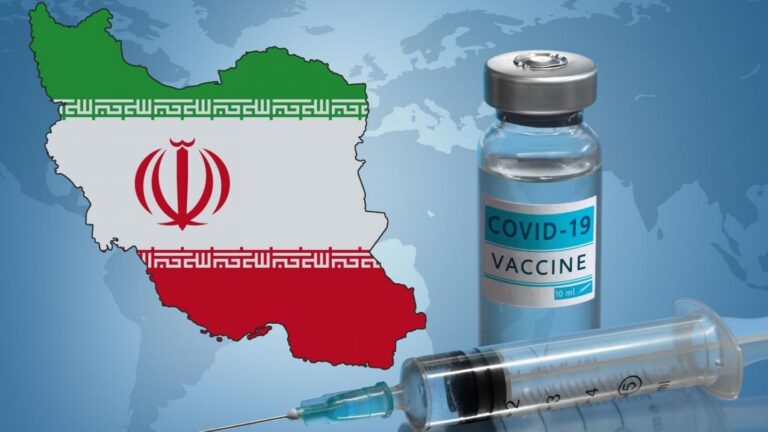
The Iranian Islamic Revolutionary Guard Corps’ (IRGC) bluff, regarding making the “Barakat” locally produced Covid-19 vaccine, and the many civilians’ lives that were lost due to this lie is being widely reflected in various Persian-language media networks every day.

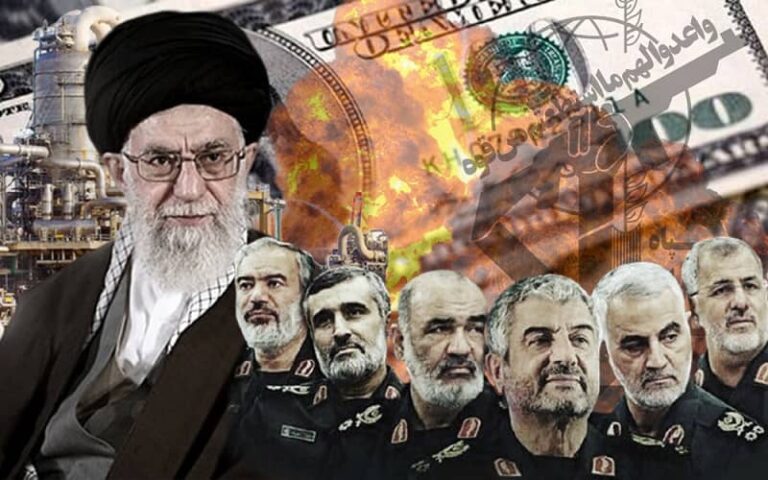
Earlier reports said that in the weeks following the ban on the import of American and British vaccines ordered by Khamenei, a branch of the IRGC called the ” Executive Headquarters of Imam’s Directive ” claimed that it could locally engineer and mass-produce the most effective Covid vaccine within months.

The Tehran-based Jahan-e-Sanat newspaper wrote: “From the beginning of the announcement by this institution, it was certain that it would not be able to fulfill this commitment because it has no scientific structure and experience in vaccination.” But the same institution was able to get hundreds of millions of dollars from the government for this empty promise and keep the Iranian people waiting for the mass-produced vaccines, only to admit that it does not have the industrial infrastructure needed to mass-produce vaccines in the end.

Because of this empty promise, and after Khamenei’s ban on the import of safe and approved vaccines, hundreds of thousands of Iranians have died and about one billion dollars of the nation’s money was wasted and poured into the pockets of IRGC officials.

The IRGC uses every opportunity to steal the hard-earned money of the Iranian people to fill its own pockets. Locally based Iranian media has emphasized that the main culprit of this scam at the time was the head of the Execution of Imam Khomeini’s Order, Mohammad Mokhber, who was not investigated or punished, but was instead promoted and is now the first vice president of Ebrahim Raisi, Iran’s newly appointed president.

Also read: Iran Intelligence fearing dissidence targets “Clubhouse” social audio app
Lack of Accountability Perpetuates Deaths of Prisoners in Iran

The torture and inhuman mistreatment of detainees and prisoners in Iran are among the most serious violations of human rights in the country’s prisons.

In many cases, prisoners or detainees have died from injuries inflicted upon them in custody and yet the government has never acknowledged responsibility on a systemic level, allowing the perpetrators to go unpunished.

The torture and mistreatment of prisoners and detainees, long a grim feature of the Islamic Republic of Iran’s security establishment and judicial system, have attracted greater attention with the emergence of social media.

In particular, abuse in jails in remote parts of the country would never have been exposed without the internet.

In some cases, deaths were caused by inhumane living conditions and were exacerbated by the lack of medical care.

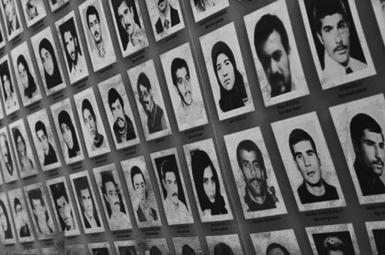
Iranian authorities have failed to provide accountability for at least 72 deaths in custody since January 2010, despite credible reports that they resulted from torture or other ill-treatment or the lethal use of firearms and tear gas by officials, according to a report by Amnesty International.

Amnesty noted that the real number of deaths in custody is likely much higher given the lack of transparency in Iran’s justice system and the fact that many human rights violations go unreported due to widespread fear of reprisal and systematic repression of civil society.

Dozens of political prisoners are among those who’ve perished in Iranian prisons.

In February 2021, Behnam Mahjoubi, a Sufi dervish imprisoned in Tehran’s Evin Prison, died from serious neurological issues after the State Medical Examiner concluded he could not withstand incarceration and recommended his release

Political prisoner Sassan Niknafs lost his life in the Greater Tehran Central Penitentiary in June 2021 after the authorities ignored his multiple physical and mental health problems.

One of the most brutal and tragic examples of abuse of detainees was the death of dissident blogger Sattar Beheshti from internal bleeding, hemorrhaging in his lungs, liver, kidneys, and brain which followed the torture he endured while in police detention in November 2012.

Source: Iran Human Rights

Also Read: Iran Charges Lawyers Protesting COVID-19 Negligence With ‘Disrupting Order’

Iran Intelligence fearing dissidence targets “Clubhouse” social audio app

The Iranian regime has targeted virtual debate rooms that provide opportunities for the free exchange of ideas such as the “Clubhouse” application and has jailed a number of those involved in debates from inside Iran and warned others not to participate in such discussions.

Less than a year ago, the Clubhouse social audio application was booming among Iranians on the eve of the presidential election campaign. But now the regime fears the application as a tool for the Iranian people to organize against the tyrannical government.

In some of the Clubhouse debate rooms, a number of political activists and thinkers have explicitly suggested that the best way to put pressure on the regime or even overthrow it, is to take people to the streets.

These words have sounded the alarm in the Ministry of Intelligence and government security agencies.

The Ministry of Intelligence is well aware that the situation is ripe for a mass uprising in Iran: The economic situation has become increasingly difficult, the living standards of the people has declined, the country is grappling with a number of crises that have led to, inflation, poverty, water, electricity, and gas disruptions.

The appointment of Ebrahim Raisi as Iran’s new president, whose hands are stained with the blood of several thousand political activists, along with the appointment of high-ranking Islamic Revolutionary Guard Corps (IRGC) officials who follow in the footsteps of the Taliban, has caused the Iranian people to largely forsake the possibility of any reforms under the existing system.

As the living conditions in Iran rapidly decline, government repression and fears that large numbers of people will take to the streets to demand the overthrow of the government are on the rise.

Source: BBC
Also read: Iran promises property for militias to attract impoverished foreign fighters

Iran, Hezbollah planning attacks on US to retaliate for Soleimani slaying: Officials

0

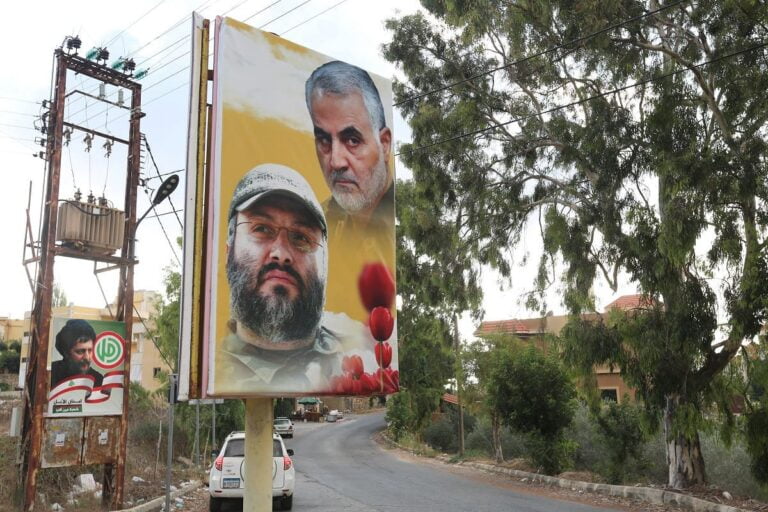
Iran is planning ways to retaliate against the US for the slaying of Quds Force Commander Qassem Soleimani, and Lebanese Hezbollah is being closely watched for potential attacks on American soil, a top US intelligence official warned Tuesday.

“Protecting against such threats is even more important now, as Iran, its agents, and proxies plan ways to retaliate against the United States for the January 2020 killing of IRGC-QF Commander Qassem Soleimani,” Christine Abizaid, the director of the National Counterterrorism Center, said during testimony before the US Senate’s Homeland Security and Governmental Affairs Committee.

Abizaid said the US had assessed that Iran-backed Hezbollah maintained a “high threshold for conducting attacks in the Homeland.

“Secretary-General Hassan Nasrallah balances his organization’s view of the United States as one of its primary adversaries against the likelihood of US retaliation if the group decided to conduct an attack,” Abizaid added.

Soleimani was killed in a drone strike ordered by former President Donald Trump after the Iranian general was said to have been planning attacks on US diplomats and military personnel.

The strike, which was carried out in Baghdad, also killed Abu Mehdi al-Muhandis, then-deputy commander of Iraq’s Shiite militia, Popular Mobilization Forces.

“Iran views terrorism as a tool to support its core objectives, including projecting power in the Middle East, defending Shia Islam, and deterring its strategic rivals,” Abizaid said.

Turning to Iraq, Abizaid suggested that Iran-backed Shiite militias were posing the “most immediate threat to US interests,” citing drone attacks on US facilities there.

The US intelligence official also highlighted Iran’s support for the Houthis in Yemen. “In Yemen, Iran has maintained its years-long effort to support Houthi attacks against Saudi Arabia and other targets located in the Gulf, including those involving long-range missiles and UAVs,” she said.

For his part, FBI Director Chris Wray said Iran and its global proxies were continuing to plot attacks against the US and its allies throughout the Middle East.

Source: Alarabiya

Also Read: Iran loses Iraqi militias as Qasem Soleimani’s successor proves too weak

Iranian children are being punished based on their parents’ religion and beliefs

0

It was the last week of September 2020 when an Iranian-Christian-convert couple lost custody of their two-year-old adopted daughter, Lydia. The court statement mentioned that Lydia had a strong attachment to her parents since they received temporary custody in February 2019. They also agreed that Lydia was born with a poor health system and demanded medical treatment.

Despite these facts vital to Lydia’s best interest, the District Court and Court of Appeal of Bushehr, a southern port city, rejected the parents’ request to keep custody. The court revoked custody of Lydia because “[the parents] have converted to Christianity.”

Unfortunately, Lydia is not the only child whose best interests have been overlooked and rights violated due to discrimination and unjust laws in the Islamic Republic of Iran. In practice, Iran’s discriminatory law affects almost all aspects of minority children’s lives, such as safety and well-being and access to health and education.

In a separate case, Darya, an eight-year-old girl, may lose her parents of more than two years due to incarceration, since they’re of the Baha’i Faith. The Iranian constitution doesn’t recognize the Baha’i religion and Iranian authorities deny their most fundamental human rights. Most of the time, courts look at the Baha’i Faith as an opposition group, and the judge will likely punish Darya’s parents based on that. This is in direct contradiction of the Family Protection Act, which calls for “providing for the best interests of children and adolescents to be respected in all courts and executive officials’ decisions.” Ironically, this very act has been called an achievement in the 2016 report of the United Nations Convention on the Rights of the Child.

Systemic discrimination against all religions and beliefs

In January 2020, some Baha’i families were told that they must declare their religion to get a national identification card. However, the Iranian constitution only recognizes four religions: Islam, Christianity, Judaism, and Zoroastrianism. In this way, Baha’i families, Yarsanies, Sabean-Mandaeans, and other religious minorities or atheists must either lie to receive a national identification card or be denied access to services, such as insurance, education, banking, and, most recently, public transportation.

Source: Atlantic Council

Also Read: Iranian pastor, 8 other Christians sentenced to 5 years in prison

children children 

Iran promises property for militias to attract impoverished foreign fighters

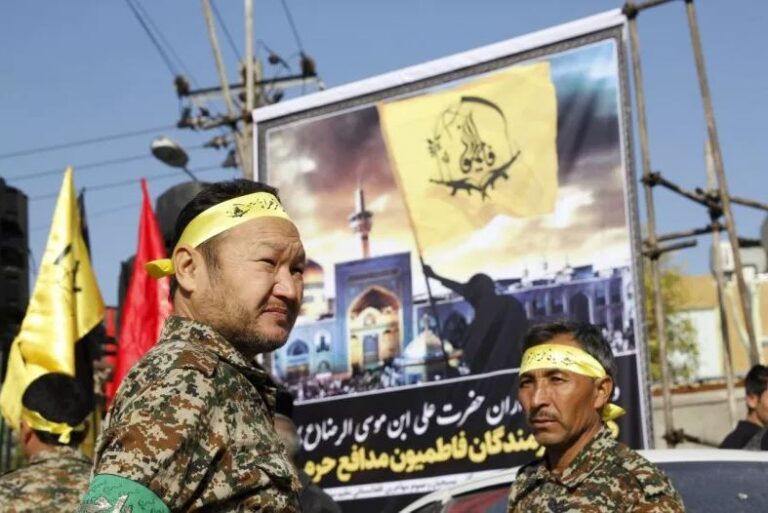
The deputy head of the Iranian Martyr’s Foundation said that there was no difference between Iranian and Fatemiyoun martyrs, adding that the organization is working with the Property Registration Organization to provide conditions for families of fighters who die in Iran’s proxy wars to receive free property. He noted that the pursuit was ordered by Ali Khamenei, Iran’s supreme leader.

In 2014 Iran’s terrorist designated Islamic Revolutionary Guard Corps (IRGC) offered attractive financial benefits to the impoverished Afghan refugees in Iran and formed the Fatemiyoun Brigade to support Bashar al-Assad’s government in crushing the uprising of Syrian people.

According to some reports, more than 2,000 Fatemiyoun fighters were killed in the Syrian war. According to Human Rights Watch, Liwa Fatemiyoun has recruited child soldiers, some of whom were as young as 14.

The Afghans are promised Iranian citizenship and salaries of $500–$800 per month in return for fighting. Many are refugees and some criminals who choose recruitment over imprisonment or deportation. After completing their service, many ex-Liwa Fatemiyoun fighters were frustrated that the Iranian government proved slow in fulfilling all their demands; most importantly, fighters struggled to secure the promised benefits such as salaries, housing, and jobs due to Iran’s difficult economic situation. The families of fallen fighters have also struggled to secure benefits and visas.

It appears that the properties promised to these fighters will be from the one million houses that the government promised to build for Iran’s struggling population to attract votes during the last elections.

The Islamic Republic strives to export its ideology of violence, repression and killing at any cost, including the lives of helpless Afghan refugees looking for shelter.

With every advice of the supreme leader, a series of rent-seeking, corruption and destruction takes shape and burdens the already suffering lives of the Iranian people.

Also read: Family Of Detained Rapper In Iran Concerned About His Life

Campaign For Detained British-Iranian Urges Sanctions On 10 Iranians

0

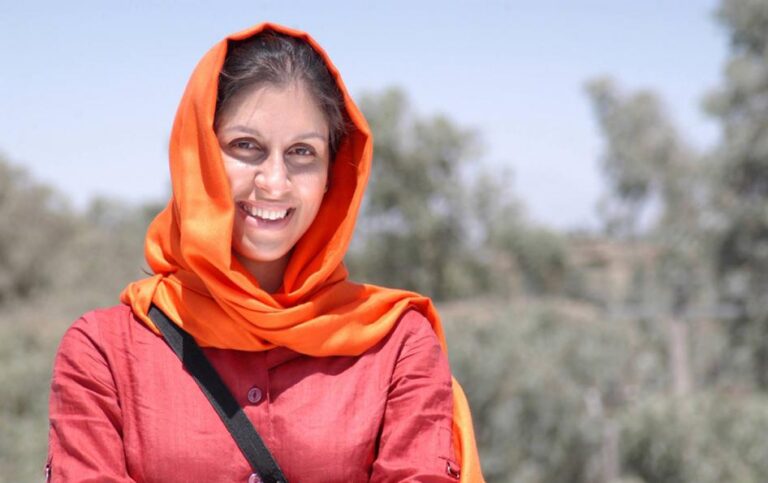
The campaign to free British-Iranian Nazanin Zaghari-Ratcliffe held in Iran will submit a list of ten Iranians to the UK foreign secretary, Liz Truss, and urge her to sanction them for their role in “hostage-taking” of several dual citizens including the 43-year-old Zaghari-Ratcliffe.

The ten Iranians the campaign wants to be sanctioned include those involved in various stages of Zaghari-Ratcliffe’s arrest, interrogation, trial, and abuse in prison as well as those who led false propaganda against her or were involved in her “deployment as an asset in diplomatic negotiations”. The campaign has said that it is not releasing the names of the ten Iranians at this stage for security reasons.

Zaghari-Ratcliffe, a project manager for the Thomson-Reuters Foundation, has been detained in Iran for nearly 2,000 days. She is currently serving a second prison term for propaganda against the Iranian regime but is under house arrest due to the pandemic. Zaghari-Ratcliffe previously spent four years in prison, including eight months in solitary confinement.

Richard Ratcliffe, Zaghari-Ratcliffe’s husband, has repeatedly charged that the Iranian government has taken his wife hostage to force the British government to repay 400-million-pounds it received in the 1970s to deliver Chieftain tanks to Iran.

“Iran conducts its diplomatic business through hostage-taking, in part because it is cost-free. British citizens will not be protected from hostage-taking by words and soundbites, but by actions that cause the perpetrators to reassess their calculations and consider the personal costs – for their role in what is a serial organised crime,” Richard Ratcliffe told the Guardian. He also called on Truss to be “proactive” and “brave” when she engages with Iranian officials “or there will be more hostages taken by Iran, and new copycat regimes”.

Liz Truss is scheduled to meet with Iran’s new foreign minister, Hossein Amir-Abdollahian, in New York next week during the United Nations annual General Assembly meeting (UNGA). This will be the first meeting of British and Iranian foreign ministers since 2018. She is the fifth UK foreign secretary since Zaghari-Ratcliffe was first detained.

Source: Iran International

Also Read: Nazanin Zaghari-Ratcliffe: PM demands ‘immediate release’ of British-Iranian woman

Family Of Detained Rapper In Iran Concerned About His Life

0

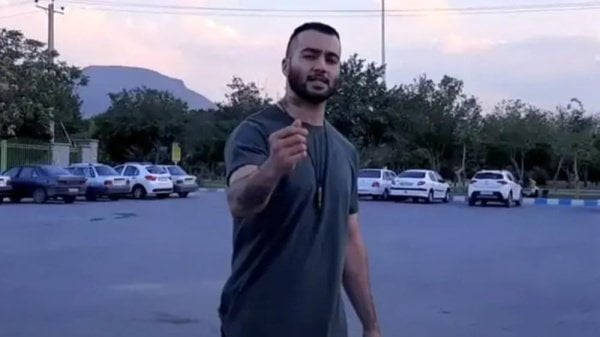
Iranian dissident rapper, Toomaj Salehi, who was detained on September 13 was arrested by the intelligence ministry in Esfahan, family sources have told Iran International. They are extremely worried about the safety of the young singer.

The underground rapper was apparently arrested for his latest song distributed on social media, condemning the Islamic Republic for oppression and those whom he accuses of whitewashing its crimes.

Iran International has also learned that the singer known with his first name Toomaj is being kept in the central prison in Esfahan. His lawyer Amir Raisian was quoted by a website in Iran as saying that he does not have exact information about charges his client faces, but “unofficially his father was told he is accused of propaganda against the regime.”

In his song, “Buy a rat hole”, Toomaj without naming individuals refers to those whom he accuses of perpetrating injustice or justifying it, from regime “agents” and “executioners” to political groups such as reformists in Iran and the US-based National Iranian American Council (NIAC).

The Washington-based group condemned Toomaj’s arrest on September 16, after many on social media criticized indifference toward the latest crackdown on freedom of speech.

Amnesty International has also condemned the arrest in a statement issued September 17. Iran’s exiled Prince Reza Pahlavi has also slammed the arrest, saying that protest artists are reflecting public opinion in Iran in favor of a regime change.

Source: Iran International

Also Read: Iran regime arrest Iranian rapper who criticized the government

Global sanctions on Iran prove beneficial for its terrorist designated IRGC

It appears that the global sanctions efforts against Iran have ultimately proven beneficial for Iran’s terrorist designated Islamic Revolutionary Guard Corps, similar to how the eight-year-long Iran-Iraq war with more than a million casualties served to empower the Islamic Republic of Iran forty years ago.

In this regard, Hossein Salami, Commander-in-Chief of the Islamic Revolutionary Guard Corps (IRGC), said at the opening of Iran’s strategic exhibition of self-sufficiency: “All our progress has been made during the sanctions.”

Sanctions mean war for the Islamic Republic which can be a perfect excuse to frame any protestor as the enemy and legitimize their detainment or execution.

The IRGC has used the economic turmoil caused by the global sanctions as an opportunity to seep into Iran’s political scene, an act deemed illegal even by the founder of the Islamic Republic Ruhollah Khomeini, and have successfully occupied the most important roles within Iran’s government after the last elections that saw Ebrahim Raisi appointed as the new president.

Under normal circumstances, any commodity can be purchased from the international market, but in the era of sanctions, the situation is different and in addition to financial resources, shortcuts are needed.

To this end, there is a need for a power that does not hold itself accountable, and the IRGC, Ali Khamenei’s economic and military arm, seeks to catch fish from the sanctions muddy waters that affect the livelihood of the people the most.

There have been a number of sanctions against Iran imposed by a number of countries, especially the United States, and international entities.

The United States sanctions against Iran were imposed in November 1979 after radical students seized the American Embassy in Tehran and took hostages.

The UN Security Council passed a number of resolutions imposing sanctions on Iran, following the report by the International Atomic Energy Agency Board of Governors regarding Iran’s non-compliance with its safeguards agreement and the Board’s finding that Iran’s nuclear activities raised questions within the competency of the Security Council.

The European Union has imposed restrictions on cooperation with Iran in foreign trade, financial services, energy sectors, and technologies, and banned the provision of insurance and reinsurance by insurers in member states to Iran and Iranian-owned companies.

Source: Iran International
Also read: Mullahs and Taliban; Old Enemies, New Friends

Former Iraqi politician warns of Iran using Iraq as ‘a way station for weapons transport’

0

America’s retreat from maintaining a strong military presence and moral leadership in the Mideast and Asia is a strategic blunder that aggressive regimes, including Iran, will seek to use to their advantage, says one former Iraqi Parliamentarian and longtime friend of Israel.

Mithal al-Alusi, a Sunni Muslim who served in Iraq’s Parliament from 2005 to 2010, during which time he advocated normalized relations between Iraq and Israel, told JNS this week that Iran is using Iraq as a way station for transporting material for producing “missiles and drones” from Iran to the Gaza Strip. He also said that America’s precipitous withdrawal from Afghanistan has created a “strategic vacuum” he believes will be exploited by Iran, Pakistan, China and Russia.

A champion of human rights, rule of law, free markets and democratic alliance, Alusi, 68, has paid a price for his principles. Forced to flee Iraq as a young man for protesting Saddam Hussein’s human-rights abuses, he returned to Iraq with his family following the entry of U.S. troops into the country in March 2003. In September 2004, after accepting a leadership position in Iraq’s de-Ba’athification Commission, he made a public visit to Israel, speaking about the importance of cooperation between Iraq and the Jewish state. As payback for their father’s public stand, terrorists murdered Alusi’s sons Ayman, 29, and Jamal, 22.

In 2005, the American Jewish Committee (AJC) awarded Alusi its Moral Courage Award for his determination, in the words of the AJC’s president David Harris, to “insist Iraq refuse anti-Semitism and anti-Zionism.”

Despite numerous assassination attempts against him, Alusi remained in Iraq and was elected three times to parliament. He has consistently advocated for human rights, a free press and normalized relations/counterterrorism alliance among democracies, including the United States, Iraq and Israel. Since his sons’ murders, he has visited Israel several more times to attend the yearly counterterrorism conference at the Interdisciplinary Center (IDC), now known as Reichman University, in Herzliya, considered center stage for the articulation of Israel’s national defense policy.

Source: Cleveland Jewish News

Also Read: Iran-backed militias pattern apparent in Iraqi Kurdistan airport attacks