Home Blog Page 56

Iran’s IRGC Quds Force head hints at group’s power at home and Middle East

0

Recent years have seen an ascendancy of key individuals linked to the Islamic Revolutionary Guard Corps in Iran. The IRGC already has a parallel state in Iran, controlling parts of the economy and foreign policy, and building up new military technologies such as missiles, drones and attack boats.

According to the Tasnim News Agency, IRGC Quds Force head Ismail Qaani congratulated Dr. Hossein Amir-Abdollahian on his election as Minister of Foreign Affairs of the Islamic Republic of Iran in a visit to the ministry.

Why does this matter? In the past, former IRGC Quds Force head Qasem Soleimani was seen as the “shadow commander” in reports, a figure who moved around the Middle East and pushed Iran’s agenda far and wide, but who did not often brag of his role. When the US killed Soleimani in a drone strike in January 2020, he was replaced by Qaani, a man of unclear abilities. Qaani was rumored to be an expert on Afghanistan, and it may be that his role there helped remove the US from Kabul this year, but his role in Iraq and Syria is not yet fully formed.

Nevertheless, the reports of his meeting at the Foreign Ministry seek to showcase his power and influence. In the meeting he emphasized “the special and significant position of the Ministry of Foreign Affairs in securing the national interests of our country,” the report said.

But why does the Ministry, previously run by Javad Zarif, who had fame in the West, need the blessings of the Quds Force? Because this illustrates the real power structure and how the ministry works hand in glove with the IRGC.

Zarif – although he postured as being close to the IRGC when necessary, and as a “moderate” when speaking to Western audiences – was not really close to Soleimani. Of interest here, the report says that Amir-Abdollahian, “while appreciating the valuable presence of Sardar Qaani in the Ministry of Foreign Affairs, pointed to the irreplaceable role of Soleimani in the fight against terrorism.” Iran uses the term “terrorism” to refer to ISIS and other extremists. “Today our region was different,” the minister apparently said. “If ISIS had succeeded in Syria and Iraq, it would have faced terrorism and extremism all over the world today.”

Source: The Jerusalem Post

Also Read: Iran’s IRGC Quds Force commander: “Islamic Jihad defeated Zionist pride”
France: Iran must return to nuclear talks to avoid escalation

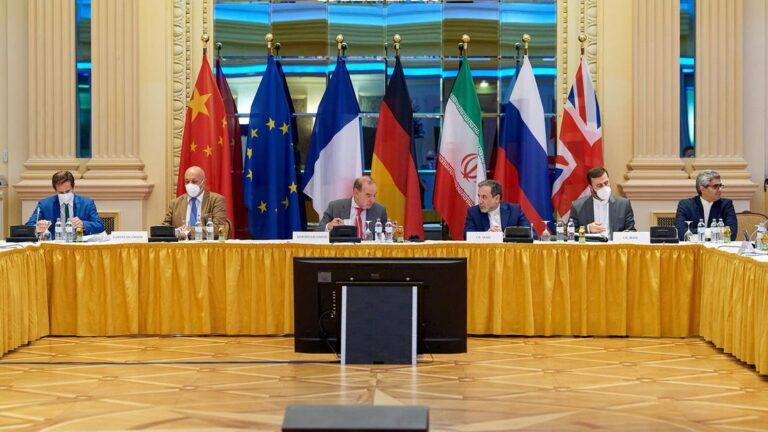
Iran must return to talks with world powers over its 2015 nuclear deal to avoid an escalation, a French presidency official said on Tuesday, adding that there was no need to set new conditions because the parameters for an accord were clear.

The official told reporters that world powers negotiating with Iran needed to remain united and that China especially needed to “express itself and act in a more determined way.”

“Nobody wants an escalation, but to avoid an escalation Iran must return to the negotiating table,” the French presidency official told reporters.

Tehran has signalled in recent weeks that negotiations would resume in a few weeks without giving a specific date, increasing frustration among the Western parties – Britain, France, Germany and the United States – to the 2015 accord.

“The more that time passes, the harder it becomes to return to the negotiating table…and the key question of restoring a manageable and acceptable breakout time for us becomes complicated to resolve,” the official said, referring to the time it takes to amass enough fissile material for a single nuclear weapon.

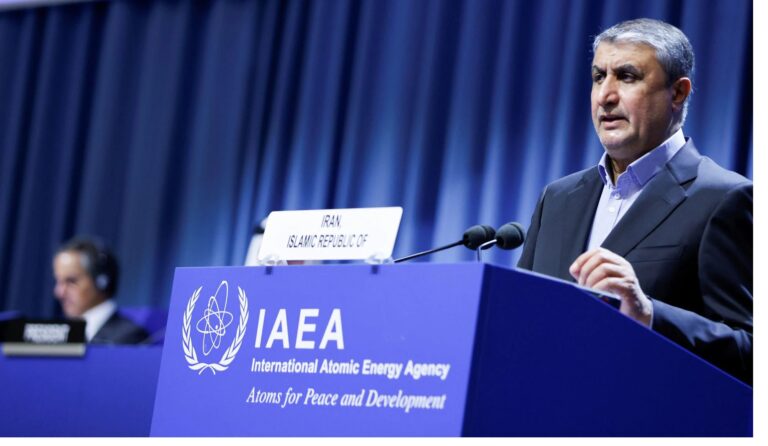
Meanwhile, Iran on Tuesday rejected a US call to grant UN inspectors access to a nuclear site, saying Washington was not qualified to demand inspections without condemning a sabotage attack on the facility, Iranian state media reported.

“Countries that did not condemn terrorist acts against Iran’s nuclear site are not qualified to comment on inspections there,” Mohammad Eslami, head of the Atomic Energy Organization of Iran, said during a visit to Moscow, according to Iranian state news agency IRNA.

Source: Alarabiya

Also Read: Iran rejects U.S. demand for U.N. inspectors’ access to nuclear site

Iran rejects U.S. demand for U.N. inspectors’ access to nuclear site

Iran on Tuesday rejected a U.S. call to grant U.N. inspectors access to a nuclear site, saying Washington was not qualified to demand inspections without condemning a sabotage attack on the facility, Iranian state media reported.

“Countries that did not condemn terrorist acts against Iran’s nuclear site are not qualified to comment on inspections there,” Mohammad Eslami, head of the Atomic Energy Organization of Iran, said during a visit to Moscow, according to Iranian state news agency IRNA. read more

The United States said on Monday that Iran must stop denying the U.N. nuclear watchdog access to a workshop making centrifuge parts as agreed two weeks ago or face diplomatic retaliation at the agency’s Board of Governors meeting.

The workshop at the TESA Karaj complex makes components for centrifuges, machines that enrich uranium, and was hit by apparent sabotage in June in which one of four International Atomic Energy Agency cameras there was destroyed. Iran removed them and the destroyed camera’s footage is missing.

Source: Reuters 

Also Read: US and European allies suspect ‘Iran is taking advantage’ of stalled talks to expand nuclear program


Iran on Tuesday rejected a U.S. call to grant U.N. inspectors access to a nuclear site, saying Washington was not qualified to demand inspections without condemning a sabotage attack on the facility, Iranian state media reported. “Countries that did not condemn terrorist acts against Iran’s nuclear site are not qualified to comment on inspections there,” Mohammad Eslami, head of the Atomic Energy Organization of Iran, said during a visit to Moscow, according to Iranian state news agency IRNA. read more The United States said on Monday that Iran must stop denying the U.N. nuclear watchdog access to a workshop making centrifuge parts as agreed two weeks ago or face diplomatic retaliation at the agency’s Board of Governors meeting. The workshop at the TESA Karaj complex makes components for centrifuges, machines that enrich uranium, and was hit by apparent sabotage in June in which one of four International Atomic Energy Agency cameras there was destroyed. Iran removed them and the destroyed camera’s footage is missing.

Leaders in IRGC reap huge profits as Iran’s official death toll hits 120,000

0

Missteps by the Iranian government and the Islamic Revolutionary Guard Corps (IRGC) in containing the COVID-19 pandemic are becoming widely apparent following the latest peak in cases.

Iran has officially recorded more than 5.4 million COVID-19 cases and almost 119,000 deaths since the start of the pandemic, the Iranian government said in its latest update on September 21, and it can be assumed from average daily death rates that the toll has since surpassed 120,000.

More than 30 million people have received a first vaccine dose and 14.1 million people have been fully inoculated in Iran, a country of about 83 million.

Health authorities acknowledge the official figures underestimate the country’s real toll.

The BBC in August 2020 found that the government’s own records appear to show almost 42,000 people died with COVID-19 symptoms up to July 20, versus 14,405 reported by its Health Ministry.

Even domestic news outlets, including the daily Javan, which is close to the regime, have published figures up to three times that of official numbers.

Healthcare workers themselves have confirmed that they were ordered to lie about the cause of death for COVID-19 victims.

“Provincial security officials have told us to write down other terms such as ‘respiratory problems’ or ‘lung disease’, or an underlying condition for previously sick patients, as the cause of death on the death certificate,” said Dr. Zahra Shojapour, a physician in Khorasan province.

Corruption

Iran’s coronavirus response suffered numerous missteps from the get-go.

After an initial period of denial in response to the first cases in February 2020, Iranian leader Ali Khamenei tasked the IRGC with “managing the crisis”.

In January this year, Khamenei announced a ban on the import of “Western vaccines”, namely American, British and French vaccines.

Tehran also refused a US offer of help for COVID-19 test kits and other medical equipment and medicine.

Khamenei justified his ban with the conspiracy theory that the United States and the United Kingdom could not be trusted and they might intend to test their newly developed vaccines on Iranians.

Source: Almashareq

Also Read: Iran Charges Lawyers Protesting COVID-19 Negligence With ‘Disrupting Order’ 


death toll death toll

‘Suicide Drones’ Linked to Iran Have Made Their Way to Yemen Rebels, Photos Suggest

0

An unmanned aerial vehicle that appeared at a weapons exhibition held earlier this year by the rebels ruling much of Yemen bears a striking resemblance to the kamikaze drone believed to have been used later in a deadly attack against an oil tanker off the coast of Oman, experts told Newsweek.

The system used in that operation and others like it have been linked by U.S. officials and other analysts to Iran, but experts also noted the near impossibility of drawing a direct link to any single source.

Mercer Street, a Liberia-flagged vessel operating on behalf of a company owned by an Israeli businessman, was hit by two back-to-back explosions in July while sailing through the Gulf of Oman. The latter blast killed the ship’s captain, a Romanian national, along with its security officer, a citizen of the United Kingdom.

The incident sparked international outrage as the United States and Israel attributed the event to one-way drones built by Iran, which denied any involvement in the attacks. The top suspect is a model referred to by experts and foreign officials as “Shahed-136,” a so-called “suicide drone” with an estimated range of 2,000 to 2,200 kilometers, or roughly 1,240 to 1,370 miles.

“We are confident, based on our assessment of the debris that was recovered from the M/T Mercer Street, that the system used in the attack was an Iranian Shahed-136 UAV and these are manufactured only in Iran,” U.K. Permanent Representative to the United Nations Barbara Woodward told the U.N. Security Council last month.

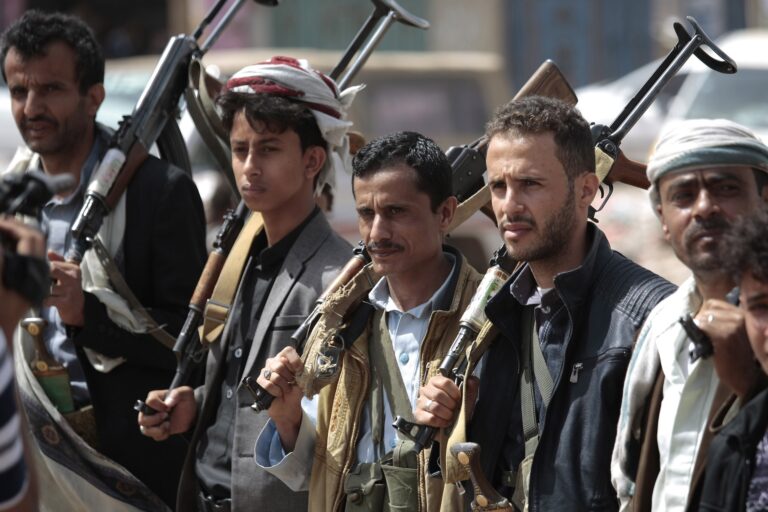
But the unique “delta-wing”-style drone has also been identified elsewhere, notably in Yemen, where the Ansar Allah, or Houthi movement, possesses a very similar platform referred to as Waeed. Allegations that Iran supplies such weapons to Ansar Allah have been rejected by both parties.

Source: News Week

Also Read: HOW IRAN HELPED HOUTHIS EXPAND THEIR REACH

US and European allies suspect ‘Iran is taking advantage’ of stalled talks to expand nuclear program

Western powers suspect Iranian officials are using the diplomatic push for renewal of the 2015 nuclear deal to buy time for the expansion of their illicit program, U.S. and European officials acknowledged after a disappointing week at the United Nations General Assembly.

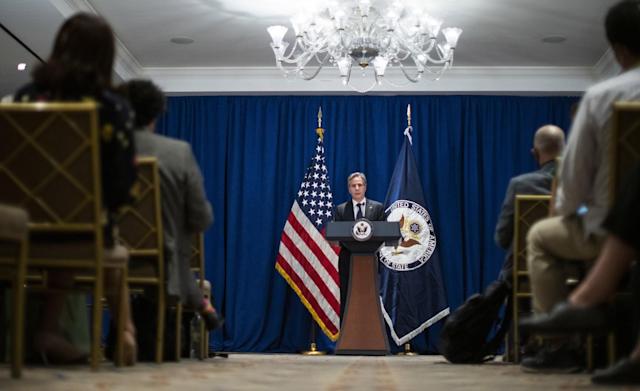
“We don’t have, yet, an agreement by Iran to return to the talks in Vienna,” Secretary of State Antony Blinken told reporters on the sidelines of the UNGA’s annual week of high-level meetings. “We’re very much prepared to return to Vienna to continue the talks, and the question is whether — and if so, when — Iran is prepared to do that.”

State Department officials have tried to broker a joint return to compliance with the deal, which is in tatters following former President Donald Trump’s withdrawal from the pact and Iran’s flouting of the nuclear restrictions imposed by the agreement. Iranian officials have declined to hold a seventh round of the “indirect” talks that unfolded earlier this year, citing the need for internal discussions following the inauguration of a new Iranian president. However, that excuse is wearing thin.

“Iran is taking advantage of the delays in order to compound its nuclear violations, making a return to the JCPOA increasingly complicated,” a French foreign ministry spokesman told reporters Thursday. “If Iran is acting in good faith when it states that it wants to return to the JCPOA and to preserve it, then it must return immediately to the negotiating table that it left more than three months ago now and cease its activities that are contrary to the agreement.”

An Iranian diplomat claimed that “the Vienna talks will resume soon and over the next few weeks” in a public briefing earlier this week. Still, Iranian officials blew off French Foreign Minister Jean-Yves Le Drian’s call for them “to take advantage of this week to restart” the negotiations.

“The U.K., U.S., and our international partners are fully committed to a nuclear deal, but every day that Iran continues to delay talks whilst escalating its own nuclear program means there is less space for diplomacy,” British Foreign Secretary Liz Truss said in a public appeal for the continuance of the negotiations.

Source: Washington Examiner

Also Read: Iran will never obtain a nuclear weapon, should return to JCPOA talks: US official

Family marks 2,000 days since UK woman’s arrest in Iran

0

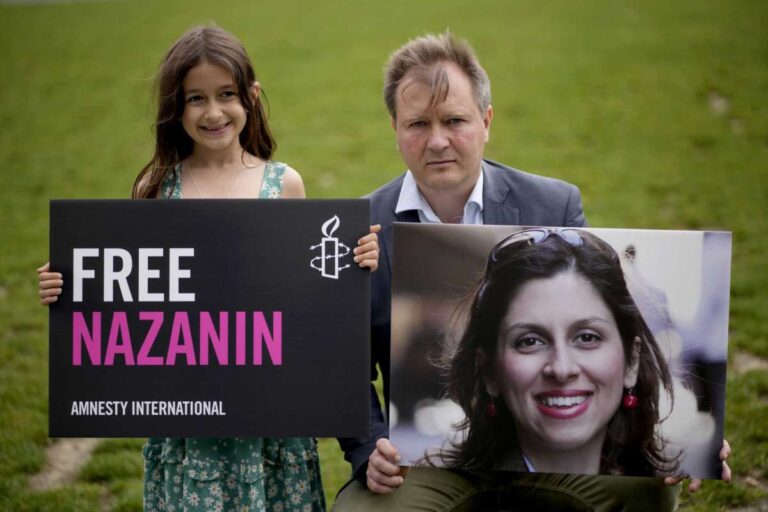
The husband of detained U.K. charity worker Nazanin Zaghari-Ratcliffe appealed to the British government on Thursday to be brave in its dealings with Iran as the family marked 2,000 days since her arrest there.

Richard Ratcliffe and the couple’s 7-year-old daughter Gabriella stood on top of a snakes and ladders game board in Parliament Square, symbolizing the dilemma of being caught between two governments. Nazanin Zaghari-Racliffe is one of several people with British or dual-British nationality now being held there.

“It’s 2,000 days of ups and downs and twists and turns and false dawns, and snakes and ladders seemed to encapsulate that because we’re in the middle of a game between two governments, we’re just a bargaining chip in it,” he said.

The Foreign Office insists that the case is a priority for Liz Truss, who recently took over as foreign secretary. She raised the case before her Iranian counterpart on Wednesday.

“The government needs to be brave and just start doing things that will cause a rethink amongst those in charge of Iran’s hostage-taking action,” Ratcliffe said.

Zaghari-Ratcliffe was sentenced to five years in jail after being convicted of plotting to overthrow Iran’s government, a charge that she, her supporters and rights groups vigorously deny. She was taken into custody at the airport after visiting her family in 2016 in Tehran. At the time, she was working for the Thomson Reuters Foundation, the charitable arm of the news agency.

In May, Zaghari-Ratcliffe was sentenced to an additional year in prison on charges of spreading “propaganda against the system” for having participated in a protest outside the Iranian Embassy in London in 2009.

Source: NC Advertiser

Also Read: Nazanin Zaghari-Ratcliffe: PM demands ‘immediate release’ of British-Iranian woman

Iranian IRGC takes pride in destabilizing the region

0

Ali Jafarnejad, the representative of Iran’s supreme leader for Kurdistan’s Islamic Revolutionary Guard Corps (IRGC), claims that the Islamic Republic has made the region unstable for the United States and other enemies of the regime. But by what logic does he consider such crime to be a source of pride and authority of the Iranian regime?

The fact is that causing instability is deemed honorary and indeed the specialty of the Islamic Republic and IRGC. This is not limited only to the middle-east. Iran’s Balochistan, Kurdistan and Khuzestan are all facing instability. Life for workers, writing for journalists, freedom for women, and economy for businessmen, farmers, and teachers is unstable and unsafe as a direct result of IRGC’s violent meddling.

The political system of the Islamic Republic, with all its financial and military resources, can only be proud of the instability and insecurity it has brought to the region.

Looking at more than ten years of war and killing in Syria, six years of war, famine and displacement in Yemen, presence in Lebanon, and arming its Hezbollah, we will see nothing but violence and terrorism in the track record of IRGC.

The IRGC this month carried out days of bombing of the Kurdistan Region’s border areas, using artillery and airstrikes, including suicide drones, and claiming its target was Iranian Kurdish opposition groups. There are a number of Kurdish opposition groups based in the Kurdistan Region that have units in the mountainous region where the IRGC carried out the strikes. 

There is no place in Iran where the IRGC and the agents of the Islamic Republic have not destroyed the security of, through violence, corruption, and destruction. Now they are shelling the territory of Iraqi Kurdistan and claim they work towards security and stability by doing so.

https://youtu.be/8ewwifkEwHE

Source: IRNA English
Also read: The IRGC locally produced vaccine bluff and theft of $1m from Iranians

Prison Reportedly Confirms Death In Custody, Iran’s Fourth In Two Weeks

0

A day after prisoners at Greater Tehran penitentiary reported the death in custody of Shahin Naseri to his family and to the Oslo-based Iran Human Rights, sources close to the family told Iran International that prison authorities had confirmed to them his death and were investigating its cause.

In an audio-file acquired by Iran International, a political prisoner at the penitentiary Farhad Salmanpour-Zahir rejected any possibility of a suicide.

Salmanpour-Zahir said Naseri, who testified in the 2020 murder trial of wrestler Navid Afkari that Afkari had been tortured before his confession, was put into solitary confinement a day before the September 12 anniversary of Afkari’s execution to stop him giving media interviews.

Babak Paknia, Afkari’s lawyer, in a series of tweets Tuesday(link is external) said Naseri had contacted him three times from the prison Monday asking him to represent him. Paknia tweeted that Naseri had borrowed a card from a friend after his own phone had been confiscated.

Naseri earlier alleged he had been threatened after submitting his Askari testimony in 2020 by an investigation judge(link is external) who said he “was interfering in a security case.”

Naseri, who had shared a cell with Afkari at Adel-Abad prison in Shiraz, testified to court that Afkari had been tortured to confess to killing Hassan Turkman in Shiraz in 2018 during anti-government protests. Afkari was hanged 12 September last year after retracting in court the confession he said had been made under physical and psychological duress.

State media originally described Turkman as a member of security forces(link is external) but later reported he was a security guard for the publicly-owned Shiraz water company.

Naseri’s case is the fourth suspicious death in Iranian prison reported in September.

The Iraq-based Hengaw Organization for Human Rights reported on September 20 the deaths in Urumieh prison under torture by Revolutionary Guards(link is external) (IRGC) intelligence of two Kurdish detainees, Assad Ramin and Davoud Rahimi, allegedly members of the Kurdistan Democratic Party of Iran(link is external) (KDPI). Hengaw earlier reported the death in custody in Urumieh on September 8 of Yaser Mangouri, also − Hengaw said − under torture

Source: Iran International

Also Read: Lack of Accountability Perpetuates Deaths of Prisoners in Iran

Saudi king tells Iran to end militias’ support for talks to continue

0

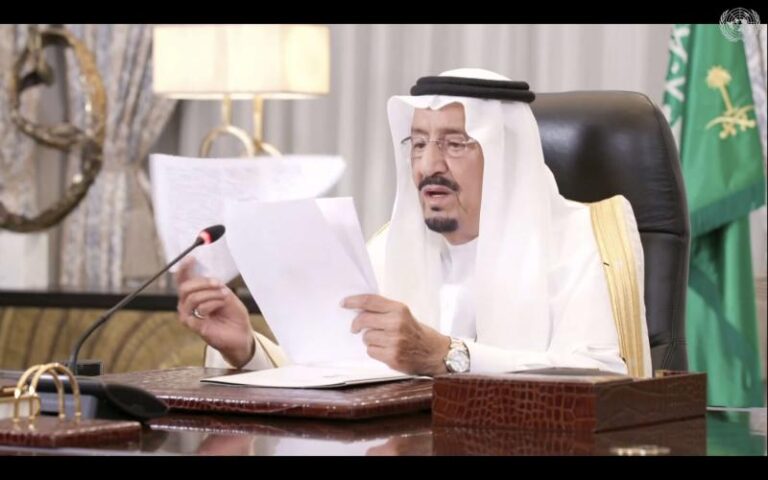
Saudi Arabia’s King Salman bin Abdulaziz al-Saud expressed hope Wednesday that the kingdom’s direct talks with Iran will lead to confidence-building and tangible results that pave the way to achieving the aspirations of the region’s people.

The king, however, cautioned that relations must be based on respect of national sovereignty and the cessation of support for sectarian militias, in apparent reference to the Iran-backed Houthis in Yemen.

Iran and Saudi Arabia, two bitter regional rivals, have been taking small steps toward dialogue following several years of heightened tensions.

King Salman, who described Iran as a neighbour of Saudi Arabia, made Wednesday’s remarks in a pre-recorded speech delivered to leaders gathered for the UN General Assembly.

Riyadh views negotiations with Tehran as essential for a solution in Yemen, a vision based on the conviction that the Houthis have so far  been intransigent to serve a broader strategy that Iran is pursuing to score wins on different fronts, whether in its disputes with Saudi Arabia, differences with other countries in the region or in nuclear negotiations.

In this respect, observers consider that the Kingdom has become increasingly convinced that dialogue with Iran is the best way to resolve current crises, including the Yemeni conflict.

Turning to the fighting in Yemen, the Saudi king said on Wednesday that the Houthi militias keep rejecting the initiatives offered through the United Nations to peacefully resolve the conflict.

“The peace initiative in Yemen, tabled by the Kingdom last March, sought to end the bloodshed and conflict. It ought to put an end to the suffering of the brotherly Yemeni people,” the king said.

“Unfortunately, the terrorist Houthi militias reject peaceful solutions. They have placed their bets on a military option to take over more territory in Yemen,” he added.

Some months ago, Saudi Foreign Minister Prince Faisal bin Farhan bin Abdullah unveiled proposals to end the war in Yemen, including a ceasefire across the country, under the supervision of the United Nations.

Source: The Arab Weekly

Also Read: Yemeni Houthi rebels admit Iran supplies missiles used to attack Saudi Arabia