Home Blog Page 55

Khamenei continues to lie as tensions rise between Iran and Azerbaijan

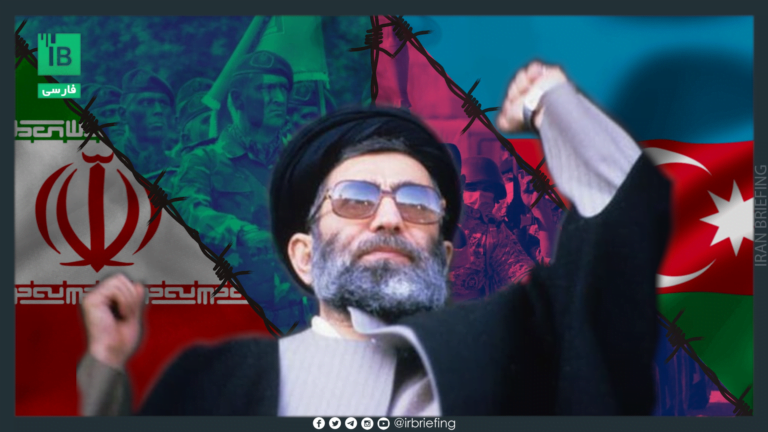
The recent speech of the Iranian supreme leader Ali Khamenei revealed that Iran’s problem with Azerbaijan, which lead to Iran holding military drills at the border, was over Israel. Ali Khamenei, referring to Azerbaijan relations with Israel said: “Some countries think that they can ensure their own security under the delusion of relying on others. They should know that they will be slapped soon. One of the most catastrophic disasters for a country is that outsiders interfere in their security issues and plan and intervene in their war and peace.”

The spokesperson for Azerbaijan’s ministry of foreign affairs however denied Iran’s accusations regarding Azerbaijan’s reliance on Israel and called them baseless.

The question is, why should Khamenei, who claims to be the leader of all Shia Muslims in the world, have such quarrels with one of the few Shia majority countries over Israel? Is Israel truly the enemy of the Iranian people, and who is the real oppressor of the Iranian people? Israel or Iran’s own Islamic Revolutionary Guard Corps (IRGC)?

Enmity with Israel and the U.S. is a part of the Islamic Republic’s identity. Iranian leaders have consistently spoken against these countries and threatened to wipe them off the face of the earth.

Although the Islamic Republic wishes to remove these countries from existence, evidence and truth suggest otherwise. The Islamic Republic, not only has had relations with Israel, but Israel has in fact come to the regime’s rescue during its most troubling times.

Israel, despite having no interest in Iran’s victory during the Iran-Iraq war, knew an Iraqi victory would transition the country into an even more powerful foe that could hardly be dealt with.

It was under this pretext, that Israel rushed to Iran’s help at the start of the war, and the mullahs despite chanting against the Israeli regime, decided to maintain secretive relations with the Jewish country.

Iran’s deputy supreme leader during the Iran-Iraq war, Hussein-Ali Montazeri, furious about the Islamic Republic’s secret dealings with the U.S. and Israel, complained to Khomeini the founder and first supreme leader of Iran. When he realized even Khomeini was aware of the dealings, he tasked his son-in-law to leak this information to the media in order to put an end to it, which ended with his son-in-law being sentenced to death and himself being sidelined after the war. Montazeri thought purchasing weapons from Israel to kill other Muslims and holding backdoor meetings with countries that are considered the enemy is inherently wrong and should not be happening.

Nevertheless, the mullahs continued to purchase weapons from Israel under Khomeini’s orders and some records estimate that Iran bought up to $2.5b worth of weapons only from the Jewish country during the Iran-Iraq war. Others estimate that Iran bought up to 80% of its weapons and equipment from Israel and the U.S.

Iran’s secret relations with Israel did not end with the purchase of weapons and equipment. Israel supported Iran and actively participated in several missions with Iran in the war against Iraq.

Operation Opera was a surprise airstrike conducted by the Israeli Air Force on 7 June 1981, which destroyed an unfinished Iraqi nuclear reactor near Baghdad, Iraq. The Israeli operation came after Iran’s partially successful Operation Scorch Sword had caused minor damage to the same nuclear facility a year prior. Iran and Israel shared information and planned carefully with each other in order to delay Iraq’s access to a nuclear weapon by attacking its nuclear reactor together.

Going back to the original question of Iran and Israel rivalry, and who has committed more crimes against the Iranian people:

Factually during all the 42 years of the Islamic Republic’s rule, Israel has never acted against the best interest of the Iranian people; it has never killed any civilians nor has it done operations in urban areas. During its recent attacks on Iran’s nuclear sites or theft of top-secret information, Israel has made sure there are no civilian casualties.

It is the Islamic Republic that executes its citizens on a daily basis under Khamenei’s command and violently suppresses any discontent or demonstrations by killing unarmed civilians. One of the recent examples is Iran’s recent fuel protests during which the Islamic Republic massacred more than 1500 unarmed civilians who showed discontent regarding the tripling prices of fuel in the country.

Also read: Khamenei sends free fuel to IRGC-backed Hezbollah ignoring the crisis in Iran
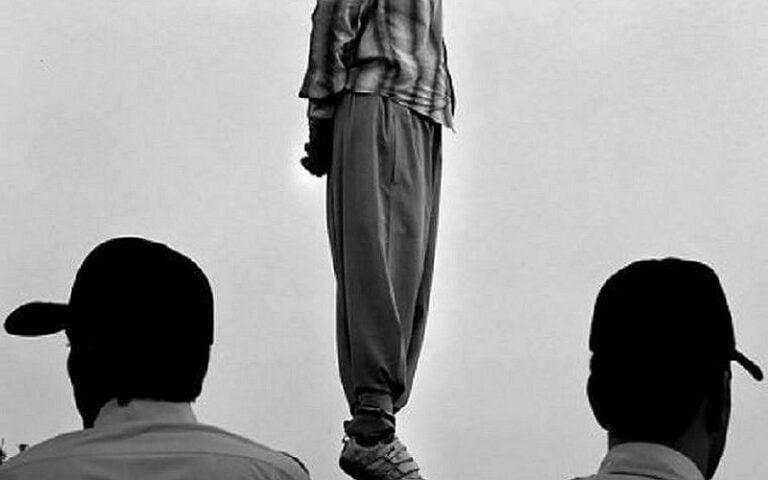
High number of Iran executions in 2021 signals worsening rights condition

October 10 is World Day Against the Death Penalty. More than 140 countries have agreed to abolish the death penalty, according to Amnesty International. The Iranian regime, however, holds the world record for both executions of women and the highest per capita execution rate.

The death penalty is a violation of Articles 3 and 5 of the Universal Declaration of Human Rights, which emphasize the right to life of every human being.

It is also contrary to the International Covenant on Civil and Political Rights.

The Iranian regime continues to use the death penalty as a tool to intimidate and repress dissidents; And many regime officials also defend it.

In his first news conference after the June 2021 election, the regime’s president Ebrahim Raisi, who is responsible for the massacre of political prisoners in 1988 and other crimes against humanity, defends himself over the executions and said that he should be rewarded for defending people’s rights and security.

Gholam Hossein Mohseni Ejei, the current head of the regime’s judiciary, who was appointed to the post by Khamenei on July 1, has also a dark record regarding the execution of dissidents in Iran.

According to statistics compiled by Iran Human Rights Monitor, at least 267 people were executed in Iran since the beginning of 2021.

This shows an increase over the last year, when 255 people were executed throughout 2020.

The actual number of executions is much higher. The clerical regime carries out most executions in secret and out of the public eye. No witnesses are present at the time of execution but those who carry them out.

At least 92 executions were carried out for drug-related offenses in 2021 and 130 were carried out for murder. Nine women, eight political prisoners and two child offenders are among those executed.

Source: Iran HRM

Also Read: Iran’s Rising Trend of Executions Indicates Further Human Rights Violations

Khamenei sends free fuel to IRGC-backed Hezbollah ignoring crisis in Iran

0


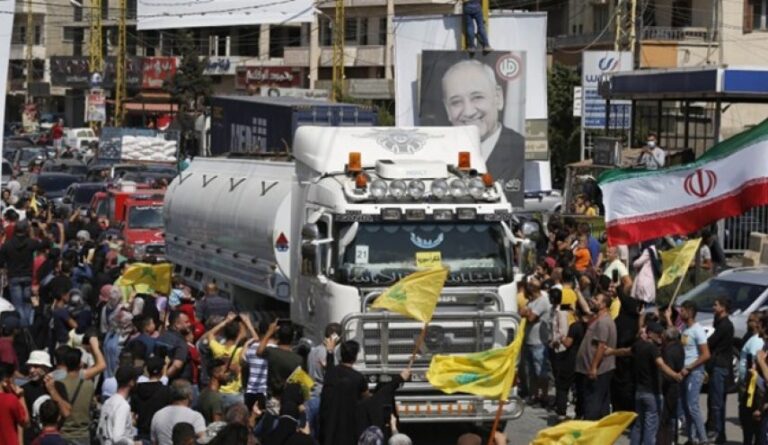
On Khamenei’s orders, Iran’s Islamic Revolutionary Guard Corps (IRGC) has continued to send free shipments of fuel to its proxy group Hezbollah since last month and promised to send more shipments to its armed group in Lebanon in the coming days.

Importing fuel from a country like Iran with a collapsed economy under massive sanctions is not a lasting solution to Lebanon’s energy crisis. What Hezbollah is doing is merely a propaganda ploy to gain power, and it does not play a constructive role in solving the country’s core issues.

Meanwhile, sixty percent of Iranians are below the absolute poverty line, and 73 percent are eligible for government aid according to Iranian officials. Yet the Islamic Republic of Iran is providing more welfare to Lebanon. Poverty and unemployment pervade the country, and of course, along with it, the coronavirus pandemic, lack of electricity and water, high prices, and a bankrupt economy have put the already impoverished Iranian people under immense pressure.

Meanwhile, the Minister of Foreign Affairs of the Islamic Republic, Hossein Amir-Abdollahian, announced today: “We are ready to help Lebanon so that it can successfully overcome the current economic crisis. Large Iranian companies are ready to build two 1,000-megawatt power plants in Beirut and southern Lebanon in less than 18 months. We will do this quickly with the joint investment of Iran and Lebanon and with the export of Iranian technical-engineering services.”

In 1982, Hezbollah was conceived by Muslim clerics and funded by Iran. Its leaders were followers of Ayatollah Khomeini, and its forces were trained and organized by a contingent of 1,500 Revolutionary Guards that arrived from Iran. Since the Supreme Leader of Iran is the ultimate clerical authority, Hezbollah’s leaders have appealed to him “for guidance and directives. After the death of Iran’s first Supreme Leader, Khomeini, Hezbollah’s governing bodies developed a more “independent role”. Since the Second Lebanon War, however, Iran has restructured Hezbollah to limit the power of Hassan Nasrallah and invested billions of dollars “rehabilitating” Hezbollah.

Source: IranPressNews
Also read: Is Iran threatening Azerbaijan over Israel ties?

Israel said to alert embassies worldwide of possible Iran threats

Israel has warned its missions around the world of a possible Iranian terror threat, a television report claimed on Wednesday, following the arrest of an Azeri national over an alleged plot to assassinate one or more Israeli businesspeople in Cyprus.

According to Channel 12 news, Israeli diplomats across the globe have been told to remain on high alert.

The network also said three suspects in the foiled attack attempt in Cyprus, revealed earlier this week, are suspected of fleeing the island nation. The channel did not cite a source for the information.

Iran has been behind repeated threats against Israelis and Israeli missions around the world over the years. In March of this year, the National Security Council warned Israelis they could be targeted by the Islamic Republic abroad. It said Iran was behind a bombing attack near the Israeli embassy in India in January, which did not cause casualties.

The Israeli government has blamed “Iranian terror” for last week’s reported plan to kill billionaire Teddy Sagi in Cyprus. However, local media reported Wednesday that Cypriot authorities do not believe Iran is behind the plot. Authorities are also said to be convinced the would-be hitman’s target in the plot was not Sagi, but other members of his company, the Philenews site reported.

Sagi is the founder of the gambling software company Playtech, which has offices in Nicosia.

Some sources had claimed that the foiled attack was an assassination attempt against Sagi linked to his business dealings. But the Israeli government on Monday blamed Iran, and said Sagi was targeted only because he was an Israeli businessman.

An Azeri suspect was arrested last week on reported suspicions of planning to attack one or more Israeli businesspeople. Cypriot authorities unsealed 11 possible charges the suspect is being investigated for, including terror activity, attempted murder, belonging to a criminal organization, conspiracy to commit a crime, and being in the country illegally, Channel 12 reported Wednesday. He was ordered held in custody another six days during a hearing.

Source: Times of Israel

Also Read: Details of Iranian foiled plot to assassinate two Israelis in Colombia

Is Iran threatening Azerbaijan over Israel ties?

0

Iran’s media has begun to up the rhetoric against Azerbaijan, with a headline claiming that Baku has “denied the presence of the Zionist regime near the border with Iran,” a claim that appears to contrast with its insinuation that Israel’s close relationship with Azerbaijan is a threat to Tehran.

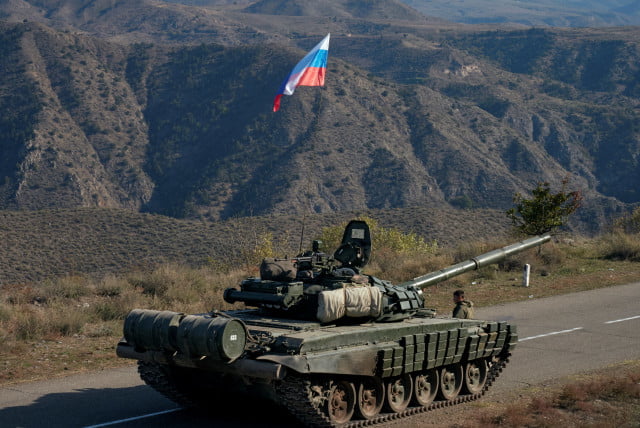
The larger context is that Iran has carried out military maneuvers near the border with Azerbaijan and Armenia and hosted an Armenian delegation, signaling its commitment to a robust policy that wants the status quo maintained on the border.

What’s really going on here? A year ago, Azerbaijan launched a war against Armenian forces in the disputed area of Nagorno-Karabakh. In Baku’s view, backed by Turkey, the Armenians had for too long dominated disputed areas that they captured in the 1990s. In Armenian’s view, these were historical lands where Armenians lived and which the Soviet Union had arbitrarily made an autonomous part of the Azeri Soviet republic in the 20th century.

Regardless of who is correct in this dispute, it shares similarities to many others such as in Northern Cyprus, the West Bank and other places. What matters is that a rising and increasingly powerful Azerbaijan is asserting itself militarily.

Israel and Iran’s northern neighbor enjoy close relations and Baku has acquired a large number of Israeli-made drones in recent decades, becoming a pioneering drone power. Azerbaijan frequently shows off Israeli-made drones and boasts of their effectiveness. Recent videos posted online even appeared to show IAI Harop drones in launch formation on the back of trucks being toured by Azeri leader Ilham Aliyev, according to videos on Twitter.

Iran’s media claims the “Zionists” may be on Iran’s doorstep by working with Baku. But it also prints Azerbaijan’s denials. “Azerbaijan pursues an independent foreign policy and on this basis establishes relations with its neighbors and does not allow anyone to interfere in its internal affairs,” Aliyev said, according to Iran’s Fars News.

Source: The Jerusalem Post

Also Read: Biden aides to tell Israelis U.S. will pursue ‘other avenues’ if Iran diplomacy fails

Biden aides to tell Israelis U.S. will pursue ‘other avenues’ if Iran diplomacy fails

Top U.S. officials will tell their Israeli counterparts on Tuesday that the Biden administration remains committed to diplomacy with Iran, but if necessary would be prepared to pursue “other avenues” to ensure Tehran does not acquire a nuclear weapon, a senior U.S. official said.

A visit to Washington by Israel’s national security adviser, Eyal Hulata, will allow the two allies to share intelligence and develop a “baseline assessment” of how far Tehran’s nuclear program has advanced, the official said.

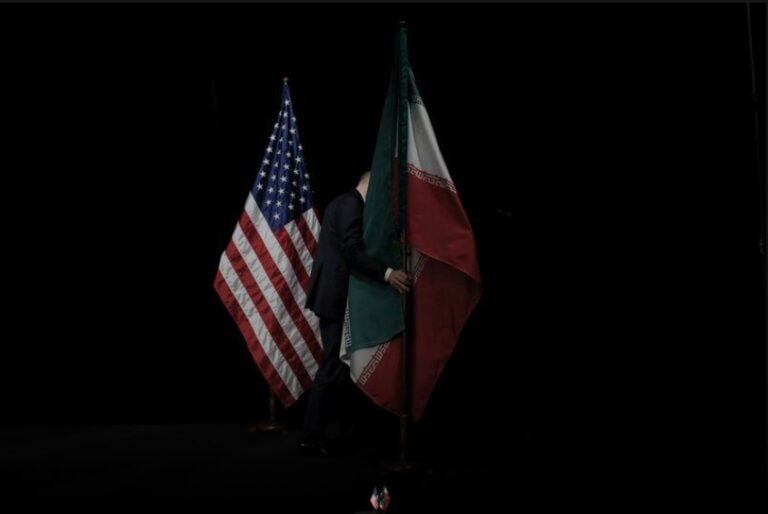
Under a 2015 deal, Iran curbed its uranium enrichment program, a possible pathway to nuclear arms, in return for the lifting of economic sanctions. Then-U.S. President Donald Trump quit the deal in 2018 and the Israeli government opposes U.S. efforts to revive it.

In broad terms, U.S. experts believe the time it would take Iran to achieve nuclear “breakout” – enough enriched uranium to build a nuclear bomb – has “gone from about 12 months down to a period of about a few months” since Trump pulled out of the pact, the official said, speaking on condition of anonymity.

“Obviously that is quite alarming,” the official told reporters ahead of Hulata’s talks with U.S. national security adviser Jake Sullivan.

Iran has consistently denied it is developing nuclear weapons.

Echoing President Joe Biden’s comments in a White House meeting with Israeli Prime Minister Naftali Bennett in August, the official said: “We of course remain committed to a diplomatic path.”

“But obviously if that doesn’t work there are other avenues to pursue, and we are fully committed to ensuring that Iran never develops a nuclear weapon.”

Asked what actions were under consideration and whether that included military options, the official said “we’ll be prepared to take measures that are necessary” but did not elaborate.

The official said that Iran was “sending indications to a number of parties that they are preparing to come back to Vienna,” where the United States and Iran held indirect talks earlier this year that stalled.

Source: Reuters

Also Read: France: Iran must return to nuclear talks to avoid escalation


aides aides 

All construction megaprojects in Tehran handed to IRGC engineering arm

0

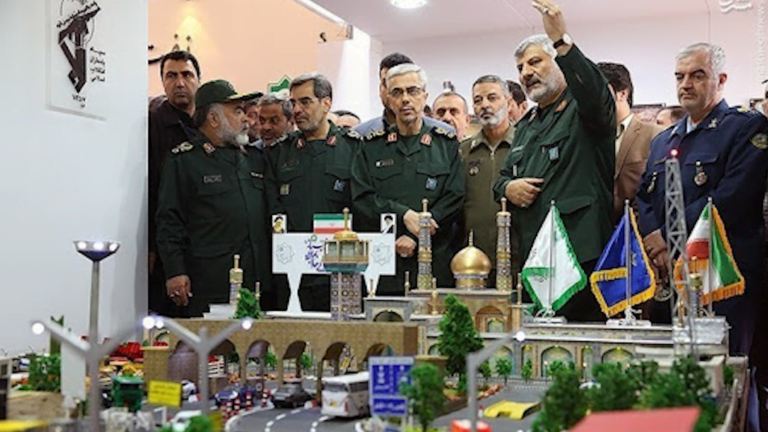
Mehdi Chamran, the chairman of the City Council of Tehran, announced the handover of Tehran’s development projects to the Khatam-al Anbiya Construction Headquarters (GHORB) of Iran’s Islamic Revolutionary Guard Corps (IRGC).

On October 3, Chamran, referring to the cooperation of the City Council with the IRGC, said: “The City Council has always worked closely with the IRGC and GHORB to carry out large projects in the form of megaprojects.”

Without mentioning the names and number of these projects, he said that the Tehran Municipality intends to hand over the “mega projects” to the IRGC.

Mohammad Javad Haghshenas, a member of the Tehran City Council, during an interview in April 2021, announced the secret contracts entitled “Finance 1” and “Finance 2”, which were unofficially concluded with GHORB during the mayoralty of Mohammad Baqer Qalibaf. According to him, “the money involved was more than the annual budget of the municipality.”

Khatam-al Anbiya Construction Headquarters was established after the end of the Iran-Iraq War with the aim of involving the IRGC in economic projects, and quickly became the largest economic cartel and sponsor of the IRGC’s military activities outside Iran with the support of the Islamic Republic.

GHORB is an Islamic Revolutionary Guard Corps (IRGC)-owned group of companies that acts as a prime contractor on projects for Iran’s ballistic missile and nuclear programs; involved in large-scale civil and military construction and engineering projects, according to the U.N. Security Council; oversees subsidiaries that, according to the U.N. Security Council, “were heavily involved in the construction of” the Fordow Fuel Enrichment Plant.

GHORB’s civil engineering activities include road and dam construction and the manufacture of pipelines to transport water, oil, and gas; also involved in mining operations, agriculture, and telecommunications; main clients include Ministry of Energy, Ministry of Oil, Ministry of Roads and Transportation, and Ministry of Defense.

Source: Al Arabiya
Also read: Iran’s Regime Claims To Recreate an 8 Million Basij Force

Hunger-Striking Political Prisoner Passes Out In Iranian Women’s Jail

0

The health of political prisoner Soheila Hejab who has been on hunger strike at the notorious Qarchak Prison for women since September 19 has worsened.

A pro-monarchy and anti-hijab activist, Sohelia Hejab passed out twice as she staged a sit-in in a corridor at Qarchak women’s prison, former hunger striker Arash Sadeghi tweeted Saturday evening.

Sadeghi wrote that Hejab, a 30-year-old law graduate who has been on hunger strike since September 19, was wearing a shroud to symbolize her readiness to die.

A member of the royalist group, Constitutional Party of Iran banned by the Islamic Republic, Hejab is protesting against the treatment of political prisoners. Hejab was sentenced to 18 years in July 2020 for “propaganda against the regime”, “forming a women’s rights group” and “calling for a referendum to change the Constitution”, by notorious judge Mohammad Moghiseh. In May 2020 she was arrested again by Revolutionary Guards’ Intelligence Organization and was taken to Qarchak Prison for women in the south of the capital to serve her sentence.

On Friday the United States-based Human Rights Activists News Agency (HRANA) reported that Hejab’s blood pressure had dropped, and that her stomach “would not even hold water.”

“Her family are seriously worried due to [her hunger strike] and her kidney problems,” HRANA wrote. HRANA said prison authorities had on the orders of a judge refused to allow her to receive treatment in a hospital outside the prison.

In a voice message from prison in May 2020 Hejab accused Revolutionary Guard (IRGC) intelligence officers who arrested her of brutality. She said that she had been held by her hair, dragged along the ground, and kicked.

She also said her interrogators from IRGC intelligence at Qarchak threatened to have her killed by dangerous criminals in the jail. She has written a number of letters from prison in which she has defended her political beliefs and criticized the Iranian authorities including Supreme Leader Ali Khamenei.

Source: Iran International

Also Read: More Than 500 Women Human Rights Defenders Unjustly Imprisoned In Iran

Iran’s Regime Claims To Recreate an 8 Million Basij Force

0

The word ‘Basij’ (Mobilization) which is one of the most hated words in Iran since the start of the mullahs’ rule is today reminiscent for most Iranians of a character with attributes like mercenary, criminality, ragged nature (Lumpenism), and sloppiness, and finally, the thugs of society and those people who the rulers hire to control the people and repress them.

In the 8-year Iran-Iraq war, they were whose young people, mostly underaged, were used as minefield cleaners for the IRGC.

After the war, these group of people changed their goals and started the repression of the people. The regime’s hardline cleric Ahmad Alamolhoda in 2020 revealed the goal of the Basij and its class descent: “Many of the young people who had become thugs in their regions because of poverty and deprivation became local Basijis with the right cultural work and getting to know Imam Hussein, who prevented many of the riots. (Hamshahri Online, October 8, 2020)

Earlier, one of the IRGC commanders Hossein Hamedani, who was killed in Syria, had explained this issue better:

“We did something with intelligence work that was a boom in Tehran. We identified 5,000 people who were present in the riots but were not from any political parties and movements, but were among the miscreants and thugs, and controlled them at their homes.

“The day they called (for protests), they were controlled and were not allowed to leave the house. Then I made them members of the battalion. Later, these three battalions showed that if we want to train mujahedeen, we must bring such people who are dealing with blades and machetes to work. One of these was a man named Sattari. When he hit the crowd, he was injured by 70 percent and was martyred last year.” (Tabnak, October 9, 2015)

If we want to compare the Basij with armed forces outside Iran, we can compare them with Hitler’s protective squads or the SS which were the most important tools of Hitler’s terror.

Source: Iran News Update

Also Read: Iran cracks down on protesters demanding basic rights

Iran FM: IRGC-QF contributes to regional and global peace and stability

0

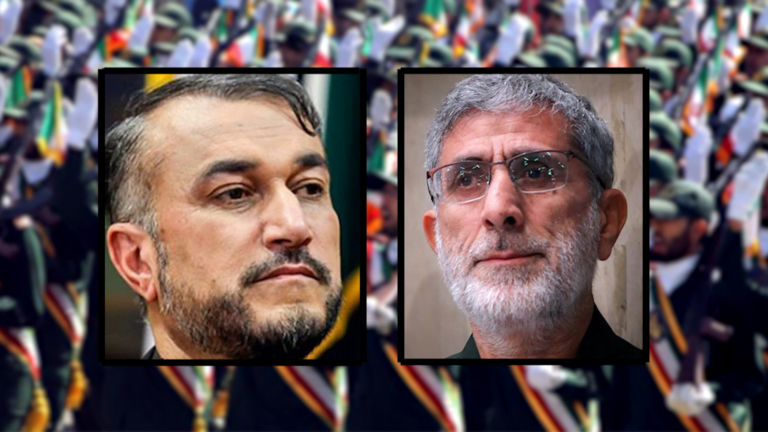
Iranian Foreign Minister Hossein Amir-Abdollahian, in his meeting with IRGC Quds Force Commander Esmaeil Ghaani, said that Islamic Revolutionary Guards Corps (IRGC) Quds Force contributes a lot to the spread of peace and security in the international arena.

Amir-Abdollahian called IRGC Quds Force a borderless soldier that plays a key role in helping the spread of peace and security both regionally and globally.

Meanwhile, analysts believe Iran’s regional interference — in Iraq, Syria, Lebanon, and Yemen, via the Islamic Revolutionary Guard Corps Quds Force (IRGC-QF) and affiliated militias — fuels tensions in these countries and domestic unrest inside Iran.

The IRGC-QF affiliates most recently include Kataib Hezbollah and Asaib Ahl al-Haq in Iraq, Hezbollah in Lebanon, and the Houthis in Yemen.

Such proxies are working on several fronts to impose the Islamic Republic’s hegemony and expansionist policies in the region. In return, Tehran provides its “axis” partners with all the money, weapons, and support they need.

The IRGC-QF reports directly to Iranian leader Ali Khamenei and is responsible for external operations, overseeing proxy forces in the region to construct a defensive shield against reactions to Iran’s aggressive expansionist policies.

The threats posed by the Islamic Republic and its affiliates will likely become more serious under the presidency of new Iranian President Ebrahim Raisi.

All this comes at the expense of its own people, who are reeling from a severe economic crisis. Iran’s actions will result in tougher sanctions and pressure from the international community and further isolation since the Islamic Republic insists on fuelling tension and supporting militias that act on its behalf.

The Iranian FM though, stresses that the Foreign Ministry would proudly follow in the footsteps of Qasem Soleiman, the slain Quds Force commander.

Source: Tasnim News Agency
Also read: Leaders in IRGC reap huge profits as Iran’s official death toll hits 120,000