Home Blog Page 54

Iran’s Riaisi Appoints More IRGC Commanders To Civilian Positions

0

Iran’s President Ebrahim Raisi (Raeesi), in a rare move, has appointed two active-duty Revolutionary Guard commanders as governors in two key provinces.

In a decision of the cabinet on Sunday Abedin Khorram, Islamic Revolution Guard Corps (IRGC) commander in Eastern Azerbaijan was appointed governor of same province. Also, Yaghubali Nazari, IRGC commander in Khorasan-Razavi province became governor of the same province.

Raisi’s move in effect changed the civilian governorship in the two provinces into military governorship, since both IRGC officers were commanders in the same provinces, although they might be replaced as military commanders in the two provinces.

Islamic Republic presidential administrations and state entities have routinely given civilian positions to less active or former IRGC senior commanders but appointing active-duty military commanders directly to top civilian positions within the jurisdiction of their own commands has been rare.

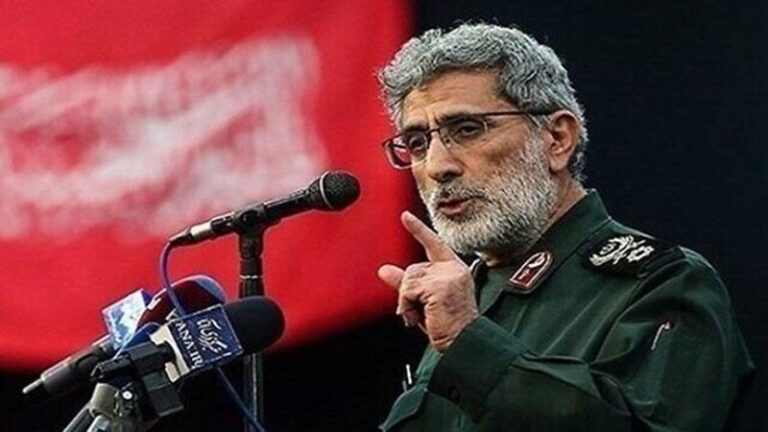
IRGC’s Abedin Khorram, appointed governor by Raisi.

Dozens of IRGC officers also swept into the parliament in the February 2020 elections, when hundreds of reformist candidates were barred from running, and with a very low voter turnout, hardliners and IRGC officers won an overwhelming majority.

Khorram was previously IRGC commander in Khoi and deputy commander and commander in Western Azerbaijan. Fars news agency affiliated with IRGC had earlier mentioned him as a veteran of the Syrian war, where Iran has deployed an array of forces since 2011 to defend Bashar al-Assad’s rule.

Nazari commanded IRGC forces in Khorasan-Razavi province for the past six years before being appointed as governor.

Raisi has already appointed several former IRGC officers as ministers in his cabinet and top managers in other positions throughout the government. One of his main economic aides is Mohsen Rezaei, a former top IRGC commander who has no experience as an economic manager.

Another military officer appointed as governor by Raisi is Ahmad Mohammadizadeh, who was the head of IRGC’s ‘strategic center for management and command’ and is now governor of Bushehr province.

Source: Iran International

Also Read: Iran’s silent military coup: IRGC conquers government
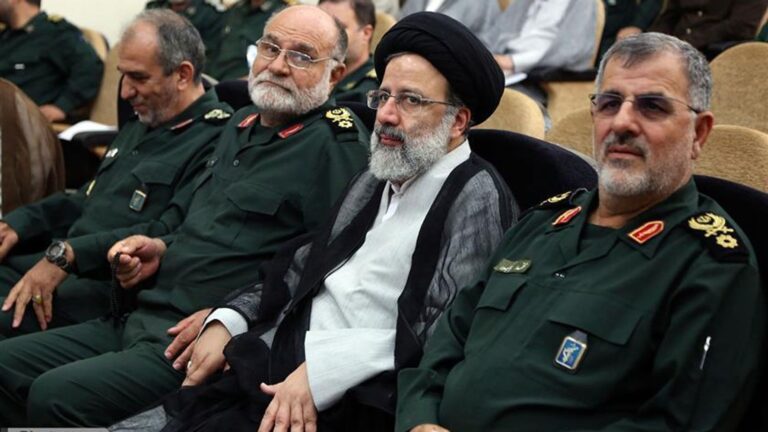
Iran’s silent military coup: IRGC conquers government
0

The Islamic Republic of Iran’s newly appointed president Ebrahim Raisi has proven his determination to form a military dictatorship by installing commanders of the Islamic Revolutionary Guard Corps (IRGC) within Iran’s government body.

Ebrahim Raisi’s attempt to turn Iran into a military government ever since he took office, has been clearly witnessed after he appointed Mohsen Rezai, former commander-in-chief of the IRGC as Vice President for Economic Affairs, and Saeed Mohammad, former commander of IRGC-GHORB as secretary of Free Zones High Council, as well as Hasan Kazem, former IRGC Quds Force commander as special representative for Afghanistan Affairs.

Raisi’s appointment of IRGC commanders continues with Abedin Khorram, active IRGC commander in Eastern Azerbaijan being appointed governor of the same province. Also, Yaghubali Nazari, IRGC commander in Khorasan-Razavi province became governor of the same province.

Another military officer appointed as governor by Raisi is Ahmad Mohammadizadeh, who was the head of IRGC’s ‘strategic center for management and command’ and is now governor of Bushehr province.

Islamic Republic presidential administrations and state entities have routinely given civilian positions to less active or former IRGC senior commanders but appointing active-duty military commanders directly to top civilian positions within the jurisdiction of their own commands has been rare.

Dozens of Revolutionary Guards officers also swept into the parliament in the February 2020 elections, when hundreds of reformist candidates were barred from running, and with a very low voter turnout, hardliners and IRGC officers won an overwhelming majority.

The policy of hardline supporters of Supreme Leader Ali Khamenei, backed by Revolutionary Guards, in pushing many other loyal regime elements to the margins of politics has opened more vistas for Revolutionary Guard officers. The military force already is perhaps the biggest economic actor in Iran with hundreds of companies in all sectors.

Source: ISNA News Agency
Also read: Unhappy Iran Battles for Lost Influence in South Caucasus

‘Threatened With Death And Rape’: Iranian Activist Back Behind Bars After Exposing Prisoner Abuse

Since she was first jailed in 2018 for covering labor strikes at a local sugar factory, journalist and activist Sepideh Gholian has become somewhat of an expert at exposing the torture tactics she has witnessed in prisons throughout Iran.

Now the 26-year-old’s experiences, drawn from her incarceration at detention facilities and four notorious penitentiaries around the country, has landed her back in a familiar place — prison.

Gholian was on medical furlough after contracting COVID-19 when a large team of security agents stormed her family’s home in the western Khuzestan Province on October 10, arrested her, and took her into detention.

Gholian’s lawyer, Amir Raisian, wrote on Twitter on October 13 that his client called her family after two days and said she had been taken from the provincial capital, Ahvaz, to the port town of Bushehr, and from there to Tehran’s notorious Evin prison.

Gholian’s lawyer said his client was transferred to the Tehran facility for “investigation and interrogation.”

As she has been transferred from prison to prison over the years Gholian has specifically requested that she not be sent back to Evin prison where, she told RFE/RL’s Radio Farda in an interview last month, she had been “threatened with death and rape many times.”

Her arrest came just days after Gholian posted an image of a summons for her to face charges of “spreading lies and propaganda” online against the Iranian government.

While the Iranian authorities have not officially made the connection, Gholian’s arrest and transfer to Evin prison appears to be related to a series of tweets she posted on September 9 in which she documented what she said was rampant prisoner abuse during her time at Bushehr Central Prison.

Those tweets included accounts of psychological torture, collective punishment, and sex-for-favors practices.

In posting the summons she received from the local prosecutor’s office, Gholian wrote on September 22 that “the Islamic Republic has once again proved that its answer to truth and justice is repression and revenge.”

Source: RFERL

Also Read: Dozens of human rights violations reported in Iran’s Kurdish areas in August

Unhappy Iran Battles for Lost Influence in South Caucasus

0

Events that might not matter elsewhere in the world matter quite a lot in the South Caucasus. Given a recent history of conflict, with all the bad feelings that generates, plus outside powers playing geostrategic games, and its growing importance as an energy corridor between Europe and Central Asia, the region is vulnerable.

This has been worsened by the two-year-long Western absence of engagement. In 2020, Europe and the U.S. were barely involved as the second Nagorno-Karabakh war broke out between Armenia and Azerbaijan, leaving about 7,000 dead. With tensions now on the rise between Azerbaijan and Iran, Western uninterest is again evident, even though this might have wider ramifications for future re-alignment in the South Caucasus.

The drumbeat of Iranian activity against Azerbaijan has been consistent in recent months. Iran is getting increasingly edgy about Israel’s presence in the South Caucasus — hardly surprising given Israel’s painfully well-targeted assassination and computer hacking campaigns against nuclear staff and facilities — and especially its growing security and military ties with Azerbaijan, with whom Iran shares a 765km (430 mile) border. Iran has also voiced concern about the presence in the region of Turkish-backed Syrian mercenaries, who were used as Azeri assault troops last year.

Much of the anger has been played out in military exercises. The Azeri military has been busy since its victory, exercising near the strategic Lachin corridor which connects the separatist region to Armenia, and in the Caspian Sea, where it has jointly exercised with Turkish personnel. Iran, in turn, sent units to the border region this month for drills of an unstated scale.

This week, the Azeri and Iranian foreign ministers agreed to dial down the rhetoric amid much talk of mutual understanding. Whether that involved promises regarding the Israeli presence or a pledge by Iran to abandon a newly promised road to Armenia was not stated.

Iran’s behavior is a recognition of the long-term strategic changes caused by the Armenian defeat last year. Iran has been sidelined. Its diplomatic initiatives have failed, and it has been unwelcome in post-conflict discussions.

Source: CEPA

Also Read: Iran forms new IRGC-backed armed militia in Azerbaijan

Europeans raise pressure on Iran over nuclear deal before EU visit

0

A pending visit to Tehran by the European Union coordinator for talks to revive the Iran nuclear deal cannot be deemed “business as usual” given escalating Iranian nuclear activities and the stalling of negotiations since June, European diplomats said.

Enrique Mora, the EU’s political director, is due to hold talks on Thursday with members of Iran’s nuclear negotiating team four months after talks broke off between Iran and world powers, including the United States, to rescue the accord.

“The visit comes at an important time,” the diplomats from Britain, Germany and France, known as the E3, said in a note on Wednesday. The three countries along with China and Russia are parties to the deal.

“The situation in the nuclear field has been worsening and been aggravated continuously since then,” they said, alluding to Iran’s accelerating enrichment of uranium to higher fissile purity, a possible pathway to a nuclear bomb.

“For this reason, we do not see this visit as ‘business as usual’, but rather as a decisive visit in the crisis.”

The Islamic Republic has repeatedly said it will return to the negotiations “soon” without giving any sense of what that actually means. Western diplomats have tentatively said a return to the Vienna talks may be possible before the end of October.

“Through its statements and actions on the ground, the new Iranian administration of President (Ebrahim) Raissi raises doubts about its intention to return to the Joint Comprehensive Plan of Action (JCPoA),” French Foreign Ministry spokeswoman Anne-Claire Legendre told reporters in a daily online briefing.

“While refusing to negotiate, Iran creates facts on the ground that further complicate the return to the JCPoA,” she said, adding that Tehran would also need to be clear about its intentions should it come back to the talks.

Since then-U.S. President Donald Trump ditched the deal in 2018 and reimposed sanctions on Iran, Tehran has been rebuilding stockpiles of enriched uranium, refining it to higher levels of purity and installing advanced centrifuges to speed up enrichment.

Source: Reuters

Also Read: France: Iran must return to nuclear talks to avoid escalation


Europeans Europeans Europeans

IRGC Commander in Baghdad as Pro-Iran Groups Lose Ground in Election

The new commander of the Islamic Revolutionary Guard Corps’ expeditionary Quds Force has come to Baghdad on an unannounced visit, a source in the Iraqi parliament confirmed.

Ismail Ghani arrived in the Iraqi capital at dawn on Monday, October 11 in the aftermath of the country’s first parliamentary election since mass protests in winter 2019.

Initial results on Monday showed record low turnout, but also major gains for Shia cleric Muqtada al-Sadr’s populist Sadrist Movement, which is now expected to hold a majority in the legislature.

A sitting MP told IranWire that Ghani had held meetings with a number of key Iraqi officials and political groups over the course of Monday.

“The IRGC Quds Force commander’s meetings with officials in Iraq,” they said, “are intended to coordinate positions on political allegiances for the post-results period.”

Apparent Victor Warns Against Foreign Interference

The visit came even as Muqtada al-Sadr tweeted about the need “not to interfere” in the decisions of the Iraqi Electoral Commission “nor to put pressure on it – internally or from foreign countries.”

The Islamic Republic has long been accused of meddling in Iraqi domestic politics, through both sympathetic proxies and militia groups.

Pro-Iran political parties, which appeared on Monday to have lost many seats to Sadrists and pro-reform candidates, have already threatened to not recognize the result.

For his part Al-Sadr insisted that the vote on Sunday had not been compromised. “What distinguishes these elections,” he said, “is that they took place under national, international and Arab auspices and supervision, and they were approved.”

He added that his group was closely monitoring for any “illegal” interference in the process, and for external interference that could “undermine Iraq’s prestige and independence”.

The polls closed across Iraq on Sunday night. Preliminary results announced by the Election Commission gave Al-Sadr’s party 73 seats, up from 54 in 2018 and potentially giving the bloc a majority in the legislature.

Source: Iran Wire

Also Read: Former Iraqi politician warns of Iran using Iraq as ‘a way station for weapons transport’

Devastation of Iranian people at the hands of Israel or IRGC?

The Iranian people, regardless of ethnicity or religion, have been suffering due to the critical political and economical conditions of the country in the past forty years, with the clergymen, IRGC officials, and those connected to them being the only exception. The Islamic Republic and its terrorist organization of Islamic Revolutionary Guard Corps (IRGC), not only have caused agony and devastation for the Iranian people but have also disturbed the peace and stability in neighboring countries.

The Islamic Republic’s global campaign of terror has included as many as 360 targeted assassinations in more than 40 countries to date. Regional countries, as well as the U.S. and EU, have consistently highlighted Iran’s role in the global exportation of terrorism.

The majority of these assassinations, especially the ones in Europe, happened while Ali Fallahian served as the minister of intelligence from 1989 to 1997 under the presidency of Ali Akbar Rafsanjani. Shapour Bakhtiar, Abdorrahman Boroumand, Fereydoun Farrokhzad, Abdul Rahman Ghassemlou, Sadegh Sharafkandi, Kazem Rajavi, and Reza Mazlouman are some of the prominent faces of the opposition, all assassinated in various ways and in different countries while Fallahian held office as the minister of intelligence. The Islamic Republic has been accused of involvement in the deadly 1994 bombing of a Jewish center in Argentina and a number of Iranian officials have been convicted or summoned to international courts of law for their connection to various assassinations and terrorist attacks.

The sanctions on Iranian people which are a direct result of the IRGC expansionist and interventionist policies, regional adventures, and exportation of terrorism is a prime example of how the Islamic Republic has simultaneously driven more than one hundred million Muslims in Iran, Syria, Iraq, Yemen, Lebanon, and Afghanistan to the edge of starvation and poverty.

Iran’s eight-year war with Iraq that saw millions of people injured, displaced, and killed was also instigated by Khomeini, threatening Iraq’s sovereignty and questioning Saddam’s rule for several years. Hundreds of thousands of Iranians were aimlessly massacred at the hands of Inexperienced and uneducated commanders, such as Mohsen Rezaei, whose unorthodox tactics according to himself resulted in the deaths of thousands of soldiers in several missions, or Ghasem Soleimani, who was only a worker before joining the army, and Mohammad Bagher Ghalibaf who became chief commander of the Imam Reza Brigade at the age of 21 and chief commander of Nasr Division a year later.

It was Israel that came to Iran’s rescue during the war with Iraq and provided the army with key military equipment to prevent Iran’s early defeat against a powerful Iraq. The IRGC’s total control of Iran’s economy through its engineering arm, the Khatam al-Anbiya Construction Headquarters, has gotten to the point that Tehran Municipality recently announced the hand-over of all “megaprojects” in the capital to the IRGC.

The Islamic Republic’s role in poverty, corruption, theft, murder, detainment, and torture of Iranian people, fueling wars, and exporting terrorism in the region, is clearly evident.

The real enemy of Iranians and all peoples of middle-east is the Islamic Republic, a close ally of China, the same country that is committing acts of genocide against more than a million Muslims, and also an ally with Russia, responsible for killing Chechen Muslims, and lastly, an ally with Syria, actively killing and displacing its own unarmed civilians.

Today we witness Israel striking peace accords with various Muslim countries while Iran continues to meddle in the internal affairs of regional countries, such as Shia majority Azerbaijan, attempting to further destabilize regional peace and stability. Even from an Islamic point of view, to decide only three of the most brutal countries committing atrocities against Muslims, only three countries come to mind: Iran, China, and Russia.

Also read: Khamenei continues to lie as tensions rise between Iran and Azerbaijan 

Iran forms new IRGC-backed armed militia in Azerbaijan

0

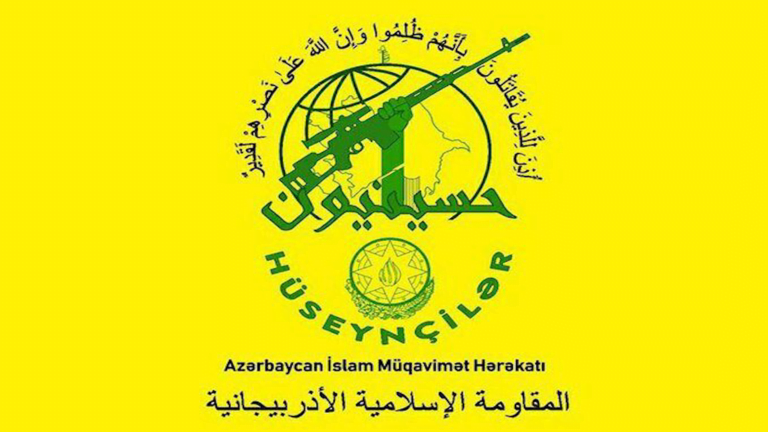
Amid the growing tensions between Iran and neighboring Azerbaijan, several accounts on social media belonging to the Islamic Revolutionary Guard Corps (IRGC) stated that a newly-announced “resistance” faction has emerged in the Republic of Azerbaijan, called the Huseynyun.

While next to little is known about the group – allegedly formed in 2019 during the Syrian conflict, only to be formally activated recently – the Huseynyun bears all the main hallmarks of other factions in an alliance with the Islamic Republic, known as the “Axis of Resistance”, yellow and green color co-coordination and clutched assault rifle included, similar to Hezbollah in Lebanon.

Although Tehran has previously sought to export its revolution to Azerbaijan, it had never found much success. For example, the Islamic Party of Azerbaijan (AIP), established in 1991, the same year as the founding of the republic, was dissolved four years later, after being accused of being covertly funded by Iran with the aim of overthrowing the government and turning the country into an Islamic republic.

Nevertheless, the IRGC’s Quds Force has been active in Azerbaijan since the early ’90s. Some former AIP members also found their way into Azeri Hezbollah, which has existed in the country since 1993, with arms and funding from Iran and Jaysh Allah, established in 1995, and once plotted an attack against the US Embassy in Baku.

in 2012, Azeri authorities convicted 22 members of an illicit network handled by the IRGC who were found guilty of conspiring to carry out terrorist attacks on Israeli and Western targets. Other than Iraq, Azerbaijan, being a Shia-majority country, would be unique compared to Iran’s involvement in other countries, but also due to the progressive attitudes to religion in the country.

Any further provocations perceived by Tehran in Azerbaijan may not lead to a conflict in the conventional sense, but the emergence of the Huseynyun is an indicator that Iran has options to confront its enemies across the border in the Caucasus through unconventional means.

Source: Middle East Monitor
Also read: IRGC commander Saeed Mohammad appointed as advisor to president 

Microsoft says Iran hackers targeting Israeli, US defense technology firms

0

Microsoft said Monday that it had identified a group of Iranian hackers targeting Israeli and American defense technology companies using the tech giant’s products, as well as firms running maritime shipping in the Middle East.

The statement came as Israel and Iran have accused each other of attacks on ships in the Middle East, and amid reports of growing efforts by Tehran to avenge the death of its top nuclear scientist Mohsen Fakhrizadeh, killed last year.

In a blog post, Microsoft said it had first identified the hacker cell — nicknamed DEV-0343 — in July.

The company said the hackers carried out “extensive password spraying against more than 250 Office 365 tenants, with a focus on US and Israeli defense technology companies, Persian Gulf ports of entry, or global maritime transportation companies with business presence in the Middle East.”

“Less than 20 of the targeted tenants were successfully compromised, but DEV-0343 continues to evolve their techniques to refine its attacks,” the statement said.

Among the targets have been “defense companies that support United States, European Union, and Israeli government partners producing military-grade radars, drone technology, satellite systems, and emergency response communication systems.”

“This activity likely supports the national interests of the Islamic Republic of Iran based on pattern-of-life analysis, extensive crossover in geographic and sectoral targeting with Iranian actors, and alignment of techniques and targets with another actor originating in Iran,” the statement said.

Microsoft said the hacking efforts could help Iran track “adversary security services and maritime shipping in the Middle East.”

“Gaining access to commercial satellite imagery and proprietary shipping plans and logs could help Iran compensate for its developing satellite program,” Microsoft said.

Numerous suspected Iranian cyberattacks on Israel were reported in recent years, including one that targeted its water infrastructure in 2020. The most recent was reported last week.

Israel and Iran have been engaged in a years-long shadow war, with Israel allegedly directing most of its efforts – including multiple suspected cyberattacks — at sabotaging the Islamic Republic’s nuclear program.

Source: Times of Israel

Also Read: Israel said to alert embassies worldwide of possible Iran threats

IRGC commander Saeed Mohammad appointed as advisor to president

0

Saeed Mohammad, a senior commander of Iran’s terrorist designated Islamic Revolutionary Guard Corps (IRGC) and the secretary of the Supreme Council of the Free Trade-Industrial and Special Economic Zones, was appointed as an advisor to the President on Free Trade-Industrial and Special Economic Zones by a decree of Iran’s IRGC-aligned hardliner president, Ebrahim Raisi.

The 52-year-old Saeed Mohammad has been a member of the IRGC since 1987 and has been in charge of its engineering arm, Khatam al-Anbiya Construction Headquarters since 2018. According to Yadollah Javani, the political deputy of the IRGC, Saeed Mohammad was fired from the Khatam al-Anbyia Construction Headquarters for “violation” and “non-compliance with the rules of command” and was disqualified from the presidential elections which led him to rally behind Ebrahim Raisi.

Under President Ebrahim Raisi, the Islamic Revolutionary Guard Corps (IRGC) is poised to exert greater control over Iran’s national security agenda and economy. With several of his ministers and advisors being members of the IRGC and more IRGC commanders gaining significant political and economical power daily ever since his rise to power.

Ebrahim Raisi’s appointment as Iran’s new president enables the IRGC to further plunder Iran’s wealth in all fields and sectors with IRGC commanders present in his presidential cabinet, governorates, municipalities, and non-governmental organizations.

Some of Raisi’s appointments reflected a preference for the IRGC old boys’ network over technocrats with proven competence. Raisi’s 19 cabinet nominees did not include any women or religious minorities.

Raisi’s pick for vice president of economic affairs, Mohsen Rezaei, has little experience with economic planning. He has a doctorate in economics but is better known as the longest-serving IRGC commander. During his tenure from 1981 to 1997, the IRGC took on construction projects and became increasingly involved in the economy.

Source: Iran International
Also read: Khamenei sends free fuel to IRGC-backed Hezbollah ignoring the crisis in Iran