Home Blog Page 53

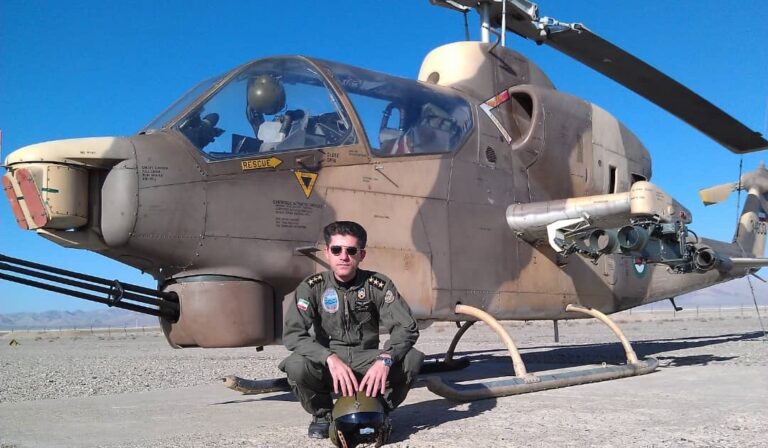
Former pilot says Iranian agents tried to kidnap him in Turkey

Nearly a month since he says a team of Iranian intelligence agents tried to drug him and take him back to Iran, Mehrdad Abdarbashi said he was thankful to Turkish authorities for saving his life but worried he is still not safe.

“I don’t think I am safe in any city in Turkey right now,” he told Al Jazeera. “I think Iranian intelligence will come after me, and this time they won’t try to kidnap me, this time they will just kill me.”

Holed up in an undisclosed location in eastern Turkey, the former Iranian military helicopter pilot said he was going to great lengths to keep a low profile, never leaving home, and ordering all he needs online.

According to official Turkish state media, Turkish police and intelligence detained eight people, including two described as Iranian “agents”, on September 24 as they attempted to kidnap Abdarbashi.

The suspects appeared in a court in Van on October 4 to face charges of espionage and conspiracy to commit a crime.

It is not the first time Iranian dissidents have been targeted by Tehran inside Turkey.

Last October, Habib Chaab, who headed the Arab Struggle Movement for the Liberation of Ahvaz, a separatist group Tehran accuses of attacks inside Iran, travelled from his home in exile in Sweden to Istanbul to meet an Iranian woman.

Less than 24 hours later, Turkish officials said, he was bundled into a van and driven nearly 2,000km east to the Iranian border, to appear in a televised confession on Iranian television days later.

In February, Turkish authorities said they arrested an Iranian working at the Iranian consulate in Istanbul for the 2019 fatal shooting of Masoud Molavi Vardanjani, a vocal dissident of Tehran living in Turkey. Iran has denied it had anything to do with Vardanjani’s killing.

Source: Aljazeera

Also Read: Iran’s priorities clear once again with attempt to kidnap activists on U.S. soil
Iran behind drone attack on U.S. base in Syria, officials say

U.S. officials say they believe Iran was behind the drone attack last week at the military outpost in southern Syria where American troops are based.

Officials said Monday the U.S. believes that Iran resourced and encouraged the attack, but that the drones were not launched from Iran. They were Iranian drones, and Iran appears to have facilitated their use, officials said, speaking on condition of anonymity to discuss details that have not been made public.

Officials said they believe the attacks involved as many as five drones laden with explosive charges, and that they hit both the U.S. side of al-Tanf garrison and the side where Syrian opposition forces stay.

There were no reported injuries or deaths as a result of the attack.

U.S. and coalition troops are based at al-Tanf to train Syrian forces on patrols to counter Islamic State militants. The base is also located on a road serving as a vital link for Iranian-backed forces from Tehran all the way to southern Lebanon and Israel.

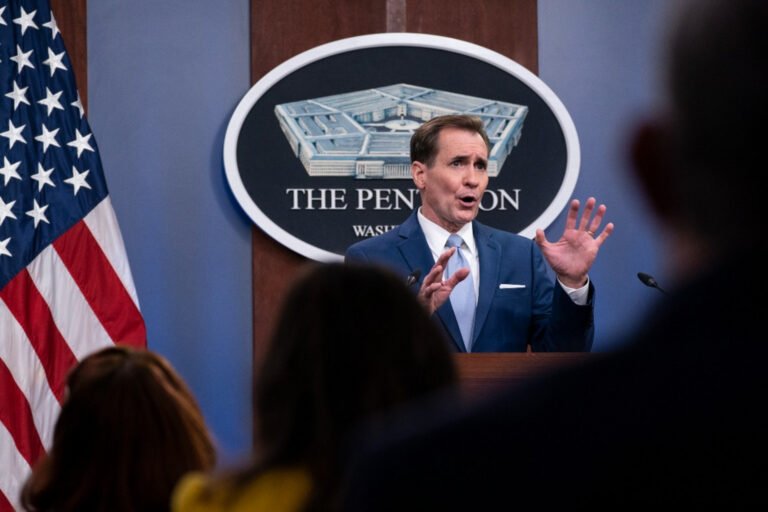
Pentagon spokesperson John Kirby declined to provide details when asked about the report during a news conference Monday. He called it a “complex, coordinated and deliberate attack” and said the U.S. has seen similar ones before from Shia militia groups that are backed by Iran. But he would not go into specifics and said he had no update on the munitions used in the attack.

Kirby also declined to say if troops were warned ahead of time or whether the U.S. intends to make a military response.

“The protection and security of our troops overseas remains a paramount concern for the secretary,” Kirby said, referring to Defense Secretary Lloyd Austin, “and that if there is to be a response, it will be at a time and a place and a manner of our choosing, and we certainly won’t get ahead of those kinds of decisions.”

Source: POLITICO

Also Read: ‘Suicide Drones’ Linked to Iran Have Made Their Way to Yemen Rebels, Photos Suggest

Lebanon grows weary of Iran, IRGC and Hezbollah interference

0

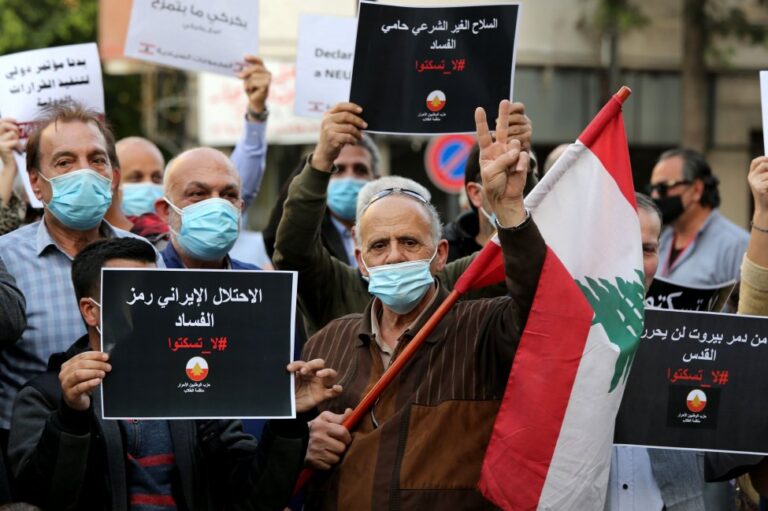
Lebanese public outcry continues to escalate against Iran and the IRGC-backed Hezbollah’s intervention in Lebanon which has become a major factor in the country’s economic crisis.

In a live televised interview in Beirut, a Lebanese author, Jean-Marie Kassab, made it clear that he and most Lebanese people want the Iranian regime to leave the Lebanese people alone and refrain from interfering in the internal affairs of their country through its proxy group Hezbollah.

He added that Hezbollah acts purely based on the political interests of Iran, which is to sacrifice the lives of Lebanese people and Lebanon’s sovereignty, just so that Iran has more leverage over Israel without direct warfare and Iran in-turn arms and funds Hezbollah so that it can gain more power and rule over Lebanon.

Kassab added that the “Axis of Resistance” does not concern the Lebanese people and called for the establishment of unity and solidarity among the Lebanese people and the preservation of the security and territorial integrity of Lebanon.

Hezbollah, created and funded by the Iranian regime, with its members being trained and armed by Iran’s Islamic Revolutionary Guard Corps (IRGC), has launched a series of military offensives against Israel, which in turn prompted an Israeli response that has cost the country more than $500 million.

IRGC-backed Hezbollah’s money laundering, smuggling, and destabilizing activities have also led to tougher sanctions, which is another cause of the current economic and political crisis in Lebanon, which has put the country back on the brink of civil war.

Hezbollah’s meaning and image have drastically changed in the eyes of Lebanese people, as it is now also considered the biggest obstacle to advancing the investigation into the tragic explosion in the port of Beirut on August 4, 2020.

Source: MEMRI TV
Also read: Why Iran opposes FATF money laundering regulations

UN nuclear watchdog calls for censure of Iran over violations

0

World powers should censure Iran for stonewalling the United Nations nuclear inspectors, according to the watchdog agency’s chief.

International Atomic Energy Agency Director-General Rafael Grossi’s call for the global rebuke of Iran comes after months of Western powers avoiding action, fearing it might jeopardize President Joe Biden’s bid to broker a return to the 2015 Iran nuclear deal. Grossi, who spent the week briefing U.S. lawmakers and officials on Iran’s violation of multiple agreements with the IAEA, was asked in public if he believes that “censure [is a] good idea” now and gave an affirmative, if laconic, answer.

“Yeah,” he replied, after a pause.

“It is?” Stimson Center president Brian Finlay repeated for confirmation, prompting Grossi to nod in assent.

Grossi’s support for a censure follows months of regular warnings to the IAEA Board of Governors, a 35-nation body that helps set policy for the nuclear agency, that Iran has failed to comply with multiple formal and informal agreements with the inspectors. Grossi has attempted to broker deals that would prevent “a total blackout” of IAEA inspections in Iran, but even those mitigation efforts have run aground.

“We have been keeping the patient stable as much as we can, in terms of the amount and quality of information that we can put on the table as a baseline, which is indispensable for any further negotiation,” Grossi said.

Iranian officials have refused for years to answer questions about missing nuclear material at three sites where it has never acknowledged conducting nuclear research. That lack of transparency has galvanized skepticism on Capitol Hill of Secretary of State Antony Blinken’s attempt to negotiate a rehabilitation of the 2015 nuclear deal.

“I don’t know how we can go into any negotiation, and much less an agreement, unless Iran comes clean and we know what they did, what they’re doing, and therefore you can move forward,” Senate Foreign Relations Chairman Bob Menendez, a New Jersey Democrat, told the Washington Examiner after inviting Grossi to brief lawmakers on the status of the Iranian nuclear file.

Source: Yahoo

Also Read: UN watchdog warns of damaged ability to monitor Iran’s nuclear activity

Why Iran opposes FATF money laundering regulations

0

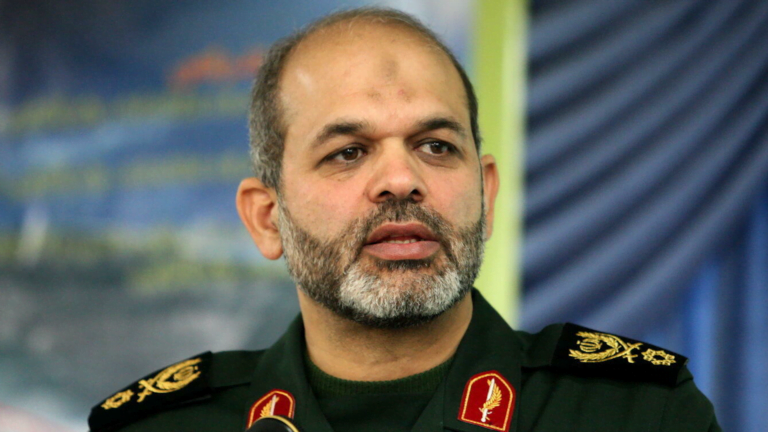
The Islamic Republic of Iran’s Minister of Interior announced his opposition to the signing of anti-money laundering regulations and the fight against financing terrorism.

Ahmad Vahidi, who is also an Islamic Revolutionary Guard Corps (IRGC) commander, while opposing the Islamic Republic’s adherence to anti-money laundering and counter-terrorism financing regulations, said: “Gentlemen who created the FATF and claim that all banking systems are under their control; why don’t they interfere with the drug smuggling economy? ” “We have a right to be pessimistic. Those who run this economy are the ones who run the FATF,” he said.

The IRGC commander is not the only official of Iran’s new government who opposes joining the FATF. Another IRGC commander, Mohsen Rezaei, who has been appointed as Vice President for Economic Affairs, was one of the main opponents of these bills during his membership in the Expediency Council.

The FATF bills have been drafted by the Financial Action Task Force as a global organization to combat money laundering and the financing of organized terrorist activities and have become a global pact.

Regardless of how much economic power the IRGC has in Iran’s economy as a nation, what is certain is that a large amount of money is in the hands of IRGC and all of its institution and companies; Institutions for which there is no clear mechanism for accounting and it is not clear how much they invest, how much they earn, what their expenses are, how much they owe in taxes they do not pay, etc.

Although lack of transparency and tax evasion is an innate habit for the IRGC and its institutions under Khamenei’s command, the rest of the world refers to these habits as clear signs of money laundering.

Source: Radio Liberty
Also read: Saudi FM, US envoy discuss Iranian support to ‘terrorist militias’

Saudi FM, US envoy discuss Iranian support to ‘terrorist militias’

Saudi Foreign Minister Prince Faisal bin Farhan al-Saud and US Special Envoy for Iran Robert Malley met in Riyadh on Wednesday to discuss the Iranian nuclear talks, the state news agency SPA said.

Prince Faisal and Malley, who earlier visited Qatar on a regional tour to coordinate with Gulf allies, also discussed strengthening “joint action to stop Iranian support for terrorist militias” threatening regional security, SPA added.

Iran’s proxy militias in the region include the Houthis in Yemen as well as armed contingents in Lebanon, Iraq and Syria.

Iran’s new President Ebrahim Raisi has not yet agreed to resume indirect talks with the United States on returning to the deal, under which Iran curbed its nuclear programme in return for economic sanctions relief.

Malley has said Washington is ready to consider “all options” if Iran is unwilling to return to the 2015 agreement, while Prince Faisal last week warned of the “dangerous” acceleration of Iran’s nuclear activities.

Riyadh, which has criticised Iran’s proxy wars in the region, has been targeted by Yemen’s Houthi militias with drones and missiles.

Riyadh has criticised the 2015 pact as flawed for not addressing Tehran’s missile programme and network of regional proxies, a key concern for some Gulf states.

US President Joe Biden’s administration wants to negotiate a return to compliance with the deal after his predecessor, Donald Trump, withdrew from the agreement in 2018 and re-imposed sanctions, as a result of which Iran resumed the building its stockpile of enriched uranium.

Source: The Arab Weekly

Also Read: Iranian IRGC smuggling cultural antiquities to fund regional terrorism

UN watchdog warns of damaged ability to monitor Iran’s nuclear activity

0

Fragile measures to monitor Iran’s nuclear activity that were established by the U.N.’s atomic energy watchdog are becoming undone, its director-general has warned.

“Stop-gap” measures agreed to in February to prevent the total disintegration of a monitoring deal between Tehran and the International Atomic Energy Agency are no longer “intact,” IAEA chief Rafael Grossi said in an interview with the Financial Times published Tuesday. Specifically, Iran is no longer allowing surveillance cameras to record at its Tesa Karaj facility west of Tehran, which manufactures centrifuge parts.

Grossi said he urgently needed to speak to Iran’s new foreign minister to revive this aspect of the agreement — an agreement which is seen as vital to propping up the beleaguered 2015 Iranian nuclear deal and enabling continued negotiations between Tehran and the West.

“I haven’t been able to talk to [Iran’s] foreign minister,” Grossi told the Financial Times. “I need to have this contact at the political level. This is indispensable. Without it, we cannot understand each other.”

Indirect talks between the Biden administration and Iran and mediated by foreign intermediaries have stalled since the June election of Iranian President Ebrahim Raisi, who is vocally anti-Western and has called U.S. sanctions “crimes against humanity.”

Spearheaded by the Obama administration and known formally as the JCPOA (Joint Comprehensive Plan of Action), the nuclear deal signed between Iran, the U.S., China, Russia and several European powers in 2015 lifted sanctions on Iran in exchange for curbs to its nuclear program. It has steadily disintegrated since former President Donald Trump abandoned the deal in 2018, reimposing heavy sanctions that crippled Iran’s economy and subsequently led Iran to make gradual violations of the deal like enriching more uranium and at a higher level than allowed under the agreement.

Source: CNBC

Also Read: Europeans raise pressure on Iran over nuclear deal before EU visit
 

Female Political Prisoner In Iran Protests Repeated Strip Searches

A female Iranian political prisoner has told her family that she has been repeatedly subjected to strip-down searches in various detention centers.

Mozhgan Kavosi was first arrested in northern Iran during the November 2019 nationwide protests and sentenced to six months in prison by a local prosecutor. Later her sentence increased during an appeal to nearly seven years.

Kavosi, who is a 45-year-old mother of two daughters, belongs to a religious minority but she was charged with propaganda against the regime and an array of other vague political accusations.

Kavosi told her family that every time she was stripped-searched, she told prison guards that she is a political prisoner, not a common criminal and their intrusion into her privacy is simply a psychological pressure tactic.

In line with a recent policy of ‘exiling’ political prisoners to distant prisons, Kavosi is now serving her time in Karaj, near Tehran. The tactic is meant to make it harder for their families to visit them.

Kavosi has also been deprived of her lawyer, Mostafa Nili, who was arrested in August along with others for threatening to sue Supreme Leader Ali Khamenei for banning American and British Covid vaccines and causing thousands of more deaths.

Source: Iran International

Also Read: ‘Threatened With Death And Rape’: Iranian Activist Back Behind Bars After Exposing Prisoner Abuse

Military “adventures” of Iran in Syria cost nearly $100 billion dollars

Estimates of Iran’s actual military and economic spending in Syria range from $30 billion to $105 billion to this date, according to a new report by a Lebanese French newspaper.

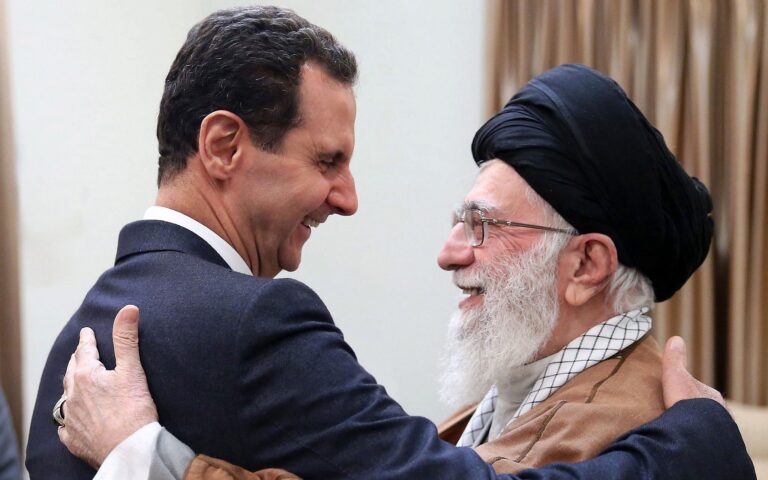
The Islamic Republic of Iran tries to maintain its control in Syria through economic investment, mainly in the real-estate sector, but Syria has been distancing itself from Iran, in order to rebuild its image in the international arena and mend its relationship with Arab countries.

Russia and Syria have both been pressuring Iran’s Revolutionary Guards (IRGC) stationed in Syria, with the goal of driving them away from Israeli borders. Israeli media claim IRGC-backed militias have moved out from their previous positions surrounding the Damascus airport and are now stationed around Deir Ez-Zor and Homs, mainly due to this pressure.

Multiple reports suggest Iranian forces in Syria have declined from 20 thousand to 10 thousand in number and Iran tries to continue its activity through Syrian armed and intelligence forces, as well as its paid foreign and Syrian militia groups.

The French Lebanese newspaper adds that the Damascus regime is fully aware that one of Iran’s goals behind its heavy presence in Syria is the ability to engage Israel without bringing the trouble back home, which is not acceptable for the Assad regime if it plans to mend relations with Arab and Gulf countries.

Ten years after the beginning of the Syrian revolution, Iran is increasing its recruitment drive in the eastern Syria region of Deir Zour, where it has been expanding its presence since 2017, residents and experts say.

The region’s high unemployment rate is pushing young Syrians to enroll in militias backed by the IRGC where they can earn attractive salaries, sometimes double that of a government employee.

Despite constant IRGC claims that it is there to help civilians, it has been providing money and aid only to members of its militias, while the people of the area it controls suffer from poverty.

Source: L’Orient-Le Jour
Also read: Desperate Iran-backed militias in Iraq resort to usury and extortion

Desperate Iran-backed militias in Iraq resort to usury and extortion

0

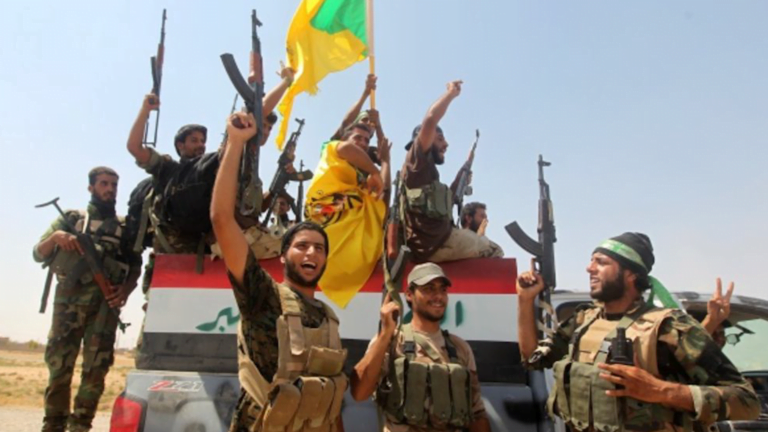
Cash-strapped Iran-backed armed militias in Iraq, trained and funded by Iranian Revolutionary Guards (IRGC) are becoming increasingly involved in loan-sharking and other illegal activity such as seizure and occupation of Sunni and Christian houses, as well as extortion of farmers and truck drivers.

The rise of various criminal activity among these IRGC-backed militias coincides with Iran’s economic crisis due to the mismanagement of the country’s resources, coupled with heavier US sanctions, which has rendered Iran unable to pay its armed fighters across the region as it used to.

The Iraqi Hezbollah and Harakat al-Nujaba, with the help of local banks and financial companies, offer loans with unusually high interest rates to employees and retirees and use home appliance stores or private banks as a front for their schemes.

Deception of destitute workers and retirees begins with advertising on social media. The person receiving the loan will be promised an amount according to their income, but on the day of receiving the loan a large amount will be deducted from them and the monthly and total installments will be much higher than banking rules.

These Iran-backed Iraqi militias have modeled their schemes based on methods used by Hezbollah in Lebanon which has been operating via its Qard al-Hasan Association with ties to Lebanese Banks for the past three decades.

This year, a group called Spider-Z hacked Hezbollah’s Qard al-Hasan Association and gained access to information from more than 400 thousand customers, also revealing banking activities of Iranian Supreme Leader Ali Khamenei and the Yemeni Houthis.

Following the new round of US sanctions against the Islamic Republic of Iran, militant groups in Iraq are no longer receiving the same funding as in the past and are now financing their activities in ways that are deemed Haram within the Islamic teachings.

Source: Fikra Forum
Also read: Iran’s Riaisi Appoints More IRGC Commanders To Civilian Positions