Home Blog Page 52

Exclusive: Leaked Documents From Iran’s Notorious Evin Prison Reveal Plight Of Inmates

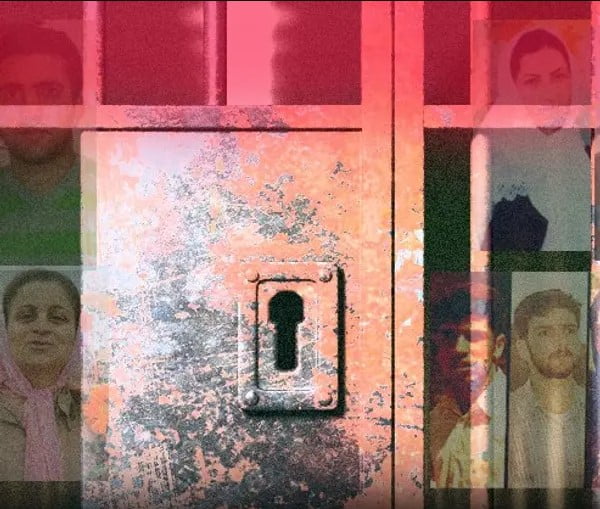
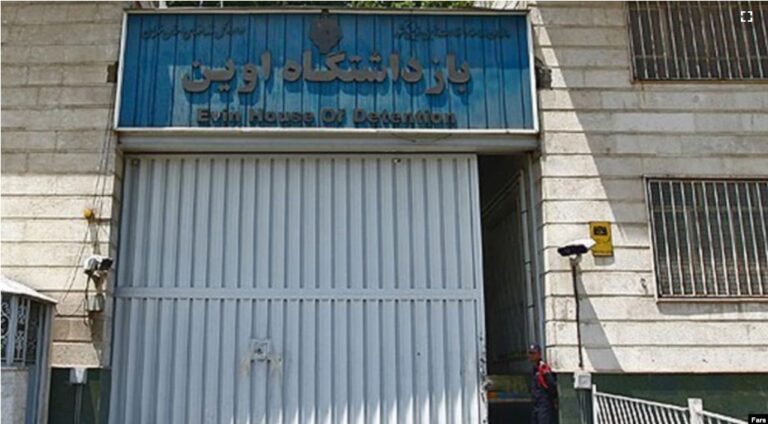
A self-described hacking group calling itself Edalat-e Ali (Ali’s Justice) has leaked confidential documents to RFE/RL’s Radio Farda that appear to reveal the plight of prisoners at Evin prison, Iran’s most notorious facility.

According to the prison documents, hunger strikes by prisoners and the publication of open letters by inmates is considered “criminal” behavior.

In one document, a former official at Evin prison called for the punishment of inmates who refused to eat or released letters, statements, and audio files from prison.

“In such cases, prisoners [accused] of violations should be held in isolation, their welfare [including private and public meetings] should be limited, and we should look into their demands,” the document says.

The document says Nazanin Zaghari-Ratcliffe, a British-Iranian woman held in Iran for five years, was punished in 2019 after she went on hunger strike to protest her imprisonment. Rights groups have described her detention as hostage-taking aimed at winning concessions from foreign powers.

Prison authorities denied Zaghari-Ratcliffe personal visits, a measure that led her to “break her hunger strike,” the document said, adding that the method should be used with other inmates.

RFE/RL could not independently verify the authenticity of the documents leaked by Edalat-e Ali.

Some political prisoners in Iran have in recent years gone on hunger strike to protest their prison conditions. Inmates have also released open letters and statements from prison in a bid to highlight their mistreatment and voice their opinions on political events.

Earlier this year, Edalat-e Ali hacked into Evin prison’s CCTV cameras and leaked videos that appeared to show the systematic mistreatment of inmates at the prison, including beatings.

The unprecedented hacked footage was a major embarrassment for Iranian authorities, who had claimed in the past that Evin’s inmates are treated with “kindness and Islamic mercy.” The videos prompted a rare apology from the head of Iranian Prisons Organization.

Source: RFERL

Also Read: Iran confirms leaked footage of harsh conditions in Evin Prison
U.S. increases pressure on Iran ahead of new nuclear talks

0

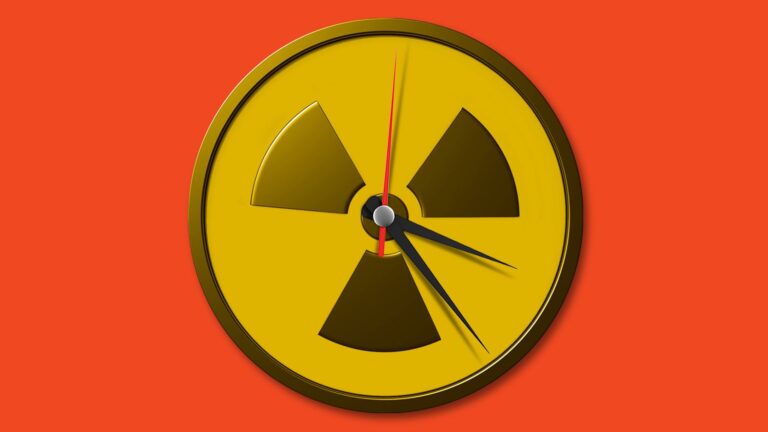
The Biden administration is slowly ratcheting up its diplomatic pressure on Iran ahead of a potential resumption of the nuclear talks.

Why it matters: After months of contemplating how to respond to Iran’s foot-dragging, with talks now frozen since June, the Biden administration in recent days started taking steps that some of its European allies, Israel and the Gulf states were waiting for.

  • Driving the news: Iran’s chief nuclear negotiator has said the country will return to the talks by the end of November, but senior officials in Washington are skeptical about the prospects for those talks.
  • On Friday, the U.S. announced new sanctions on Iranian officials and entities affiliated with the Islamic Revolutionary Guard Corps’ drone unit, which has been engaged in attacks against U.S. forces in Syria and Iraq as well as Israeli-owned ships.
  • Israeli officials say those sanctions were ready several weeks ago but were finally implemented after the latest drone attack on the U.S. base in al-Tanf, Syria.
  • On Saturday, President Biden and the leaders of the “E3” — France, Germany and the U.K. — met at the G20 and issued a joint statement to show they are aligned on the Iranian issue and warn the Iranians of a “dangerous escalation” if they don’t return to the 2015 deal.

That same day, the U.S. took another step to signal its impatience.

  • A U.S. Air Force B-1 strategic bomber went on what U.S. Central Command called a “presence patrol” over the Red Sea, Israel, Saudi Arabia, the Gulf and the Strait of Hormuz.
  • Fighter jets from Egypt, Israel, Saudi Arabia and Bahrain escorted the U.S. patrol over their respective airspaces. “The patrol was intended to deliver a clear message of reassurance,” U.S. CENTCOM commander Gen. Frank McKenzie said in a statement.
  • Israeli officials tell me the B-1 overflight was exactly the sort of “power projection” they urged the Biden administration to show in the region as a signal to Iran.

Source: Axios

Also Read: U.S. envoy says Iran nuclear deal effort is at ‘critical phase’

Iranian Kurds Allege Secret Detentions Centers Torture Inmates

A Kurdish NGO has described widespread torture carried out in Revolutionary Guards and intelligence ministry secret detention centers in Kurdish areas of Iran.

In its report last week based on interviews with former detainees, France-based Kurdistan Human Rights Network (KHRN), a non-governmental organization (NGO) focused on Iran’s Kurdish areas, alleged that torture like attaching weights to testicles, hanging detainees from the ceiling, and beating them with hoses and cables was “prevalent.”

The KHRN cited an intelligence ministry detention center in Orumiyeh, West Azarbaijan province, and two IRGC centers in Orumiyeh and Sanandaj, both in Kurdistan province. It said one detention center had very small cells known as graves.

The ex-detainees told KHRN that interrogators had used threats − including raping the detainees’ families − to extract confessions. One detainee, who said he had been held at the IRGC detention center in Sanandaj, told KHRN that he was not taken to hospital for 29 days despite having been shot in the leg. Detainees also said interrogators also staged fake executions to encourage confessions.

Former Kurdish political prisoner Mohammad-Hossein Rezaei, who spent time at the intelligence ministry’s Sanandaj detention center, told KHRN that he had been tied to a table and beaten with cables, damaging his nose and ribs.

Roya Toloui, a Kurdish journalist and civil rights activist now living in the US has claimed that after her arrest in 2006 she was tortured and raped in at intelligence ministry detention center of Sanandaj for refusing to put her signature on confessions that had been written by her interrogators.

The report said the IRGC intelligence in West Azerbaijan province had the capacity to detain several hundred.

Several illegal Kurdish parties seeking either Kurdish autonomy within a federal Iran or an independent state are active in Iran’s Kurdish regions. Iranian military commanders have issued repeated warning in recent months they will strike the bases of these groups in Kurdish-held northern Iraq.

Source: Iran International

Also Read: Dozens of human rights violations reported in Iran’s Kurdish areas in August

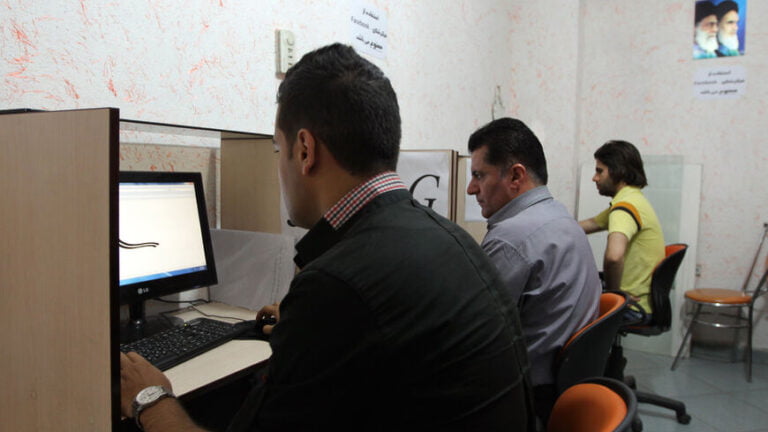
Iran’s parliament moves forward with troubling bill to further restrict internet

The Committee to Protect Journalists expressed concern today that Iran’s parliament is moving ahead with a restrictive internet bill, despite objections from citizens and international observers.

The legislation, the Cyberspace Users Rights Protection and Regulation of Key Online Services Bill, was undergoing review by a parliamentary subcommittee in October, according to local news reports and the Iran-focused Filterwatch, a project by the U.K.-based digital rights group Small Media. According to local news outlets, an October 17 Instagram Live broadcast on an official parliamentary account announced that the bill is moving ahead; it is expected to be ratified early next year.

A draft of the legislation released in July 2021 and reviewed by CPJ would strengthen the government’s legal authority to block websites and platforms run by foreign technology companies without a local representative in Iran – though U.S. sanctions would prevent U.S.-based companies from appointing one, according to international freedom of expression organization Article 19; it would also require people to register their ID to access the internet. The bill is part of a campaign to create a closed national intranet under government control, according to The Iran Primer, a project of the United States Institute of Peace.

The production, sale, and distribution of VPNs and other proxy services would be criminalized if the draft became law, according to CPJ’s review and Article 19’s analysis. International social media platforms are already subject to blocking in Iran; as CPJ has reported, journalists and others rely on VPNs to access services like Telegram, Twitter, YouTube, and Facebook, because all other forms of media are controlled by the state.

“Instead of further controlling what journalists and citizens can do online, Iranian lawmakers should be finding ways to promote the free flow of information,” said CPJ Middle East and North Africa Program Coordinator Sherif Mansour. “All of society suffers when barriers to open internet access prevent journalists from doing their jobs.”

Source: CPJ

Also Read: Iran to punish social media users, IRGC to police the Internet

US slaps sanctions on Iran drone commander behind attack on Israeli-linked ship

0

The US Treasury hit Iran’s drone program with sanctions on Friday, boosting pressure on Tehran ahead of the reopening of negotiations on the country’s nuclear program.

The Treasury said lethal unmanned aerial vehicles from Iran’s Islamic Revolutionary Guard Corps have been used to attack US forces and international shipping in the Gulf region.

The drones have also been supplied to Hezbollah, Hamas and Yemen’s Houthis, and have also been seen in Ethiopia, “where the escalating crisis threatens to destabilize the broader region,” the Treasury said.

The sanctions singled out Brigadier General Saeed Aghajani, who leads the Revolutionary Guards’ UAV Command.

The Treasury said that Aghajani was behind a 2019 drone attack on an oil refinery in Saudi Arabia as well as the July 29, 2021 attack on the Mercer Street commercial ship operated by an Israeli-owned firm off the coast of Oman that saw two crewmen killed.

“Iranian forces have been responsible for several high-profile attacks against international shipping over the last few years, including two prior incidents this year alone,” the Treasury said.

“The imposition of new sanctions reflects the completely contradictory behavior of the White House, [which] speaks of its intention to return to the nuclear accord and continues to impose sanctions,” Foreign Ministry spokesman Saeed Khatibzadeh told state media shortly after the announcement from Washington.

The US has stated its interest in reviving the Joint Comprehensive Plan of Action, but Tehran has not returned to talks on a joint US-Iran return to the accord since June.

In August, Defense Minister Benny Gantz named Aghajani publicly as the head of the IRGC drone unit responsible for the assault on the tanker and other UAV attacks, in a briefing with envoys from countries on the United Nations Security Council.

“The UAV command conducted the attack on Mercer Street,” he said. “Saeed Aghajani plans and provides the training and equipment to conduct terror attacks in the region.”

Also named to the sanctions blacklist were two companies, Kimia Part Sivan and Oje Parvaz Mado Nafar, which provide components for and help develop the armed UAVs of the Revolutionary Guards.

Source: Times of Israel

Also Read: EU, G7 condemn Iran attack on ship that killed British and Romanian crew

Iran IRGC Quds Force chief’s secret visit to Lebanon

0

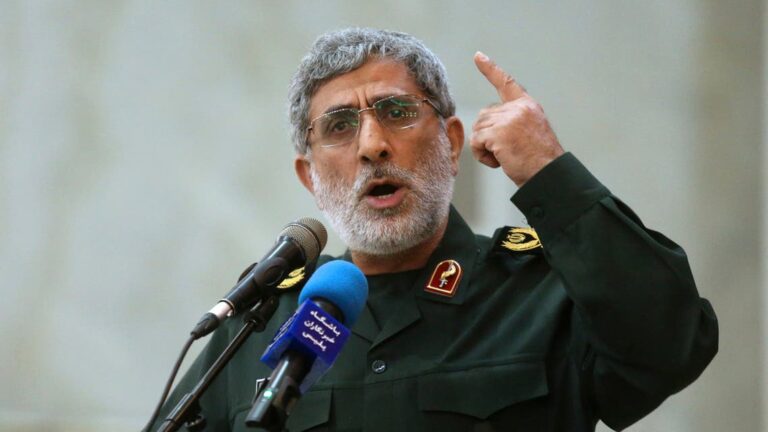
Several sources revealed on Tuesday that the commander of the Iranian Islamic Revolutionary Guard Corps Quds Force, Esmail Qaani, had arrived in Beirut to visit Iran’s proxy group the Lebanese Hezbollah.

Hassan Nasrallah, Iran’s proxy group’s leader has played nearly all of his cards with no success at stopping the investigation unto the Beirut port explosion that could reveal Hezbollah’s involvement in the tragedy.

It seems Hezbollah is desperately in need of guidance from its Iranian leaders after nearly two weeks of violence and bloodshed on Beirut’s streets, orchestrated by Hezbollah, failed to disrupt the investigation into Beirut’s port blast.

Iran’s proxy group in Lebanon is also facing increasing pressure from Lebanese citizens, activists, and politicians after its operatives were recently found guilty of assassinating former Lebanese Prime Minister Rafik Hariri.

Esmail Qaani’s visit also highlights Iran’s worries that its paid fighters in Lebanon might lose their grip over Lebanon’s economy and political affairs, which directly translates to Iran losing its regional influence that has been established through decades of heavy military and economic investment, coupled with violence, bloodshed, and corruption.

Commander of the IRGC Quds Force, Esmail Qaani, usually makes secret visits to Iran’s paid foreign fighters in the region, Baghdad, Damascus, and Beirut in order to pass new instructions to them.

Iran’s self-described “Axis of Resistance” has been used over the years to refer to an alliance between Tehran and its state-funded terror groups, including Kataib Hizbullah and Asaib Ahl al-Haq in Iraq, Hezbollah in Lebanon, and the Houthis in Yemen.

Source: الحدث 
Also read: IRGC’s Hezbollah, “Party of Allah” or “Party of Drugs”? 

Biden Will Closely Coordinate Iran Talks With Europeans, Sullivan Says

0

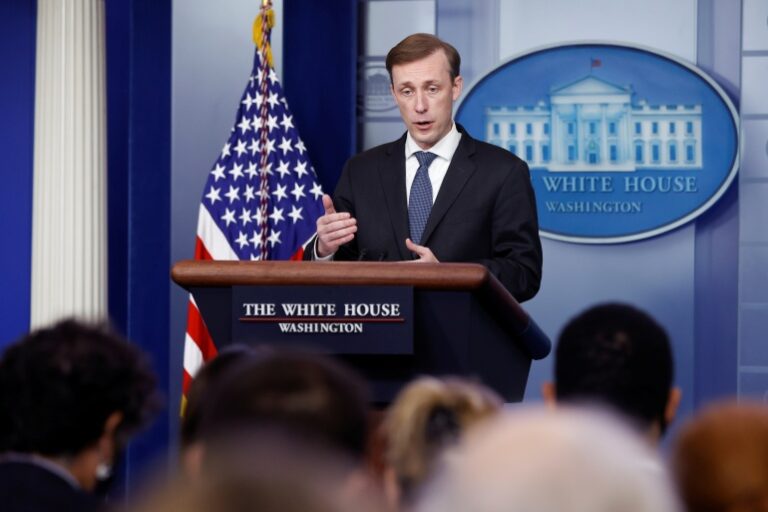
US National Security Advisor Jake Sullivan outlined US priorities Thursday in advance of the G20 summit this weekend, including the issue of Iran nuclear talks.

President Joe Biden is expected to discuss with the leaders of three European allies, Chancellor Angela Merkel of Germany, President Emmanuel Macron of France and the British Prime Minister Boris Johnson the coordination of the Western position in the talks to revive the Joint Comprehensive Plan of Action, JCPOA.

“It’s an opportunity to closely coordinate with our key European partners at the leader level on a joint negotiating position as we work towards a resumption of negotiations,” Sullivan told a briefing in Washington.

After four months of staying away from multi-lateral talks in Vienna, Iran announced on Wednesday that it will return to negotiation until the end of November, but Tehran delaying tactic has led to uncertainty about its real intentions.

Iran’s Foreign Minister Hossein Amir-Abdollahian said on Wednesday that Tehran expects Biden to show “goodwill” and release $10 billion of Iran’s frozen funds before talks take place.

“It’s not entirely clear to me yet whether the Iranians are prepared to return to talks. We have heard positive signals that they are, but I think we have to wait and see when and whether they actually show up at the negotiating table, and we’re prepared to negotiate in good faith for a return to mutual compliance with the JCPOA. We hope they are as well,” Sullivan said about how Washington perceives Iran’s moves.

Sullivan argued that the Biden Administration has much closer cooperation with its European allies than the Trump administration, which abandoned the JCPOA and imposed ‘maximum pressure’ sanctions on Tehran. The national security advisor said this is “one of the most profound divergence between the previous administration and the European.”

He went on to say, “Here you’ll see Chancellor Merkel, President Macron, Prime Minister Johnson, President Biden all singing from the same song sheet on this issue.”

Source: Iran International

Also Read: UN nuclear watchdog calls for censure of Iran over violations

Iran’s Government Is Lining Up Against the People in Fear of a Revolution

0

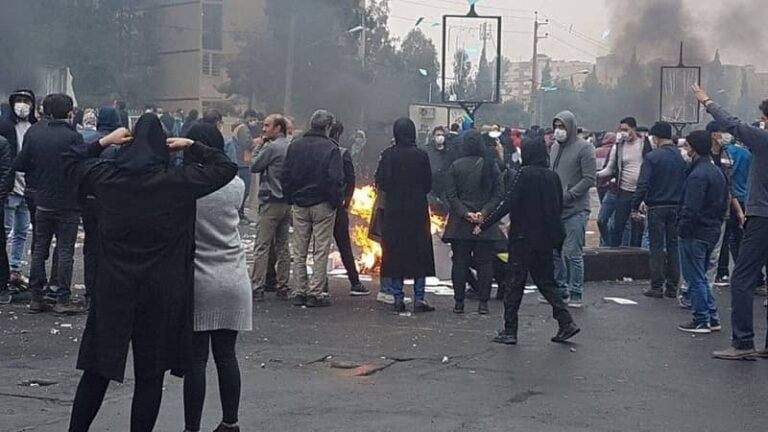
In recent years, Iran has witnessed nationwide protests like November 2019 which have threatened the regime’s security. The regime has found the only solution to curb these protests to be repression and killings.

The formation of a Revolutionary Guards (IRGC) strike force under in the name of neighborhood-centered patrols of the Basijis and the so-called plan of fighting the thugs by the police, and lately the entry of the IRGC, the Basij, and the police into the social sphere under the pretext of fighting social harms are meant to prevent any further protests.

The Saat-24 and the Payam website were just some of the many media outlets which reported on October 20, 2021, about the regime’s new decisions to increase the repression.

This is something that is declaring the regime’s increasing brutality, especially in the use of the executions, dissidents say. At least 31 prisoners have been executed in the past 30 days, which raises the number of executed persons in Iran since the start of Ebrahim Raisi’s government to 141 persons.

A look at the names of the new governors and ministers who are IRGC officers shows the regime’s real fear.

  • IRGC officer Mohsen Rezaei, Deputy Economic Director of Raisi
  • IRGC officer Hossein Amir Abdollahian, Minister of Foreign Affairs
  • IRGC officer Ahmad Vahidi Minister of Interior
  • IRGC officer Rostam Qasemi, Minister of Roads and Urban Development
  • IRGC officer Mohammad Ali Zolfi Gul Minister of Science and Research
  • IRGC officer Ismail Khatib Information Minister
  • IRGC officer Mohammad Reza Gharai Ashtiani, Minister of Defense and Support of the Armed Forces
  • IRGC officer Bahram Einollahi, Minister of Health
  • IRGC officer Ezatollah Zarghami, Minister of Cultural Heritage and Tourism
  • IRGC officer Amin Hossein Rahimi, Minister of Justice
  • IRGC officer Mohammad Mehdi Esmaeili, Minister of Culture and Islamic Guidance
  • IRGC officer Saeed Mohammad, secretary of the Supreme Council of Free Zones

Raisi has also handed over the governorate of 13 provinces to the Revolutionary Guards until now.

The state-run daily Eghtesad news on October 19, 2021, quoted the Tehran Municipality’s Social Deputy, Amin Tavakolizadeh, and announced that the IRGC Khatam al-Anbia base with the help of the mosques and the regime’s Friday prayers leaders are carrying out the so-called ‘Social Support’ plan in the capital.

Source: Iran News Update

Also Read: Iran: Security forces use ruthless force, mass arrests and torture to crush peaceful protests


Fear Fear  Fear 

U.S. envoy says Iran nuclear deal effort is at ‘critical phase’

0

Efforts to revive the 2015 Iran nuclear deal are at a “critical phase” and Tehran’s reasons for avoiding talks are wearing thin, a U.S. official said on Monday while raising the possibility of further diplomacy even if the deal cannot be resuscitated.

U.S. Special Envoy for Iran Robert Malley told reporters Washington was increasingly worried Tehran would keep delaying a return to talks, but said it had other tools to keep Iran from developing a nuclear weapon and would use them if need be.

“We’re in a critical phase of the efforts to see whether we can revive the JCPOA,” Malley said, referring to the deal formally called the Joint Comprehensive Plan of Action. “We’ve had a hiatus of many months and the official reasons given by Iran for why we’re in this hiatus are wearing very thin.”

While saying that the window for both the United States and Iran to resume compliance with the agreement would eventually close, Malley said the United States would still be willing to engage in diplomacy with Iran even as it weighed other options to prevent Tehran from getting the bomb.

He also hinted at the economic benefits that might flow from Iran’s return to the agreement, under which Tehran took steps to limit its nuclear program in return for relief from U.S., European Union and U.N. economic sanctions.

Then-U.S. President Donald Trump abandoned the pact in 2018 and reimposed harsh U.S. sanctions. About a year later, Iran began violating some of the deal’s limits, including on uranium enrichment. Enriching uranium can provide a path to obtain the fissile material for an atomic bomb, an ambition Iran denies.

While saying the window for returning to the JCPOA will not be open forever because eventually Iran’s nuclear advances will have overtaken it, Malley said Washington would continue to look for diplomatic arrangements with Tehran.

Source: Reuters

Also Read: UN nuclear watchdog calls for censure of Iran over violations

Hezbollah founder explains Iran enmity with the Turk and Muslim world

0

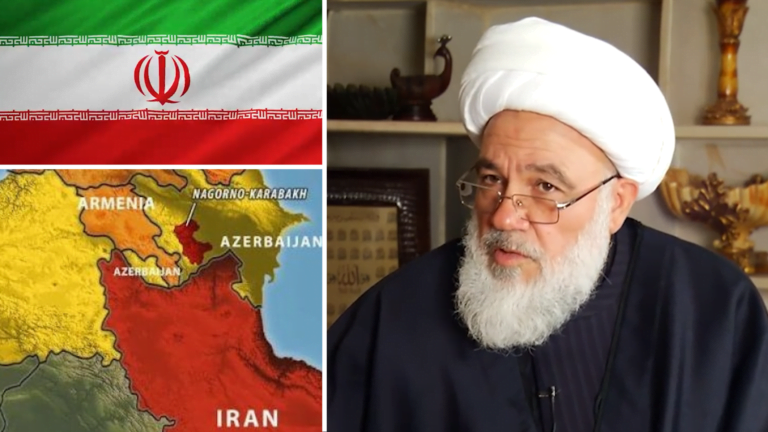
Subhi al-Tufayli, one of the original founders of Hezbollah, and a prominent Lebanese Shia cleric said in an interview: “I was in Iran when Armenia occupied the Nagorno-Karabakh region during the 90s. The Iranian press and politicians supported the occupation of Nagorno-Karabakh by Armenia. I spoke to the Iranian Foreign Minister to find out why a country that claims to be the protector of Muslims and the oppressed, is supporting Christian Armenians against Shia Muslims in Azerbaijan.

Subhi al-Tufayli recalled the then Iranian Foreign Minister Ali Akbar Velayati saying: “Armenia is creating a barrier between Turkey and Azerbaijan, Turkmenistan and other Turkic republics that have seceded from the Soviet Union; we support Armenia and will strengthen it to block the way for Turkey.”

Subhi al-Tufayli emphasized that Azerbaijan at the time had just gained independence and there was no Israeli presence in the country as a cause for Iran to be against the Shia Muslim country.

al-Tufayli added that: “Iran signed an agreement with Israel in 1996 to never directly harm any Israeli troops in the Occupied Palestinian Territories and has remained faithful to this agreement. Iran’s claims of Zionists’ presence in Azerbaijan being the cause of tensions between the two countries today is nothing but a lie. Iran’s policies are purely destructive with zero honesty.”

Referring to Iran’s presence in Lebanon and Syria, he said: “Iran has a project in Lebanon and Hezbollah is just a pawn to execute those plans. No one in Hezbollah has the power to make decisions, from Secretary-General Hassan Nasrallah to its smallest member; everyone receives orders from Iran’s foreign ministry.”

In regards to Iran’s presence in Syria and Iraq al-Tufayli said: “When Iran infiltrates a country, its best interest is for the government to not have any decision-making powers. If the government becomes stronger, Iran’s influence naturally decreases. For this reason, destruction and corruption in countries where Iran has influence are in its best interest.” He continued: “If we consider the political developments in Lebanon since 2005, we realize that Iran’s policy is to destroy, and cooperate with the corrupt.”

Earlier and only a day before al-Tufayli’s interview, the Armenian prime minister had also emphasized that: “Without Iranian military and logistical support, the Armenian army would have failed in the early 1990s.”

Source: TRT World
Also read: Lebanon grows weary of Iran, IRGC and Hezbollah interference