Home Blog Page 51

Iran’s New Population Law Violates Women’s Rights, HRW Warns

0

Human Rights Watch (HRW) is calling on Iran to repeal provisions of a new legislation that it says undermine women’s rights, dignity, and health, denying them access to reproductive health care and information.

“Iranian legislators are avoiding addressing Iranians’ many serious problems, including government incompetence, corruption, and repression, and instead are attacking women’s fundamental rights,” Tara Sepehri Far, senior Iran researcher at HRW, said in a statement on November 10.

First approved by parliament in March, the “rejuvenation of the population and support of family” bill was backed by Iran’s Guardians Council on November 1.

It is set to become law when it is signed and published in the official gazette, which HRW said is expected within the next month.

The legislation bans sterilization and free distribution of contraceptives in the public health-care system unless a pregnancy threatens a woman’s health.

Several articles also “further limit already restricted access to safe abortion,” HRW said.

By adding to existing limits on access to contraception and abortion, the legislation violates women’s rights to sexual and reproductive health and puts women’s health and lives at risk, according to the New York-based human rights watchdog.

Currently, abortion can be legally performed in Iran during the first four months of pregnancy if three doctors agree that a pregnancy threatens a woman’s life or the fetus has severe physical or mental disabilities that would create extreme hardship for the mother.

Source: RFERL

Also Read: More Than 500 Women Human Rights Defenders Unjustly Imprisoned In Iran


Tribunal to Investigate Violent Crackdown in 2019 Iran Fuel Protests

0

A group called the Iran Atrocities Tribunal is holding an event starting Wednesday in London to “investigate the killing and wounding of thousands of innocent protesters in Iran in 2019″ after the government hiked the price of fuel.

The tribunal will hear from 45 witnesses and will investigate the roles of more than 100 Iranian government officials who carried out the crackdowns, according to a press release.

The group will reveal its findings in early 2022.

Iran’s government sparked the nationwide demonstrations on November 15, 2019, by ordering a 50% increase in the subsidized price of gasoline, further straining the finances of Iranians facing high unemployment and inflation in a shrinking economy under heavy U.S. sanctions. Security forces killed hundreds of demonstrators and arrested thousands more while crushing the mostly peaceful protests, in which some people also damaged public buildings and businesses.

“To date, the Islamic Republic of Iran has failed to investigate its own responsibility, or the responsibility of its own security forces, or otherwise facilitate any independent international adjudication for any of this violence or alleged crimes,” Wayne Jordash, a human rights lawyer and chair of the tribunal, said in a statement.

“The Iran Atrocities Tribunal consists of independent and impartial jurists who will investigate these events to reveal the truth and to determine where the responsibility lies in light of general principles of law and human conscience with the aim of ending impunity for any international crimes and seeking redress for the victims,” the statement said.

The event is slated to end November 14.

Source: VOA News

Also Read: Iran: Security forces use ruthless force, mass arrests and torture to crush peaceful protests

Amnesty International: Iran is suffering from an epidemic of torture

Last month, a 49-year-old man named Shahin Naseri died in prison under suspicious circumstances after he provided witness testimony about the torture of wrestler Navid Afkari. Afkari, a high-profile protester, was unjustly arrested by state agents, sentenced to death following a grossly unfair trial and executed in secret in September 2020.

This is not an isolated incident. In August, footage released from Tehran’s Evin Prison showed horrific scenes of torture and other ill treatment. Iranian officials characterized the abuses as the acts of rogue prison guards. But Amnesty International and other human rights groups have repeatedly shown that torture and other forms of cruel and unhuman treatment are an integral part of the Iranian criminal justice system, not an exception to it. The international community must act now to break the cycle of state violence.

Last month, Amnesty International revealed the failure of the Iranian authorities to provide accountability for the suspicious deaths in custody of at least 72 men and women in the past decade, despite credible reports indicating the cause to be torture, the lethal use of force or other violence by officials. Young people made up a significant proportion of the victims. Since the publication of Amnesty International’s findings on Sept. 15, the organization has received reports of four further suspicious deaths in custody.

Amnesty International’s findings underscore that prosecution authorities, prison officials and security and intelligence agents in Iran commit torture and other forms of ill treatment against men, women and children behind bars on a widespread and systematic basis and with total impunity. Judges contribute to these abuses by dismissing allegations of torture without ordering independent investigations and doling out guilty verdicts based on torture-tainted “confessions.”

Iran’s torture epidemic has been sustained by a culture of impunity that has enabled officials who are reasonably suspected of responsibility for crimes under international law and gross violations of human rights to avoid justice and, instead, rise to powerful positions. The recent rise to the presidency of Ebrahim Raisi — who has been credibly implicated in crimes against humanity — offers yet another grim reminder of this dire situation.

Source: The Washington Post

Also Read: Amnesty Urges Accountability For 72 Suspicious Deaths In Iran Prisons

US declines to blame Iran for assassination attempt against Iraqi prime minister

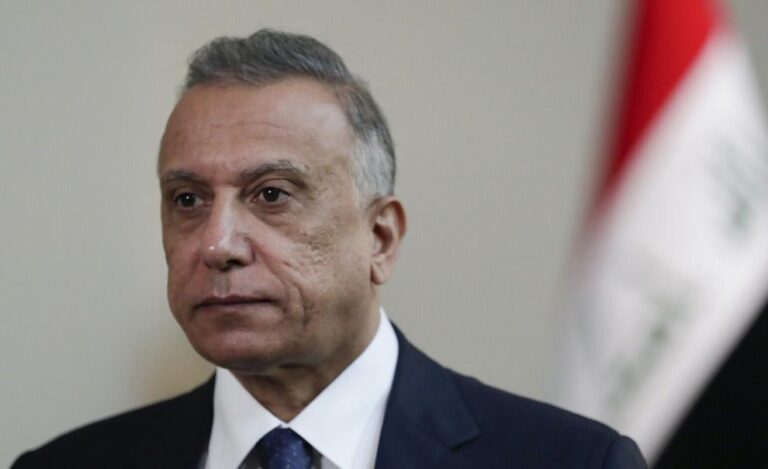
Secretary of State Antony Blinken‘s team declined to blame Iran for a recent assassination attempt against Iraqi Prime Minister Mustafa al-Kadhimi, citing the need for U.S. officials to “defer to the Iraqis” probing the Sunday assault.

“We are going to defer to the Iraqis for the progress of that investigation,” said Department of State spokesman Ned Price. “We’ve seen a number of attacks that have … had links to Iran-backed groups, but when it comes to this attack, we’re going to let the investigation play out.”

The drone attack on Kadhimi’s residence took place just days after an Iranian announcement that U.S. and Iranian officials will return to Vienna for “indirect nuclear” talks, raising questions about whether those long-stalled negotiations will resume. Price’s public commentary about the attack was tuned to the deeper struggle to counter Iranian influence in Iraq while avoiding Iraqi nationalist backlash against the United States.

“Prime Minister Kadhimi represents not only the head of government, but he represents the State of Iraq, and he is the commander in chief of Iraqi security forces,” Price said. “And, therefore, we believe that this was an attack not only on him but also on the sovereignty and stability of the Iraqi state.”

An Iranian security official responded to the drone attack by claiming that “foreign think tanks” are responsible for “creating and supporting terrorist and occupying forces.” Iran has acquired military and political power within Iraq in recent years, in part due to the role of Tehran-aligned Shia militias that mobilized against the Sunni-oriented Islamic State terrorists who rampaged across Syria and Iraq in 2014.

Two years later, an Iraqi prime minister incorporated the militias into the Iraqi government’s armed forces in an apparent bid to bring the fighters under Baghdad’s control, but their deference to Iran was dramatized when a senior militia commander died in the U.S. airstrike that killed Iranian general Qassem Soleimani.

Source: The Denver Gazette

Also Read: Iran-Backed Militia Behind Attack On Iraqi PM

IRGC assassination of Iranian military scientist in Turkey

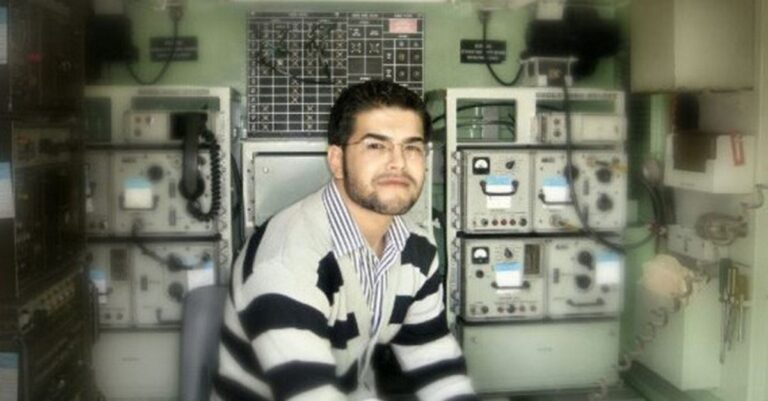
The assassination of Masoud Molavi-Vardanjani, a defector and Iranian scientist, by Iranian intelligence in Turkey in 2019 was likely aimed at preventing him from exposing the Iranian regime’s corruption and missile activities, experts say.

November 14 will mark the second anniversary of Molavi’s assassination. He was gunned down on a street in Istanbul about a year after he fled Iran.

For a few years after the inception of the Islamic Republic in 1978, regime-commissioned assassinations were focused on officials from the previous regime (Pahlavi era).

Afterward, the regime’s focus started shifting to individuals who were part of the system at some point but who later distanced themselves from the regime for various reasons and fled abroad where they started exposing its atrocities.

The regime’s aim has been to silence them.

Molavi’s disillusionment with and criticism of the Iranian regime led to him being targeted, say analysts.

He had worked for about 10 years as a consultant and the director of a data security company called Parseh Research in Esfahan before starting his work as a military consultant specializing in artificial intelligence.

He was recruited to work for the Islamic Revolutionary Guard Corps (IRGC), reportedly in an IRGC missile facility, after a robot, he had built for the Defence Ministry, caught the attention of IRGC officials.

Molavi’s investigation of cyber security affairs and his uncovering of corrupt practices that saw public funds going into the pockets of regime officials led to his 2017 arrest, imprisonment, and torture in Evin prison‘s infamous Ward 209.

He was kept in solitary confinement under the pseudonym “Reza Faribozi”, then was sentenced to eight years in prison but did not serve that sentence after acquaintances he had made during his work for the IRGC fought for his freedom.

Upon his release from prison, Molavi left Iran for Turkey in 2018, where he started exposing through social media Iranian officials’ corruption.

Molavi also provided details about the tracking methods and techniques for the kidnapping, assassination, and murder of Iranian dissidents, and theft of Iranian intelligence outside Iran, particularly in Turkey.

Two senior Turkish officials told Reuters that two intelligence officers at Iran’s consulate in Turkey instigated the killing.

The suspected gunman and several other suspects, including Turkish and Iranian citizens detained for questioning in the weeks after the killing, told officials two intelligence officers at the Iranian consulate had ordered the attack, according to one official.

According to ample evidence, his assassination is one of more than 200 political and extrajudicial killings that the Islamic Republic has committed outside Iran.

These terror plots have taken place in 40 countries, mainly by way of the IRGC’s overseas arm the Quds Force, the Islamic Republic’s Ministry of Intelligence, or by proxy groups.

Source: Al-Mashareq
Also read: Mossad said to have foiled Iran terror plots against Israeli targets in Africa

Mossad said to have foiled Iran terror plots against Israeli targets in Africa

0

Five people have been arrested in African countries over suspicions that they were planning on carrying out attacks against Israeli tourists or businesspeople on behalf of Iran, an Israeli television network reported Sunday.

The five, who had been in Senegal, Tanzania, and Ghana, were recruited by Iran’s Quds Force expeditionary arm of the Islamic Revolutionary Guards Corps, according to the report from Channel 12 news, which did not attribute the information to a source.

The five were arrested in the African countries by local intelligence, who were working off information obtained from “Western” spies, the channel said.

According to intelligence information cited by the channel, the five were given special training and unspecified materials in Lebanon and then sent back to Africa with a cover story of being religious students, where they were given the mission of finding Jewish and Israeli targets to attack.

Among the top targets were Israeli tourists on safari in Tanzania, the channel said.

All five suspects were arrested before they could take any action, according to the report. It did not say when the arrests took place, but indicated they were still being questioned.

Though the report credited the Israel’s Mossad spy agency with foiling the plot, its role in the affair was not mentioned.

There was no immediate confirmation of the report from authorities in Israel or the three African countries. The channel said Iranian officials denied any allegations against it, calling them “baseless.”

The report would appear to point to the latest chapter in an ongoing covert war between Israel and Iran, including a number of alleged plots on the African continent.

In February, The New York Times reported that a cell of Iranian operatives in Ethiopia had been recruited for an attack on diplomats from the United Arab Emirates over its normalization with Israel.

Source: Times of Israel

Also Read: Iran’s influence in Africa poses a serious threat

Iran-Backed Militia Behind Attack On Iraqi PM

0

A drone attack that targeted the Iraqi prime minister on Sunday was carried out by at least one Iran-backed militia group, Reuters reported on Monday.

The Iraqi security sources and sources close to the militias, who spoke to Reuters on Monday on condition of anonymity, said the drones and explosives used in the assault were Iranian-made.

On Sunday, Tehran condemned the attack and the official media tried to distance Iran from the incident, claiming that it was a plot against “resistance forces” in Iraq.

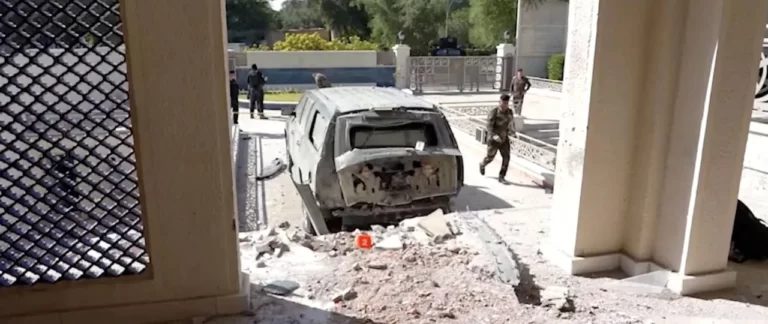
Prime Minister Mustafa al-Kadhimi escaped unhurt from the attack on his residence in the Iraqi capital Baghdad, which was carried out using explosives-laden drones.

Two Iraqi security officials and three sources close to the militia groups that Iran has supported in Iraq said the attack was committed by at least one of those groups but gave slightly different assessments of exactly which factions.

The two security officials said that the powerful Kataib Hezbollah and Asaib Ahl al-Haq groups carried it out in tandem.

One militia source said that Kataib Hezbollah was involved and that he could not confirm the role of Asaib.

The incident could be seen as another sign of Iran’s interventionist regional policies that for years have alarmed some Arab states and the West.

No group has claimed responsibility for the attack, which raised tension in Iraq a few weeks after a general election disputed by Iran-backed militias including Kataib Hezbollah and Asaib.

The political parties that represent Iran-aligned paramilitary groups in parliament suffered crushing defeats at the polls on October 10, losing dozens of the seats they have controlled for several years.

The Iran-backed armed militias do not like the prime minister who tries to maintain a balance between Washington and Tehran and has good relations with the West.

The election defeat comes as the Islamic Republic boasts to its domestic audience about the influence of its Shiite ideology in neighboring Iraq. Iranian critics of the clerical regime say that after spending billions of dollars to gain influence in a Shiite-majority country, the people reject its local allies and its presence.

Source: Iran International
Also read: IRGC and Hezbollah heavy presence in Yemen expose Iran’s push for war

Despite Upcoming Negotiations, Iran Keeps Expanding Enriched Uranium Stockpile

0

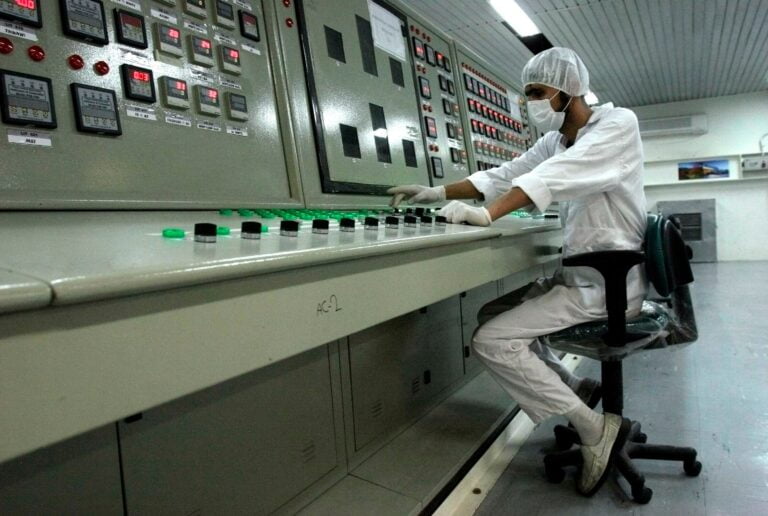
Iran says it has increased its stockpile of 60 percent enriched uranium to 25 kilograms, an almost fourfold increase from the level reported in June, as Tehran prepares for negotiations later this month with world powers to preserve a 2015 deal aimed at curbing its nuclear program.

“So far we have produced 25 kilograms of 60 percent uranium, which, except for countries with nuclear weapons, no other country is able to produce,” Iranian media quoted Behrouz Kamalvandi, a spokesman for the Atomic Energy Organization of Iran, as saying on November 5.

Kamalvandi added that Iran’s stockpile of 20 percent enriched uranium has reached over 210 kilograms, well beyond the 120-kilogram target set by parliament.

The announcement potentially complicates efforts to revive the landmark 2015 deal between Iran and world powers. President Donald Trump pulled the United States out of the agreement in 2018, but Britain, France, Germany, China, and Russia have tried to preserve the accord.

President Joe Biden has said he is willing to rejoin the pact if Iran returns to full compliance, but indirect negotiations between Tehran and world powers that started in April in Vienna were put on hold in June after the Islamic republic elected hard-liner Ibrahim Raisi as president.

The nuclear agreement, which offered curbs on international sanctions in exchange for Iran’s limiting its nuclear program, caps the purity to which Tehran can refine uranium at 3.67 percent — enough for civilian nuclear energy and far below the 90 percent purity needed for an atomic weapon.

Iran has denied seeking nuclear weapons and said its breaches are reversible if Washington lifts sanctions and rejoins the agreement.

Western officials and analysts believe Tehran’s escalation of enrichment is aimed at gaining leverage during the negotiations that are due to resume on November 29 in Vienna.

Biden and European leaders criticized Tehran last week for continuing to enrich uranium to a higher levels, calling the move provocative.

Source: RFERL

Also Read: UN nuke watchdog: Iran pressing on with uranium enrichment

IRGC’s bluff on foiling US attempt at pirating Iranian oil

0

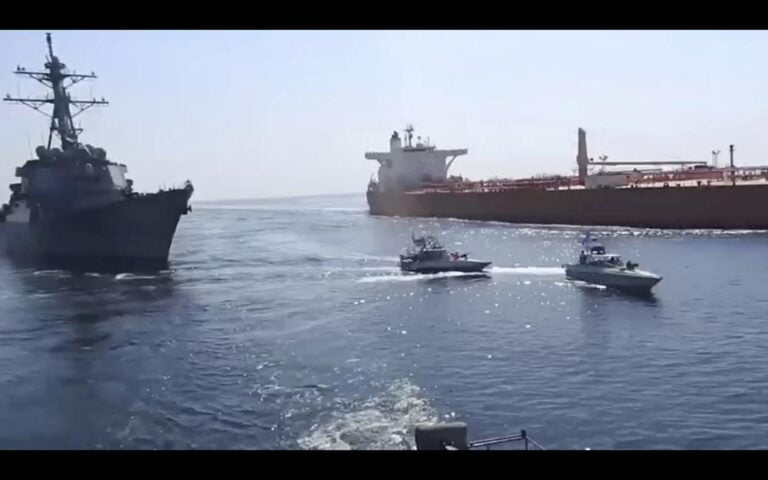
Iran claimed this week that it would release momentous news about a great military operation. When the announcement by Iran’s Islamic Revolutionary Guard Corps (IRGC) came, it claimed that the US had tried pirating Iranian oil on a tanker and that the oil on the tanker was transferred by the US. IRGC claims that in a daring raid it sent a helicopter with elite IRGC troops to rope down onto the ship and grab the oil back, right in front of the Americans, then it took the tanker back while the US 5th Fleet, the greatest naval power in the world, was helpless.

TankerTrackers.com, which monitors global shipping posted about the incident, adding skepticism. The US also rejected the Iranian claims, saying allegations are “totally false and untrue.”

The real story apparently of this ship is that it sailed to China where its Iranian oil cargo was rejected and the ship had set sail back to Iran anyway. The tanker is apparently owned by a Vietnamese company, TankerTrackers.com wrote on Twitter.

It looks like Iran staged the raid on its own oil to pretend it was “capturing” it from the US. This was to cover up an Iranian failure of exporting oil after it was rejected in Chinese ports.

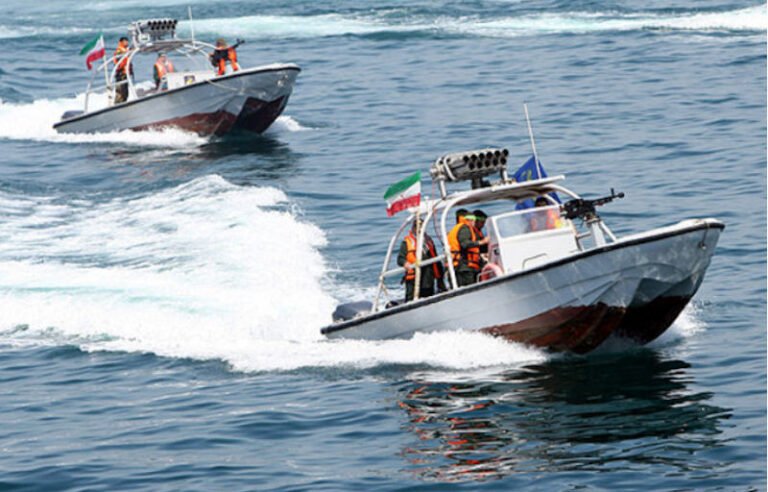
The overall lesson here is that Iran wants to create an incident. It is willing to use fast boats, helicopters, and IRGC forces in a way that could lead to a real live-fire incident. Much of this is made for propaganda purposes, to create videos that can be shown in Iran.

Source: The Jerusalem Post
Also read: Vietnam seeks information from Iran about seized oil tanker

Vietnam seeks information from Iran about seized oil tanker

0

Vietnam was seeking more information Thursday about a Vietnamese oil tanker that was seized at gunpoint last month by Iranian soldiers in the Gulf of Oman, while vowing to ensure the safety and humane treatment of the ship’s crew members.

Iran’s powerful paramilitary Revolutionary Guard troops on Oct. 24 took control of the MV Sothys, a vessel that analysts suspect of trying to transfer sanctioned Iranian crude oil to Asia. U.S. forces had monitored the seizure but ultimately didn’t take action as the vessel sailed into Iranian waters.

The episode was the latest provocation in Mideast waters as tensions escalate between Iran and the United States over Tehran’s nuclear program.

Vietnamese officials “continue to closely follow the developments and work closely with Iranian authorities to resolve this issue in accordance with the law and enact necessary measures to safeguard the rights and interests of Vietnamese nationals,” Pham Thu Hang, deputy spokesperson in Vietnam’s Ministry of Foreign Affairs, said Thursday.

The captain of the MV Sothys told the Vietnamese Embassy in Iran that all 26 crew members were being treated well and were in “normal health,” Hang told reporters at a scheduled briefing.

Iran celebrated its capture of the vessel in dramatic footage aired on state television Wednesday, the day before the 42nd anniversary of the 1979 seizure of the U.S. Embassy in Tehran.

Ship-tracking data analyzed by The Associated Press from MarineTraffic.com showed the vessel still off Iran’s southern port of Bandar Abbas on Tuesday. A satellite photo from Planet Labs Inc. also showed the vessel off Bandar Abbas in recent days.

Iranian state TV offered a series of contradictory reports about a confrontation between the Guard and the U.S. Navy’s Mideast-based 5th Fleet. State TV sought to cast the incident as an act of American aggression against Iran in the Gulf of Oman, with the U.S. Navy detaining a tanker carrying Iranian oil and the Guard freeing it and bringing it back to the Islamic Republic.

Source: APNews

Also Read: Tanker attack: UK and US blame Iran for deadly ship attack