Home Blog Page 50

Khamenei and terrorist designated IRGC on money laundering blacklist

0

The Financial Action Task Force (FATF),  an intergovernmental organization, founded to develop policies to combat money laundering and terrorism financing has stated that the Iranian regime remains on the international organization’s blacklist, as the Iranian government refuses to pass money laundering bills and reforms to its financial system.

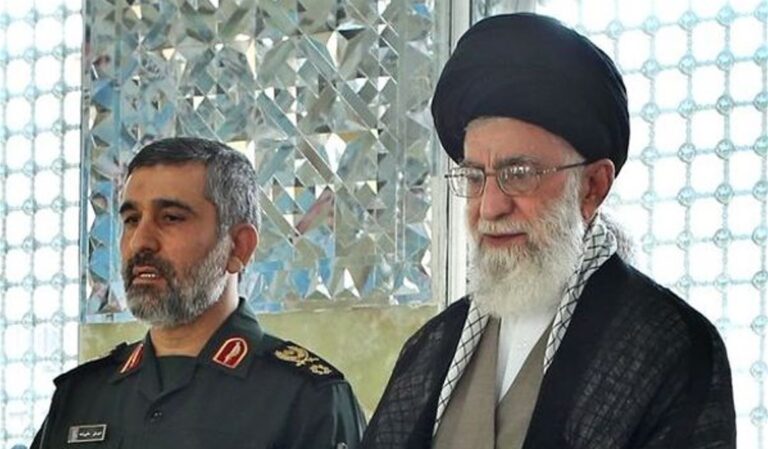
The illegal activities of Iran’s terrorist designated Islamic Revolutionary Guard Corps (IRGC) are the main reason behind the regime’s fears of adhering to international policies and standards when it comes to combatting money laundering.

Most financial activities of the IRGC violate international laws — from financially supporting terrorist groups to participating in organized criminal activities such as drugs smuggling.

The IRGC functions under the supervision and command of Iran’s Supreme Leader Ayatollah Khamenei. For this reason, Khamenei has openly and blatantly opposed joining the FATF during the past few years.

Although the IRGC’s money laundering information is difficult to leak due to its secretive nature, the discovery of the IRGC money laundering network in Bahrain in 2011, the exposure of IRGC’s $5 billion money laundering case in India, and IRGC’s $5 billion money laundering case through Bahrain Future Bank in 2009 are some of the most recent examples that have led the Basel Institute to rank Iran as the riskiest country in the world in terms of money laundering for three consecutive years.

Meanwhile, Iran’s current Minister of Interior, who is also an IRGC commander, while strongly opposing the FATF bills says: “In the case of the FATF, we see that they have created a security current under the guise of an anti-money laundering organization. In fact, the FATF is not an economic organization but a security organization.”

Even if the IRGC’s financial support for terrorist groups is set aside, their other financial activities outside Iran also fall under the category of money laundering. The IRGC is an active player in the Iranian economy, and a large segment of Iranian banks and individuals engaged in foreign trade are, officially or unofficially, associated with the Revolutionary Guards or the previously mentioned powerful entities under the control of the Supreme Leader.

Source: IranWire 
Also read: Iran losing regional influence with newly appointed IRGC-QF commander
IDF chief: Army ‘accelerating’ plans targeting Iran’s nuclear program

0

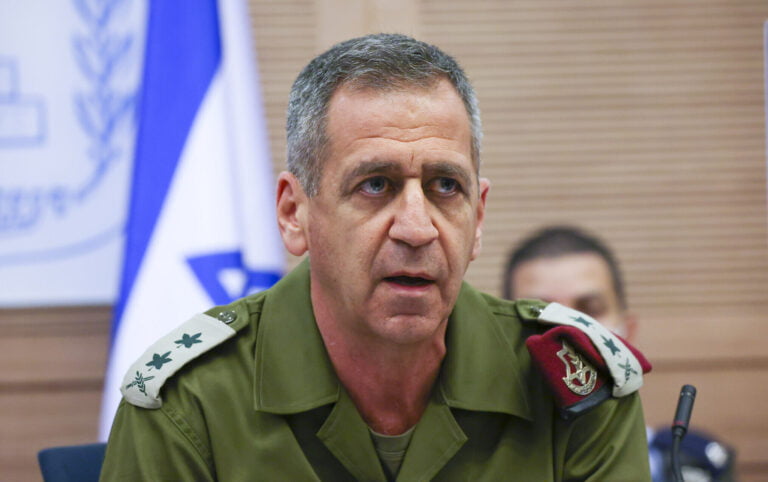
Israeli security chiefs ramped up their rhetoric against Iran on Tuesday, with the head of the Israel Defense Forces warning that the military was ramping up its preparations for a possible attack on Iranian nuclear facilities.

Defense Minister Benny Gantz said Israel will carry out operations that “haven’t been seen in the past” if regional war breaks out.

IDF Chief of Staff Aviv Kohavi told the Knesset’s Foreign Affairs and Defense Committee that the army “is accelerating operational planning and preparedness to deal with Iran and the military nuclear threat. Thankfully, the budget that was approved [last week] makes it possible to contend with a variety of threats.”

His comments came as the Israeli Air Force is expected to resume practicing for a strike on Iran’s nuclear program.

In January, Kohavi announced he had instructed the military to begin drawing up fresh attack plans for a strike on Iran’s nuclear facilities, and last month the government reportedly allocated billions of shekels toward making those plans viable.

In his remarks to the committee on Tuesday, Kohavi also told Knesset members that Israel faces “many security challenges” on numerous fronts.

“In the past year we’ve continued to act against our enemies in missions and secret operations throughout the entire Middle East. The IDF will continue to act to remove threats and will respond forcefully to any violation of [Israeli] sovereignty, in Gaza or in the north,” he said.

In his appearance before the committee, Kohavi hailed Israel’s current security level, saying “there is no existential threat facing the State of Israel, Israel’s freedom of operation is unprecedented and our military cooperation with our partners is highly effective.”

However, he said that the military is focused on two other main threats besides Iran’s nuclear program: air-based attacks in the form of rockets, precision missiles, cruise missiles and drones; and infiltration units, which would attempt to take over an Israeli border community.

Source: Times of Israel

Also Read: IRGC Commander: If Israel starts a war, it will end with its destruction

After 100 Days In Office, Raisi Asks Why Iran Faces An Economic Crisis

0

In a recent meeting with economists, President Ebrahim Raisi asked basic questions about the sorrow state of Iran’s economy, showing a lack of prior planning.

In a meeting with economists in November 9, Raisi had asked “why the economy is not doing well, why Iran has not been able to have a single-digit inflation rate, why the people cannot see the impact of tens of billions of dollars of government subsidies in their daily life, and why Iran’s economic growth rate has been less than one percent during the past eight years despite high government spending?

The fact that the president of the country asked these basic questions after 100 days in office, shows a lack of preparation and planning by his government, a point highlighted by many domestic critics.

According to Donyaye Eqtesad (Economic World), a newspaper that generally supported the policies of Iran’s previous administration, economists told Raisi conditions are not favorable for businesses in Iran. A decline in domestic and foreign investment, as well as the impact of sanctions have suppressed the country’s economic growth.

The long process to get government permits to do business, lack of a good legal framework, and unfair taxation are the main elements leading to unfavorable conditions. Iran’s global ranking in terms of ease of running a business is 128, while anything above the rank of 50 is considered unfavorable, the newspaper said.

The daily said that in three major indicators Iran faces serious problems: Economic growth, the rate of inflation and the unemployment rate.

Meanwhile, because of overall unfavorable conditions and the lack of a promising outlook for the future of the economy, there has been a sharp drop in domestic and foreign investment in Iran. Furthermore, this disrupts the trend of economic growth in the long run. With the current trend, economists cannot expect anything more than a 4 percent growth in the best-case scenario, economists told Raisi.

Source: Iran International

Also Read: Iran: President Raisi’s hardline government stalling on progress

FBI Warns US Companies About New Activity By Iranian Hackers

0

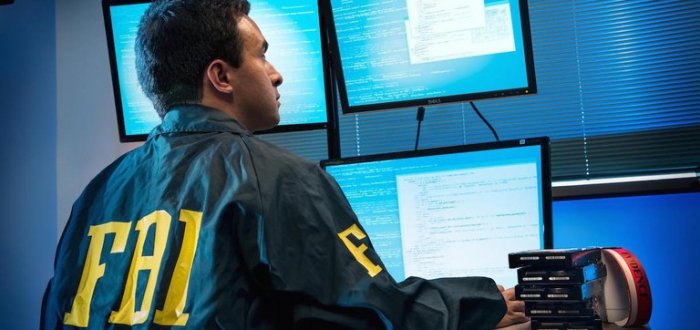
The FBI has warned US companies that Iranian hackers are searching cybercriminal websites to obtain stolen information to use in their future activities.

The warning was issued in a private industry notification, first reported by Bleeping Computer, a cybersecurity news website on Wednesday.

Iran has a strong network of state hackers who regularly target American, Israeli and other government and company computers, both for disruption and for obtaining sensitive information.

The Federal Bureau of Investigation warned that any information obtained from the dark web by Iranian hackers can be used to penetrate the networks of more organizations.

While it is not clear which Iranian group is involved in the attempt to get information from cybercriminals, the FBI warned organizations to take steps to protect themselves against future attempts by these operators who both pursue ransom and security objectives.

Some cybersecurity experts believe that targeting entities for ransom by Iranian hackers could be a tactic to blur the line between criminal and state operatives, pretending they pursue profits rather than espionage.

In late October, an Iranian hacking group called Black Shadow attacked an Israeli data and internet company, stealing a large amount of client information and demanding ransom.

Source: Iran International

Also Read: Microsoft says Iran hackers targeting Israeli, US defense technology firms


Iran: President Raisi’s hardline government stalling on progress

0

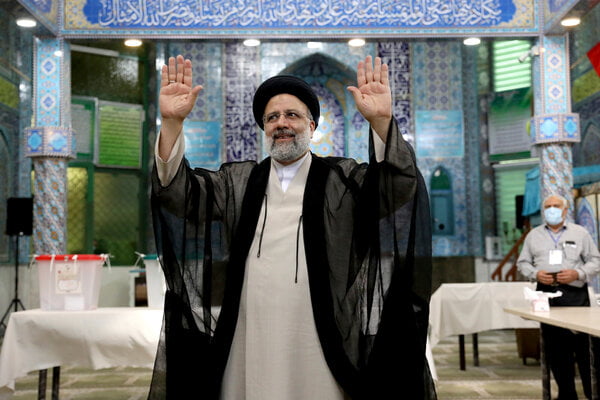
Conservative cleric Ebrahim Raisi was inaugurated as Iran’s sixth president in August, coming into office an uncompromising hardliner contrasting with his predecessor, Hassan Rouhani.

As a supporter and close confidant of Ayatollah Ali Khamenei, President Raisi can count on the backing of Iran’s parliament, where hardliners have held a majority since early 2020.

Raisi began his term pledging a “revolutionary” emergency recovery program to repair Iran’s economy, battered by international sanctions, the coronavirus pandemic, and structural problems, while promising “peace and prosperity” to all Iranians.

“Peace for the country and prosperity through economic growth are not part of the fundamental policy of the Islamic Republic,” said Fatemeh Haghighatjoo, head of the US-based NGO Nonviolent Initiative for Democracy Inc.

“Those in power, especially the hardliners, dream of exporting their ideology and greater influence in the region through military strength,” Haghighatjoo added.

From 2000 to 2004, Haghightjoo was a member of the Iranian parliament as a reform-oriented politician. She has lived in the US since 2005.

“In Iran, we have an autocratic system with the supreme religious leader at the top who wants to decide everything,” Haghightjoo said. For Khamenei, President Raisi is merely an “instrument” used for pushing through the supreme leader’s agenda, she added.

Iran seeking an economic lifeline

After 100 days in office, Raisi is facing economic challenges on several fronts.

Iran is currently dealing with rising COVID infections. The rial is tanking in value, and the country’s largest banks are racking up huge losses.

Relief from US sanctions, and a positive outcome in negotiations on reviving the nuclear deal are considered vital if the Iranian economy is to recover.

Nuclear talks with the UK, France, Germany, Russia and China are planned in Vienna on November 29.

The US has said it will pull back sanctions and return to the deal only if Iran agrees to stop enriching uranium, which Tehran expanded after former US President Donald Trump dumped the agreement in 2018.

Source: DW

Also Read: Iran’s Raisi Forms Cabinet Including Terror And Corruption Suspects


hardline hardline 

Iran losing regional influence with newly appointed IRGC-QF commander
0

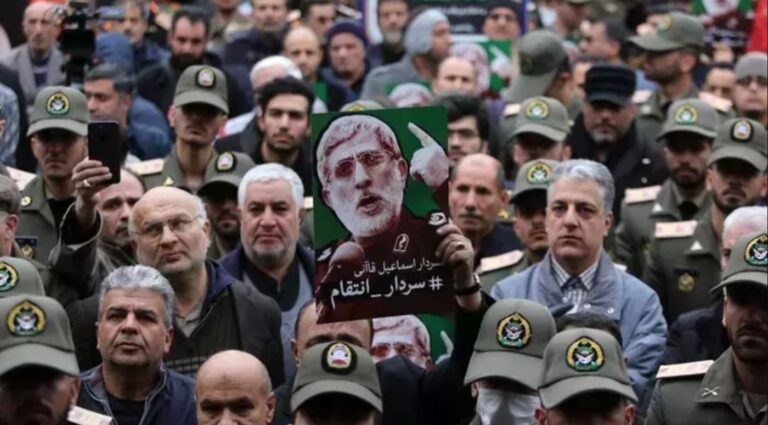
The influence and clout of the once formidable Islamic Revolutionary Guard Corps Quds Force (IRGC-QF), which directs Iran’s external operations, have been faltering under the leadership of Brig. Gen. Esmail Qaani.

Since taking the helm on short notice, following the January 2020 assassination of his predecessor, Qassem Soleimani, Qaani has failed to distinguish himself in his new role, and has no significant achievements to his name, observers say.

There are many indicators of failure, but the most obvious of them is “the loosening of Iran’s grip on its traditional allies in Iraq” — its proxy militias.

A coalition of militias calling itself the “Iraqi Resistance Co-ordination Committee” comprising Asaib Ahl al-Haq, Sayed al-Shuhada and small factions linked to Kataib Hizbullah continues to defy and shrug off Iran’s instructions.

Rifts have begun to emerge among Iran-aligned militias in Iraq in recent months as a result of conflicts over tribute money, smuggling outlets, and drug trafficking, and as they jockey for power and influence.

Qaani’s lackluster leadership has frustrated the Iranian regime, which has seen Iran’s influence and sway decline in Iraq, Syria, and Yemen.

On 12 November, Syrian President Bashar Assad decided to dismiss the commander of Iranian IRGC-QF forces in Syria, Javad Ghaffari, according to multiple sources.

Sources in the presidential palace were dissatisfied with Ghaffari’s actions and went as far as deeming them a “violation of Syrian sovereignty,” the report said.

A Syrian source explained that Ghaffari’s dismissal constitutes a decisive blow against former Iranian Revolutionary Guard Corps head Qasem Soleimani’s vision of Iranian hegemony over the strategic area between Iran and Lebanon.

Source: Al-Mashareq
Also read: IRGC Commander: If Israel starts a war, it will end with its destruction

‘Atrocities Tribunal’ Says No Impunity For Iran Leaders Over 2019 Killings

0

Rights activists say the Iran Atrocities Tribunal is meant to bring the people’s voice to the world and to make Islamic Republic authorities accountable.

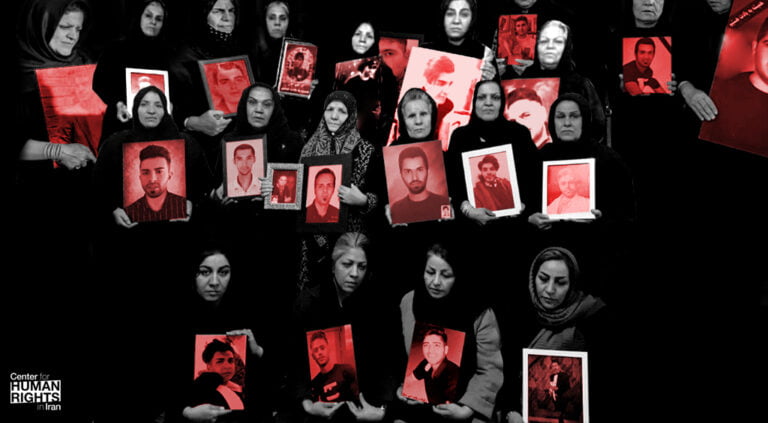
The Iran Atrocities Tribunal convened in London Wednesday with testimonies from family members who sent recorded messages or testified via video on the alleged killing of their relative in protests in November 2019.

Regina Paulose, a member of the tribunal’s counsel and an attorney who focuses on genocide and crimes against humanity, told Iran International that there was no “question of impunity” for Iran’s leaders. “The people’s tribunal makes it known that… the leaders have to be accountable,” she said.

While ‘atrocity’ is not a legal term, the tribunal follows the model of the Russell Tribunal on Palestine, which was held 2009 to 2014 to review alleged Israeli war crimes against Palestinians following the notion of ‘people’s tribunals’ advocated by British philosopher Bertrand Russell.

“When a similar tribunal was held for Palestine, [Iran’s] Press TV was probably the only media outlet in the world that broadcast it live,” journalist Mehdi Mahdavi-Azad said. “When such tribunals are concerning itself, they boycott them and make no mention at all.”

Mahboubeh Ramezanifard, mother of Pejman Gholipour, told the tribunal in a recorded message that she had kept her son’s “bloody clothes to show the world as evidence that my child was murdered.” Ramezanifard said her son’s jacket had “holes on both sides because he was shot with a live bullet.”

In the afternoon session, United States-based opposition activist Masih Alinejad testified from her “own findings” that the Iranian authorities had made the families of those killed in the protests bury the corpses in remote places. Alinejad said this was “psychological torture.”

Alinejad also said “authorities” had threatened families not to talk to foreign media and has asked two for the cost of the bullet used to kill them. “The families believe there is no justice in Iran,” she said. “You can take your complaint against murderers to the murderers themselves.”

Source: Iran International

Also Read: Tribunal to Investigate Violent Crackdown in 2019 Iran Fuel Protests

Iran-backed Houthis holding US Embassy staff in Yemen: State Department

0

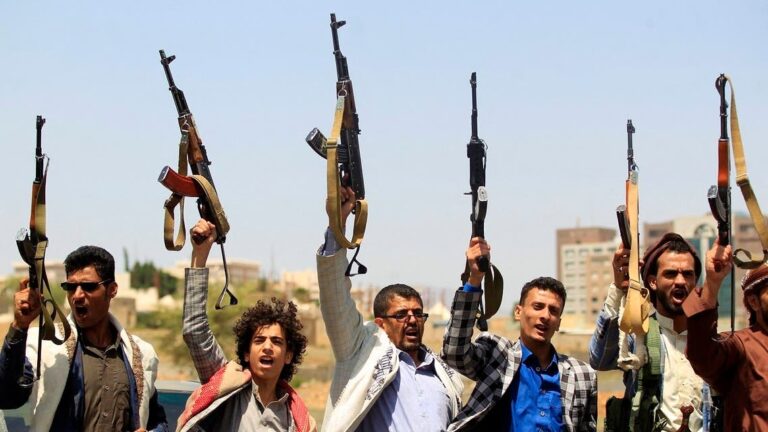
Yemen’s Houthi militia has detained US Embassy staff and the Iran-backed group seized property from the US Embassy compound, a State Department official said Thursday.

“We are concerned that Yemeni staff of the US Embassy in Sana’a continue to be detained without explanation and we call for their immediate release,” a State Department spokesperson told Al Arabiya English in an email.

Bloomberg earlier reported that at least 25 Yemenis were detained by the Houthis in recent weeks, citing two people familiar with the matter.

The State Department official said a majority of the detained had been released, “but the Houthis continue to detain additional Yemeni employees of the Embassy.”

On Tuesday, State Department Spokesman Ned Price also said many of the detained had been released. No further details were provided.

The Houthis, designated as a terrorist organization in the final days of the Trump administration, have also “breached” the US compound that the Embassy used before they suspended operations in 2015, the official said.

“We call on the Houthis to immediately vacate it and return all seized property,” the State Department spokesperson said, adding that the US would continue diplomatic efforts to “secure the release of our staff and the vacating of our compound, including through our international partners.”

US Special Envoy for Yemen Tim Lenderking and Chargé d’Affaires of the US Embassy to Yemen Cathy Westley visited Aden Monday, where they met with Prime Minister Maeen Abdulmalek Saeed, Foreign Minister Ahmed Bin Mubarak, Aden Governor Lamlas, other senior government officials, and representatives of Yemeni civil society.

One of the Biden administration’s first foreign policy moves was to lift the terror designation off the Houthis and remove senior officials in the group from the Specially Designated Global Terrorist (SDGT) list, citing humanitarian aspects.

The Houthis expelled Yemen’s internationally recognized government from power in Sanaa in 2014. The yearslong war has continued to gain momentum, with the Iran-backed group refusing to engage in ceasefire talks.

Source: Alarabiya

Also Read: HOW IRAN HELPED HOUTHIS EXPAND THEIR REACH

IRGC Commander: If Israel starts a war, it will end with its destruction

0
Amir Ali Hajizadeh, commander of the Islamic Revolutionary Guard Corps’ (IRGC) Aerospace Force, warned on Thursday that if Israel starts a conflict, Iran will “destroy” it, according to Iranian media.
“The Zionist regime officials know that they can be the initiators, but the end is with us,” said the commander. “The end of this work is the destruction of the Zionist regime, and if they give us an excuse… their destruction will certainly be advanced historically.”
Hajizadeh said that Israel is the only country in the world that talks about its own survival and continued existence.
“A regime that speaks about its existence is doomed to destruction, and such a regime cannot talk about the destruction of other countries, and the threats it issues are mostly for domestic consumption,” he said.
The IRGC Aerospace Force commander called Iran’s security “exemplary,” saying he did not need to talk about the country’s capabilities “because the enemy is talking enough about Iran’s missile and defense capabilities.”

Israeli security chiefs have ramped up their rhetoric against Iran, with Israeli Defense Forces (IDF) Chief of Staff Aviv Kohavi warning Tuesday that the military was boosting its preparations for a possible attack on Iranian nuclear facilities.

The same day, Israeli Defense Minister Benny Gantz said Israel would carry out operations that “haven’t been seen in the past” if regional war breaks out.

The Islamic Republic of Iran has been continuously threatening Israel for the past few decades, and despite its IRGC extraterritorial arm, Quds Force, actively funding dozens of militias across the region to destabilize neighboring countries, it has so far refused to directly confront Israel and as it claims, “defend those oppressed by the oppressors.”

Source: Tasnim
Also read: New Taliban governor with strong ties to Al-Qaeda and Iranian IRGC

New Taliban governor with strong ties to Al-Qaeda and Iranian IRGC

0

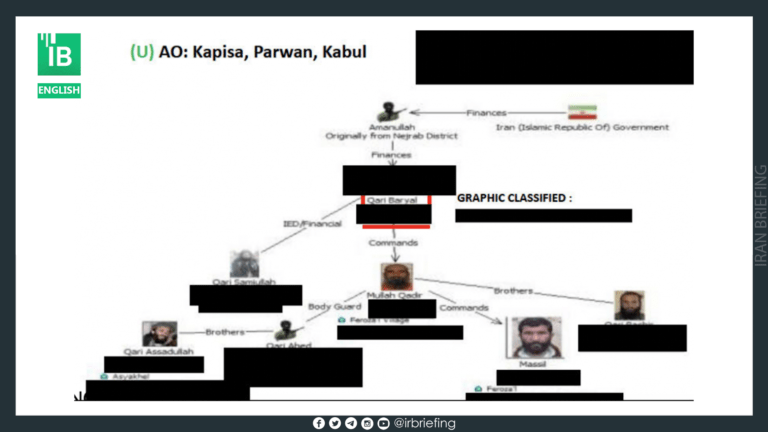
A notorious Taliban commander who organized attacks in and around the capital city of Kabul, was appointed by the Taliban to serve as the governor of Kabul province. The commander, known as Qari Baryal, was previously described as an “al Qaeda-associated Taliban leader.” Baryal regularly received cash from the Iranian IRGC and its extraterritorial operations arm the Quds Force to execute his attacks.

Baryal and his network was known to facilitate the movement of weapons, explosives, and suicide bombers from the Pakistan border to Kabul.

Baryal was “involved in the supervision of IED production, suicide personnel allocation, and overall attack planning and execution.”

The Qari Baryal Group helped plan and coordinate numerous attacks against military bases in Kabul and Parwan provinces, including the sprawling Coalition airbase at Bagram.

Baryal received direct support from the Iranian IRGC (Islamic Revolutionary Guard Corps) and its extraterritorial operations arm, Quds Force, according to a recently declassified report.

According to the report, as of October 2012, a “Taliban fighter Amanullah . . . is currently living in Tehran, Iran” and “is working as a financial liaison officer between Iran and the Taliban.”

“Iranian Government funnels money through Amanullah to support the Taliban’s fight against Afghanistan’s government.” The report noted. Baryal received funds directly from Amanullah to fuel attacks in and around Kabul.

Iran’s Qods Force supported the Taliban through its Ansar Corps, which was assigned to direct military and political operations inside Afghanistan.

NATO’s command in Afghanistan, reported that Baryal and “several” Taliban fighters were killed in an airstrike in Kunar province on Jan. 7, 2011. But Baryal clearly survived the Jan. 2011 strike, continued to serve as a top Taliban leader in central and northern Afghanistan, and is now governing influential Kabul province.

Source: FDD’s Long War Journal
Also read: Tribunal to Investigate Violent Crackdown in 2019 Iran Fuel Protests