Home Blog Page 49

Iran’s proxy militias in Iraq defying its terrorist designated IRGC

0

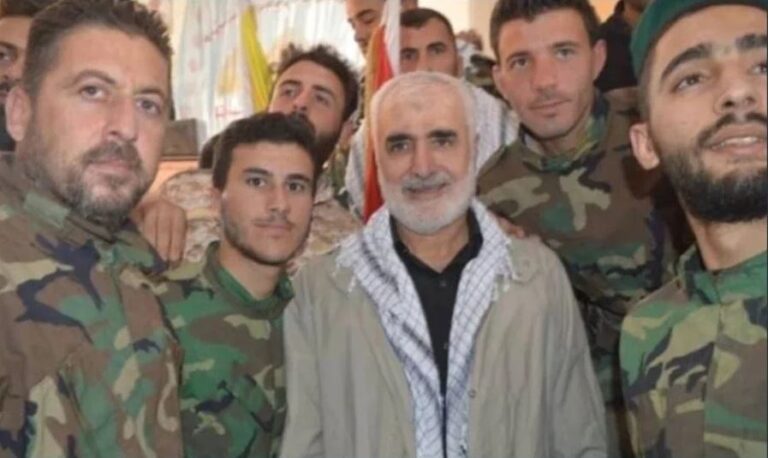
The Iraqi Asaib Ahl al-Haq militia is increasingly distancing itself from Iran and its terrorist designated IRGC forces, observers say, as its recent actions and posture of defiance highlight acute divisions among Iranian proxies in Iraq and the militia’s own bid for supremacy among them.

Since its formation in 2006 by Iran’s Islamic Revolutionary Guard Corps (IRGC), Asaib Ahl al-Haq has been actively serving Iran’s destructive agenda. It has engaged in sectarian violence in Iraq and Syria and carried out attacks on international interests. Iran-backed militias have been involved in drugs and weapons smuggling, as well as extortion and kidnapping in Iraq as the government struggles to keep in check.

The relationship between the two sides became tense at the end of last year when the IRGC directed all its proxies to refrain from attacking any international interests in Iraq without prior IRGC approval.

The so-called Iranian “Axis of Resistance” is now cracking under the strain of conflicts over money, influence, and leadership, observers said. Tension has increased accordingly between Asaib Ahl al-Haq and Kataib Hizbullah, with each accusing the other of attempting to achieve dominance and gain an advantage for themselves.

The rift among the two militias was evident in Iraq’s parliamentary elections, when Kataib Hizbullah had its own separate electoral list of candidates, while Asaib Ahl al-Haq remained under the umbrella of the Fatah Alliance.

“Asaib [Ahl al-Haq] is a dangerous Iranian affiliate and will not stand idly by in the face of its defeat after the Iraqi elections,” said political analyst Ghanem al-Abed.

Estimates of Iran’s actual military and economic spending in Iraq and Syria range from $30 billion to $105 billion to this date, according to a new report by a Lebanese newspaper.

Despite constant IRGC claims that it is there to help civilians, it has been providing money and aid only to members of its militias, while the people of the area it controls suffer from poverty.

Source: Diyaruna
Also read: Dispute between Syria’s Assad and Iran’s terrorist designated IRGC
Iran-backed hackers accused of targeting critical US sectors

0

Hackers linked to the Iranian government have been targeting a “broad range of victims” inside the United States, including by deploying ransomware, according to an advisory issued Wednesday by American, British and Australian officials.

The advisory says that in recent months, Iran has exploited computer vulnerabilities exposed by hackers before they can be fixed and targeted entities in the transportation, health care and public health sectors. The attackers leveraged the initial hack for additional operations, such as data exfiltration, ransomware and extortion, according to the advisory. The group has used the same Microsoft Exchange vulnerability in Australia, officials say.

The warning is notable because even though ransomware attacks remain prevalent in the U.S., most of the significant ones in the past year have been attributed to Russia-based criminal hacker gangs rather than Iranian hackers.

Government officials aren’t the only ones noticing the Iranian activity: Tech giant Microsoft announced Tuesday that it had seen six different groups in Iran deploying ransomware since last year.

Microsoft said one of the groups spends significant time and energy trying to build rapport with their intended victims before targeting them with spear-phishing campaigns. The group uses fake conference invitations or interview requests and frequently masquerade as officials at think tanks in Washington, D.C., as a cover, Microsoft said.

Once rapport is built and a malicious link is sent, the Iranians are extra pushy at trying to get their victims to click on it, said James Elliott, a member of the Microsoft Threat Intelligence Center.

“These guys are the biggest pain in the rear. Every two hours they’re sending an email,” Elliott said at the Cyberwarcon cybersecurity conference Tuesday.

Earlier this year Facebook announced it had found Iranian hackers using “sophisticated fake online personas” to build trust with targets and get them to click on malicious links and often posed as recruiters of defense and aerospace companies.

Source: ABC News

Also Read: German intelligence warns of Iran’s growing cyber attack capabilities

Human Rights Violations: European Union Gives Iran’s Mullahs Full Impunity

The European Union, which endlessly and hypocritically lectures the international community on human rights, is turning a blind eye on the Iranian regime’s expanding human rights violations.

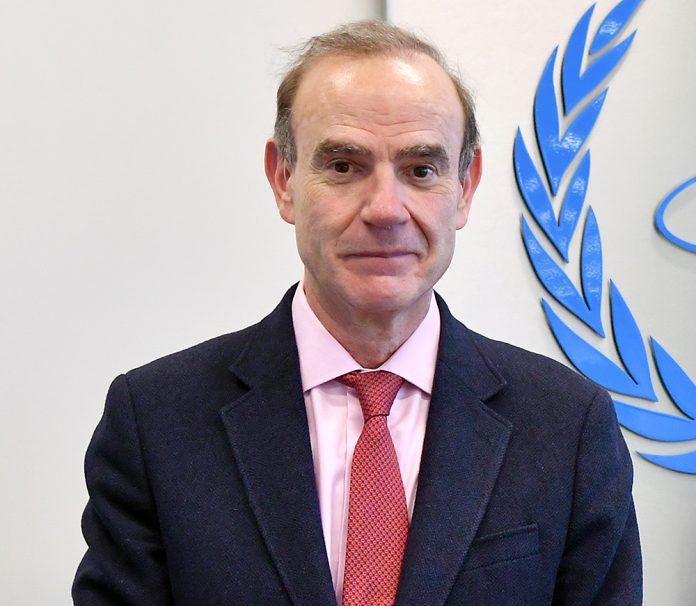
EU special envoy Enrique Mora, despite the Iranian regime’s horrendous and brutal human rights abuses, traveled to Iran in October and discussed “mutual interests” with Iran’s leaders. Meanwhile, Iran’s regime has been executing people “at an alarming rate”, and, according to a recent report by Amnesty International, was “the top executioner in the Middle East” last year.

“There are extensive, vague and arbitrary grounds in Iran for imposing the death sentence, which quickly can turn this punishment into a political tool. In addition, the structural flaws of the justice system are so deep and at odds with the notion of rule of law that one can barely speak of a justice system. The entrenched flaws in law and in the administration of the death penalty in Iran mean that most, if not all, executions are an arbitrary deprivation of life.”

The suppression and execution of political prisoners and those who protest against the ruling mullahs of Iran has been on the rise. According to Human Rights Watch’s “World Report 2021,” the Iranian regime is one of the leading “implementers of the death penalty”.

To execute political prisoners, Iran’s judiciary accuses defendants of vaguely defined charges labeled as “national security crimes.” These “crimes” include moharebeh (“enmity against God”), ifsad fil arz (“sowing corruption on Earth”), and baghi (“armed rebellion”).

It is not only the number of executions that is appalling, but also the nature of some of them. Executions have involved minor children, women and individuals from ethnic and religious minority groups. Although Iran has ratified the International Convention on the Rights of the Child, the government has made no effort to alter the country’s Islamic Penal Code, which allows girls as young as nine to be executed.

Source: The Jewish Voice

Also Read: The Iranian Economic Crisis Is Caused by Mullahs

Dispute between Syria’s Assad and Iran’s terrorist designated IRGC
0

Iran’s Foreign Ministry Spokesperson, Saeed Khatibzadeh, commented on a story circulating online about Iran’s terrorist designated Islamic Revolutionary Guard Corps (IRGC) commander in Syria being expelled, calling it nothing but a baseless rumor.

This is besides Iran’s state-run media affiliated with the IRGC posting news regarding the assignment of a new commander for its paid militias and forces in Syria.

Earlier this week, Syria’s leadership shunned the commander of Iran’s Quds Force in the country after he almost caused an “unwanted regional war”, according to Al-Hadath, a television network operated by Al-Arabiya.

Citing several Syrian sources familiar with the developments in the country, the report said the move against Mustafa Javad Ghafari was taken by high-ranking officials in the Assad regime, after “months of disputes.”

Ghafari has also been “excluded” over a series of actions he took that were viewed by dictator Bashar Assad as “a major breach of Syrian sovereignty at all levels.”

Among his misdeeds, Ghafari “transgressed Syrian customs and smuggled goods with the aim of creating a ‘black market,’ which constitutes a challenge and competition to the Syrian market.

“The Iranian forces in Syria have repeatedly exploited the Syrian natural resources for their personal interests, as well as looting economic resources and evading paying taxes to the Syrian state,” it added.

Estimates of Iran’s actual military and economic spending in Syria range from $30 billion to $105 billion to this date, according to a new report by a Lebanese newspaper.

Despite constant IRGC claims that it is there to help civilians, it has been providing money and aid only to members of its militias, while the people of the area it controls suffer from poverty.

Source: Iran Briefing
Also read: Iranian Terrorist Designated IRGC’s Bags of Dollars in Southern Syria

Bennett: No matter what happens with Iran talks, we’ll defend ourselves

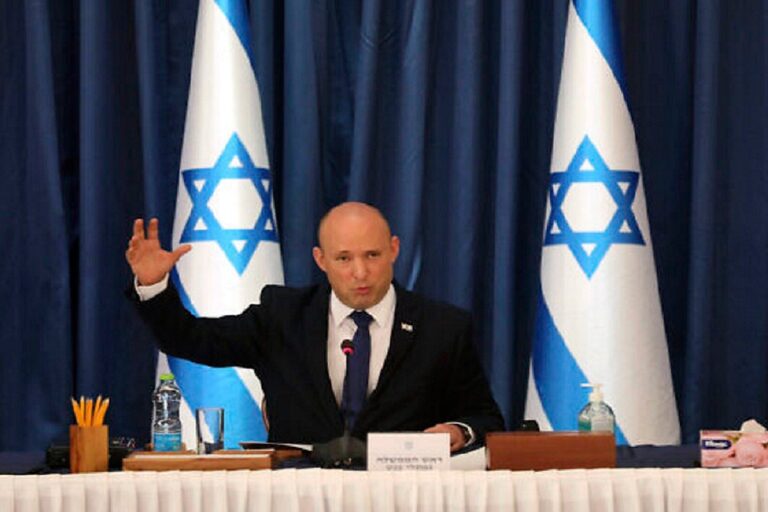
Prime Minister Naftali Bennett stressed that Israel would defend itself, no matter what happens in the nuclear talks between Iran and the world powers, during a visit to an exercise being carried out by the IDF in northern Israel on Tuesday.

“We are surrounded by security challenges and the goal is to take advantage of periods of relative quiet to build strength. Therefore, we are preparing for various scenarios, both near and far,” said Bennett. “We are dealing with Iran and its affiliates in Lebanon and Syria. No matter what happens between Iran and the superpowers, and we are certainly concerned about the fact that there is not enough toughness in the face of Iranian violations, Israel will defend itself, on its own.”

During the visit, Defense Minister Benny Gantz stated that “we are of course following everything happening on all fronts.”

“We are currently seeing Iran’s policy within Iran in the nuclear context, as well as its strengthening outside Iran, and its influence in Syria and Lebanon,” added Gantz. “The world must act against Iran and Israel must continue to do what it needs in every front in general and in the northern front in particular.”

Last week, the IDF began a drill in northern Israel, as part of which reservists in the 36th Division, also known as the Ga’ash Formation, were called up.

About 3,000 soldiers from the Golani Brigade, Armored Corps, artillery and reserve brigades, along with intelligence and the Air Force, took part in the drill.

“We found here a very cohesive and trained system that is gaining more and more capabilities, and I am very happy with what we have seen here,” said Gantz about the drill.

“The state budget has been approved and this is especially important for the IDF, which can properly plan its resources, train continuously and intensively and invest everything it needs in preparing for the next war,” said Bennett.

Source: The Jerusalem Post

Also Read: IRGC Commander: If Israel starts a war, it will end with its destruction

Prison guards ‘celebrated hangings at Iran jail with sweets’

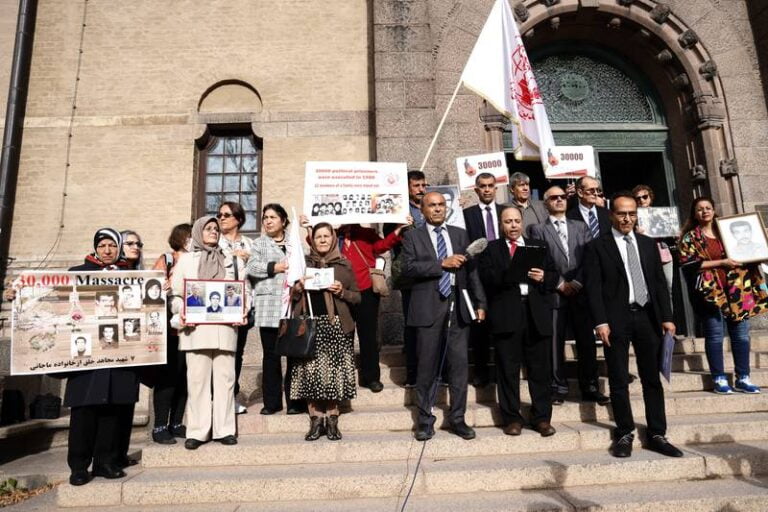
Former Iranian prison inmates have told a murder trial how their guards celebrated the mass hanging of dissidents by passing around sweets.

Witnesses described the final hours of victims at the trial of Hamid Nouri, a former regime official accused of war crimes and murder following the mass killing of thousands of prisoners at the end of the 1980-1988 Iran-Iraq War.

The trial has moved for several days to Albania at the request of prosecutors to hear evidence from seven exiles who have fled the country. Mr Nouri, 60, who denies the charges against him, has remained in Sweden, where he was arrested in 2019 after flying into the country to visit family.

One former inmate at Iran’s Gohardasht prison, Saheb Jam, said he watched Mr Nouri call out the names of inmates to be taken away for execution.

He “held a box of pastries and offered sweets to prison guards as they passed by”, he told the court, according to a translation of his evidence by an opposition group. “They were celebrating the executions with sweets.”

Mr Nouri has been on trial at the district court in the Swedish capital Stockholm since August in connection with events during the summer of 1998, when he was working as an assistant to prosecutors at the jail in Karaj, near Tehran.

The court will continue to sit in the port city of Durres until November 18 to hear the evidence of the seven, who are members of the People’s Mujahideen of Iran (MEK) group who live in a camp close by. The MEK, which turned on the regime after initially supporting the 1979 revolution, were the main targets of the campaign of executions at prisons across Iran in 1988.

Human rights groups have estimated that 5,000 prisoners were killed across Iran, allegedly under the orders of supreme leader Ayatollah Ruhollah Khomeini in revenge for the group’s support of Iraq during the war.

Source: The National News

Also Read: High number of Iran executions in 2021 signals worsening rights condition

Iranian Terrorist Designated IRGC’s Bags of Dollars in Southern Syria

0

In recent months, the Iranian terrorist designated Islamic Revolutionary Guard Corps (IRGC) has been sending bags full of dollars to several destinations in the southern Syrian towns, in the Houran and Golan regions, in order to recruit the local people for its political and ideological goals.

The money reaches a number of community leaders in the city of As-Suwayda, members of the Arab Druze community, some of whom were known to support the regime, and showed a shift towards Iran and its paid militias, as well as the Lebanese Hezbollah, according to various local reports.

They also sent money to Qarfa town, which Iran succeeded in converting from Sunni to the Shiite sect.

Last year, the “Information Center on Intelligence and Terrorism” published an overflowing report on Iran’s efforts of converting the Sunni population to Shiism in Syria and talked about a “huge settlement campaign” in various Syrian territories.

According to a new report, Iranian activity is currently expanding, especially in the southern and eastern regions, as well as near the border with Lebanon, where they are buying homes and land in huge numbers, and bringing new residents from Iran itself or from other Shiite population groups from several countries in the region, such as Iraq, Afghanistan, Yemen, and others, and they also take advantage of the poverty and financial hardship of the local population, setting up charities to lure the population.

The report indicated that this Iranian activity worries the Syrian regime and is also causing concern for Russia and several countries in the region.

The Quds Force, Iranian IRGC’s extraterritorial operations arm, helps arm, train, and otherwise support numerous insurgent and rebel groups in Afghanistan, Iraq, Syria, Yemen, the Palestinian territories, and other areas, and its activities are part of why numerous countries have labeled Iran the “world’s leading sponsor of terrorism.”

Source: Asharq AL-awsat | International and Arab News
Also read: Iranian Diplomat Charged With Assassination of a Publisher in Norway

Iranian Diplomat Charged With Assassination of a Publisher in Norway

0

A former senior Iranian diplomat based in Oslo, Norway, and a Lebanese national is at the center of accusations of being involved in the assassination of Norwegian publisher, William Nygaard. According to the Norwegian Broadcasting Corporation (NRK), the Norwegian National Criminal Investigation Service (Kripos) has been investigating the case since 2009.

Nygaard, who was the former head of the publishing company Aschehoug and the former chairman of the NRK, was responsible for publishing the Norwegian edition of Salman Rushdie’s controversial novel, The Satanic Verses.

Based on a fatwa by Ruhollah Khomeini, the Iranian regime’s founder and first Supreme Leader, against Salman Rushdie, Nygaard was targeted in 1993 by several fanatics for publishing Rushdie’s novel.

Tehran’s first Secretary at the Iranian regime’s Embassy in Oslo, unidentified by the NRK, and Lebanese national, Khaled Moussawi, who lived in Oslo during the 1990s, are the main suspects in Nygaard’s assassination. Tehran’s diplomat reportedly visited Norway just after Rushdie’s book was published but left the country four days before the assassination.

This wasn’t the first time that the Iranian regime’s embassy in Oslo has been involved with terrorism and espionage. Three years ago, Mohammad Davoudzadeh Lului was arrested by Swedish authorities for his affiliation with the regime’s Ministry of Intelligence and Security (MOIS).

Davoudzadeh was involved in a terrorist plot against Iranian Arab citizens in Denmark. Davoudzadeh had obtained refugee status and later Norwegian citizenship and was in regular communication with the regime’s embassy in Oslo and then-ambassador Mohammad Hassan Habibolahzadeh.

In September 2021, it was reported in Swedish newspapers that former Swedish security police chief, Peyman Kia had been arrested and charged with spying on Iran’s behalf between 2011 and 2015. Having obtained Swedish citizenship, he worked as a director for the Swedish Security Police (SPO), and as an analyst for the Swedish military whilst spying on behalf of the regime and relaying information back to them.

Source: Iran Focus

Also Read: US-Based Writer Says She Was Target Of Iran Murder Plot

Pentagon Confirms Iranian Helicopter Came Within 25 Yards Of Navy Ship

0

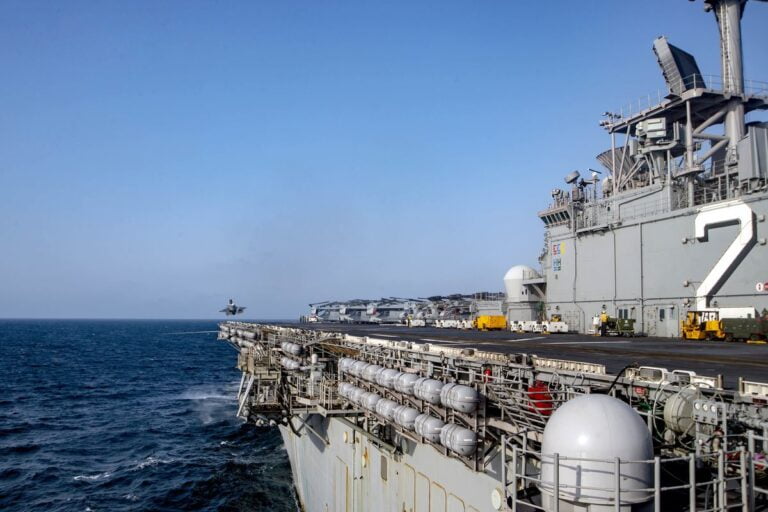
The Pentagon has said that an Iranian military helicopter came as close as 25 yards to USS Essex Navy ship in the Gulf of Oman, in a “reckless” move last week.

Iran’s Islamic revolution Guard Corp has released a video on November 13 showing the flight of the helicopter very close to the US Navy vessel. They said the incident took place on November 11.

Pentagon spokesman John Kirby was pressed by reporters during his briefing on Monday about why the Essex did not take any defensive measure. Kirby refused to elaborate saying that he would not comment on engagement rules enforced by Navy commanders in charge.

“The ship’s commander did what he believed was in the best interest of the ship and its crew. They have necessary means to protect themselves,” Kirby maintained.

Iranian forces have harassed US forces on many occasions before in the Persian Gulf region but the Essex incident in one of the closest approaches they have made to a US vessel.

Earlier last week the US military announced that USS Essex amphibious assault warship and a Marine expeditionary force had joined the Fifth Fleet in the Sea of Oman and had conducted exercises with the British Navy.

Source: Iran International

Also Read: US Navy fired warning shots at IRGC vessels in Gulf

Panel Calls for Justice for Victims of 2019 Iranian Protest Crackdown

The Iran Atrocities Tribunal adjourned Sunday in London after hearing five days of testimony from more than 30 witnesses who alleged that Iranian authorities killed, tortured and abused thousands of their countrymen three years ago during protests against Tehran’s sudden increase in the price of gasoline.

The six-lawyer panel, formed by civil society groups but with no official international legal standing, said it had examined more than 100 written statements, videos and pictures of the mostly peaceful protests that turned violent. More submissions are yet to be reviewed, with the panel saying other witnesses have expressed interest in testifying before a final report is issued in early 2022.

Eyewitnesses to the violence blamed Iran’s Islamic Revolutionary Guard Corps and special anti-riot forces for the attacks.

Hamid Sabi, one of the lawyers presenting the case against the Iranian authorities, said, “We hope with what we have presented so far, that world governments will consider Magnitsky sanctions against the 133 people we have alleged to be perpetrators of these heinous crimes.”

His reference to Magnitsky sanctions refers to a 2016 U.S. law that allows Washington to blacklist foreign government officials implicated in human rights abuses throughout the world.

Regina Paulose, a co-counsel to the tribunal, said the victims and survivors of the attacks “must have access to justice” under United Nations conventions.

Shadi Sadr, executive director of Justice for Iran and a co-organizer of the tribunal, said after the testimony ended, “By holding the truth to the utmost importance, the honorable panel members have devised a safe space for relatives of the victims and protesters who are accused as ‘rioters’ and ‘terrorists’ by their own state, to stand tall and with pride to voice the truth to the world.”

In a concluding statement, the tribunal said, “The killing of protesters was deliberately concealed from the world through an ‘information blackout.’”

Source: Voice of America

Also Read: ‘Atrocities Tribunal’ Says No Impunity For Iran Leaders Over 2019 Killings