Home Blog Page 48

Iranian IRGC Basij militia and violent oppression of civilians

0

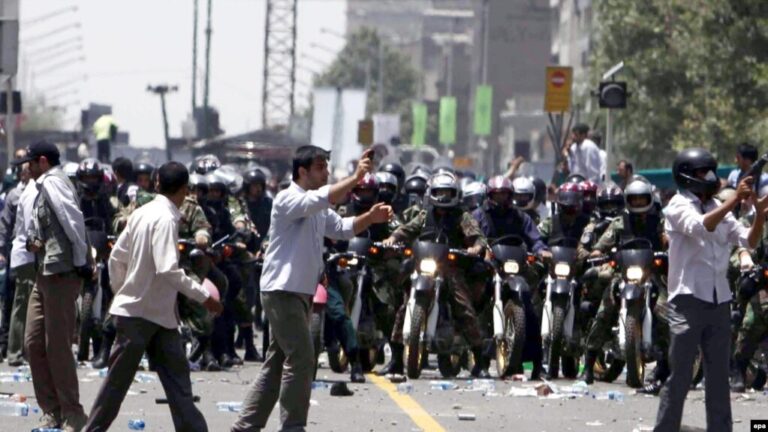
Every year, the Islamic Republic of Iran mobilizes the government for a campaign to purify and glorify the oppressive Basij paramilitary militia forces in Iran. An institution that in any incident and at any time, outside the legal and moral framework, acts violently against any form of public demonstration.

The Basij follows only the direct orders of Iran’s supreme leader, is one of the five forces of Iran’s terrorist designated Islamic Revolutionary Guard Corps (IRGC) forces, and is naturally designated as a terrorist organization by Bahrain, Saudi Arabia, and the U.S. as it has been actively involved in violent oppression of civilians, harassing citizens, money laundry and drug trafficking.

Khamenei describes Basij as “the greatest hope of the Iranian nation” and “an immaculate tree”. Iran’s Speaker of Parliament Mohammad Bagher Ghalibaf recently stated that “the Basij is a crystallization of all people that shall embrace everyone.”

But this does not change the reality that the Basij evidently has the blood of Iranian citizens on its hand after killing thousands of unarmed civilians during the 1999, 2009, 2017, and 2019 protests.

Hekmat Ali Mozaffari, the head of the Administrative Court of Justice, also said that the Basij is a way of life, and if this thinking dominates life, most of the “problems can” be overcome.

In the eyes of Ali Mozaffari and the Islamic Republic, the Basij, without any hesitation and accountability, is destroying the “problems” and obstacles of the regime, which are protests against inflation and demands for human rights, in the streets.

Members of Basij are more likely than non-members to obtain government positions, especially security-related positions within government-controlled institutions. Benefits for members of the Basij reportedly include exemption from the 21 months of military service required for Iranian men, reserved spots in universities, and a small stipend.

The Islamic Republic invests hundreds of millions of dollars annually into the terrorist Basij forces in order to rule over the Iranian people with an iron fist.

Raisi, Khamenei Come Under Fire For Economic Crisis, Brain Drain

0

Critics say President Ebrahim Raisi’s wrong choice of officials will hurt efforts to attract foreign investment and is prompting talented Iranians to emigrate.

Hossein Kashefi, the former chief of the Parties House, an umbrella organization that regulates relations among political parties, has said in an interview published by Arman newspaper on November 20 that the way Raisi is running the affairs of the state is not likely to instill hope for promising and essential change in Iran.

In recent weeks, many politicians and commentators from across Iran’s political spectrum have begun criticizing the president for inaction as prices rise and more people fall into poverty.

Kashefi said when Raisi was setting up his cabinet before his inauguration in August, only reformists were unhappy about the choices he was making, but now most of the critics of his cabinet‘s makeup are conservatives, like those who rejected his latest choice for the post of education minister in parliament last week.

Raisi’s lack of success in bringing about positive change in people’s lives, which is partly because of his wrong appointments, would dissuade foreign investors from coming to Iran, while foreign investment would be crucial in overcoming the current economic crisis, which is what the people want from the president, Kashefi said.

Kashefi added that choosing the right managers and ministers is key to such improvement, but he did not talk about the negative impact of US sanctions on foreign investment in Iran. However, he vaguely pointed out that only an improvement in the country’s foreign policy could have prompted foreign investors to show an interest in Iran.

Meanwhile, he pointed out that nepotism in the Raisi administration that appears to be the most important factor leading to choosing the wrong people, and the fact that he has chosen individuals based on their kinship and political affiliation rather than their qualifications has prompted elite executive workforce to leave the country.

Source: Iran International

Also Read: After 100 Days In Office, Raisi Asks Why Iran Faces An Economic Crisis

Watchdog Denounces Iran’s ‘Harsh’ Treatment Of Jailed University Students

Amnesty International says two Iranian university students detained without trial for more than 1 1/2 years are at risk of being convicted in a “grossly unfair” trial on charges they deny.

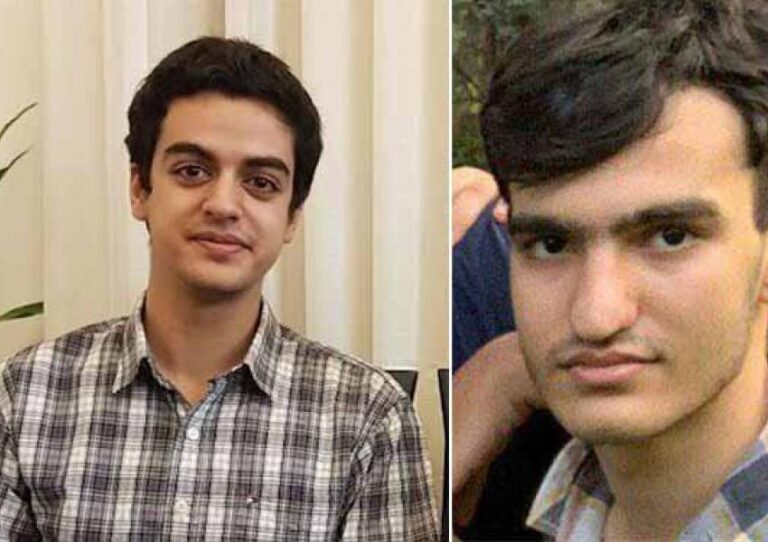
Ali Younesi, 21, and Amirhossein Moradi, 22, are prisoners of conscience who have been “arbitrarily” kept in custody since April 2020, the London-based group said on November 22.

It said Younesi and Moradi are being kept in Tehran’s Evin prison, where they have been held in solitary confinement for two months “in harsh conditions to extract forced ‘confessions.’”

Younesi has told his family he had been denied adequate health care for injuries to his left eye sustained during beatings by Intelligence Ministry agents and that lights in his cell were turned on 24 hours a day, according to Amnesty International.

It said Moradi has reported being beaten harshly during his arrest.

During a hearing before Tehran’s Revolutionary Court in July, the two were accused of “corruption on earth,” which carries the death penalty, among other “spurious” charges, Amnesty International said.

The human rights watchdog said the authorities have accused Younesi and Moradi of ties to “counterrevolutionary” groups and claimed to have found “explosive devices” in their possession.

Both university students have denied the accusations.

Source: Radio Free Europe Radio Liberty

Also Read: Prison guards ‘celebrated hangings at Iran jail with sweets’

Iran attempts to lure dual-nationals back to use as bargaining chips

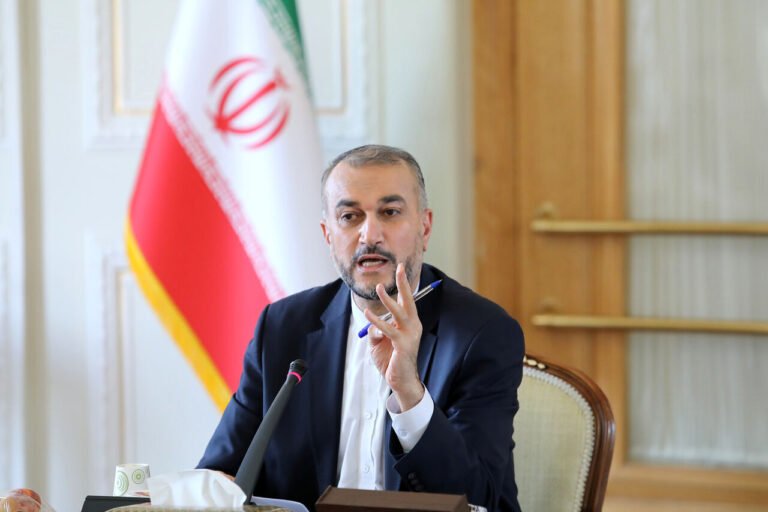
Iranian Foreign Minister Hossein Amir-Abdollahian said on Sunday that the Ministry will guarantee the safety of Iranian dual-nationals if they were to return to the country.

He said the government’s treatment of dual-nationals had caused unwanted consequences for Iran, including what he described as Iranophobia affecting Iranian nationals living abroad.

Amir-Abdollahian’s attempt at luring dual-nationals back to the country has no value as there has been a sudden rise in the number of jailed Iranian dual-nationals in recent years.

Iran’s terrorist designated Islamic Revolutionary Guard Corps (IRGC) has arrested dozens of dual nationals and foreigners in recent years, mostly on vague charges, without providing any evidence to back up its accusations.

The intelligence agency of the IRGC, responsible for jailing dozens of innocent civilians, is technically above the law as it does not respond to anyone but the supreme leader.

Since the 1979 Islamic Revolution, Iran has systematically arrested foreign citizens or Iranians with dual citizenship to be used as bargaining chips, and to exchange with its own terrorists abroad who are jailed after mounting evidence against them proves they were involved in terror plots and assassinations and in order to gain political concessions.

In May of this year, the Supreme Leader of the Islamic Republic, Ali Khamenei, in response to an interview of Iran’s previous FM, said that the Foreign Ministry merely implements policies that are formulated elsewhere, hinting to the IRGC.

According to Iran’s own supreme leader and countless other officials, the Iranian FM’s claims of providing security to Iranian dual-nationals are completely baseless and a poor attempt at luring citizens back in order to jail and use as bargaining chips.

A former foreign detainee in Iran has told Iranian expats not to be tricked by the foreign minister claiming to guarantee their safety if they visit the country.

Source: Iran Briefing
Also read: Tens of thousands take part in anti-regime protests in Iran

Bahrain Says It Foiled An attack, Seized Iranian Weapons And Explosives

0

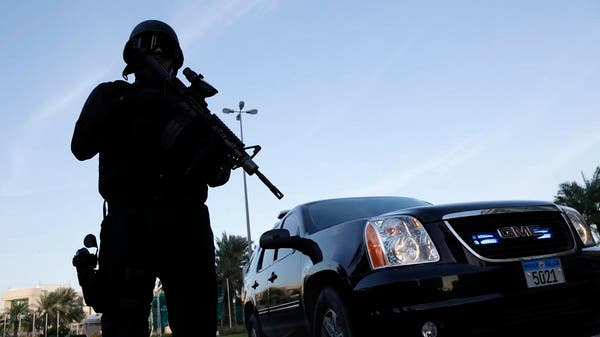
Bahrain arrested several suspected militants ahead of an attack and seized weapons and explosives that had come from Iran, the interior ministry said on Monday.

The ministry, tweeting the news, did not say how many people were arrested or specify their nationalities. It described them as “linked with terrorist groups in Iran” and said they were “plotting terrorist operations against security and civil peace”.

Bahrain, host to the US Navy’s Fifth Fleet and other international naval operations, has often accused Shiite Muslim Iran of seeking to subvert the Sunni-ruled kingdom, which has a Shiite majority. Iran has denied such charges.

The island state was the only Gulf Arab state to witness a sizeable pro-democracy uprising in the 2011 “Arab Spring”, from a largely Shi’ite opposition movement, which it quashed with help from Saudi Arabia and the United Arab Emirates.

Last year, Bahrain said it had foiled a “terrorist attack” backed by Iran’s Islamic Revolutionary Guard Corps.

Iranian officials and government-controlled media routinely attack Bahrain’s royal family and its close ties with Saudi Arabia.

Source: Iran International

Also Read: Bahrain jails 18 men for forming Iran-backed cell

 seized seized 

Tens of thousands take part in anti-regime protests in Iran

0

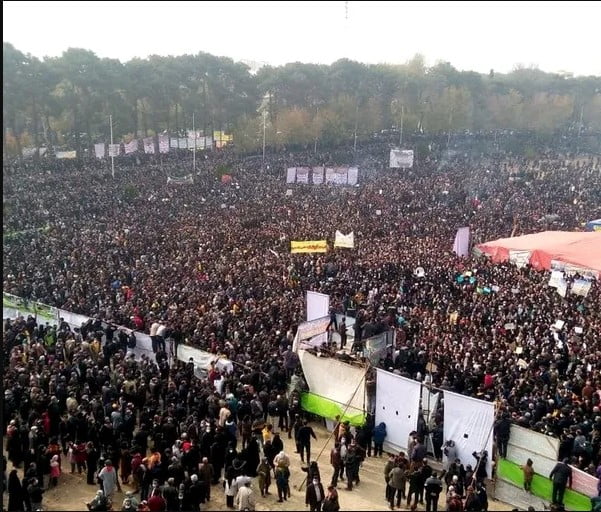
Thousands of farmers and their supporters gathered in the central Iranian city of Isfahan on Friday, state TV reported, in a major protest over water shortages in the drought-stricken region.

“Let Isfahan breathe again, revive Zayandeh Rud,” chanted some of the demonstrators in a video posted on social media as crowds gathered in the dry bed of the river where protesting farmers have set up a tent city. “Our children want water to provide food for your children,” read a sign carried by a woman.

In an unusual move, authorities allowed the protests to be held, and no arrests or violent incidents were reported.

Iran’s energy minister apologized for the water shortages. “I apologize to all of our dear farmers, and I feel ashamed for not being able to provide the water needed for their crops. With God’s help, I hope we can overcome these shortcomings in the next few months,” Ali Akbar Mehrabian told state TV.

Protesters complained state funds were being wasted overseas directly criticizing Tehran’s meddling in neighboring countries including Iraq, Yemen, and Syria. A video posted to social media showed a young boy giving a speech at the rally having his microphone confiscated after calling for the death of Iranian Supreme Leader Ayatollah Ali Khamenei.

The demonstrations began on Thursday when farmers marched with local politicians. As thousands joined them in protest, the demonstrations took on a more anti-regime tone. Local authorities responded by restricting data traffic to prevent demonstrators from having unlimited access to social media.

The farmers in Isfahan Province have for years protested the diversion of water from the Zayandeh Rud to supply other areas, leaving their farms dry and threatening their livelihoods. A pipeline carrying water to Yazd province has been repeatedly damaged, according to Iranian media.

In July, protests broke out over water shortages in the oil-producing southwestern province of Khuzestan, with the UN’s human rights chief criticizing the fatal shooting of protesters. Iran rejected the criticism.

Iran has blamed its worst drought in 50 years for the water shortages while critics also point to mismanagement.

The drought has forced Iran to import a record volume of wheat.

Source: Israel Hayom

Also Read: After 100 Days In Office, Raisi Asks Why Iran Faces An Economic Crisis


Iran: Prominent human rights defender Narges Mohammadi at risk of flogging after arrest

Amnesty International is calling for the immediate release of the prominent Iranian human rights defender Narges Mohammadi after she was arrested earlier this week and is now at imminent risk of being flogged in jail.

Mohammadi, vice president of the Centre for Human Rights Defenders in Iran, has been the subject of repeated persecution at the hands of the Iranian authorities.

She was arrested on 16 November by agents from Iran’s ministry of intelligence who, according to her husband, brutally beat Mohammadi before taking her to an unknown location.

The following day, Mohammadi called her family and informed them she was in Tehran’s Evin Prison and had been told she was to serve a two-and-a-half-year prison sentence.

In May this year, a court in Tehran sentenced the human rights activist to two-and-a-half years in jail and 80 lashes for charges that included “spreading propaganda against the system”. In September, Mohammadi received a summons to begin serving the sentence but did not respond as she considered the conviction unjust.

Her arrest on Tuesday occurred as she attended a memorial in the city of Karaj for Ebrahim Ketabdar, who was killed by the Iranian security forces during nationwide protests two years ago. Mohammadi has been vocal in her support of bereaved family members seeking truth and justice for their loved ones’ killings during the 2019 protests.

In 2016, Mohammadi was sentenced to 16 years in jail on charges solely related to her freedom of expression and assembly. Following global action, including by Amnesty, she was released in October 2020, yet since then the Iranian authorities have repeatedly harassed her.

Heba Morayef, Amnesty International’s Middle East and North Africa Director, said:

“Narges Mohammadi is a prisoner of conscience targeted solely for her peaceful human rights activities and is now at imminent risk of receiving 80 lashes.

“To arrest a human rights defender for calling for truth and justice on the two-year anniversary of the November 2019 protests – where hundreds of men, women and children were killed by Iranian security forces – is a callous act.

“For far too long, the Iranian authorities have subjected Narges Mohammadi to arbitrary detentions, unjust prosecutions, torture and other ill-treatment for her human rights work.

“Amnesty International urges the international community – including the United Nations and the European Union – to speak out about her case.

“We call on the Iranian authorities to immediately and unconditionally release her, quash her unjust sentence and ensure she is protected from all forms of torture and other ill-treatment, including floggings.”

Source: Amnesty International

Also Read: Iran releases human rights activist Narges Mohammadi after sentence cut

U.S. indicts two Iranian hackers over 2020 election disinformation campaign

0

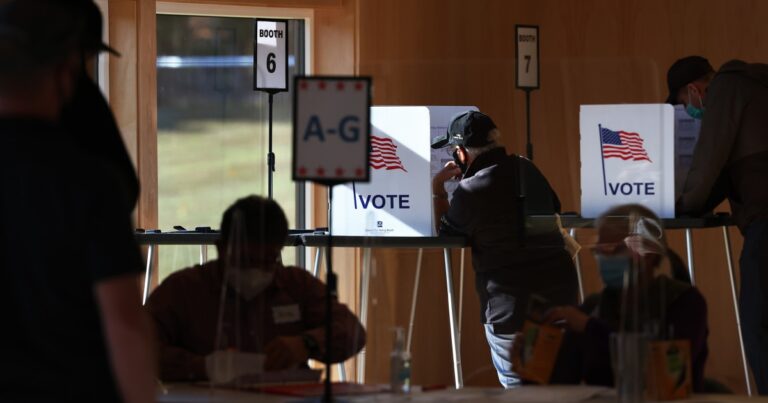
An indictment was unsealed in New York today charging two Iranian nationals for their involvement in a cyber-enabled campaign to intimidate and influence American voters, and otherwise undermine voter confidence and sow discord, in connection with the 2020 U.S. presidential election.

According to court documents, Seyyed Mohammad Hosein Musa Kazemi (سید محمد حسین موسی کاظمی), aka Mohammad Hosein Musa Kazem, aka Hosein Zamani, 24, and Sajjad Kashian (سجاد کاشیان), aka Kiarash Nabavi, 27, both of Iran, obtained confidential U.S. voter information from at least one state election website; sent threatening email messages to intimidate and interfere with voters; created and disseminated a video containing disinformation about purported election infrastructure vulnerabilities; attempted to access, without authorization, several states’ voting-related websites; and successfully gained unauthorized access to a U.S. media company’s computer network that, if not for successful FBI and victim company efforts to mitigate, would have provided the conspirators another vehicle to disseminate false claims after the election.

“This indictment details how two Iran-based actors waged a targeted, coordinated campaign to erode confidence in the integrity of the U.S. electoral system and to sow discord among Americans,” said Assistant Attorney General Matthew G. Olsen of the Justice Department’s National Security Division. “The allegations illustrate how foreign disinformation campaigns operate and seek to influence the American public. The Department is committed to exposing and disrupting malign foreign influence efforts using all available tools, including criminal charges.”

“As alleged, Kazemi and Kashian were part of a coordinated conspiracy in which Iranian hackers sought to undermine faith and confidence in the U.S. presidential election,” said U.S. Attorney Damian Williams for the Southern District of New York. “Working with others, Kazemi and Kashian accessed voter information from at least one state’s voter database, threatened U.S. voters via email, and even disseminated a fictitious video that purported to depict actors fabricating overseas ballots. The United States will never tolerate any foreign actors’ attempts to undermine our free and democratic elections. As a result of the charges unsealed today, and the concurrent efforts of our U.S. government partners, Kazemi and Kashian will forever look over their shoulders as we strive to bring them to justice.”

“The FBI remains committed to countering malicious cyber activity targeting our democratic process,” said Assistant Director Bryan Vorndran of the FBI’s Cyber Division. “Working rapidly with our private sector and U.S. government partners and ahead of the election, we were able to disrupt and mitigate this malicious activity – and then to enable today’s joint, sequenced operations against the adversary. Today’s announcement shows what we can accomplish as a community and a country when we work together, and the FBI will continue to do its part to keep our democracy safe.”

Source: The United States Department of Justice

Also Read: U.S. Blames Iran For Threatening Election Emails, Says Russia May Interfere Too

Death toll of Iranian terrorist designated IRGC’s warmongering in Yemen

0

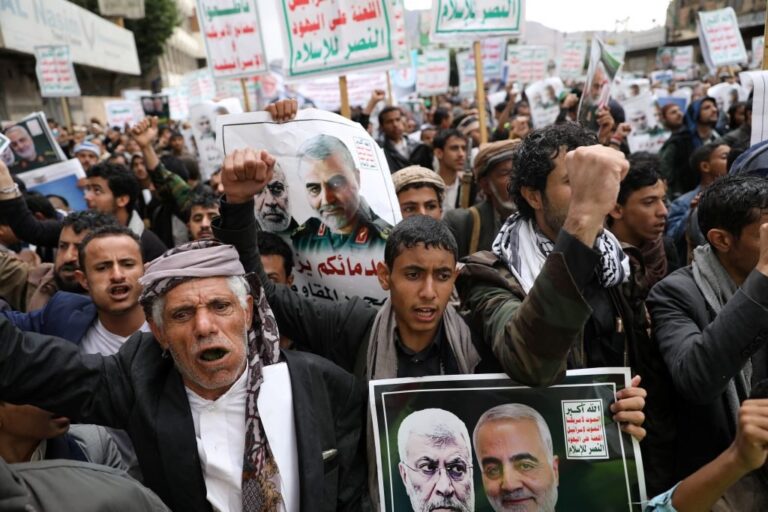
Nearly 15,000 Yemeni Iran-backed Houthi fighters, armed and supported by Iran’s terrorist designated Islamic Revolutionary Guard Corps (IRGC), have been killed near the strategic city of Marib since June, in a rare admission of their casualties during the seven-year war.

Yemeni Deputy Justice Minister Faisal al-Majidi said the presence of IRGC and other terrorist militias such as the Hezbollah in Yemen underscores their “dangerous role” in increasing the destructive capabilities of Houthi militias.

“The airstrikes launched by the military coalition and the battles have killed nearly 14,700 Houthis since mid-June near Marib,” an official at the Houthi-run defense ministry said on Thursday.

These casualties do not include the nearly 100 thousand civilians whose lives were lost as a result of Iran’s warmongering in Yemen.

Marib city is the internationally-recognized government’s last major stronghold in Yemen’s oil-rich north, where the government is trying to re-establish peace in Yemen and drive out IRGC forces and commanders who have been smuggling in weapons and funding militias to destabilize the country to establish Iranian hegemony.

The Iran-backed Houthi fighters began a major push to seize the city last year. Day after day, the danger of Houthi summer boot camps for children grows, according to the Yemeni government, which also warned against the Iran-backed militia exploiting tens of thousands of Yemeni minors for plotting future suicide attacks.

The battle was halted multiple times due to negotiations, but the rebels renewed their attacks in February, there was a major assault in June, and an intensified push since September.

The war has led to what the United Nations calls the world’s worst humanitarian crisis. Tens of thousands of people have died and millions have been displaced.

A smuggling network that generates tens of millions of dollars for Iran’s IRGC and the Houthis has been sanctioned this year, including 12 members.

Source: TRT World
Also read: Iran’s proxy militias in Iraq defying its terrorist designated IRGC

Iranian Terrorists Attempt To Appeal Their Convictions at a Belgian Court

0

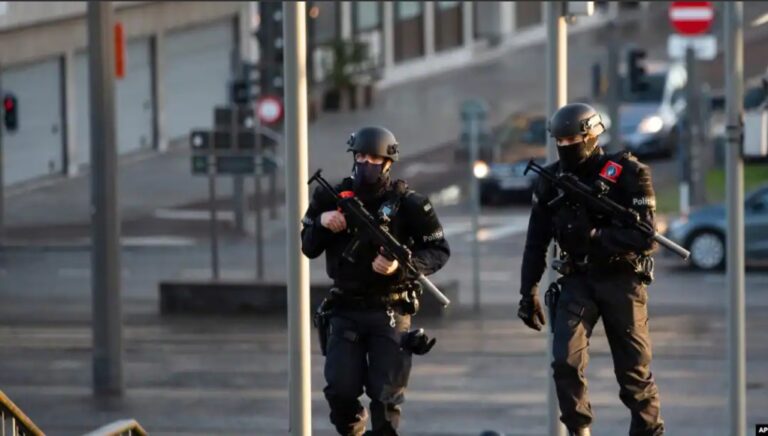
A Belgian court is currently considering an appeal for three individuals who were convicted earlier this year for their roles during a failed terrorist bomb plot on behalf of the Iranian regime. The three men who have Iranian and Belgian dual citizenship were sentenced to between 15 and 18 years in prison, while the mastermind behind the plot, Iranian regime diplomat Assadollah Assadi was sentenced to 20 years behind bars.

During the convictions of the men in February, the National Council of Resistance of Iran (NCRI) asked the European Union to act and extend the accountability of the terror plot in 2018 beyond just the four individuals. The target of the plot was a political rally in France that had been organized by the NCRI.

Attendance at that rally was estimated at around 100,000, including dozens of European and American political dignitaries. The primary target of Assadi’s plot was NCRI’s President-elect Maryam Rajavi.

According to experts, if the bomb had been detonated at the rally, hundreds of people in attendance would have been killed immediately, with the death toll possibly increasing due to a stampede from mass panic.

The bombs were fortunately discovered in a vehicle belonging to two of the imprisoned men, Amir Saadouni and Nasimeh Naami, and were detonated by a Belgian bomb squad, which slightly wounded one police officer despite the area being cordoned off to a safe distance.

The explosives were exported out of Iran on a flight to Austria, contained in Assadi’s diplomat pouch to avoid security screenings. Once in Austria, the explosives were then transported to the French border by car. Saadouni and Nasimeh were arrested at the French border, while Assadi was apprehended in Germany while traveling back to the Iranian embassy in Austria where he was stationed.

It is now understood that while technically employed as the third counselor at that embassy, Assadi was operating as the European bureau chief for the Iranian Ministry of Intelligence and Security.

Source: Iran Focus

Also Read: Belgian Court Hands Iranian Diplomat 20 Years for Terrorism Plot