Home Blog Page 624

Imprisoned Teacher in Death Row Ward at Vakilabad Prison

26th May 2011


A human rights activist in the city of Mashad told the International Campaign for Human Rights in Iran that Hashem Khastar, a retired teacher from Mashad who was imprisoned inside Security-Political Ward 6/1 of Mashad’s Vakilabad Prison, has been transferred to Hall 102 of Ward 5 in that prison. Ward 5 of Vakilabad Prison houses convicts who have committed murder and drug-related crimes. According to requirements for separating prisoners within prisons, prisoners of conscience and political prisoners should not be kept inside this ward.

“Up until last week, Hashem Khastar was kept together with 40 prisoners of conscience, but he was recently moved to Hall 102 of Ward 5 inside Vakilabad prison. Ward 5 of Mashad’s Vakilabad Prison contains halls number 101, 102, 103, 104, and 105, where prisoners convicted of drug-related crimes and murder, most of whom have been sentenced to death, are kept,” the human rights activist told the Campaign. “Considering Mr. Khastar’s age, the illnesses he developed in prison over the past two years, and the horrific conditions of Ward 5′s Hall 102, anything could happen to him. At this time, the responsibility for Mr. Khastar’s life lies with the Mashad Prosecutor and other judicial authorities who have ordered his transfer to the fearsome Ward 5′s Hall 102,” said the activist.

“Prison authorities said that the reason for his transfer to Ward 5′s Hall 102 is the letters he has recently published from inside the prison, and the transfer is aimed at punishing him. One of the authorities has said that since he writes so much about the prison in his letters, he needs to find out what’s happening in Ward 5.”

“Detaining political prisoners next to regular criminals and dangerous convicts is against the procedures of the Prisons Organization. This illegal measure is taken to break Mr. Khastar’s spirit, as he has thus far resisted increasing psychological and physical pressure by Mashad’s security and judicial organizations,” he continued.

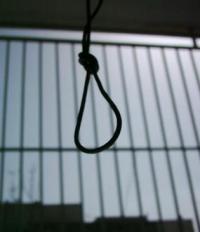
“This ward is one of the most horrible wards of Vakilabad and all prisons nationwide, which due to its weekly group executions, has a most regrettable situation from the standpoint of prisoner morale. Inside Ward 5 of Vakilabad Prison, death reigns. Each week, at least 10 prisoners are hanged and most of them come from the different halls inside Ward 5. In this regard, Ward 5 of Mashad’s Vakilabad Prison is comparable to Ward 2 of Ghezel Hessar Prison in Karaj. It is said that there are nearly 2,000 death row inmates inside Ward 5 of Vakilabad Prison. At this time, in Hall 102 where Mr. Khastar is currently kept, there are more than 700 prisoners, which is four times its capacity. In the summer of 2009, there were 370 prisoners in this Hall, and the number has risen to 700 in less than two years. Most of the inmates in this Hall are sentenced to death.”

“The room capacity of where Mr. Khastar is kept is only 15, but currently 60 people are kept in that room. According to Mr. Khastar, because of the large number of prisoners, there are a lot of problems for using the toilets and the kitchen. Sometimes there are as many as 100 people waiting in line to use the toilet and the sink,” he added.

“Presently, Mr. Khastar shares a bed with another prisoner. Due to lack of space, many other prisoners sleep on the floor, in the hallways, in the prayer room, on staircase landings, and even in the toilets. The hygienic conditions of this ward are a lot worse than all the other wards at Vakilabad Prison. Large quantities of drugs are used in this ward and there is a high rate of sexual violation. Because dangerous criminals are kept in this ward, the statistics for murder, fights, and rape in this ward are very high. The air in the ward is full cigarette smoke and various kinds of drugs.”


Source


Political prisoner Saied Masouri in critical conditions

May 26, 2011

The political prisoner Dr. Saied Masouri is suffering from acute neck pain and serious kidney problems, but the interrogators of the Ministry of Intelligence (MOI) prevent him from receiving any treatments, website of Human Rights and Democracy Activists reported on May 22.


For more than six months, Saied Masouri has been suffering from acute neck ache and serious kidney problems, as well as painful gum disease. Recently, his illnesses have worsened with non-stop acute pain to such an unbearable degree that it is impossible for him to sit still. He has repeatedly asked to receive treatments for his physical conditions, but they deny him any treatments. MOI interrogators are the main reason for preventing Saied’s treatment. MOI interrogators systematically use political prisoners’ physical illnesses as a tool to pressure and torture the political prisoners.


Dr. Saied Masouri was arrested in 2000 by the MOI agents and was held in solitary confinements for several years in Dezful and Ahvaz Prisons as well as in the infamous section 209 of Evin Prison. During these years, he was subjected to severe physical and psychological torture. In 2002, he was tried and sentenced to death, but under international pressure, his sentence was commuted to life imprisonment. He is currently in the hall 12 of section 4 of Karaj Gohardasht Prison under critical physical conditions without any treatments whatsoever.


Source

The Story of the Arrest of Baha’i Citizen Amanollah Mostaghim

May 26, 2011

RAHANA – Shiraz Intelligence agents raided the homes of several Baha’i families located in a building, arrested the residents of all the 3 units and searched the location.

According to the Human Rights House of Iran, until 2 hours after the raid, none of the individuals were allowed to talk. They then took Amanollah Mostaghim from his house to his workplace and confiscated 12 bags of his personal belongings and books.

Mostaghim has undergone a heart surgery recently and is in poor physical condition.

According to the Human Rights House of Iran, confirmed arrests include Shaheen Negari, Ramin Zibai, Kamran Mortezai, Favad Moghaddam, Vahid Mokhtari, Mahmood Badavam, Afrooz Farmanbordari and Soheil Ghanbari.


Source

Amnesty International and International Commission of Jurists Condemn Persecution of Iranian Lawyers

WEDNESDAY, 25 MAY 2011

Amnesty International and International Commission of Jurists Joint Statement

Human Rights organizations condemn continued persecution campaign against lawyers in Iran

Amnesty International and the International Commission of Jurists (ICJ) today condemned the ongoing arrests and imprisonment of several prominent lawyers in Iran which they see as part of an orchestrated attempt by the Iranian authorities to repress dissent in the country.

The two organizations are calling for the immediate and unconditional release of lawyers Nasrin Sotoudeh, Mohammad Seyfzadeh, Maedeh Ghaderi, and Ghasem Sholeh Saadi, who are detained arbitrarily in violation of Iran’s obligations under international law. They are prisoners of conscience, held solely for the peaceful exercise of their rights to freedom of expression and association, or for their work as defence lawyers.

The two organizations are also calling for the conviction of Khalil Bahramian, a lawyer sentenced for publicly expressing his views about flaws in the judicial process in the cases of some of his clients who were executed, to be overturned, as he would be a prisoner of conscience if imprisoned.

In addition, the organizations are seeking clarification of the current legal status of Javid Houtan Kiyan, a lawyer who represented Sakineh Mohammadi Ashtiani, a woman sentenced to death by stoning for “adultery while married”, including any charges brought against him and any sentences imposed. If – as appears – he is held solely for the peaceful exercise of his right to freedom of expression, including in connection with his work as a defence lawyer on behalf of Sakineh Mohammadi Ashtiani, he should be released immediately and unconditionally. The allegations that he has been tortured while in detention should be investigated immediately and anyone found responsible for abuses brought to justice.

The recent targeting of lawyers, notably those who defend political prisoners and prisoners facing the death penalty, is part of the Iranian government’s ongoing crackdown on civil society following the post-June 2009 election unrest in the country. By targeting defence lawyers, the Iranian authorities are limiting access to competent legal representation, a basic right and important fair trial guarantee.

The two organizations welcome the recent release on 19 April 2011 of prisoner of conscience Mohammad Oliyaeifard, a defence lawyers and a board member of the Committee for the Defence of Political Prisoners in Iran, a human rights organization, after serving the complete one year prison sentence imposed for speaking out against the execution of one of his clients during interviews with international media. His client, juvenile offender Behnoud Shojaee, had been hanged for a murder he committed when he was 17 years old. Mohammad Oliyaeifard has also defended many prisoners of conscience, including independent trade unionists, as well as juvenile offenders.

However, Amnesty International and the ICJ condemn the increasing number of lawyers who face or who have been convicted of vaguely worded charges stemming from their peaceful exercise of their rights to freedom of expression and association and their work as lawyers.

These lawyers are:

Nasrin Sotoudeh, the defence lawyer of Mohammad Oliyaeifard, is herself currently imprisoned in Tehran’s Evin Prison. She was arrested on 4 September 2010 after she presented herself in compliance with a court summons. A mother of two young children, Nasrin Sotoudeh was sentenced on 9 January 2011 to 10 years on the charge of “acting against national security, including membership of the Centre for Human Rights Defenders (CHRD)” (a human rights organization forcibly closed by the authorities) and one year for “propaganda against the system” and has been banned from practising law and leaving the country for 20 years.

Another prominent lawyer, Mohammad Seyfzadeh, is believed to remain held by Ministry of Intelligence officials in a detention facility in Oroumieh in north-west Iran. He was arrested on new charges on 11 April 2011 for allegedly attempting to leave the country illegally, and was held in conditions amounting to enforced disappearance for around two week, as he was not permitted to contact anyone until 21 April when he contacted his family. On 23 April 2011 Mohammad Seyfzadeh’s lawyer and son attempted to visit him in Oroumieh, but only his son was permitted a visit, lasting approximately two minutes. During this visit Mohammad Seyfzadeh is reported to have been limping and had lost weight. Mohammad Seyfzadeh had previously been sentenced on 30 October 2010 to nine years’ imprisonment for “forming an association… whose aim is to harm national security” and “being a member of an association whose aim is to harm national security” in relation to the Centre for Human Rights Defenders CHRD, a human rights organization he co-founded with Nobel Peace Laureate Shirin Ebadi and others. He was also sentenced to a 10-year ban on practising law, despite the fact that only the Disciplinary Court for Lawyers may impose such professional bans, This sentence remains under review by Branch 54 of the Tehran Appeals Court. He was banned from leaving the country in 2009.

Maedeh Ghaderi, a member of Iran’s Kurdish minority, is a lawyer based in Mashhad, north-east Iran. She was arrested on or about 2 March 2011. Maedeh Ghaderi had been representing her husband, Ali Parandian, a member of the opposition Green Movement who was arrested in January 2011. It is not known whether Ali Parandian has had access to any other lawyer since his wife’s arrest. She went on hunger strike in mid-April 2011 to protest at her continuing detention without charge or trial, after which unconfirmed reports suggested that she and her husband are under investigation by Branch 904 of the Revolutionary Court in Mashhad on suspicion of contacts with the Party For Free Life of Kurdistan, a Kurdish armed group known by its Kurdish acronym PJAK. PJAK was formed in 2004, and carried out armed attacks against Iranian security forces, but declared a unilateral ceasefire in 2009, although it still engages in armed clashes with security forces in what it terms “self-defence”.

University professor, lawyer, and former Member of Parliament Ghasem Sholeh Saadi was arrested on 3 April 2011 at Tehran’s Mehrabad Airport after a flight from Shiraz and taken to Tehran’s Evin Prison. Ghasem Sholeh Saadi had sought to run as a candidate for president during the June 2009 elections, but was not approved by the Council of Guardians, which screens candidates for popular election under discriminatory selection procedures. Ghasem Sholeh Saadi had previously been detained for 36 days at Evin Prison in Tehran in 2003 following a critical open letter he wrote to the Supreme Leader Ayatollah Sayed ‘Ali Khamenei in 2002. Amnesty International and the ICJ understand that Ghasem Sholeh Saadi was sentenced to one-and-a-half years’ imprisonment in June 2006 on charges stemming from this letter, which was upheld on appeal, and then overturned by the Head of the Judiciary, who sent the case for retrial, although this is not known to have taken place. According to reports, Ghasem Sholeh Saadi was nevertheless told on arrest that this was the reason for his detention. After his arrest, Ghasem Sholeh Saadi was also informed that a new one-year sentence had been passed against him, along with a 10-year ban on teaching and a 10-year ban on practising law, apparently imposed for interviews he had given to foreign media.

Khalil Bahramian, who has represented many political prisoners, including some on death row – such as Sherko Moarefi, a member of Iran’s Kurdish minority who is at risk of imminent execution – was sentenced in February 2011 to 18 months in prison and banned from the practice of law for 10 years by Branch 28 of Tehran’s Revolutionary Court on charges of “propaganda against the system” and “insulting the Head of the Judiciary”. Khalil Bahramian has been practising law in Iran for 46 years. He is currently free pending appeal against this sentence.

Javid Houtan Kiyan, a member of Iran’s Azerbaijani minority, is a lawyer based in Tabriz, north-west Iran, who represented Sakineh Mohammadi Ashtiani, a woman sentenced to death by stoning for “adultery while married”. He was arrested on 10 October 2010 in his office along with Sajjad Qaderzadeh, Sakineh Mohammadi Ashtiani’s son and two German journalists who were conducting an interview with them about her case. Sajjad Qaderzadeh was released on bail in December 2010, and the German journalists were released in February 2011 after being sentenced to a fine. In March 2011, a letter attributed to Javid Houtan Kiyan alleged that he was tortured while held in solitary confinement in Section 209 of Evin Prison from 11 October to 12 December 2010. Since 1 November 2010, when a prosecutor said that he was held on suspicion of having three forged or duplicate ID cards, the Iranian authorities have given no information concerning his legal situation. Other sources have since suggested that he has been sentenced to between one to 11 years in prison on various charges, and may still be facing other charges. Most – if not all – of these appear to relate to his defence of Sakineh Mohammadi Ashtiani.

Principle 16 of the UN Basic Principles on the Role of Lawyers provides that lawyers must be allowed to carry out their work “without intimidation, hindrance, harassment or improper interference.” Principle 18 states that lawyers “shall not be identified with their clients or their clients’ causes as a result of discharging their functions”. In addition, Principle 25 affirms the right of lawyers to freedom of expression, also provided for in Article 19 of the International Covenant on Civil and Political Rights, which includes “the right to take part in public discussion of matters concerning the law, the administration of justice and the promotion and protection of human rights”.

The UN Special Rapporteur on the Independence of Lawyers and Judges has not been permitted to visit the country despite the Standing Invitation issued by Iran to all UN human rights mechanisms in 2002.


Source

 

Rights group says secret hangings continue in Iranian prison

Wed, 05/25/2011

The International Campaign for Human Rights in Iran says 70 people have been executed at Vakilabad Prison in Mashhad in the past two and half months.

According to the reports the prisoners, charged with drug crimes, have been executed en masse and in secret.

Since last September there have been several reports of secret executions at Vakilabad Prison in the northeastern city of Mashhad.

The report adds that there is no prior notification to prisoners or defence lawyers when the Supreme Court has approved an execution.

There has been a surge in the number of executions in Iran in the past months.

Ban Ki-moon, the UN Secretary General, has expressed grave concern over the rising number of hangings in Iran and noted the disturbing nature of the news coming from Vakilabad Prison.

Iran is second only to China in the number of executions per year, but international human rights organizations maintain that relative to their populations, Iran could actually be considered the country with the highest annual execution rate.


Source


Mehdi Karroubi’s Daughter: My Father Still Under House Arrest and News Reporting His Release Are False

May 25, 2011

(JARAS): 100 days after Mehdi Karroubi was placed under house arrest, one his children, in an interview with his personal website, disclosed all information about her father’s condition, emphasizing that he is still under house arrest and rejecting all news about his release as false.

This member of the Karroubi family said that, “As a response to the false news reporting of Mr. Karroubi’s release from house arrest, and for our friends and admirers who have persistently attempted to make contact, we are announcing that, like before, he is still under house arrest. 100 days into his house arrest, Mr. Karroubi hasn’t yet left his house even once. He hasn’t received permission to use the phone to call his children, daughters-in-law, and grandchildren.” At the end of the interview, Mehdi Karroubi’s daughter added, “Of course I hope that such illegal jurisdiction will end soon.”

Mehdi Karroubi’s wife Fatemeh was granted medical release after enduring 71 days of house arrest. The house arrest began February 13, 2011.


Zahra Mohammadi Arrested Upon Arrival at Tehran’s Imam Khomeini International Airport

May 25, 2011

Based on news sources, Seyyedeh Zahra (Sanaz) Mohammadi was arrested by security forces upon her arrival in Iran. According to Jaras News, on Tuesday, May 24, 2011, Sanaz Mohammadi was arrested by officers at Tehran’s international airport and taken to an unknown location. Sanaz Mohammadi was a supporter of the Green Movement who went to the United States after the elections in order to continue her studies. She also had some political problems in Iran as well.

There is no information available about the real cause of this student’s arrest, the place where she is detained, or her physical and mental condition.


Increased pressure on Iranian political prisoners

WEDNESDAY, 25 MAY 2011

Radiozamaneh – Twenty-six Iranian political prisoners are reportedly under pressure from the Revolutionary Guards and the Tehran Prosecutor’s office to withdraw an official complaint they have filed against their interrogators.

Some of the Iranian political prisoners

The Kaleme opposition website reports that the 26 prisoners have been called on to deny the allegations recorded in their letter of complaint or else they will face “harsh consequences.” The complaint alleges torture and abuse by their interrogators.

Several senior opposition figures and reformists detained after the controversial 2009 presidential elections and the disputed victory of Mahmoud Ahmadinejad are among those who signed the complaint.

To quash the widespread protests that followed the 2009 presidential election, the authorities arrested dozens of political activists and thousands of protesting citizens.

Chief opposition figures mainly have been accused of “propaganda against the regime and activities against national security.”

Kaleme reports that several of the high-profile prisoners have been threatened with further charges and the loss of all their privileges inside prison.

In a letter, the prisoners indicate that their filing of the letter has led to further torture, the most common form being solitary confinement.

They add that prison authorities are using torture and pressure to force them to sign false confessions.

“Without exception, we have all been subjected to immoral and un-Islamic behaviour by the interrogators,” the prisoners write.

The Iranian judiciary has denied any torture of the prisoners.


Source

U.S. slaps sanctions on companies working with Iran

0

May 25, 2011

Washington (CNN) — The United States is imposing sanctions against seven companies for working with Iran in the energy sector, part of an effort to suppress Tehran’s nuclear program, the State Department said Tuesday.

The companies in Iran, the United Arab Emirates, Israel, Monaco and Venezuela’s state oil company “engaged in activities related to the supply of refined petroleum products in Iran,” Deputy Secretary of State James Steinberg announced.

“Iran uses revenues from its energy sector to fund its nuclear program as well as mask procurement of dual-use items,” Steinberg said.

Different sanctions have been selected for each company.

“In some cases our intent has been to shut down the activities of target firms. In others our intent is dissuasive,” Steinberg said. “In all cases we’ve examined transactions in detail and have made judgments about the likely impact of our actions on the global energy market.”

For example, Venezuela’s state oil company, Petroleos de Venezuela, or PDVSA, will be cut off from access to U.S. government contracts, U.S. import-export financing and licenses for controlled technologies, but the sanctions will not prevent the sale of oil to the U.S. or other markets, according to Steinberg. The sanctions also do not affect any of PDVSA’s subsidiaries, such as Citgo.

The move was slammed by Venezuelan lawmaker Freddy Bernal, a member of the United Socialist Party of Venezuela, who said the decision to sanction the state oil company is an attack against the government of Venezuelan President Hugo Chavez.

“Once again, Hillary Clinton — acting as the head of the colonies in Latin America — seeks to impose sanctions against PDVSA for alleged ties to an Iranian nuclear program. I’ve never heard anything more ridiculous. For her to involve Venezuela in a nuclear program is ridiculous,” he said.

A former director at PDVSA, Jose Toro Hardy, said the sanctions should not impact oil exports to the United States, but that they are sending a strong message of fear to financial markets regardless.

The announcement Tuesday brings the total number of companies sanctioned by the Obama administration under the official Iran Sanctions Act to nine. The administration is the first to impose sanctions under the act, which has been on the books since 1996, according to a senior administration official who briefed reporters in a conference call under the agreement that the official’s name not be used.

In a separate action Tuesday, the administration also imposed sanctions on 16 foreign companies and individuals under the Iran, North Korea and Syria Nonproliferation Act for their activities in support of weapons of mass destruction or missile programs primarily in Iran. Chinese, Belarussian, Iranian, North Korean, Syrian and Venezuelan companies and individuals were involved.

The policies have already had a significant impact on Iran’s energy sector, and Tuesday’s sanctions on the additional companies will send a strong signal to companies around the world about the risk of doing business with Iran, according to the senior official.

“Five major oil companies have committed to terminate their involvement in Iran,” the official said. “Major suppliers of refined petroleum and energy traders have stopped sales of refined product to Iran. Jet fuel suppliers are now refusing to supply jet fuel to Iran Air at most destinations in Europe and Asia where Iran Air flies.”

The official did concede, however, that for most of the entities sanctioned Tuesday “very few, if any” currently have commercial dealings with the United States.

“So the immediate practical impact of the sanctions will be minimal,” the official said.


Source

US senators introduce Iran sanctions bill

May 25, 2011

WASHINGTON (AFP) — A nuclear-armed Iran would be a nightmare scenario marking the death knell of the Arab-Israeli peace process and global non-proliferation efforts, experts said Monday as US lawmakers sought tighter sanctions.

As the European Union beefed up its own sanctions regime on Tehran, US Senator Mark Kirk and others unveiled a bill that would boost enforcement of existing sanctions, bring fresh pressure on Iran’s oil sector and military, and shine a spotlight on the regime’s poor human rights record.

The bilateral legislation, called the Iran, North Korea and Syria Sanctions Consolidation Act of 2011, aims to increase pressure on companies still doing business with Iran’s energy industry, notably Chinese firms that are on existing US lists of violators but have not been sanctioned.


“What we ought to do is enforce the sanctions that are already on the books,” Kirk told the annual meeting of the powerful pro-Israel lobby AIPAC.

The bill would expand an asset freeze on companies selling conventional military goods or technology to Iran, North Korea or Syria, and would also “put forward dramatically tougher sanctions against Iran’s Republican Guard,” he added.

The sanctions, which need congressional approval, would also target Iranian banks involved in such sales.

Brad Gordon, a former CIA analyst on Iran and now the director of policy and government affairs for the American Israel Public Affairs Committee, said Washington must come down harder on violators, pointing to a steady rise in refined petroleum deliveries to Iran in recent months after a sharp drop last year following introduction of sanctions by US President Barack Obama.

“If you don’t pull the trigger on a sanction that’s meaningful, eventually companies get the notion that we’re not serious about this and begin to go back in,” Gordon told the AIPAC delegates.

New sanctions, he said, “allows us to refocus attention on Iran” in the midst of dramatic changes in the Middle East, including the sweeping away of dictatorships in Tunisia and Egypt, civil war in Libya and unrest in Syria and Yemen that have dominated foreign policy debate.

“Tehran acquiring the bomb,” he said, “is very likely the death knell of the peace process,” with Israel hamstrung on making concessions on the West Bank, “knowing that Hamas backed by Iranian nuclear weapons could take over.”

He said a nuclear arms race in the Middle East would mean 60 years of US efforts to contain nuclear weapons “will be in vain,” and the chances of nuclear terror would increase “exponentially.”

Former Israeli deputy national security adviser Chuck Freilich said that with some dozen Arab countries already announcing “civil” nuclear programs of their own, “a multi-nuclear Middle East is a nightmare which the world does not know how to deal with.”

Unlike the US-Soviet confrontation, a possible Iran-Israel face-off and a nuclear Middle East “doesn’t threaten the very future of humanity,” Freilich said.


Source