Home Blog Page 660

Ebadi Calls for March Demanding Gender Equality; Urges Constitutional Change

3rd March 2011

Shirin Ebadi, the 2003 Nobel Peace Laureate and Director of the Defenders of Human Rights Center, has called on Iranians to hold public rallies on the occasion of International Women’s Day, 8 March, demanding reform of constitutional laws to achieve gender equality. She described her call as the beginning of a civil rights movement and not a political demand.

In her statement, issued on 2 March 2011, she said: “March 8th 2011 (the International Women’s Day) is a special day. On this day, besides the equal rights of women, the democratic aspirations of the Iranian people will also be demanded. We, as women though, should be vigilant, ensuring that in the midst of political upheaval and political developments, we do not forget about our long time demand for ‘equal rights.’ On this day, shoulder to shoulder with our brothers, we will come to the streets to support the popular and broad democratic demands, because achieving ‘equal rights’ is possible only if voiced in a democratic system. But, we must not allow anyone to disregard our demands under the auspices of preventing crisis or avoiding divisiveness.”

She further noted that, “Thirty-two years ago on March 8, International Women’s Day, a statement broadcast on national television, stripped women employed by the government of one of their most basic rights–the freedom to choose their own dress. Since then and incrementally the identity and the character of the Iranian woman has become the target of attacks by men who didn’t even respect the rights of their mothers. Those who viewed themselves more worthy than even their mothers, shamelessly wrote laws which valued women as half that of men. Laws that proclaimed that ‘the Dieh or the blood money of women was valued at half that of men.’ Ungrateful politicians had forgotten women’s struggle in ensuring the victory of the Revolution and through their laws they stated that ‘the testimony of two women was to be equal to the testimony of one man in court.’”

Calling on Iranian women, she said, “Dear Sisters, for years women’s demands for justice have been silenced under a variety of pretexts–on occasion with the excuse of misuse by those opposing the Revolution, other times blaming the war with Iraq, or for the preservation of national security or with the excuse of waging war against world arrogance. More painful still was the fact that not only the political elite, but many intellectuals contributed to the effort which sought to forget women. Over the past thirty-two years some fought to gain power and some fought to prove their ideology. As such, women’s demands for justice were not acknowledged in a worthy manner.”

“Those brave women who spoke of equal rights and called for equality, were met with batons and had lashings inflicted upon them by the defenders of the Regime. Some found themselves imprisoned and some were even executed. Eventually though, when someday we celebrate the liberty of humans and not just that of men, the history that our children will write will indeed be different…Iranian women are not starved for political power nor are they demanding decadence. They are simply weary of enduring more cruelty and disparagement. They are in search of justice and equality,” Ebadi concluded.

Source

Death threats for Iranian journalist

0

03 March 2011

Oxford Mail/2011-03-03 – An Iranian journalist who fled to Oxfordshire 18 months ago has received two death threats.

The first came last Monday when she received a phone call from a man she believed was in Iran.

She said: “The caller said: ‘We are going to kill you and we don’t care where you live; don’t think you live in a safe place. We are going to kill you in a way no one will find out’.”

She added: “It’s scary because I’m a single mum. It’s intimidating and I feel very insecure.

“I believe that they don’t want to hurt me, they just want to stop me doing what I’m doing.”

A day later she received an email saying she would ‘fall on her cross soon’. It also made sexual threats. She believes the sender was European because of the language used.

The threats came days after the publication of an interview she conducted with Iranian presidential challenger Mehdi Karroub, who is under house arrest.

The piece was published on an American political website called enduringamerica.com.

The 34-year-old, who would not reveal her address for fear of being traced, said she was considered a dangerous political activist and troublemaker in her homeland.

State television IRIB (Islamic Republic of Iran Broadcasting) branded her an “ugly duckling” and alleged she was supported by western governments to encourage Iranian dissent, she said.

Masih Alinejad, 34, who has been critical of her country’s regime, said she had been advised by police to move house and change her movements following two threats last week.

The first came last Monday when she received a phone call from a man she believed was in Iran.

She said: “The caller said: ‘We are going to kill you and we don’t care where you live; don’t think you live in a safe place. We are going to kill you in a way no one will find out’.”

She added: “It’s scary because I’m a single mum. It’s intimidating and I feel very insecure.

“I believe that they don’t want to hurt me, they just want to stop me doing what I’m doing.”

A day later she received an email saying she would ‘fall on her cross soon’. It also made sexual threats. She believes the sender was European because of the language used.

The threats came days after the publication of an interview she conducted with Iranian presidential challenger Mehdi Karroub, who is under house arrest.

The piece was published on an American political website called enduringamerica.com.

The 34-year-old, who would not reveal her address for fear of being traced, said she was considered a dangerous political activist and troublemaker in her homeland.

State television IRIB (Islamic Republic of Iran Broadcasting) branded her an “ugly duckling” and alleged she was supported by western governments to encourage Iranian dissent, she said.

Earlier this month, Iranian president Mahmoud Ahmadinejad vowed to punish protest organisers after thousands took to the streets for a banned rally which led to clashes with security forces.

Two people were killed and dozens were injured.

Last night, Miss Alinejad, who has a 15-year-old son, said she was living in fear, but was determined to continue reporting what she said was “the truth” about events in her home country.

She said British police were trying to trace the email and phone calls, and had fitted her house with a panic alarm.

Miss Alinejad said she was forced to flee after the 2009 presidential elections when her coverage in reformist newspaper Etemad-e Melli saw her intimidated by state supporters.

Her car was vandalised and her press card crushed beneath her car wheel as a threat.

She said: “I can’t say that I’m not scared, but it has given me more courage to carry on doing what I’m doing. I have spent all my life reporting on the lack of security of others and now I am a victim myself I feel people should know.”

Police spokesman Christopher Kearney declined to comment.

Source

Iran executes at least 20 people in three days

March 3, 2011

Iran Human Rights According to different reports from Iran, at least 20 people may have been executed during the last three days. All those executed have been charged with drug trafficking by the Iranian authorities.

No independent sources have confirmed the charges.

Seven people were executed in the Kerman province:

Seven people were hanged in the towns of Jiroft and Bam in the Kerman province, south east of Iran, reported the official web site of the Iranian judiciary yesterday March 1. According to this report five of the executions took place in the prison of Jiroft and two in the prison of Bam. Those who were executed were identified as: “Mohammad Nabi N.” convicted of trafficking of 60 kilos of morphine, “Mehdi S.” for keeping and carrying 8 kilos and 145 grams of crack, “Ali Bakhsh S.” for keeping, carrying and selling 50 kilos opium, “Hamidreza D.” for carrying 31 kilos and 250 grams of heroin, “Sohrab N” for carrying 2 180 grams of heroin, “Malek N.” for keeping 900 grams of crack and “Saeed M” for participation in trafficking of 6 kilos morphine, 5 kilos heroin and 23 kilos of crack.

“Malek N” and “Saeed M” were hanged in the prison of Bam while the other five were hanged in the prison of Jiroft.

Three people were executed in Shiraz:

According to the official site of the Iranian judiciary in Shiraz, three people were hanged in the Adelabad prison of Shiraz. According to this report that was published yesterday, “A. A.”, “H. R.” and “S. K.” were convicted of “armed” drug trafficking of heroin and opium.

According to the same website, another person identified as “M. M.” was lashed 70 times in the “Khomeini square” of Lamerd , in the Fars province. He was convicted of stealing animals and sentenced to three years in prison and 70 lashes.

Execution of 8-11 people in Orumiyeh:

According to reports from unofficial sources, between 8 to 11 people may have been executed in the prison od Oroumieh, north-west of Iran. According to the Kurdish news agency “Mokarian”, eight people have been execued in Oroumieh during the past days. However, HRANA, reported that nine people were executed in this prison on Monday Februart 28th. According to this report 7 of those executed were Kurdish prisoners and two of them were Azari. Two of the executed were women according to the report. The campaign for the rights of the “ethnic minority” prisoners reported that 10 people were executed in the prison of Oroumieh, Three of them were identified as “Hamid Bahadori”, “Seyad Ansari” and “Behzad Honareh”. Another unconfirmed report said that 11 people have been executed in the prison of Orumiyeh on Sunday. According to these reports, all of those executed in Oroumieh, were convicted of drug related charges.

Official Iranian sources haven’t confirmed Orumiyeh’s executions.

According to the IHR’s annual report on the death penalty in Iran in 2010, at least 546 people were executed in 2010 in Iran. According to this report there are more than 200 cases of unconfirmed executions in addition to the 546, that haven’t been included among in the annual report.

Mahmood Amiry-Moghaddam, the spokesperson of IHR, condemned these executions and said:” This is a regime which is uses execution as a tool to extend its survival”.

Source

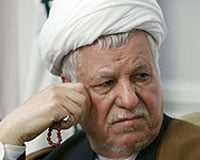
Rafsanjani warned about losing other posts

0

March 3, 2011

Several members of the Iranian regime’s ruling faction have warned former mullahs’ president Ali Akbar Hashemi Rafsanjani in a meeting that he may not only be removed from his post at the regime’s Assembly of Experts but also from additional organs.

Khabar Online, a website close to the regime’s Majlis (Parliament) Speaker, Ali Larijani, wrote on Sunday that four people close to the mullahs’ Supreme Leader Ali Khamenei met with Rafsanjani expressing concerns about his “continued silence” about the “sedition” of anti-regime protests, especially on February 14.

The four were Asadollah Badamchian, Hassan Ghafourifard, Mohammad Nabi Habibi, and Abolfazl Tavakkoli Bina.

According to Khabar Online, one of them told Rafsanjani that his silence would lead to his “ouster as the head of the Assembly of Experts and probably other positions.”

The state-run Khabar Online also said Rafsanjani gave an “impassioned speech,” saying, “I personally love Mr. Khamenei and will never trade his friendship with anything else.”

Khamenei “is unique and exceptional as a leader,” Rafsanjani was quoted as saying. “I believe that if the position of the Supreme Leader were to be harmed in this country, the enemy will deal blows to the establishment.”

Another state-run website, Jahan News, said Rafsanjani’s remarks were “tellingly close” to the mullahs’ Assembly of Experts elections and added that he seeks to retain his post as chairman.

Issuing a veiled word of warning, the website said, “Of course, the esteemed chairman will, God willing, always be a supporter of the revolution. But, being forced to play some other games and exercising silence will not be without costs to him.”

“No one will then be able to back him up by announcing a position on his behalf.”

“Subsequently, the designs of those who seek to harm the roots of unity within the establishment will succeed,” it added.

Source

Iran Protesters Clash With Police

March 2, 2011

By FARNAZ FASSIHI

BEIRUT–Tensions escalated in Iran on Tuesday as the biggest anti-government protests in two weeks erupted across the nation in reaction to the arrest of two opposition leaders.

Witnesses said Tuesday’s rallies, scattered across several locations in Tehran and other big cities, were some of the largest and angriest to date. The public appeared fearless and infuriated, witnesses said, fighting back security forces with rocks and defiant chants of “death to the dictator.”

Tuesday’s demonstration comes a day after the families of Mir Hossein Mousavi and Mehdi Karoubi said the opposition leaders were arrested along with their wives. The protests are also part of a new plan by the opposition to challenge Iran’s regime by keeping a street presence every Tuesday for the next few weeks. The protests this Tuesday coincided with Mr.Mousavi’s birthday.

Iran’s government reacted with force, deploying large swats of anti-riot police and plain-clothes Basij militia to crush the crowds armed with batons, tear gas and guns. In several neighborhoods witnesses reported hearing gunshots fired but no reports of casualties had yet surfaced.

In Englelab Avenue in downtown Tehran, the main route for the demonstration, police reportedly smashed car windows out of frustration when protesters wouldn’t back down, several witnesses said.

“The level of anger on both sides was unprecedented,” said a young man from Tehran. He said at one point a team of riot-police had encircled the crowd where he was standing and beat the crowd with electric batons. When protestors shoved them back, they fired in the air, he said.

Iranian judicial authorities denied that Messers Mousavi and Karoubi had been transferred to Heshmatieh jail on Tuesday, according to semi-official Fars News Agency, but confirmed steps were taken to isolate the two men from their supporters.

Iran’s leadership has rejected calls by hardliners to bring the two to trial, fearing that it could serve as a rallying point for the beleaguered opposition’s supporters. The current claims about their detentions, however, could also help to re-energize opposition forces.

Secretary of State Hillary Clinton, speaking at a U.N. human-rights meeting in Geneva on Monday, reiterated her criticism of Iran’s government for its human-rights violations and systematic crackdown on opponents.

Foreign Ministry spokesman Ramin Mehmanparast said Iran won’t respond to international questions about the whereabouts of the two opposition leaders, adding that the country considers the matter a “completely domestic” affair, the Associated Press reported.

Source

Ex-diplomat: Iran would “slaughter” people in revolt

0

March 2, 2011

Source: Reuters // Reuter

PARIS, March 1 (Reuters) – An Iranian diplomat who defected last month said on Tuesday than Iran’s leaders would rather “slaughter” their own people than surrender power to any popular revolt inspired by uprisings across the Arab world.

Ahmed Maleki, who was vice consul of Iran’s consulate in Milan before fleeing to Paris with his family last month, is the latest in a string of officials to defect from the Islamic state and join a year-old opposition group called the Green Wave.

He said in an interview that Iranians had been inspired by images of popular revolt in North Africa but faced a regime far more brutal than those of Egypt, Tunisia or even Libya.

“In the course of the past 32 years the sole objective of the regime has been to retain power,” he told Reuters at a prestigious hotel in Paris, speaking through an interpreter.

“They are willing to … resort to whatever measure, including slaughter and bloodshed to the extreme in order to retain power.”

Two people were killed and dozens arrested on Feb. 14 when thousands of opposition supporters in Tehran and other cities took to the streets in sympathy with uprisings that toppled the leaders of Egypt and Tunisia.

Iran’s Islamist leaders, seeking to avoid a revival of mass rallies that erupted after 2009 elections, have warned that any illegal gatherings by the opposition would be confronted.

Maleki said many other Iranian diplomats and military officers shared his critical point of view on the Tehran government but were waiting for the right time to switch sides.

He said he had fought for his country for 77 months in the 1980-88 Iran-Iraq War.

Maleki joins a former Iranian consul to Norway, an air force officer and a general who have already defected to the Green Wave. It was founded in March 2010 by exiled Iranian businessman Amir Jahanchahi, who aims to disrupt Iran’s vital energy sector to put pressure on Iranian leaders. (Reporting by Nick Vinocur and Lucien Libert; editing by Mark Heinrich)

Iran Executions Under Scrutiny

March 2, 2011

Iran is coming under increased scrutiny for the number of executions it carries out. Media reports from Iran on Wednesday reported the punishment for 10 drug traffickers. Human rights groups say Iran executes more people per capita than any other country in the world.

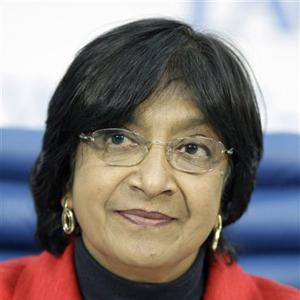
The United Nations human rights chief Navi Pillay said last month that there has recently been a dramatic increase in the number of executions carried out in Iran. She said the rate was three times higher than that of last year.

In the latest instances of capital punishment, Iran’s Arman newspaper reports seven people were hanged on Tuesday in Kerman Province in southern Iran. A judiciary website reported another three executions in Fars Province, also in the south. It didn’t say when the executions took place.

All ten were convicted on drug charges.

According to international law, the death penalty should be limited to the “most serious crimes,” which the U.N. says applies to crimes that are lethal or have extremely grave consequences.

Drewery Dyke is an Iran researcher at Britain-based Amnesty International.

“Therefore the application, as is the case in Iran, of the death penalty to forms of drug trafficking, drug related crimes, to extremely vaguely-worded charges such as ‘Moharebeh’ or enmity against God, for which we have seen both this year and last,” Dyke said. “These are really beyond what is provided for in international law.”

Amnesty says Iran is second only to China in the number of people it executes. In 2009, Amnesty says Iranian authorities put 388 people to death. Iranian media reported 179 hangings last year and 89 executions so far this year.

According to New York-based Human Rights Watch, Iran is one of only three countries that, since 2009, have put someone to death for a crime they committed before turning 18. The other two countries are Saudi Arabia and Sudan.

Iran says the death penalty is needed to maintain law and order.

Amnesty’s Dyke says Iran also has historically used the death penalty in part as a political tool.

“The Iranian authorities have used the implementation of the death penalty – and mass use of the death penalty – to convey a message to would-be opponents of the regime to get in line,” Dyke added.

Iranian authorities have cracked down in recent weeks on political unrest that was revived by successful uprisings against authoritarian leaders in Tunisia and Egypt.

Iranians who oppose the leadership of President Mahmoud Ahmadinejad have gathered under the Green Movement that sprang up after Ahmadinejad was re-elected in a disputed poll back in 2009.

Anthony Skinner is a Middle East expert with the London-based risk analysis group Maplecroft. He says Iran’s administration may use the death penalty as a way to intimidate potential opponents.

“The government obviously wants to put a lid on the Green Movement, it wants to deter the Green Movement from gaining any kind of momentum from Libya and elsewhere in the broader (Middle East/North Africa) region,” said Skinner. “And it’s trying to intimidate and trying to intercept communications and trying to use whatever mechanisms it has in its power in order to basically defuse the thrust of the Green Movement.

Some hard-line politicians in Iran have called for the trial and execution of two Green Movement leaders, Hossein Mousavi and Mehdi Karroubi. Opposition sources say both are being held in a Tehran prison although Iranian authorities have denied this.

Source : VOA

Over 200 ‘arrested’ in Tuesday protest

March 2, 2011

Opposition websites said security services rounded up protesters in several locations in the capital and were helped by police in plain clothes.

Another 40 people were said to have been detained in the city of Isfahan.

Opposition groups had called for rallies over the reported imprisonment of their leaders – Mir Hossein Mousavi and Mehdi Karroubi.

The two men had been placed under house arrest several weeks ago as authorities cracked down on protests staged in solidarity with the uprisings in Tunisia, Egypt and elsewhere.

Their families say that on Monday they were taken to prison, although the government denies this.

‘Black vans’

Riot police and militia on motorcycles broke up attempts by a number of opposition supporters to protest in various parts of Tehran on Tuesday.

One website said eyewitnesses had reported 30 arrests on Felestin Street alone.

“Masked officers arrested men and women and put them into black vans and continued beating them even after they were put in the van,” the Human Rights House of Iran reported.

There has been no independent confirmation of the number of arrests.

But the BBC has learned that Fakhrosadar Mohtashami, the wife of former minister Mostafa Tajzadeh, was one of those detained.

A relative told BBC Persian that Ms Mohtashami is being kept in Evin Prison and has not been allowed contact with her family for the time being.

No Iranian officials have acknowledged Tuesday’s protests, and they were ignored by Iranian state media.

Both Mr Mousavi and Mr Karroubi ran as opposition candidates in the disputed June 2009 presidential election.

Mr Mousavi said he was the actual winner and President Mahmoud Ahmadinejad was only re-elected through a rigged vote.

Hundreds of thousands of opposition supporters then took part in marches that were crushed by the security forces.

Source: BBC

Iran arms proxies to destabilize Middle East, Mattis says

0

Wednesday, 02 March 2011

Iran Focus/2011-03-02 – Iran’s nuclear weapons ambitions and arming of proxy fighters still represent the “greatest long- term challenge” in the Middle East, the top U.S. commander for the region says.

Iran, after four rounds of United Nations sanctions, still “appears determined to mature its nuclear weapons program — an ambition that could lead to the proliferation of illicit nuclear materials and spark a nuclear arms race in the region,” Marine Corps General James Mattis, who leads the U.S. Central Command, said in testimony today to the Senate Armed Services Committee.

Mattis’s command includes nations that have experienced popular demonstrations against current leaders, such as Yemen and Bahrain, or the downfall of existing governments, such as Egypt.

“The strategic landscape of the broader Middle East has been altered by recent events in Tunisia, Egypt, Libya and elsewhere,” Mattis told the committee.

There’s “pressure on government institutions from the aspirations of people seeking improved economic and social conditions,” he said. “Young people born in the information age are exchanging ideas in real time,” said Mattis, who said it was too soon to predict the outcomes.

“For the vibrant people of Iran, the regime is no giant,” Mattis said. “The regime’s actions have thrown the economy into disarray, destroyed rapport with the bulk of the world and spread hate and discontent across the region.”

‘Urgent Concern’

Libya, which is undergoing a revolt against Muammar Qaddafi, isn’t in the Central Command region.

Mattis said Iran’s Islamic Revolutionary Guard Corps, under the control of its Islamic leaders, continues “to fund, arm, train and equipment a network of agents, surrogates and proxies” in Lebanon, Syria, Gaza, and elsewhere.

“Of urgent concern,” said Mattis, the Revolutionary Guard “continues to equip militants in Iraq and Afghanistan that attacks U.S. and coalition forces.”

A January attack by insurgents in Iraq using a large- caliber improvised rocket-assisted mortar was aided by Iranian forces and “demonstrated Iran’s malicious intent and ability to escalate violence when they desire,” Mattis said.

Source

Has the Plan to Eliminate Rafsanjani Failed?

0

March 2, 2011

Nazanin Kamdar

Even though Hashemi Rafsanjani’s remarks at the opening session of the Assembly of Experts on Saturday in which he for the first time referred to the demonstrators who came out into the streets across Iran on February 14 on calls from Green Movement leaders to demonstrate their support for the uprisings in the Middle East as inimical (Moaned), were disapproved by many Green Movement supporters, those in the right interpreted his change as a “tactic” to remain at the head of the powerful Assembly of Experts which is expected to have its internal elections in this session. Mahdavi Kani’s unofficial rejection of running for leadership in the Assembly and his comment that he did it out of “respect” for Rafsanjani, have strengthened this view.

It should be noted that Rafsanjani’s opponents had invested in ayatollah Mahdavi Kani as the replacement for Rafsanjani rather than ayatollah Mesbah Yazd who is closely affiliated to Mahmoud Ahmadinejad.

According to Iranian domestic media, with Kani’s withdrawal, Rafsanjani chances of re-wining the chairmanship of the Assembly have bumped up. According to these news sites, including Aftab, which the news announcing Kani’s withdrawal from the Assembly race was announced by Assadollah Badamchian published, the political secretary of the Motalefe Eslami party (Islamic Coalition) which is in a coalition with the Jame Rohaniyate Mobarez clerical association (Association of Combatant Clerics) led by Kani.

Badamchian’s short announcement that, “The leadership of the Assembly of Experts would continue to be with Mr. Rafsanjani because ayatollah Mahdavi Kani would not be running in the elections out of respect for Mr. Rafsanjani.” This short news was a bombshell, sending pro-government media scrambling for personalities to criticize the announcement and Badamchian.

The Majlis representative from the province of Kohkilooye va Booyer said, “One representative cannot speak for ayatollah Kani.”

During the inaugural meeting of the Assembly last week, Rafsanjani said that he had offered the chairmanship of the Assembly to Kani during its last session and that he was not interested in the position.

Fars News agency called Rafsanjani’s public criticism of the Green Movement a “tactical” move and editorialized that everyone knew that the current chairman of the Assembly was in sympathy with the opposition groups and their leaders, Mohammad Khatami, Mir-Hossein Mousavi and Mehdi Karoubi. It also asked why Rafsanjani had met with one of the leaders of the protestors on February 14, the very day that the protestors took to the streets across Iran to show their solidarity with the uprisings in the Middle East. The writer even claimed that Rafsanjani had urged the person he had met (without naming him) to increase the pressure. The piece concluded by saying that Rafsanjani had to respond to public questions on his change and support for the protestors whom it called counter-revolutionaries.

It should be noted that the conflict over whom should be the next chairman of the Assembly of Experts is not confined to the senior members of the Iranian regime, but includes laymen as well, which Saham News has labeled “Government Thugs,” and sites that support Ahmadinejad or Rafsanjani.

Source