Home Blog Page 682

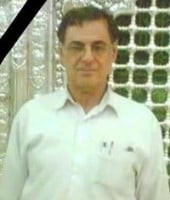
Gholam Hossein Arshi’s Narration of His Torture in Prison

Tuesday, 04 January 2011

His Excellency Prosecutor of Tehran,

I, Gholam Hossein Arshi, was arrested after the 2009 Ashura events by the security police, and sentenced to 4 years in prison by the lower court which was later reduced to a year in prison by the appeals court.

I have been serving my sentence in Ward 350 of Evin Prison for the past 9 months. The events that have occurred during the preliminary investigation by the security police, interrogations, and court sessions have persuaded me to write this letter to you. In my opinion, the incidents have been unjust and unlawful and in general torture and harassment of a defendant for making confessions is against the law.

Similar to hundreds of thousands of other citizens, I was in the streets on last year’s Ashura to participate in the ceremonies on this holy day. I witnessed the violence used by the riot police against other citizens and in particular girls and women which would cause anyone with the slightest amount of dignity to react. Consequently, a confrontation between the citizens and the riot police took place.

His Excellency Prosecutor of Tehran,

On February 6th, I was identified through the photos from the confrontations on Ashura published in Naja and Gerdab websites and 8 officers of the Tehran security police arrested me and transferred me to their headquarter. Two plainclothes agents began interrogating me after one night. They asked me to confess to being the person in the photo published on Gerdab and to confess to setting fire on several anti-riot police cars. I informed them that even though I am the person in the photos, I was not involved in setting fire on public property and based on the published photos and videos, I was assisting the police forces who were surrounded by angry citizens.

The interrogators began beating me and cursed me and my family and threatened that there will be serious consequences if I fail to confess to setting the cars on fire. During the second interrogation session, I was exhausted of the degrading treatment of the interrogators. I even denied that I was the person in the photos. I asked them to stop cursing me and beating me for God’s sake and asked them not to force me into making false confessions. I told them that I take responsibility for my own deeds and I never escaped even though my photo had been published. The interrogators talked to me in an offensive manner and told me that “we would have found you even if you were in your mother’s womb and we are the ones who decide for you here, not God.” They handcuffed me to the chair and started beating me with cable and wire to the extent that the injuries from the beatings were evident on my arms and legs for months and those injuries can be confirmed by my cellmates. In order to force me to confess to something I had never done, setting fire on the police cars, they spread my legs while my hands were tied, and hit me in my testicles, inflicting severe pressures on them. I was screaming out of pain and they responded to my cries for help by using degrading words to insult my honor.

His Excellency Prosecutor of Tehran,

I was transferred to the court in Evin Prison for interrogation. Judge Asadi of the 5th branch of the Tehran Court ignored my objections to the tortures I had endured and stated that
“you have been charged with being a Mohareb (waging war against God) and you are aware what the punishment for the crime of Moharebeh is; however, we will only fine you if you agree to confess to setting fire on the police cars.”

After 10 days of enduring pressure and harassment by the security police, I was first transferred to Ward 240 and later transferred to Ward 350 where I was able to contact my family and inform them of my condition.

His Excellency Mr. Jafar Dolatabadi,

I have been deprived of my right to have a lawyer in the lower court. The presiding Judge of the 15th branch of the Revolutionary Court, Judge Salavati, sentenced me to 4 years in prison for assembly and conspiracy. He ignored my complaints stating that my body still had the marks from the injuries caused by cable and wire and that there were black marks on my testicles from the beatings.  During my time in prison, I have been deprived of prison visits which are the natural rights of every detainee. I am suffering from kidney problems since my hunger strike in August and my transfer to solitary confinement but other than prescriptions for anti-anxiety medication, I have been deprived of medical attention.  In the past 9 months, my requests for prison visits have been denied and the authorities have refused to grant me prison visit, temporary prison leave or conditional release due to my participation in the hunger strike.

By writing this letter to you, I intend nothing but to inform the citizens of this country of the mistreatments of the post-election protesters by the so called security authorities and the unjust decisions made by the Judiciary with respect to the Ashura detainees and the events that followed the disputed presidential elections. Other detainees and I know that no one in the Judiciary is going to care about what has happened to us. This has been proved to us by your behavior and the behavior of the other officials.

At the end of my letter, I emphasize that my only crime was that I was trying to prevent the IRI authorities from getting hurt.  They were facing the consequences of their brutal actions at the hands of the angry mob. Yet, they survived with my help and the assistance of people like me, and were later forgiven by the kind citizens of this country. I was most likely sentenced to 4 years in prison for helping the Islamic Republic of Iran authorities.

Gholam Hosssein Arshi

Source

Continuous pressure on Hossein Ronaghi at Evin prison

January 3, 2011

Hossein Ronaghi Maleki has bee under continuous pressure while serving his 15 year sentence at Evin prison.

RAHANA reports that his lawyer Mohammad Ali Dadkhah was informed of his 15 year prison sentence in writing within the past couple of days.

According to one of his close family members, the pressure on him for making false televised confessions as well an interviewing the Keihan newspaper has not suppressed since his transfer to ward 350 at Evin prison.

Hossein Ronaghi is an Azari human rights activist and a blogger living in the city of Malekan and was arrested on December 13th of last year. He was transferred to solitary confinement after enduring physical and psychological torture in order to make false confessions and to interview the state television. He was sentenced to 15 years in prison on October 7 of this year.

Source

Iran Training Iraqi Death Squads

0

January 01, 2011

By: UPI International Editor

“Loose lips sink ships” was a popular slogan during World War II, a reminder that misplaced words could help the enemy. But the reverse is also true: Purposely placed words can sink the enemy’s ships. At a time when President George W. Bush keeps reminding Iran that “all options are on the table,” a group opposed to the regime reveals new information on the Islamic republic’s involvement in Iraq.

According to an Iranian opposition group, Iran’s al-Quds force is heavily involved in training Iraqi death squads and militias. The latest reports from the Mojahedin-e-Khalq, or the MeK, accuse the Iranian regime of secretly engaging in “the organization and training of large Iraqi terrorist networks in Iran and sending them back to Iraq”.

The group opposed to the ruling clergy in Tehran says Iran’s ultimate goal is to destabilize Iraq, forcing U.S. troops to leave the country, thus paving the way for the establishment of an Islamic republic in Iraq.

Alireza Jafarzadeh, an Iranian opposed to the current regime in Tehran, divulged in New York Tuesday information he received from sources inside Iran — mainly from the MeK — with whom he enjoys close ties.

The MeK, which is lobbying hard to get off Washington’s list of terrorist organizations, recently released a list of nearly 32,000 Iraqis on Tehran’s payroll. Those included senior officials in the Iraqi government.

The Quds Force of the Islamic Revolutionary Guards Corps has allocated several of its bases in the cities of Tehran, Karaj, Qom, Isfahan, as well as provinces close to Iraqi borders, such as Kermanshah, Ilam, Kurdistan and Khuzestan — using veteran commanders — to train death squads and terrorist networks, according to the Iranian dissident.

These individuals travel to Iran in different groups, under different covers and using various legal and illegal borders, and go back to Iraq after completing their training sessions. According to information obtained by the MeK, since February 2006 Iraqi militias affiliated with the Quds Force, such as the Supreme Council for the Islamic Revolution in Iraq — SCIRI — the Badr Corps, Hezbollah, Islamic Revolution Mujahedin, and Seyyed-ol-Shohada Movement have traveled to Iran in groups and are being trained in various camps of the Quds Force.

The trainings includes urban guerilla warfare, instruction on use of light and semi-heavy weapons, mortars, missiles, sniping techniques, use of explosives and firing shoulder-launched anti-aircraft missiles.

Still, according to Jafarzadeh, the Iraqi militias are trained under the command of IRGC Brig. Gen. Mohammad Shahlaei, a veteran commander of the Quds Force in the Ramezan base. Based on information he received from the MeK in Iran, the Islamic Revolutionary Guard Corps operates a number of secret bases where Iraqi terrorists are trained.

Among them are the Imam Ali Base in northern Tehran’s Alborz-kooh Street, north of Saad-abad Palace; south of this base is another IRGC base called “Al-Zahra.” It is designed to train women. According to the MeK, “there are many veteran instructors in Imam Ali base, with extensive experience in terrorist activities. The base is under the command of a Revolutionary Guard officer named Hossein Lotfi.”

Trainees are divided into small groups of eight. Each group has two trainers, an Iranian and a Lebanese member of Hezbollah. The training lasts 20 days. The personnel are instructed not to speak to anyone about training Arabs.

Several groups from SCIRI traveled from Sadr City near Baghdad to train in October 2006, according to Jafarzadeh. This base has been the IRGC’s main location for training foreign terrorists. In the past, the Imam Ali base was used to train terrorists; it is now reserved exclusively to train Iraqi militias.

Hezbollah Base in Jalilabad, Varamin has been used by al-Quds Force to prepare Iraqi volunteers where an al-Quds Force commander named “Fouad” is the liaison officer. Two of the foreign trainers are named “Khalili” and “Vajih.” They are Iraqis who lived in Iran for years and are employed by the Quds Force. On Jan. 2 a group of 50 Iraqis from Sadr City completed their training and returned to Iraq.

According to the MeK, Abu Ahmad al-Ramisi, a former commander of the Badr Corps, has infiltrated the Iraqi government. He also goes by the Iranian name of Muhammad Ali Hessani. Employed by the IRGC since 1986, he was dispatched in April 2003 to Iraq, where he became commander of the Badr forces in Al-Muthanna Province. He is presently the governor of Al-Muthanna Province.

The list goes on: Bahonar Base in Karaj is another site for training Iraqi militias. Iraqi militias are sent to this base in groups of 50 from Tehran. Their training lasts 30 days. Several groups have been trained in this camp since October 2006.

Bahonar Base is one of the most important training bases for foreign fighters. The operations and information about the trainees are strictly confidential. The trainings are organized in a way that the trainees have the least possible information about each other. In this base the principles of urban guerilla warfare, deception and coverup, methods and tactics for collecting intelligence, various weapons training, body-building and working with explosives are taught.

The MeK network inside Iran has proven accurate in the past, exposing Iran’s clandestine nuclear weapons program by revealing the nuclear sites in Natanz and Arak in 2002.

It is still worth remembering the reverse logic of the famous WWII slogan. In other words, proceed with care. Those rooting for a U.S.-Iranian military confrontation may end up sinking both ships.

related report

by Pamela Hess

UPI Pentagon Correspondent Washington (UPI) March 21 – US. House Armed Services Committee Chairman Ike Skelton said Tuesday U.S. forces can do nothing to avert sectarian violence in Iraq.

A bloody, all-out clash is inevitable no matter when the United States pulls out, he said.

It is that belief that underpins the Democratic “redeployment” plan included in the 2007 war supplemental bill now under consideration by the House of Representatives.

“I’m convinced that should there be a redeployment now, six months from now, two years from now, the sectarian violence will increase … It’s inevitable,” Skelton said.

“At what point if ever do the Sunnis and Shiites get tired of fighting each other? Obviously we’re not close to it now and I think it will be years and years before it reaches (that point). I don’t think any of these groups … who are killing each other every day are even close to being tired.”

The Democratic redeployment plan calls for the withdrawal of many U.S. troops from Iraq – either to perches nearby or back to their home bases, by March 2008 regardless of conditions on the ground in Iraq. The plan calls for leaving behind counter-terrorism forces to take on al-Qaida in Iraq and other terrorist groups, and advisers for the Iraqi military and police.

Skelton acknowledged that all-out sectarian violence would destabilize Iraq’s government and said the answer is not more U.S. troops or a continued large presence but mobilizing regional powers to prevent the spread of violence to the wider region.

“We do our very best to get other countries involved in stabilizing the region. That’s been a major problem since day one, but they are gonna have to step up to it. Whether it be Saudi Arabia, or Syria or Iran, which is doing its best to have tentacles all over the place.”

Skelton said serious mistakes were made in the beginning of the war that cannot be undone. He said the first was in failing to have hundreds of thousands of troops to maintain order after the invasion; allowing looting and lawlessness immediately after the fall of Baghdad; not securing weapons caches; shutting down government industries and putting those employees out of work; outlawing the Baath party and forbidding its members to work for the new Iraqi government and disbanding the military.

“All of this caused in some respects people to go over to the insurgency, or at least not to want to work with the Americans or coalition forces. I think it put us in such a bad shape that the best we can do is bring the violence down, get the baton handed fully to the Iraqi government and military and redeploy our troops,” he said. “We have made irretrievable strategic mistakes made that can not be unrung.”

“I don’t see a solid hoped-for democracy as we would see it coming out of here with peace spreading all over Iraq because in the most part those (are) irretrievable strategic mistakes,” he said.

Though he voted for the war, Skelton comes by his criticism of its prosecution honestly. In September 2002 and again in March 2003, just before the war began, Skelton sent letters cautioning President George W. Bush about planning for the post-war properly.

“I have no doubt that our military would decisively defeat Iraq’s forces and remove Saddam. But like the proverbial dog chasing the car down the road we must consider what we would do after we caught it,” he wrote.

He warned of the “extreme difficulty” of occupying Iraq, its ethnic and sectarian tensions, the question of what to do with Baath party members, and the possibility that the new Iraqi regime would be resisted by the population. He also warned of the possibility that an invasion of Iraq would undermine international support for the broader war on terrorism. He warned that the war might push away Iran, which had been cooperating with U.S. efforts in Afghanistan, and inflame Islamic terrorism. All of those problems have been manifested in Iraq.

“Can you unring those bells? I don’t think you can unring those bells short of starting all over again and putting hundreds of thousands of troops (into Iraq that) we don’t have. It’s far too late for it,” Skelton said. “If we had not made those mistakes — they are not small mistakes. Mistakes are always made in war but these were biggies. If they had not been made there may be some light at end of tunnel.”


Two Women’s Rights Activists Get Six Months in Prison for Signatures

December 31, 2010

International Campaign for Human Rights in Iran – An appeals court upheld the sentences of Maryam Bidgoli and Fatemeh Masjedi who are women’s rights activists and members of the One Million Signatures Campaign. Bidgoli and Masjedi will now begin serving sentences of six months in prison and will pay fines of $200 in cash in the coming days.

In the final ruling was issued by Branch Three of the Qom Province Judiciary and has been reviewed by the International Campaign for Human Rights in Iran. The ruling stated that collecting signatures for the Campaign for Equality is “propagation against the regime,” and a factor in upholding the sentence is the signing of a statement in which the Islamic Republic is characterized as “without merit for filling a seat on the United Nation’s Commission on the Status of Women.”

Iranian authorities, such as President Mahmoud Ahmadinejad and Head of the Judiciary’s Human Rights Council Mohammad Javad Larijani, have repeatedly spoken of freedom of expression in Iran during trips abroad. However, courts found Bidgoli and Masjedi guilty of “propagation against the regime” for their activism and signing a statement expressing their opinions about the conditions of human rights and discriminatory laws in Iran.

The ruling for Bidgoli and Masjedi, originally issued by Branch Two of the Qom Revolutionary Courts, is reflected as “propagation against the Islamic Republic regime, and in favor of a feminist group (The Campaign), through distribution and collection of signatures for changing discriminatory laws against women.”

The Appeals Court included in its ruling issues such as “internet signatures of a statement demanding disqualification of the Islamic Republic for filling a seat on the United Nation’s Commission on the Status of Women,” “interviewing with JARAS website,” and “signing the Campaign statemen.” These new charges for Bidgoli and Masjedi are clear manifestations of the judges’ denial of freedom of opinion and expression. The Campaign demands a halt to this unfair ruling. The Campaign further demands that the Iranian Judiciary respect minimum individual and social rights in their rulings.

Source

Ali Saremi’s brother arrested in Iran

December 31, 2010

Agents from the Iranian regime’s Ministry of Intelligence and Security (MOIS) on Thursday arrested a recently executed political prisoner’s brother for honoring his memory by hanging pictures on his shop window.

Mr. Ali Saremi, 62, was imprisoned by the clerical regime for visiting his son, Akbar, in Camp Ashraf, Iraq, where 3,400 members of the main opposition People’s Mojahedin Organization of Iran (PMOI/MEK) reside. In a barbaric act on Tuesday, the mullahs executed Mr. Saremi, who had spent a total of 24 years in prison.

His brother, Mohammad-Reza Saremi was arrested by regime MOIS agents on Thursday after he put up pictures in his memory at his shop window.

Separately, Mr. Ali Saremi’s family referred to Kahrizak prison on Thursday to retrieve his body, but the regime’s agents there refused to respond to the family’s inquires. One of the agents reportedly told family members that Mr. Saremi’s body has already been buried in a village in Boroujerd.

The village, known as Amir Abad, is located in Lorestan province, about 394 km away from Tehran, where the family lives.

Source: NCRI

Source

Reporters without borders- Iran:World’s biggest prison for journalists

December 30, 2010

Reporters Without Borders condemns a new crackdown on journalists and intellectuals. The arrests of two journalists in the past two days bring the total number of media personnel arrested since 5 December to eight. The number of journalists now detained in the Islamic Republic of Iran now stands at 37, which makes it the world’s biggest prison for the media.

The well-known economist and writer Fariborz Rais Dana, a member of the Association of Iranian Writers, was arrested yesterday during a search of his home by intelligence ministry officials in civilian dress. It is not yet known why he was arrested or where he is being held.

A few hours before his arrest, Dana had criticised yesterday’s lifting of price controls in an interview for the BBC’s Farsi-language TV station. “It is a policy that will not improve the population’s living standards,” he said. “What’s more, the decision to provide ‘economic assistance’ to poor families means the government can say at election time: ‘Now, if you don’t vote for us, we won’t pay you’.”

One of the country’s oldest civil society organizations, the Association of Iranian Writers was banned under the Shah and has continued to be banned under the Islamic Revolution. Two of its representatives, the writers and journalists Mohamad Makhtari and Mohamad Jafar Pouyandeh, were murdered.

Dana’s arrest came one day after Hadi Heidari, a well-known cartoonist and editor of the Persian Cartoon website (http://www.haditoons.com), was arrested after responding to a summons from the prosecutor’s office located inside Tehran’s Evin prison. When Heidari was previously arrested on 22 October 2009 in Tehran (along with three other supporters of the pro-reform party Participation), he was released on bail after 16 days.

Reporters Without Borders is meanwhile also very concerned about Nazanin Khosravani, a contributor to various pro-reform newspapers who was arrested at her home by intelligence ministry officials on 2 November. Her family has still not been told why she was arrested or where exactly she is being held.

The press freedom organization has learned that Amir Hadi Anvari, a business reporter for Etemad (a daily that was closed by the authorities), was released on 15 December after being interrogated for six days.

Source

Iran refuses to hand over body of executed political prisoner to his family

0

December 30, 2010

According to reports, several family members of executed political prisoner and PMOI supporter Ali Saremi went to Kahrizak Detention Center to get custody of Ali Saremi’s body. They were told by Evin Prison agents to go to Kahrizak for the body.

They were initially banned from entering Kahrizak and finally after persisting, security forces told them to leave and bring a letter from Evin Prison.

According to other reports, after widespread reports in the international media about the execution of this 63 year old political prisoner, the Iranian regime is looking to retaliate against his family and therefore arrested a number of his family members on the day he was hanged. They were finally forced to release them last night after harassing and threatening them. Security forces also raided their family shop today and arrested Ali Saremi’s nephew identified as Mohammad.

Source

Bleak News On Human Rights In Iran

0

December 29, 2010

There is more bleak news concerning flagrant human rights violations in Iran.

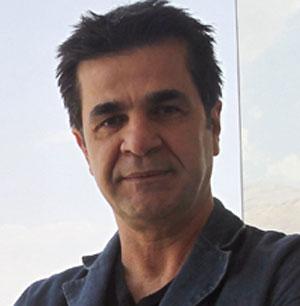
Two Iranian film makers, Jafar Panahi and Mohammad Rasulov, have been sentenced by the Iranian government to six years in prison for the crime of “conspiring against the ruling system.”  Mr. Panahi has also been barred from making films and from leaving Iran for 20 years. At his trial in November, Mr. Panahi reportedly described his prosecution by the government as part of an attack on Iran’s entire art and cultural community.  A third Iranian film maker, Mohammad Nourizad is currently serving a three and a half year term in prison for the so-called crimes of spreading propaganda and insulting the country’s leaders.

Meanwhile, there is anxiety over the health and fate of prominent Iranian human rights lawyer Nasrin Sotoudeh. Ms. Sotoudeh, who has been in solitary confinement for over three months, had been on a hunger strike in protest over terrible prison conditions. She reportedly ended the strike recently citing her duty as a mother to her two young children. Iranian Nobel Laureate Shirin Ebadi has called for Ms. Sotoudeh’s immediate release on bail and for an examination of her case before a “just court.”

Ms. Ebadi said that Ms. Sotoudeh is one of many political prisoners who are imprisoned in Iran, several of whom have started a hunger strike to protest their appalling prison conditions.

Ms. Ebadi also noted that more than forty journalists and bloggers are incarcerated in Iran. The Committee to Protect Journalists reports that Iran is conducting “a relentless attack on opposition and independent media” and described the Iranian government as “the world’s leading jailer of journalists” urging that Iran “change the course it has clearly chosen – unrelenting violence.”

Iran has ratified several international documents aimed at preserving the fundamental rights of citizens, including the Universal Declaration on Human Rights and the International Covenant on Civil and Political Rights, but fails to live up to them.  That is why the United Nations passed, on December 21st, a resolution calling on the Government of Iran to fully respect its human rights obligations; one that was  welcomed by the United States and the international community.

In a statement released by Secretary Clinton on December 22 she said “To all those Iranians struggling to lift your voices and speak up for fundamental freedoms and human rights, you are not alone. The United States and the international community stand with you.”

Source

Student Activist Farzad Eslami Held Incommunicado

Wednesday, 29 December 2010

RAHANA: Farzad Eslami is a law student at Azad University and the former secretary of the Muslim Student Association, who has been detained and transferred to the Evin Prison since December 5th.

According to RAHANA, he has been under severe pressure to admit to the unfounded charges brought against him.

Since his arrest, he has not called his family and they have not been able to gather any information on his condition despite their attempts. One of the officials at the court in Evin Prison has stated that one of his charges is “communicating with foreign embassies” which is a clear example of the unfounded charges brought against him.

He had previously been sentenced to one year in prison which was suspended for 3 years for participating in a gathering in Tehran University of Technology on October 13th.

He was once arrested on November 3, 2009 and was held in Ward 240, a security ward, for 15 days. The Disciplinary Committee of Tehran University has suspended him for 3 semesters for “persuading”  other students.

Source

Ali Maghami arrested

0

Tuesday, 28 December 2010

RAHANA – Ali Maghami’s arrest took place during a visit with Alireza Taheri whom was released from prison.

According to RAHANA reporters, there are no further information on this former Participation front member’s whereabouts.

Ali Maghami is Emadeldin Baghi’s son in law. Last month Emadeldin Baghi was returned to Evin prison to serve his seven year sentence.

Source