Home Blog Page 687

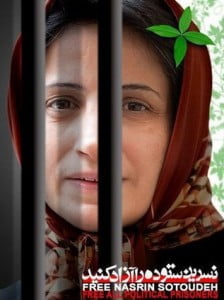
Nasrin Sotoudeh Continues with Hunger Strike

0

November 11, 2010

Persian Report by HRANA
Translation by Banooye Sabz | Editing by Persian2English

November 11, 2010 – According to reports by HRANA, The husband, sister, and brother of Nasrin Sotoudeh were granted a ten minute visit with her from behind a [glass window] in Evin prison.

Reza Khandan, Sotoudeh’s husband who was finally able to meet his wife after two and a half months of incarceration, told the Feminist School, “Nasrin informed us that at the request of friends and her lawyers she decided to break her “dry” hunger strike and begin drinking water. However, she will continue a regular hunger strike (no food) until her demands are met.”

According to the Feminist School, in this meeting Sotoudeh told her family, “So far three judicial and security officers have promised to release me, however, to date, no one have stood by their words. I will therefore continue with a hunger strike until my demands are met.”

After the brief meeting with his wife Reza Khandan said, “I didn’t recognize Nasrin because her face was so gaunt. Nasrin was a mere 57 kilograms (125 lbs) when she was arrested. Since her incarceration she has lost approximately 13 kilograms (28 lbs). Her face is no longer recognizable to me.” Khandan added, “Nasrin confirmed that she was connected to IVs twice during her hunger strike.”

Nasrin Sotoudeh, human rights lawyer and women’s rights activist was arrested on September 4, 2010. Sotoudeh has been on a hunger strike since September 25, 2010, nine days of which were a dry (no food, no water) hunger strike

http://freedomessenger.com/?p=13898

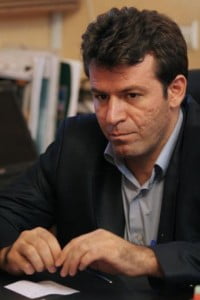
Exiled Lawyer Mohammad Mostafaei Sentenced to Prison in Abstentia

0

November 11, 2010

Persian Report by RAHANA
Translation by Banooye Sabz | Editing by Persian2English

Judge Moghiseh of branch 28 of Tehran’s Revolutionary Court has sentenced Mohammad Mostafaei in absentia to six years prison exile in the town of Izeh. He is charged with acting against national security by giving interviews to Persian-language media, in which he discussed the Sakineh Mohammadi Ashtiani case, and propaganda against the regime.

Even though Mostafaei was accused by the Tehran Prosecutor of trying to pull off a scam, he was not convicted on the charge of “trying to take over the property of another”, since there was no sufficient evidence to convict him.

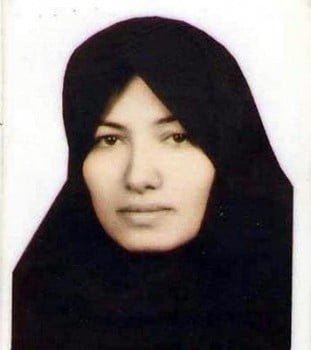
Mostafaei is a justice lawyer and human rights activist who has taken on numerous juvenile offender cases in threat of execution and also the case of Sakineh Mohammadi Ashtiani.

Mostafaei was summoned to Evin prison’s Court Branch on July 21st. On the morning of July 24th, he visited the Intelligence Prosecutor’s office inside Evin prison and attended an interrogation session that lasted four hours. According to RAHANA, later in the afternoon, security forces went to Mostafaei’s office with an arrest warrant, but he was not there. There is no news on his whereabouts.

http://freedomessenger.com/?p=13901

Khamenei: I have no Concerns When Ahmadinejad Travels Abroad

0

November 10, 2010

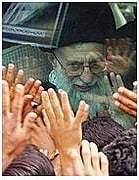
Just one week after the leader of the Islamic republic paid a visit to the holy city of Qom – originally scheduled for tens days and subsequently extended to eleven – news agencies reported that ayatollah Khamenei had returned to the city to meet a number of senior clerics.  In the meantime, in an interview with Fars news agency, a member of the teachers association of the Qom Theological Seminary (Jame Modaresin Hoze Elmie Qom) described some aspects of the leader’s previous meeting with the members of the teacher’s association and said the ayatollah had stressed in explaining the reason for his support of Ahmadinejad, which is that that he was not striving to create a parallel administration.

According to Mehr news agency which is affiliated to the Islamic Propagation Organization, Mr. Khamenei’s second trip took place last Friday when he met with three most senior clerics in Qom: ayatollah Makarem Shirazi, ayatollah Noori Hamedani, and ayatollah Jaafar Sobhani, all of whom are marjae taghlid, i.e., “sources of emulation” – the most senior clerical title in the Shiite hierarchy bestowed on clerics who have the authority to independently interpret basic Islamic sources and issue religious edicts known as fatwas.

No news on the meetings between Mr. Khamenei and the senior clerics have been published yet, although the leader met these very clerics during his previous trip to Qom just two weeks ago as well.

During the leader’s last trip some senior clerics such as ayatollah Vahid Khorasani (the father in-law of ayatollah Larijani, the head of Iran’s judiciary), and others close to regime reformers such as ayatollah Mousavi Ardebili and ayatollah Sanei did not pay a visit to Mr. Khamenei while he was there. However, some 12 clerics who are considered most senior by virtue of having published their own religious thesis did go to visit the leader amongst whom was ayatollah Shobeiri Zanjani who is recognized as the most senior cleric.

According to various online news sites including Emrouz, ayatollah Zanjani asked Khamenei to free Ali Shakurirad, a member of the central council of the Iran Participation Party, a request that has been apparently met with favor.

Ayatollah Zanjani’s request came up after family members of a number of political prisoners had gone to Qom while ayatollah Khamenei was visiting the city and through an open letter to the senior clerics requested that the situation of political prisoners be discussed with the leader of the Islamic regime.

It is said that despite ayatollah Zanjani’s critical views of the current administration, which are rooted in the teachings he received in the Iraqi city of Najaf and also on the views of senior ayatollah Abolghasem Khoi, Zanjani enjoys esteem and respect by Khamenei’s household because he had been the private teacher of the leader’s three sons. In the past, this special position had allowed ayatollah Zanjani to play a key role in ending the blockade of the late ayatollah Hossein-Ali Montazeri’s house. It is also noted that it was he who performed the memorial service for the ayatollah Montazeri upon his death last year.

According to Moj Sabz Azadi news website (the Green Wave of Freedom), in a meeting with ayatollah Safi Golpaygani, ayatollah Zanjani had broken into tears over the killings and the treatment of post 2009 presidential elections in Iran. There are also reports that he had written two strongly worded letters to ayatollah Khamenei protesting the suppressive measures of the security and military forces.

What has not been Said About Ayatollah Khamenei’s Second Trip

While ayatollah Khamenei was on his visit to Qom, a member of the powerful teachers association of the theologians in Qom disclosed through an interview with Fars observations regarding the visit of the leader of the Islamic republic and his meetings with members of the association that have not been published till now.  According to him, the remarks by the leader during this visit concerned his criticism of the previous administration and support for the current one.

The leader of the Islamic regime met members of the teachers association on his visit to Qom and while he had initially planned to stay in the city for ten days, his trip was extended for another day to meet with the clerics of this grouping one more time. Political observers at the time had speculated that during the trip ayatollah Khamenei was planning on introducing his son, Mojtaba Khamenei, as a cleric, with the purpose of laying the groundwork for passing on the leadership mantle of the Islamic republic onto his son in the future. The second visit to Qom has been interpreted to be for this purpose as well.

The teachers association is the de facto manager of the Qom Theological Seminary and is the group that has traditionally determined who would be a senior cleric and source of emulation in the Shiite world.

Two days after the death of senior ayatollah Araki, a source of emulation in the Shiite hierarchy, the teachers association of the Qom Theological Seminary announced the names of seven ayatollahs as sources who may be emulated. The list named the following: ayatollah Mohammad Fazel Lankarani, ayatollah Mohammad-Taghi Behjat, ayatollah Hossein Vahid Khorasani, ayatollah Mirza Javad Tabarizi, ayatollah seyed Mousa Shobeiri Zanjani, ayatollah Naser Makarem Shirazi and ayatollah seyed Ali Khamenei.

The teachers association is thus the first organization that names ayatollah Khamenei as a source of emulation. This is also the first time that a single organization named all the newly attained senior clerics, whereas in the history of Shiism the announcement of senior clerics was not confined to specific single organization.

As explained by cleric Eslamian to Fars news agency, “When the talks turned to the administration, friends raised some issues to which the leader responded with these words: I have supported all administrations but this administration is different from the earlier ones and the principal difference is that it is not striving to create a parallel administration.”

The leader’s reference of parallel administration is to articles that were published during the reform period by Saeed Hajjarian, a member of the Iran Participation Front (Jebhe Mosharekat) titled, “Parallel Administration.” An assassination attempt on Hajjarian’s life in 2000 has paralyzed part of his body. He is among those who were arrested following the post-2009 elections protests  and was forced to make “confessions” during his trial.

This member of the teachers association further adds, “The leader has said ‘Today, when the president or another senior government authority goes abroad, I have no concerns whereas before I was concerned about what they wanted to say there.’ He also presented some examples of improper behavior from the past and gave this example: ‘At one time they brought in a piece of paper in connection with relations with a European country and raised some issues which were not respectable and I stood against them and in another similar incident made it clear that if they proceeded with the issue, I would announce my opposition to it.’”

While the contents of this “paper” have not been published yet, it is said that what the leader of the Islamic republic was talking about was related to the nuclear issue. During recent weeks, some pro-administration news media had once attacked the nuclear negotiations team. This comes despite the repeated statements that decisions on this issue are made with coordinations with the leader of the Islamic republic. But the remarks by ayatollah Khamenei indicate that in fact it is he who makes the decisions for the group  and even threatens them if they act against his views.

Eslamian also said the following regarding the relations between the leader of the regime and the administration: “At the second meeting between the teachers association and the leader, a friend had raised the issue of hijab and women’s dignity and his remarks suggested that some officials were indifference to the issue of religious hijab. The leader responded by saying, “I do not accept these remarks,” adding, “officials today accept the religious hijab and the differences are simply in the tactics. A young woman who does not have the full hijab but who participates in the special religious prayer sessions or komeil prayers and embraces God, or participates in the revolution anniversary celebrations by holding the Imam’s portrait, cannot be said to be against religion. She simply does not know what is Islamic hijab and so she must be educated.”

He further added that the leader of the Islamic regime has categorically stated that there are differences of opinion today and that he does not accept some of them but if he says anything today, the president would accept and implement it. “It is important to note that contrary to what is being propagated and imagined that Mr. Ahmadinejad does not listen to the leader,” he explained. “Current officials say the rights things, say what the system wants and what the revolution is and there is no place for concern.” According to Eslamian, Khamenei also mentioned the issue of the Iranian school of thought that has been the subject of much controversy in recent months, and said, “ I am against raising this issue of the Iranian school and have even told them so and believe that their goal is not to present a confrontation between the Iranian and the Islamic.”

This member of the cultural-social committee of the Experts Assembly on Leadership concluded his remarks by saying, “The concerns that were raised by some members of the teachers association over the national radio and television were valid and in response the leader said that he did not defend the performance of the national radio and television and that there are issues and that he spent time on this problem. “I advise the officials of the national radio and television station regularly, but this is how things are,” he quoted ayatollah Khamenei saying.

http://www.roozonline.com/english/

Iranian reformist slams Ahmadinejad administration

0

Publish date: November 10

Iranian reformists, despite relentless government persecution, continue their resistance against the Ahmadinejad administration by criticizing the government in public statements and interviews.

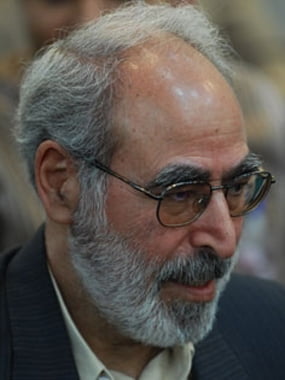
In an interview with Jaras website, Abolfazl Ghadiani, senior member of the banned reformist party, Mojahedin of the Islamic Revolution, condemned Ahmadinejad’s “irrational policies” for leading Iran into a series of deep crises.

Ghadiani said: “I said in my trial that the elections were rigged and after the elections, they carried out a coup.”

The 2009 presidential election which brought Ahmadinejad back to another term at the presidency has been contested by reformists and millions of protesters with allegations of fraud.

The government has responded to the protests with extreme violence on the streets subduing street protests with force and continued arrest of dissidents.

The government retaliation against election protesters has been often referred to as a government engineered coup.

Abolfazl Ghadiani was arrested charged with “propaganda against the regime and insulting the president.” He is sentenced to a year in prison and a monetary fine. Ghadiani stressed that his trial was by no means impartial and was in effect in defence of Mahmoud Ahmadinejad.

The opposition has frequently maintained in the past year and a half that the judiciary has lost its independence and is heavily under the influence of security and intelligence forces.

Ghadiani also contested the banning of the Mojahedin of the Islamic Revolution organization saying: “I stressed in court that this order is illegal. We were not summoned to court; they did not talk to our lawyer and we were not issued a court order. Therefore, we cannot consider the dissolution of the organization to be a legal order.”

Ghadiani concluded that the only “faithful execution of the constitution, release of all political prisoners, assuring freedom of speech and assembly, as well as compensating post-election victims can lead Iran out of this crisis.”

http://www.zamaaneh.com/enzam/2010/11/iranian-reformist-slams-a.html

Iran to Defend Women’s Rights and Philosophy? No, Unfortunately, it’s Not a Joke

0

November 9, 2010

We’re not done with Iran. First of all, of course, because of Sakineh, who has been granted a new stay of execution but remains imprisoned, in solitary confinement, like her own son. And the sentence may be executed at any moment. The summum of ignominiousness, the local presiding justice of Tabriz had the gall to declare that Sakineh is in good health. But because of two other affairs (I don’t dare say two new affairs, for they are known and have been going on, the one and the other, for several months now) that have been little discussed, far too little, when they are just as indicative of the blindness, the cowardice, and the absence of democratic reflexes of the West when confronted with Iran.

The first concerns World Philosophy Day, organized every November by UNESCO and which, it has been decided, will be held this year in — Tehran! Before the incredulousness and disturbance the news caused in philosophical circles, the organizers attempted to duck the issue by scheduling a pre-opening, in Paris, on November 18th, followed by a series of meetings in the days thereafter in Mexico, Tunis, or Dakar. But they did not go so far as to cancel the days in Tehran. So, if things remain as they are, one will philosophize from November 21st to 23rd in one of the world’s capitals of fanaticism and tyranny.

We’ll discuss “theory and practice” — the theme of these day sessions — in a country where, in August 2009, after demonstrations against the fraudulent elections, humanities were banished from the universities’ curriculum. We shall debate the means of progressing towards excellence — another theme of these days — under the presidency of a “thinker” (Gholam Ali Haddad-Adel) whose greatest accomplishment is to have married his daughter to the son of the Supreme Guide, and in the presence of two others (Mohammad-Javad Larijani and the Ayatollah Mesbah Yazdi) who have to their credit little more in the way of philosophical titles than, for the former, a subtle theory on the relative “humanity” of death by stoning and, for his colleague, a delicate analysis of the Jewish “race”, described as “the most corrupt in the world”.

And I’m not even mentioning the fact that serious contemporary Iranian philosophers such as Ramin Jahanbegloo, Daryoush-Ashouri, and Mohammad-Reza Nikfar, are all forbidden to speak in their country and will therefore be replaced — it’s official — by colleagues who come exclusively from the holy city of Qom. Pinch me, I’m dreaming. The Ubuesque aspect of the situation leaves one dumbstruck. Yet that is what will happen if 1) the 400 foreign philosophers who have been invited (the list of whom is kept secret to avoid the pressure of boycotters) do not have the elementary dignity to cancel, or if 2) the Director of UNESCO (whose election, and I know a little about it, inspired such hope just a year ago) does not very rapidly take the decision to delay until the after-Ahmadinejad a manifestation that, for the moment, can only sanction a regime that censures, exiles, imprisons and assassinates free thought. It is not as though it would be the first of UNESCO’s moral disasters, but this one would be impressive. With ridicule added to dishonor, it is by no means certain the organization would recover from it.

The second affair concerns the creation of UN Women, this new United Nations agency charged with promoting the cause of women in the world and where the Asian region chose a representative of the Iranian government as one of the 41 members of the board of directors destined to pilot the thing. Truth compels one to say that the Asia group proposed another country whose choice would scarcely have been better: Pakistan. Worse still, it seems that, in the contingent of delegates reserved for so-called “donor” countries is a third whose presence in this conclave is scarcely less incongruous — Saudi Arabia.

But Iran! The country of Neda and Sakineh charged with promoting the advancement of women’s rights. One of the last places in the world where adulteresses are condemned to stoning, assigned to champion gender equality and the struggle against discrimination. It sounds like a joke. Or even a provocation. But no, this is reality. This is the state of the balance of power at the United Nations, one we have already seen operate in the composition of the Human Rights Commission as well as at Durban 1 and 2. And it is, in this case, a slap in the face to every woman on the planet, spitting in the faces of the most humiliated and tormented among them.

It is an insult to common sense and an affront to simple decency. It is the guarantee that, what’s more, this new agency is, from now on, paralyzed, and therefore stillborn. Call the ex-President of Chile, Michelle Bachelet who, after a good deal of dithering, accepted the direction of this thing, for her to use her influence to refute this ridiculous nomination. Appeal to Ban Ki-Moon, from whom, strangely, we have not heard during the entire Sakineh affair. He should, without delay, put what remains of his authority in the balance to block a decision whose inconsistency would draw smiles were it not potentially tragic. An Iranian commissioner in an agency dealing with women’s rights is like a Pol-Potian responsible for human rights or a neo-Nazi guiding the fight against antisemitism. The United Nations cannot eternally play with the worst. We are nearing the moment when, from little arrangements to great back-downs, from cultural concessions to totalitarian power grabs, the institution itself will be ready for the scrap heap.

http://freedomessenger.com/?p=13782

Student activists transferred to Tehran’s Evin Prison

0

Publish date: November 09

Iranian authorities press on with crack down on student activists as the four recently detained members of the Iranian student organization, Daftar-e Tahkim-e Vahdat, were transferred to Evin Prison yesterday.

The International Campaign for Human Rights in Iran reports that according to “an informed student source”, Babol prosecutor has told the families of Mohsen Barzegar and Alireza Kiani that the two were arrested and sent to Tehran following “legal proceedings taken against them by Tehran judiciary officials.”

Barzegar and Kiani along with Ali Gholizadeh and Mohammad Heydarzadeh were arrested between Friday and Sunday.

The Campaign reports that Ali Gholizadeh, head of Shahrood Islamic Association, was arrested in Mashhad at his father’s home while Mohammad Heydarzadeh, another student activist, was arrested in ShahreKord. Barzegar and Kiani, involved in the Mazandaran University student association, were arrested in the north.

Daftar-e Tahkim-e Vahdat has reported that the government has started a new wave of arrests of its members in order to stifle their activities especially as they are involved in a nationwide campaign to elect their new leadership.

Following the controversial re-election of Mahmoud Ahmadinejad which protesters claim was rigged, Daftar-e Tahkim-e Vahadat and student activists have been heavily hit with government persecution.

Many of their members and leadership have been arrested and handed heavy prison terms while hardliners have demanded that the organization be deemed illegal.

http://www.zamaaneh.com/enzam/2010/11/student-activists-transfe.html

Student organization targeted by Islamic Republic authorities

0

Publish date: November 08

Iranian student organization, Office for Consolidating Unity, announced that the Islamic Republic government has started a new wave of retaliation against its members.

Daneshjoo News reports that at least four senior members of the Office for Consolidating Unity (Daftar-e Takhim-e Vahdat) have been arrested in cities all across the country.

The organization reports that they are currently in the process of their annual elections through an online campaign. They maintain that the government has stepped up pressure on their members in order to stifle the organization’s activities.

Numerous student activists were arrested following the disputes over the irregularities in the 2009 presidential elections which the opposition contends secured Mahmoud Ahmadinejad’s victory.

Many student activists have received heavy prison terms for their participation in the post-election protests against the controversial return of Ahmadinejad to power.

http://www.zamaaneh.com/enzam/2010/11/student-organization-targ.html

Detained Iranian journalist remains incommunicado

0

Publish date: November 08

Nazanin Khosravani, detained Iranian journalist, remains in an undetermined judicial state six days after her arrest.

The International Campaign for Human Rights in Iran reports that Khosravani’s mother, Azam Afsharian informed them that despite assurances from Abbas Jafari Dowlatabadi, Tehran’s prosecutor that her daughter would contact her soon, she has so far heard nothing from her daughter.

Afsharian reports that on Saturday Evin Prison authorities told her that her daughter was not in their list of prisoners. Tehran Prosecutor also refrained from informing Afsharian about the location of Khosravani’s detention.

Azam Afsharian stated that she is very hopeful that her daughter’s arrest is a misunderstanding since in the past seven months she has not been involved in any media or journalistic activities.

Nazanin Khosravani, who has collaborated extensively with reformist newspapers and publications in the past, was arrested last Wednesday after which her home was also raided and her personal items were confiscated. Government officials returned for a second attempt at searching the Khosravani home after her arrest and went on to confiscate her laptop and computer.

Journalists have been the repeated target of arrests and persecution in the past year and a half in Iran after the Islamic Republic faced widespread mass protests to the alleged fraud in the re-election of Mahmoud Ahmadinejad.

http://www.zamaaneh.com/enzam/2010/11/detained-iranain-journali.html

Retired Revolutionary Guard Commander Arrested, Intelligence Officials Disavow Knowledge

0

A reliable source told the International Campaign for Human Rights in Iran that the fate of activist and Iran-Iraq war era deputy Islamic Revolutionary Guard Corps (IRGC) commander Mohammad Reza Farzin, remains unknown. Farzin was arrested two weeks ago by IRGC intelligence officers in Khorasan and transferred to an unknown location. The Intelligence Office of the City of Mashad disavowed knowledge regarding his whereabouts. Due to his heart condition, Farzin’s arrest has gravely worried his family. Farzin had open heart surgery last year and also suffers from hypertension.

The source who is close to the Farzin family, told the Campaign that nine intelligence officers of the IRGC stormed into Farzin’s home without presenting a warrant while his wife and daughters were without their hejab, dressed in comfortable clothing, and eating breakfast. “The intelligence officers inspected family photos and videos of the former IRGC commander, obscenely looked through the wardrobes of his daughters, insulted him and his family, and, in a word, violated the sanctity of this religious family,” the source said.

“The IRGC officers took away all family members’ mobile phones, a large number of books, personal computers, CD’s, videos, and his family photos. They even hacked into his personal computer and gained access to his Facebook password, for the purpose of building a case against him by posting some non-religious contents on his Facebook page, which has been deleted since. The IRGC intelligence officers, some of whom he knows, searched his house for four hours,” said the source.

During the reform era, Mohammad Reza Farzin was Mashad Municipality’s Cultural Deputy. He is also a film director, and until a month ago, was teaching a film directing course at Mashad’s Applied Sciences University. Due to his political activities and by orders from security officials, Farzin was removed from his professorship at the University, and was dismissed last month. All of his professional films and other equipment were confiscated by intelligence officers.

Farzin retired from the IRGC in the early 1990′s with the rank of Brigadier General.

http://www.iranhumanrights.org/2010/11/farzin-arrested-whereabouts-unknown/

Refugees from the land of the Mullahs

0

In Turkey, Iranians who have escaped their regime dream of the day their homeland changes

by Michael Petrou on Tuesday, November 2, 2010 4:40pm

“Everybody in the square was angry, but there was also some sort of energy coming from the group. It seemed like an uprising. We felt free to do what we wanted, like a revolution. Everyone was united over the same thing, which was opposition to Ahmadinejad and the election results. Then we saw the Basij coming.”

Makan Akhavan is recalling the night after last year’s disputed June 12 election in Iran, when large crowds gathered in Tehran’s Kaj Square to protest results they believed had been rigged to give victory to hardline incumbent Mahmoud Ahmadinejad.

For Ahmadinejad’s opponents, the previous morning—voting day—had begun with such promise. “There was this bursting of freedom,” says Akhavan, 23. “We knew we were winning.”

Supporters of Ahmadinejad’s main rival, Mir Hossein Mousavi, had seen their numbers swell in the weeks leading up to the election and believed they had momentum on their side. Many did not necessarily agree with Mousavi’s moderately reformist agenda, but they backed him anyway out of a desire to protest Ahmadinejad or even the Islamic regime itself.

But that night, too soon to be considered credible, it was announced that Ahmadinejad had secured an improbable landslide. At first, says Akhavan, people were paralyzed by shock. But the demonstrations, when they materialized, were furious. There were too few Basijis (paramilitaries aligned with the regime’s Islamic Revolutionary Guards Corps) to corral the protesters in Kaj Square, so they started clubbing them. Then the Revolutionary Guards themselves swarmed in. “They came from all sides. It seemed like it had been planned,” says Akhavan.

Akhavan was arrested and photographed, but he escaped in the ensuing melee when protesters attacked the car he had been shoved into. He bolted through streets now filled with smoke and screams. Security forces later raided his parents’ home and searched his room. They found political pamphlets for the Constitutionalist Party of Iran, a monarchist opposition group with a following among Iranian exiles.

The police already knew who Akhavan was because of at least one previous arrest for protesting against the government. He was afraid to return home and instead left Tehran to stay with a friend in another city. Ten days later, Akhavan’s parents received an order from the Islamic Revolutionary Court demanding that Akhavan turn himself in. He filled a small backpack with donated clothes and fled the country.

Akhavan tells this story in his below-ground, one-room apartment in the Turkish city of Agri. He wears a sky-blue tank top and a green bracelet. His black hair is cut short and there is a tattoo of a vine running up and down his muscular left arm. The apartment is musty, the bed unmade. He holds up a clear plastic tub full of antidepressants. “All of us refugees have nerve problems and need these just to function,” he says.

Repression in Iran is pushing hundreds of Iranians into Turkey. There are 100 in Agri alone, another 250 in Van, down from more than 1,000 in that city last year, according to Iranians living there now. Most who left Van have sought refuge abroad. Of those who remain, some, like Akhavan, came after last year’s post-election demonstrations, when Iranian security forces tried to crush public dissent with mass arrests, show trials, prison rapes and executions. On the night he was briefly detained, Akhavan was with two friends, Ashka Karkhane and Amir Najafi, who did not get away. He has not heard solid information about their fate since.

Others are practitioners of the Baha’i faith, whose persecution has intensified of late. Shakib Adibzadeh, 26, tells Maclean’s his family home was pelted with garbage, and his relatives were harassed on the street. His brother could not get accepted to university. His employer would not pay him, knowing the state would do nothing about it. When members of his family tried to set up their own business, they could never get a permit. Baha’i graves were dug up and destroyed. Adibzadeh and his family fled to Van. Canada has recently accepted him as a refugee.

Ahmad Mousavi, another Iranian in Van, is gay. He was in love with a Baha’i man, whose phone calls the security services were monitoring. “That’s how I was found out,” he says.
Tormented by his homosexuality, Mousavi had converted to Christianity in an effort to become heterosexual. It didn’t work, but his dalliance with the church gave intelligence ministry officials one more thing to hold against him, in addition to his homosexuality and friendship with a Baha’i. They forced Mousavi to sign a declaration promising to get married and shun non-Muslims. “I could have done everything they asked except get married,” he says. “I couldn’t marry a girl.”

http://www2.macleans.ca/2010/11/02/refugees/