Home Blog Page 688

Iran’s Revolutionary Guards recruiting “terrorists”

0

Tuesday, 02 November 2010 12:11

Iran Focus – Tehran, Oct. 28 – The “Mohammad Rassoul-o Allah Garrison” of Iran’s Islamic Revolutionary Guards Corps (IRGC) has been recruiting among villagers in various regions, in particular in the oil-rich southwestern Province of Khuzistan. These recruits are being trained for terrorist purposes, sources in the IRGC have told Iran Focus.

Young people who cannot complete their secondary school are the prime target, especially if they know Arabic language. The priority is given to families which have multiple siblings.

In the past three months, the IRGC has recruited 600 under-20 students from Khuzistan. It has also begun to recruit in Isfahan, Chaharmahal-va-Bakhtiari and Yazd provinces.

The base monthly salary for these young people is between four and five millions rials ($400 to $500).

The IRGC is also recruiting mechanical and computer sciences engineers, but they go through a more rigid recruitment process.

http://www.insideofiran.com/en/archive/

Leaked Reports Detail Iran’s Aid for Iraqi Militias

0

http://www.nytimes.com/2010/10/23/world/middleeast/23iran.html

By MICHAEL R. GORDON and ANDREW W. LEHREN
Published: October 22, 2010

On Dec. 22, 2006, American military officials in Baghdad issued a secret warning: The Shiite militia commander who had orchestrated the kidnapping of officials from Iraq’s Ministry of Higher Education was now hatching plans to take American soldiers hostage.
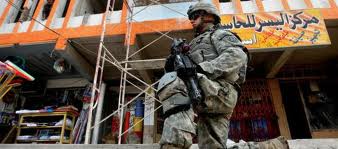
What made the warning especially worrying were intelligence reports saying that the Iraqi militant, Azhar al-Dulaimi, had been trained by the Middle East’s masters of the dark arts of paramilitary operations: the Islamic Revolutionary Guards Corps in Iran and Hezbollah, its Lebanese ally.

“Dulaymi reportedly obtained his training from Hizballah operatives near Qum, Iran, who were under the supervision of Iranian Islamic Revolutionary Guard Corps Quds Force (IRGC-QF) officers in July 2006,” the report noted, using alternative spellings of the principals involved. Read the Document »

Five months later, Mr. Dulaimi was tracked down and killed in an American raid in the sprawling Shiite enclave of Sadr City in Baghdad — but not before four American soldiers had been abducted from an Iraqi headquarters in Karbala and executed in an operation that American military officials say literally bore Mr. Dulaimi’s fingerprints.

Scores of documents made public by WikiLeaks, which has disclosed classified information about the wars in Iraq and Afghanistan, provide a ground-level look — at least as seen by American units in the field and the United States’ military intelligence — at the shadow war between the United States and Iraqi militias backed by Iran’s Revolutionary Guards.

During the administration of President George W. Bush, critics charged that the White House had exaggerated Iran’s role to deflect criticism of its handling of the war and build support for a tough policy toward Iran, including the possibility of military action.

But the field reports disclosed by WikiLeaks, which were never intended to be made public, underscore the seriousness with which Iran’s role has been seen by the American military. The political struggle between the United States and Iran to influence events in Iraq still continues as Prime Minister Nuri Kamal al-Maliki has sought to assemble a coalition — that would include the anti-American cleric Moktada al-Sadr — that will allow him to remain in power. But much of the American’s military concern has revolved around Iran’s role in arming and assisting Shiite militias.

Citing the testimony of detainees, a captured militant’s diary and numerous uncovered weapons caches, among other intelligence, the field reports recount Iran’s role in providing Iraqi militia fighters with rockets, magnetic bombs that can be attached to the underside of cars, “explosively formed penetrators,” or E.F.P.’s, which are the most lethal type of roadside bomb in Iraq, and other weapons. Those include powerful .50-caliber rifles and the Misagh-1, an Iranian replica of a portable Chinese surface-to-air missile, which, according to the reports, was fired at American helicopters and downed one in east Baghdad in July 2007.

Iraqi militants went to Iran to be trained as snipers and in the use of explosives, the field reports assert, and Iran’s Quds Force collaborated with Iraqi extremists to encourage the assassination of Iraqi officials.

The reports make it clear that the lethal contest between Iranian-backed militias and American forces continued after President Obama sought to open a diplomatic dialogue with Iran’s leaders and reaffirmed the agreement between the United States and Iraq to withdraw American troops from Iraq by the end of 2011.

A Revolutionary Force

Established by Ayatollah Ruhollah Khomeini after the 1979 Iranian revolution, the Islamic Revolutionary Guards Corps has expanded its influence at home under President Mahmoud Ahmadinejad, a former member of the corps, and it plays an important role in Iran’s economy, politics and internal security. The corps’s Quds Force, under the command of Brig. Gen. Qassem Soleimani, has responsibility for foreign operations and has often sought to work though surrogates, like Hezbollah.

While the American government has long believed that the Quds Force has been providing lethal assistance and training to Shiite militants in Iraq, the field reports provide new details about Iran’s support for Iraqi militias and the American military’s operations to counter them.

The reports are written entirely from the perspective of the American-led coalition. No similar Iraqi or Iranian reports have been made available. Nor do the American reports include the more comprehensive assessments that are typically prepared by American intelligence agencies after incidents in the field.

While some of the raw information cannot be verified, it is nonetheless broadly consistent with other classified American intelligence and public accounts by American military officials. As seen by current and former American officials, the Quds Force has two main objectives: to weaken and shape Iraq’s nascent government and to diminish the United States’ role and influence in Iraq.

For people like General Soleimani, “who went through all eight years of the Iran-Iraq war, this is certainly about poking a stick at us, but it is also about achieving strategic advantage in Iraq,” Ryan C. Crocker, the American ambassador in Iraq from 2007 until early 2009, said in an interview.

“I think the Iranians understand that they are not going to dominate Iraq,” Mr. Crocker added, “ but I think they are going to do their level best to weaken it — to have a weak central government that is constantly off balance, that is going to have to be beseeching Iran to stop doing bad things without having the capability to compel them to stop doing bad things. And that is an Iraq that will never again threaten Iran.”

Politics and Militias

According to the reports, Iran’s role has been political as well as military. A Nov. 27, 2005, report, issued before Iraq’s December 2005 parliamentary elections, cautioned that Iranian-backed militia members in the Iraqi government were gaining power and giving Iran influence over Iraqi politics.

“Iran is gaining control of Iraq at many levels of the Iraqi government,” the report warned.

The reports also recount an array of border incidents, including a Sept. 7, 2006, episode in which an Iranian soldier who aimed a rocket-propelled grenade launcher at an American platoon trying to leave the border area was shot and killed by an American soldier with a .50-caliber machine gun. The members of the American platoon, who had gone to the border area with Iraqi troops to look for “infiltration routes” used to smuggle bombs and other weapons into Iraq, were concerned that Iranian border forces were trying to surround and detain them. After this incident, the platoon returned to its base in Iraq under fire from the Iranians even when the American soldiers were “well inside Iraqi territory,” a report noted. Read the Document »

But the reports assert that Iran’s Quds Force and intelligence service has turned to many violent and shadowy tactics as well.

The reports contain numerous references to Iranian agents, but the documents generally describe a pattern in which the Quds Force has sought to maintain a low profile in Iraq by arranging for fighters from Hezbollah in Lebanon to train Iraqi militants in Iran or by giving guidance to Iraqi militias who do the fighting with Iranian financing and weapons.

The reports suggest that Iranian-sponsored assassinations of Iraqi officials became a serious worry.

A case in point is a report that was issued on March 27, 2007. Iranian intelligence agents within the Badr Corps and Jaish al-Mahdi, two Shiite militias, “have recently been influencing attacks on ministry officials in Iraq,” the report said.

According to the March report, officials at the Ministry of Industry were high on the target list. “The desired effect of these attacks is not to simply kill the Ministry of Industry Officials,” the report noted, but also “to show the world, and especially the Arab world, that the Baghdad Security Plan has failed to bring stability,” referring to the troop increase that Gen. David H. Petraeus was overseeing to reduce violence in Iraq. Read the Document »

News reports in early 2007 indicated that a consultant to the ministry and his daughter were shot and killed on the way to his office. The March report does not mention the attack, but it asserts that one gunman was carrying out a systematic assassination campaign, which included killing three bodyguards and plotting to attack ministry officials while wearing a stolen Iraqi Army uniform.

The provision of Iranian rockets, mortars and bombs to Shiite militants has also been a major concern. A Nov. 22, 2005, report recounted an effort by the Iraqi border police to stop the smuggling of weapons from Iran, which “recovered a quantity of bomb-making equipment, including explosively formed projectiles,” which are capable of blasting a metal projectile through the door of an armored Humvee. Read the Document »

A Shiite militant from the Jaish al-Mahdi militia, also known as the Mahdi Army, was planning to carry out a mortar attack on the Green Zone in Baghdad, using rockets and mortar shells shipped by the Quds Force, according to a report on Dec. 1, 2006. On Nov. 28, the report noted, the Mahdi Army commander, Ali al-Sa’idi, “met Iranian officials reported to be IRGC officers at the border to pick up three shipments of rockets.”

A Dec. 27, 2008, report noted one instance when American soldiers from the 82nd Airborne Division captured several suspected members of the Jaish al-Mahdi militia and seized a weapons cache, which also included several diaries, including one that explained “why detainee joined JAM and how they traffic materials from Iran.” Read the Document »

The attacks continued during Mr. Obama’s first year in office, with no indication in the reports that the new administration’s policies led the Quds Force to end its support for Iraqi militants. The pending American troop withdrawals, the reports asserted, may even have encouraged some militant attacks.

A June 25, 2009, report about an especially bloody E.F.P. attack that wounded 10 American soldiers noted that the militants used tactics “being employed by trained violent extremist members that have returned from Iran.” The purpose of the attack, the report speculated, was to increase American casualties so militants could claim that they had “fought the occupiers and forced them to withdraw.”

An intelligence analysis of a Dec. 31, 2009, attack on the Green Zone using 107-millimeter rockets concluded that it was carried out by the Baghdad branch of Kataib Hezbollah, a militant Shiite group that American intelligence has long believed is supported by Iran. According to the December report, a technical expert from Kataib Hezbollah met before the attack with a “weapons facilitator” who “reportedly traveled to Iran, possibility to facilitate the attacks on 31 Dec.” Read the Document »

That same month, American Special Operations forces and a specially trained Iraqi police unit mounted a raid that snared an Iraqi militant near Basra who had been trained in Iran. A Dec. 19, 2009, report stated that the detainee was involved in smuggling “sticky bombs”— explosives that are attached magnetically to the underside of vehicles — into Iraq and was “suspected of collecting information on CF [coalition forces] and passing them to Iranian intelligence agents.” Read the Document »

A Bold Operation

One of the most striking episodes detailed in the trove of documents made public by WikiLeaks describes a plot to kidnap American soldiers from their Humvees. According to the Dec. 22, 2006, report, a militia commander, Hasan Salim, devised a plan to capture American soldiers in Baghdad and hold them hostage in Sadr City to deter American raids there.

To carry out the plan, Mr. Salim turned to Mr. Dulaimi, a Sunni who converted to the Shiite branch of the faith while studying in the holy Shiite city of Najaf in 1995. Mr. Dulaimi, the report noted, was picked for the operation because he “allegedly trained in Iran on how to conduct precision, military style kidnappings.” Read the Document »

Those kidnappings were never carried out. But the next month, militants conducted a raid to kidnap American soldiers working at the Iraqi security headquarters in Karbala, known as the Provincial Joint Coordination Center.

The documents made public by WikiLeaks do not include an intelligence assessment as to who carried out the Karbala operation. But American military officials said after the attack that Mr. Dulaimi was the tactical commander of the operation and that his fingerprints were found on the getaway car. American officials have said he collaborated with Qais and Laith Khazali, two Shiite militant leaders who were captured after the raid along with a Hezbollah operative. The Khazali brothers were released after the raid as part of an effort at political reconciliation and are now believed to be in Iran.

The documents, however, do provide a vivid account of the Karbala attack as it unfolded.

At 7:10 p.m., several sport utility vehicles of the type typically used by the American-led coalition blocked the entrance to the headquarters compound. Twenty minutes later, an “unknown number of personnel, wearing American uniforms and carrying American weapons attacked the PJCC,” the report said.

The attackers managed to kidnap four American soldiers, dragging them into an S.U.V., which was pursued by police officers from an Iraqi SWAT unit. Calculating that they were trapped, the militants shot the handcuffed hostages and fled. Three of the American soldiers who had been abducted died at the scene. The fourth later died of his wounds, the report said, and a fifth American soldier was killed in the initial attack on the compound.

Summing up the episode, the American commander of a police training team noted in the report that that the adversary appeared to be particularly well trained. “PTT leader on ground stated insurgents were professionals and appeared to have a well planned operation,” the report said.

Illegal Interrogations of 14 Political Prisoners at Evin’s Ward 350 Continue

0

http://freedomessenger.com/?p=13618

Report in Persian by Kaleme
Translation by Banooye Sabz | Edited by P2E


Sunday, October 31, 2010 –  Summary: 14 political prisoners who recently demanded for the formation of a fact finding committee to investigate the truth about last year’s presidential elections and the events that followed, have had to once again endure grueling interrogations at Evin prison in recent weeks.

All 14 political prisoners are serving their prison sentences and interrogating them while serving their terms is completely illegal. Prisoners are held in prison under the jurisdiction of the Prison Organizations in Iran, and as such, Ministry of Intelligence interrogators do not have the legal authority to interrogate them. As a result the prisoners filed an official complaint to the authorities at Iran’s Prison Organization and the representative of Tehran’s prosecutor, but have not received a response to date.

The interrogations took place as a result of a statement that the 14 prisoners issued in response to Ahamadinejad’s comment at the United Nations to ‘form an independent fact finding committee to probe the events of 9/11″. The prisoners requested that Iran’s government form an independent fact finding committee to investigate the truth about last year’s presidential elections and the events that followed.  The prisoners were repeatedly threatened by prison officials, after this statement was issued and published in a variety of online media outlets.

Prison officials have asked these prisoners to deny signing such a statement, however the prisoners have not given in to such a demand and instead have filed a complaint about the illegal nature of the interrogations by Ministry of Intelligence interrogators.  They have stressed that they are serving their original prison sentences and no new charges have been filed against them and these interrogations are completely illegal.

Bahman Ahmadi Amoui, Said Milad Asadi, Mohsen Aminzadeh, Ali Parvizi, Ali Tajernia, Mohammad Davari, Majid Dori, Amir Khosro Dalirsani , Mohammad Farid Taheri Ghazvini, Keyvan Samimi, Kouhyar Goodarzi, Ali Malihi, Abollah Momeni and Mohsen Mirdamadi are amongst the political prisoners who signed the statement and have endured hours of illegal interrogations by Ministry of Intelligence interrogators.

Majid Dori was interrogated a few days prior to his exile to Behbahan prison. Ali Parviz was interrogated a few days prior to his release.  Kouhyar Goodarzi was also transferred to Rajai Shahr prison a few days after his interrogation.  There is growing fear that there will be further transfers to prisons with harsher conditions and new charges will be created and filed against the remaining prisoners who signed this statement.

The statement signed by the 14 political prisoners reads: “As innocent victims of the incidents that occurred after the presidential elections of 2009 and in the same fashion as Mr. Ahmadinejad’s recent request of the United Nations, since we were wrongfully and unjustly accused, arrested and imprisoned, we request that an independent, national, fact finding committee be established, consisting of trusted and reliable members of our communities to investigate the truth behind the elections and the events that followed.”

Court Officials to Families of Ali Saremi and Reza Sharifi Boukani: “Why Are they Still Alive?”

0

http://freedomessenger.com/?p=13612

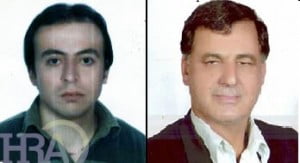
Reza Sharifi Boukani (left) and Mohammad Ali Saremi (right)

Persian Report by Komite Defa |
English by P2E | Translation by Azadeh Sabz

If you burn my body and sew it to a pole, Can you steal love for the motherland from my soul?
– Ali Saremi, political prisoner

The families of political prisoners Ali Saremi and Reza Sharifi Boukani who have referred to the Revolutionary Court in Tehran several times inquiring on the status of their loved ones’ case files have not [to date] received a convincing response; instead, they were faced with rude reactions from the authorities. Court officials responded to the families by asking, “Why are they still alive? Their sentences should have been implemented by now.” The families were escorted out of the court.

Saremi and Boukani are both held in ward 4 of Rajai Shahr prison in Karaj, Iran. During the last few days, Intelligence agents attacked prisoners in ward 4 and confiscated some personal items belonging to the political prisoners, including the personal writings of Saremi and Boukani. These two political prisoners were then limited from accessing the public area of the prison, which consequently has caused their families to become more concerned.

63 year old Mohammad Ali Saremi was arrested in September 2007 for speaking at the memorial event in Khavaran cemetery for victims of the 1988 prison massacres.  After enduring 26 months of solitary confinement, interrogations, and torture in Evin prison, a death sentence was delivered to him in prison on December 29, 2009 by branch 15 of the Revolutionary Court.

Saremi was transferred to Rajai Shahr prison on August 29, 2010. He was interrogated for disclosing intolerable prison conditions [to the public] and protesting against the lack of due process in regards to his death sentence.

Mahin Saremi, Ali Saremi’s wife, told the International Campaign for Human Rights in Iran, “Once we also went to see our son at Camp Ashraf [in Iraq] in 2005. A short time after our return we were arrested and my husband spent a year in prison. A few months later he was arrested on charges of participating in ceremonies commemorating the 19th anniversary of the mass executions of political prisoners in 1988. But I don’t know why he suddenly received the death sentence last year after the elections.”

Reza Sharifi Boukani is charged with “espionage” and “Moharebeh” (waging war against God). He was arrested by Intelligence agents on May 5, 2010 in Tehran. He remains detained in Rajai Shahr prison. He has been interrogated and tortured to make a false televised confession. Boukani is a Kurdish political prisoner.

Basij Commander Calls For Including “Culture of Martyrdom” In Textbooks

0

http://freedomessenger.com/?p=13664

Mohammad Reza Naghdi, Commander of Iran’s Basij Force, says the ‘values’ of sacred defense need to be taught in schools.

October 31, 2010

The Commander of Iran’s Basij Force, Mohammad Reza Naghdi, has said that pro-government forces are calling on the Education Ministry to include “the culture of self-sacrifice and martyrdom” in school textbooks.Martyrdom and self-sacrifice were highly promoted during the 1980-1988 Iran-Iraq war, when thousands of school children were sent to the front and promised that by dying as martyrs, they would go straight to heaven.Naghdi said the Basij force want to bring the “values” of the sacred defense (a reference to the war with Iraq) to classrooms and textbooks. He said the move is part of the Basij’s measures to counter the “soft war” Iranian officials say the country’s enemies have launched to destabilize the Islamic establishment and lead to its downfall.

(Read more on Iran’s warning over a ‘soft war’)

“The course of defense that has been taught at schools and high schools for the past two years is somewhat dry and classic,” said Naghdi. He added that by including the “culture of martyrdom,” the textbooks will be transformed.

He also said that the Basij force is trying to have a more “direct role” in the preparation and compilation of textbooks, including those dealing with the issue of defense.

Iran’s Education Minister, Hamid Reza Haji Babayi said earlier this year that “the culture of the sacred defense” should be included in school books:

“I don’t believe that the culture of martyrdom and self-sacrifice has not been transferred to our third and fourth generation. In case of war, the youth we have today will be nothing less that than [those who acted] in the time of war.”

A Tehran based expert on education, Shirzad Abdollahi, told the BBC that “martyrdom and self-sacrifice” have in some form been part of schools’ curriculum.

“Some think repeating an issue in schoolbooks demonstrates its importance, while it can actually lead students to have a negative view about it.”

In recent months, Iran has increased efforts to ideologically indoctrinate schoolchildren, including setting up Basij centers at elementary schools. There are reportedly also plans for clerics to be permanently based in schools to answer religious questions.

A mother of a seven-year-old boy in Tehran, who described the efforts as “brain washing,” expressed doubt over the impact of the measures.

“These things have been going on for 30 years. Have they made us the way [Iranian leaders] want us to be? Of course not. These moves will backfire and lead to more frustration among our children,” said the mother, who spoke to Persian Letters on condition of anonymity.

– Golnaz Esfandiari

Arms shipment found in Nigeria loaded in Iran: firm

0

http://freedomessenger.com/?p=13553

By Susan Njanji (AFP)

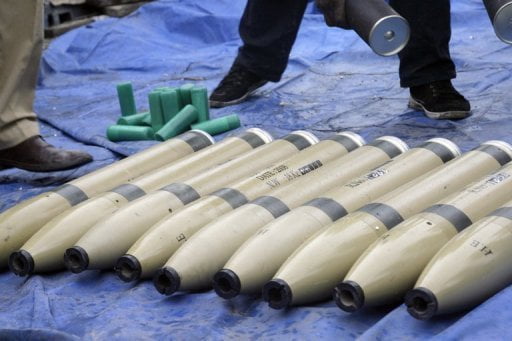
LAGOS — An illegal arms shipment including rockets and grenades discovered in Nigeria this week was loaded in Iran by an Iranian trader, the firm that operates the vessel that delivered it said on Friday.

Security agents this week intercepted 13 containers declared as building materials and discharged from the CMA CGM Everest vessel at the country’s busiest port of Apapa in Nigeria’s economic hub of Lagos.

“The shipment in question was booked as a ‘shippers owned container’ and supplied loaded and sealed by the shipper, an Iranian trader who does not appear on any ‘forbidden persons’ listing,” said CMA CGM, which operates the Marshall Islands-flagged vessel.

CMA CGM, based in France, said the containers were loaded in Bandar Abbas, a southern port city of Iran, and discharged in Lagos in July.

But last week the shipper asked to have the containers reloaded and sent to the Gambia, a tiny west African country wedged inside Senegal, according to the firm.

Clearance had been obtained before Nigerian customs intervened and halted the shipment, according to CMA CGM.

Iranian embassy officials in Nigeria refused to comment, saying a statement would be issued later.

A Nigerian intelligence agency spokeswoman has said authorities were on heightened alert following October 1 twin car bombings in the capital that killed at least 12 people.

Ten of the containers opened so far contain an array of weaponry, customs spokesman Wale Adeniyi said, despite being declared as building materials.

CMA CGM said it has been cleared of any involvement in the illegal shipment and called itself the “victim of (a) false cargo declaration.”

Two people have reportedly been arrested in connection with the cargo, but security officials have not confirmed the reports.

Authorities have publicly refused to speculate on the origins or destination of the shipment, coming just months before presidential elections, but have heightened port security.

“Certainly security at the ports has been beefed up and we are trying to move up ahead … and tighten our own systems to block such shipments,” Adeniyi told AFP.

Regarding paperwork for the shipment that contained the weapons, Adeniyi said “the documents were irregular… and we felt that the names given on them were false.”

Precise quantities of the weapons will be known after all the containers are opened, he said.

So far, the 10 examined contained “similar contents — mortars, grenades, light ammunition and of course tiles,” said Adeniyi.

The ship’s last port of call before arriving in Nigeria was India’s Jawaharlal Nehru port near Mumbai, the customs service has said. The vessel berthed in the Nigerian port on July 10 and sailed out on July 15.

Illegal weapons are widespread in Nigeria, and the discovery has sparked fresh concerns with presidential elections set to be held early next year. Ballots have frequently been tainted by violence in the oil-rich nation.

Militants in the Niger Delta, the country’s main oil-producing region, have carried out scores of attacks there in recent years.

The Movement for the Emancipation of the Niger Delta, the country’s most prominent militant group, claimed the October 1 car bombings.

A series of attacks have also been carried out by suspected members of an Islamist sect, known as Boko Haram, in the country’s north in recent months.

The life story of a person who today is the “military advisor” to Iranian Leader Ayatollah Khamenei

0

This is the life story of a person who today is the “military advisor” to Iranian Leader Ayatollah Khamenei. This has made him the most powerful military man in Iran. According to the Iranian Constitutions, the leadership post, now in the hands of Ayatollah Khamenei, is the Commander-in-Chief and can command to declare war or issue the order to ceasefire and piece. The IRCG, the Iranian military and the police force are all absolutely obedient to his commands and wishes. In a religious and dictator country like Iran where the highest rank belongs to a cleric, this means that his sayings and commands are those of God. In this regard, however, the IRGC is more religious than the military because, although the military commanders are all chosen from the IRGC, the main body consists of secular men who are less interested in getting involved in religion or politics. This distinguishes them from their IRGC counterparts who consider themselves as the “guardians’ of Ayatollah Khamenei and the protectors of the regime values.

Yahya Rahim Safavi is the military advisor to the Supreme Leader and always attends in public in his military uniform. Many journalists and analysts in Tehran believe he is the main planner of the Islamic Republic military tactics. Before he was chosen for this post, which is in spite of the title “advisor” is very important and influential, he was the Head of the IRGC for 10 years. He was preceded by Mohsen Rezaee, who, after 10 years of heading the IRGC, left the military, studied economics and challenged Ahmadinejad in the last year’s controversial elections, representing a vast range of former high-ranking IRGC officials who, although heartedly committed Ayatollah Khamenei, criticize Ahmadinejad’s various approaches and foreign adventures as an outline that, in Rezaee’s own word in his first press conference, “have placed the country on the verge of collapse”. He was succeeded by Aziz Hafari, the current head of the IRGC.

Not only has Rahim Safavi been a member of the IRGC for more than 30 years, but also his wife and brothers are members of the IRGC and the military as well and this has made the Safavis a military-political family.

His brother, Homayoun, is a member of the IRGC and Morteza, another brother, is in the military. Mehrdad, his other brother, was the commander of “Serat” engineering base when he got killed during Iran-Iraq war. However, long before these brothers joined the military and the IRGC, it was the oldest brother, Salman, who, during the Iranian imperial regime, established a group called “Tohidi Saf” with some prominent figures and started armed struggle with the imperial regime.

Mahboobeh, his sister, works at the Martyr Foundation which offers services to those whose family member got killed in Iran-Iraq war. Jalal Afshar, Mahboobeh’s husband, had a high post in Alghadir Garrison and Imam Hosein Division in Isfahan. Yahya safavi, the family’s sixth child, promoted through the Iranian military structure sooner and more easily.

Yahya was born in a family with a farmer father and a religious mother. When he was five, the family moved from the village to Isfahan, the second largest city after Tehran in Iran. After his mother died, his father remarried and the nine-member family increased to 11.

When he finished high school, he was uncertain whether or not to continue his study and go to university because in those days (Shah’s reign), Iranian universities promote western and secular values and from the viewpoint of religious families like Rahim Safavi, universities were full of immoralities.

Once in a local mosque, Rahim Safavi asks a cleric to do sortes for him, that is, to open Quran and if there comes a verse with a positive meaning on the page, he will go to university and if not, he won’t. The cleric tells him: “do whatever you have in your mind and you will definitely be successful.

Therefore, he and his friend Mahdi Yazdi (brother of Ayatollah Mohammad Yazdi, former head of Iranian Judiciary for ten years and now a key figure) started studying and when he passed the entrance exam, he went to Tabriz to major in geology.

The university was a gate for him to get into social activities and he established a student council named “Muslim Students Club of Tabriz University” with Ahmad Khoram (who later became the Minister of Transportation during Khatami presidency), Mehdi Bakeri (a well-known martyr during Iran-Iraq war whose family now is an ardent opponent to Ahmadinejad government and the IRGC) and Abolhasan Alle Es’hagh (a key economic figure and supporter of the regime). In this student council, which gathered at a dormitory called “valiahd” (Crown Prince) at eastern Tabriz but they called it “Valiasr” a title for the 12th Imam according to the Shiite, he experienced political-religious activities for the first time.

When he finished university, he was summoned for military service where his real education actually began. Wearing military uniform, he stepped in the main route of his life. In this time, he still thought about his progress and, in spite of the customary manner and regulation, was chosen as the first company commander. “I was a second company commander of a 45-50 individuals and I was surprised when I was chosen first company commander. I told the battalion commander that I was a noncommissioned officer and that according to the rules, I couldn’t be chosen in charge of a company. But the battalion commander rejected the rules and told me that i knew the military science and technology very well and that I should attend my new post the next morning”, he says.

One year before the Iranian revolution, his military service ended and he went to Qom, the religion capital of Iran, to learn religious teachings including Islamic governing in the clergymen’s classes. His secret religious and political activities left hem no choice but to leave the country. He fled Iran under alias Rahim, a name that has still stayed with him and Iranian official media call him “yahya Rahim Safavi”.

He didn’t head to Europe; instead, he went to Syria and Lebanon where he could gain guerilla trainings in Palestinian Camps. Then he went to Paris to visit Ayatollah Khomeini, leader of Iranian revolution who asked him and other students to return to the country and contribute to the preparations of the revolution more than ever.

When the revolution successfully fulfilled in Tehran, he went to him hometown, Isfahan. A day after the regime collapsed in Tehran, he and some of his friends conquered SAVAK (National Intelligence and Security Organization) and began to fight the imperial reign remaining ones. Now, he was a Guardian of the Islamic Revolution. These small groups nationwide were mobilized as the revolution guard and established the Islamic Republic Guardian Corps”, the IRGC.

A year after the Islamic revolution, Yahya Rahim Safavi was such a well-known face among the guardians that the deputy commander of Iran’s Revolutionary Guard asked him to travel to western province of Kurdistan and fight the opponent forces there. With 200 isfahani guards, Rahim Safavi departed for Sanandaj, capital of Kurdistan, and undertook the Revolutionary Guard Command there. Purging began and with his effort, “Stroke Battalion” was established. Its first head was Morteza Safavi, His brother.

After months of civil conflict, the Iraqi military launched a widespread attack on Iranian western borders. Rahim Safavi function in cracking down Kurd rebels led to his appointment as a war commander in the oil-rich and prosperous province of Khuzestan. This province is the oil resource of the country and the Iraqi Military did its best to attach this region to itself.

During the war as well as the post-war years, Rahim Safavi was among high-ranking IRGC commanders until another great change took place in the country and reformist Mohammad Khatami became president. Unlike all Islamic Republic Leaders, khatami had liberal tendencies and was an ardent opponent to religious rigors, censorship and intruding people’s personal lives. He tried to establish ties with European governments. Along with several other reasons, these made him popular among the Iranian youth who were fed up with difficult religious life.

After two decades of silence and pressure, Iranian media started to criticize various issues, from war-time management to foreign policy to the regime’s too much support for Palestine and Lebanon. They talked about freedom of media and optional Hijab and demanded for the reduction of the leader’s and the IRGC’s power. During this period, Mohsen Resaee resigned his post as the head of the IRGC and Ayatollah khamenei appointed Rahim Safavi as the new Head of the IRGC.

During the eight years of his time as the IRGC head, a half-secret half-open war took place between the conservative and religious fractions that supported Ayatollah Khamenei and the reformists who increasingly gained power. Beside the presidency, they managed to capture many parliamentary seats. Forming rural and urban councils, the reformists obtained these councils as well.

One of the reformists’ power-gaining issues was their challenge for the highly-religious regime of Iran. At this time, the IRGC openly or secretly entered the scene and launched a war ranging from economics to censorship against the reformists with the help of other pro-Khamenei institutions. The IRGC played a key role in the 7th and the 8th (current) parliamentary elections. It disqualified reformist figures, banned all their media and jailed many.

By attacking students’ dormitory in Tehran, the IRGC deprived the students and the universities of vivacity and activity. It called Khatami’s reformist government and its supporters “westernized” and “subverters”. To deal with the reformists, the IRGC demonstrated such force that it ended the last year’s controversial presidential elections with a soft coup in favor of Ahmadinejad and banished the protestors to the elections results from the streets through a violent crackdown. The election management was conducted not by Rahim Safavi, but by Aziz Jafari, the new IRGC head. Now with a more powerful post at Ayatollah Khamenei office, Rahim Safavi played a key role in this coup Khamenei’s support for the IRGC coup.

IRGC’s New Plan to Confront Crisis

0

Various state news resources in Iran report on a new plan by the IRGC known as the “Resistance Movement” which aims at gaining preparation to confront ultra-crisis situations. According to this plan, a collection of forces will be chosen and staffed from the Basij bases all over the country so that in case the current situation arises from tension to crisis and the country fails to correctly manage the crisis with the regime at the risk of collapse, a network of highly-committed individuals to the regime will be available and can be summoned under any circumstances.

The purpose of establishing these networks is announced as “regaining the control over the situation in any possible way”. According to this plan, in case the Basij bases collapse, the selected individuals will be summoned by the commanders of each district in a place called “Emergency Operation Center” while they are prepared to carry out the instructions.

An individual attending a Basij Base describes the purpose to this plan:

“Resistance Movement” plan aims at collecting a network of those who are most committed to the regime and can be available and summoned under any circumstances to regain the control over the situation in case the situation changes from stability to tension, from tension to stress and eventually to crisis and the crisis management fails with the risk of the regime collapse.

The source underlined that in the Emergency Operation Center, the commander of each district is obliged to set up a new seat outside the bases which enjoys the qualifications of an emergency operation center, is adjacent to the most important entrances and exits of the district, enjoys the parameters of the unbreakable defense with the capacity to keep arms and ammunitions.

Therefore, based on its logistics, every distinct is obliged to inform its sub-bases to secretly select five individuals among the members and introduce them to the superiors.

Some of the Green Movement pro websites such as Jaras believe that choosing five individuals among the all members of each Basij Base indicates that since these members have arisen from the public, the IRGC fear that in case of a crisis, 90 percent of their forces would refuse to cooperate. Therefore, they are content with this limited numbers under restricted conditions.

Considering the fact that some of the IRGC commanders and security officials confessed to and warned about a social riot resulting from the upcoming economic pressures based on the estimates by their informational bodies, it’s safe to say that the fear of a serious and uncontrollable crisis arising from public riot made them get prepared to confront a critical situation.

Basij and the plain-clothes militia played a key role in the bloody crackdown in the wake of the last year’s controversial presidential elections.

Information on the Commander Who Confessed to Coup-d’état

0

“Jaras” news website which is close to the Iranian opposition leaders known as the “Green Movement” released information regarding an IRGC high-ranking commander.

Two month ego, seven prominent members of Iranian reformist parties who spent time in jail after the last year’s post-election events sent an open letter to the Iranian Judiciary System, invoking an auditory file of a speech by one of the IRGC high-ranking commanders in a secret meeting in Mashhad, and announced that what happened during the last year’s controversial presidential elections was a coup-d’état by the IRGC and officially complained against him, calling for an independent arbitration by the Judiciary System.

Jaras reports so about him:

His name is Commander Moshfegh. However, from the early days after this letter was publicized, the Green Movement associate websites considered the possibility that Moshfegh might be his alias.

Consequently, all these seven members were sent back to jail by the Judiciary System. After more than two months since their official complaint against the deputy commander of the IRGC “Sar Allah” quarters for his statements regarding the reformists and his confession to the IRGC role in the elections, Jaras website attempts to provide its readers with some unsaid facts about this commander:

His real name is IRGC Commander Abdollah Zeighami. His current position is the deputy commander of the IRGC “Sar Allah” quarters. During the Iraq-Iran war, he served in the IRGC’s Demolition and Operation Unit.

His speech in Mashhad reflects the mental image of the coup-d’état planners towards the critics of the current political situation and the protesters to the 10Th presidential elections as well as the risks of Ahmadinejad’s defeat and the necessity to contribute to his victory and explains the various aspects of a two-year informational and operational activity while verbally attacking the protesters. In his speech, Zeighami accuses the reformists and critics of irreligiousness, espionage, moral corruption, power-thirstiness and overthrow.

Jaras calls these statements “confessions” and continues:

The confessions by this commander which led to the letter and complaint by the reformists are thinkable. The organized role of the IRGC in the political activities, information operations to contribute to Ahmadinejad’s victory in the elections, causing obstacles for other candidates and the pre-election operations are of high importance. According to Zeighami, he personally interrogates the accused and the interrogation information on those who were detained by the IRGC is within his reach.

Quoting from its resources in Tehran, this opposition website continues to say:

As the result of the speech leak and the consequent complaint by the reformist, his promotion has been postponed.

The seven political activists (Mohsen Aminzadeh, Mostafa Tajzadeh, Abdollah Ramazanzadeh, Fezollah Arabsorkhi, Mogsen Safaee Farahani, Mohsen Mirdamadi and Behzad Nabavi) presented their complaint under the title of “complaint against the military-intelligence group as well as the planners and executors of election fraud” to the head of the Judiciary System as well as the Armed Force Judiciary Organization. The complainants, however, ended up in jail whereas the commander’s statements have not been refuted by any of the country’s officials.

Basij and IRGC Struggle to Subjugate Iranian Retain Market

0

Hosein Radmard, Head of Iranian Guilds Council, informed of the Basij plan to launch 300 chain department stores across the country. This piece of news is the latest in regard to the vast economic activities of the militia Basij and its main organ, the IRGC.

In recent years, the volume of economic activities of military organs, especially the IRGC, the Basij and the Police Force, has increased and this has resulted in the increase of criticism by economists and independent figures.

Economic activities by military organs have increased do much that sometimes they become serious competitions with each organ struggling to gain more shares than other military organs in the country’s economy and market. Sometimes these struggles result in death; as in the case of Majid Soleimanipoor, the winner of Iranian Telecommunication Company auction, who died last November and his death was announced suspicious. He was the CEO of the company that was to buy the TCI shares and online resources accused his rivals, namely the IRGC and the Basij, of his death.

About four months ago, the president of the Central Bank told the reporters that Mehr Financial and Credit Institution, an affiliate to the Basij Force, were to convert to a bank. This announcement was made a few days after, in a controversial move, Mehr Institution shares were transferred to the IRGC. The IRGC expended $8bn to gain the TCI shares; an amount that may be unaffordable by the government. In the time of the contract, many questioned the whereabouts of this enormous amount.

From Invisible Waterfronts to Visible Airports

Beside the open and evident ways, the IRGC and its affiliate, the Basij add up to their wealth and power in other ways as well and now have become one of the greatest economic mafia in the world. When Medi Karubi was the speaker of the 6th parliament, he talked about invisible waterfronts that worked under the IRGC’s supervision. Until then, only a few newspapers alluded to these 60 secret waterfronts and Karubi was the first to publicly announce their existence. Ali Ghanbari, Member of the 6th parliament, said that one third of the country’s imports took place at these waterfronts.

It is said that through these waterfronts including Shahid Rajaee port, the IRGC exports inexpensive state gasoline and gains 300% benefit. Also, some of the independent members of the 6th parliament acknowledged that the volume of the IRGC smiggling activities was over $12bn and believed that 68% of the country’s imports took place at the illegal waterfronts.

These events took place when the reform government was ruling the country and before Mahmud Ahmadinejad took the office. During Ahmadinejad presidency, massive contracts, in various fields of oil and gasoline, TCI, railways, etc, were signed with the IRGC and the Bsij.

Some of the Tehran’s clothing market activists attribute the 80% of the illegal imports of cloth and garments to the IRGC and believe no one but the IRGC and the Basij can pass 80% of the illegal imports of cloth and garments through Shahid Rajaee port. Such illegal imports from China have resulted in the bankruptcy of many of the country’s industries and those engaged in them.

Some of the MPs of the border cities implicitly name the IRGC as the importer of cigarettes, alcohol drinks, satellite receivers, and so on.

Payam airport near Karaj officially belongs to the IRGC and contributes to the invisible waterfronts in the south. In the fall and winter 0f 88, Shargh newspaper reported about 2000 tones of goods that were imported via this airport. These goods varied from Viagra pills to computer accessories. In March 2003, Ali Yunesi, Minister of Intelligence in Mohammad Khatami’s cabinet, declared that the goods clearance through this airport took place without the presence of Customs officials.

Besides, some media report about 25 entrance and exit gates in Mer Abad Airport that the Iranian Customs has no control over and the IRGC imports and exports illegally via them.

Beside the IRGC and the Basij, other organs have pre-empted the Iranian market. The impolitic imports of sugar and tea have resulted in the bankruptcy and unemployment of many including those active in these areas as well as farmers.

Ahmadinejad: Presence of the Basijis Is Reassuring

In October 2008, in the inauguration ceremony of the executive operation of the water transfer project from Dez River branches to Ghomrood, Mahmud Ahmadinejad said: “in order to develop the country, we need Jihadist and faithful spirit. The presence of the Basijis is reassuring to every one and suggests that we can take great measures in the country. Some individuals, however, express wrong and unaware opinions when they say that the presence of Basij in the country’s projects makes it difficult for other sectors to be active in those fields. This opinion is wrong and due to unawareness”.

It seems that now, in addition to massive industrial and construction projects, the IRGC and the Basij are planning to enter the microeconomics so that they can eliminate smaller and more fragile organs and totally pre-empt the Iranian economy, reassuring the Leader of the Islamic Republic an the president more than before. In fact, as some observers of the Leader and his affiliate organs like the IRGC, Oppressed Foundation, Astan Ghods and Martyr Foundation believe that by financially supporting those who are loyal to the Leader, these organs are trying to establish a special class in the society so that they will always have content and reliable supporters in the society.