Home Blog Page 79

Iran Regime Uses Drugs to Fund Terrorism

As the Iranian regime is under international sanctions, how on earth are they able to fund proxy terrorist groups in Iraq, Lebanon, Syria, Yemen, and more?

Well, the Iranian opposition asserts that the regime has actually established an international arms smuggling and drug trafficking system, using the financial resources plundered from the Iranian people. They said that groups operating under the influence of Supreme Leader Ali Khamenei and managed by the Revolutionary Guards (IRGC) and Quds Force are funding terrorism and regional interventions through sending drugs to the West.

For the clearest picture, we need to look at international media coverage, but due to the secrecy of the Iranian regime, it should be noted that the evidence uncovered is just the tip of the iceberg.

Drug trafficking

WikiLeaks revealed a US Embassy report that stated that over 80% of global opium and over 28% of global heroin were being transported through Iran in 2007. While the Times reported in 2011 that the Revolutionary Guards has a huge role in Iran’s “multibillion-pound” drug trafficking and that they’re using this to create a relationship with the “global crime network” to undermine the West.

Meanwhile, the US Treasury identified senior Quds Force commander Brigadier General Gholamreza Baghbani as a drug trafficker in 2010, citing evidence that he let Afghan traffickers smuggle drugs into Europe through Iran if they would deliver weapons to the Taliban, and sent out an arrest warrant.

This year alone, these drug shipments happened:

  • May 20 – 244 kilograms of heroin smuggled into Azerbaijan in a watermelon truck
  • May 10 – 1,452kg of heroin found in Romania in a shipload of construction materials headed to western Europe.
  • April 26 – 17 tons of drugs (worth $44.78 million) seized by Nigerian officials that were headed for Libya.
  • April 13 – 230kg of heroin discovered in Azerbaijan en route to Ukraine in a potato truck
  • February – 401kg of heroin found in containers of bitumen roofing rolls on a ship in Bulgaria

As a result of this and a further thwarted attempt to smuggle drugs through Saudi Arabia, the country banned fruit and vegetable shipments that were coming from Lebanon, where the Iranian regime proxy Hezbollah is based.

Read the complete article at: Iran News Update

Also Read: IRGC’s Hezbollah, “Party of Allah” or “Party of Drugs”?
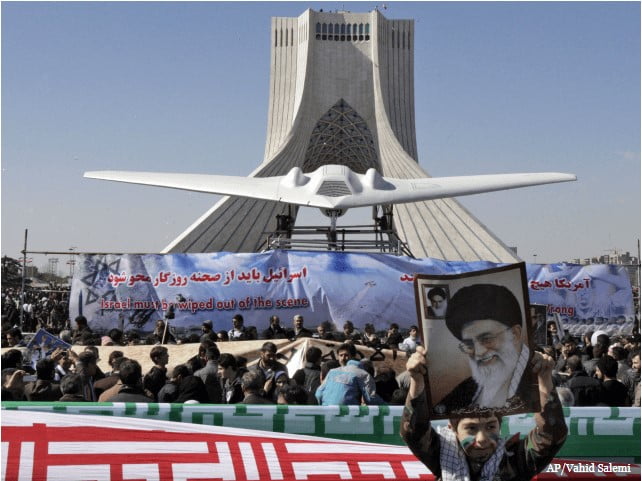


Iran-Backed Militias Warn: Iranian Drones Can Attack U.S. Troops in Iraq

Iran A senior member of the Iran-backed militia coalition Iraq integrated into its armed forces claimed the group can attack U.S. combat troops and military installations with Iran-made drones, Kurdish news outlet Rudaw reported on Monday.

In a television interview with a Rudaw journalist that aired Sunday, Abd al-Rahman al-Jazairi – whose role in the Popular Mobilization Forces (PMF) the outlet did not specify, said that, though they initially acquired the drones from Iran to fight the Islamic State (ISIS), the U.S. targeting of the PMF necessitated a change in target for the military hardware.

“The American presence in Erbil province is problematic, and the US base there is targeting PMF, so the Iranian drones we have are ready for any emergency to strike the American headquarters,” Jazairi said. Erbil is the capital of Iraqi Kurdistan.

The U.S. maintains a troop presence in Erbil as well as an active consulate, though the State Department notes it is currently only able to provide emergency services. Erbil, situated in Iraq’s north, is the capital of the Kurdistan Regional Government (KRG). While, as with U.S. forces, the PMF fought the Islamic State as the same time the KRG’s Peshmerga did, both have increasingly clashed following the fall of the ISIS “caliphate.”

Jazairi claimed the PMF did not wish to damage internal Iraqi infrastructure, but would not hesitate to do so if provoked.

“We reject any attack on Erbil’s airport altogether,” he said, adding the PMF “will definitely respond” to any attack against it.

Baghdad made the PMF, also known as the Popular Mobilization Units (PMU), an official part of the Iraqi military in 2016 after the group rose to prominence fighting ISIS. The militia group earned praise from U.S. military leaders for its role in defending Baghdad from the jihadist incursion. PMF leaders, before and after that incident, threatened U.S. forces in Iraq with violent action. Several member groups of the PMF are U.S.-designated terrorist organizations.

The Iran-backed PMF worked closely with the Quds Force, part of the U.S.-designated terrorist organization the Islamic Revolutionary Guard Corps (IRGC). The IRGC is a wing of the Iranian armed forces. The January 3, 2020, airstrike that neutralized Iranian Major General Qasem Soleimani also took out Abu Mahdi al-Muhandis, the head of the PMF group Hezbollah Brigades.

Read the complete article at: Breitbart

Also Read: Iran’s influence crumbling in Iraq as militias defy IRGC handlers

Troops

U.N. atomic watchdog says it hasn’t had access to key Iran data since late February

The United Nations’ atomic watchdog hasn’t been able to access data important to monitoring Iran’s nuclear program since late February when the Islamic Republic started restricting international inspections of its facilities, the agency said Monday.

In its May 31 report, obtained by CBS News, the International Atomic Energy Agency (IAEA) said that it has “not had access” to several key pieces of information since February 23. These include data on Iran’s stockpiles and production of heavy water, “the data and recordings collected” by equipment designed to monitor centrifuges and “the data from [the Agency’s] online enrichment monitors and electronic seals” as well as “the measurement recordings registered by its installed measurement devices.”

Since February, although the IAEA had access to relevant buildings at Iran’s Fordow and Natanz nuclear sites, “it has not been able to perform daily access upon request,” the report said. The most troubling point in the report is that the international watchdog agency has been unable to verify what Iran is doing at some of the sites.

While the IAEA and Iran earlier acknowledged the restrictions limited access to surveillance cameras at Iranian facilities, Monday’s report indicated they went much further. The IAEA acknowledged it could only provide an estimate of Iran’s overall nuclear stockpile as it continues to enrich uranium at its highest level ever.

The watchdog agency was clear about why they were not receiving the information: “Since 23 February 2021, however, the Agency’s verification and monitoring activities have been affected as a result of Iran’s decision to stop the implementation of its nuclear-related commitments under the JCPOA [known as the Iran nuclear deal], including the Additional Protocol.”

Iran started limiting inspections in a bid to put pressure on the government of U.S. President Biden to lift crippling sanctions reimposed after then President Trump pulled out of the 2015 nuclear deal with Iran unilaterally in 2018.

Read the complete article at: CBS News

Also Read: Blinken: Iran Funds ‘Extremist Groups,’ But Biden Wants to Return to Nuclear Deal Anyway

atomic watchdog atomic watchdog

Iran presses Houthis to step up drone attacks on Saudi Arabia

Iran, bolstered by its increased unmanned aerial capabilities through encouraging Hamas to try to strike Israel with them from Gaza, after it flew a UAV into northern Israel on May 18 and when it used one in April to attack a CIA hangar in northern Iraq’s Kurdistan Region, has now celebrated new Houthi drone attacks on Saudi Arabia.
 
The Iran-backed drone war is now threatening or has involved Syria, Iraq, Israel, Yemen and other states in the region.

Iran’s major drone contribution has been to Yemen, where it supplied expertise and equipment, such as gyroscopes and other specialist parts, to aid an indigenous industry for UAV manufacturing. These became the Qasef-style drones that the Houthi rebels have used for years against Saudi Arabia and the Riyadh-led coalition.
 
“According to Fars News Agency’s International Group, Brig.-Gen. Yahya Sari, the official spokesman for the [Houthi] Yemeni Armed Forces, announced that King Khalid Air Base was once again targeted by a Yemeni drone,” an Iranian report said Monday.
 
It is clear from the Iranian reports that Iran is encouraging and is behind these attacks. They are used to pressure Saudi Arabia. Iran relies on Houthi information to tell the public of the role of the UAV units that the Houthis have.
 
“With the help of God, the UAV unit succeeded in targeting King Khalid Air Base in Khamis Mushait this morning in an attack operation with a 2K Qasef UAV,” the report said. “Referring to the precise targeting, [the Houthis] stressed that the attack was carried out in response to the escalation of aggression and the pervasive siege of Yemen.”
 
The Yemeni UAV unit also targeted the King Khalid Base in Khamis Mushait with a 2K Qasef UAV in an offensive operation on Friday and Sunday. This means there has been a rising drone offensive against Saudi Arabia over the past several days.

Read the complete article at: The Jerusalem Post

Also Read: US seizes Iran weapons to Houthis amid nuke talks

Report: Hamas Coordinated Gaza War With Iran, Hezbollah in Joint Military Room

Senior leaders of the Gaza Strip-ruling Hamas terrorist organization and the Palestinian Islamic Jihad (PIJ) worked reportedly in close coordination with Iran’s Islamic Revolutionary Guard Corps (IRGC) and the Hezbollah to discuss military operations during the 11 days of fighting with Israel.

The editor-in-chief of the Lebanese daily Al-Akhbar, Ibrahim Al-Amin, said during an interview with Hezbollah-operated Al-Manar TV that the IRGC, Hezbollah and Hamas set up a joint military operations room in Beirut during the May hostilities in Israel and the Gaza Strip.

The channel’s report said that Al-Amin claimed “officers from Hezbollah, IRGC, and Hamas coordinated the military confrontation in Gaza” and “the Commander of IRGC’s Al-Quds Force, General Esmail Qaani, visited Lebanon twice to attend the chamber meetings.”

According to a May 27 analysis by the Meir Amit Intelligence and Terrorism Information Center, Qaani discussed the fighting between Israel and the Palestinians in a phone conversation with Hamas head Ismail Haniyeh. The IRGC general praised the acts of “resistance” against the “Zionists” and emphasized Iran’s support for the Palestinians in light of the “aggression and crimes of the Zionist enemy in Jerusalem and Gaza.” Qa’ani also spoke to PIJ secretary general Ziad al-Nakhleh and stressed that Iran is standing by the Palestinians who are defending their land and their rights.

Al-Akhbar’s Al-Amin asserted that the Hezbollah sent weaponry and ammunition to Gaza and helped to move a number of “Palestinian Resistance officers” out of the battle zone during the conflict.

Additionally, the military hub in Beirut provided Palestinian factions with data about the movements of the Israeli military, while drones were used, Al-Amin claimed, to prevent an “ambush” by the “enemy” on Hamas fighters near the Gaza border.

Meanwhile, on May 20, Prime Minister Benjamin Netanyahu showed German Foreign Minister Heiko Maas during his visit to Israel an Iranian drone that had been downed by the Israel Defense Forces in the Beit Shean area, as evidence that “the true backer of much of this aggression is Iran.”

Read the complete article at: Algemeiner

Also Read: Iran, a longtime backer of Hamas, cheers attacks on Israel

Gaza War Gaza War

Iran sentences journalist to 30 months jail, flogging

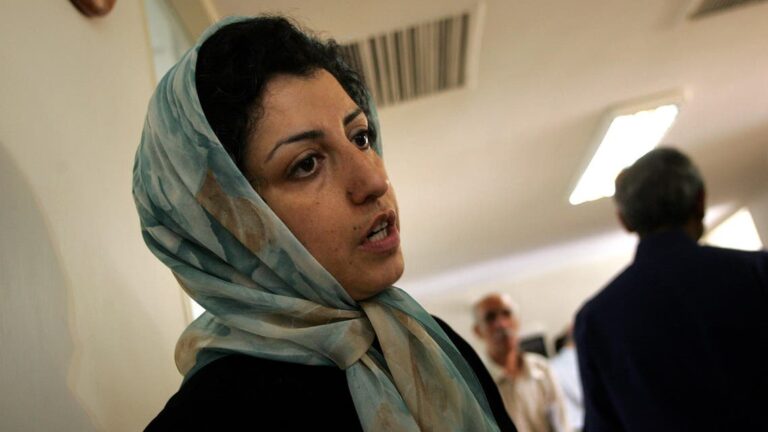
Iranian rights activist and journalist Narges Mohammadi, released from jail in October, has been handed a new sentence of 80 lashes and 30 months in jail, her lawyer said Thursday.

Mohammadi, 49, a campaigner against the death penalty, was spokeswoman for the Defenders of Human Rights Centre in Iran — founded by lawyer and Nobel Peace Prize laureate Shirin Ebadi — when she was arrested in May 2015.

At that time, the mother-of-two was handed a 10-year prison sentence for “forming and managing an illegal group,” among other charges, but was released last year after her sentence was reduced.

However, on Tuesday, the reformist newspaper Etemad reported she had been tried and found guilty of “propaganda against the system” of the Islamic republic, as well as “defamation” “ and “rebellion against the prison authority.”

The paper said she was charged with having “issued a statement against the death penalty,” of having accused prison officials of “torture and harassment,” and of organizing a sit-in protest while in prison.

She was sentenced “to 80 lashes, 30 months in prison and two fines,” the paper reported.

Her lawyer, Mahmoud Behzadi-Rad, confirmed the report to AFP, adding that Mohammadi does not intend to appeal given the “circumstances,” without providing further details.

According to international press freedom organization Reporters Without Borders (RSF), during her detention Mohammadi was moved from Tehran’s Evin prison to a prison in Zanjan, in northwestern Iran.

The journalist had “lodged a complaint against her immoral and illegal transfer,” her lawyer said.

Etemad newspaper said the activist had also claimed she was “beaten and harassed” in Evin prison.

“Instead of examining her complaint, justice officials opened another case against my client,” Behzadi-Rad said.

The European Union called the sentencing “a worrying development.”

Read the complete article at: Alarabiya English

Also Read: Iran releases human rights activist Narges Mohammadi after sentence cut

Family of Iranian Americans held in Iran worry they will be left behind again

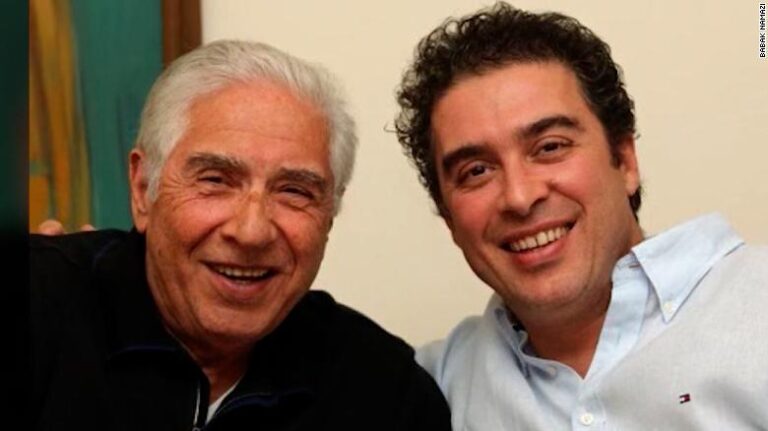
Babak Namazi, whose brother and father are detained in Iran, is living in fear that his family members could be left behind again as the Biden administration is engaged in a diplomatic effort to salvage the Iran nuclear deal.

Namazi’s deep concerns are not unfounded: While American prisoners have been released from Iran three times in the last six years, each time his family members remained there. The first instance occurred in 2016, when Americans were freed on the day that the Iran nuclear deal went into effect.

“We do not want to repeat 2016, where I was told the reason that the government, the administration, felt confident in leaving Siamak behind was the assurance they had that Siamak would be released within weeks,” Namazi said. “That tried and failed catastrophically, because not only Siamak was not released, but within weeks my dad was taken.”

Siamak Namazi, Babak’s brother, was blocked from leaving Iran after visiting in July 2015 and underwent months of interrogations before being arrested in October 2015. Five years ago, his father, Baquer Namazi, was lured to Iran under the false premise that he would be able to see his son. He was instead immediately taken into custody.

Iran accused both men of working with a hostile government — the US — which the family denies.

The Biden administration is engaged in diplomatic talks in Vienna, Austria, aimed at bringing the US back to the 2015 nuclear deal and Iran back into compliance with it. Earlier this year, Babak Namazi urged the Biden administration not to reenter the deal without his family members being released.

“As the Biden administration develops its new Iran policy, my family expects that President Biden and his administration will not make concessions or deals with Iran that do not include, and indeed require as a precondition, the release of my father and Siamak,” Namazi said. “Their releases should not be a subsequent step. That approach by both the Obama and Trump administrations failed.”

Read the complete article at: CNN

Also Read: Blinken faults Iran for taking ‘American hostages’ as hawks see ransom payments coming

Pompeo warns against Biden’s willingness to lift sanctions on Iran

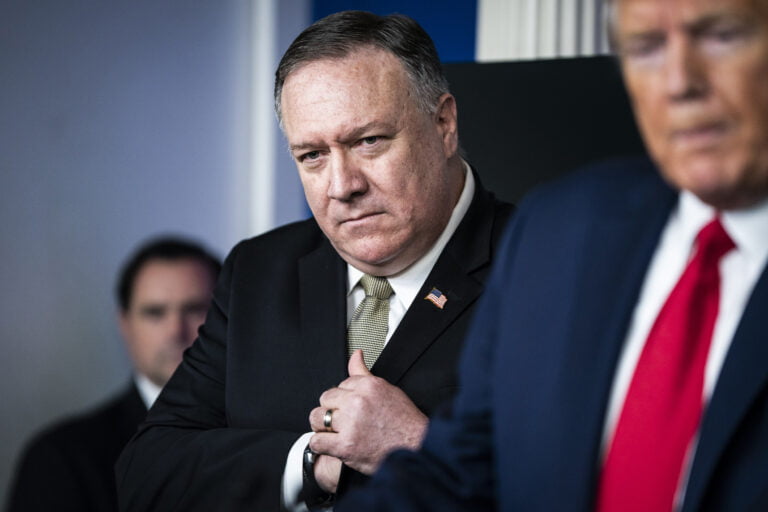
Former U.S. Secretary of State Mike Pompeo, in a tweet, has warned against the Joe Biden administration plan to return to Iran’s 2015 nuclear deal with world powers and lifting the sanctions on Iran.

He wrote: Don’t forget — when President Biden re-enters the flawed nuclear deal, he not only will pave the way for Iran to build its nuclear program. He’ll also be allowing hundreds of billions of dollars to go to the very mullahs who host & support Al-Qaeda in Tehran.

He continued in another tweet: Almost 20 years ago Al-Qaeda killed 3000 people in America. Now the regime that protects it gets American money.

In an interview that aired Friday on VOA Persian’s TV channel, the former top U.S. diplomat, who left office in January, made more detailed allegations about Iran’s secretive relationship with al-Qaida and warned against lifting the sanctions on Iran.

The ex-CIA director said Iran’s Islamist rulers have allowed al-Qaida’s most senior operational leaders to stay in the country on two conditions; “(First), you’ll do what we tell you to do. And second, you won’t conduct operations against Iranian assets or inside of Iran.”

The remarks were an expansion on details about the Iran-al-Qaida relationship in a January 12 speech, in which he stated that since 2015, Iran’s top security institutions had allowed al-Qaida leaders “greater freedom of movement” in the country under Iranian supervision. He said Iran’s Ministry of Intelligence and Security and Islamic Revolutionary Guard Corps also provided logistical support in the form of travel documents, ID cards and passports to “enable al-Qaida activity,” including fundraising and global communication.

President Biden’s Defense Intelligence Agency (DIA) released a Worldwide Threat Assessment on April 26 saying counterterrorism operations by the U.S. and its allies “eliminated parts of al-Qaida’s senior leadership” in the preceding year. The report also said al-Qaida’s “overall emir Ayman al-Zawahiri remains in hiding, while a handful of Iran-based al-Qaida leaders oversee al-Qaida’s network.”

The DIA report was the first by the U.S. intelligence community in recent years to publicly disclose that al-Qaida’s Iran-based leaders have a powerful role in the global terror network, although it did not say whether those leaders have become stronger or weaker.

Sources: The Independent  | Voice of America

Also read: UK MP calls for banning IRGC after flag flown at London demonstration 

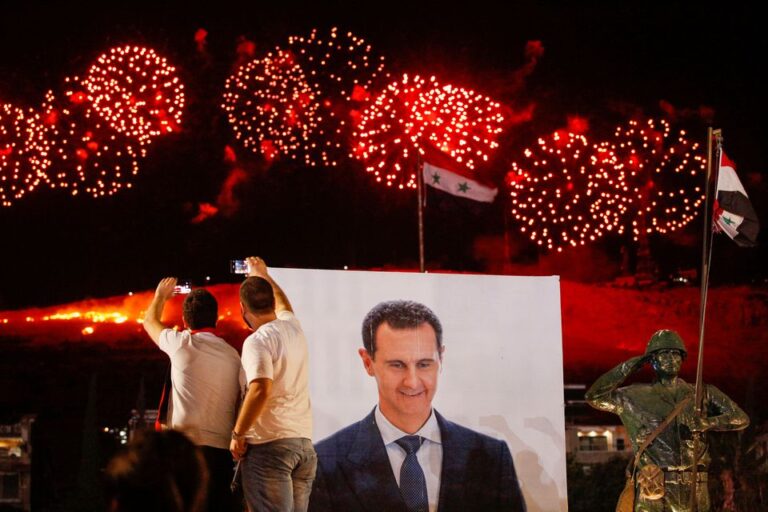
Syria’s Bashar al-Assad re-elected for 4th term with a 95% vote

DAMASCUS: Bashar al-Assad has been re-elected for a fourth term as president of war-ravaged Syria, official results showed on Thursday (May 27), despite Western accusations the polls were “neither free nor fair”.

The controversial vote extending Assad’s stranglehold on power was the second since the start of a decade-long civil conflict that has killed more than 388,000 people, displaced millions and battered the country’s infrastructure.

Bashar al-Assad government says the election on Wednesday shows Syria is functioning normally despite the decade-old conflict, which has killed hundreds of thousands of people and driven 11 million people – about half the population – from their homes.

The parliamentary speaker announced Thursday that Assad garnered 95.1 per cent of the votes cast, trouncing two virtually unknown challengers.

Standing against him were former state minister Abdallah Salloum Abdallah and Mahmud Merhi, a member of the so-called “tolerated opposition”, long dismissed by exiled opposition leaders as an extension of the regime.

On the eve of the election, the US, Britain, France, Germany and Italy said the poll was “neither free nor fair”, and Syria’s fragmented opposition has called it a “farce”.

Turkey, an Assad adversary, has also said the election was illegitimate.

But few doubted that Assad, a 55-year-old ophthalmologist by training, would be re-elected.

In the last multi-candidate poll in 2014, Assad won 88 per cent of the vote.

Huge election posters glorifying Assad had mushroomed across the two-thirds of the country under his control in the lead-up to Wednesday’s poll.

The election was held Wednesday in government-held areas, and state media showed long queues forming outside polling stations, which remained open five hours past the planned closing time.

More than 80 per cent of the population live in poverty, and the Syrian pound has plunged in value against the dollar, causing skyrocketing inflation.

Assad’s campaign slogan, “Hope through work”, evoked the colossal reconstruction needed to rebuild the country, requiring billions of dollars in funding.

Read the complete article at: CNA
Also read: Iran’s influence crumbling in Iraq as militias defy IRGC handlers

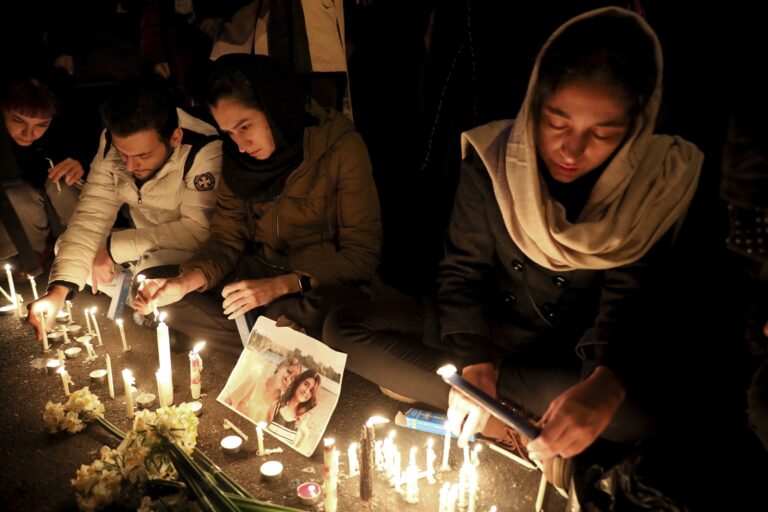
Iran Harassing Families Of Those Killed In Downed Ukrainian Plane, Says Rights Watchdog

Iranian security agencies have harassed and abused families of the victims of the Ukrainian passenger jet shot down by the Islamic Revolutionary Guards Corps (IRGC) after takeoff from Tehran last year, Human Rights Watch said on May 27.

“Iran’s Revolutionary Guard killed 176 people without a shred of accountability, and now Iran’s brutal security agencies are abusing victims’ family members to squash any hope for justice,” said Michael Page, deputy Middle East director at Human Rights Watch.

Days after official denials in the wake of the January 2020 tragedy, Iran admitted that an IRGC unit had inadvertently shot down Ukraine International Airlines Flight 752 when it fired two missiles amid heightened tensions with the United States over the U.S. drone strike that killed top general, Qasem Soleimani, in Baghdad.

Iran’s final report into the incident cited “human error” and a broken radar communication system with a military unit as reason the plane was shot down. But Tehran has come under criticism from the UN, Canada, and Ukraine for misleading statements and lack of transparency about the investigation. Iranian authorities have also provided little public information about the 10 people indicted for their role in the incident.

The majority of the victims were Iranians and Canadians, whose families have demanded transparency and accountability. The Iranian government has allocated $150,000 to compensate the family of each passenger, but some families have refused the money.

Human Rights Watch said it spoke to 31 family members of victims and other people with direct knowledge of Iranian authorities’ treatment of victims’ families. They said that Iranian security agents had arbitrarily detained, summoned, interrogated, tortured, and otherwise mistreated victims’ family members.

The agencies also interfered with burial and memorial gatherings in an apparent attempt to crush calls for accountability.

Read the complete article at: RFERL

Also Read: Top Ukraine Official Says Iran ‘Intentionally’ Shot Down Airliner Last Year