Home Blog Page 78

IAEA urges Iran to explain uranium particles at undeclared sites

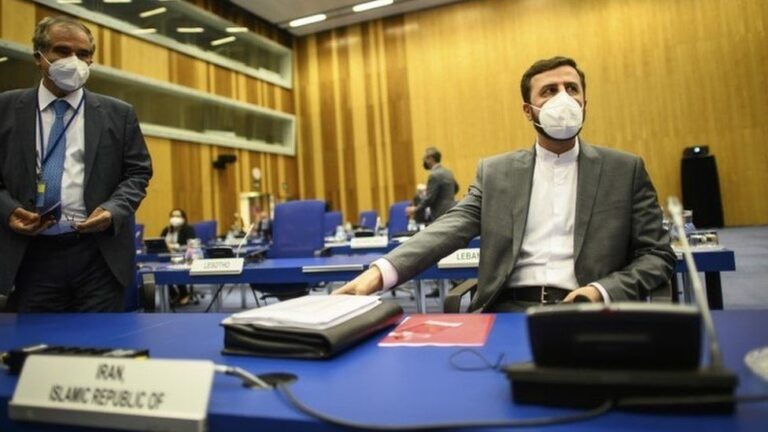
The head of the global nuclear watchdog is deeply concerned that Iran has still not explained the presence of uranium particles at three undeclared sites.

Rafael Grossi told the International Atomic Energy Agency’s member states that nuclear material or contaminated equipment had been at the locations.

The lack of progress “seriously affects the ability of the agency to provide assurance of the peaceful nature of Iran’s nuclear programme”, he warned.

Iran has insisted it is co-operating.

It is thought that possible nuclear-related activities took place at the locations in the early 2000s, long before Iran struck a deal with world powers that placed limits on its nuclear programme.

Iran insists it has never sought to develop a nuclear weapon, but evidence collected by the IAEA suggests that until 2003 it conducted “a range of activities relevant to the development of a nuclear explosive device”.

In 2019, the IAEA requested that Iran answer questions about possible undeclared nuclear activities and materials.

The move came after Israel’s Prime Minister Benjamin Netanyahu said it had obtained documents showing Iran surreptitiously continued nuclear weapons work beyond 2015.

Mr Netanyahu also identified a “secret atomic warehouse” in a district of Tehran, believed to be where IAEA inspectors subsequently detected the presence of “natural uranium particles of anthropogenic [man-made] origin” and “isotopically altered particles of low enriched uranium”. Enriched uranium is used to make reactor fuel, but also nuclear weapons.

Inspectors also detected uranium particles at two more unidentified locations – one where there was “the possible presence… of natural uranium in the form of a metal disc”, and another where there was “possible use or storage of nuclear material and/or conducting of nuclear-related activities”.

They also asked questions about a fourth location where nuclear material was possibly used and stored, and where outdoor, conventional explosive testing may have taken place.

Read the complete article at: BBC

Also Read: European Intel Agencies Find Iran Sought Nuclear Weapons
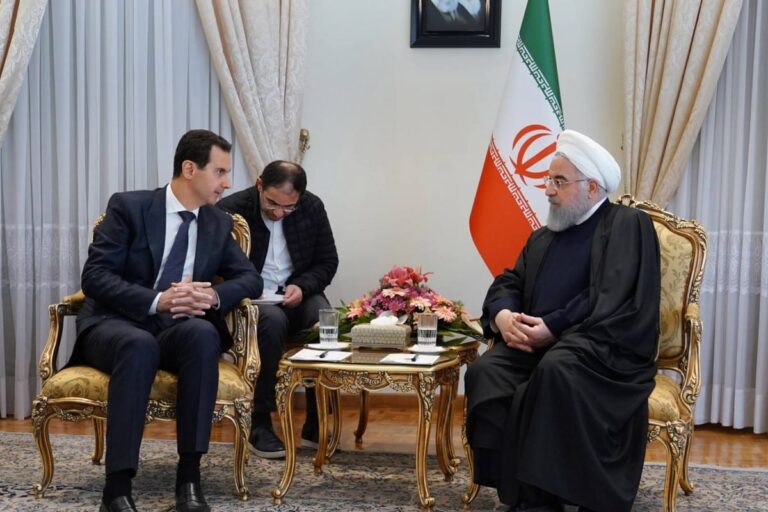
Iran’s race to loot Syria and earn back its losses from the decade long war

Iran is trying to recoup the financial losses it suffered as a result of its intervention in the Syrian decade long war by signing trade, economic and financial agreements with the Syrian regime and implementing commercial projects.

But economists believe these efforts are likely to bear little fruit, given the heavy competition companies affiliated with the Islamic Revolutionary Guard Corps (IRGC) face in Syria, particularly from Russia.

“The Russian-Iranian competition is clearly evident in Syria,” said Syrian economist and Damascus University lecturer Mahmoud Mustafa.

Both sides are vying to secure the largest piece of the reconstruction pie as compensation for the money they have spent to keep the regime of Syrian president Bashar al-Assad in power.

But it is evident that Iran’s share of new business opportunities has not met the Iranian regime’s aspirations and estimates, as it had hoped for a huge return on its investment in the shortest possible timeframe.

This can be attributed to the influence of Russia, which historically has exerted control over several revenue-generating facilities, such as the phosphate mines in the eastern desert of Badiya and commercial ports in Tartus and Latakia.

Mustafa said nothing is left for Iran at the present time, other than the trans-regional land route it has been attempting to establish for some time, which connects Iran to Syria via Iraq.

This serves as a trade conduit for basic electrical goods and foodstuffs that do not generate the level of revenue the Iranian leaders expected, he said.

According to economics professor Shaher Abdullah, Iran is trying to cash in on reconstruction activity revenue and boost commercial ties via the establishment of an Iranian Trade Centre in the heart of the free zone in Damascus.

Having presence in the free zone exempts Iranian companies from taxes and gives them the freedom to act and make commercial and reconstruction-related deals, he said.

The 4,000-square metre, 12-floor commercial centre is “massive in size”, he said, and currently houses 25 Iranian legal, financial investment, insurance, shipping and transportation companies.

Through it, Iranian companies communicate with Syrian private companies and the government sector to bid on tenders and obtain new contracts that are expected to bring money to the Iranian treasury.

According to 2020 report from the Atlantic Council, estimates of Iran’s actual military and economic spending in Syria range from $30 billion to $105 billion in the first seven years of the decade long war alone.

Source: Al-Mashareq
Also read: Iran’s proxies in Iraq threaten US with more sophisticated weapons

Iran’s proxies in Iraq threaten US with more sophisticated weapons

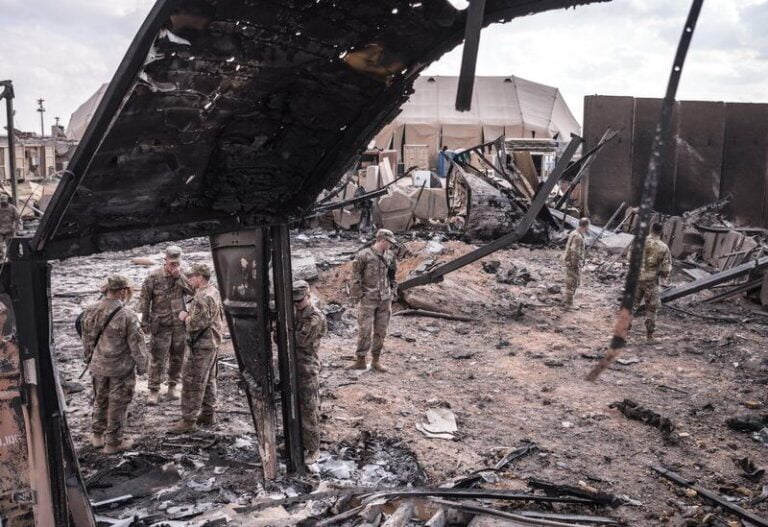
The United States grapples with a rapidly evolving threat from Iranian proxies in Iraq after militias specializing in the exploitation of more sophisticated weapons, including armed drones, hit some of America’s most sensitive during attacks that escaped American defenses.

At least three times in the past two months, these militias have used small explosive-laden drones that stab bombs and crash into their targets in nightly attacks on Iraqi bases, including those used by the CIA and US special operations units, according to US officials.

Gen. Kenneth F. McKenzie Jr., the top US commander in the Middle East, said last month that drones pose a serious threat and the military is rushing to find ways to combat them.

Iran – weakened by years of harsh economic sanctions – is using its proxy militias in Iraq to step up pressure on the United States and other world powers to negotiate a relaxation of these sanctions as part of a relaunch of the 2015 nuclear deal. Iraqi and US officials say Iran designed the drone attacks to minimize losses that could provoke US retaliation.

Michael P. Mulroy, a former CIA officer and senior Middle East politician at the Pentagon, said that with the technology provided by the Iranian force Quds – the foreign arm of the Iranian security apparatus – drones are rapidly becoming more sophisticated at a relatively low level. Cost.

“Drones are a big problem, one of the biggest threats our troops face there,” he said.

A senior Iraqi national security official said drones were a challenge, but were tools, not the heart of the problem.

“It is a pressure tactic,” said the official, who asked not to be identified so that he could speak freely about Iran. “Iran is economically suffocating. The more he suffers, the more these attacks multiply, ”he added. “The problem is the conflict between the United States and Iran.”

Read the complete article at: Good Word News

Also Read: Iran-Backed Militias Warn: Iranian Drones Can Attack U.S. Troops in Iraq

sophisticated weapons


US tracking Iranian ships that may be headed into the Atlantic and for Venezuela

0

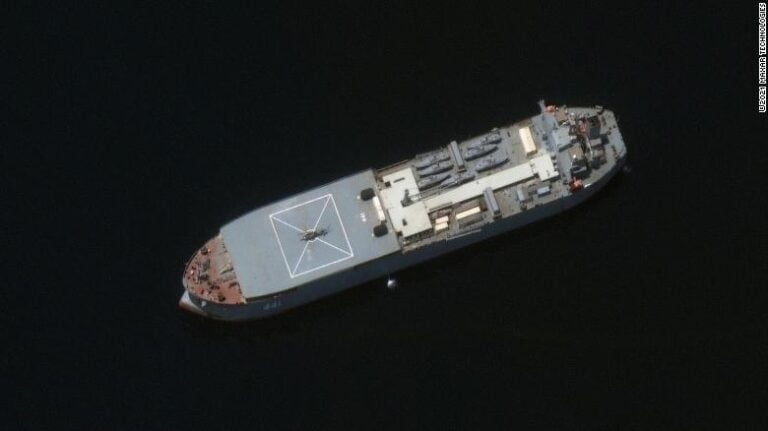
The Pentagon and US intelligence agencies are closely tracking two Iranian ships that Tehran claims are bound for Venezuela.

At the Pentagon and other agencies, officials said that at the moment the ships’ passage is not a concern, but they are being monitored and the intelligence community is working to assess what Iran’s intentions are. The two countries — both the subject of harsh US sanctions — are allies and trading partners that have helped each other withstand the American measures.

While it is still unclear if the ships are carrying any weapons, according to multiple US officials, satellite imagery reveals one of them is carrying the kind of small, fast-attack boats that Iran has used to harass US naval ships in the Persian Gulf. And if Iranian vessels gain the ability to access the Atlantic, analysts say it would be a significant step forward for the country’s navy, which has tried and failed to do so in the past.
 
Officials said the US has been monitoring the ships for approximately two weeks. The vessels have been off the east coast of Africa for the past several days. While they were initially expected to round the Cape of Good Hope at the southern tip of the continent around June 9 to June 11, experts tracking their movement say that now they are not expected to arrive until July.

Pentagon spokesman John Kirby, speaking generally about the possibility of any shipment of Iranian weapons to the Western Hemisphere, said that would be a “provocative act” and a threat to US allies.

“While DoD will not comment on intelligence matters, we would note that the delivery of such weapons would be a provocative act and a threat to our partners in this hemisphere. As such we would reserve the right to take appropriate measures — in concert with our partners — to deter the delivery or transit of such weapons,” Kirby said in a statement to CNN.

Read the complete article at: CNN

Also Read: Pompeo warns against Biden’s willingness to lift sanctions on Iran

Turkey government academic helping IRGC murder dissidents abroad

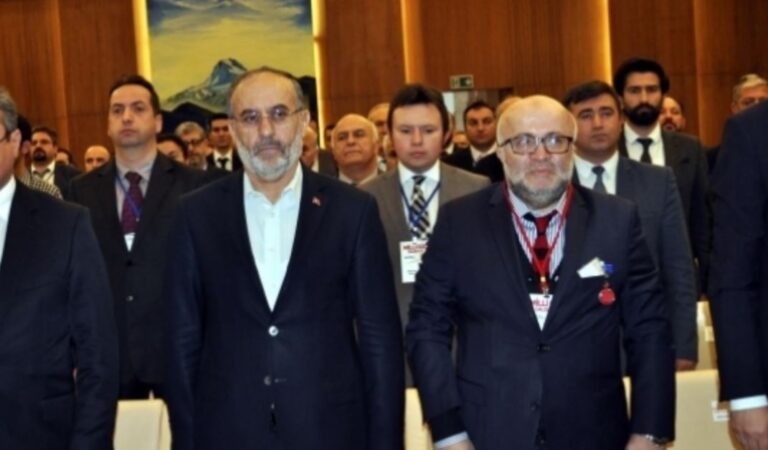
A 58-year-old academic who runs the well-funded research and development arm of the Turkish government agency that is tasked with boosting the country’s defense industry has worked with Islamic Revolutionary Guard Corps (IRGC) Quds Force cells in Turkey, a Nordic Monitor investigation has found.

The evidence collected through court-authorized surveillance and wiretaps from 2011 to 2014 led the investigators to conclude that Şenlikci was part of a Quds Force operation in Turkey and was working closely with the Iranian Consulate General’s cultural attaché, Hassan Shabani, also a suspect in the Quds Force probe.

The two had been trying to establish an Iran chair at Istanbul University, where Şenlikci was working as an academic at the time, and were making efforts to recruit dozens of students as assets under the guise of various educational and cultural programs financed by Iran.

The investigation uncovered that Şenlikci had been associated with known Quds operatives who had served time in the past on terrorism convictions. According to a wiretap record dated April 2, 2012, Şenlikci spoke to a man named Abdülhamit Çelik, who was convicted of killing two opponents of the Iran regime in Turkey in 1996 on behalf of the Quds Force and sentenced to 12 years, six months in prison.

The content of dozens of wiretap records reviewed by Nordic Monitor portray Şenlikci as a religious man who idolizes Iranian Shiite clerics and made visits to Shiite holy places in Iraq and Iran. He traveled twice to Iran in 2012 and 2013 as part of a project run by the Quds Force, according to the investigation file.

The IRGC Quds Force case in Turkey never went to trial because the Erdoğan government hushed it up in February 2014 after learning about the probe, which incriminated senior government officials.

The investigating prosecutor was sacked before he had a chance to secure detention warrants for the suspects and file an indictment. Şenlikci escaped the long arm of the law thanks to the intervention of Erdoğan, who apparently protected pro-Iranian assets and helped their Quds Force handlers escape from Turkey.

Source: Nordic Research Monitoring Network
Also read: Iran-backed Yemeni Houthis indoctrinating school students for war

Iran’s New Form of Cyberattacks ‘An Act of Digital War Against Israel’

0

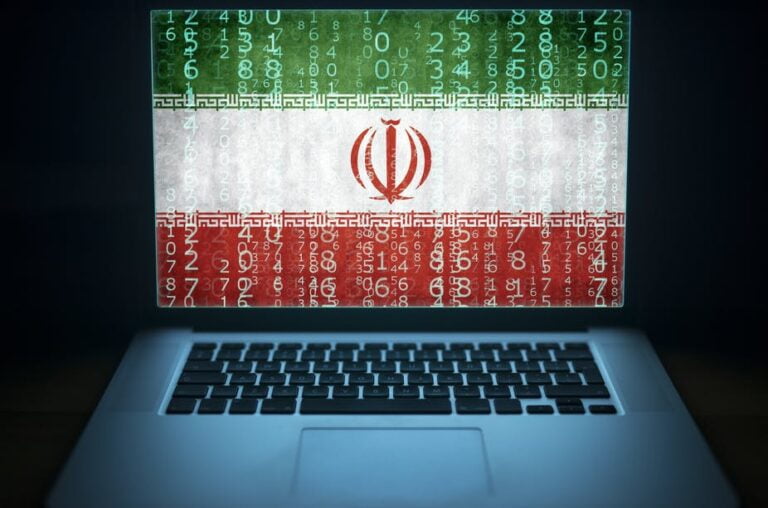
The Iranian regime has long used cyber warfare as a critical component of its soft-target approach, but has begun to deploy an especially threatening new actor as it targets its number one foe, Israel.

According to a recent report by cybersecurity and intelligence firm SentinelLabs, a new Iran-linked hacker group named Agrius has been targeting Israel since the beginning of this year.

While it focused at first on espionage activity, security experts detected that the infiltrators also initiated a series of “wiper” attacks against Israel targets – masquerading as ransomware attacks but designed to destroy important data.

“What is different now is that Iran is trying to hide the true goal of its cyberattacks – destroying data – behind the mask of ransomware,” explained Karim Hijazi, CEO of Prevailion, a Houston-based cyber intelligence company.

By disguising the attack, Hijazi said, Iran can confuse its victims, making them think they are dealing with a financially motivated cyberattack that can be negotiated. In reality, the hackers are trying to cause as much damage as they can.

“Victims will lose valuable time because of this, as they will be focused on restoring data from their backups instead of preventing the attacker from causing more damage,” he added.

“This technique can also make it harder to attribute the attack, as it takes on the appearance of a criminal group, as opposed to a nation-state.”

According to the SentinelLabs report, the attacks were executed using a backdoor called “IPSEC Helper” and a unique wiper termed “Apostle.”

“The message inside it suggests it was used to target a critical, nation-owned facility in the United Arab Emirates,” it said. “The similarity to its wiper version, as well as the nature of the target in the context of regional disputes, leads us to believe that the operators behind it are utilizing ransomware for its disruptive capabilities.”

Read the complete article at: CNS News

Also Read: Criminal cyber actions are used to cover Iranian strategic operations against Israel

Digital War Digital War

More Defense Attorneys Prosecuted in Iran for Defending Human Rights

The state policy of persecuting and imprisoning independent defense lawyers under false charges for doing their jobs is continuing under Iranian Judiciary Chief Ebrahim Raisi, who is running for the presidency in June 2021.

In addition to at least four defense attorneys who are currently imprisoned in the country, two others were recently prosecuted: Farzaneh Zilabi, a lawyer representing workers in their dispute with a sugar company in southwest Iran, and Mohammad Hadi Erfanian-Kaseb, who represented a political prisoner that was stabbed to death.

“The court can accept or reject arguments presented by defense lawyers, but it cannot put pressure on them or silence them in this manner,” Zilabi’s lawyer Nasser Zarafshan said in an interview with the Center for Human Rights in Iran (CHRI) on May 27, 2021.

“When a lawyer comes under threat for carrying out her professional duties and loses her job under Paragraph C of Article 247, that’s a clear case of censorship,” he added.

“If invoking that section of the law becomes the norm in the judiciary… lawyers will no longer have the freedom to defend their clients or any protection against threats to their profession,” he said.

Zilabi’s lawyer continued: “If this precedent becomes the norm, Article 247 will hang like a knife over lawyers’ heads, especially in these kinds of cases, and they will not be able to fully and freely defend their clients for fear of losing their livelihood.”

Zarafshan stressed that Zilabi’s case could affect the legal profession as a whole and called on the Iranian Bar Association to defend its members against the judiciary’s resolve to crush defense attorneys’ independence.

Lawyers Suspended for Defending Their Clients

On May 15, 2021, Zilabi was suspended from practicing law for six months while Erfanian-Kaseb was sentenced to 95 days in prison earlier that month.

Other lawyers currently serving prison sentences include Nasrin Sotoudeh, Mohammad Najafi, Amirsalar Davoudi, and Giti Pourfazel.

For strongly defending activists and dissidents, they were convicted of charges ranging from “propaganda against the state” to “acting against national security.”

Read the complete article at: Iran Human Rights

Also Read: Iran executes political activist Javid Dehghan Khald despite human rights groups warnings

Iran-backed Yemeni Houthis indoctrinating school students for war

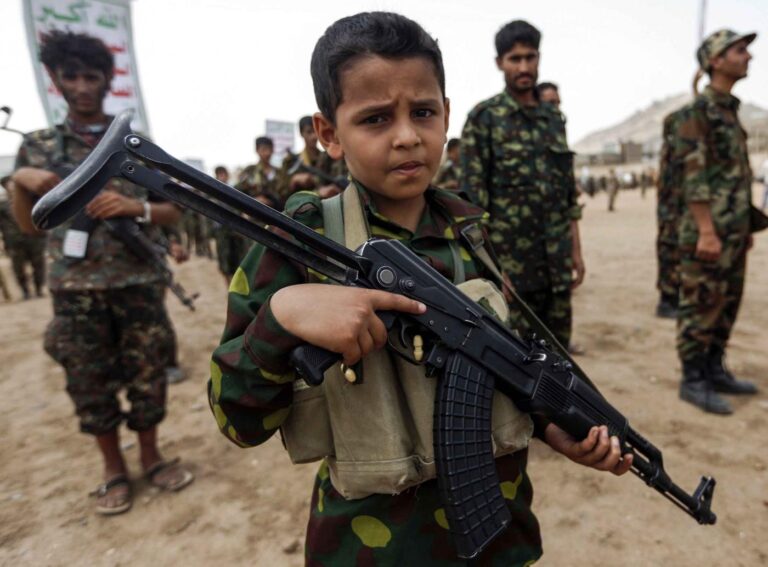
Day after day, the danger of Houthi summer boot camps for children grows, according to the internationally recognized Yemeni government, which also warned against the Iran-backed militia exploiting tens of thousands of Yemeni minors for plotting future suicide attacks.

“Iran-backed Yemeni Houthis have pursued this dangerous scheme to brainwash the minds of hundreds of thousands of children in its areas of control,” said Muammar Al-Eryani, the Yemeni information minister, madding that the group is seeking to birth a generation that listens to hostile slogans and promotes a culture of death and hatred.

“They are carrying out this dangerous escalation that threatens the very social fabric and civil peace in Yemen and the values of coexistence among Yemenis for decades to come,” explained Eryani.

The information minister further encouraged Yemenis to save their children from being used as cheap bargaining chips by militias that do not care for their future.

Yemenis living under Houthi control must “preserve their families instead of handing them over as a cheap commodity to terrorist militias that have no regard for their lives,” urged Eryani.

“The international community and UN and US envoys need to carry out their legal and moral obligations regarding such practices,” noted Eryani, adding that Iran-backed Yemeni Houthis must be pressured into ending their exploitation of Yemeni children.

Muammar Al-Eryani confirmed the high death toll of children recruited within the ranks of the Iranian-backed terrorist Houthi militia in recent battles on various fronts in Marib Governorate, Yemen. While a prominent Houthi leader confirmed that set up camps can accommodate between 500,000 and 600,000 young cadets in insurgency-run areas.

Similarly in Iran, Rahian-e Noor is the name given by military organizations, such as IRGC and Basij, to indoctrination tours that take students to areas that were once the heart of the battle during the Iran-Iraq war. There is a heavy ideological and educational aspect to these trips that is not even related to the Iran-Iraq war.

Source: Asharq AL-Awsat
Also read: Iran Regime Uses Drugs to Fund Terrorism

Iran’s Threat to Iraq Is a Threat to the US

The US Office of the Director of National Intelligence recently released its annual threat assessment, in which Iran is mentioned no fewer than 60 times as part of a “diverse array of threats” facing the US. Iran is moving toward its goal of full domination of Iraq and the expulsion of the last remaining US forces from that country, a result that would represent a great success for the Islamic Republic.

The annual threat assessment released in April by the US Office of the Director of National Intelligence states that “Iran will remain a regional menace with broader malign influence activities.” The Islamic Republic is expected to continue those malign activities all over the globe, but its focus will likely remain its immediate regional surroundings—particularly Iraq. Tehran views Iraq as a key country over which it must establish and maintain complete supremacy.

Iran has been a highly troublesome actor in the Middle East ever since it was taken over by a religious dictatorship in 1979. Through its proxies as well as through other means, it has destabilized an already volatile region. Saudi Arabia and Israel have spent years expressing concern over Iran´s hegemonic ambitions, which also threaten the US and its allies.

Iran´s hateful anti-Israel rhetoric will continue for as long as the regime is in power. Tehran will maintain support for its proxies, like Hezbollah and Hamas, in order to threaten Israel and Israeli interests in the region. At the same time, the Islamic cold war between Saudi Arabia and Iran over dominance and power in the Middle East will also go on, leading to continued insecurity and instability in the region. The two countries are unlikely to engage in a full-blown war, but will rather fight one another in other parts of the Middle East.

Read the complete article at: Besacenter 

Also Read: Iran-Backed Militias Warn: Iranian Drones Can Attack U.S. Troops in Iraq

Iran’s Threat Iran’s Threat

Hamas claims Iran already resupplying it with thousands of rockets

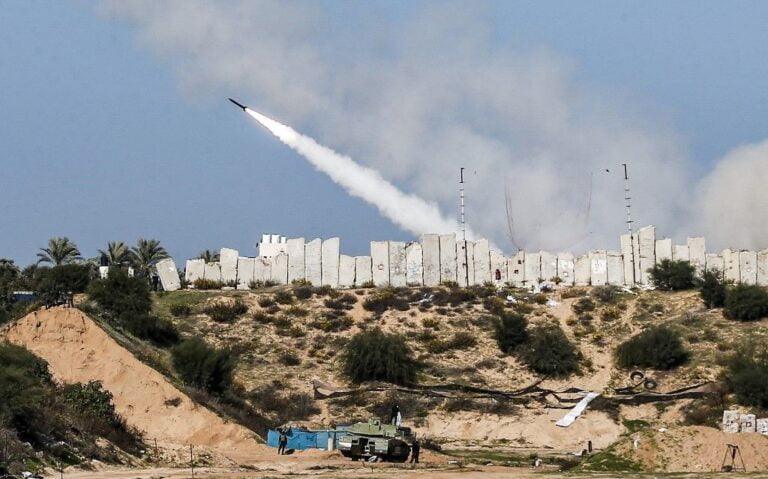
The Iranian regime has reportedly begun to restock its Islamist proxy in the Gaza Strip – Hamas, which entirely controls the enclave – with the resources to produce thousands of new rockets, according to a report on Tehran state TV.

In the recent 11-day conflict, which ended last month and for which a fragile Egyptian-brokered ceasefire still holds, Hamas and Palestinian Islamic Jihad fired more than 4,300 rockets toward Israel’s population centers. For nearly two weeks, Israel’s citizens were forced to sporadically seek refuge in bomb shelters as terrorists fired rockets indiscriminately.

“With the end of the Israeli regime’s latest aggression, the Palestinian resistance has resumed the process of rocket production,” Fathi Hamad, a member of Hamas’ politburo, was quoted as saying over the Memorial Day weekend by Iran’s state-run Fars News Agency, reported The Washington Free BeaconI. 

“Our factories and workshops have restarted producing thousands of rockets to stop [Israeli Prime Minister Benjamin] Netanyahu’s intransigence in Al-Quds [Jerusalem] and Tel Aviv.”

Hamas’ leaders also warned that despite the current period of calm, “This war will last forever,” which seems entirely in keeping with the organization’s charter.

The statement seemed to show that despite the Israel Defense Force’s (IDF) claim that it destroyed dozens of kilometers of attack and smuggling tunnels, much of the terrorist network remains intact.

Both Iranian and Hamas military leaders talked up the effects of the recent conflict, with variations on a theme that the Gaza Strip’s Islamist rulers surprised Israel with their weaponry and that they will eventually be victorious.

Read the complete article at: i24News

Also Read: Report: Hamas Coordinated Gaza War With Iran, Hezbollah in Joint Military Room


The statement seemed to show that despite the Israel Defense Force’s (IDF) claim that it destroyed dozens of kilometers of attack and smuggling tunnels, much of the terrorist network remains intact. Both Iranian and Hamas military leaders talked up the effects of the recent conflict, with variations on a theme that the Gaza Strip’s Islamist rulers surprised Israel with their weaponry and that they will eventually be victorious. resupplying  resupplying