Home Blog Page 77

Iranian hackers deface websites of African bank, US government library

0

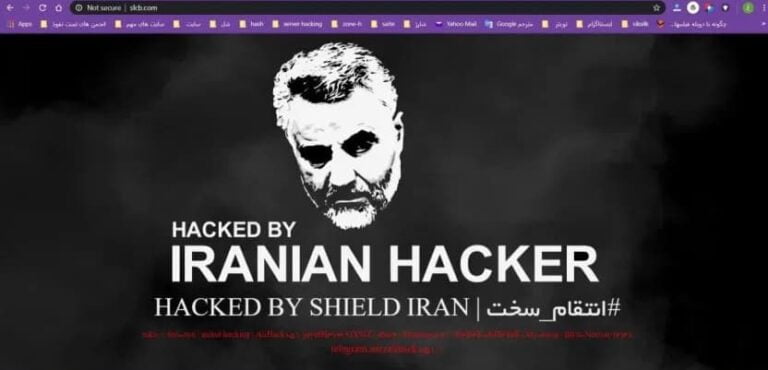
Hackers claiming to be from Iran defaced the websites of Sierra Leone Commerical African bank and the US Federal Depository Library Program, placing a pro-Iranian messages and images on the sites.

The Sierra Leone Commerical Bank’s website was displayed as “H4ck3D IRANIAN HACKER” in Google search results.

Screenshots posted on Twitter showed a drawing of former IRGC Quds Force commander Qasem Soleimani, who was killed in a US airstrike on Friday with the words “hacked by Iranian hacker, hacked by shield Iran.

”The library program’s website was replaced with a bloodied image of US president Donald Trump being punched in the face, along with a message written in both Farsi and English, reading “martyrdom was [Soleimani’s]… reward for years of implacable efforts,” with another caption noting that “this is only small part of Iran’s cyber ability!” according to CBS news.

A spokesperson from the Cybersecurity and Infrastructure Security Agency, a section of the US Department of Homeland Security, acknowledged that the hack took place. “We are aware the website of the Federal Depository Library Program [FDLP] was defaced with pro-Iranian, anti-US messaging,” the spokesperson said in a statement. “At this time, there is no confirmation that this was the action of Iranian state-sponsored actors.

The website was taken offline and is no longer accessible. CISA [the Cybersecurity and Infrastructure Security Agency] is monitoring the situation with FDLP and our federal partners.”Another senior US official noted that the defacement is a small-time event that was likely carried out by Iranian sympathizers.

US Secretary of State Mike Pompeo mentioned on Friday that one possible response by Iran against the US could be a cyberattack. It is unclear whether the hackers had any official status or connection to Iran.

The hack comes amid increased tensions between the United States and Iran following the assassination of Iran Revolutionary Guards Corps Quds Force commander Qasem Soleimani in a US strike in Baghdad on January 2. Iran has since vowed to take revenge for the assassination, alluding to potential attack against US assets and interests throughout the Middle East, in addition to attacking US allies.

Source: National Cyber Security News

Also Read: Iran’s New Form of Cyberattacks ‘An Act of Digital War Against Israel’
Frontrunner Ebrahim Raisi unfit for Iran leadership over role in 1988 massacres

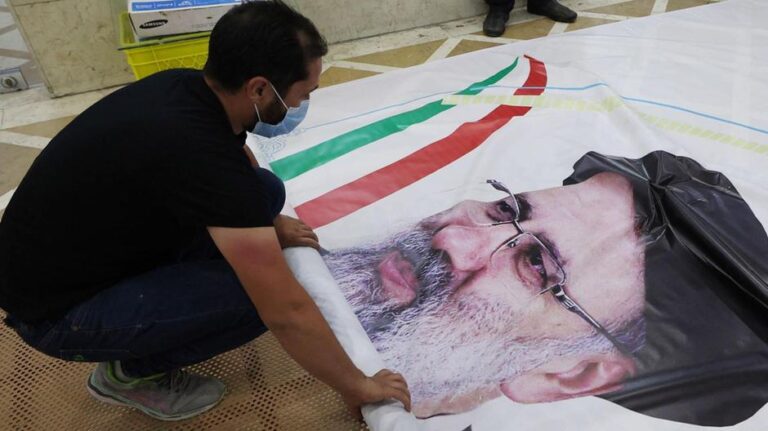
Ebrahim Raisi: The ultra-conservative front runner in Iran’s presidential election is unfit to take power because of his enthusiastic leadership of the 1988 Iran prison massacres that killed about 5,000 regime opponents, former inmates said on Tuesday.

Ebrahim Raisi, 60, the head of the judiciary and a former leading member of the so-called “death committees”, signed off on the executions of an inmate arrested at the age of 13 and another who was paralysed, former prisoners said.

Nasrollah Marandi, who lost five family members for supporting the dissident MeK group, said of Mr Raisi: “He is a criminal involved in the 1988 massacre of prisoners and in the years before and after.

“Raisi should not be able to travel to other countries because of his role in genocide … he should not be in a position as a head of government.”

Days after the end of the Iran-Iraq war in 1988, former Iranian supreme leader Ayatollah Ruhollah Khomeini signed a death warrant for thousands of prisoners linked to the opposition.

Within weeks, up to 5,000 had been killed, according to a 2011 report by prominent human rights barrister Geoffrey Robertson.

The executions focused on supporters of the Mujahideen-e-Khalq, who backed the overthrow of the shah but then became the enemy of the regime after hundreds of its members were killed at a 1981 opposition rally.

Three-man committees identified thousands of dissidents in its prisons and ordered the deaths of those who failed tests of loyalty to the regime.

Their bodies were doused with disinfectant and buried at night in clandestine mass graves. Their families learnt of their fate only months later, when they were handed a plastic bag of their loved ones’ possessions.

Six former inmates on Tuesday said they had witnessed Mr Raisi operating in Iranian prisons during the massacres in 32 cities. One witness spoke of how Mr Raisi was present when prisoners were hauled on ropes and hanged from a crane.

Read the complete article at: The National News

Also Read: Iran Election: Political Prisoners Dying Under Candidate Raisi’s Watch

Ebrahim Raisi Ebrahim Raisi


Iran’s embarrassing military mishaps and years of misplaced priorities

0

A series of recent military mishaps makes it clear that Iran has failed to invest in its regular armed forces, even as it heavily bankrolls the IRGC amid an economic crisis.

According to the Islamic Republic of Iran Navy (IRIN), one of the country’s largest naval ships sank June 2 after catching fire while on a “training mission” off the port of Jask in the Gulf of Oman.

The same day, a huge blaze broke out at a major oil refinery in southern Tehran that is responsible for providing the bulk of the capital’s fuel.

Two days earlier, an ejector seat malfunctioned on an Iranian F-4 from the 1960s which was being repaired, state media reported. Two pilots were killed in the incident.

On May 23, nine people were injured in a blast at a plant producing explosive materials in central Iran, local media reported, while three days later, a pipeline explosion at a petrochemical complex near Iran’s Gulf coast left one dead.

In April, an explosion at Iran’s Natanz uranium enrichment facility put the spotlight on the flaws of the Iranian regime’s internal security.

In May 2020, an Iranian warship was hit by friendly fire during a naval exercise off Jask, killing the 19 sailors onboard.

Analysts say these recent events, seen as part of a years-long series of deadly incidents, bring into question the efficacy of Tehran’s military strategy and the preparedness of the Iranian armed forces.

“Iran’s approach to military funding is problematic,” said a former Iranian navy analyst, following the recent military mishaps.

“Officials are effectively trying to fund two militaries, while showing a clear preference for the Islamic Revolutionary Guard Corps (IRGC),”

“This means the conventional military is underfunded in all areas: training, equipment, weapons and hardware,”

“To maintain existing equipment, they keep cannibalising old military equipment manufactured before the 1979 Islamic Revolution,” he said.

US-based Iran analyst Jason Bahari described the vessels of Iran’s aging fleet as “floating museums”.

“The government retrofits them with rocket launchers and slightly tweaked radars,” he explained. “But the basic technology is 50 years old or older.”

Aging equipment is just part of the problem, analysts said, noting that the IRGC Navy’s unprofessional conduct has drawn international rebuke, as it puts lives at risk and reflects poorly on the entire Iranian military apparatus.

Source: Al-Mashareq
Also read: Internet filtering in Iran ramped up ahead of presidential election

Internet filtering in Iran ramped up ahead of presidential election

In the past month, several regime officials have backed Internet filtering in Iran and threatened Iranians who call for the election boycott.

The Chief Justice of Kurdistan said in a meeting on June 1 that anyone who crossed the regimes “red line” in cyberspace regarding the upcoming elections would be severely dealt with. According to the state-run ISNA News Agency, Seyed Hossein Hosseini said the Judiciary would monitor everyone’s activities on the internet and that offenders would be “severely” dealt with without any leniency. 

“All regimes have organizations similar to the Guardian Council and if there is doubt in some people’s competence, they will be scrutinized,” the cleric added.

He also said cyberspace should be used “correctly” and with a positive approach to achieve “healthy and fervent” elections.

Before this on May 28, Iran’s Chief of Police, Hossein Ashtari threatened “election norm breakers” and “those who encourage people not to vote” and said they would be dealt with.

“The (Supreme) Leader of the revolution cited everything in his meeting with members of parliament and determined everyone’s duty. The Police and the Judiciary will deal with anyone who transgresses according to the law,” he said according to the state-run Entekhab website.

Also on May 28, the Head of Friday Prayers in Isfahan, who also represents the regime’s Supreme Leader in the central city, said Iran should follow Syria’s example in elections.

There were also reports that the intelligence agents in the Islamic Revolutionary Guard Corps (IRGC) have contacted several social media activists, threatening them not to post content that criticizes Raisi, otherwise they would be in “trouble”.

Security police and Iran’s Cyber Police (FATA) have also contacted many activists, putting them under pressure because of their stance.

A letter classified as top secret that has recently revealed by an internet freedom activist, shows that the regime’s judiciary intends to ramp up Internet filtering in Iran and restrict social-media access to election material including calls to boycott the June presidential vote.

To ramp up Internet filtering in Iran the judiciary has ordered Internet Service Providers to filter Instagram in such a way that all access through any anti-filtering tools including VPNs (virtual private networks) would not be possible. Most Iranians use VPNs to get around an extensive government Internet filter.

Institutions related to Internet filtering in Iran

  • Supreme Council of Cyberspace (established on March 7, 2012)
  • Islamic Revolutionary Guard Corps (established in May 1979)
  • Working Group for Determining Cases of Criminal Content (Established in 2009) Meanwhile
  • FATA Police (established on February 24, 2011)
  • Cyber Army (established in 2005)

Ali Khamenei has an important role in determining the main people influencing the filtering institutions.

Source: Iran Human Rights Monitor
Also read: Khamenei tightens grip on social media with Cyber Security Law, fearing its influence in Iran

Iran can enrich enough uranium for a nuclear bomb within 70 days

The Institute for Science and International Security has estimated that Iran may be able to produce the enriched uranium needed to build a nuclear bomb within 70 days.

The institute has based its findings on an analysis of the International Atomic Energy Agency’s new report on Iran’s activities over the past three months.

Former UN nuclear inspector David Albright, after studying the agency’s report, believes that Iran could produce the 90 percent uranium necessary to produce a bomb in less than two and a half months after reaching the breakout time.

According to Albright, Iran could also produce materials for a second bomb in the fifth month and a third one in the seventh month.

David Albright said in his assessment that if the fire breakout and power outages had not taken place in Natanz, the initial two-and-a-half months would have been reduced to about 40 days.

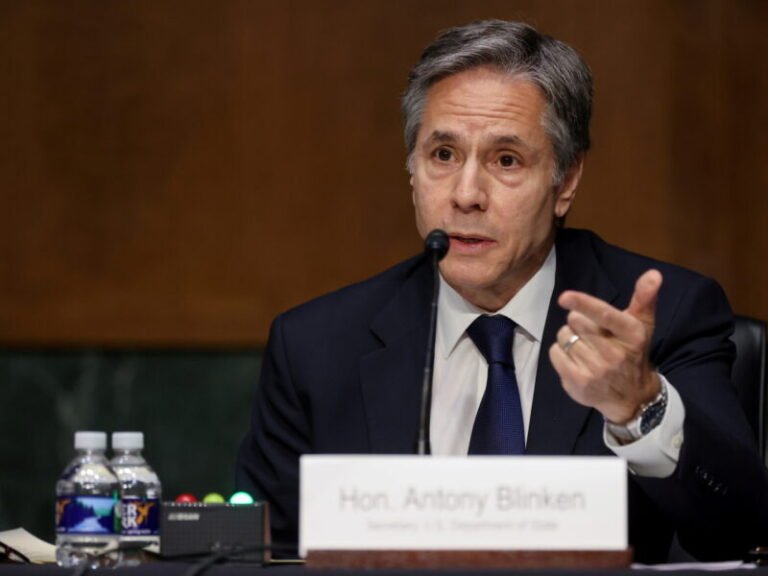
Speaking to the House Foreign Affairs Committee on Monday, U.S. Secretary of State Antony Blinken said there was no clear indication that Iran was committed to returning to compliance with the nuclear deal.

“We’ve been engaged in indirect conversations, as you know, for the last couple of months, and it remains unclear whether Iran is willing and prepared to do what it needs to do to come back into compliance,” he said.

Blinken also said that the breakout time for Iran to assemble a nuclear bomb could be reduced to just weeks if Tehran keeps violating the terms of the original 2015 accord.

The US and Iran began indirect talks in Vienna in April to see if both could resume compliance with the JCPOA.

The fifth round of talks ended on June 2 and diplomats have said a sixth may begin on Thursday. That would leave only eight days to rescue the deal before Iran’s presidential election on June 18, which is expected to bring in new a hard-line leader. 


Source: Voice of America
Also read: Pompeo warns against Biden’s willingness to lift sanctions on Iran

US sanctions against Iran will be maintained even in the event of a nuclear deal

The United States has said it is ready to ease the sanctions against Tehran taken by the Trump administration to save the Iran nuclear deal, the Secretary of State announced on June 8. Several of them will however be maintained.

The United States will maintain “hundreds of sanctions” against Iran even if the two enemy countries reach a compromise to save the Iran nuclear deal, warned on June 8 the head of American diplomacy Antony Blinken.

In the event of an agreement at the end of the indirect negotiations underway for two months in Vienna, which are due to resume at the end of the week, “our responsibility will be to lift the sanctions which are in contradiction” with the 2015 nuclear agreement. Iranian, he assured during a parliamentary hearing in Washington.

But the American government will “resolutely maintain the sanctions which are not in contradiction with it, which concern the numerous harmful behaviors of Iran in a whole series of fields”, he added.

“I predict that, even if compliance with the agreement is returned, hundreds of sanctions will remain in effect, including sanctions imposed by the Trump administration, if they are not in contradiction with the agreement. They will remain in force until Iran changes its behavior, ”he insisted.

However, he did not commit to upholding punitive measures targeting the Iranian central bank and the oil sector, as requested by a senator.

Thanks to the agreement concluded in 2015 in Vienna with the great powers (United States, China, Russia, Germany, France, United Kingdom), Tehran had benefited from the lifting of international economic sanctions in exchange for the commitment, subject to strict surveillance, not to acquire the atomic bomb.

Former US President Donald Trump withdrew the United States from this agreement in 2018, deeming it insufficient. He restored and toughened US sanctions against Iran, which in turn began to break free from the limits on its nuclear program.

Read the complete article at: Good Word News

Also Read: Blinken: Iran Funds ‘Extremist Groups,’ But Biden Wants to Return to Nuclear Deal Anyway

Iran’s game plan for its increasingly disobedient Iraqi militias

Historically, Iran’s game plan has been to use Iraqi militias to implement both its short-term plans and long-term strategies. The death of Qasem Soleimani and Abu Mahdi al-Muhandis, the de facto commander of the Popular Mobilization Forces (PMF), created a vacuum that militia leaders are scrambling to fill.

Qais al-Khazali, leader of Asa’ib Ahl al-Haq said in an interview: ”I sent a clear and frank message to Mr. Esmail Qaani, current commander of Islamic Revolutionary Guard Corps-Quds Force… the matter is related to us, regardless of other calculations…from now on…we ask that no one talks to us and we won’t listen to anyone.”

leader of Asa’ib Ahl al-Haq, had never talked about Qasem Soleimani, Qaani’s predecessor, in this way—not on national TV. But Soleimani is gone now and things have changed in Iraq, at least to an extent.

In his Nov. 19, 2020 interview, Khazali was speaking about the Quds Force’s attempts to persuade some Iraqi militias to stop provoking then-President Donald Trump to avoid any reaction from the United States. At the time the Islamic Republic’s policy was to de-escalate tensions with the United States and wait for the new administration to start negotiating on the Joint Comprehensive Plan of Action or JCPOA and sanctions.

Khazali seemed adamant that the decision to attack U.S. forces and interests in Iraq is made by Iraqi militias “regardless of other calculations” in other words, regardless of Iran’s game plan to temporarily reduce tensions with the United States at the time. He followed through on his plans and his group continued firing rockets at the U.S. embassy in Baghdad.

The attack prompted Qaani to travel to Iraq the next day to calm AAH down. He was successful in preventing Iraqi militias from carrying out serious attacks against the U.S. embassy in Baghdad to show that the Quds Force still has control over its proxies in Iraq.

The successor of Abu Mahdi al-Muhandis has so far failed to fill the void, creating space for characters such as Khazali to try to take on a leading role among Iran-backed militias. This can explain why he chose to reveal the content of his message to Qaani live on air. In this environment groups such as AAH, Kata’ib Hezbollah (KH), and Harakat al-Nujaba (HN) both coordinate on matters like attacking U.S. interests and compete for prominence among the militias.

At this stage Iran seems to have included its Iraqi proxies in plans to lift U.S. sanctions. Going forward, the Islamic Republic may use escalation against the United States in Iraq to exercise leverage in its dealings with Washington on the JCPOA.

Source: Middle East Institute
Also read: Khamenei tightens grip on social media with Cyber Security Law, fearing its influence in Iran

Khamenei tightens grip on social media with Cyber Security Law, fearing its influence in Iran

0

The Iranian parliament has begun preparing a law to suppress freedoms on social media, just days before the presidential election, as the mullahs fear that social media will play a role in creating an impact that threatens the regime’s survival. The law punishes with dismissal, imprisonment and a fine for those who violate it.

Iranian Supreme Leader Ali Khamenei was keen to point out the role of social media on March 21, saying, “All countries of the world manage their cyberspace, and this space can have a significant impact on the country’s situation and future.”

Khamenei’s speech reflects the extent of the Iranian regime’s fear of the impact of social networking sites such as Twitter, Instagram, Telegram, Club House and others. Despite blocking some of these sites in the country, internet users resort to using programs to circumvent authoritarian control of the web.

Tehran MP Reza Taghipour said that 170 parliamentarians had signed the Cyber Security Law, pointing out that it was time to review the parliament’s open court in order to pass the law.

The law to be passed by the Iranian parliament subjects all social media to a guillotine and a security fist, and it establishes duties and responsibilities for supervising the activities of access and hosting service providers mentioned in the chapter on computer crimes of the Iranian Penal Code and Article 10 of the Code of Criminal Procedure.

Violators of the provisions of Memorandums 1 and 2 of Article 14 shall be punished with temporary dismissal with deprivation from working in government jobs from six months to two years.

The law punishes with imprisonment of the sixth degree or with a fine or with both penalties for whoever attempts, without observing the provisions of Article 2 of the law, to provide social messengers and provide access to them by violating the blocking procedures.

Read the complete article at: The Portal Center

Also Read: IRGC forms group to monitor internet in Iran as election approaches

Iran Election: Political Prisoners Dying Under Candidate Raisi’s Watch

Another political prisoner has died in state custody two weeks before Iran’s Judiciary Chief Ebrahim Raisi, who is ultimately responsible for the care of prisoners, runs for president.

“The reported death of Sassan Niknafs in the Greater Tehran Central Penitentiary reveals the mounting human toll of the Iranian judiciary’s policy of imprisoning individuals for criticizing the government,” said Hadi Ghaemi, executive director of the Center for Human Rights in Iran (CHRI).

“These individuals shouldn’t be in prison in the first place yet they’re dying in state custody while Raisi focuses on his latest power grab,” he said.

Niknafs’ death was reported just four months after another political prisoner, Behnam Mahjoubi, died in state custody after Iran’s State Medical Examiner had concluded he could not withstand incarceration.

Since Supreme Leader Ali Khamenei appointed Raisi to judiciary chief in March 2019, at least three political prisoners—Niknafs, Alireza Shirmohammadali, and Mahjoubi—have died in state custody, though this number only includes reported deaths and does not include the significantly higher numbers of death by execution or deaths of non-political prisoners.

Niknafs—who was imprisoned despite displaying multiple physical and mental health issues—reportedly died in Firouzabadi Hospital on June 5 after displaying “declining consciousness” while being seen by prison clinicians, according to a statement by the Tehran Prisons Organization that was published by the Iranian Students News Agency (ISNA) on June 7.

“The death of Sassan Niknafs could be deliberate murder due to the authorities’ lack of attention to his inability to endure imprisonment,” tweeted Iranian human rights lawyer Saeid Dehghan on June 7.

“Based on Article 290 of the Islamic Penal Code, it would be considered intentional murder if a person deliberately commits an act that leads to a crime that was unintentional but committed with the knowledge that the action could result in a crime,” Dehghan wrote.

According to Article 502 of Iran’s Code of Criminal Procedure, if imprisonment worsens the health of a prisoner suffering from physical or mental illness, the judge could suspend punishment after consulting with the medical examiner until the prisoner recovers.

Read the complete article at: Iran Human Rights

Also Read: Military candidates in Iran elections raise worry of further IRGC control

Iran targets UK political system with fake website

A 100-page report published by the Henry Jackson Society cited examples of fake sites used to promote Scottish independence and to promote anti-Saudi, anti-Israel and pro-Palestinian themes in the UK.

Iran, once considered a “tier three” country in terms of cyber capabilities, warns that it is becoming increasingly sophisticated in terms of scope and choice of targets.

In the United States alone, over 100 domain names were confiscated last year by Iranian Islamic Revolutionary Guards in cyber campaigns. These include syria-victory.com and yemenpress.org related to Iran’s regional foreign policy goals.

Interference in the Scottish Independence Controversy.

Iran also has more than 20,000 followers and was found to have funded a Facebook page to promote Scotland’s independence, including the title “Free Scotland”, which was shut down after the source of the money was revealed.

The report said computer company Grafica recorded Iranian interference online in Scotland ahead of the 2013 independent referendum.

One Facebook page “stole” the name of the newspaper The Scotsman from a site called The Scotsman Cartoon, which used a variety of visual styles to promote Scotland’s need for independence and attacked then Prime Minister David Cameron for “repression of the English language”.

The report said, “There is no suggestion that Scottish nationalist politicians have encouraged or supported Iranian interference, but it sets a worrisome precedent, especially since the issue of a potential second referendum on Scottish independence is highly controversial.”

“So far, Iran’s online involvement in British politics does not appear to have had a decisive impact. It is not for lack of attempts.

“Iran has shown that Iran is a country that spreads disinformation online and establishes fake websites and Internet accounts in an attempt to subvert a political system it considers an enemy.

Promoting anti-Israel and pro-Palestinian messages

Iran has been found behind leftist accounts promoting anti-Israel and pro-Palestinian topics, including the title britishleft.com.

Read the complete article at: ExBulletin

Also Read: Iran cyber misinformation campaign takes aim at Scottish independence