
Home Blog Page 76

German intelligence warns of Iran’s growing cyber attack capabilities

0

Iranian hackers have upgraded their capabilities to carry out cyber attacks against foreign targets, it is feared.

A German intelligence agency said attacks emanating from Iran had hit targets in Europe and the US as well as Tehran’s regional rivals.

The targets in Europe included politicians, government officials, businesses, scientists and researchers.

The annual report by Germany’s Office for the Protection of the Constitution warned of a heightened threat level from Iranian attacks.

“Iranian cyber actors have significantly raised their technological capacity to carry out cyber operations,” it said.

“We have to assume that Iranian actors will continue to strengthen and professionnalise their efforts.

“We take it for granted that there is a continued high level of threat against German institutions from cyber attacks directed by the Iranian state.”

The main methods used by the hackers include spear phishing in which people are duped into handing over sensitive information.

One such attack targeted German companies by tricking their employees into installing malware on their computers.

As well as German businesses, Iranian hackers are thought to have targeted dissidents, journalists and rights activists living in Europe.

They have taken an interest in research institutions in Germany such as colleges and universities.

“In most cases, Iranian cyber attackers try to gain permanent access to sensitive information,” the report said.

Previous intelligence findings highlighted Iran’s efforts to acquire weapons technology from unsuspecting European businesses.

The latest report said that sanctions on Iran gave the regime an incentive to acquire information and expertise through cyber attacks.

US sanctions on Iran were restored after Donald Trump pulled out of the nuclear deal between Tehran and world powers in May 2018.

Iran responded by breaching its nuclear activity limits agreed to under the deal.

Germany is one of the remaining parties to the deal along with Britain, France, Russia and China, who are holding talks in Vienna aimed at reviving the pact.

Read the complete article at: The National News

Also Read: Iran’s New Form of Cyberattacks ‘An Act of Digital War Against Israel’

German intelligence 
Iran’s Election Is All About Supreme Leader’s Toxic Legacy

0

In the Persian puppet theater known as Shah Selim Bazi, tragicomic tales of court intrigue gave audiences a glimpse into the mind of their ruler and the workings of his administration. Behind the screen, the strings were pulled by the “morshed,” or spiritual leader, who also served as narrator. This allowed him to manipulate not only the marionettes but also public opinion.

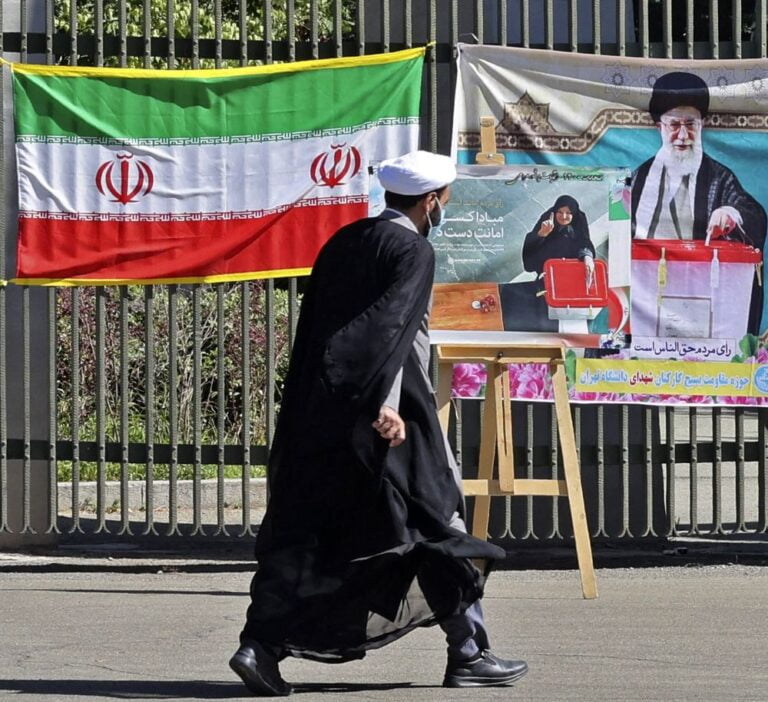
It is tempting to view Iranian presidential elections as a variation of this form, with the ruler himself playing the morshed. In the three decades he has been Supreme Leader, Ayatollah Ali Khamenei has stage-managed the process by limiting the contest to candidates committed to the theocratic ideals of the Islamic Republic and personally loyal to him. Like Henry Ford, he has given voters the choice of any color — so long as it is black.

And not just in the metaphorical sense, either: Khamenei has tended to favor candidates in atramentous clerical vestments. The one exception to the rule, Mahmoud Ahmedinejad, compensated for his lack of theological qualifications (and sartorial conformity) with even more performative piety than most mullahs.

But the Supreme Leader has never pulled the strings as tightly as he is for his ninth production of the presidential puppet show; the vote is on Friday. Khamenei has used his control of the Guardian Council, which oversees the election process, to eliminate any aspirants who might have challenged his chosen candidate — Ebrahim Raisi, the raven-robed, hardline head of the judiciary.

Even previous beneficiaries of such field-tilting have expressed concern that this time the puppet-master has gone too far. Outgoing President Hassan Rouhani urged Khamenei to widen the field, and Ahmedinejad has said he will not vote on Friday.

There have been calls for a boycott, and turnout is expected to be very low. That would damage not only the credibility, such as it is, of the election, but also Khamenei’s legitimacy.   Toxic Legacy Toxic Legacy

Read the complete article at: Bloomberg

Also Read: Iranian Cyber Army Role in Iran’s Presidential Elections

Aftermath of Iran’s sunken ship highlights IRGC threat to environment

0

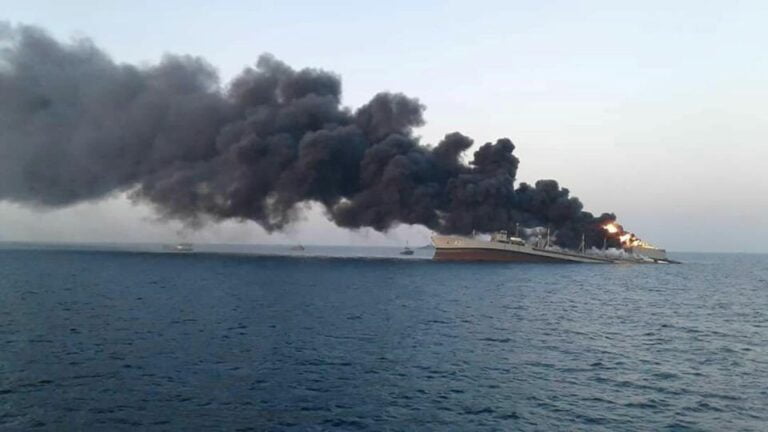
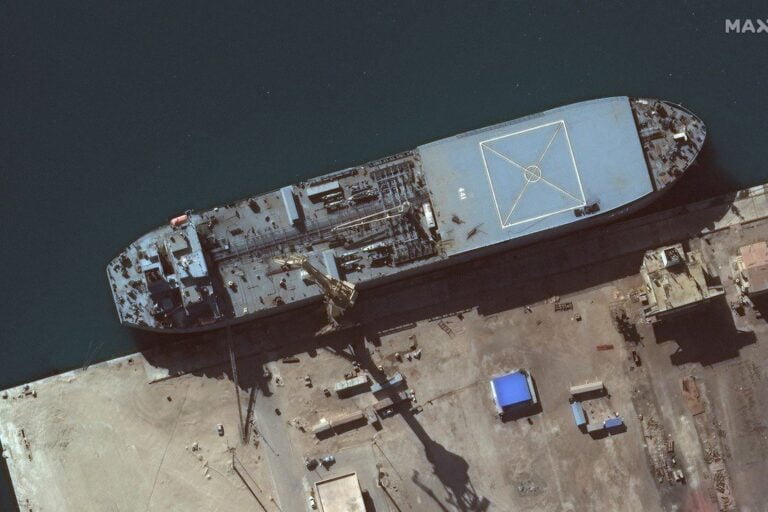
The Iranian government and the Islamic Revolutionary Guard Corpse’ handling of the recent sinking of the Kharg, one of the largest ships in Iran’s navy, shows its negligence regarding environmental issues and highlights its hypocrisy in dealing with others, as well as the regime and IRGC threat to the environment.

“The fire that started on the ship likely occurred because the vessel is so old,” said a former Iranian naval analyst speaking on condition of anonymity, noting that the Kharg was built in the 1970s.

The Iranian regime “keeps having to retrofit old equipment” in weapons systems, nuclear facilities or oil and gas refineries, he said.

Iran also has ignored environmental concerns in its pursuit of expansionism and regional domination in the Middle East.

Satellite photos published by multiple outlets show a large oil slick and debris around the sinking hull of the Kharg. Iranian officials have, thus far, failed to acknowledge the environmental impact of the incident.

In November 2019, an Iranian port authority official in Bushehr province confirmed an oil leak off the Gulf coast, 20km in length, but both the Oil Ministry and the Foreign Ministry remained silent about the issue.

Iran’s top officials are unwilling to acknowledge that the country is grappling with widespread environmental challenges.

Dilapidated equipment in refineries and power plants causes multiple fires throughout Iran every year, but the Islamic Republic routinely disregards the environmental damage of such catastrophes.

Air pollution has been a persistent problem in Tehran, occasionally forcing schools in the Iranian capital to close.

A 2017 warning by Kaveh Madani, one of the country’s top former environmental officials, that Iran is less than 50 years away from running out of fresh drinking water, fell on deaf ears.

His warnings were ignored, he was detained on espionage charges for a short time, and left Iran soon after.

In January 2018, the Islamic Revolutionary Guard Corps (IRGC) intelligence department arrested seven environmentalists and conservationists in Iran.

Kavous Seyyed-Emami, a well-known environmentalist and cheetah conservationist who was falsely accused of using monitoring cameras to spy on Iran’s missile depots, died after being tortured in prison that February.

Though it has ignored the warnings of its own experts about environmental degradation and failing to control oil spills off its Gulf coast, the Islamic Republic has held others to a higher standard than it has applied to itself and the regime and IRGC threat extend well beyond just environmental issues.

It detained a South Korean tanker in January in the Strait of Hormuz for alleged environmental pollution.

In 2019, the US Navy said Iranian limpet mines, likely planted by the IRGC, were responsible for explosions that damaged a Japanese and a Norwegian oil tanker in the Gulf of Oman.

Iran denied the charge, but the US Navy showed video footage of IRGC operatives removing an unexploded mine from the Japanese vessel.

Source: Al-Mashareq
Also read: Iran’s public school curriculum should be a global concern

Iranian Cyber Army Role in Iran’s Presidential Elections

Cyberwarfare is a part of Iran’s “soft war” military strategy and the Iranian cyber army is considered an emerging military power in the field.

Since November 2010, an organization called “The Cyber defense Command” has been operating in Iran under the supervision of the country’s “Passive Civil defense Organization” which is itself a subdivision of the Joint Staff of Iranian Armed Forces.

According to a 2014 report by Institute for National Security Studies, Iran is “one of the most active players in the international cyber arena”. In 2013, a Revolutionary Guards general stated that Iran has “the 4th biggest cyber power among the world’s cyber armies.”

According to a 2021 report by a cyber-security company, “Iran is running two surveillance operations in cyber-space, targeting more than 1,000 dissidents”.

https://www.youtube.com/watch?v=PSZRq0wzl4s

The Iranian Cyber Army is an Iranian computer hacker group. It is thought to be connected to Iranian government, although it is not officially recognized as an entity by the government. It has pledged loyalty to Supreme Leader of Iran.

According to Tehran Bureau, the Islamic Revolutionary Guard initiated plans for the formation of an Iranian Cyber Army in 2005. The organization is believed to have been commanded by Mohammad Hussein Tajik until his assassination.

The group has claimed responsibility for several attacks conducted over the Internet since 2009, most notably attacks against Baidu and Twitter. The attack against Baidu resulted in the so-called Sino-Iranian Hacker War. In 2012, a group self-identified as “Parastoo” hacked the International Atomic Energy Agency’s servers: the Iranian Cyber Army is suspected of being behind the attack.

In 2013, a general in the Islamic Revolutionary Guards stated that Iran had “the 4th biggest cyber power among the world’s cyber armies”, a claim supported by the Israeli Institute for National Security Studies.

Also read: Khamenei tightens grip on social media with Cyber Security Law, fearing its influence in Iran

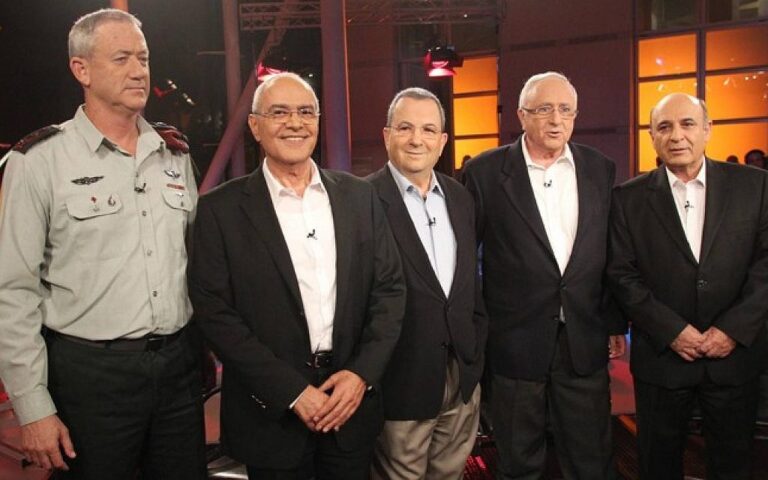
Iran said to hack former Israeli army chief-of-staff, access his entire computer

0

A cyber-hacker working for Iran hacked the computer of a former IDF chief-of-staff, an Israeli television report said Tuesday, and gained access to the unnamed army chief’s entire computer database.

The hacker was named by Channel 10 as Yaser Balaghi. He was said to have subsequently bragged about the hack, but he also inadvertently left behind a means to trace his identity. That error prompted Iran to halt the hacking operation, which targeted 1,800 people worldwide, including Israeli army generals, human rights activists in the Persian Gulf and scientists.

The Times of Israel reported on the Iranian hacking operation two weeks ago, after an Israeli cyber-security firm, Check Point, revealed its existence. Tuesday’s Channel 10 report also cited information from Check Point.

Gil Shwed, CEO of Check Point Software Technologies, told Israel Radio in late January that the attack began two months earlier and that its targets received email messages aimed at sending spyware into their computers.

More than a quarter of the recipients opened the emails and thus unknowingly downloaded spyware, allowing the hackers to steal information from their hard drives.

Over the last two years, Israel has been targeted by a number of cyber-attacks. Officials say hackers affiliated with Hezbollah and the Iranian government were behind some of the infiltration attempts.

Also in late January, Energy Minister Yuval Steinitz revealed that Israel’s Electric Authority was being targeted by a “severe cyber-attack,” although he did not say where it was coming from.

In June, the Israeli ClearSky cyber-security company said it had discovered an ongoing wave of cyber attacks originating from Iran on targets in Israel and the Middle East, with Israeli generals again among the targets. The goal is “espionage or other nation-state interests,” the firm said.

Read the complete article at: Times of Israel

Also Read: Iran’s New Form of Cyberattacks ‘An Act of Digital War Against Israel’

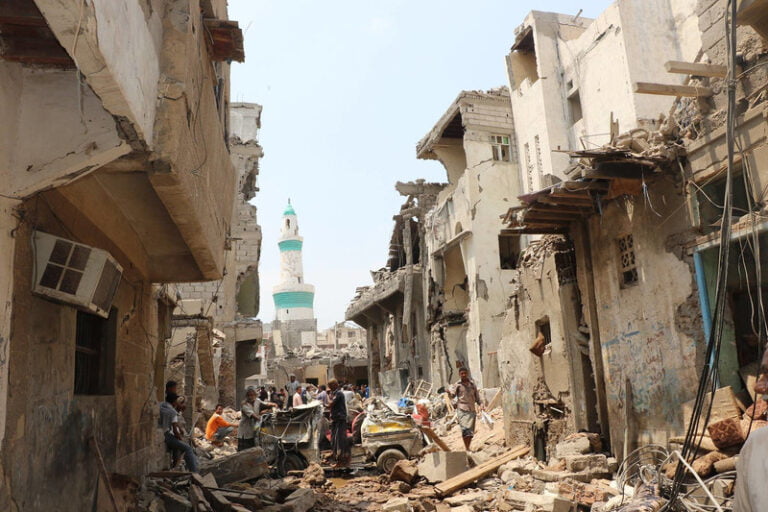
Yemen foreign minister to EU: to stop the war, talk to Iran

Yemen’s foreign minister Ahmed Awad BinMubarak has a clear message to the European Union: to be united, and to talk to Iran, in order to achieve peace in Yemen.

“I ask the EU to use all the leverage it has to give a message to the Houthis and Iran,” BinMubarak said in an interview with EUobserver.

What that message should be, is accepting the UN’s proposed deal for a ceasefire, reopening the airport in Yemen’s capital Sanaa, reopening the seaport of Al Hudaydah and to restart political talks.

Yemen is going through critical days, as the Saudi-led coalition announced a halt to its military operations – in order to give negotiations by neighbouring Oman a chance.

Unverified sources say Oman may be close to reaching an agreement between the Saudi-supported coalition and the Iran-backed Houthi rebels to stop the fighting and let humanitarian aid into the country.

However, any ceasefire is still uncertain, as the Houthis raise the stakes before agreeing to their participation to new political talks.

On Sunday (13 June) a Houthi drone crashed into a school in Saudi Arabia, although without casualties.

“The international community always talks to [Iranian foreign minister Mohammad Javad Zarif. He always says he supports peace,” he said, adding that “the reality on the ground in Yemen is different, as there it is people from the Quds forces running the show.”

BinMubarak also said that the Yemeni government has found ships full of arms being transported from Iran to the Houthis in Yemen.

Therefore, he concludes “Iran has the key. The EU should pressure the Houthis and Iran – without making a link to the nuclear deal.”

Europe, the United States, Russia and China have been trying to reinstate the nuclear deal with Iran, the so-called Joint Comprehensive Plan of Action (JCPOA) by which Iran would not be able to go further with its nuclear arms programme.

Read the complete article at: EU Observer

Also Read: US sanctions smuggling network financing IRGC and Houthis in Yemen

Russia is preparing to supply Iran with an advanced satellite system that will boost Tehran’s ability to surveil military targets, officials say

Russia is preparing to supply Iran with an advanced satellite system that will give Tehran an unprecedented ability to track potential military targets across the Middle East and beyond, according to current and former U.S. and Middle Eastern officials briefed on details of the arrangement.

The plan would deliver to the Iranians a Russian-made Kanopus-V satellite equipped with a high-resolution camera that would greatly enhance Iran’s spying capabilities, allowing continuous monitoring of facilities ranging from Persian Gulf oil refineries and Israeli military bases to Iraqi barracks that house U.S. troops, the officials said. The launch could happen within months, they said.

While the Kanopus-V is marketed for civilian use, Iranian military officials have been heavily involved in the acquisition, and leaders of Iran’s elite Islamic Revolutionary Guard Corps have made multiple trips to Russia since 2018 to help negotiate the terms of the agreement, the officials said. As recently as this spring, Russian experts traveled to Iran to help train ground crews that would operate the satellite from a newly built facility near the northern city of Karaj, the officials said.

Details of the agreement were described by a current and a former U.S. official as well as a senior Middle Eastern government official briefed on the sale. The three officials spoke on the condition of anonymity, citing sensitivities surrounding ongoing intelligence collection efforts. The Russian Foreign Ministry in Moscow did not respond to an email request for comment.

The disclosures came as President Biden is preparing for his first meeting with Russian President Vladimir Putin. The imminent launch of a Russian-made Iranian satellite could add to a long list of contentious issues that have strained relations between Moscow and Washington, including most notably recent Russian hacking operations and efforts to interfere with U.S. elections. Opponents of the U.S. reentering the nuclear accord with Iran are also likely to seize on the disclosure to argue against any engagement with Tehran that doesn’t address its military ambitions in the region.

Read the complete article at: Washington Post

Also Read: Russia and Iran tried to interfere with 2020 election, U.S. intelligence agencies say

satellite system satellite system

Could Iran use Shi’ite centers in France to spread terror?

The Alma Research and Education Center reported on Thursday that two organizations in France, referred to as “Al-Ghadir,” and “Imam Al Khoei,” could possibly be used to “spread the dangerous ideology of the radical Shi’ite axis led by Iran to youngsters and adults alike.” 

The report states that the axis aims to develop “an active civilian and military integrated infrastructure,” as a possible terror base on European soil.

These reports and activities all appear to to be part of the movement referred to as “Ahlul Bayt” that was established in 1990. 

The Alma Research Center has stated that it will continue to examine whether these organizations serve as an outlet to promote “indoctrination and radical ideology linked to terrorist activities.”  

However, France is reportedly unaware of these organizations and their affiliation to the Shi’ite axis, but has kept a close eye and sometimes closing down religious institutions and organizations with some even linked to the activities of the Sunni Muslim Brotherhood, according to the press release by the Alma Research Center.     

The Alma Research Center is a non-profit organization whose goal is to educate on geopolitical conflicts in the Middle East and make this information accessible to English-speakers, according to their website. 

Source: The Jerusalem  Post

Also Read: France says Iran is building nuclear weapons capacity, urgent to revive 2015 deal


The Alma Research and Education Center reported on Thursday that two organizations in France, referred to as “Al-Ghadir,” and “Imam Al Khoei,” could possibly be used to “spread the dangerous ideology of the radical Shi’ite axis led by Iran to youngsters and adults alike.”  The report states that the axis aims to develop “an active civilian and military integrated infrastructure,” as a possible terror base on European soil. These reports and activities all appear to to be part of the movement referred to as “Ahlul Bayt” that was established in 1990.  The Alma Research Center has stated that it will continue to examine whether these organizations serve as an outlet to promote “indoctrination and radical ideology linked to terrorist activities.”


U.S. warns Venezuela, Cuba to turn away Iranian warships carrying arms

The Biden administration is urging Venezuela and Cuba to turn away two Iranian warships believed to be carrying arms.

A senior Biden administration official said the Iranian warships are thought to be carrying weapons to fulfil a deal that Iran and Venezuela made a year ago, noting that it was during the administration of former President Donald Trump.

The official did not specify the types of weapons involved, but last summer there were reports that Venezuela was considering purchasing missiles from Iran.

According to a defence official, one of the ships is carrying fast-attack boats likely intended for sale to Venezuela.

“The delivery of such weapons would be a provocative act and understood as a threat to our partners in the Western Hemisphere,” the senior administration official said in a statement.

“We would reserve the right to take appropriate measures in coordination with our partners to deter the transit or delivery of such weapons.” He continued.

The White House is pressuring Caracas and Havana over diplomatic channels not to allow the vessels to dock in their countries.
Iran and Venezuela, both facing U.S. sanctions, have increased their cooperation in industrial and energy industries.

U.S. intermediaries have communicated to Venezuelan officials that letting the ships dock there would make it less likely that the U.S. would provide the country with sanctions relief.

Kirsten Fontenrose, an Atlantic Council fellow and former National Security Council official says: “The threat is the precedent it sets, because the UN arms embargo is no longer on Iran and they’re free to import and export. This could be the first of many transfers we see. It allows Iran to proliferate their model of what I call zero to hero, where they arm failing governments or proxy groups and make them larger than they’re capable of being on their own.

Source: Euronews
Also read: US sanctions smuggling network financing IRGC and Houthis in Yemen

US sanctions smuggling network financing IRGC and Houthis in Yemen

The United States on Thursday imposed sanctions on members of a smuggling network that helps fund Iran’s IRGC and Houthis militia in Yemen, according to statements from the US Department of the Treasury and the Department of State.

The US blacklisted Sa’id Ahmad Muhammad al-Jamal and other individuals and entities involved in an international network he has used to provide tens of millions of dollars worth of funds to the Houthis in cooperation with senior officials in Iran’s Islamic Revolutionary Guard Corps–Qods Force (IRGC-QF).

Those in al-Jamal’s network of front companies and intermediaries sell commodities, such as Iranian petroleum, throughout the Middle East and beyond and channel a significant portion of the revenue to the IRGC and Houthis in Yemen, the US Department of State said.

“The 11 other individuals, companies, and vessel sanctioned today play key roles in this illicit network, including Hani ‘Abd-al-Majid Muhammad As’ad, a Yemeni accountant who has facilitated financial transfers to the Houthis, and Jami’ ‘Ali Muhammad, a Houthi and IRGC-QF associate who helped al-Jamal procure vessels, facilitate shipments of fuel, and transfer funds for the benefit of the Houthis,” the statement read.

Commenting on the punitive measures, US Secretary of State Antony Blinken tweeted, saying: “The United States will maintain pressure on Houthis to accept a ceasefire and engage in real talks to resolve the Yemen conflict. Today, we designated a network of front companies and intermediaries that support the Houthis in coordination with IRGC-QF.”

Meanwhile, Director of the Office of Foreign Assets Control Andrea Gacki said. “This network’s financial support enables the Houthis’ deplorable attacks threatening civilian and critical infrastructure in Yemen and Saudi Arabia. These attacks undermine efforts to bring the conflict to an end and, most tragically, starve tens of millions of innocent civilians.”

“Ending the suffering of millions of Yemenis is of paramount concern to the United States, and we will continue to hold accountable those responsible for widespread misery and deny them access to the global financial system,” Gacki added.

According to the Treasury Department’s statement, Iran-based Sa’id Al-Jamal directs a network of front companies and vessels that smuggle Iranian fuel, petroleum products, and other commodities to customers throughout the Middle East, Africa, and Asia.

A significant portion of the revenue generated from these sales is directed through a complex international network of intermediaries and exchange houses to the Houthis in Yemen. This revenue helps fund the destabilizing regional activities of the Houthis, IRGC-QF, and others, including Hezballah.

Turkey-based Houthi-affiliate Abdi Nasir Ali Mahamud, a key business partner of Sa’id Al-Jamal, acts as a financial intermediary and has coordinated the smuggling of petrochemicals for the network.

UAE-based Indian national Manoj Sabharwal is a maritime shipping professional who manages shipping operations for Sa’id Al-Jamal’s network and advises Al-Jamal on smuggling Iranian oil products. Sabharwal is responsible for coordinating shipments of Iranian petroleum products and commodities throughout the Middle East and Asia while obscuring Sa’id Al-Jamal’s involvement.

Since 2017, Jami’ ‘Ali Muhammad, a Somali businessman and Houthi and IRGC-QF associate, has assisted Sa’id Al-Jamal’s efforts to procure vessels, facilitate shipments of Iranian fuel, and transfer funds for the benefit of the Houthis.

Read the complete article at: Saudi Gazette
Also read: Iran’s embarrassing military mishaps and years of misplaced priorities