Home Blog Page 75

Dissidents targeted by Iranian hacker Ferocious Kitten in a six-year surveillance campaign

0

Iranian hackers “Ferocious Kitten” have used the reputation of one of the administration’s most prominent critics to deceive an online surveillance program that has been running for at least six years without finding dissidents.

A cyber-spy activity run by a group known as Ferocious Kitten was designed to steal data from users’ computers and hijack the Telegram app commonly used by opposition to evade regime oversight. It was.

“The content of the decoy document suggests that attackers are particularly chasing supporters of domestic protests,” said Kaspersky, a cybersecurity expert who first learned about malware in March. ..

According to Kaspersky, the ferocious kitten sent an email containing videos of dissident protests and resistance camps, including hidden malicious software that monitors the computer activity of those who downloaded it.

While the malicious software was being downloaded, a message was displayed on the screen claiming to be from Hussein Jafari, a political prisoner in the 1980s.

“Please add my name to Iraj Mesdaghi’s prisoner’s statement about bloodthirsty mercenaries,” the message said. “Use the nickname Jafar for myself and my family.”

Former exiled political prisoner Mesdaghi, who spent 10 years in three prisons, said he didn’t know what the message meant, and Jafari didn’t even know. But he said cyber-spying is typical of repeated attempts by the administration to trap foreign dissidents.

“This is the first time they have used my name,” he said. “Of course, that has no effect on me, but they try, and they are very positive about these things.”

A malware known as MarkiRat allowed Ferocious Kitten to download and upload materials from the user’s computer. According to Kaspersky, all the victims of this operation appeared to be Iranian and Persian-speaking people.

Researchers said the ferocious kittens appear to be “very active” and may be modifying their tactics to continue targeting opponents.

Read the complete article at: Illinois News Today

Also Read: Exclusive: Iranian diplomats instigated killing of dissident in Istanbul, Turkish officials say
Iran Elects Hardline Cleric Linked to Mass Killings as President

0

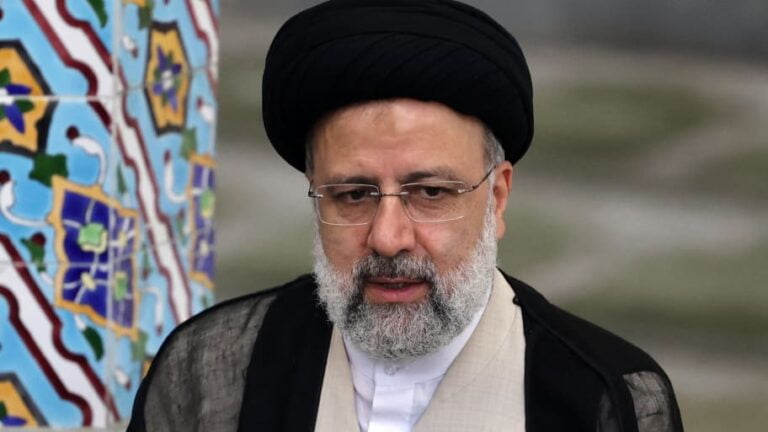
Ebrahim Raisi, a hardline judiciary chief with a brutal human rights record, will be the next president of Iran following his win in an uncompetitive election that most of the country sat out.

Raisi, who has long opposed engagement with the West and is a close ally of Supreme Leader Ayatollah Ali Khamenei, sailed to victory in a poll that saw all of his serious rivals barred in the runup to the race.

The 60-year-old won almost 18 million of the nearly 29 million ballots cast, Interior Minister Rahmani Fazli announced Saturday. But many reform-minded Iranians refused to take part in an election widely seen as a foregone conclusion.

Overall voter turnout was 48.8% — the lowest since the establishment of the Islamic Republic in 1979.

Many activists accused Iran’s clerical establishment of “selecting” rather than electing the next president in a poll designed to further entrench the power of the country’s hardline clerical rulers, despite the public’s calls for reforms.

The historically low turnout came despite numerous pleas from Khamenei urging people to vote. On Friday, he warned that low turnout would “increase the pressure of the enemies.”

President-elect Raisi will officially take office in 45 days, at which point he will become Iran’s eighth president. Until that time, Hassan Rouhani will remain acting president of Iran. Rouhani visited Raisi on Saturday to offer his congratulations.

The election comes at a pivotal moment for Iran. The next government will have to confront an economic crisis exacerbated by the Covid-19 pandemic, and calls for constitutional reform. Tehran is also currently locked in negotiations with the United States about how to revive the 2015 nuclear deal.

The election of Raisi will further heighten speculation that he is being groomed to one day succeed 81-year-old Khamenei as the Supreme Leader. Under Iran’s political system, it is ultimately the Supreme Leader, not the president, who makes the final call on all major matters of state.

Read the complete article at: CNN

Also Read: Frontrunner Ebrahim Raisi unfit for Iran leadership over role in 1988 massacres

UK: daughter of British man jailed in Iran calls on Government to ‘save my dad’

The daughter of a UK national jailed in Iran has issued an emotional “save my dad” appeal to the UK government ahead of Father’s Day this Sunday.

Elika Ashoori, 34, made the comments as part of her family’s campaign to secure the release of her 67-year-old father – retired engineer Anoosheh Ashoori, a UK-Iranian dual-national who has been arbitrarily detained in Iran for almost four years. 

Mr Ashoori’s adult children – Elika and Aryan – and his wife Sherry Izadi, who lives in south London, are calling on the UK government to extend “diplomatic protection” to Ashoori, which means his case would become the subject of an official dispute between the UK and Iran. 

Amnesty is supporting the family’s efforts, with more than 30,000 people backing Amnesty’s “Free Anoosheh” campaign. High-profile figures like Olivia Colman, Nazanin Boniadi and Shaparak Khorsandi have also drawn attention to the case as part of wider campaigning for other UK nationals held in Iran, including Nazanin Zaghari-Ratcliffe.

Elika Ashoori explained the painful nature of the day and similar family occasions:

“Each year that goes by, a little bit of hope dies along with it. A year of life that never comes back, a year our family could have been together but missed forever.

“I try not to even dwell on the big days anymore. The less I focus on Father’s Day, birthdays or Christmas, the less painful it is to go through them.

“I see signs, newsletters and shop adverts everywhere saying, ‘Treat your dad this Father’s Day’, or ‘Have you told your dad you love him this Father’s Day?’, and there is no way to cope with these constant reminders other than to try really, really hard to ignore them.

“I’ve almost run out of things to say to the Government – it feels like ministers and officials are just not listening. My one plea though is that they grant my father diplomatic protection. It’s perhaps the one way they can save my dad.”

Read the complete article at: Amnesty

Also Read: Nazanin Zaghari-Ratcliffe: PM demands ‘immediate release’ of British-Iranian woman


daughter daughter 

Human rights groups urge Iran to avoid cutting the internet on election day

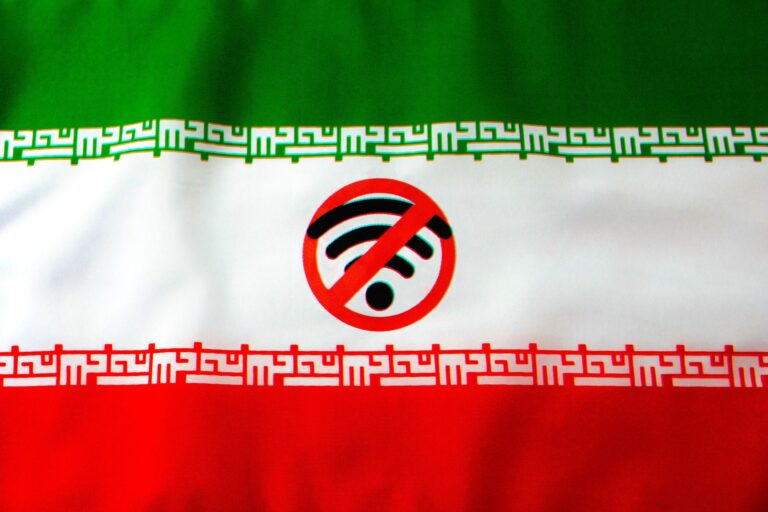
In an open letter to the Supreme Leader and the President of Iran, 45 civil society organizations advocating for Iranian and international internet rights and freedoms called for respect of citizens’ right to access the Internet during the 2021 presidential elections and urged Iran to avoid cutting the internet access on election day.

The letter was also sent to the Supreme National Security Council, the Revolutionary Guards, the Ministry of Intelligence and a number of other entities.

The letter says: Internet, social media platforms, and messaging apps play a critical role in providing a space for expression and activism in any society, especially in contexts like Iran, where the public sphere is severely controlled and policed through criminalization of the right to freedom of expression.

These outlets provide space for communicating, public debate, seeking information on election processes and candidates, advocating for human rights, reporting and documenting events and outcomes, as well as electoral and human rights violations.

For weeks, Iranian journalists and activists have reported on threats from security authorities that criticism of Ebrahim Raisi — head of judiciary and presidential candidate — during the election period will not be tolerated.

The Islamic Republic of Iran has a long history of cutting the internet nationwide, as well as aggressive censorship of social media platforms during elections, the November 2019 protests which were violently repressed, and, more recently, the near-total internet shutdown in Sistan and Baluchistan during the February 2021 protests. There have also been numerous reports of internet and social media shutdowns, including Signal and Clubhouse in 2021.

Other specific requests in the letter include:

-Refrain from arbitrarily blocking access to social media platforms.

-Stop blocking and tampering with VPN connections.

-Refrain from impeding access to high-quality, secure, and unrestricted internet for everyone throughout the election period and thereafter

The letter was signed by organizations such as the Abdorrahman Boroumand Foundation, the Siamak Pourzand Foundation, Article 19, the Center for Human Rights in Iran and Human Rights Watch.

Source: رادیو فردا
Also read: Prominent Activist in Iran Fears Her “Life is in Danger” After Violent Confrontations

Prominent Activist in Iran Fears Her “Life is in Danger” After Violent Confrontations

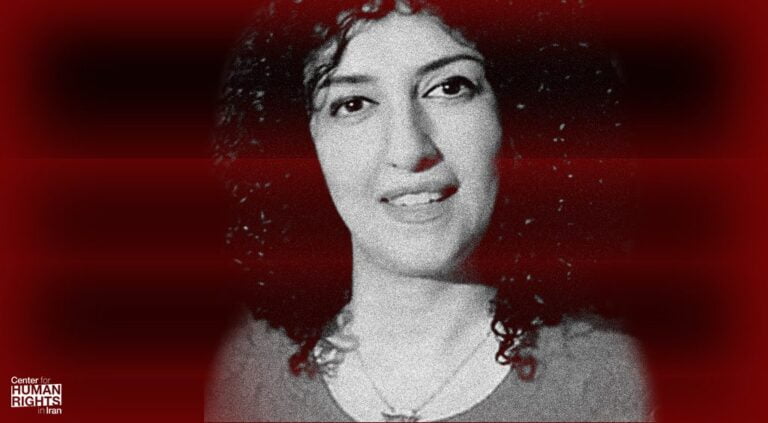
Iranian authorities should stop physically assaulting, harassing and threatening peaceful activists in Iran, including the prominent rights defender Narges Mohammadi, who told the Center for Human Rights in Iran (CHRI) that she fears for her life after being twice violently confronted by unidentified state security agents in less than a week.

“I am extremely worried for my life,” Mohammadi told CHRI on June 17, 2021. “In a matter of a few days, unknown assailants who do not identify themselves have attacked and threatened me.”

“They have told me to stop my activities because it ‘harms the interests of the Islamic Republic,’” she added. “I am a human rights defender and have not broken any laws.”

Photographs received by CHRI show large bruises on Mohammadi’s body.

CHRI calls on the Iranian authorities to cease trying to muzzle free speech and expression and allow peaceful activism without the threat of violence, imprisonment or death.

CHRI urges the international community to speak out against this unlawful state violence, and to monitor the human rights situation in Iran with heightened vigilance ahead of a sham election, scheduled for June 18, 2021, that could bring Ebrahim Raisi, a man guilty of crimes against humanity, to power.

Mohammadi and Mothers of Killed Protesters Violently Confronted in Shiraz

Mohammadi and other activists, including the mothers of peaceful protesters who were killed by security forces, were first violently confronted and briefly detained by state agents who refused to identify themselves on June 12, 2021, in the city Shiraz. They had traveled to Shiraz to visit the grieving family of champion wrestler Navid Afkari, who was unjustly executed there in September 2020.

The activists had peacefully gathered outside the prison where the wrestler was hanged—and where his two brothers now also fear for their lives in prolonged solitary confinement—when they were beaten by plainclothes agents who refused to identify themselves.

Read the complete article at: Center for Human Rights in Iran

Also Read: Iran releases human rights activist Narges Mohammadi after sentence cut

Prominent Activist Prominent Activist

Iran buying surveillance satellite from Russia and its growing satellite threat

0

Recently, Putin’s regime in Russia announced its intention to sell an advanced surveillance satellite to the Islamic Republic.

Iran is on the march to destroy the established order in the Middle East and replace it with a regional order of its own design. Iran has developed a coterie of capabilities with which to threaten its American, Israeli, and Sunni Arab rivals. 

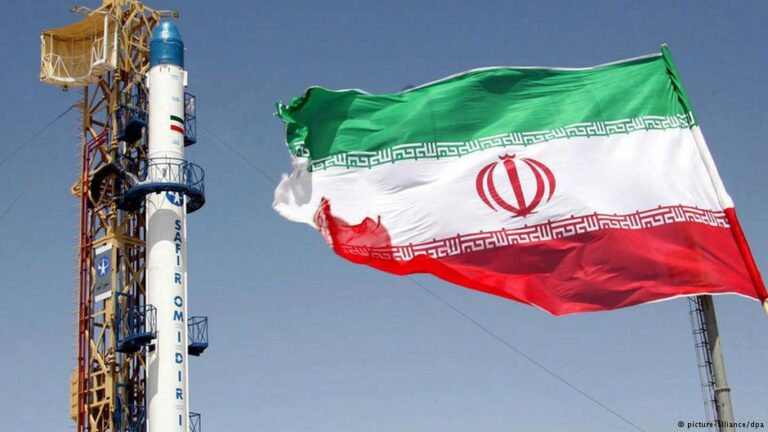
This year, Iran successfully tested its largest heavy-lift rocket yet. Known as the Zuljanah, the rocket has two stages of solid propulsion and a single stage of liquid propulsion. According to Iran’s space agency, the rocket “can compete with the world’s current carriers.”

In fact, these systems can be used to launch military satellites or can be refashioned into intercontinental ballistic missiles (ICBMs) with which to strike deep and hard against any target in the world – including the distant United States and Europe.

Satellites are essential for modern militaries. They allow for over-the-horizon capabilities that a nation like Iran would otherwise lack. Everything from a more robust communications architecture to stealthy surveillance to better nuclear weapons command-and-control functions, satellites are decisive components for a nation to be able to project power and threaten its rivals from afar.

The Russian-built Kanopus-V satellite will be equipped with a high-resolution camera that would allow Iran’s military to track potential targets all across the Middle East. Specifically, the surveillance satellite would allow Iran’s military “continuous monitoring of facilities ranging from Persian Gulf oil refineries and Israeli military bases to Iraqi barracks that house US troops.” 

More frighteningly, reports have surfaced that Iran might also be trying to move its precision-guided missiles into Venezuela and Cuba, to threaten world peace further. An enhanced military satellite capability would only help this aggressive behavior.

If Iran can build and test a nuclear weapon and prove that it has the capability to build and launch a satellite, even a small one, it will join a new category of states that could be referred to as ‘mini-superpowers.

Source: Asia Times
Also read: Biden Says He and Putin Agreed to Work to Keep Iran From Getting Nuclear Weapons

Biden urged to secure release of Americans left behind in Iran

As the United States works to bring Iran back into compliance with the nuclear accord, the family of two Americans held by Tehran is appealing to the Biden administration to make their release part of any deal made with the Islamic Republic.

US officials say they’ve engaged in indirect discussions — independently of the nuclear deal talks in Vienna — with Iran over unjustly detained US citizens, including Siamak and Baquer Namazi.

The White House says their release is a top priority, but Babak Namazi worries his brother, Siamak, and father, Baquer, could once again be left behind.

“That fear is ever present, irrespective of what assurances one receives,” he told Al-Monitor.

Siamak and Baquer Namazi have come to symbolize what rights groups describe as Iran’s use of hostage diplomacy. Days after the nuclear deal — known as the Joint Comprehensive Plan of Action (JCPOA) — was reached in July 2015, the Iranian Revolutionary Guard Corps (IRGC) detained and interrogated Siamak Namazi as he arrived at the Tehran airport for a return flight home to the United Arab Emirates following a visit with relatives. After months of interrogations, the Iranian-American business consultant was formally arrested in October 2015.

Several months into Siamak Namazi’s imprisonment, the IRGC lured Baquer Namazi to Iran on the premise he could visit his son in prison, his family says. The senior Namazi, a former Iranian provincial governor and UNICEF official, was instead intercepted at the airport and thrown in jail under the same vague spying charges.

In October 2016, both men were sentenced to 10 years in prison on charges of cooperating with the US government. Baquer Namazi’s sentence was commuted in February 2020, but the 84-year-old is still barred from leaving the country despite serious medical conditions.

Siamak Namazi, now the longest-held American prisoner in Iran, remains in the notorious Evin prison where his family says he has endured long stretches of solitary confinement, as well as physical and psychological torture.

Read the complete article at: Al Monitor

Also Read: US calls on Iran to release all American citizens wrongfully detained

Americans

Biden Says He and Putin Agreed to Work to Keep Iran From Getting Nuclear Weapons

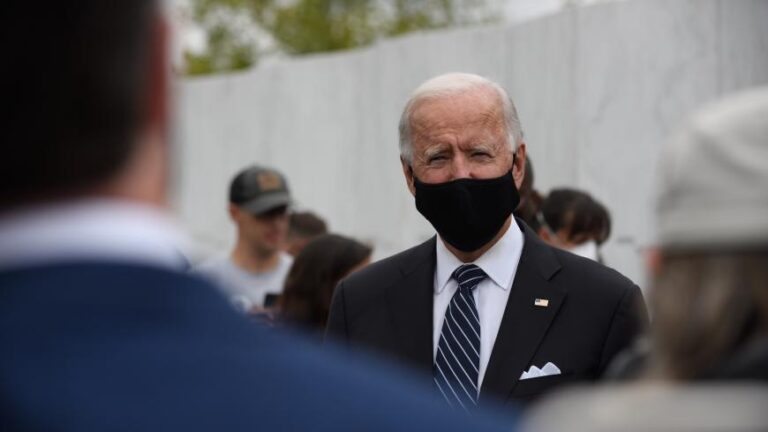
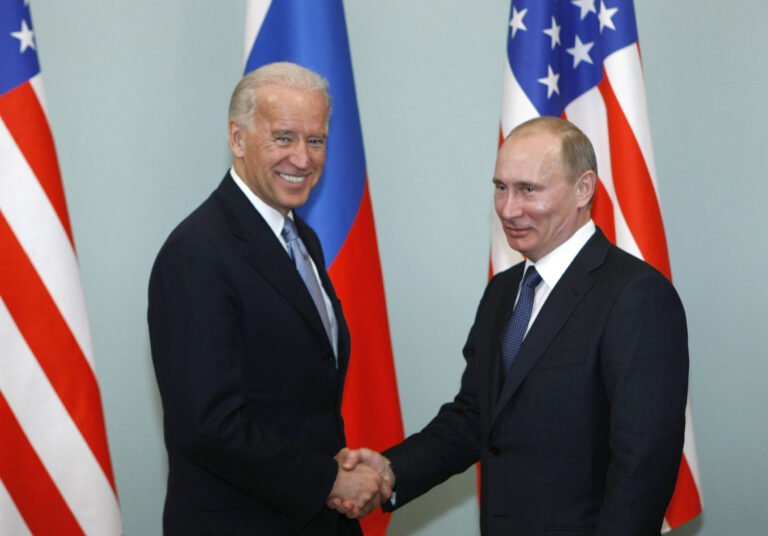
Russian President Vladimir Putin and his U.S. counterpart Joe Biden agreed to work to prevent Iran from obtaining nuclear weapons when they met in Geneva on Wednesday, Biden said after the meeting.

Putin meanwhile said that Moscow and Washington had agreed to launch nuclear arms control talks to build on the New START treaty, a cornerstone of global arms control.

Putin said the two sides were aware of their special responsibility for global strategic stability and the important role of the treaty, extended by the two countries at the eleventh hour earlier this year.

“I think it is clear to everyone that President Biden has made the responsible and, in our view, perfectly timely decision to extend the New START treaty for five years, which means until 2024,” Putin said.

“Of course, that begs the question of what happens next,” Putin said. He said arms control discussions would be launched and held at the inter-agency level.

Speaking at a news conference after Wednesday’s talks, Putin said he believes that he and Biden “were speaking the same language” despite sharp disagreements on a variety of issues.

He said that Biden is a “very constructive, balanced … and extremely experienced.”

The two parties also adopted a joint declaration, reaffirming their commitment to the principle “that there can be no winners in a nuclear war and that it must never be fought,” the document, shared on the Kremlin website, said.

The declaration also referenced the new talks, which it described as aimed at laying the foundations for future arms control.

Signed in 2010, the New START treaty limits the numbers of strategic nuclear warheads, missiles and bombers that Russia and the United States can deploy.

Due to expire earlier this year, the deal was extended by Moscow and Washington in January and February respectively, for five more years.

The treaty restricts the United States and Russia to deploying no more than 1,550 strategic nuclear warheads each.

Source: Haaretz

Also Read: Congressional leaders urge Biden to take tough stand on Iran


work work 


Khamenei’s indirect answer to NATO, G7 pointing at Iran ballistic missiles

0

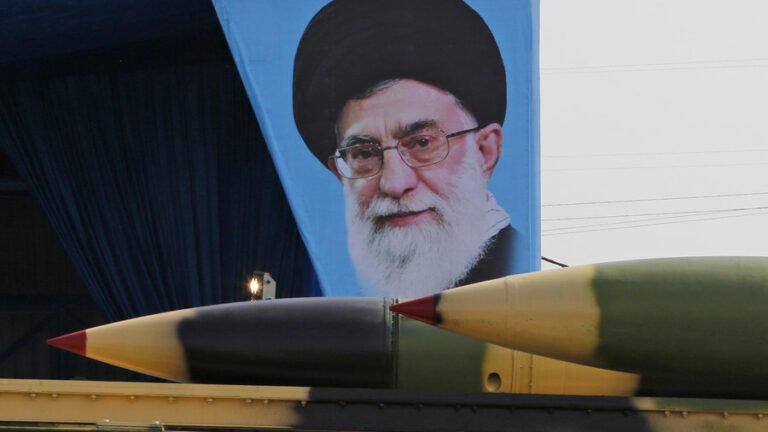
Iranian Supreme Leader Ayatollah Ali Khamenei said that he limited the range of Iran ballistic missiles capability to 2,000 kilometers, despite IRGC requests to increase the range to 4,000 and 5,000 kilometers.

He made his remarks during a meeting with experts in the fields of science and technology on February 28, 2019, which was posted on Khamenei.ir, the official website of the Iranian Supreme Leader, on June 14, 2021 a day ago.

Khamenei said that IRGC officials are not happy with this decision and complain about it, but he has reasons for this decision.

He added that long-range accurate missiles are a “very significant thing,” and added that these missiles hit 5-10 meters from the target.

Khamenei’s video, despite being 2 years old, is released on his official website only days after NATO leaders agree to a 41-page communique at their summit outlining the alliance’s approach to old threats.

Included in the document is a call on Iran to stop all of its ballistic missile activities.

There has also been rumors of Iran ballistic missiles program to be included in the current talks of Iran nuclear deal in Vienna.

The video is clearly an indirect answer to NATO and Group of 7 members call for Iran to put an end to its ballistic missile program.

Of course, many experts believe Iran will never negotiate away its missile capabilities. After all, Iranians view missile force as a “crown jewel,” and many officials, going all the way up to the Supreme Leader, have insisted that they are non-negotiable.

The repeated yet vague mentions of curbing Iran’s missile program have largely concealed the fact that it comprises not one single problem, but two: Iran’s potential development of long-range missiles that could reach Western Europe and the United States on one hand, and its proliferation of rockets and missiles to proxy groups in the Middle East on the other.

Source: Al Arabiya
Also read: Russia is preparing to supply Iran with an advanced satellite system that will boost Tehran’s ability to surveil military targets, officials say

Iran regime-backed Hezbollah builds stronghold in France – report

The prominent French weekly magazine Le Point shined a spotlight in its new issue on the Iranian regime-backed terrorist organization Hezbollah’s operations in France.  Hezbollah 

In an article titled “Hezbollah weaves its web in France” for the magazine, the investigative journalist Rachel Binhas reported the French government authorized the extradition of the Lebanese national Mazen al-Atat, who is alleged by the US to be an agent for Hezbollah.

Binhas noted that the extradition order of al-Atat “could have serious consequences for the person concerned.” According to Le Point, a New York court ordered the extradition of al-Atat based on criminal conspiracy to provide material support to Hezbollah.

The US government along with Canada, Britain, Germany, Austria the Netherlands, Israel, the Arab League, and many additional European Union and Latin American countries classify Hezbollah’s entire organization as a terrorist movement.

However, France and the European Union have split Hezbollah into so-called military and political wings, only designated its militia a terrorist entity.

The French authorities detained al-Atat in 2016 as part of the US Drug Enforcement Agency international operation “Project Cassandra” involving a complex enterprise of money laundering and trafficking of narcotics for Hezbollah.

The annual Hezbollah-controlled operation resulted in millions of dollars in annual elicit revenues for Hezbollah.

France’s judiciary sentenced al-Atat to a prison term in 2018 and he has since been released.

Le Point states that “The Lebanese Shi’ite militia…has long ramifications in Europe, especially in France. But its activities there have reportedly increased worryingly in recent years.”

A second member of the Hezbollah ring in France, Mohamad Noureddine, who was sentenced to seven years in prison, is slated to be extradited to the US, according to Le Point.

Al-Atat, who denied connections with Hezbollah, told Le Point “I was contaminated by Noureddine,” explaining that he “was doing secretarial work for him” as [Noureddine]’s calls were sometimes transmitted to [Al-Atat] phone, “but it was because Noureddine had a mistress. In fact, I would cover him when his wife called him,” said Al-Atat.

Read the complete article at: The Jerusalem Post

Also Read: Could Iran use Shi’ite centers in France to spread terror?