Home Blog Page 81

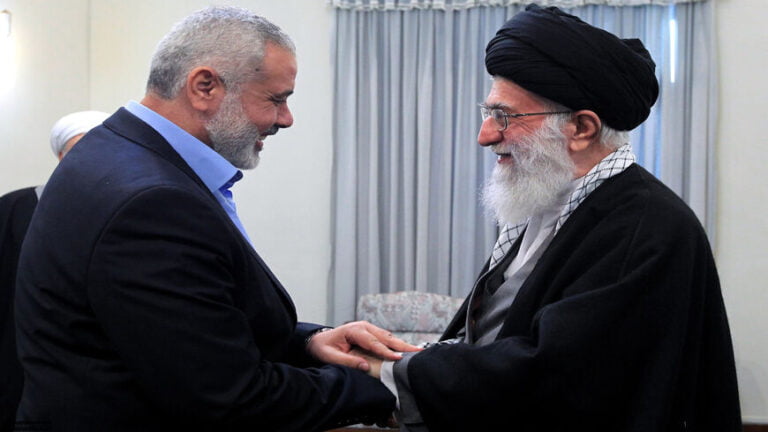
Iran, a longtime backer of Hamas, cheers attacks on Israel

The leadership of Iran, engaged in a long shadow war with Israel on land, air and sea, did not try to conceal the pleasure it took in the most recent Israeli-Palestinian conflict.

Over the 11 days of fighting this month, Tehran praised the damage being done to its enemy, and the state news media and conservative commentators highlighted Iran’s role in providing weaponry and military training to Palestinian militants in the Gaza Strip to hammer Israeli communities.

Iran has for decades supported Hamas, the Palestinian militant group that controls Gaza and whose own interests in battling Israel align with Iran’s. Experts say that over the years, Iran has provided Hamas with financial and political support, weapons and technology and training to build its own arsenal of advanced rockets that can reach deep into Israeli territory.

But in the assessment of Israeli intelligence, Hamas made its decisions independently of Iran in the latest conflict.

In the past year, Israel orchestrated a string of covert attacks on Iran, including the sabotaging of Iran’s nuclear facilities. While Iran’s leaders have made no secret of their desire to punish Israel for the wave of attacks, they have struggled to find an effective way to retaliate without risking an all-out war or derailing any chance for a revised nuclear accord with the United States and other world powers.

So the conservative factions in Iran that had been urging payback for the Israeli strikes seized on a chance to portray the thousands of rockets fired by the Gaza militants as revenge.

“The Gaza war woke up Israel to the fact that war with Iran means Israel getting plowed,” Gheis Ghoreishi, a political analyst who has advised Iran’s foreign ministry on Arab affairs, wrote on Twitter.

Read the complete article at: Economic Times

Also Read: Netanyahu: Drone downed by IDF this week was armed, launched by Iran
Blinken: Iran Funds ‘Extremist Groups,’ But Biden Wants to Return to Nuclear Deal Anyway

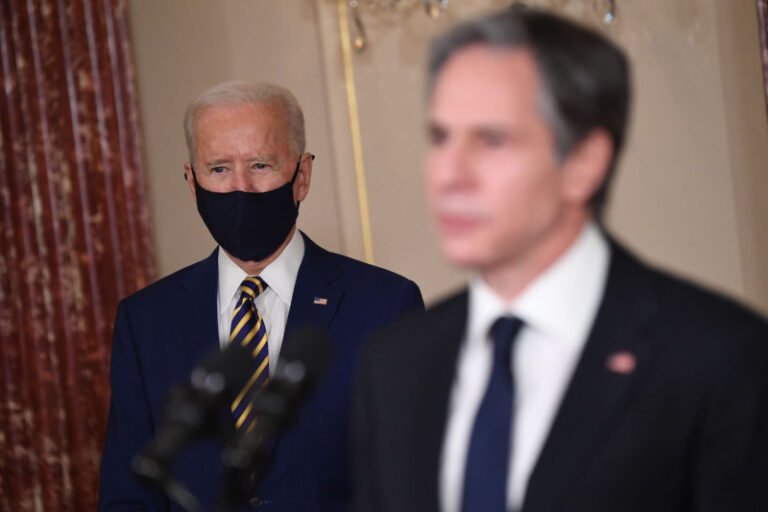
Secretary of State Antony Blinken on Sunday acknowledged that Iran funds terrorist proxies across the Middle East, but confirmed that the Biden administration is looking to lift sanctions against the regime in Tehran anyway.

In doing so, he echoed the arguments put forward by the Obama administration to the effect that Iran would be even more dangerous without a nuclear deal – thereby justifying an agreement that freed up billions of dollars for the terror-sponsoring regime.

On ABC’s “This Week,” host George Stephanopoulos noted that 42 Republican senators have urged President Biden to halt diplomatic talks in Vienna aimed at reviving the Obama-era Joint Comprehensive Plan of Action (JCPOA), to “make it clear that sanctions will remain in place because of Iranian funding of Hamas.”

“Do you believe that Iran is funding Hamas?” Stephanopoulos asked. “And if they are, should the sanctions stay in place?”

Blinken’s reply did not include the word “Hamas,” but he agreed that the regime was “engaged in a number of activities, including funding extremist groups, supporting terrorism more broadly, supporting very dangerous proxies that are taking destabilizing actions throughout the Middle East, [and] proliferating weapons.”

However, he continued, “an Iran with a nuclear weapon or with the capability to build one in very short order is going to act with even greater impunity in those areas, which just adds to the urgency of trying to put the nuclear problem back in the box that the nuclear agreement put it in.”

Blinken added that many of those activities had continued under the Trump administration, despite its “so-called maximum pressure” campaign.

“But the first thing that we need to do is put the nuclear problem back in the box,” he said. He confirmed again that a return to the JCPOA will entail the U.S. lifting sanctions that are “inconsistent with the nuclear agreement.”

Read the complete article at: CNS News

Also Read: Netanyahu: Drone downed by IDF this week was armed, launched by Iran
Mass grave of civilians executed by IRGC-made militias unearthed in Iraq

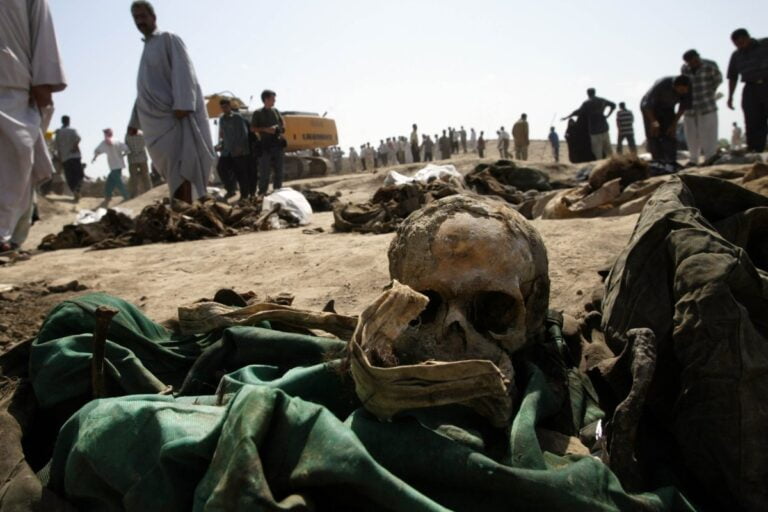
A newly discovered mass grave near the Anbar province city of Fallujah contains the remains of “dozens” of civilians whom Iran-backed and IRGC-made militias in Iraq apparently executed at point blank range, officials said.

Omar al-Farhan, director of the Iraqi War Crimes Documentation Centre says: It is not clear how many victims are interred at the site, which local farmers and authorities found by chance, although there appear to be “dozens”.

He added: not long after the locals discovered the mass grave, the dominant militias in the area — Iran-backed Kataib Hizbullah and Kataib al-Imam Ali — cordoned off the site in an apparent attempt to obfuscate the crime.

The human remains had protruded above the ground after heavy rains, al-Farhan said, noting that local residents found traditional Arab clothing and sportswear at the site, which indicates the victims were civilians.

The victims’ slayers tied their hands and shot them at close range, as evidenced by bullet holes in their skulls.

While the mass grave is similar to dozens of others containing the remains of ISIS victims, the newly discovered burial site is “the work of the militias, according to the testimony of the local population in the area”, he said.

This testimony has gained credence from the remarks of a Kataib al-Imam Ali leader, who goes by the name Abu Azrael (Angel of Death), in a video clip that has been circulating on social media, the Iraqi War Crimes Documentation Centre said.

In the clip, Abu Azrael describes the fate of those whom the militias detained during the war on ISIS. He claims that many Iraqi Sunnis have called him to tell him their sons have been detained since 2015, and ask to see them in prison.

“I tell them there are no detainees. They killed them,” he said, adding that at that time “sectarianism consumed anything and everything”.

Iraqi officials accuse Iran’s proxies and IRGC-made militias of forcibly disappearing at least 12,000 Iraqi residents of areas liberated from ISIS, under the pretext that they had ties to the extremist group.

Political analyst Ahmed Shawki said Iran-aligned militias took advantage of their positions in the rear of the battle lines to “hunt” families the Iraqi army was liberating from ISIS, on the pretext that they were collaborators.

The militias are perpetrating the most heinous crimes” under the cover of fighting terrorism, Shawki said.

Source: Al-Mashareq
Also read: Iran Grows New Loyalist Iraqi Militias

Iran Grows New Loyalist Iraqi Militias

Iran has hand picked hundreds of trusted fighters from among the cadres of its most powerful Iraqi militias, forming smaller, elite and fiercely loyal factions in a shift away from relying on large groups with which it once exerted influence, reported Reuters in an exclusive report.

The new covert groups were trained last year in drone warfare, surveillance and online propaganda and answer directly to officers in Iran’s Quds Force, the arm of its Revolutionary Guards (IRGC) that controls its allied militia abroad.

They have been responsible for a series of increasingly sophisticated attacks against the United States and its allies, according to accounts by Iraqi security officials, militia commanders and Western diplomatic and military sources.

After Soleimani’s death, and with protesters turning against groups publicly linked to Iran, officials in Tehran became suspicious of some of the militia they had promoted and grew less supportive, according to the militia commanders.

“They (Iran) believed leaks from one of the groups helped cause Soleimani’s death, and they saw divisions over personal interests and power among them,” said one.

Another said: “Meetings and communications between us and the Iranians have reduced. We no longer have regular meetings and they’ve stopped inviting us to Iran.”

The Iraqi security officials, a government official and the three Iraqi militias commanders all said the Quds Force began splitting trusted operatives away from the main factions within months after Soleimani’s death.

The shift from supporting mass movements to relying on smaller, more tightly controlled cadres reflects a strategy Iran has pursued before: at the height of the US occupation of Iraq in 2005-2007, Tehran created cells that proved particularly effective at deploying sophisticated bombs to pierce US armor.

Read the complete article at: Asharq Al-Awsat
Also read: Iran and Hezbollah are establishing a foothold in Canada

Iran and Hezbollah are establishing a foothold in Canada

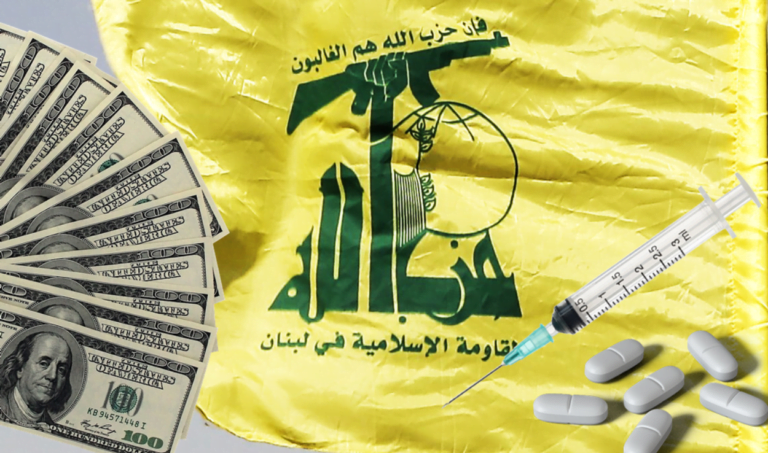
Battered by American sanctions on Iran, its open-ended involvement in the Syrian conflict and Lebanon’s economic collapse, Hezbollah is relying more and more on the global drug trade to finance its political and military activities. And Canada appears to be an increasingly important part of its efforts to boost its finances through illicit activities, such as drug smuggling and money laundering.

Though it has been slow to react to Iranian and Hezbollah activities on Canadian soil, Ottawa has now reportedly launched an investigation into their Canadian money-laundering operations. While the government should be commended for taking action, to be more effective, Canada should address the root of the problem and designate the Tehran’s Islamic Revolutionary Guards Corps (IRGC) as a terrorist organization, as it would allow law-enforcement agencies to take aggressive action against it.

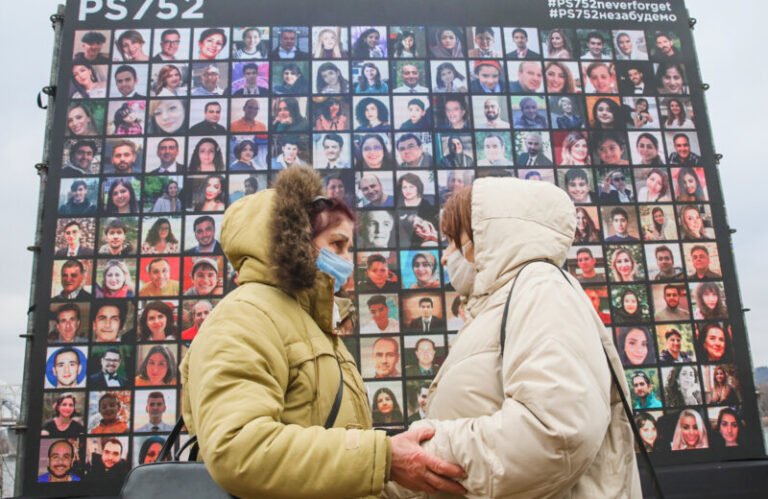
The IRGC is responsible for commanding and co-ordinating Hezbollah’s global activities, including drug smuggling and money laundering, so it makes sense for the investigation to target both organizations. And Canada has many reasons to sanction the IRGC, especially as it is responsible for shooting down Ukrainian Airlines Flight 752, which resulted in the death of 176 people, including 55 Canadian citizens and 30 permanent residents.

The IRGC and senior Iranian officials have refused to provide answers about the incident, with United Nations investigator Agnes Callamard stating that, “Inconsistencies in the official explanation and the reckless nature of the mistakes have led many, including myself, to question whether the downing of Flight PS752 was intentional.”

Ottawa has designated Hezbollah as a terrorist organization, yet Prime Minister Justin Trudeau has refused to give the IRGC the same designation, despite a 2018 motion passed by the House of Commons, and backed by the Liberals, calling on the government to do so. Trudeau has so far provided no rationale for his government’s lack of action on this file.

Read the complete article at: FDD

Also Read: IRGC’s Hezbollah, “Party of Allah” or “Party of Drugs”?

Canadian court rules Iran’s downing of Ukrainian plane was ‘act of terrorism’

A Canadian court in the province of Ontario on May 20 ruled that Iran’s destruction of a Ukrainian passenger plane in January 2020, which killed all 176 people on board, was an “act of terrorism.”

The court also ruled that Iran owes compensation to the four families of people killed in the crash who sued Iran’s Revolutionary Guards, who are responsible for the incident.

“I find on a balance of probabilities that the missile attacks on Flight 752 were intentional and directly caused the deaths of all onboard,” Justice Edward Belobaba wrote.

“I further find on a balance of probabilities that, at the time in question, there was no armed conflict in the region,” he added.

Iran’s Foreign Ministry soon released a statement, calling the court’s ruling “shameful.”

“Everyone knows that the Canadian court is fundamentally not qualified to judge this aviation accident or potential negligence in an incident that is outside the territory and jurisdiction of Canada,” said the ministry’s spokesman, Saeed Khatibzadeh. He added the ruling was “predictable, considering the country’s history of making moves against the Islamic Republic.”

Flight 752 of Ukrainian International Airlines was shot down by two missile strikes on Jan. 8 last year, minutes after it took off from Tehran. All of the people on board, most of whom were Iranian and Canadian citizens, died in the crash, including eleven Ukrainians.

Initially, Iran denied responsibility, but then admitted to unintentionally shooting down the plane and called it a “disastrous mistake” by the Iran’s Revolutionary Guards, a branch of Iranian armed forces.

The officials in Iran said that an air defense operator thought the Ukrainian plane was an American cruise missile, and fired at it due to tensions with the U.S. at the time. Hours before the incident, Iran fired ballistic missiles at U.S. military bases in Iraq in retaliation for the killing of top Iranian general Qasem Soleimani by American forces.

Read the complete article at: Kyiv Post

Also Read: IRGC Blames Ukrainian Plane Disaster on US Adventurism

Iraqi truck drivers incur losses due to Iran-backed militias’ extortion

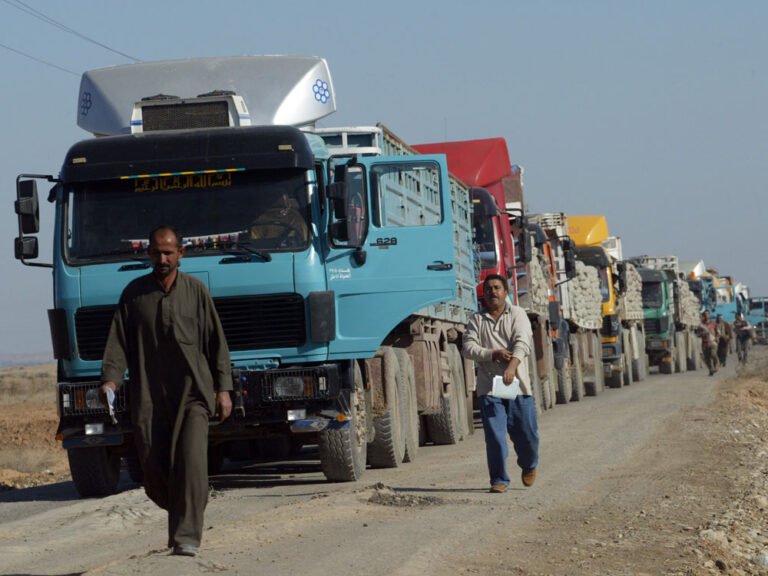
Commercial truck drivers in Iraq say that as they go about their business, they face extortion attempts and delays as the result of a patchwork of checkpoints Iran-backed militias have set up along main roads and highways.

As they pass through territories the militias control, they are forced to pay bribes at the checkpoints, a driver says.

If they refuse, the militias do not allow them passage for hours, sometimes even days, with the delays leading to goods rotting on trucks and heavy financial losses.

“We have identity cards, and all our documents are legal and valid, yet we are stopped and extorted to pay the militias what they demand in order to pass through,” the driver said — sometimes at multiple checkpoints.

The tolls demanded by the militias are illegal and random and vary based on the cargo, with militiamen occasionally demanding as much as $500 per truck.

Extortion is a “major artery” of funding for the militias and is indispensable to them, said strategy analyst Alaa al-Nashou.

Money flows in from forced tributes without much effort on the militias’ part, he explained, noting that militiamen need only demonstrate their ability to harm truck drivers in order to force them to pay.

Political writer Abdul Karim al-Wazzan says, they also reap enormous profit from smuggling operations and the acquisition of oil fields, wells and other national resources in Iraq.

The government is making efforts to curb the militias’ hegemony and has taken some positive steps, he said, including imposing the rule of law at border crossings.

But he called for “more robust and resolute measures to dry up the militias’ sources of funding, especially those accrued from extortion activities”.

In December, a series of attacks targeted stores selling alcoholic beverages in Baghdad. Storeowners said they had refused to pay tribute to the IRGC-aligned militias and accused them of being behind the bombings.

Source: Al-Mashareq
Also read: Yemen accuses Iran of ‘fueling war’ over weapons seizure

IRGC’s Hezbollah, “Party of Allah” or “Party of Drugs”?

0

The negative consequences of IRGC’s Hezbollah to Lebanon due to its ongoing complicity in the production, transport and trade of illegal drugs have been in full view in the past few weeks.

After the US sanctions and the fall of Iran’s currency, Iran-backed militias in numerous countries resorted to drug-trafficking in order to raise money for their fighters.

Two major events — the recent bust of a large shipment of Captagon(amphetamine) pills in Saudi Arabia and the arrest of the “Emperor of Captagon” in Lebanon — have exposed how IRGC’s Hezbollah attempts to generate revenue for its fighters via illegal drug trafficking undermine Lebanon’s relationships with countries in the region and its ability to trade with them.

“Hezbollah puts its own interest ahead of the interests of the Lebanese people and the Lebanese state,” said Fathi al-Sayed, an Iranian affairs specialist at the Middle East Centre for Regional and Strategic Studies.

“The party and its leaders knew full well that if the last shipment of Captagon were to be busted, the consequences would be dire, not only for the party but also for the Lebanese economy,” he said.

The shipment, intercepted at the port of Jeddah on April 23, contained millions of Captagon pills hidden inside pomegranates that were packed in Syria and transported to Lebanon, before making their way to the kingdom.

Predictably, he added, “The spontaneous stance taken by the Kingdom of Saudi Arabia was to halt the import of all agricultural products from Lebanon and also their transit through its territory, to protect its national and social security.”

“Lebanon’s agricultural exports to Saudi Arabia represent 16% of its total exports, amounting to 50,000 tonnes valued at $24 million,” he noted.

Also affected will be exports to all Gulf states, whose total value amounts to $145 million, as a consequence of the decision to ban the transit of Lebanese goods.

Hezbollah’s literal meaning is “Party of Allah” but it seems like this terrorist organization in specific is the “Party of Drugs” instead.

Source: Al-Mashareq
Also read: Bahrain to prosecute Iranian financial institutions on money laundering

Woman whose father is jailed in Iran pleads for help

As President Biden pursues a new nuclear settlement with Iran, for some people it’s personal.

Families of Western dual nationals being held in Iran – either in prison or under house arrest – describe waiting anxiously for news of their relatives’ fates.

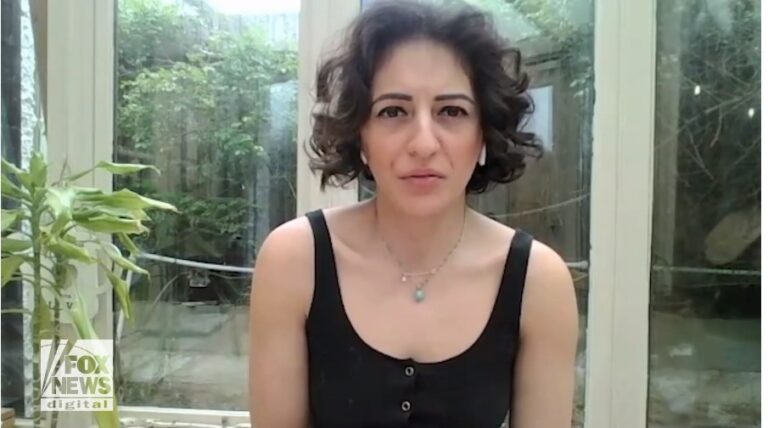
“We have highs and lows,” said Elika Ashoori, whose British-Iranian father Anoosheh is serving a 10-year prison sentence.

She told Fox News: “We have episodes where we are extremely hopeful, where he’s extremely hopeful that something’s moving to the right direction.

“But then everything stops. It’s a continuous mental torture.”

Iran is thought to be holding more than a dozen Western dual nationals: American Iranians, British Iranians, and others with Canadian, Austrian, French or German citizenship. Many relatives describe their loved ones as hostages – innocent people they say are being used by Iran to pressure Western governments.

Anoosheh Ashoori’s family says the retired engineer, who lives in England, had traveled to Iran to care for his elderly mother when she had knee surgery in 2017.

“One day he went out shopping,” said his daughter Elika, who also lives in England. “A van pulls up and they ask him if he’s Anoosheh Ashoori. And when he confirms, they put a bag over his head and push him into this van.

“That’s when basically all our nightmares started.”

The 67-year-old was jailed as an Israeli spy – a charge his family says is baffling.

“It’s all theater,” Elika Ashoori said. “We now know in hindsight that it has nothing to do with us, it has nothing to do with our background or family.

“We just, luck of the draw, got picked, unfortunately, to be pawns in a bigger game.”

She said her father has tried to take his own life twice, after Iranian officials threatened to target his wife and children.

Read the complete article at: Fox News

Also Read: Franco-Iranian, German citizens arrested in Iran – Le Figaro

jailed jailed 

Netanyahu: Drone downed by IDF this week was armed, launched by Iran
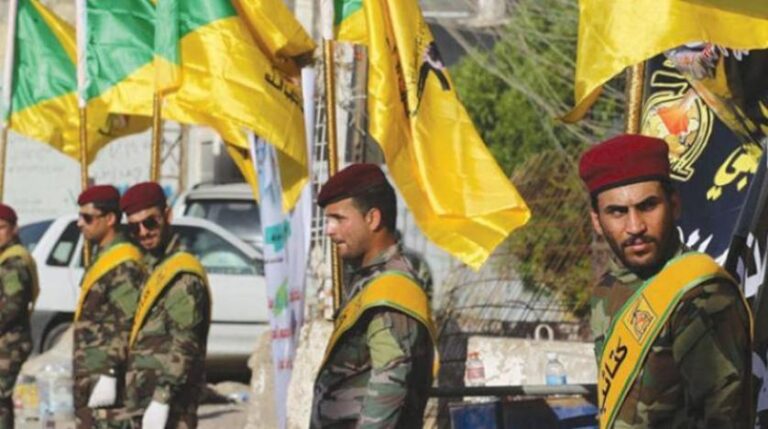
A drone downed by the Israel Defense Forces earlier this week was launched by Iran and was armed with explosives, Prime Minister Benjamin Netanyahu said Thursday.

Until now, the IDF has largely remained mum on the incident, in which the UAV was brought down as it approached Israeli airspace near the city of Beit She’an in the predawn hours of Tuesday morning.

According to Netanyahu, the drone was made by Iran and launched by Iranian forces toward Israel from either Syria or Iraq.

“Iran sent an armed drone to Israel from Iraq or Syria. Iranian forces launched the armed drone, which our forces intercepted on the border between Israel and Jordan,” Netanyahu said, speaking at a press conference alongside German Foreign Minister Heiko Maas.

It would be the second time Iran has sent armed UAVs into Israel. In a similar case in 2018, a drone was flown from Syria into northern Israel before it was shot down by an Israeli helicopter. In response, the IDF launched a wave of strikes on Iranian assets in Syria.

Netanyahu accused Iran of providing support and technical assistance to terror groups throughout the Middle East, including the Palestinian Islamic Jihad, which receives most of its funding from Tehran, as well as Hamas, which also gets weapons and other help from the Islamic Republic.

“They provide the scaffolding on which these organizations really work,” Netanyahu said.

Tuesday’s airspace breach came amid ongoing fighting between Israel and Hamas and Islamic Jihad in the Gaza Strip.

At roughly 4 a.m. on Tuesday, the Israeli Air Force downed the drone as it approached the Israeli border from Jordan.

“The UAV was being monitored by IDF air control units. The fragments of the UAV were collected by security forces,” the military said.

Read the complete article at: Times of Israel

Also Read: Iran ‘wants chaos in Israel,’ says retired British military official