Home Blog Page 92

Iranian Missile Hits Israeli-owned Cargo Ship in Arabian Sea

0

A Iranian missile hit an Israeli-owned cargo ship in the Arabian Sea, Channel 12 News reported on Thursday.

The ship was making its way from Tanzania to India when the missile hit.

The ship – owned by XT Management, which is chaired by Israeli Udi Angel – carried on to its destination amid the damage it suffered. The military said that at this stage, it would not comment on the report.

Last month, a ship owned by an Israeli firm, the MV HELIOS RAY, was hit by an explosion in the Gulf of Oman. Israel estimated that the explosion was a targeted attempt against an Israeli-owned ship by Iran.

Iran denied involvement at the time. “We strongly reject this accusation,” Saeed Khatibzadeh, spokesman for the Foreign Ministry in Tehran.

An investigation by Haaretz published last Friday meanwhile revealed that a Wall Street Journal report from two weeks ago reflected only part of the broad picture of the Israel-Iran naval war. In practice, it appears that  Israel struck several dozen Iranian oil tankers, which caused Iran cumulative damage of billions of dollars, amid a high rate of success in disrupting its shipping.

Read the complete article at: Haaretz

A Iranian missile hit an Israeli-owned cargo ship in the Arabian Sea, Channel 12 News reported on Thursday. The ship was making its way from Tanzania to India when the missile hit. The ship – owned by XT Management, which is chaired by Israeli Udi Angel – carried on to its destination amid the damage it suffered. The military said that at this stage, it would not comment on the report. Last month, a ship owned by an Israeli firm, the MV HELIOS RAY, was hit by an explosion in the Gulf of Oman. Israel estimated that the explosion was a targeted attempt against an Israeli-owned ship by Iran. Iran denied involvement at the time. “We strongly reject this accusation,” Saeed Khatibzadeh, spokesman for the Foreign Ministry in Tehran.

Hezbollah, Iran’s control of Syrian areas helps them transport weapons

Lebanon’s Hezbollah and Iran “completely control” Syrian borders near Lebanon, Hama airport and surrounding areas which aids them in transporting weapons, Syrian opposition figure Firas Tlass tells Al Arabiya in an interview.

“Hama airport is the main transport hub for Iranian weaponry to Hezbollah in Lebanon and southern Syria,” according to Tlass, who also said Iranians “established an intelligence base for the revolutionary guard that is now as strong as the Syrian intelligence in the Damascus airport.”

This reportedly happened after the assassination of IRGC Quds Force Commander Qassem Suleimani, whose plane took off from that same airport, before he was killed in Iraq upon arrival.

Hezbollah loses trust in Syrian regime

The mistrust between Hezbollah and the Syrian regime began after Hezbollah’s Chief of Staff Imad Mugnieh was assassinated, according to Tlass.

Syrian Army General Muhammad Suleiman was allegedly responsible for communication between Assad and Hezbollah, but it is speculated that he had relations with the Americans and Israelis, Tlass said.

“After Mughniyeh’s assassination, Hezbollah concluded that Mohammad Suleiman had a hand in the assassination. Noting that Mohammad Suleiman was the main point of contact between the Syrian regime and Hezbollah. He was killed in Tartous by Hezbollah after Hezbollah met with Assad,” Tlass added.

Read the complete article at: Ammon News


The mistrust between Hezbollah and the Syrian regime began after Hezbollah’s Chief of Staff Imad Mugnieh was assassinated, according to Tlass. Syrian Army General Muhammad Suleiman was allegedly responsible for communication between Assad and Hezbollah, but it is speculated that he had relations with the Americans and Israelis, Tlass said. “After Mughniyeh’s assassination, Hezbollah concluded that Mohammad Suleiman had a hand in the assassination. Noting that Mohammad Suleiman was the main point of contact between the Syrian regime and Hezbollah. He was killed in Tartous by Hezbollah after Hezbollah met with Assad,” Tlass added. Syrian areas


Khomeini’s grandson eyed for presidential run to compete with IRGC candidates

0

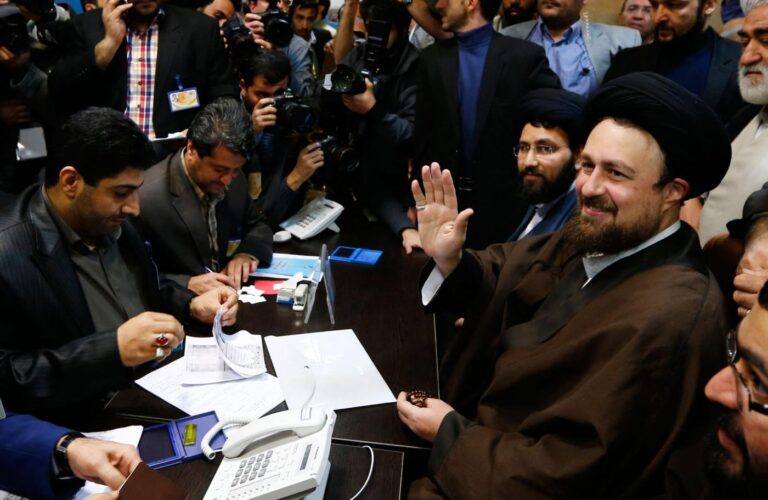
Three months ahead of Iran’s presidential elections, various reformist political figures and factions have suggested that Sayyed Hassan Khomeini, a grandson of Iran’s first supreme leader, Ayatollah Ruhollah Khomeini, could be the reformist camp’s candidate in the upcoming elections to compete against IRGC candidates.

In an interview with Arman, reformist politician Gholam Ali Dehghan said that Khomeini could shape a national unity government in Iran amid a worsening power struggle between the reformists and conservatives. 

“Sayyed Hassan Khomeini is trusted by the three political factions of reformists, moderates and central conservatives,” Dehghan told the daily. “He would be a new source for developing national unity among Iranians, and he could evolve political moderation [in Iran].”

Hassan Khomeini became a cleric in 1993. He was appointed caretaker of the Mausoleum of Khomeini in 1995 where his grandfather and father are buried, and has had official meetings with officials such as Syrian President Bashar al-Assad and Hezbollah Secretary-General Hassan Nasrallah. He also teaches in the holy city of Qom, and has published his first book on Islamic sects.

Khomeini, the caretaker of his grandfather’s mausoleum and the head of the Institute for Compilation and Publication of Imam Khomeini’s Works, has not announced any plans for his possible candidacy in the elections.  

Despite his family background leaning toward a strict interpretations of Islam, he is closer to reformists, and supported moderate president Hassan Rouhani in the last election, hence he might be a good option for the reformist camp against IRGC candidates.

With the next vote scheduled for June, three current and former commanders of the country’s Islamic Revolutionary Guard Corps (IRGC) have so far announced their candidacy for the elections. 

No name has officially been released yet by the reformist camp. However, in recent weeks, speculation has grown about Khomeini or current foreign minister Mohammad Javad Zarif being likely representatives of the reformist current. 

Read the complete article at: Middle East Eye
Also read: IRGC forms group to monitor internet in Iran as election approaches

IRGC forms group to monitor internet in Iran as election approaches

0

Following Iranian Supreme Leader Ayatollah Ali Khamenei’s speech on the important issues facing the country in the upcoming year, such as the freedom of Internet in Iran, the Islamic Revolutionary Guard Corps announced plans to form groups to make sure these issues are prioritized.

In an open letter to Khamenei following the start of the Iranian new year on March 20, Hossein Salami announced the formation of the Headquarters for Realization of the year 1,400 Nowruz Orders. Salami said that the headquarters will consist of a leadership board which will include the heads of the IRGC and Basij Organization, intelligence officials as well as economic and construction officials linked to the IRGC. 

Some of the top priorities of the group will be to help the country with domestic production, fighting corruption and establishing a presence on the internet. 

Khamenei’s theme for the upcoming year was the “Year of Production: Support and Elimination of Obstacles.” In his Nowruz speech, Khamenei also spent time discussing the internet and social media, outlets he claimed are used by enemy countries to turn people away from the Islamic Republic. “Every country in the world manages the internet,” Khamenei said. “But in our country some take pride in letting the internet be open, whereas this method in no way [should] pride be taken.” This was an indirect criticism of President Hassan Rouhani’s administration, which has advocated for a more open internet in Iran.

Khamenei continued, “People should use the internet, but this space should not be put at the discretion of the enemy.” He added that one method used by enemy countries on social media platforms is to try to lower voter turnout in the country. Iran has a presidential election in June and a high voter turnout is always a gauge for government support according to Iranian officials themselves. In his open letter, Salami said that the new group will “set the internet free of vulgarities.” 

Read the complete article at: Al Monitor

Also read: Iran’s Supreme Leader Praises IRGC As U.S. Alleges Election Meddling

Quds Force commander admits Iran supporting Houthi attacks on Saudi Arabia

Tehran supports attacks on Saudi Arabia by the Iran-backed Houthi militia in Yemen, the commander of the Islamic Revolutionary Guard Corps’ overseas Quds Force has admitted.

Ismail Qaani told a conference in the northeastern city of Mashhad that the Houthis had launched  “18 operations in less than 10 days” targeting the Kingdom.

He said Iran supported all such armed groups around the world, which he described as “forces of resistance against global arrogance.”

Qaani became head of the Quds Force after its previous leader, Qassem Soleimani, was assassinated in a US drone strike at Baghdad airport in January 2020. In his Mashhad speech, Qaani repeated threats that the US would pay a price for Soleimani’s death.

Read the complete article at: Arab News


Tehran supports attacks on Saudi Arabia by the Iran-backed Houthi militia in Yemen, the commander of the Islamic Revolutionary Guard Corps’ overseas Quds Force has admitted. Ismail Qaani told a conference in the northeastern city of Mashhad that the Houthis had launched  “18 operations in less than 10 days” targeting the Kingdom. He said Iran supported all such armed groups around the world, which he described as “forces of resistance against global arrogance.” Qaani became head of the Quds Force after its previous leader, Qassem Soleimani, was assassinated in a US drone strike at Baghdad airport in January 2020. In his Mashhad speech, Qaani repeated threats that the US would pay a price for Soleimani’s death. Tehran supports attacks on Saudi Arabia by the Iran-backed Houthi militia in Yemen, the commander of the Islamic Revolutionary Guard Corps’ overseas Quds Force has admitted. Ismail Qaani told a conference in the northeastern city of Mashhad that the Houthis had launched  “18 operations in less than 10 days” targeting the Kingdom. He said Iran supported all such armed groups around the world, which he described as “forces of resistance against global arrogance.” Qaani became head of the Quds Force after its previous leader, Qassem Soleimani, was assassinated in a US drone strike at Baghdad airport in January 2020.

Recent Threat To U.S. General Highlights Iran’s Commitment To Terror and Brutality

0

Last week, American intelligence sources revealed via the Associated Press that they had intercepted communications in January pointing to an Iranian plot against a military base in Washington, DC. The Islamic Revolutionary Guard Corps (IRGC) apparently considered deploying operatives on U.S. soil in an effort to kill U.S. Army Vice Chief of Staff Joseph M. Martin at Fort McNair. The attack would have been at least the second attempt at revenge for killing IRGC Quds Force commander Qassem Soleimani almost exactly one year earlier.

For anyone who has been paying attention to the rhetoric coming out of Iran, the A.P.’s report should have come as little surprise. In the days before the specific plot was uncovered, IRGC officers and other Iranian officials had openly boasted about their plans to kill Americans on their soil and demonstrate their lasting outrage over the killing of an individual whom the regime had lionized for his work in projecting Iranian power beyond its borders.

Soleimani had been instrumental in the defense of Syrian dictator Bashar al-Assad and was the de facto leader of numerous paramilitary organizations in Syria and Iraq and the chief backer of the Hezbollah terrorist group in Lebanon and the Houthi rebels in Yemen.

Tehran has struggled to project power as effectively in his absence, and the recent threats can easily be read in the context as an effort to save face. Like much of the regime’s militant rhetoric, those threats are overblown. But that is not to say that Western policymakers or intelligence services should regard them as toothless.

Read the complete article at: NCRI


Tehran has struggled to project power as effectively in his absence, and the recent threats can easily be read in the context as an effort to save face. Like much of the regime’s militant rhetoric, those threats are overblown. But that is not to say that Western policymakers or intelligence services should regard them as toothless. Recent Threat Recent Threat

Why Iran’s hate-filled public school curriculum should be a global concern

0

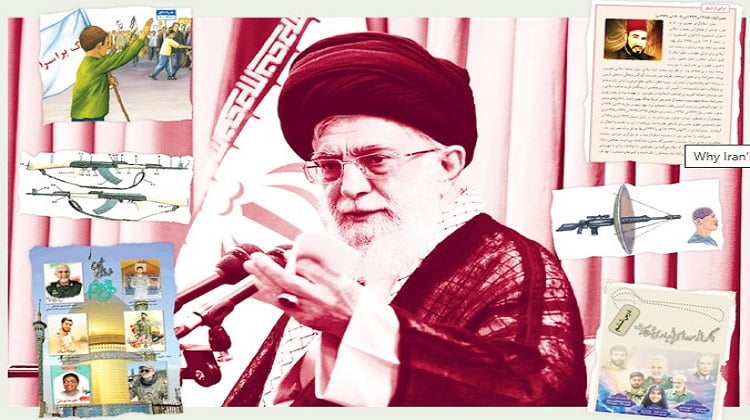
The government of Iran remains the world’s largest state sponsor of terrorism, and unfortunately its educational curriculum is no exception. Public school teachers in Iran today use textbooks designed by the state to indoctrinate young people to export global revolution using terrorism and other aggressive means. As a result, the content of its textbooks should be a global concern.

I recently completed the first comprehensive study of hate and extremism in current Iranian textbooks in nearly half a decade as part of my ongoing work with the Anti-Defamation League, the results of which are accessible in full on the ADL website.

Evaluating teaching materials to identify and discourage hateful content is an important trend in the Middle East. Accordingly, this essay reproduces key findings from the ADL research on Iran and adds several notable new examples beyond the content in the original report.

Read the complete article at: Arab News


The government of Iran remains the world’s largest state sponsor of terrorism, and unfortunately its educational curriculum is no exception. Public school teachers in Iran today use textbooks designed by the state to indoctrinate young people to export global revolution using terrorism and other aggressive means. As a result, the content of its textbooks should be a global concern. I recently completed the first comprehensive study of hate and extremism in current Iranian textbooks in nearly half a decade as part of my ongoing work with the Anti-Defamation League, the results of which are accessible in full on the ADL website. Evaluating teaching materials to identify and discourage hateful content is an important trend in the Middle East. Accordingly, this essay reproduces key findings from the ADL research on Iran and adds several notable new examples beyond the content in the original report. Evaluating teaching materials to identify and discourage hateful content is an important trend in the Middle East. Accordingly, this essay reproduces key findings from the ADL research on Iran and adds several notable new examples beyond the content in the original report.

Iranian woman ‘executed by her own DAUGHTER under chilling laws that let kids exact revenge on their parents’

AN Iranian woman was executed by her own daughter under barbaric death penalty laws, reports claim.

Maryam Karimi was hanged for killing her abusive husband with the help of her father.

She was executed at Rasht Central Prison on March 13, after serving 13 years behind bars.

Maryam’s daughter, who was six when she killed her husband, took part in the execution after reportedly refusing to forgive her or accept “Diya” (blood money), according to Iran International TV.

Maryam was charged with “retribution in kind”, which is known in Iran as “Qisas” – a form of “an eye for an eye” retribution.

Qisas requires the victim’s next of kin to be present at the execution and they are actively encouraged to carry out the execution themselves.

A source told Iran Human Rights: “Maryam’s daughter was six years old when the murder took place and has been in the care of her father’s family.

“For the past 13 years, they had told her that both her parents were dead, but had to tell her the truth a few weeks prior to the execution to prepare her psychologically.”

Read the complete article at: The Sun


She was executed at Rasht Central Prison on March 13, after serving 13 years behind bars. Maryam’s daughter, who was six when she killed her husband, took part in the execution after reportedly refusing to forgive her or accept “Diya” (blood money), according to Iran International TV. Maryam was charged with “retribution in kind”, which is known in Iran as “Qisas” – a form of “an eye for an eye” retribution. Qisas requires the victim’s next of kin to be present at the execution and they are actively encouraged to carry out the execution themselves. A source told Iran Human Rights: “Maryam’s daughter was six years old when the murder took place and has been in the care of her father’s family. “For the past 13 years, they had told her that both her parents were dead, but had to tell her the truth a few weeks prior to the execution to prepare her psychologically.” chilling laws chilling laws


Iranian Revolutionary Guards Publication: Young People in Iran Pose a Security Threat to the Regime

0

The weekly Sobh-e Eghtesad, the official newspaper of the Revolutionary Guards’ Political Bureau, called young Iranians born in the 1990s and the first decade of the 21st century a “serious threat” to the regime, stressing that it was difficult to impose power on them compared to previous generations.

In an editorial (March 7, 2021), the weekly refers to the extensive activity of these generations in cyberspace and emphasizes that the essence of their lives is an expression of dissatisfaction towards the status quo, and they “may well be exploited by Western enemies against the regime, both politically and culturally.”

Officials in the Islamic Republic have repeatedly warned in the past of the political and social consequences of the “inter-generational rift.”

The Tehran-based newspaper Jomhouri-e Eslami wrote in an editorial on March 14 that in the Islamic Republic, like during the Shah’s regime, power is once again in the hands of 1,000 influential families, and the rest of the country’s citizens, however talented, never achieve important roles.

Recalling the Shah’s rule, the paper noted, “Experience proves that the concentration of power in the hands of a certain group of people and families does not guarantee the future of the regime.”

Read the complete article at: JCPA

The weekly Sobh-e Eghtesad, the official newspaper of the Revolutionary Guards’ Political Bureau, called young Iranians born in the 1990s and the first decade of the 21st century a “serious threat” to the regime, stressing that it was difficult to impose power on them compared to previous generations. In an editorial (March 7, 2021), the weekly refers to the extensive activity of these generations in cyberspace and emphasizes that the essence of their lives is an expression of dissatisfaction towards the status quo, and they “may well be exploited by Western enemies against the regime, both politically and culturally.” Officials in the Islamic Republic have repeatedly warned in the past of the political and social consequences of the “inter-generational rift.”1 Young People

Iran continues to supply Houthis with weapons: Yemen minister

0

Tehran has not stopped providing the Houthis with military support as the militia continues to be equipped with Iran-made marine mines, a Yemen senior official said.

“The terrorist Houthi militiamen displayed in what they called ‘Exhibition of Military Productions’ types of Iran-made marine mines, used recently in attacks against commercial ships in the Red Sea,” according to Muamer Al-Eryani, the minister of information, culture and tourism, in a report by the Yemeni News Agency reported, citing Muamer Al-Eryani, the minister of information, culture and tourism.

“These Iran-made mines show that the Iranian Revolutionary Guards have continued to supply the Houthis with weapons, military technology and experts, making the Yemeni territories a launch-pad to threaten commercial navigation and control international waterways,” Al-Eryani said.

Read the complete article at: Arab News


Tehran has not stopped providing the Houthis with military support as the militia continues to be equipped with Iran-made marine mines, a Yemen senior official said. “The terrorist Houthi militiamen displayed in what they called ‘Exhibition of Military Productions’ types of Iran-made marine mines, used recently in attacks against commercial ships in the Red Sea,” according to Muamer Al-Eryani, the minister of information, culture and tourism, in a report by the Yemeni News Agency reported, citing Muamer Al-Eryani, the minister of information, culture and tourism. “These Iran-made mines show that the Iranian Revolutionary Guards have continued to supply the Houthis with weapons, military technology and experts, making the Yemeni territories a launch-pad to threaten commercial navigation and control international waterways,” Al-Eryani said. “The terrorist Houthi militiamen displayed in what they called ‘Exhibition of Military Productions’ types of Iran-made marine mines, used recently in attacks against commercial ships in the Red Sea,” according to Muamer Al-Eryani, the minister of information, culture and tourism, in a report by the Yemeni News Agency reported, citing Muamer Al-Eryani, the minister of information, culture and tourism. “These Iran-made mines show that the Iranian Revolutionary Guards have continued to supply the Houthis with weapons, military technology and experts, making the Yemeni territories a launch-pad to threaten commercial navigation and control international waterways,” Al-Eryani said.