Home Blog Page 91

Former Foreign Hostages Unite to Confront Iran

In February, the Canadian Government led the launch of a global initiative condemning the arbitrary arrest of foreign nationals by regimes in order to exercise leverage over foreign governments. The declaration was signed by 59 countries, including Australia, but did not single out any one country. It followed countries with the highest numbers of foreign hostages such as Iran, China and, most recently, Myanmar.

Australia’s Foreign Minister Marise Payne has highlighted Australia’s opposition to foreign hostage taking and emphasised that “Australia will hold countries to account for their international commitments and the obligation to comply with international laws and practices.”

Moore-Gilbert is also trying to encourage such international efforts through a new international advocacy group, Hostage Aid Worldwide. She told the global launch of the new group that international coordination along the lines of the Canadian initiative (though she did not refer to it explicitly) is needed to stop such hostage diplomacy: 

“We call on governments to take action to disrupt the hostage taking business model. A coordinated effort is needed, both in terms of strengthening international legal mechanisms and in information and best practice sharing between western states.” 

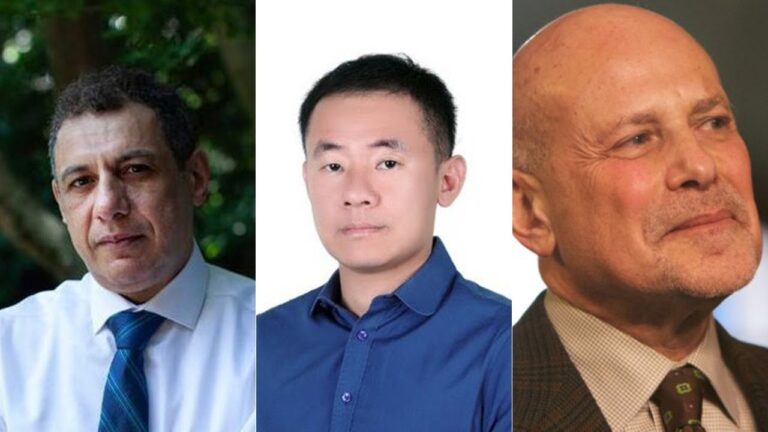
Hostage Aid Worldwide’s board includes Barry Rosen, Nizar Zakka and Wang Xiyue, each of whom spent a significant amount of time in Iranian detention. 

At its launch, Hostage Aid Worldwide held a panel discussion on hostage taking and the 2015 Iran nuclear deal, known as the JCPOA. This agreement, while still technically in place, is in tatters with the United States withdrawing and reimposing harsh financial sanctions in 2018, and Iran continually escalating its material breaches of the deal since 2019.

US President Joe Biden has made clear that his country will return to the deal if Iran first returns to compliance with all JCPOA commitments. However, in addition to its ongoing and increasing breaches of its JCPOA obligations, recent reports reveal that Iran continues to hide key components of its nuclear weapons program from UN inspectors, contrary to international law.

Read the complete article at: AIJAC
Also read: Interrogations in Iran’s Judicial Systems: Law vs. Reality

Iranians developing the cyber capabilities of Hezbollah

0

The Quds Force of Iran’s Revolutionary Guard Corps set up a new cyber unit for Hezbollah. The new cyber unit will deal with attacks and collection of intelligence in cyberspace, and will operate under the counterespionage wing of Hezbollah that is under the command of Hassan Nasrallah’s son.  

Hezbollah operatives and members of the Iranian Quds Force will serve in the cyber unit, whose main objectives will be countering espionage and subversive activity against Hezbollah and Iran.  

The cyber unit will mainly collect information on Lebanese citizens using capabilities to attack cellular telephones, intercept Wi-Fi signals, collect information from social networks and databases, penetrate networks of Lebanese government agencies, and more. 

The missions of the unit are expected to also include cyberattacks and collection of information on gas and oil companies, banks, newspapers and media companies in Gulf countries including the United Arab Emirates. 

Read the complete article at: Israel Defense


The Quds Force of Iran’s Revolutionary Guard Corps set up a new cyber unit for Hezbollah. The new cyber unit will deal with attacks and collection of intelligence in cyberspace, and will operate under the counterespionage wing of Hezbollah that is under the command of Hassan Nasrallah’s son. Hezbollah operatives and members of the Iranian Quds Force will serve in the cyber unit, whose main objectives will be countering espionage and subversive activity against Hezbollah and Iran.   The cyber unit will mainly collect information on Lebanese citizens using capabilities to attack cellular telephones, intercept Wi-Fi signals, collect information from social networks and databases, penetrate networks of Lebanese government agencies, and more.  The missions of the unit are expected to also include cyberattacks and collection of information on gas and oil companies, banks, newspapers and media companies in Gulf countries including the United Arab Emirates.  The missions of the unit are expected to also include cyberattacks and collection of information on gas and oil companies, banks, newspapers and media companies in Gulf countries including the United Arab Emirates.  Iranians developing Iranians developing

EU set to sanction more Iranians for rights abuses, first since 2013, diplomats say

The European Union is set to agree to sanction several Iranian individuals on Wednesday for human rights abuses, the first such measures since 2013, three EU diplomats said.

EU envoys are expected to agree to impose travel bans and asset freezes on the individuals, the diplomats said, and their names would be published next week, when the sanctions take effect. They gave no further details.

The European Union declined to comment.

Like the United States, the European Union has an array of sanctions over human rights since 2011 on more than 80 Iranian individuals which has been renewed annually every April. Those will also be renewed on Wednesday, the three diplomats said.

Asked why the latest measures were being taken now, one of the diplomats said the EU was seeking to take a tougher stance to uphold human rights. This month, the EU sanctioned 11 people from countries including China, North Korea, Libya and Russia.

Read the complete article at: KFGO


The European Union is set to agree to sanction several Iranian individuals on Wednesday for human rights abuses, the first such measures since 2013, three EU diplomats said. EU envoys are expected to agree to impose travel bans and asset freezes on the individuals, the diplomats said, and their names would be published next week, when the sanctions take effect. They gave no further details. The European Union declined to comment. Like the United States, the European Union has an array of sanctions over human rights since 2011 on more than 80 Iranian individuals which has been renewed annually every April. Those will also be renewed on Wednesday, the three diplomats said. Asked why the latest measures were being taken now, one of the diplomats said the EU was seeking to take a tougher stance to uphold human rights. This month, the EU sanctioned 11 people from countries including China, North Korea, Libya and Russia.

IRGC Basij forces fatally shoot two young men in southwest Iran

Members of Iran’s Basij Force shot and killed two young men from Iran’s Arab minority, in the city of Shush in Khuzestan Province, southwest Iran.

According to local sources, Ebrahim Atshani, 20, and Mostafa Hargani, 22, were shot by the IRGC Basij forces of “Danesh” base in the city of Shush. Both young men lost their lives after being taken to hospital.

Both men were on a motorcycle on Friday, March 26, when the Basij forces shot Ebrahim Atshani in the stomach and legs, and Mostafa Hargani in the shoulder.
The men were taken to a hospital, where they died later on Saturday.

Ebrahim Atshani had been arrested during the November 2019 protests and was released on bail after several months in prison.

The deaths of the two young men have not yet been reported by state media.

According to reports, local government officials have said that the two young men were shot during an attack on a seminary, a courthouse and the Danesh Basij base in southwest Iran, but their families have denied the allegations.

The Basij Force is one of the five forces of the Islamic Revolutionary Guard Corps. It was an independent organization from inception until 17 February 1981, when it was officially incorporated into the Revolutionary Guards organization structure. The Basij are subordinate to and receive their orders from the Islamic Revolutionary Guard Corps (IRGC) and the Supreme Leader of Iran, to whom they are known for their loyalty. They have a local organization in almost every city in Iran.

The Iranian regime’s security forces and police have a history of shooting and killing civilians. 

In August 2020, the state security forces shot and killed two young motorcyclists in Tehran because they did not show their driver’s license. The two were stopped by the police in Shahriar in southern Tehran and asked to show their driving licenses. They tried to leave the scene and the police opened fire on them, killing Alireza Goudarzi on the spot. The second man, Alireza Jafarlu, was wounded but died due to the lack of medical treatment.


Read the complete article at: Iran HRM
Also read: Interrogations in Iran’s Judicial Systems: Law vs. Reality

Iran’s Political Transition Threatens Security at Home and Abroad

0

When is a republic not a republic? When an incumbent leader lays the groundwork for his son to succeed him, which is exactly what Iran’s supreme leader, Ayatollah Ali Khamenei, is doing. The dynastic style of this once-in-a-generation political transition makes a mockery of the Islamic Republic’s professed ideals and will lead to further misery for the Iranian people. 

The leader-in-waiting, Mojtaba Khamenei, already has many supporters, thanks to his father’s efforts, which, despite the opaque nature of Iranian politics, are abundantly clear.

Khamenei, who is 81 and said to be ailing, has already ensured he has an entirely compliant, conservative Parliament by getting the Guardian Council (the body that approves election candidates) to disqualify a record number of candidates in last year’s parliamentary election. The supreme leader will further strip away whatever remains of Iran’s deeply flawed democracy and the regime’s legitimacy by stage-managing the upcoming Presidential Election in June for the sole purpose of ensuring a smooth political transition and succession for his 51-year-old son.

In recent months, Khamenei has filled key regime positions with the right people to ensure a smooth succession. Last summer, Hossein Najat, a Mojtaba ally, was made commander of Sarallah Headquarters, an Islamic Revolutionary Guard Corps base responsible for protecting Tehran’s political elite and, most importantly, for crushing anti-regime protests. Another Mojtaba ally, Hossein Ta’eb, is head of the IRGC’s Intelligence Organization. Mojtaba also has connections in the IRGC, the Basij paramilitary force and the Assembly of Experts, an elected clerical body responsible for appointing the next supreme leader. He also has access to vast financial resources, which he will dispense as patronage to secure additional support. 

Mojtaba currently is a Hojjat-al-Islam, a comparatively junior position in the Shia clerical hierarchy, but his supporters already have begun to refer to him as “Ayatollah” (a prerequisite to becoming a supreme leader).

An Iran led by Mojtaba Khamenei as the supreme leader will be even more driven by ideology. Domestically, there will be further clampdowns on civil liberties as well as the window-dressing that gives the Iranian regime the veneer of a democratic republic. The political opposition and ordinary citizens will find that the outlets for democratic expression become even more limited, for Mojtaba and his cronies have shown in the past that they are willing to spill blood to preserve the regime’s grip on power.

Read the complete article at: TimesNowNews
Also read: Interrogations in Iran’s Judicial Systems: Law vs. Reality
Iran Says Sanctions Could Force Shutdown of Nuclear Power Plant

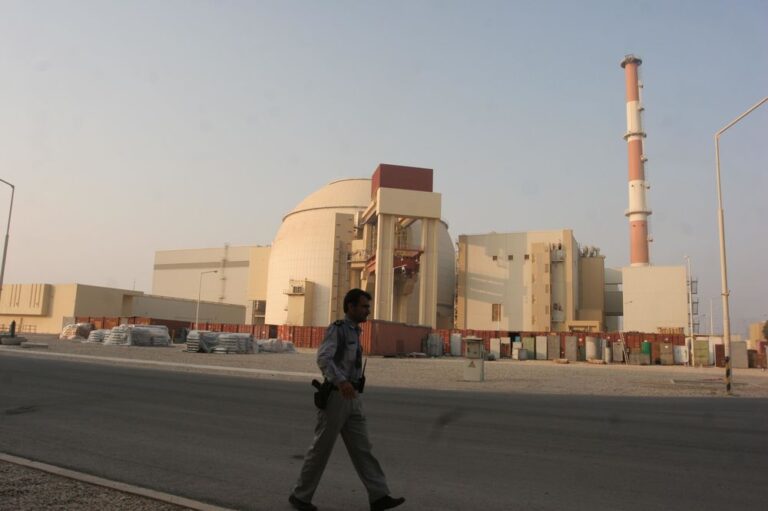
Iran said its only nuclear power plant could stop operating this year as the country struggles to keep the unit running because of sanctions.

The Bushehr nuclear power station is “facing the risk of shutdown” because U.S. banking restrictions have made it difficult for the Islamic Republic to transfer money and procure necessary equipment, Mahmoud Jafari, a deputy at the Atomic Energy Organization of Iran, was quoted as saying by the semi-official Iranian Students’ News Agency.

“Currency fluctuations and problems related to banking sanctions have complicated efforts to meet the reactor’s operational and maintenance costs and make payments to Russian contractors,” Jafari said.

Read the complete article at: Bloomberg

Iran said its only nuclear power plant could stop operating this year as the country struggles to keep the unit running because of sanctions. The Bushehr nuclear power station is “facing the risk of shutdown” because U.S. banking restrictions have made it difficult for the Islamic Republic to transfer money and procure necessary equipment, Mahmoud Jafari, a deputy at the Atomic Energy Organization of Iran, was quoted as saying by the semi-official Iranian Students’ News Agency. “Currency fluctuations and problems related to banking sanctions have complicated efforts to meet the reactor’s operational and maintenance costs and make payments to Russian contractors,” Jafari said. Iran said its only nuclear power plant could stop operating this year as the country struggles to keep the unit running because of sanctions. The Bushehr nuclear power station is “facing the risk of shutdown” because U.S. banking restrictions have made it difficult for the Islamic Republic to transfer money and procure necessary equipment, Mahmoud Jafari, a deputy at the Atomic Energy Organization of Iran, was quoted as saying by the semi-official Iranian Students’ News Agency. “Currency fluctuations and problems related to banking sanctions have complicated efforts to meet the reactor’s operational and maintenance costs and make payments to Russian contractors,” Jafari said.  

Iran Regime’s Systematic Corruption and Iran’s Economic Crisis

0

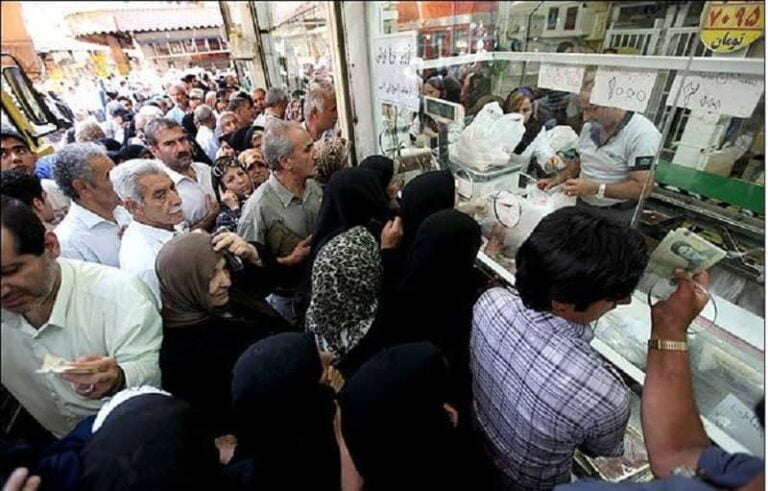
News from Iran indicates how people are grappling with economic hardships, particularly the skyrocketing prices and inflation. Meanwhile, the state-run media acknowledge how the regime’s economic mismanagement has created Iran’s economic crisis. People wait in long lines for hours to purchase their basic needs at governmental prices.

“There have been over a month since we face poultry scarcity around the country, and there are difficulties in distributing it. Each kilogram of poultry should be sold at 20,400 tomans. Unfortunately, a limited number of poultry is distributed among people standing in long lines to purchase [poultry at a government-set price],” wrote the state-run Young Journalist Club (YJC) on Sunday.

“If the government’s officials go to the market, as ordinary people do, they would see that most shops either do not have poultry or selling it at high prices. The poultry [which is supposed to be sold at] 20,400 tomans is being sold at 40,000 tomans. There are long queues in front of markets and shops that distribute poultry at the [adopted] prices. While 1,000 tons of fresh chicken and 1,000 tons of frozen chicken were to be distributed daily to meet Tehran province’s 1,700-ton need, Rahmati, the Chamber of Trade inspector Unions, said that a total of 90 tons of poultry has arrived for Tehran. This should be distributed in Tehran and other cities of the province,” wrote the state-run Tasnim news agency on Thursday in this regard.

Read the complete article at: NCRI

News from Iran indicates how people are grappling with economic hardships, particularly the skyrocketing prices and inflation. Meanwhile, the state-run media acknowledge how the regime’s economic mismanagement has created Iran’s economic crisis. People wait in long lines for hours to purchase their basic needs at governmental prices. “There have been over a month since we face poultry scarcity around the country, and there are difficulties in distributing it. Each kilogram of poultry should be sold at 20,400 tomans. Unfortunately, a limited number of poultry is distributed among people standing in long lines to purchase [poultry at a government-set price],” wrote the state-run Young Journalist Club (YJC) on Sunday. “If the government’s officials go to the market, as ordinary people do, they would see that most shops either do not have poultry or selling it at high prices. The poultry [which is supposed to be sold at] 20,400 tomans is being sold at 40,000 tomans. There are long queues in front of markets and shops that distribute poultry at the [adopted] prices. While 1,000 tons of fresh chicken and 1,000 tons of frozen chicken were to be distributed daily to meet Tehran province’s 1,700-ton need, Rahmati, the Chamber of Trade inspector Unions, said that a total of 90 tons of poultry has arrived for Tehran. This should be distributed in Tehran and other cities of the province,” wrote the state-run Tasnim news agency on Thursday in this regard. Systematic Corruption Systematic Corruption

Iran preparing for protests during Festival of Fire

The Iranian regime is taking “extraordinary deterrent measures” to prevent an uprising of citizens against its repressive rule during the upcoming Festival of Fire, dissident leaders said on Monday.

The festival, also called Chaharshanbe Suri or Scarlet Wednesday, takes place on the Wednesday prior to the Iranian new year on March 20, when young people dress in disguises, bang spoons against plates and go through their communities to receive snacks.

Dissidents said Tehran fears that Iran’s youth might use the event as an opportunity to disrupt regime oppression and spark a revolution.

The National Council of Resistance of Iran (NCRI) said the regime had ordered “extraordinary mobilization” of its “repressive forces.”

Read the complete article at: Arab News


The Iranian regime is taking “extraordinary deterrent measures” to prevent an uprising of citizens against its repressive rule during the upcoming Festival of Fire, dissident leaders said on Monday. The festival, also called Chaharshanbe Suri or Scarlet Wednesday, takes place on the Wednesday prior to the Iranian new year on March 20, when young people dress in disguises, bang spoons against plates and go through their communities to receive snacks. Dissidents said Tehran fears that Iran’s youth might use the event as an opportunity to disrupt regime oppression and spark a revolution.The National Council of Resistance of Iran (NCRI) said the regime had ordered “extraordinary mobilization” of its “repressive forces.” The festival, also called Chaharshanbe Suri or Scarlet Wednesday, takes place on the Wednesday prior to the Iranian new year on March 20, when young people dress in disguises, bang spoons against plates and go through their communities to receive snacks. Dissidents said Tehran fears that Iran’s youth might use the event as an opportunity to disrupt regime oppression and spark a revolution.The National Council of Resistance of Iran (NCRI) said the regime had ordered “extraordinary mobilization” of its “repressive forces.”

Interrogations in Iran’s Judicial Systems: Law vs. Reality
Iran’s judicial system allows detainees and prisoners to be subjected to harsh and inhuman interrogations without access to counsel and with impunity for interrogators and other judicial officials.

First-hand accounts of being interrogated in Iranian prisons and detention centers have been documented by the UN and human rights groups and are available online in Persian and English.

What they all have in common are descriptions of unlawful and inhuman tactics that are used to extract false “confessions” in violation of international standards of due process.

In addition to physical assaults, sexual humiliation, and verbal abuse, tactics used to extract false statements from detainees include prolonged interrogation sessions—despite laws and regulations prohibiting such practices.

According to Iranian law, preliminary interviews of alleged suspects should be handled by a judicial investigator, yet detainees facing politically motivated charges and prisoners of conscience in Iran are usually immediately interrogated by security and intelligence agents who act as “judicial associates.”

According to first-hand accounts by former political prisoners, the most common arbitrary practice by state investigators is the practice of conducting prolonged interrogation sessions.

This occurs while detainees are denied access to counsel and also often contact with family members.

Based on Article 42 of the Code of Criminal Procedure, “Interrogations and investigations regarding women and underage individuals should be conducted when possible by trained female judicial associates in accordance with the principles of Sharia law.”

The Iranian judiciary has hired female judicial associates, yet women arrested for peaceful political or civil activities are always questioned by male interrogators.

Some female political prisoners have detailed the mental and physical abuse they have suffered at the hands of their male interrogators.

Many factors diminish the rights of detainees during preliminary inquiries and the interrogation process in Iran’s judicial system.

Read the complete article at: Center for Human Rights in Iran

Also read: The IRGC and Judiciary Collude in Disbandment of Iran’s Largest NGO

The Khatam al-Anbiya camp and future of the IRGC empire

0

When Ali Khamenei was appointed Supreme Leader of the Islamic Republic, knowing that he lacked the charisma of his predecessor, Ruhollah Khomeini, and therefore would need the power of the military to subdue his rivals and consolidate his position, he tried to pull the Islamic Revolutionary Guard Corps closer to himself. At the same time, the newly elected president, Hashemi Rafsanjani, who as the wartime supreme commander had already nurtured close relations with the IRGC generals in a bid to exploit the public resources of the nation with less restrictions, sought to partner with the IRGC in his “privatization” movement—basically, the mass transfer of public property, resources and organizations from the government sector to the regime insiders. Thus, the Khatam al-Anbiya construction camp was born as the first and foremost financial institution of the IRGC.

In December 1989, Khamenei issued a decree to establish the Khatam al-Anbiya camp with the purported aim of “utilizing the civilian capacity of the armed forces to develop the construction of the country.” The camp was originally intended to be formed and run as a joint enterprise between all the branches of the armed forces of the Islamic Republic, including the army, the IRGC and the police. However, in the course of time, Khatam al-Anbiya turned into an exclusively IRGC venture with managers and senior officials appointed by the guards.

The sole body overseeing the activities of Khatam al-Anbiya is the IRGC Intelligence Protection Unit; other regulatory bodies are not mandated to monitor and request performance reports from the camp. The nominal commander of Khatam al-Anbiya is the commander-in-chief of the Revolutionary Guards, but he appoints a successor to take over the real workings. The scope and direction of the camp’s participation in financial and economic projects is determined by the IRGC commander-in-chief.

Read the complete article at: JNS

Also read: Khomeini’s grandson eyed for presidential run to compete with IRGC candidates