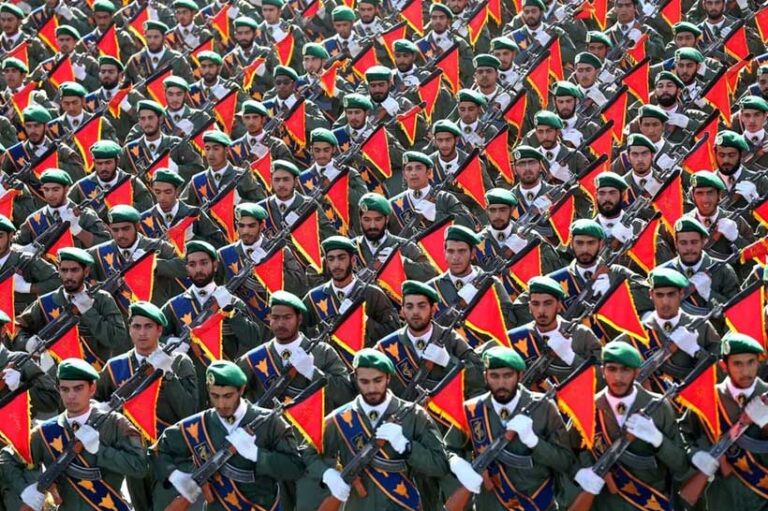
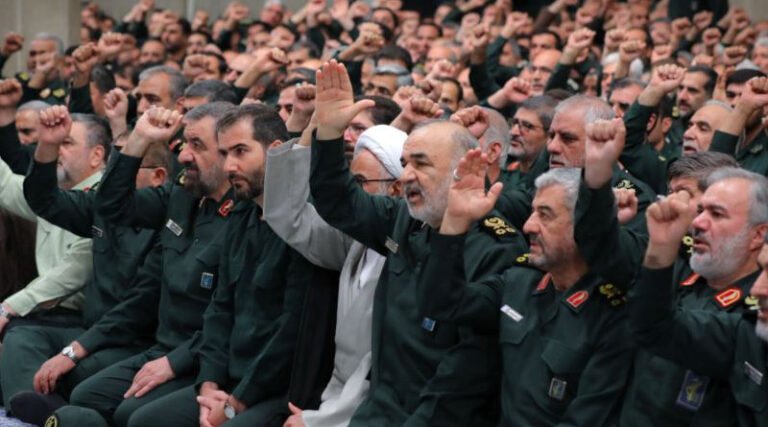
Citing two unidentified senior US intelligence officials, the Associated Press recently reported that the US National Security Agency (NSA) has intercepted communications in January which exposed emerging terrorist plots from Iran’s Islamic Revolutionary Guard Corps (IRGC). According to the report, in January the IRGC discussed carrying out a “USS Cole-style attacks” (a reference to the October 2000 al Qaeda suicide bombing of a US guided missile destroyer which killed 17 American sailors) on Fort McNair to kill General Joseph M. Martin, the vice chief of staff for the US Army.
According to the intelligence officials, the recent threat was one example ofthe Iranian regime’s apparent commitment to seeking revenge for the January 2020 killing of Qassem Soleimani, the commander of the IRGC’s terrorist Quds Force. A number of senior officials of the regime, including the current commander of the Quds force, Esmail Qaani, have already threatened to carry out terrorist attacks on US soil for the same purpose.
“So long as there is a man around the world, he is ready to punish the cowards who did this,” Qaani said on January 1, 2021, adding, “With this crime you have committed, you have created another objective for all the free people in the world, and rest assured that someone, even from inside your house, will respond to your crime.”
He also tweeted: “We warn the US President, the head of the CIA, the Secretary of Defense, the US Secretary of State and other US officials involved in the assassination of Martyr Soleimani that they must learn the secret lifestyle of Salman Rushdie because the Islamic Republic will avenge Martyr Soleimani’s blood that was unjustly shed.”
The Fort McNair plot cannot be dismissed as mere talk or bravado.
From the assassination of Iran’s last pre-revolution Prime Minister in Paris in 1991to the bombing of a Jewish community center in Argentina in 1994 to many more such attacks in foreign cities, Iran’s regime has consistently carried out extraterritorial terror attacks and assassinations against its enemies.
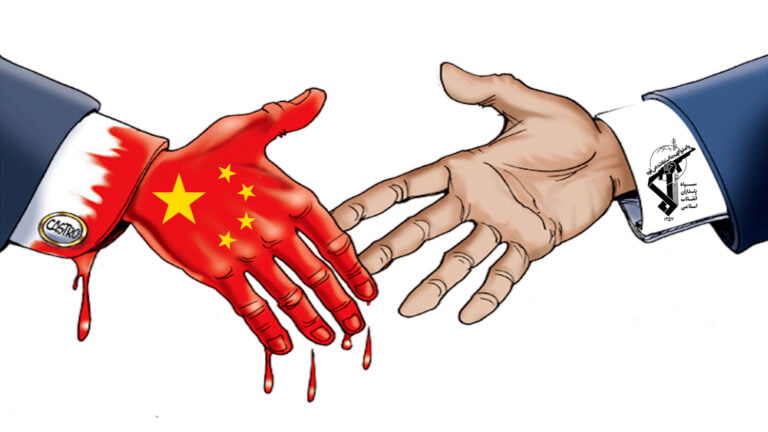
As Iran has grown increasingly desperate for cash in order to sustain its power and network of militia groups in the region, Chinese Foreign Minister Wang Yi, travelled to Tehran On March 27th 2021 to sign the Iran-China 25-year Cooperation Program Agreement.
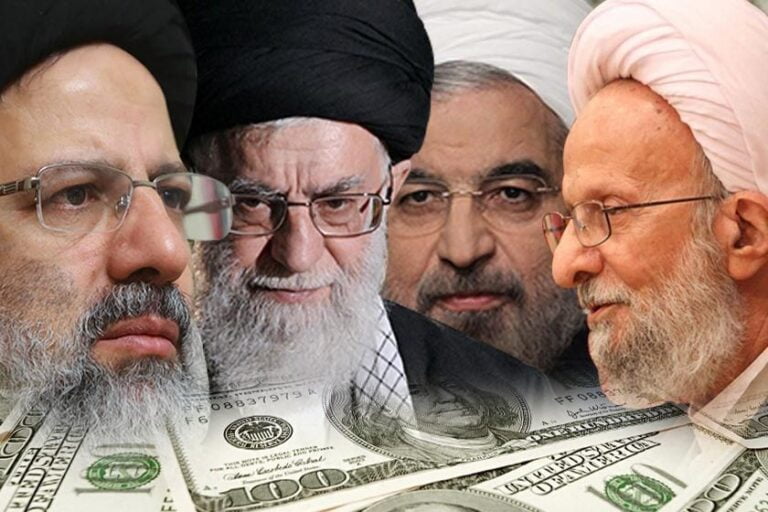
Although the news of the agreement first surfaced in 2016, it was only 2 years ago that the Supreme Leader of the Islamic Republic of Iran, Ayatollah Ali Khamenei, in order to strengthen his tyrannical regime’s foothold and contrary to the constitution, instructed Ali Ardeshir Larijani to manage and finalize this 25-year comprehensive cooperation plan between Iran and China, without the intervention of the President and Parliament.
Mohammad Javad Zarif, Iran’s current minister of foreign affairs, who studied at San Francisco State University where he gained a bachelor’s degree and the University of Denver where he obtained his master’s degree as well as a PhD in international law, was also instructed by Iran’s supreme leader to sign the 25-year deal on behalf of Iran.
Mansour Haghighatpour, who has reportedly served as a member of Iran’s Quds Force, the extraterritorial operations arm of IRGC and was also a key member of Iran’s Islamic Consultative Assembly special commission for examining the Iran nuclear deal or the Joint Comprehensive Plan of Action, was also appointed as Larijani’s advisor to ensure and prioritize the interests of IRGC and Quds Force, such as the nationalization of Internet and other military, defense, and terrorist projects.
And last but not least, with Mohammad Bagher Ghalibaf, a senior commander of the Islamic Revolutionary Guard Corps, being elected as the new Speaker of Iran’s Parliament in 2020 to silence the opposing representatives, all obstacles to the approval and implementation of this anti-people project were removed.
There isn’t a shadow of doubt that this 25-year comprehensive cooperation agreement was designed with only the best interest of IRGC and CCP in mind.
https://youtu.be/a9VG1fGe-BY
After a closer look at the clauses of this agreement and a review of previous treaties and agreements signed by the Islamic Republic, especially ones involving powerful countries such as China and Russia, we find that they all share the following characteristics:
1. Clauses in the treaty, contract or agreement that directly target Iran’s economy and economical independence, putting Iran in debt to the other countries.
2. Clauses in the treaty, contract or agreement that are directly in favour of the IRGC and the oppressive forces of the regime.
3. Clauses in the treaty, contract or agreement that are vague or inapplicable and only serve the purpose of deceiving and confusing the public.
There are 4 notable and alarming issues within the Comprehensive Strategic Partnership agreement between the Islamic republic of Iran and people’s republic of China.
1. A large part of the agreement is related to China’s military and economic presence in Iran. As such, China’s presence in all Iranian provinces is to be expected in the near future. China’s main goal is to control Iran’s ports and transportation routes, as well as its telecommunications and intelligence services to strengthen its control and influence over Iran’s economy and politics.
2. Part of the agreement is designed to give the IRGC more control over the Iranian people. The IRGC, like communist China, is seeking Round-The-Clock Surveillance of Iranian citizens.
3. The Iran-China agreement on joint counterterrorism efforts means that Iran must not only remain silent in the face of the repression and genocide of Uighur Muslims, but also condemn them for the same made-up reasons that CCP has done so in recent years.
4. The agreement has been signed by two countries with the highest number of annual executions and political prisoners globally. Countries that commit the worst human rights violations, oppress minorities, suppress freedoms of expression, control and restrict internet access, brutally suppress peaceful demonstrations and blatantly lie to their citizens as well as the international community.
It is the duty of every human being, regardless of one’s personal, religious or political belief to openly fight against these two cruel, dictatorial, and inhumane tyrannical regimes.
Iran’s apologists, as well as many unfamiliar with institutionalized corruption among the mullahs, often blame international sanctions for Iran’s economic crisis, but now even state-run media and Iranian officials are acknowledging publically that the real blame lies with the mullahs.
On Friday, both the Young Journalist Club and the Mashreq News ran stories about the rising cost of poultry, now over 40,000 Tomans despite government promises to fix the issue. Even the attempt to reduce costs by distributing animal feed to farmers only caused a small drop with a cost that still far exceeds the approved price.
Quoting official reports and trade union leaders, Mashreq News wrote: “The inflation rate for the twelve months ending March 2020 for the country’s households reached 36.4%/. The point-to-point inflation of food items in February reached more than 60%… The government is behind 95% of the skyrocketing prices, but they blame the guilds and small business owners for avoiding being accountable.”
One of the reasons for the high prices of poultry is the shortage of chickens, which can be linked to the Revolutionary Guards’ unnecessary culling of over 16 million chickens last March. Meanwhile, the IRGC continue to dominate most industries.
Mojtaba Zoulnouri, Chairman of the Security Commission at the parliament, said: “The officials’ double standards [in treating people] and their lack of motivation about the [mullahs’] ideals have caused misery in the country.”
Another reason for the economic collapse is rising liquidity and the false exchange rate, which Central Bank chief Abdol-Nasser Hemmati admitted was the only way the mullahs could balance the budget for the past two years. Economist Hossain Raghfar said that this was dangerous for Iran because it would affect the economy for decades.
He said: “It should be noted that this increase in the exchange rate is a source of income for the government and has fragile consequences for people. In other words, it creates a dangerous imbalance for families and their livelihoods. The consequences [of this action] will affect the country’s economy for years.”
This mismanagement and corruption have turned the country into a powder keg waiting for the right spark to make it explode.
Mashreq News wrote: “The Iranian society is grappling with crises. The intertwining of social crises has made living conditions difficult for people. In such a society, people are not able to resolve their issues through different social institutions, and [this trend] ultimately causes many social crises in society.”
Facebook says it busted a troll farm run by the Mujahideen-e-Khalq—a dissident Iranian group which lobbies for the overthrow of Iran’s revolutionary government—that used artificial intelligence-generated fake faces to populate sham accounts.
The social media company linked the troll farm, based alongside the MEK’s headquarters in Albania, to 300 different assets on Facebook’s platform, including pages, groups and accounts engaged in coordinated inauthentic behavior.
The Mujahideen-e-Khalq, which began as a Marxist revolutionary organization, opposed Iran’s monarchy in the 1970s and fought alongside the IRGC to overthrow the Shah of Iran. After the revolution, the IRGC cracked down on the MEK and the group sought refuge in Saddam Hussein’s Iraq. The U.S. designated the group as a terrorist organization in 1997 but the Obama administration removed the designation in 2012.
Since then, the group has spent millions of dollars cultivating allies in the U.S. and advocating for regime change in Iran. It’s also spent big on speaking fees for high profile Democratic and Republican heavyweights it considers allies, including Rudy Giuliani, former Vermont governor and DNC chair Howard Dean, and former Trump national security advisor John Bolton.
The group is known for its strict control of members. A 2005 study by Human Rights Watch based on interviews with MEK dissidents included testimonies about “abuses ranging from detention and persecution of ordinary members wishing to leave the organization, to lengthy solitary confinements, severe beatings, and torture of dissident members.”
In a 2009 study, RAND researchers alleged that the group displayed a number of “cult characteristics,” including “intense ideological exploitation and isolation,” “sexual control,” “emotional isolation,” and other such tactics.
While the U.S. has accounted for much of the MEK’s lobbying focus, the troll farm it ran was apparently focused more on Iranian and diaspora audiences. Facebook says the majority of posts by the troll farm were in Farsi with a smaller number in Arabic and English.
A number of Iranian military leaders, from both the army and the Islamic Revolutionary Guard Corps (IRGC), are among the likely candidates for Iran’s presidential election, which will be held on June 18. Among these candidates are the former IRGC air force commander and former defense minister in the Rouhani government Hossein Dehghan; former IRGC commander and current Secretary of Iran’s Expediency Discernment Council Mohsen Rezaee; and the former head of the IRGC’s Khatam Al-Anbiya Construction Headquarters Brig. Gen. Saeed Mohammed, as well as other politicians with a military background, including Ali Larijani, Parviz Fattah and Mehrdad Bazrpash.
It is still a bit early to tell whose names will ultimately appear on the ballot papers. This is because Supreme Leader Ali Khamenei controls the reins of power in Iran and has a tight grip over the upcoming election. Khamenei, after a complicated process to develop consensus and select suitable candidates, has the final say and is interested in preserving the political system’s interests. Therefore, until Iran’s Guardian Council announces its final verdict on the qualified candidates, it is uncertain whether the next Iranian president will be a military man. Prior to taking this decision and determining what the next Iranian president is required to do, Khamenei will have to consider many critical issues, including the country’s domestic stability and its foreign policy, especially regarding the prospects for diplomatic negotiations with global powers led by the US.
However, the number of military figures in the running reflects the political vacuum they are trying to fill and highlights their desire for more control in a bid to assume the second-most important political position in Iran after the supreme leader. It also reflects the attempts by Iran’s military to consolidate its presence in the decision-making institutions. This was evident after the IRGC won several seats in the parliamentary elections of February 2020. Moreover, the ascent of Mohammed Bagher Ghalibaf, a former IRGC commander, to the apex of Iran’s judiciary means the IRGC has extended its influence and reached deep into the country’s political system.
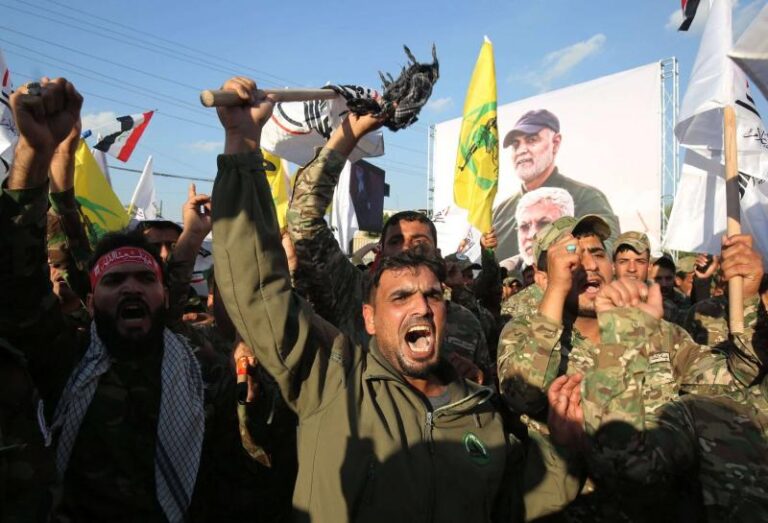
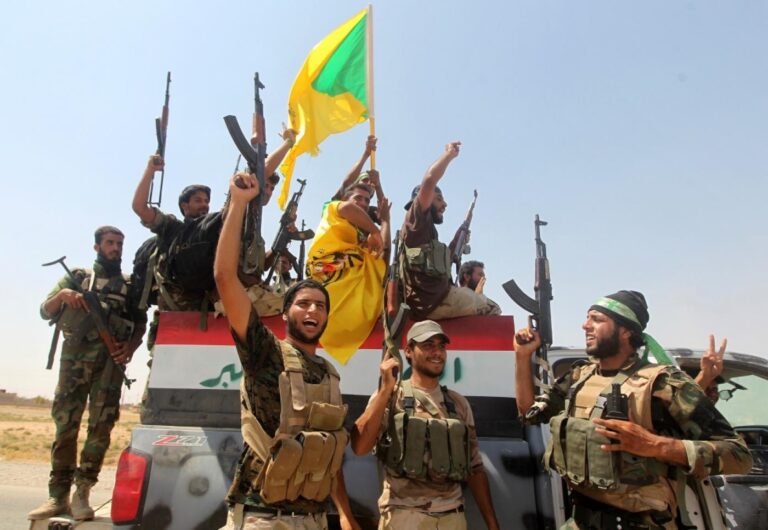
It was a stark message: A convoy of masked Shia militiamen, armed with machine guns and rocket-propelled grenades, drove openly through central Baghdad denouncing the US presence in Iraq and threatening to cut off the prime minister’s ear.
The ominous display underscored the growing threat that rogue militias loyal to Tehran pose for Iraq. It came at a time when Baghdad seeks to bolster relations with its Arab neighbours and is gearing up for early elections, scheduled for October, amid a worsening economic crisis and a global pandemic.
Last week’s procession also sought to undermine Prime Minister Mustafa Al Kadhimi’s credibility, with Iran-aligned militias driving down a major highway and passing near ministries as Iraqi security forces looked on. Ahead of a new round of talks between the US government and Iraq, it sent a stark warning that the militias will not be curbed.
A fourth round of so-called strategic Iraq-US talks is scheduled for next week after the Iraqi government requested it, partly in response to pressure from Shia political factions and militias loyal to Iran that have lobbied for the remaining US troops to leave Iraq.
The talks, which began in June under the Trump administration, would be the first under President Joe Biden. On the agenda is an array of issues, including the presence of US combat forces in the country and the issue of Iraqi militias acting outside of state authority. The discussions are meant to shape the future of the US-Iraq relationship, a senior U.S. official recently said.
It is a tightrope for Kadhimi, who has said that bringing armed groups under state control is a goal of his administration but finds himself increasingly helpless in reining in the groups. US officials have said Washington will use the meetings to clarify that US forces remain in Iraq for the sole purpose of ensuring the Islamic State (ISIS) extremist group “cannot reconstitute” itself — a signal that the US seeks to keep the 2,500 remaining American soldiers in Iraq.
The United States and Iran said Friday that they would start indirect talks with other major world powers next week to try to get both countries back into an accord limiting Iran’s nuclear program, nearly three years after President Donald Trump pulled the U.S. out of the deal and a month after Iran was reported to have rejected a proposal from the European Union to enter talks with the U.S.
U.S. State Department spokesperson Ned Price called the resumption of negotiations, scheduled for Tuesday in Austria, “a healthy step forward.” But, Price added, the situation is in “early days, and we don’t anticipate an immediate breakthrough as there will be difficult discussions ahead.”
Former U.S. President Trump pulled the United States out of the Iran nuclear deal in 2018, and incumbent President Joe Biden has said rejoining the agreement is a priority for his administration.
The Biden administration and Iran have differed on any conditions for that to happen, including the timing of the lifting of U.S. sanctions against Iran, and the stalemate on those points threatens to pose a major foreign policy setback for the new Biden administration.
Agreement on the start of multiparty talks — being held to get Iran and the United States over their differences on conditions for returning to the 2015 nuclear deal — came after talks Thursday brokered by other governments that have remained in the accord, known as the Joint Comprehensive Plan of Action.
Price said next week’s talks will be structured around working groups that the European Union was forming with the remaining participants in the accord, including Iran.
“The primary issues that will be discussed are the nuclear steps that Iran would need to take in order to return to compliance with the terms of the JCPOA, and the sanctions relief steps that the United States would need to take in order to return to compliance as well,” Price said.
Iranian regime’s first Supreme Leader, Ruhollah Khomeini, once remarked that if he were faced with a situation that required either giving up on the country’s ruling system or abandoning Islamic principles, he would choose the latter. It was a remarkable acknowledgment of this regime’s priorities, and with this new agreement with China, once again, that priority is demonstrated.
If Khamenei is willing to give up the regime’s core identity as an “Islamic Republic,” then what wouldn’t he be willing to give up in order to tighten his grip on power? Over four decades, every major undertaking by the regime and its officials has been self-serving and being absolutely at direct odds with the public good.
This has arguably grown all the more obvious in recent years, during which steep economic downturns and public unrest put the system in an extremely precarious position even before the Iranian people came under siege from the coronavirus pandemic. That public health crisis has been uniquely mismanaged in Iran, and much of the international community remains ignorant of the true extent of that mismanagement. The Iranian Health Ministry estimates that roughly 60,000 citizens have died of Covid-19 in the nation of 83 million people, but independent assessments suggest that the real figure is around four times higher.
In fact, while the severity of the crisis was beginning to be recognized in every corner of the globe, Iranian officials were encouraging and even compelling government employees and ordinary citizens to take part in public celebrations of the regime’s 40th anniversary. Strong attendance at those events was vital to state propaganda, in part because they were taking place in the shadow of at least three nationwide uprisings. The largest of those, in November 2019, was brutally suppressed by the Islamic Revolutionary Guard Corps, which opened fire on crowds of protesters, killing approximately 1,500.
It was a stark message: A convoy of masked Shiite militiamen, armed with machine guns and rocket-propelled grenades, drove openly through central Baghdad denouncing the U.S. presence in Iraq and threatening to cut off the prime minister’s ear.
The ominous display underscored the growing threat that rogue militias loyal to Tehran pose for Iraq. It came at a time when Baghdad seeks to bolster relations with its Arab neighbors and is gearing up for early elections, scheduled for October, amid a worsening economic crisis and a global pandemic.
Last week’s procession also sought to undermine Prime Minister Mustafa al-Kadhimi’s credibility, with Iran-aligned militias driving down a major highway and passing near ministries as Iraqi security forces looked on. Ahead of a new round of talks between the U.S. government and Iraq, it sent a stark warning that the militias will not be curbed.
A fourth round of so-called strategic Iraq-U.S. talks is scheduled for next week after the Iraqi government requested it, partly in response to pressure from Shiite political factions and militias loyal to Iran that have lobbied for the remaining U.S. troops to leave Iraq.
The talks, which began in June under the Trump administration, would be the first under President Joe Biden. On the agenda is an array of issues, including the presence of U.S. combat forces in the country and the issue of Iraqi militias acting outside of state authority. The discussions are meant to shape the future of the U.S.-Iraq relationship, a senior U.S. official recently said.
It is a tightrope for al-Kadhimi, who has said that bringing armed groups under state control is a goal of his administration but finds himself increasingly helpless in reining in the groups. U.S. officials have said Washington will use the meetings to clarify that U.S. forces remain in Iraq for the sole purpose of ensuring the Islamic State group “cannot reconstitute” itself — a signal that the U.S. seeks to keep the 2,500 remaining American soldiers in Iraq.
The cybersecurity company said it could not directly link the actions of the cybercriminals with Tehran, but alleged an attack on Israeli-based specialists would be “consistent” with increased geopolitical tensions between Israel and Iran.
The hacker group TA453, also known as “Charming Kitten” and “Phosphorus”, targeted 25 “senior professionals” specialising in genetic, neurology, and oncology research based in Israel and the US in 2020, cybersecurity firm Proofpoint has said in a report.
The company could not say what the hackers were planning to do with the data obtained in the course of the cybercampaign dubbed BadBlood, but noted that “Phosphorus” used credentials harvested in earlier attacks to extract emails and use compromised accounts in new cyber operations.
Proofpoint cited outside reports linking “Phosphorus” to the Iranian government and its Islamic Revolutionary Guard Corps (IRGC), but stressed it could not “independently attribute TA453 to the IRGC”. The cybersecurity company also noted that it could not “conclusively determine the motivation” of the hackers involved in the BadBlood campaign.
Proofpoint said the techniques used to target the American and Israeli medical researchers in the 2020 attack were consistent with previous tactics used by “Phosphorus”, but the group had never before conducted operations against such individuals.
The cybersecurity company said TA453 had historically targeted “[Iranian] dissidents, academics, diplomats, and journalists”, but suggested the BadBlood campaign could have been “a specific short-term intelligence collection requirement”. Proofpoint added that a cybercampaign targeting Israeli individuals would also be “consistent” with geopolitical tensions between Israel and Iran, which intensified in 2020.
During the BadBlood campaign, “Phosphorus” used a phishing attack to steal the credentials of the aforementioned medical professionals’ Microsoft accounts, Proofpoint said. According to the cyberwatchdog, the hackers sent emails to their victims from an account masquerading as a prominent Israeli physicist and containing an invitation to read a report on the subject “Nuclear weapons at a glance: Israel”.