Home Blog Page 89

Iranian and Pakistani forces use Balochistan borders for drug trafficking

0

The Revolutionary Guards of Iran are transporting narcotics from the borders of Balochistan to Saravan under the pretext national security visit to the region.

The ‘Rasad Balochistan (Balochistan Observatory) in an exclusive reported that Colonel Ahmad Maldar, the commander of the Revolutionary Guards in Saravan, is using his subordinates and forces to transport drugs from the borders of Balochistan to Saravan.

The report further claimed that after the transfer of Colonel Pudineh and his replacement with Colonel Maldar as the commander of the Saravan Corps, vehicles go to the border areas and crossings every day under the pretext of national security missions.

According to the ‘Rasad Balochistan,’ its sources say that IRGC Saravan several vehicle cross border of Jaleq and Kallagan on daily basis under the pretext of security mission and transport drugs to the Saravan city in Iranian Occupied Balochistan (IOB).

According to a source who did not want to be identified for obvious reasons, the IRGC receives millions of Toman in bribe for transporting drugs from the zero border points to Saravan city, which is done with the direct coordination of the head of the Saravan IRGC commander.

The subordinates for their cooperation with the IRGC commander only receive goods such as rice and oil.

After closing the borders of Balochistan and stranding the border crossings, the Revolutionary Guards easily transport drugs.

The IRGC’s “Razzaq plan,” which was implemented to ‘regulate’ the Baluch fuel couriers’ has been forgotten in less than two months and the border of Balochistan have been completely shut to the Baloch people.

However, the IRGC and its forces are now using the Balochistan border as their narcotic transportation business.

It is pertinent to remember that in February 2021 the IRGC had shot dead and wounded at least 37 Baloch fuel traders who had gathered to protest the border closer.

Read the complete article at: Balochwarna

Also Read: HRW Urges Iran To Probe Deadly Shooting On Pakistan Border

Iran Sentences Two Protesters to 13 Years

0

The Iranian Judiciary handed down long prison sentences to two protesters arrested during the November 2019 nationwide protests.

Jalal Namdari, from Kermanshah, and Saeed Khaledi, from Paveh, were sentenced to a total of 13 years in prison for taking part in the anti-regime protests that sprung up following the government’s overnight tripling of fuel prices.

Khaledi will serve three years for “acting against the national security and cooperation with dissident opposition groups” and another year for “spreading propaganda against the establishment”. While Namdari will serve five years on the charge of “acting against the national security and cooperation with the People’s Mojahedin Organization of Iran (PMOI/MEK)” and another three for “assembling and collusion for crimes by participating and encouraging people to participate in the November protests”.

Namdari, currently held in Kermanshah’s Diesel Abad prison, was arrested on December 30, 2020, by the Revolutionary Guards’ (IRGC) intelligence unit. Khaledi was arrested just after and released on bail until the verdict.

This comes at a time of increased worry over human rights abuses of the many thousands arrested during the November 2019 protests, which doesn’t even account for the 1,500 killed by the security forces, as they opened fire on huge crowds.

Amnesty International reported in September 2020: “[Our] research shows that many of the arrests took place during the five days of protests, but, in the days and weeks that followed, the pattern of mass arrests continued, particularly in provinces that had suffered high death tolls in a context in which the authorities had stationed significant numbers of security vehicles and personnel in public places to deter further protests.”

Eight high ranking IRGC figures and three Iranian prisons were sanctioned by the European Union on Monday for their role in the November 2019 protests. This included Revolutionary Guards head Hossein Salami who, according to the EU, “took part in the sessions that resulted in the orders to use lethal force to suppress the November 2019 protests [meaning he] bears responsibility for serious human rights violations in Iran”.

Read the complete article at:: Iran Focus

Also Read: Protests Continue To Expand In Iran, Exposing Regime’s Anxiety Over Unresolved Outrage

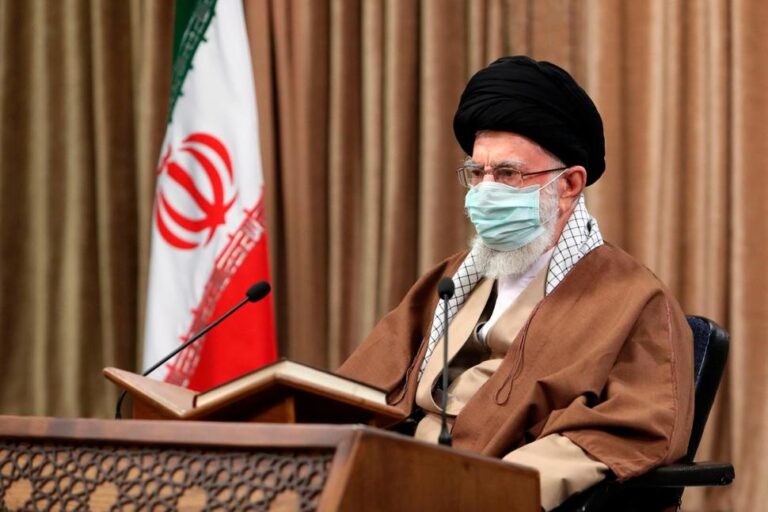
Iran’s Supreme Leader: Vienna Offers ‘Not Worth Looking At’

Iran’s supreme leader on Wednesday dismissed initial offers at talks in Vienna to save Tehran’s tattered nuclear deal as “not worth looking at,” attempting to pressure world powers after an attack on the country’s main nuclear enrichment site.

The comments by Ayatollah Ali Khamenei, who has final say on all matters of state in the Islamic Republic, came after a day that saw Iran’s president similarly ratchet up pressure over the accord. European powers meanwhile warned Tehran its actions were “particularly regrettable” and “dangerous.”

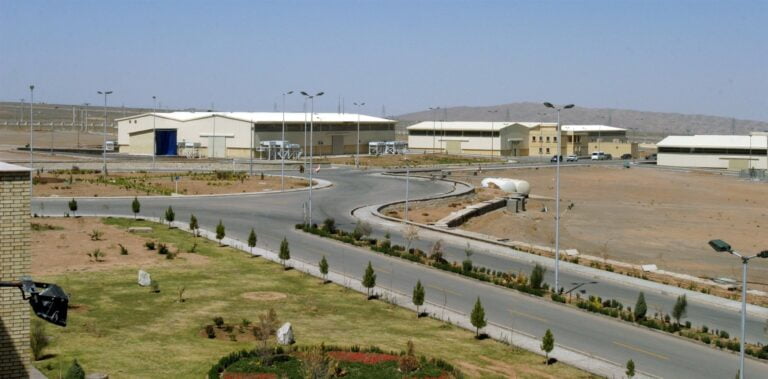
The talks already have been thrown into disarray by a weekend attack on Iran’s main Natanz nuclear enrichment site suspected to have been carried out by Israel. Tehran retaliated by announcing it would enrich uranium up to 60% — higher than it ever has before but still lower than weapons-grade levels of 90%.

“The offers they provide are usually arrogant and humiliating (and) are not worth looking at,” the 81-year-old Khamenei said in an address marking the first day of the holy Muslim fasting month of Ramadan in Iran.

He also criticized the U.S. and warned time could be running out.

“The talks shouldn’t become talks of attrition,” Khamenei said. “They shouldn’t be in a way that parties drag on and prolong the talks. This is harmful to the country.”

Speaking to his Cabinet, an impassioned Iranian President Hassan Rouhani said the first-generation IR-1 centrifuges that were damaged in Sunday’s attack would be replaced by advanced IR-6 centrifuges that enrich uranium much faster.

“You wanted to make our hands empty during the talks but our hands are full,” Rouhani said.

Rouhani added: “60% enrichment is an answer to your evilness. … We cut off both of your hands, one with IR-6 centrifuges and another one with 60%.”

Read the complete article at: US News

Also Read: Iran says it will enrich uranium to 60 percent purity after Natanz attack

Iran says it will enrich uranium to 60 percent purity after Natanz attack

Iran will start enriching uranium at 60 percent purity — higher than ever before — following the attack on its Natanz nuclear facility, the country’s deputy foreign minister said Tuesday.

Abbas Araghchi said on the state-run Press TV that Iran has informed the International Atomic Energy Agency, the United Nations’ atomic watchdog, of its intentions. The watchdog told NBC News that Tehran had informed the agency of its plans.

The decision to hike the level of enrichment will be seen as a further reduction in compliance by Iran with the restrictions on its nuclear program agreed to in its 2015 deal with world powers.

Iran had been enriching uranium up to 20 percent. Under the nuclear deal, it agreed to only enrich uranium up to 3.67 percent.

On Monday, Iran blamed Israel for a weekend sabotage attack at Natanz that damaged centrifuges it uses to enrich uranium there, and warned that it would take revenge for the assault. Details remain scarce about the weekend attack.

Iran has consistently said that it does not seek a nuclear weapon and that doing so would be contrary to Islamic teaching.

Araghchi’s announcement comes amid ongoing negotiations over the deal that aim to bring the United States back into the pact, after former President Donald Trump unilaterally withdrew from the agreement in 2018.

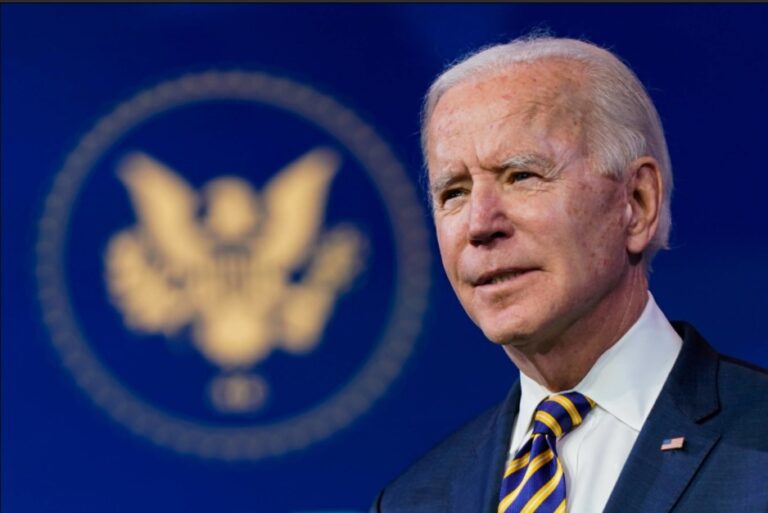
President Joe Biden has said he is open to returning to the nuclear deal, known as the Joint Comprehensive Plan of Action and that bound Iran to restrictions on its nuclear program in return for relief from U.S. and international sanctions.

But the two sides have so far disagreed over how to revive the pact. Indirect talks between Iran and the United States started in Vienna last week.

Iranian Foreign Minister Mohammad Javad Zarif warned in the wake of the Natanz attack that the nuclear facility would be reconstructed with more advanced machines.

Read the complete article at: NBC News

Also Read: Netanyahu to visiting US defense secretary: We won’t let Iran obtain nukes

Biden Must Put Human Rights Front and Center in Iran Policy

The ubiquitous human rights group Amnesty International recently released its report on “the state of the world’s human rights.” It calls attention to a wide range of issues spanning 149 countries, including many that remain unresolved.

Within this category, the 1988 massacre of Iranian political prisoners, described as the worst crime against humanity in the latter half of the 20th century, stands out above most others. Unfortunately, the international community has been reluctant to address this crime against humanity and hold the regime accountable.

As a result of that inexplicable silence, the regime developed an enhanced sense of impunity to annihilate the organized opposition. In May 1988, “death commissions” began convening in prisons throughout Iran, with the mandate to interrogate political prisoners over their attitudes toward the theocratic system and to summarily execute those who failed to demonstrate fealty to the regime and its supreme leader. Then-supreme leader Khomeini declared in a fatwa (religious decree) that anyone associated with the principal opposition Mujahedin-e Khalq (MEK) is guilty of enmity against God and must be immediately executed.

The same vague charge has since been used in countless instances to justify draconian punishments against dissidents. According to the Amnesty International report, “Several protesters were sentenced to death following unfair trials which relied on torture-tainted ‘confessions.’” Therefore, the same tactics used in the 1988 massacre remain commonplace in Iran.

This comes as no surprise considering that one of the leading figures in the 1988 massacre, Ebrahim Raisi, is now the head of Iran’s judiciary. He has reportedly overseen an escalating crackdown on dissent, aspects of which an earlier Amnesty report titled “Trampling Humanity” has detailed. The report focused on the widespread torture meted out to protesters arrested during a nationwide uprising in November 2019. According to Amnesty, “authorities continued to cover-up the real death toll” from incidents in which the Islamic Revolutionary Guard Corps opened fire on crowds of protesters.

Read the complete article at: Patriot Post

Also Read: Iran executes political activist Javid Dehghan Khald despite human rights groups warnings 


Iran Policy Iran Policy

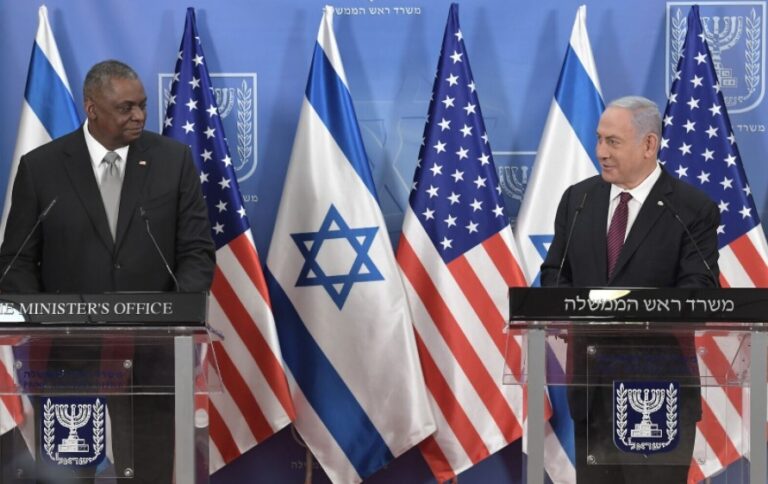
Netanyahu to visiting US defense secretary: We won’t let Iran obtain nukes

Hosting US Defense Secretary Lloyd Austin at his office in Jerusalem, Prime Minister Benjamin Netanyahu said Monday that Israel and the US agree on never allowing Iran to obtain nuclear weapons.

“As you know, the US-Israel defense partnership has continually expanded over successive administrations and our cooperation is crucial in dealing with the many threats confronting both the United States and Israel,” Netanyahu said at a press conference alongside Austin.

“Mr. Secretary, we both know the horrors of war. We both understand the importance of preventing war. And we both agree that Iran must never possess nuclear weapons. My policy as prime minister of Israel is clear — I will never allow Iran to obtain the nuclear capability to carry out its genocidal goal of eliminating Israel.

Speaking days after an apparent attack on the Iranian Natanz nuclear facility, which Tehran has blamed on Israel, Netanyahu concluded by saying that “Israel will continue to defend itself against Iran’s aggression and terrorism,” the prime minister added.

Austin, speaking after Netanyahu, refrained from explicitly mentioning Iran but said he had decided to travel to Israel to “express our desire for earnest consultations with Israel, as we address shared challenges in the region.”

With his two-day visit, the first official visit to the Jewish state by an American secretary of defense since 2017, Austin is the first member of US President Joe Biden’s administration to pay an official visit to Israel.

Affirming the Biden administration’s support for Israel’s security and qualitative military edge in the region, Austin said he and Netanyahu discussed “ways to deepen our longstanding defense relationship in the face of regional threats and other security challenges, and I affirm the department’s support for our ongoing diplomatic efforts to normalize relations between Israel and Arab and Muslim-majority nations,” he says.

Read the complete article at: Times of Israel

Also Read: Iran is building something new at an underground nuclear site

EU to sanction Iran militia, police, three entities over 2019 protests: Diplomats

0

The European Union will target eight Iranian militia and police commanders and three state entities with sanctions next week over a deadly crackdown in November 2019 by Iranian authorities, three diplomats said on Wednesday.

The travel bans and asset freezes will be the first time the EU has imposed sanctions on Iran for human rights abuses since 2013 and are set to be put in place some time next week after the Easter holidays in Europe, the diplomats said.

The individuals to be targeted include members of Iran’s hard-line Basij militia, who are under the command of the Revolutionary Guards, the most powerful and heavily armed security force in the Islamic Republic.

Reuters reported on Tuesday that the EU was planning the sanctions. The bloc declined to comment on Tuesday and Wednesday.

Iran has repeatedly rejected accusations by the West of human rights abuses. The Iranian Embassy in Brussels was not immediately available for comment, nor were other Iranian officials.

About 1,500 people were killed during less than two weeks of unrest that started on Nov. 15, 2019, according to a toll provided to Reuters by three Iranian interior ministry officials at the time. The United Nations said the total was at least 304.

Iran has called the toll given by sources “fake news.”

On March 9, UN special rapporteur on the situation of human rights in Iran, Javaid Rehman, presented a report saying Tehran used lethal force during the protests and chided it for failing to conduct a proper investigation or for failing to hold anyone accountable.

Asked why the bloc had taken so long to process its sanctions response, one EU diplomat involved in the preparations cited the need for strong evidence against those hit with the punitive measures.

Read the complete article at: Arab News

Also Read : Iran: Lord Alton Calls on UK Government to Hold Iran Responsible for its Terrorism on European Soil

Protests Continue To Expand In Iran, Exposing Regime’s Anxiety Over Unresolved Outrage

Last Sunday, protests were recorded as taking place in at least 20 Iranian cities as the country’s roughly 18 million pensioners continued their activities over a declining quality of life and increasing scarcity of access to various food staples. Several protests have taken place on a similar scale since the beginning of this year, and it appears as if the pensioners’ activism is being accompanied by growing numbers of protests by younger Iranians, many of which express a broader political agenda and a persistent desire for regime change.

Pensioners have endorsed this message to some degree while remaining focused on the immediate goal of securing the means to their short-term survival at a time when more than 60 percent of the Iranian population, according to the regime itself, are living under the poverty line. In their most recent protests, many elderly activists joined their younger compatriots in urging a general boycott of the political process that regime authorities are attempting to promote in advance of their sham presidential election in June.

The regime’s sham parliamentary elections in February 2020, had the lowest level of voter turnout in the regime’s history. That same outcome was also driven by a longstanding electoral boycott movement, led by the People’s Mojahedin Organization of Iran, which urged the general population to deny legitimacy to the clerical system and “vote for regime change.”

This message has lately begun appearing in the forms of graffiti and banners in prominent locations throughout Iran, often accompanied by images of Mrs. Maryam Rajavi, the president-elect of the National Council of Resistance of Iran. Mrs. Rajavi has personally commented on the pensioner protests and the youth activist movement in order to suggest that the establishment of such a transitional government may not be far off.

Read the complete article at: NCRI

Also Read: Iran preparing for protests during Festival of Fire

3 Years Later, A Prisoner’s Family Still Awaits His Return From Iran

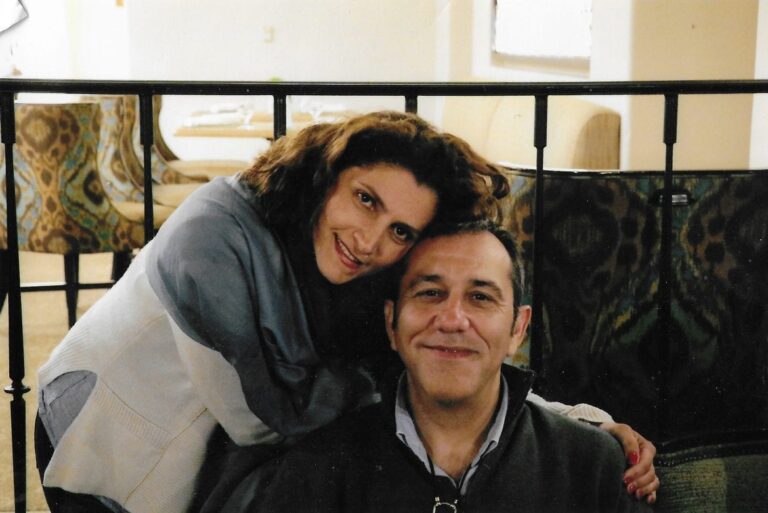
Later this month, Bahareh Shargi will mark an anniversary: It will be three years that her husband has been stuck in Iran.

Iranian authorities first imprisoned Emad Shargi, a U.S. citizen, on April 23, 2018. Though they eventually released him on bail, they did not allow him to leave the country and later returned him to Tehran’s Evin prison. Now his family hopes that speaking out may help him.

His wife discussed his case at the Washington, D.C., home where they raised two daughters. She sat on their concrete back porch, which overlooks a playground set from the days when their children were little. “I’m so proud to have spent the last 32 years with him,” she said. She calls these last three years spent apart “this ordeal.”

Emad, Shargi, 56, is one of numerous U.S. citizens who have been arrested in Iran over the years on opaque charges of espionage. He said he was innocent, and Iran made no evidence public.

Iranian diplomats have frequently spoken of exchanging such prisoners for Iranians in U.S. prisons. While the United States formally rejects any such exchanges, some U.S. and Iranian prisoners were released during the Trump administration. But not Emad Shargi.

Bahareh Shargi, 53, said she and her husband were born in Iran, and both moved to the United States when they were young and became citizens. But they maintained family ties to their native country, and when their children went to college a few years ago, they chose to take an opportunity to live in Tehran.

“We had this window of time where we thought, ‘We can travel,’ ” she said.

They occupied a house in Tehran belonging to Bahareh Shargi’s family. Emad Shargi, a businessman, had previously worked in the Persian Gulf region and briefly worked for the Dutch arm of an Iranian venture capital firm.

Read the complete article at: WSKG

Also Read: Franco-Iranian, German citizens arrested in Iran – Le Figaro
Prisoner’s Family Prisoner’s Family

In Soleimani’s path, Iran’s IRGC is in Iraq for meetings

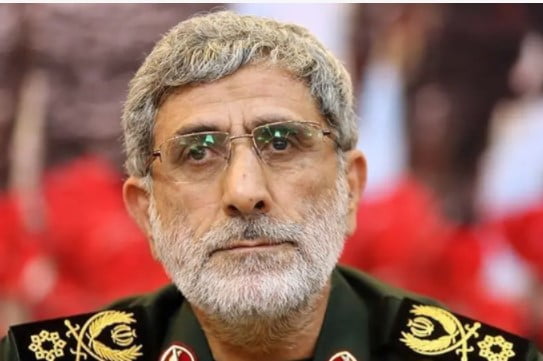
Brig.-Gen. Esmail Qaani, the commander of Iran’s IRGC Quds Force, went to Iraq on the eve of the country holding discussions with the US this week. This is clearly a symbolic visit designed to show that Iran considers Iraq part of its “near abroad” and that the US should be wary to be playing too close to Iran’s backyard. Qaani ended a two-day trip to neighboring Iraq, the Arabic-language Al-Alam news network reported today.

Qaani has struggled to take up the banner of his predecessor Qasem Soleimani since being appointed in January 2020. Soleimani was killed in a US drone strike in Baghdad. Qaani is an expert on Afghanistan but has struggled to deal with Iraqis and other Arab groups that Iran is close to. He has been sent to Iraq before and has gone to Syria.

“Citing informed sources as saying, the Iranian news channel’s correspondent said Tuesday that the IRGC Quds Force’s chief had met with a number of Iraqi officials and senior figures besides leaders of political parties and movements in the Arab country,” Iran’s Press TV said.

There isn’t much information on Qaani’s trip, but it is clear that Iran wants to show it off on the eve of dialogue between Iraq and the US. The goal here is to show that Tehran can coordinate efforts in Iraq. In the past, pro-Iranian groups there have attacked US forces, bases and supply convoys. However, attacks have been reduced in recent weeks, likely in the lead-up to the Vienna Iran deal talks with Europeans, which the US will be watching closely.

Qaani went to Iraq as Iran sent its top diplomat to Central Asia. Clearly, there is a reason for this. Work with Central Asia, where Qaani is actually an expert, is left to diplomats. Iraq is a military issue because Iran uses the pro-Iranian militias there to traffic weapons to Syria and uses Iraq as a base to threaten Israel.

Source: The Jerusalem Post

Also Read: Pro-Iran militias in Iraq go rogue trying to pressure Kadhimi