Home Blog Page 88

US calls on Iran to release all American citizens wrongfully detained

The US on Friday reiterated previous calls for Iran to release all American citizens detained in the country.

The safe return of those detained in Iran or elsewhere was a “top priority” for Washington, Jalina Porter, State Department spokeswoman, said.

“This weekend marks 2,000 days since Iran arrested Siamak Namazi for being a US citizen,” she said, adding he “was a businessman living in Tehran when he was arrested in October of 2015.”

His father Baquer Namazi, 84, was also arrested when he traveled to Iran to help free his son. They have both been sentenced to 10 years in prison on “baseless charges.”

She said “as a result, the Namazi family has suffered for five and a half years while the Iranian government continues to treat their husband, father, son, and brother as political pawns. This terrible milestone should offend all who believe in the rule of law.”

She called on the Iranian government to also “immediately and safely release” Emad Sharghi, and Morad Tahbaz, who is a British citizen

“Iran must also account for the fate of Robert Levinson and other US citizens who are missing or abducted in Iran,” said Porter, adding: “The abhorrent act of unjust detentions for political gain must cease immediately, whether in Iran or anywhere around the world.”

On Wednesday, Ned Price, State Department spokesman, said that the Biden administration had made clear early on that it has “no higher priority than the safe return of Americans who are unjustly detained around the world, and that includes the Americans who are unjustly detained or who are missing in Iran.”

Price added that the US will continue to stress to the Iranian regime that these practices are “unacceptable.”

Read the complete article at: Arab News

Also Read: Iran rejects Trump’s threats over detained US citizens

Who Is Mohammad Reza Fallahzadeh, the New Deputy Commander of Iran’s Qods Force?

Following the sudden passing of Mohammad Hossein-Zadeh Hejazi, the deputy commander of Iran’s Islamic Revolutionary Guard Corps-Qods Force (IRGC-QF), Supreme Leader Ali Khamenei appointed Brig. Gen. Mohammad Reza Fallahzadeh as his replacement on April 19. Who is Fallahzadeh, why was he named as second-in-command of such a crucial tool in Tehran’s foreign policy, and how might his appointment affect the organization?

Also known as Abu Baqer, Fallahzadeh was born in Yazd province in 1962 or 1963 and hails from a family of Iran-Iraq War veterans. One brother, Mohammad Baqer, was killed in combat in 1987; another relative, Asghar, currently serves in the Qods Force and may be Fallahzadeh’s brother as well.

Next to nothing is known about his service in the Iran-Iraq War, perhaps due to his junior position at the time. Information about his activities since then is rather scarce as well, however. The official statement announcing his appointment included a few sentences noting his previous roles as a provincial IRGC chief in Isfahan (where he commanded the 33rd al-Mahdi Division), Fars (19th Fajr Division), and Yazd, but no information is available regarding his performance in those positions.

Much like his military career, Fallahzadeh’s political arc after the Iran-Iraq War seems to resemble that of his peers. In 2007, he was named governor of his native Yazd province, making him one of many IRGC commanders who became political appointees under President Mahmoud Ahmadinejad. Fallahzadeh himself was accused of replacing professional civil servants in the province with IRGC colleagues, and for spending more time promoting his career in Tehran than serving the local community. English-language coverage of his tenure mainly focused on delegations from Ghana, France, and Japan visiting Yazd to explore investment opportunities, none of which materialized. When President Hassan Rouhani dismissed Fallahzadeh in 2013, his replacement purged IRGC officers from the provincial administration and reinstated the civil servants.

Read the complete article at: Washington Institute

Also Read: Quds Force commander admits Iran supporting Houthi attacks on Saudi Arabia

Delegate: Progress in Iran nuclear talks but end ‘far away’

High-level talks in Vienna aimed at bringing the United States back into the 2015 nuclear deal with Iran are moving ahead with experts working on drafting proposals this week, but a solution remains “far away,” Russia’s delegate said Monday.

The U.S. unilaterally left the agreement, which promises Iran economic incentives in return for curbs on its nuclear program, in 2018 under then President Donald Trump, who said it needed to be renegotiated and imposed crippling sanctions.

In response, Iran has steadily been violating the restrictions set by the deal, by enriching uranium far past the purity allowed and stockpiling vastly larger quantities, in a thus-far unsuccessful effort to force the other countries involved to provide economic relief that would offset the American sanctions.

U.S. President Joe Biden wants to return Washington to the deal, and Iran has been negotiating with the five remaining powers — Germany, France, Britain, China and Russia — for the past two weeks on how that might take place. Diplomats from the world powers have been shuttling between the Iranian delegation and an American one, which is also in Vienna but not talking directly with the Iranian side.

Two expert groups have been brainstorming solutions to the two major issues: The rollback of American sanctions on one hand, and Iran’s return to compliance on the other.

Now, said Russian representative Mikhail Ulyanov, “we can note with satisfaction that the negotiations (are) entering the drafting stage.”

Already on Saturday, Iran’s deputy foreign minister, Abbas Araghchi, said that Tehran had proposed draft agreements that could be a basis for negotiations.

“We think that the talks have reached a stage where parties are able to begin to work on a joint draft,” Araghchi told Iranian state television. “It seems that a new understanding is taking shape, and now there is agreement over final goals.”

Read the complete article at: KPIC

Read Also: Iran’s Supreme Leader: Vienna Offers ‘Not Worth Looking At’

Pro-Iran militias in Iraq threaten Israeli interests

Telegram channels affiliated with Iran-backed militias in Iraq published posters threatening Israeli interests last week, according to the Middle East Media Research Institute’s Jihad and Terrorism Threat Monitor.

On April 14, Sabreen News, a Telegram channel linked to Iraqi Shiite paramilitary group Asa’ib Ahl Al-Haq, published a poster celebrating the recent attack on an Israeli-owned cargo ship off the coast of the United Arab Emirates. The MV Hyperion Ray suffered minor damage after it was struck near the Emirate of Fujairah.

The poster showed the vessel sinking after being cut in two by “Zulfiqar,” the famed sword of Imam Ali ibn Abi Talib, a cousin, son-in-law, and companion of the Islamic prophet Muhammad, a common motif among Shiites, according to JTTM.

The text on the poster read: “Ask your grandfather about Thoalfkar [i.e., Zulfiqar] swords” in an apparent reference to the Battle of Khaybar of 628 C.E., in which Bin Talib fought the Jews.

On April 13, the day of the attack on the Israeli vessel, another pro-Iran Telegram channel, Jihad Brothers Electronic Team, celebrated the attack and published a poster of a missile flying past a boat with the text: “What lies ahead is graver.”

Also on April 13, a Telegram channel affiliated with the Iraq-based Hezbollah Brigades claimed the group had attacked an intelligence and operations center “run by the Israeli Mossad” in northern Iraq and that several Israeli soldiers had been killed or wounded. The Kurdistan Regional Government, however, rejected reports a Mossad base had been attacked in northern Iraq.

Source: Israel Hayom

Also Read: A growing challenge for Iraq: Iran-aligned Shiite militias

Top Ukraine Official Says Iran ‘Intentionally’ Shot Down Airliner Last Year

0

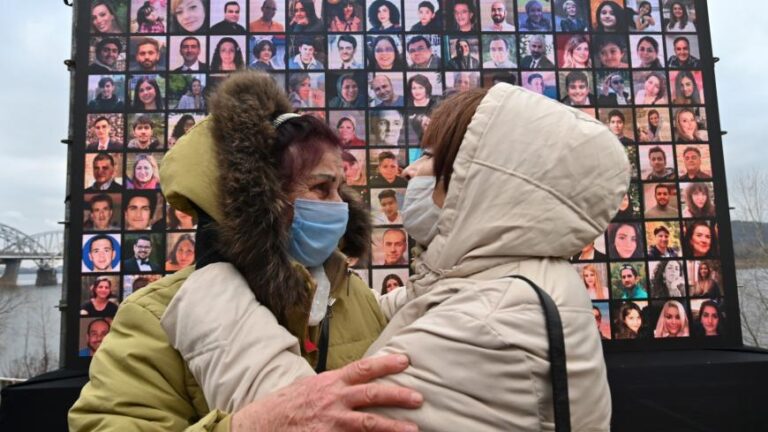
Ukrainian officials have said they believe Iran intentionally shot down the Ukrainian Airlines flight PS-752 intentionally in January 2020, Canada’s Globe and Mail reported on April 15.

Oleksey Danilov, Secretary of the National Defense and Security Council, who has been involved in the investigation of the disaster and had travelled to Iran and met high-ranking Iranian officials, said in an interview that he believed Iran shot down the plane intentionally to prevent a cycle of military escalation with the United States.

The Trump Administration did not retaliate against the missile attack which injured dozens of American servicemen.

An Iranian air-defense battery fired two missiles at the passenger plane with 176 people abord as it was taking off form Tehran’s Imam Khomeini International airport on January 8, last year, hours after Iran had fired ballistic missile at US bases in Iraq and was expecting possible retaliation.

Three days after the tragedy, Iran’s Revolutionary Guards admitted their responsibility but insisted that it was a “human error”. Iran has failed to allow access to other countries in its investigation or share information. This, Danilov said was one important evidence that proves Iran is hiding the true nature of the incident.

“When they say this was accidental…I don’t buy that,” Danilov said, “It was intentional. This was a conscious attack.” The Ukrainian government has backed his assertions.

Danilov, who met his counterpart, Ali Shamkhani in Tehran last February, said his host did not completely deny his theory and only said that his political faction was not involved but there are different groups in Iran.

Source: Iran Intl

Also Read: Experts accuse Iran of rights violations in shooting down Ukraine airlines flight

Ukraine official Ukraine official

A growing challenge for Iraq: Iran-aligned Shiite militias

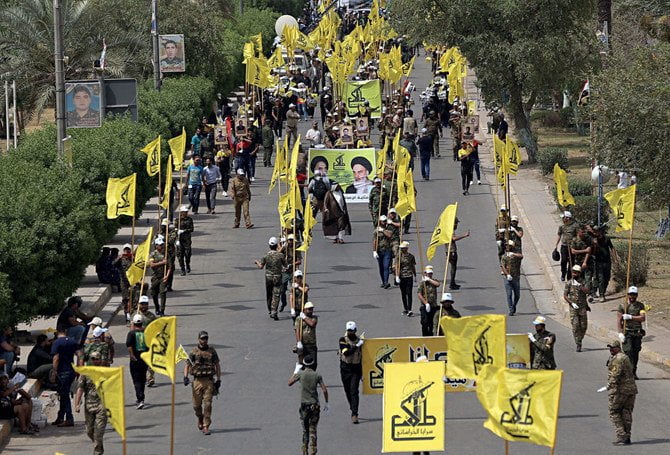
It was a stark message: A convoy of masked Shiite militiamen, armed with machine guns and rocket-propelled grenades, drove openly through central Baghdad denouncing the US presence in Iraq and threatening to cut off the prime minister’s ear.

The ominous display underscored the growing threat that rogue militias loyal to Tehran pose for Iraq. It came at a time when Baghdad seeks to bolster relations with its Arab neighbors and is gearing up for early elections, scheduled for October, amid a worsening economic crisis and a global pandemic.

Last week’s procession also sought to undermine Prime Minister Mustafa Al-Kadhimi’s credibility, with Iran-aligned militias driving down a major highway and passing near ministries as Iraqi security forces looked on. Ahead of a new round of talks between the US government and Iraq, it sent a stark warning that the militias will not be curbed.

A fourth round of so-called strategic Iraq-US talks is scheduled for next week after the Iraqi government requested it, partly in response to pressure from Shiite political factions and militias loyal to Iran that have lobbied for the remaining US troops to leave Iraq.

The talks, which began in June under the Trump administration, would be the first under President Joe Biden. On the agenda is an array of issues, including the presence of US combat forces in the country and the issue of Iraqi militias acting outside of state authority. The discussions are meant to shape the future of the US-Iraq relationship, a senior US official recently said.

It is a tightrope for Al-Kadhimi, who has said that bringing armed groups under state control is a goal of his administration but finds himself increasingly helpless in reining in the groups. US officials have said Washington will use the meetings to clarify that US forces remain in Iraq for the sole purpose of ensuring the Daesh group “cannot reconstitute” itself — a signal that the US seeks to keep the 2,500 remaining American soldiers in Iraq.

Read the complete article at: Arab News

Also Read: Pro-Iran militias in Iraq go rogue trying to pressure Kadhimi

Kylie Moore-Gilbert: The heroes I met fighting Iran’s brutal prison system

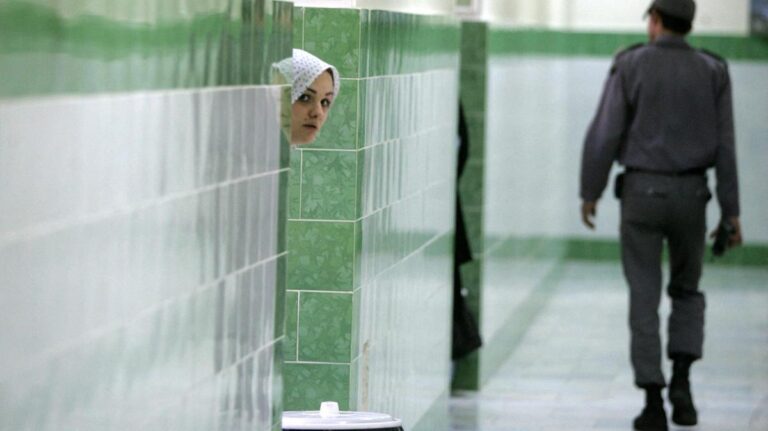
Sepideh Kashani was an administrator at the now-defunct Persian Wildlife Heritage Foundation, Iran’s premier conservation NGO. She was as well-behaved and unassuming a prisoner as the guards could have asked for. Despite the fact that we were being held in a maximum-security detention facility, the guards sometimes forgot to close the door of her cell, and Sepideh would pull it closed herself.

Both of us spent most of our time in solitary confinement, but for a time we shared a small, cramped cell. Forced to wear blindfolds every time we left it, Sepideh would pull hers firmly over her eyes and stumble around on the arm of the guard, whereas I was forever getting in trouble for wearing mine high on my forehead, my roving eyes registering every detail of the detention site and the shady, nameless individuals who ran it.

However, the day Sepideh found out that her husband, Houman Jokar, had been savagely beaten under the stairs in the interrogation block, something inside her snapped. Quiet, obedient Sepideh, who by this point had spent more than 18 months of her life sleeping on the floor of a cold, windowless cell, simply couldn’t stand that image of her intellectual, softly spoken husband, Iran’s foremost expert on big cat conservation, handcuffed and bleeding, his glasses broken and his ribs kicked in.

Houman was an employee of both the Iranian Department of Environment and the UN office in Iran when he and Sepideh were arrested along with seven other colleagues and charged with security offences by Iran’s Islamic Revolutionary Guard Corps.

“Do whatever you want to me,” she had screamed at the manager of the facility, “but don’t touch him. You can kill me if you want, but if you people touch him again, I will kill you!”

Read the complete article at: The National News

Also Read: Iran tried to recruit me as a spy, says former prisoner Kylie Moore-Gilbert

brutal prison system brutal prison system

Iran’s Intelligence Establishment Propaganda in Films and TV

Iranian Intelligence Minister Mahmoud Alavi boasted about the substantial role of the state’s security establishment in the production of local propaganda films and television shows during an interview with the reformist Shargh newspaper on February 15, 2021.

The goal is to use entertainment mediums as a vehicle to “educate the public” and “protect society against espionage,” said Alavi.

In reality, the productions serve as vehicles for state propaganda, portraying the government as a benevolent actor even as it suffocates civil society actors through arbitrary arrests and kangaroo trials to repress dissent and criticism of state policies.

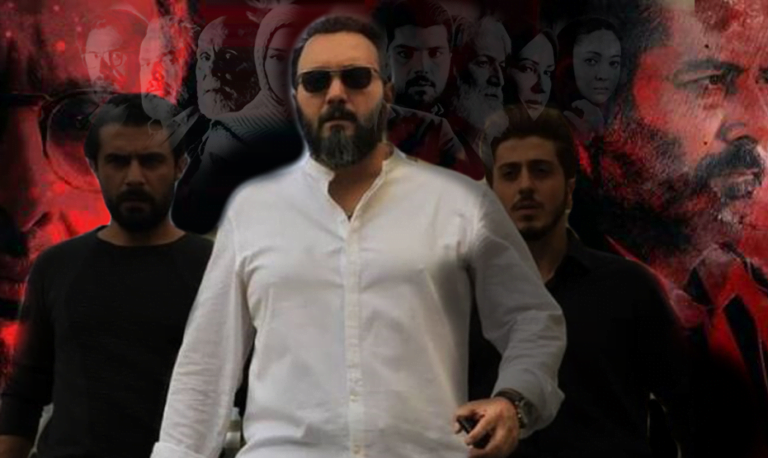
During his interview, Alavi proudly admitted that the drama series “Khaneye Amn” (“Safe House”)–a thriller in which intelligence agents hunt spies and traitors–was produced by the Intelligence Ministry.

It aired through 50 episodes on Channel 1 of the state-owned Islamic Republic of Iran Broadcasting (IRIB) organization in the fall of 2020.

IRIB has repeatedly colluded with Iran’s judiciary and security forces, including the Islamic Revolutionary Guard Corps (IRGC), to smear defendants in politically motivated cases.

It also broadcasts forced confessions by detainees, in clear violation of international provisions on fair trials and the right to due process.

One “Safe House” episode that aired in 2020 targeted German-Iranian dual national prisoner Jamshid Sharmahd.

In the episode, an agent asks an informant about Sharmahd’s identity after being shown a real photo of him.

“He leads the [outlawed] Iranian monarchist association,” the informant says. “He engages in a lot of secret activities and works with both the Israeli and American intelligence services.”

Sharmahd is facing those accusations in reality, though no date has been set for his trial.

Like other dual nationals detained in Iran, he has been denied access to counsel and only allowed severely restricted contact with his family.

Yet the state-funded series presents him as a dangerous spy while denying him a chance to defend himself and while blatantly violating his right to privacy.

According to Article 96 of Iran’s Code of Criminal Procedure, “During preliminary investigations, the publication of images or other details by the media or judicial and law enforcement authorities regarding the suspect’s identity is prohibited.”

Article 96 only allows for the photos to be published in cases involving suspects who are on the run and may be found if recognized by members of the public–not relevant in Sharmahd’s case.

Read the complete article at: CHRI
Also read: Failures of the IRGC in spotlight even as rhetoric escalates

US National Intelligence Chief Says Iran Contributes to Mideast Instability

0

The Director of US National Intelligence Avril Haines has cited Iran’s contribution to instability in the Middle East as she testified at a public congressional “Worldwide Threats” hearing.

Haines also told the Senate Intelligence Committee that China is an “unparalleled” priority.

She described China as increasingly “a near-peer competitor challenging the United States in multiple arenas.”

Federal Bureau of Investigation Director Christopher Wray said his agency opens a new investigation linked to China every 10 hours.

Central Intelligence Agency Director William Burns, National Security Agency Director General Paul Nakasone and Defense Intelligence Agency Director Lieutenant General Scott Berrier also testified.

Burns said nearly a third of the CIA’s workforce is focused on cyber issues.

Haines also cited Russian efforts to undermine US influence, Iran’s contribution to instability in the Middle East, global terrorism and potential North Korean efforts to “drive wedges” between Washington and its allies as significant threats.

The appearance by Haines and the other intelligence directors was the first such public “Worldwide Threats” hearing since January 2019.

The same officials will appear before the House Intelligence Committee on Thursday.

Before the hearings, the intelligence community published its annual threat assessment, which said China was pursuing a “whole-of-government” effort to spread its influence around the world, undercut US alliances and “foster new international norms that favor the authoritarian Chinese system.”

Russia is likely to continue developing its military and cyber capabilities while also seeking “opportunities for pragmatic cooperation with Washington on its own terms,” said the report.

North Korea, meanwhile, remains committed to nuclear power and poses an increasing risk to the US and to the region. Iran, too, presents a threat despite its weakening economy through both its conventional and unconventional military strategies, including its network of proxies.

Source: Asharq Al-Awsat

Also Read: The Iran-Russia Cyber Agreement and U.S. Strategy in the Middle East

Failures of the IRGC in spotlight even as rhetoric escalates

0

The recent sabotage at Iran’s main nuclear enrichment facility has put the spotlight on the successive security failures of the country’s Revolutionary Guard Corps (IRGC) but it  has given a boost to hard-line narrative with Iran’s ruling establishment.

The setbacks of the IRGC could not be missed by the public despite the Guards’ huge clout and intimidating power at home.  Just over a year ago they shot down a Ukrainian commercial airliner, killing 176 people. Their forces failed to stop both an earlier attack at Iran’s Natanz facility and the assassination of a top scientist who had started a military nuclear programme decades earlier. Meanwhile, their floating base in the Red Sea off Yemen was hit by an explosion.

Then on Sunday, the nuclear facility, of which the Revolutionary Guards are the chief protector, experienced a blackout that damaged some of its centrifuges.

Israel is widely believed to have carried out the sabotage that caused the outage, though it has not claimed it.

In the wake of the attack, Iran announced Tuesday it would begin enriching uranium to 60% purity, the highest level its programme has ever reached. That was a signal that the Guards and their radical alliances’ defence was going to be an escalation of Iran’s positions in the nuclear issue.

The weekend attack at Natanz was initially described only as a blackout in the electrical grid feeding above-ground workshops and underground enrichment halls — but later Iranian officials began calling it an attack.

Alireza Zakani, the hard-line head of the Iranian parliament’s research centre, referred to “several thousand centrifuges damaged and destroyed” in a state TV interview. However, no other official has offered that figure and no images of the aftermath have been released.

Despite its threatening retaliation rhetoric, Tehran has not offered much of a response besides suspected limited strikes in its shadow naval skirmishes with Israel. None of its moves has had the spectacular impact of the blows which Iran and its guards have themselves received so far.

Read the complete article at: The Arab Weekly
Also read: The Dark Role of IRGC in the Iran-China 25-year Cooperation Agreement