Home Blog Page 87

Iranian Women’s Rights Activists Condemn Iran’s Election to UN Women’s Rights Commission

0

Iranian women’s rights activists condemned the election of Iran on Tuesday to the United Nations Commission on the Status of Women, a body “exclusively dedicated to gender equality and the empowerment of women.”

“This is surreal,” tweeted Iranian women’s rights activist Masih Alinejad. “A regime that treats women as 2nd class citizens that doesn’t allow its own women to make decisions for their body has been elected by the UN to it’s top women’s body to monitor conditions of women globally. A regime that jails [women] for not wearing compulsory hijab, bans them from singing, bars them from stadiums & doesn’t let them travel abroad without the permission of their husbands.”

“This is an insult to Iranian women who are in jail & to millions of others who get beaten up by the same regime,” Alinejad continued.

On Tuesday’s ballot, the UN Economic and Social Council elected the Islamic Republic to the UN Commission on the Status of Women for a four-year term starting in 2022. Other countries elected to four-year terms included China, Japan, Lebanon, Pakistan, Egypt, Tunisia, Costa Rica, Panama and Trinidad.

Shivah Mahbobi — a political activist of the Campaign to Free Political Prisoners in Iran, who was imprisoned in Iran for three years — tweeted, “Despite 42 years of gender apartheid and crime against women, the UN voted for the criminal misogynist Islamic regime to be elected as a member of the UN Commission on women’s rights! Join the protest.”

According to a count by the non-governmental organization UN Watch, at least four out of the 15 EU and Western democracies voted in favor of Iran’s inclusion.

“Electing the Islamic Republic of Iran to protect women’s rights is like making an arsonist into the town fire chief,” said Hillel Neuer, executive director of UN Watch. “Iran’s persecution of women is gross and systematic, both in law and in practice. Why, then, did the UN name one of the world’s worst oppressors of women as a world judge and guardian of gender equality and the empowerment of women?”

Source: Algemeiner

Also Read: Iran’s Women Enduring Violence, High Unemployment, Say Activists on Women’s Day
Baghdad base housing US troops is hit as Iran proxies apply pressure

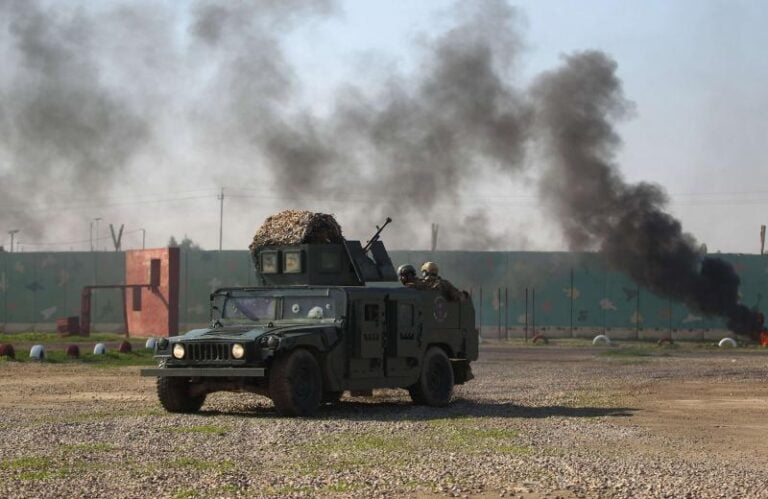
Three rockets crashed into a base at the Iraqi capital’s airport housing US troops Friday, security sources said, in the latest attack coinciding with tensions between Tehran and Washington.

One of the sources said the projectiles hit the section of the airbase occupied by Iraqi troops, who share the base with soldiers deployed by Washington as part of the US-led anti-ISIS coalition.

One Iraqi soldier was wounded, the source added.

It is the second attack on US interests in Iraq in less than a week. On Sunday, five rockets targeted another airbase north of the capital, wounding three Iraqi soldiers and two foreign contractors.

There was no immediate claim of responsibility for the strike, but Washington routinely blames Iran-linked Iraqi factions for such attacks on its troops and diplomats. Tehran is also seen by analysts as trying to exert pressure on the US to withdraw its troops from Iran and force concessions in the ongoing talks in Vienna about the Iranian nuclear programme.

Friday’s is the 23rd bomb or rocket attack against American interests in Iraq, including troops, the Baghdad embassy or Iraqi supply convoys to foreign forces, since US President Joe Biden took office in January.

Dozens of other strikes were carried out from autumn 2019 under the administration of former US president Donald Trump.

In mid-April, an explosives-packed drone slammed into Iraq’s Irbil airport in the first reported use of such a weapon against a base used by US-led coalition troops in the country, officials said.

In February, more than a dozen rockets targeted the military complex inside the same airport.

In the past year, two foreign contractors, one Iraqi contractor and eight Iraqi civilians have been killed in the attacks.

Read the complete article at: The Arab Weekly

Also Read: Pro-Iran militias in Iraq threaten Israeli interests

Newly Appointed Deputy Commander of IRGC Quds Force Warns Israel Surrounded by ‘Resistance Forces’

The “Zionist regime” is beset by Iran-allied “resistance forces,” which are pushing it ever-closer to its eventual downfall, Brig Gen Mohammad Reza Fallahzadeh, newly appointed deputy commander of the Islamic Revolutionary Guard Corps’ elite Quds Force, has said.

In a ceremony in Isfahan, Iran on Thursday paying tribute to his late predecessor, Mohammad Hejazi, who died of a heart attack on Sunday, Fallahzadeh praised the late commander as a modest “teacher and a model of morality,” recalled his war record during the 1980-1988 Iran-Iraq War, and vowed to continue on the path he set.

“Were it not for the command of generals such as Qassem Soleimani and Mohammad Hejazi in the occupied territories, the world-devouring America and the usurper Zionist regime would not have given a chance to the Muslim World, and would have invaded countries one after another,” Fallahzadeh suggested.

Fallahzadeh was appointed by Ayatollah Ali Khamenei – Iran’s supreme leader, on 19 April. He previously served as governor of Yazd province between 2007 and 2013. Fallahzadeh was deployed to Syria during that country’s war against a broad array of jihadist extremism in 2014, and was reportedly one of the five “main IRGC commanders” assisting Syrian forces during the 2014-2016 battle of Aleppo. He was wounded in 2016, prompting his redeployment back home. In 2017, he took part in the Syria peace talks in Astana, Kazakhstan as an advisor to then-Deputy Foreign Minister Hossein Jaberi Ansari.

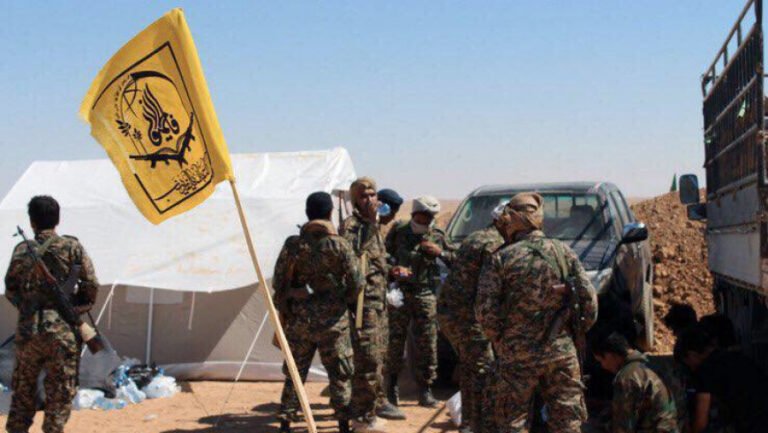
The Quds Force is an elite formation of the IRGC responsible for carrying out operations abroad. Forces from the unit have previously provided weapons and advisory assistance to the Syrian and Iraqi governments in their fight against Daesh (ISIS)* and other jihadist militias, and aided Lebanon’s Hezbollah militia during its war against Israeli forces during the 2006 Lebanon War. The US labeled the IRGC a terrorist organization in 2019, prompting Iran to designate the entire US military as terrorists in 2020.

Read the complete article at: Stroitel 1

Also Read: Who Is Mohammad Reza Fallahzadeh, the New Deputy Commander of Iran’s Qods Force?

Iran’s exportation of terrorism in Syria has cost billions of dollars

Tehran’s intervention in Syria alone has cost billions of dollars that it will likely never recoup, say experts on Iranian affairs.

Iran has been lending funds and providing aid to the regime of Syrian President Bashar al-Assad since the start of the conflict in 2011.

This has included a credit line of up to $7.6 billion, oil shipments worth $10.3 billion (between 2013 and 2018 alone), and other financial support, according to an Atlantic Council report published February 2020.

Iran’s support has been used to pay allied militiamen and deliver aid to the Assad regime, the report said.

Estimates of Iran’s actual military and economic spending in Syria alone range from $30 billion to $105 billion in the first seven years of the war alone, according to the report.

“It is not possible to ascertain the exact amount of money that Iran has spent in Syria from 2012 to date, but it is certainly more than the amount currently being circulated in the media and some reports, namely $30 billion,” Syrian lawyer Bashir al-Bassam told Al-Mashareq.

The higher amount is due to an overlap in aid, which has included direct support as well as credit, according to al-Bassam.

The lower amount stated by the media likely does not take into account Iran’s support of militias in Iraq and Lebanon, “which have played a prominent role in the Syrian war”, he noted.

Iran’s support for the Lebanese Hizbullah alone is an estimated annual $800 million, he said, noting that the money Iran has paid to Hizbullah and various Iraqi militias was also “invested” in the Syrian war.

All the main economic indicators in Iran show that the Islamic Republic is in a grave situation, with inflation skyrocketing, currency reserves plummeting, and growing discontent with the country’s leadership.

Public rage over economic and living conditions has reached a boiling point, and observers have cautioned that the next round of public protests might be far more violent than the November 2019 protests over the spike in fuel prices.

Read the complete article at: Al-Mashareq
Also read: IRGC jammed GPS during attack on Ukrainian Flight 752

IRGC jammed GPS during attack on Ukrainian Flight 752

Compelling evidence has surfaced that now suggests the shooting down of Ukrainian Flight 752 by the IRGC was in no way an error, but was a premeditated intentional act.


Many Canadian officials and victims’ family members have outright dismissed Iran’s investigation into the destruction of Ukrainian Airlines Flight PS752 after it concluded the aircraft was shot down due to human error.


Safety investigators from Iran’s civil aviation authority concluded the Boeing 737-800 passenger plane was shot down accidentally in January 2020 after being “misidentified” by an air defense unit as a “hostile target.”
All 176 passengers and crew members – including 138 people with ties to Canada – died in the crash.


Since day one of the crash Schomberg’s Andre Milne with Unicorn Aerospace has been investigating and his evidence is now being used by the Ukrainian Anti-Terrorist Prosecutor Ms. Koriniak to determine if there are grounds to take Iran to the World Court for Crimes Against Humanity for shooting down PS752.
Milne calls it a “premeditated” SAM attack on civilian Flight 752 after take off outside Tehran. The reason? To subvert an inevitable U.S. military counter strike against Iran by the creation of a spontaneous “human shield” made up of dozens of foreign government officials who all started flying into Iran 5 hours after the initial IRGC SRBM attack on U.S. and Canadian forces in Iraq.


The government of Iran, he argues, has subsequently attempted to cover up this “premeditated mass murder by concealing and or destroying evidence,” while attempting to blame the crash as a result of an engine fire.

After reading through the final report from the Aircraft Accident Investigation Board of the Islamic Republic of Iran, Milne discovered evidence that the IRGC deployed Electronic Warfare Jamming Technology in coordination with the TOR M1 Air Defense Unit that fired the two missiles that destroyed PS752.


“The IRGC simultaneously blacked out the broadcast frequencies of PS752’s Satellite GPS Navigation and Emergency Locator Transmitters and continued to jam until the IRGC was able to get to the crash site and physically disable the ELT that started broadcasting signals to the World’s Emergency Satellite Network the second the first missile struck PS752,” Milne said.

Read the complete article at: King Weekly Sentinel
Also read: Five Reasons Why The IRGC Should Be Abolished

UN atomic agency: Iran has installed additional advanced centrifuges at Natanz

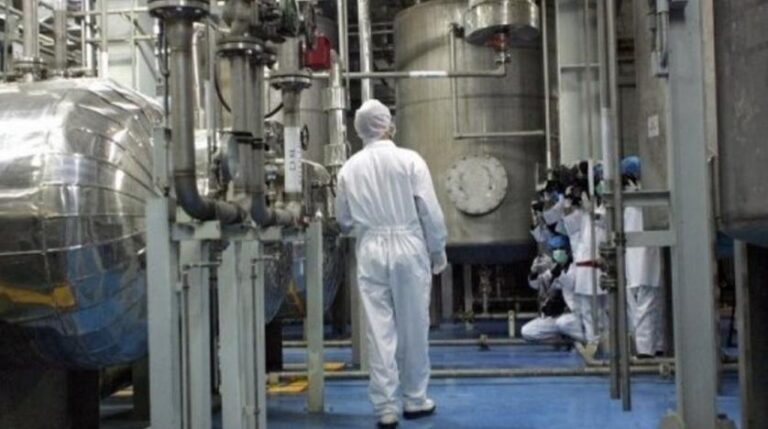
The UN atomic agency on Wednesday said Iran has installed additional advanced centrifuges at its Natanz nuclear plant, the site of a recent blast blamed on Israel.

According to a report by the International Atomic Energy Agency, seen by Reuters, Iran added two more cascades of IR-4 centrifuges and six clusters of IR-2m at its  underground facility. The IAEA also confirmed that some of the centrifuges were in use and said the Islamic Republic plans to install another four cascades of the IR-4 at Natanz.

“On 21 April 2021, the Agency verified at FEP that: … six cascades of up to 1,044 IR-2m centrifuges; and two cascades of up to 348 IR-4 centrifuges… were installed, of which a number were being used,” the report said.

On April 10, Iran announced that it started up far more advanced IR-6 and IR-5 centrifuges that enrich uranium more quickly, in a new breach of its undertakings under the 2015 nuclear agreement. It also said it has began mechanical tests on an even faster nuclear centrifuge: The output of Iran’s IR-9 centrifuge, when operational, would be 50 times quicker than the first Iranian centrifuge, the IR-1. Iran’s nuclear program is also developing IR-8 centrifuges.

Early the next morning, the site was hit in the blast that was declared by Iran to be Israeli sabotage. The explosion is said to have caused considerable damage to the Natanz plant, including its various uranium-enriching centrifuges.

In response to the attack, Iran said it began enriching a small amount of uranium up to 60 percent purity at the site — its highest level ever, and a short step from weapons-grade. The UN atomic agency confirmed the enrichment, saying it was being done in an above-ground facility at Natanz.

The head of the country’s atomic agency said Tuesday that power has been restored at Natanz and uranium enrichment activities there have been renewed. Ali Akbar Salehi, head of the Atomic Energy Organization of Iran, was cited by the official IRNA news agency as saying that “the cables damaged in the accident were speedily replaced and… the main power supply to the Natanz enrichment facility [is] now connected to the grid.”

Read the complete article at: Times of Israel

Also Read: Iran says it will enrich uranium to 60 percent purity after Natanz attack

Iran conditions nuclear talks on US removing IRGC’s terror designation

Serious differences persist between the United States and Iran over how they might resume compliance with the 2015 nuclear deal despite making some progress in their latest indirect talks in Vienna, a senior US State Department official said Wednesday.

The talks were likely to require several rounds, their outcome remained uncertain, and they were not near a conclusion, the official told reporters in a conference call.

The main differences are over what sanctions the US will need to remove and what steps Iran will need to take to resume its obligations to curb its nuclear program, said the official, who spoke on condition of anonymity.

“There still are disagreements and, in some cases, pretty important ones,” he said. “We are not near the conclusion of these negotiations. The outcome is still uncertain. We have made some progress.”

Earlier, the European parties to the Joint Comprehensive Plan of Action said they had seen progress in the first two rounds of indirect US-Iran talks, but there were still major hurdles.

Iran and world powers – Britain, China, France, Germany, and Russia – have been meeting in Vienna to hammer out steps that would be needed if the agreement, which was abandoned by former US President Donald Trump in 2018, is to be revived.

The talks will resume next week. A US delegation is in a separate location in Vienna, enabling representatives of the five powers to shuttle between both sides because Iran rejected direct talks.

The central issues are which US sanctions imposed by Trump since withdrawing would need to be removed and what steps the Islamist republic would have to take to rein it its subsequent breaches of the pact’s curbs on its uranium enrichment capacity.

Read the complete article at: Israel Hayom

Also Read: Delegate: Progress in Iran nuclear talks but end ‘far away’

Five Reasons Why The IRGC Should Be Abolished

PDF Version
Farsi Translation (ترجمه فارسی)

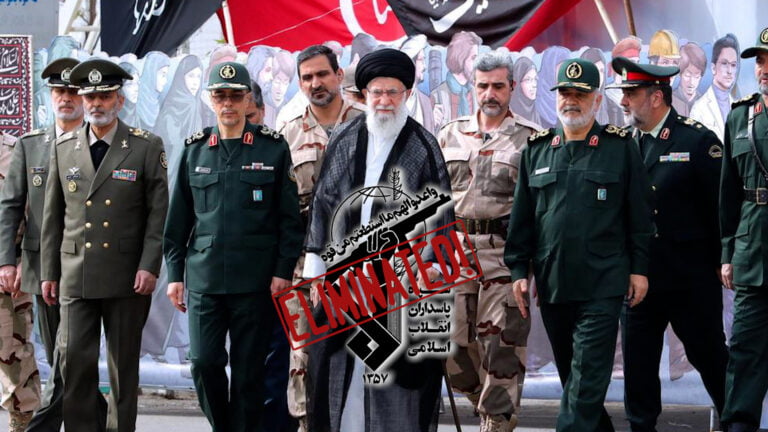
Five reasons why the Islamic Revolutionary Guards Corps, a force that was created with the intention of defending the so-called Islamic Revolution, but has only produced national discredit and doomed the future of Iran, should be abolished and its few honest serving forces, if any, should be merged with Iran’s existing official and legal armed forces:

https://www.youtube.com/watch?v=yad2tBI4TTg

1. Absolute incompetency in preventing the theft of confidential nuclear and military documents, failure to prevent the assassination of scientists and elites by hostile countries, unrestricted access to personal information, unsupervised breach of citizens’ privacy, censorship of news, imposition of Internet restrictions and obstruction of the free flow of information through the control of telecommunication and Internet companies.


2. Destruction of Iran’s economic infrastructure and foundation worth hundreds of billions of dollars in the last 30 years with the aim of control over the country’s economic system as a shadow government with influence over ministries, parliament, banks and economic arteries of the nation such as ports, customs and borders.

3. The looting and plundering of Iran’s wealth and natural resources which has been wasted on warmongering in countries such as Iraq, Lebanon, Syria, Yemen and countries alike. An act that has had no benefit for the nation whatsoever but has instead continued the 8 year long imposed Iran-Iraq war for decades, without a cent received as compensation! As Iranians live in poverty and misery throughout the nation, countless schools lack basic heating systems, and minorities in many areas are deprived of clean drinking water, people of Lebanon have rebuilt their houses, received thousands of dollars per month for several years along with food packages, and even enjoy free health care, all of which has been provided from the pockets of the Iranian people without their knowledge or consent. In Yemen and Syria, billions of dollars are still being spent on Iran’s proxy wars and militias, massacring the people of both nations.

4. Spending billions of dollars to strengthen its power and influence inside and outside of Iran. The IRGC only thinks of having control in Iran and other countries of the region through its extraterritorial operations arm, the Quds force, recognized as a terrorist organization by the US. In order to achieve this sinister goal, they have sacrificed thousands of Iranian and non-Iranian lives and have deployed thousands of Iranian mercenaries in Syria, Yemen and Iraq.

5. Providing grounds for the colonization and exploitation of Iran by Russia and China. The IRGC, created to protect the ideals of the “Islamic Revolution” which were “independence, freedom, and the Islamic Republic”, axed the roots and set fire to all three foundations of the Islamic Revolution. They sold independence to Russia and China, imprisoned, tortured, and executed freedom, and struck so hard at the roots of Islam and ancient religious beliefs of Iranians, that people increasingly hate Islam and the clergy, and even those with little religious belief left in them, see politics and the rule of religion as detrimental to the basic tenets of religion.

The incompetency of the Islamic Revolutionary Guards, which we summarized, has brought nothing but poverty, misery, forced migration and the likes to the Iranian people. Such incompetent and traitorous forces must be abolished and tried in a public court for all the crimes they have committed throughout the past 4 decades.

Author: Josef Namin

Also read: The Vital Role of IRGC in the Iran-China 25-year Cooperation Agreement

U.S. says Iran giving Yemen’s Houthis ‘significant’ and ‘lethal’ support

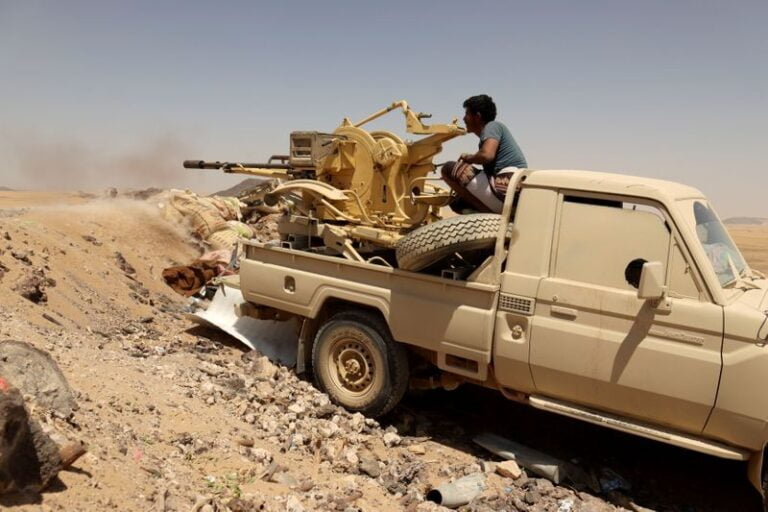
Iran’s support for Yemen’s Houthi movement is “quite significant and it’s lethal,” U.S. special envoy on Yemen Tim Lenderking said on Wednesday, as he called a battle for Yemen’s gas-rich Marib region the single biggest threat to peace efforts.

Lenderking told U.S. lawmakers that Iran supports the Houthis in several ways, including through training, providing lethal support and helping them “fine tune” their drone and missile programs.

“Unfortunately all of this is working to very strong effects as we see more and more attacks on the Kingdom of Saudi Arabia – and potentially other countries – more accuracy and more lethality. So this is a great concern to us,” Lenderking told a hearing of the U.S. House of Representatives Foreign Affairs Committee.

“Iran’s support to the Houthis is quite significant, and it’s lethal,” Lenderking said.

Iran’s mission to the United Nations in New York did not immediately respond to a request for comment on Lenderking’s remarks. Iran has denied supporting the Houthis.

“It’s been, frankly, very difficult to intercept ships,” Lenderking said. “We need our international partners to join us. … We need countries like Oman to help make sure that their border remains close to any of this type of traffic from Iran.”

A Saudi Arabia-led military coalit-ion intervened in Yemen in 2015 after the Iran-aligned Houthi group ousted the country’s government from the capital Sanaa. The Houthis have said they are fighting a corrupt system.

Since taking office in January, U.S. President Joe Biden has made Yemen a priority and appointed Lenderking to help revive stalled U.N. efforts to end a conflict widely seen as a proxy war between rivals Saudi Arabia and Iran.

“We would welcome Iran playing a constructive role, if they are willing to do so. We have not seen any indication of that,” Lenderking said.

Fighting has intensified in recent days as the Houthis push their offensive to take Marib, which if successful would strengthen the movement’s hand in any future political negotiations.

Read the complete article at: WHBL

Also Read: Iran continues to supply Houthis with weapons: Yemen minister

IRGC drones capture strikingly precise footage of US aircraft carrier

0

The Islamic Revolution Guards Corps (IRGC) has released strikingly precise and close footage of an American aircraft carrier captured by the elite force’s drones during an overflight of the vessel in the Persian Gulf.

The Corps released the footage on Wednesday as means of vividly portraying its state-of-the-art advancements in the field of drone technology.

The video recorded by an apparently four-strong drone squadron, provides real-time and remarkably close details of every warplane as well as other military aircraft and equipment deployed on the carrier.

The drones also captured what appears to be a support vessel sailing alongside the main vessel.

The IRGC footage shows UAVs of various makes, including the ones used for recording the video of the carrier, either taking off or roaring by across the sky.

The second part of the footage is entitled to precision attacks by the Corps’ kamikaze drones as they are hitting various targets, including a tank.

The UAVs are seen slamming into the targets with surgical accuracy and smashing them into smithereens.

This is not the first time, the Corps, which is Iran’s elite defense force, flaunts its achievements and prowess in the area.

Last September, it released images of a US strike group near the Strait of Hormuz in the same strategic waters.

The Corps and the Iranian Army fielded their drones alongside numerous other defensive means at their disposal in a set of 20 countrywide military exercises in January.

The back-to-back drills went underway as the US and its allies had stepped up their provocative maneuvers in the Persian Gulf.

US admits: Iran’s drones beat US air superiority

Meanwhile, the head of the US Central Command, which oversees the American forces stationed in the West Asia region, revealed to the US Congress that the Iranian drone power had stripped the American air force, of what the commander called, its upper hand in the world.

Read the complete article at: Press TV

Also Read: Washington orders US aircraft carrier to remain in Middle East amid Iranian threats