Home Blog Page 86

World cannot underestimate Iran’s involvement in Yemen

Observers recognize that US President Joe Biden’s administration, unlike previous ones, does not place Middle East crises as a high priority. This is partly because this administration is more focused on domestic issues than anything else.

It is specifically turned to tackling China’s growing global influence. But President Biden, who since the beginning of his presidential term has wielded the slogan “America is back,” is certainly well aware of the link between stabilizing Yemen on the one hand and the Iranian ayatollahs’ stranglehold on that Arab country on the other.

Comments by US Special Envoy to Yemen Tim Lenderking were a clear and vocal recognition of the ayatollahs’ role in stoking the Yemeni crisis by supporting the Houthi movement.

 
Lenderking told the House Foreign Affairs Committee that “Iran’s support to the Houthis is quite significant, and it’s lethal” and that it helps them “fine-tune” their drone and missile programs. He sees no sign that Iran is supporting a political solution in Yemen.

“What I see is continued aiding and abetting an army of Houthis by the Iranians so that they can continue attacking Saudi Arabia, and unfortunately those attacks have risen quite strongly in the last couple of months.”

This conclusion, reached by the US envoy upon taking office, is meant to shape a US position that reflects the Biden administration’s commitment to a political settlement of this crisis. The ayatollahs have abandoned their role in supporting the Houthis. They are now talking about military activities to prop up the Houthis against Saudi Arabia.

Gen. Rostam Ghasemi, economic assistant to the commander of the Iranian Revolutionary Guard Corps, said in an exclusive interview with RT that the IRGC provided weapons to the Houthis at the outbreak of the war in Yemen. The IRGC has trained elements of these forces in weapons manufacturing.

Read the complete article at: Israel Hayom

Also Read: U.S. says Iran giving Yemen’s Houthis ‘significant’ and ‘lethal’ support

underestimate underestimate
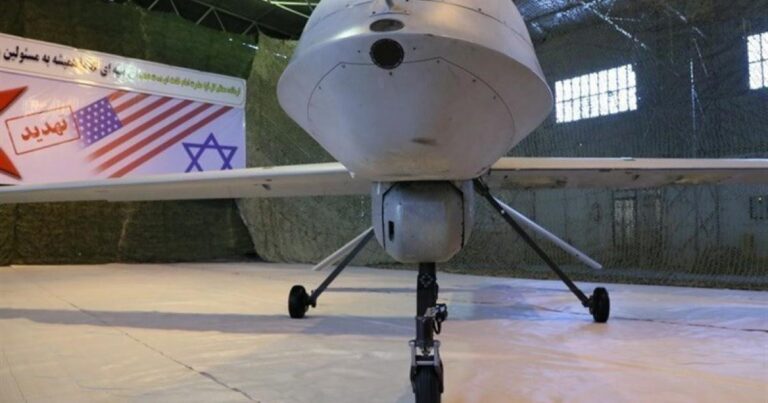
U.S. And Israel Concerned Over Growing Drone Threat From Iran

0

The U.S. and Israel will establish an inter-agency working group “on the growing threat of Unmanned Aerial Vehicles [UAVs] and Precision Guided Missiles produced by Iran and provided to its proxies in the Middle East Region,” according to a statement from the White House following bilateral talks.

The threat from such drones was underlined by an apparent drone strike on a Syrian oil tanker last week. The latest Iranian-supplied drones can hit targets more than 2,000 kilometers away. New Iranian technology unveiled on Sunday indicates they are shifting to an even higher gear.

Isolated from international suppliers, Iran has become a significant drone developer in its own right, often using technology reverse-engineered from captured U.S. drones. Iranian technology has powered the Houthi rebels long-range drone campaign against Saudi Arabia, including the dramatic mass drone strike which set the giant Abqaiq oil processing facility ablaze.

On Sunday, the Iranian Army Ground Force showcased key new technologies to upgrade their drone force. These demonstrate just how rapidly the threat is evolving – perhaps faster than the defensive measures to counter them.

The Ranesh-1 (Propulsion-1) micro turbojet engine will supersede propeller engines on a range of drones and cruise missiles. While such engines are available on the international market, they are strictly controlled and cannot be easily imported. Iran-backed Houthi rebels in Yemen currently use a variety of Chinese and German power plants for their propeller-driven Samad-3 drones. The Ranesh-1 promises higher speed and even longer ranges.

Many forces are beefing up their air defenses to tackle drones and the Saudis now seem to be shooting down the majority sent against them. The new Taha 1400 is a drone-mounted electronic warfare system which specifically targets surveillance radar and is claimed to cover “a large operational area.” It can be retrofitted easily to drones, and could prevent an attacking force being spotted.

Read the complete article at: Forbes

Also Read: IRANIAN REVOLUTIONARY GUARDS TESTED COMBAT DRONES IN SYRIA’S HOMS – REPORT

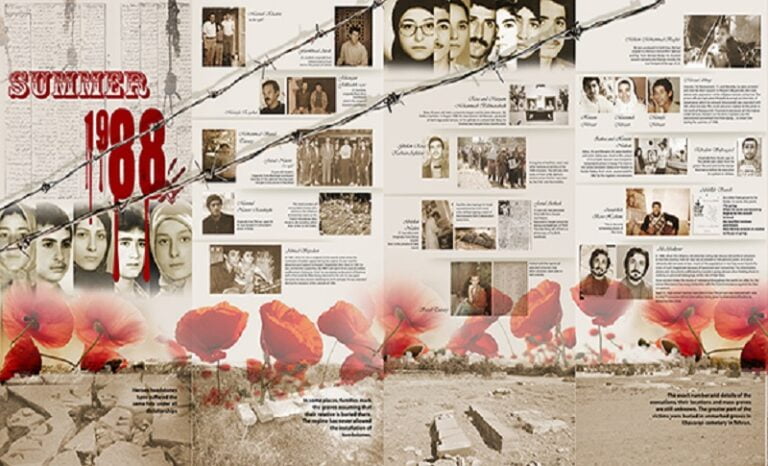
Iran Regime to Destroy 1988 Massacre Grave

0

The National Council of Resistance of Iran (NCRI), and the People’s Mujahedin of Iran (PMOI / MEK Iran), reported that the Iranian regime is set to destroy the Khavaran burial site in Tehran, which is one of several locations that they secretly buried the victims of the 1988 massacre of 30,000 political prisoners.

The plan is to get rid of the evidence for one of the worst crimes against humanity since World War Two; something that the regime has already done at several mass graves, including Mashhad’s Behesht-e Reza Cemetery and Tabriz’s Vadi Rahmat Cemetery. In Ahvaz, they even poured cement on top of a mass grave and now plan to build a road over the top.

But why now? Well, it could be that regime officials complicit with the massacre are terrified of the crimes being uncovered and them being punished in an international court. After all, the case of the 1988 massacre is being closely monitored by many international experts, with six United Nations experts demanding answers last September. Not that the UN experts got their answers, Iran has been rejecting or ignoring calls for information since 1991.

The massacre, termed an “ongoing crime against humanity” by Amnesty International in 2018, was orchestrated by many regime officials who still hold power today; most prominently current Judiciary Chief Ebrahim Raisi and current Justice Minister Alireza Avai, who served on the “Death Commissions” responsible for sending prisoners to be hanged. With Raisi a potential candidate for the presidential elections in June, it’s easy to see why the regime would want to destroy evidence of his crimes.

Repression and Appeasement

The Iranian Resistance wrote: “The regime has only managed to maintain its hold on power through brutal repression, genocide, and the massacre of opposition members… For three decades, the 1988 massacre was overshadowed by the appeasement policy of western governments toward the Iranian regime.”

Read the complete article at: Stop Fundamentalism

Also Read: The 1988 Massacres Still Haunt the Islamic Regime in Iran

US Navy fired warning shots at IRGC vessels in Gulf

0

United States says Iranian IRGC vessels came close to US Navy and Coast Guard ships on Monday evening.

The United States Navy has said it fired warning shots at vessels from Iran’s Islamic Revolutionary Guard Corps (IRGC) in the Gulf, accusing the IRGC vessels of coming close to US ships in international waters.

In a statement on Tuesday, the US Fifth Fleet said three IRGC vessels came close to a US Navy patrol ship and a US Coast Guard patrol boat on Monday evening.

“The U.S. crews issued multiple warnings via bridge-to-bridge radio and loud-hailer devices, but the IRGCN vessels continued their close range maneuvers,” the statement reads.

“The crew of [US navy patrol ship] Firebolt then fired warning shots, and the IRGCN vessels moved away to a safe distance from the U.S. vessels.”

It is the second encounter between US navy and Iranian naval forces in Gulf waters this month, after about a year without any such incidents.

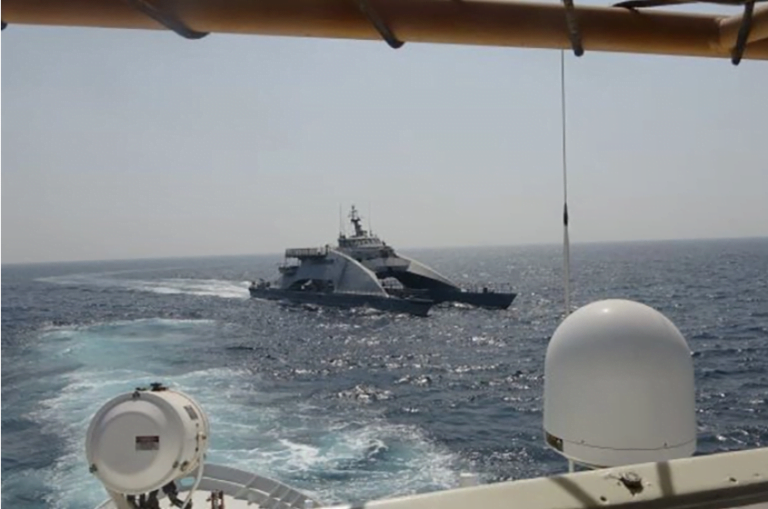
Earlier this week, the US Navy released footage dated April 2 showing a ship commanded by the IRGC cut in front of the USCGC Monomoy, causing the US Coast Guard vessel to come to an abrupt stop with its engine smoking.

Iran did not immediately acknowledge that encounter, which resulted in no injuries or damage.

The closest the Iranian fast inshore attack craft came to the American ships was 204 feet (62 metres) during the incident on Monday evening.

Iran and the US are engaged in ongoing indirect talks for a possible return to the 2015 Iranian nuclear deal as of now.

Former US President Donald Trump unilaterally withdrew from the landmark accord in 2018 in favour of a “maximum pressure” strategy against Tehran, which increased tensions between the two nations.

Read the complete article at: Al Jazeera
Also read: Similarities Between Iran’s IRGC and Al-Qaeda, Daesh

Similarities Between Iran’s IRGC and Al-Qaeda, Daesh

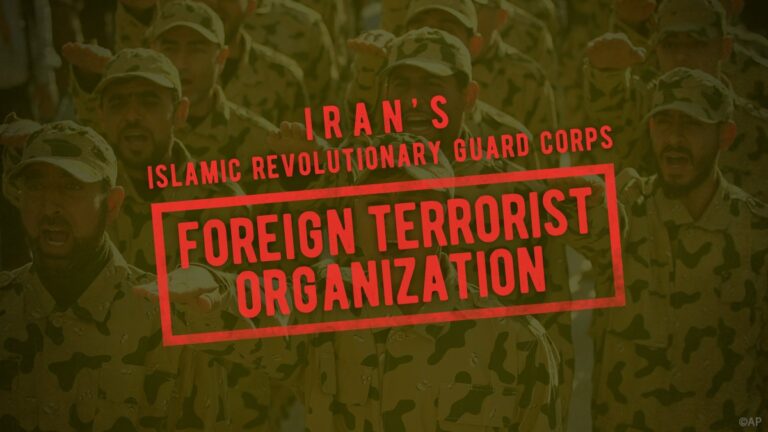
Western governments and international bodies, including the EU, should designate Iran’s IRGC (Islamic Revolutionary Guard Corps) as a foreign terrorist organization, the London-based Tony Blair Institute for Global Change said in a report published on Tuesday.

The IRGC acts as an “institutionalized militia,” and uses its vast resources to spread a “mission of jihad” through an “ideological army” of recruits and proxies, said the report, titled “Beyond Borders: The Expansionist Ideology of Iran’s Islamic Revolutionary Guard Corps.” 

The IRGC’s interpretation of Islam bears a “striking” resemblance to the extremist teachings of Sunni groups such as Al-Qaeda and Daesh, the report added.

The institute published its findings on the back of work to translate training manuals, used and freely distributed by the IRGC online, into English from Farsi for the first time. 

Its analysis of the material uncovered what it called a “formalized system of indoctrination that seeks to radicalize its recruits with an extremist Islamist ideology.”

 Tony Blair, former UK prime minister and executive chairman of the institute, said the international community needs to recognize the role that the IRGC plays in spreading terrorism and extremism.

“The IRGC is not simply an arm of the state, it is a body dedicated to advancing an ideology based on an extreme and intolerant distortion of Islam. It is time we recognized this formally,” he said.

“Extremist ideology gives rise to violent extremism. Defeating it, and calling out those groups and organizations which promote it, is a vital part of a peaceful and prosperous future for the region.”

The report found that the IRGC’s indoctrination process includes promoting a universal Shiite Islamist worldview that it said is “violent and absolutist,” and that “casts both non-Muslims and regime opponents (including Muslims) as enemies of Islam and calls for armed jihad against them.”

The report said the IRGC exists as a way of life in the way it spreads edicts on the ideal structure of society, including promoting the subjugation of women.

Read the complete article at: Arab News
Also read: IRGC jammed GPS during attack on Ukrainian Flight 752

Iran’s IRGC vessels Harass US ships in Persian Gulf

0

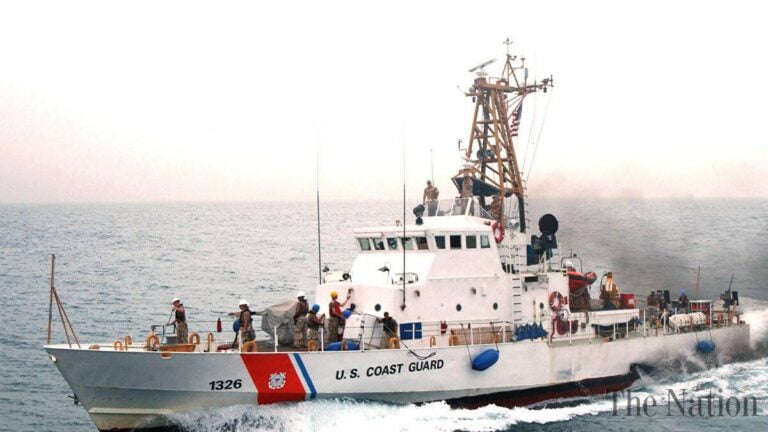
Boats from Iran’s Islamic Revolutionary Guard Corps harassed US Coast Guard ships earlier this month in the Persian Gulf, the first such altercation in a year, the Wall Street Journal reported on Monday.

US Navy officials confirmed to the newspaper that three fast attack crafts and one support vessel known as Harth 55 swarmed two Coast Guard ships while they were patrolling international waters in the southern portion of the Persian Gulf.

Officials reportedly said the larger vessel repeatedly crossed in front of the bows of the Monomoy and the Wrangell, coming as close as 70 yards away. According to the report, this prompted the Wrangell to engage in defensive maneuvers in order to prevent a collision.

As the Iranian ships began to buzz them, the American crews gave several alerts over a three-hour span. According to Cmdr. Rebecca Rebarich, a spokeswoman of the Navy’s Fifth Fleet, which oversees the area, the crew of the Harth 55 responded to the bridge-to-bridge radio queries, but the ship continued the dangerous maneuvers.

The incident, which has not been officially disclosed, occurred on April 2 as the United States and Iran are conducting indirect negotiations on the resumption of the 2015 nuclear agreement.

The US-Iranian bilateral relations plunged into new tensions amid blurred prospects for the negotiation process on the Iranian nuclear program, following the US withdrawal from the 2015 Joint Comprehensive Plan of Action (JCPOA) deal in 2018. The decision to pull out of the agreement and enforce sweeping sanctions on Iran prompted Tehran to resume the enrichment of uranium at its nuclear facilities.

The JCPOA is back on the table, with working groups spearheading the diplomatic drive to revive the beleaguered agreement now that the Biden-Harris Administration is in charge of US foreign policy.

Read the complete article at: The Nation

Also Read: Iranian Spy Ship Attacked in Red Sea

Iranian Spy Ship Attacked in Red Sea

0

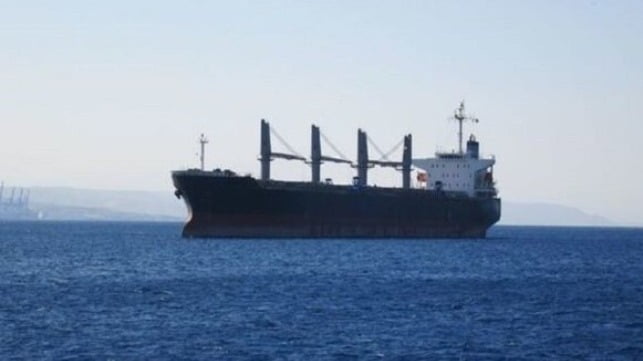
On Wednesday, Iran’s foreign ministry reported an attack on the Iranian-flagged freighter Saviz in the Red Sea. The Saviz has long been anchored off Yemen for what Iran describes as a mission to “provide maritime security along the shipping lines and to fight pirates,” but many defense analysts believe that the ship is a base of operations for the Islamic Revolutionary Guard Corps (IRGC).

“[Saviz] was slightly damaged in an explosion at the Red Sea near the coasts of Djibouti on Tuesday around 0600 local time,” Iranian foreign ministry spokesman Saeed Khatibzadeh confirmed on Wednesday. “Its origins and causes are under investigation.”

The IRGC-affiliated news outlet Tasnim identified the blast as a mine attack, but official Iranian outlets have not yet accused any party of involvement.

An American official told the New York Times that Israel has notified the U.S. government that Israeli forces attacked the Saviz. The vessel was hit below the waterline at about 0730 hours Tuesday, the official said.

U.S. Central Command has confirmed that U.S. forces played no role in the strike.

The attack came on the day that Iranian diplomats began indirect talks with the U.S. and five other world powers on a resumption of the Joint Comprehensive Plan of Action (JCPOA), better known as the Iran nuclear deal. Iran’s lead negotiator, Abbas Araghchi – who played a key role in creating the JCPOA in 2015 – described the initial meeting as “constructive.”

Israel firmly opposes the JCPOA, as Prime Minister Benjamin Netanyahu emphasized in a speech on Tuesday. “We must not go back to the dangerous nuclear deal with Iran, because a nuclear Iran is an existential threat to the state of Israel and a great threat to the security of the entire world,” he said.

Read the complete article at: Maritime Executive

Also Read: U.S. says Iran giving Yemen’s Houthis ‘significant’ and ‘lethal’ support

Iran Is a Threat to Swedish National Security

In the recently published Swedish Security Service Yearbook 2020, which discusses the main security and intelligence challenges faced by Sweden over the past year, Iran is mentioned 14 times. The Islamic Republic, together with Russia and China, is a direct threat to Swedish national security.

The Swedish Security Service, Säkerhetspolisen, publishes an annual yearbook containing information on its most important areas of operation: counterintelligence, countersubversion, counterterrorism, protective security, and dignitary protection. The yearbook discusses the most serious security and intelligence threats to face Sweden over the previous year and the challenges it will face in the future.

The Swedish Security Service Yearbook 2020 names three countries as the most active security and intelligence threats in Sweden: Russia, China, and Iran. Säkerhetspolisen devotes 25 of the report’s 86 pages to an examination of the ways these three countries incessantly, and quite effectively, undermine Swedish national security.

Iran is mentioned 14 times in the report, which states that the Islamic Republic has become highly aggressive in its operations on Swedish soil. The report says that while Iran conducts espionage against Swedish industry, research, and universities, its prime espionage target is Iranian opposition groups in Sweden.

Sweden has become something of a base for Iranian operatives, and espionage as well as terrorist attacks have been planned from Swedish territory. This unfortunate state of affairs was put on display recently when Iranian diplomat Assadollah Assadi was sentenced by a Belgian court to 20 years’ imprisonment for terrorism.

Assadi, who was third secretary at the Iranian embassy in Austria, was arrested by German security in 2018 a few days after he handed over explosive material to an Iranian couple in Belgium. The material was intended to be used at a large planned rally in Paris to assassinate opponents of the mullahs’ regime in Iran. While Assadi was stationed in Austria and his crime was connected to France, he is closely linked to Sweden.

Read the complete article at: Besa Center

Also Read: Iran: Lord Alton Calls on UK Government to Hold Iran Responsible for its Terrorism on European Soil

Uganda Deports Iranian Intelligence Officer

Ugandan security and intelligence services working closely with their Israeli counterparts interdicted efforts by elements of Iran’s Islamic Revolutionary Guard Corps (IRGC) to operate in the country, the Kampala Post has learnt.

The IRGC is a very large component of the Iranian Armed Forces founded after the Iranian Islamic Revolution on 22 April 1979.

It is charged with guarding Iran’s Islamic republic political system.

Current estimates place its strength at 250,000 military personnel – ground, aerospace and naval forces.

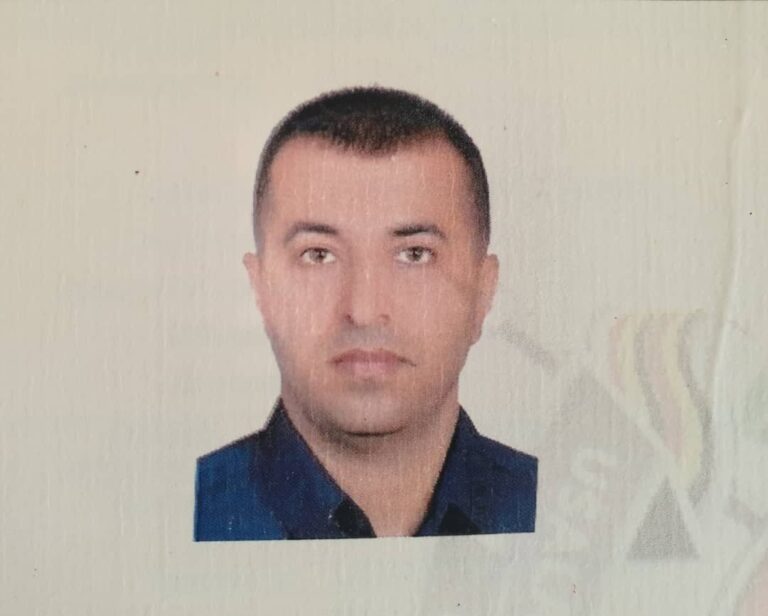
Ugandan security and intelligence services apprehended and later deported the Iranian national Salman Salehi Gheshmi on 1st of April 2021.

Mr.Gheshmi confessed that he had been sent by certain officers of the IRGC to undertake an operation in Uganda.

The Kampala Post has learnt that the sensitive mission seemed to involve compromising a joint Ugandan-Israeli operation. However, utilising its vast intelligence capabilities Uganda was able to quickly locate and apprehend Mr.Gheshmi. This website understands that the joint Ugandan-Israeli intelligence operation has generated a lot of valuable information.’

Read the complete article at: Kampala Post

Also Read: In a Dangerous Game of Cat and Mouse, Iran Eyes New Targets in Africa

The IRGC is a very large component of the Iranian Armed Forces founded after the Iranian Islamic Revolution on 22 April 1979. It is charged with guarding Iran’s Islamic republic political system. Current estimates place its strength at 250,000 military personnel – ground, aerospace and naval forces. Ugandan security and intelligence services apprehended and later deported the Iranian national Salman Salehi Gheshmi on 1st of April 2021. Mr.Gheshmi confessed that he had been sent by certain officers of the IRGC to undertake an operation in Uganda. The Kampala Post has learnt that the sensitive mission seemed to involve compromising a joint Ugandan-Israeli operation. However, utilising its vast intelligence capabilities Uganda was able to quickly locate and apprehend Mr.Gheshmi. This website understands that the joint Ugandan-Israeli intelligence operation has generated a lot of valuable information.’

In Leaked Audio, Iran’s Foreign Minister Criticizes Influence Of Revolutionary Guards

0

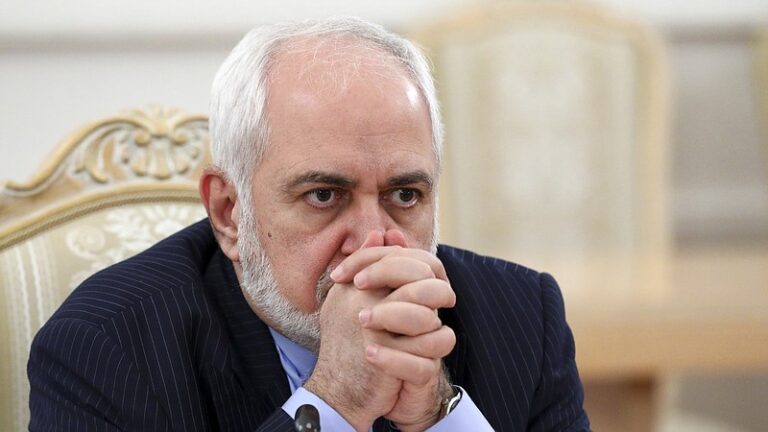
Leaked excerpts from an interview with Iran’s foreign minister have ignited controversy inside the Islamic Republic. The comments by Foreign Minister Mohammad Javad-Zarif were never intended to be broadcast, but officials say more than three hours of the seven-hour interview were leaked on Sunday.

The excerpts first appeared on Iran International, a London-based channel that Tehran views as a hostile, pro-Saudi Arabia outlet.

Several of Zarif’s remarks portrayed Iranian diplomacy as consistently taking a back seat to the interests of the military, especially the Islamic Revolutionary Guards Corps (IRGC).

Zarif even took on the late General Qassem Soleimani, who was assassinated in a targeted American air strike in January of last year, and is revered as a national hero in Iran.

Zarif told the interviewer, economist Saeed Laylaz, that Soleimani on multiple occasions dictated what Zarif should try to accomplish in negotiations.

“I sacrificed diplomacy for the battlefield,” Zarif is quoted as saying. “Every time I went to negotiate, Commander Soleimani would tell me to request this and that.”

Zarif added, “In the Islamic Republic, the battlefield rules.”

Attempt to Undermine Nuclear Agreement

Zarif also accused Soleimani of at times working against the country’s diplomats — including working with Russia to undermine the 2015 nuclear agreement with world powers, known as the Joint Comprehensive Plan of Action (JCPOA). It was considered the crowning foreign policy achievement of President Hassan Rouhani’s government, until then-President Trump pulled the U.S. out of the deal and imposed harsh sanctions on Iran.

Zarif also disputed a claim frequently made by hardliners, that Soleimani had played a key role in convincing Russian leader Vladimir Putin to intervene in the Syria conflict on the side of the Bashar al-Assad government. Zarif said Putin had already made up his mind to intervene.

A foreign ministry spokesman did not dispute Zarif’s words, but said they had been “taken out of context,” and did not reflect official policy.

Read the complete article at: KPBS

Also Read: Qassem Soleimani’s Fall And The Battle Inside Iraq To Come – Analysis