Home Blog Page 94

Iranian-backed Houthis attack Saudi Arabia with drones again

0

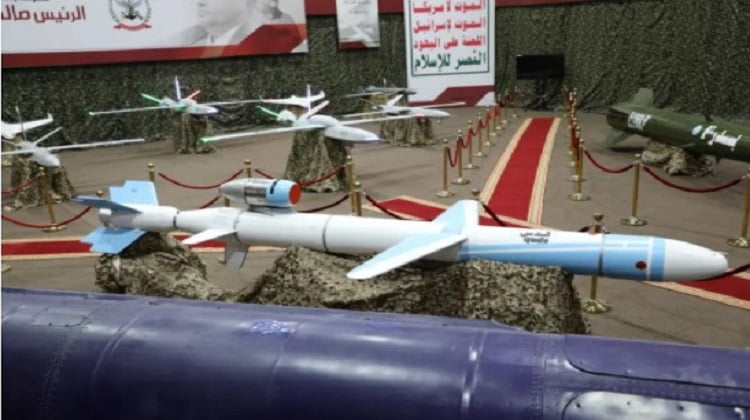
In what has become a weekly occurrence in recent months, the Iranian-backed Houthis in Yemen attacked Saudi Arabia with kamikaze drones on Monday night. The Houthis told Iranian media about the attack; a form of bragging, designed to showcase their abilities to their Tehran-based IRGC handlers. 

According to the Tasnim News Agency, Yahya Sari, the spokesman for the Houthi “Yemeni Armed Forces,” announced the drone operation for military purposes at Abuha Airport and King Khalid Air Base in Khamis Mushait.

“He announced that the operation was carried out with three Kasef K2 UAVs and the operation was very accurate,” the report notes. “This operation was carried out in order to legitimately defend the crimes of the aggressors and to continue the siege of our country,” the Houthis said.

Read the complete article at: The Jerusalem Post


In what has become a weekly occurrence in recent months, the Iranian-backed Houthis in Yemen attacked Saudi Arabia with kamikaze drones on Monday night. The Houthis told Iranian media about the attack; a form of bragging, designed to showcase their abilities to their Tehran-based IRGC handlers.  According to the Tasnim News Agency, Yahya Sari, the spokesman for the Houthi “Yemeni Armed Forces,” announced the drone operation for military purposes at Abuha Airport and King Khalid Air Base in Khamis Mushait. “He announced that the operation was carried out with three Kasef K2 UAVs and the operation was very accurate,” the report notes. “This operation was carried out in order to legitimately defend the crimes of the aggressors and to continue the siege of our country,” the Houthis said. announced the drone operation for military purposes at Abuha Airport and King Khalid Air Base in Khamis Mushait. “He announced that the operation was carried out with three Kasef K2 UAVs and the operation was very accurate,” the report notes. “This operation was carried out in order to legitimately defend the crimes of the aggressors and to continue the siege of our country,” the Houthis said.

Arab ministers consider ways to tackle Iran’s interference in region

The Arab Ministerial Quartet Committee met on Wednesday to discuss developments in the crisis with Iran and ways to address interference by Tehran in the internal affairs of Arab countries.

Osama bin Ahmed Naqli, Saudi Arabia’s ambassador to Egypt and permanent representative to the Arab League, represented the Kingdom on behalf of Foreign Minister Prince Faisal bin Farhan.

The meeting, which took place in Cairo on the sidelines of the 155th session of the Arab League Council, was chaired by UAE Minister of State Khalifa Shaheen Al-Marar. The other participants included Arab League Secretary-General Ahmed Aboul Gheit, Egyptian Foreign Minister Sameh Shukry, and Bahrain’s Assistant Minister of Foreign Affairs Abdullah Al-Dossary.

They discussed “ways to enhance cooperation and joint coordination to confront Iranian terrorist practices and combat its terrorist arms that spread havoc and destruction, disrupt development and prosperity, and threaten regional and international security and stability,” the Saudi Press Agency reported.

Read the complete article at: Arab News

The Arab Ministerial Quartet Committee met on Wednesday to discuss developments in the crisis with Iran and ways to address interference by Tehran in the internal affairs of Arab countries. Osama bin Ahmed Naqli, Saudi Arabia’s ambassador to Egypt and permanent representative to the Arab League, represented the Kingdom on behalf of Foreign Minister Prince Faisal bin Farhan. The meeting, which took place in Cairo on the sidelines of the 155th session of the Arab League Council, was chaired by UAE Minister of State Khalifa Shaheen Al-Marar. The other participants included Arab League Secretary-General Ahmed Aboul Gheit, Egyptian Foreign Minister Sameh Shukry, and Bahrain’s Assistant Minister of Foreign Affairs Abdullah Al-Dossary. They discussed “ways to enhance cooperation and joint coordination to confront Iranian terrorist practices and combat its terrorist arms that spread havoc and destruction, disrupt development and prosperity, and threaten regional and international security and stability,” the Saudi Press Agency reported. Arab ministers Arab ministers

The Iran-Russia Cyber Agreement and U.S. Strategy in the Middle East

0

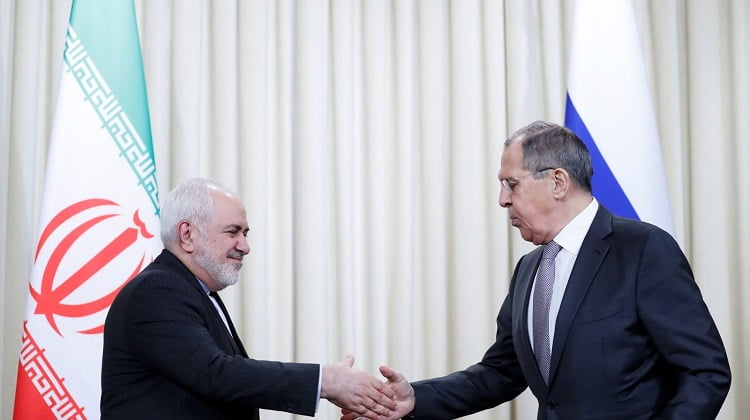
This January, Russian Foreign Minister Sergey Lavrov and his Iranian counterpart Javad Zarif signed a cooperation agreement on cybersecurity and information and communications technology (ICT). The agreement includes cybersecurity cooperation, technology transfer, combined training, and coordination at multilateral forums, like the United Nations.

Although the cooperation with Moscow outlined in the agreement could upgrade Tehran’s offensive cyber capabilities, the agreement is largely defensive, motivated by the countries’ shared animus toward the United States and U.S. influence in the Middle East as well as a desire to reduce dependence on Western technology. There are limits, however, to how closely the two sides can be expected to work together.

The relationship between Russia and Iran has long suffered from mutual suspicion, ideological differences, and competition. Moreover, in the past, Russian and Iranian operators have operated at cross purposes. For example, in October 2019, British and U.S. officials revealed that the Russian threat actor Turla had hijacked Iranian hacking infrastructure as part of a false-flag operation.

Read the complete article at: CFR


This January, Russian Foreign Minister Sergey Lavrov and his Iranian counterpart Javad Zarif signed a cooperation agreement on cybersecurity and information and communications technology (ICT). The agreement includes cybersecurity cooperation, technology transfer, combined training, and coordination at multilateral forums, like the United Nations. Although the cooperation with Moscow outlined in the agreement could upgrade Tehran’s offensive cyber capabilities, the agreement is largely defensive, motivated by the countries’ shared animus toward the United States and U.S. influence in the Middle East as well as a desire to reduce dependence on Western technology. There are limits, however, to how closely the two sides can be expected to work together. The relationship between Russia and Iran has long suffered from mutual suspicion, ideological differences, and competition. Moreover, in the past, Russian and Iranian operators have operated at cross purposes. For example, in October 2019, British and U.S. officials revealed that the Russian threat actor Turla had hijacked Iranian hacking infrastructure as part of a false-flag operation. The relationship between Russia and Iran has long suffered from mutual suspicion, ideological differences, and competition. Moreover, in the past, Russian and Iranian operators have operated at cross purposes. For example, in October 2019, British and U.S. officials revealed that the Russian threat actor Turla had hijacked Iranian hacking infrastructure as part of a false-flag operation.
 

16-year-old boy killed by IRGC forces in southeast Iran

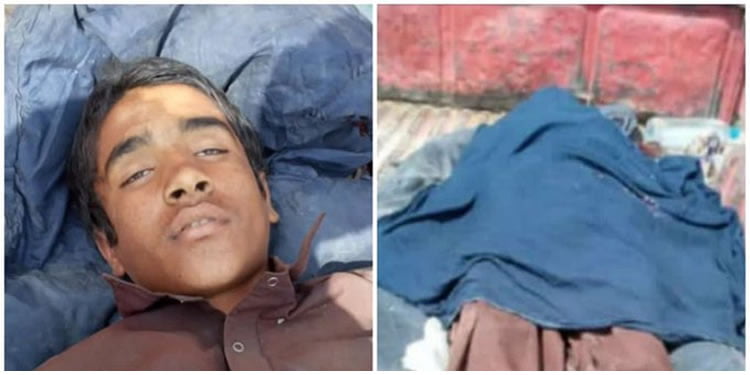
IRGC forces stationed in Rask County opened fire on a car yesterday, wounding a woman and killing a minor in southeast Iran.

According to the Baloch Campaign website, the minor killed was identified as Younes Yazdanshenas who was with his aunt, Nour Bibi.

An informed source said the two were going for medical errands when the police opened fire on them after they passed a checkpoint. The source added that both were transferred to the Chabahar hospital but Younes died due to the severity of his wounds and blood loss.

This is not an isolated case. Last week, police opened fire on Baluch citizens on March 7 and March 8 in the southeastern cities of Minab and Mirjaveh.

In Mirjaveh, police opened fire on a car during a car chase, causing the car to overturn.

The father and son in the car were identified as Mazar and Attallah Gazouie. Attallah, the son, was killed at the scene. His father Mazar was injured and passed away after a week in the hospital yesterday.

In Minab, police opened fire on another fuel carrier, whose car also overturned and caught fire. The driver who was identified as Ahmad Qasemi passed away from the severity of his injuries. 

There are almost daily reports of police and border guards opening fire on Kurd border porters in western Iran and civilians carrying fuel in southeastern Iran. Iranian security forces carry out these shootings with impunity.

An annual report by a human rights groups said that at least 204 Iranian citizens were directly or indirectly killed or wounded by Iran’s state security forces in 2020, of which 74 lost their lives.

The clashes in February erupted after Iranian Revolutionary Guards killed two smugglers in southeast Iran, prompting protesters to storm the governor’s office in the city of Saravan and burn police cars. Security forces dispersed crowds with tear gas, closed off roads, and temporarily shut down Internet connections to prevent the protests from spreading.

True to form, the Guards denied responsibility.

Read the complete article at: Iran News Wire
Also read: Iran’s Terrorism in India is Just the Tip of the Iceberg

Kylie Moore-Gilbert, falsely accused Israeli spy, joined resistance to IRGC

The Australian Middle East academic Kylie Moore-Gilbert who was imprisoned in the Islamic Republic for two years on trumped-up charges that she was an Israeli spy resisted her captors along with other female and male prisoners inside the 2A facility of Evin prison, a source familiar with political prisoners in Evin prison told The Jerusalem Post.
 
According the source, Moore-Gilbert was part of a group of prisoners who decided to collectively begin resisting the Revolutionary Guards, which included conservationist Niloufar Bayani, academic Fariba Adelkhah and another prisoner known by the pseudonym ‘Lolita.’ Some of the men in the men’s unit joined these efforts, for example in participating in coordinated group hunger strikes. 

Iran’s Islamic Revolutionary Guards Corps (IRGC) sexually harassed and tortured the environmentalist Niloufar Bayani in order to provoke a false confession, according to letters written by Bayani. BBC’s Persian Service reported on the methods of torture.

imposed on Bayani. Adelkhah is reported to have suffered permanent damage tao some internal organs as a result of prolonged hunger strikes, and has been released from prison in favor of house arrest with an electronic ankle monitor.

Read the complete article at: The Jerusalem Post


The Australian Middle East academic Kylie Moore-Gilbert who was imprisoned in the Islamic Republic for two years on trumped-up charges that she was an Israeli spy resisted her captors along with other female and male prisoners inside the 2A facility of Evin prison, a source familiar with political prisoners in Evin prison told The Jerusalem Post. According the source, Moore-Gilbert was part of a group of prisoners who decided to collectively begin resisting the Revolutionary Guards, which included conservationist Niloufar Bayani, academic Fariba Adelkhah and another prisoner known by the pseudonym ‘Lolita.’ Some of the men in the men’s unit joined these efforts, for example in participating in coordinated group hunger strikes.  Iran’s Islamic Revolutionary Guards Corps (IRGC) sexually harassed and tortured the environmentalist Niloufar Bayani in order to provoke a false confession, according to letters written by Bayani. BBC’s Persian Service reported on the methods of torture.


IRGC unveils new missile city, displays cruise and ballistic missiles

0

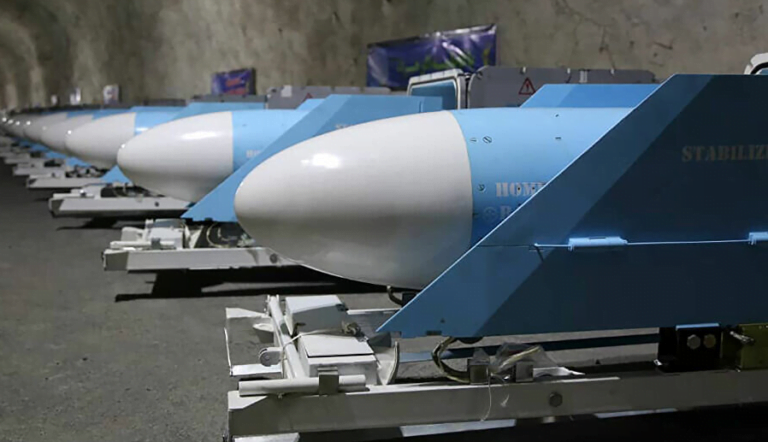
In a ceremony on Monday, the Islamic Revolution Guards Corps Navy unveiled a new missile city hosting a broad range of cruise and ballistic missiles with various ranges. ballistic missiles

The military facility was inaugurated by IRGC Commander Major General Hossein Salami, IRGC Navy Commander Rear Admiral Alireza Tangsiri, and a number of other armed forces officials.

Read the complete article at NewsNow.com

Also Read: Iranian militias claim to have active cells in Washington DC

The new missiles and missile gear have advanced operational capabilities, such as accurate firing from underground launchers and civil defense sites. The new equipment in the missile city can launch mines in various ranges, allow for 360 degree and mobile firing operations, according to Tasnim. One of the items unveiled in the event was a missile system that can shift the focus on targets after launch. The military gear has been manufactured by the Defense Ministry, local knowledge-based companies, and the IRGC Navy research organizations. Speaking at the event, Major General Salami said, “What we are noticing today is just a small section of the great and extensive power of the IRGC Navy.” He added Iran is now seeing highly extensive progress in missile power in view of “naval battles.” The new equipment in the missile city can launch mines in various ranges, allow for 360 degree and mobile firing operations, according to Tasnim. One of the items unveiled in the event was a missile system that can shift the focus on targets after launch. The military gear has been manufactured by the Defense Ministry, local knowledge-based companies, and the IRGC Navy research organizations. Speaking at the event, Major General Salami said, “What we are noticing today is just a small section of the great and extensive power of the IRGC Navy.”He added Iran is now seeing highly extensive signs of progress in missile power in view of “naval battles.”

Iranian militias claim to have active cells in Washington DC

Iranian militia groups have active cells operating in the US capital Washington DC and other US cities, according to chatrooms used by the groups.

Kawtheryoon Electronic Team, a Telegram network used by Iranian militia groups and supporters, claimed in a recent posting that Iranian “resistance cells are rooted even in America and its capital,” Fox News reported, citing a copy of the English-language posting captured by the Middle East Media Research Institute (MEMRI), which tracks radical groups.

The militia additionally claimed that terror factions associated with Iran are growing stronger and attracting more support than ever before, as they demanded a withdraw all of American troops from Iraq and the Middle East.

The Telegram post included a picture of caskets containing US soldiers, Fox News said.

Read the complete article at: Arab News


Iranian militia groups have active cells operating in the US capital Washington DC and other US cities, according to chatrooms used by the groups. Kawtheryoon Electronic Team, a Telegram network used by Iranian militia groups and supporters, claimed in a recent posting that Iranian “resistance cells are rooted even in America and its capital,” Fox News reported, citing a copy of Iranian militias the English-language posting captured by the Middle East Media Research Institute (MEMRI), which tracks radical groups. The militia additionally claimed that terror factions associated with Iran are growing stronger and attracting more support than ever before, as they demanded a withdraw all of American troops from Iraq and the Middle East. The Telegram post included a picture of caskets containing US soldiers, Fox News said. Fox News reported, citing a copy of the English-language posting captured by the Middle East Media Research Institute (MEMRI), which tracks radical groups. The militia additionally claimed that terror factions associated with Iran are growing Iranian militias stronger and attracting more support than ever before, as they demanded a withdraw all of American troops from Iraq and the Middle East. The Telegram post included a picture of caskets containing US soldiers, Fox News said.

America and Israel target Iranian assets in Syria

Syria reported a series of Israeli airstrikes on Feb. 28 targeting Iranian assets near Damascus. The strikes were likely a retaliatory measure following an explosion last week that hit an Israeli-owned cargo ship in the Gulf of Oman, which Israeli officials believe Iran executed. Although no one was injured in the attack, the vessel was damaged and forced to head towards the nearest port.

Israeli news sources reported the strikes in Syria targeted Iranian linked assets. The Syrian Observatory for Human Rights, a United Kingdom-based organization, announced that the airstrikes targeted sites in an area close to Damascus that Iran’s Iranian Revolutionary Guards Corps (IRGC) controlled. This air assault followed closely behind a series of strikes the U.S. launched in Syria on Feb. 15 that were also described as a retaliatory measure following a rocket attack in Iraq that killed an American civilian contractor.

The Israeli Defense Forces has launched dozens of assaults on Iranian-linked targets in Syria in recent years to prevent Tehran from gaining a stable foothold in the country. Many of the IDF attacks are retaliatory and preventative. In 2017, a military site in Syria filled with chemical weapons and Iranian bombs were destroyed by Israeli airstrikes. In 2019, Israel launched airstrikes in Syria in retaliation to a surface-to-surface missile that endangered civilian areas in the Golan Heights area. In 2020, IDF Chief of Staff Gen. Aviv Kochavi reported that Israel “had struck more than 500 targets during 2020 on all fronts, including clandestine missions.”

Read the complete article at: Jewish News Syndicate

Iran’s Terrorism in India is Just the Tip of the Iceberg

bomb was detonated near Israel’s Embassy in New Delhi, the capital of India, on 29 January. It was widely suspected that Iran was responsible for the bombing, and new details from the investigation appear to confirm this.

Predictably, after barely a month of investigating, India concluded a local cell of radical Shi’is, directed by IRGC, had carried out the Embassy attack, and this information was leaked to the media by an outraged Indian government. Whatever doubts there were about the Iranian intentions with the bombing, “the message was clear and the threat is real”, said one of the experts investigating the attack, speaking to The Hindustan Times on background.

This is not the first time IRGC has targeted Israel on Indian soil. In February 2012, IRGC attacked Israeli diplomats in India with an IED against their car, wounding four people, and within twenty-four hours similar attacks had been attempted in Georgia and Thailand. This was just months after the U.S. Justice Department issued an indictment over an IRGC plot, involving Mexican drug cartels, to blow up the Saudi ambassador at a café in the American capital. Iran’s motive at that time, similar to the present, was revenge for a series of deaths among its nuclear scientists, some more verifiably assassinations than others.

The attempted attack in India shows that Iran remains committed to global terrorism. As the new Biden administration considers how to move forward with Iran—whether and how to re-enter the nuclear deal, the Joint Comprehensive Plan of Action (JCPOA), and what to do about sanctions—it must not repeat the mistakes of the past by ignoring IRGC’s unconventional military adventurism. Iran’s Islamist imperialism should be kept central in the debate.

Read the complete article at: European Eye on Radicalization
Also read: IRGC Generals Line up to Replace Hassan Rouhani as President

Nazanin Zaghari-Ratcliffe: PM demands ‘immediate release’ of British-Iranian woman

Boris Johnson has demanded the “immediate release” of Nazanin Zaghari-Ratcliffe, the British-Iranian woman jailed in Iran on spying charges, in a phone call with Iran’s president.

The PM said her “continued confinement remains completely unacceptable” and that she must be allowed to return to her family in the UK.

She had her ankle tag removed on Sunday at the end of her five-year sentence.

But she faces a new court case against her – scheduled for next Sunday.

The charity worker had been under house arrest in Tehran since being moved from jail last March. She has always denied the charges against her.

Read the complete article at: BBC


Boris Johnson has demanded the “immediate release” of Nazanin Zaghari-Ratcliffe, the British-Iranian woman jailed in Iran on spying charges, in a phone call with Iran’s president. The PM said her “continued confinement remains completely unacceptable” and that she must be allowed to return to her family in the UK. She had her ankle tag removed on Sunday at the end of her five-year sentence. But she faces a new court case against her – scheduled for next Sunday. The charity worker had been under house arrest in Tehran since being moved from jail last March. She has always denied the charges against her. Boris Johnson has demanded the “immediate release” of Nazanin Zaghari-Ratcliffe, the British-Iranian woman jailed in Iran on spying charges, in a phone call with Iran’s president. The PM said her “continued confinement remains completely unacceptable” and that she must be allowed to return to her family in the UK. She had her ankle tag removed on Sunday at the end of her five-year sentence. But she faces a new court case against her – scheduled for next Sunday. The charity worker had been under house arrest in Tehran since being moved from jail last March. She has always denied the charges against her.