Home Blog Page 117

Iran Is Moving Key Facility at Nuclear Site Underground, Satellite Images Show

Iran Is Moving Key Facility at Nuclear Site Underground, Satellite Images Show

Iran Is Moving Key Facility at Nuclear Site Underground, Satellite Images Show

The mysterious July explosion that destroyed a centrifuge assembly hall at Iran’s main nuclear fuel enrichment facility in Natanz was deemed by the Iranian authorities to be enemy sabotage, and provoked a defiant response: The wrecked building would be rebuilt in “the heart of the mountains,” the head of Iran’s Atomic Energy Organization said.


Progress on that pledge, which could shield the facility from an aerial assault or other threats, has been unclear to outside observers. But new satellite imagery is now shedding light on the Iranian plans.


The Visual Investigations team of The New York Times has tracked construction at the site using the new imagery. For the first time, new tunnel entrances for underground construction are visible under a ridge in the mountain foothills south of the Natanz facility, about 140 miles south of Tehran.


The Times worked with Jeffrey Lewis, an arms control expert at the Middlebury Institute of International Studies at Monterey in California, to interpret the new image.


Read more at: DNYUZ


Iran Briefing | News Press Focus on Human Rights Violation by IRGC, Iran Human Rights


The mysterious July explosion that destroyed a centrifuge assembly hall at Iran’s main nuclear fuel enrichment facility in Natanz was deemed by the Iranian authorities to be enemy sabotage, and provoked a defiant response: The wrecked building would be rebuilt in “the heart of the mountains,” the head of Iran’s Atomic Energy Organization said. Progress on that pledge, which could shield the facility from an aerial assault or other threats, has been unclear to outside observers. But new satellite imagery is now shedding light on the Iranian plans. The Visual Investigations team of The New York Times has tracked construction at the site using the new imagery. For the first time, new tunnel entrances for underground construction are visible under a ridge in the mountain foothills south of the Natanz facility, about 140 miles south of Tehran. The Times worked with Jeffrey Lewis, an arms control expert at the Middlebury Institute of International Studies at Monterey in California, to interpret the new image.

Iran’s Rohani Vows To Continue Supporting ‘Strategic Ally’ Syria

0

Iran’s Rohani Vows To Continue Supporting ‘Strategic Ally’ Syria

Iran’s Rohani Vows To Continue Supporting ‘Strategic Ally’ Syria

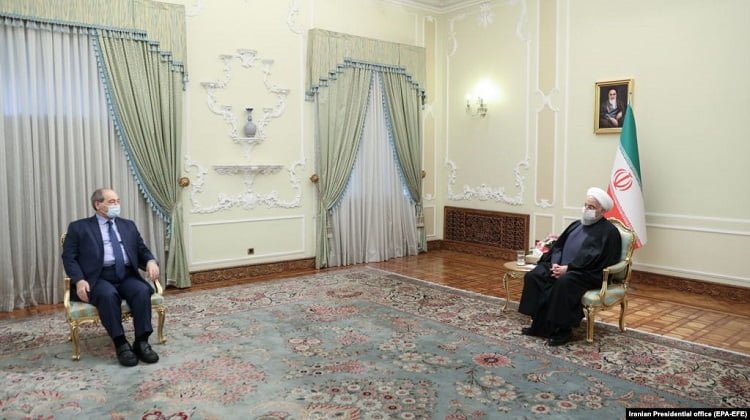
Iranian President Hassan Rohani says his country will continue to support the Syrian government as a “strategic ally” until its “final victory” in the country’s civil war.

Iran vows to build two new nuclear facilities, alarming observers

Iran vows to build two new nuclear facilities, alarming observers

Iran vows to build two new nuclear facilities, alarming observers

Iran’s possible responses to the assassination of a prominent nuclear scientist go well beyond boosting uranium enrichment and expelling weapons inspectors, two provisions of a law passed by Iran’s parliament that alarmed nonproliferation experts last week. Equally worrisome are new facilities the law requires, which could enable Iran to make plutonium and fashion uranium into bomb components.

Iran claims scientist was assassinated via satellite

Iran claims scientist was assassinated via satellite
       Iran claims scientist was assassinated via satellite


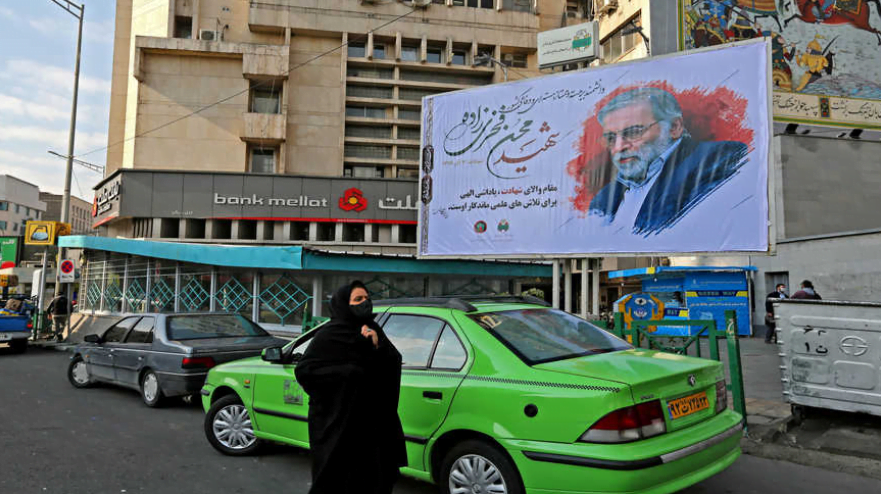
Officials from Iran’s Islamic Revolutionary Guard Corps (IRGC) have divulged new information regarding the Nov. 27 assassination of nuclear scientist Mohsen Fakhrizadeh.


Deputy commander Ali Fadavi said during a Q&A session at Tehran University on Dec. 6 that Fakhrizadeh had 11 guards with him at the time of his assassination.


He was assassinated in the suburbs of Tehran. Fadavi added that 13 bullets were fired at him from the Nissan and that the only other bullets fired were from the Iranian bodyguards.


Fadavi also claimed that Nissan was controlled through satellite and used artificial intelligence to zoom in on the target. He said that Fakhrizadeh was shot in the back, hitting his spinal cord.


Fadavi’s statements conflict with earlier reports from Iranian media, which described multiple shooters and a shootout. These reports also suggested an explosion took place.


Read the complete article at NewsNow.com


Also Read: More details emerge on the killing of Iran’s top nuclear scientist

Ali Shamkhani, secretary of the Supreme National Security Council, was one of the first individuals to briefly discuss the use of the satellite-controlled attack. Fadavi also answered questions about former Quds Force commander Qasem Soleimani who was assassinated by the United States in a drone attack in Iraq. When asked if the Rouhani administration had impeded efforts to exact revenge on the United States, Fadavi said that the IRGC answers to the commander in chief, Supreme Leader Ayatollah Ali Khamenei, and does not rely on the policies of the administration. Ramazan Sharif, the spokesman for the IRGC media team, also said that Fakhrizadeh was killed with the use of “advanced electronic tools guided by satellite.” He added that the Israelis know “that their actions will not go unanswered.” Iranian media has also responded to rumors published about Ayatollah Khamenei in American media.

More details emerge on killing of Iran’s top nuclear scientist

More details emerge on killing of Iran's top nuclear scientist
   More details emerge on the killing of Iran’s top nuclear scientist


The killing of Iran’s top nuclear scientist Mohsen Fakhrizadeh last month was carried out remotely with artificial intelligence and a machine gun equipped with a “satellite-controlled smart system,” an Islamic Revolutionary Guard Corps commander told Tasnim News Agency on Monday.


“No terrorists were present on the ground… Martyr Fakhrizadeh was driving when a weapon, using an advanced camera, zoomed in on him.”


Tasnim, a semi-official agency, quoted Ali Fadavi, the deputy commander of Iran’s Revolutionary Guards, as saying in a ceremony on Sunday.


“The machine gun was placed on a pick-up truck and was controlled by a satellite.”


Read the complete article at NewsNow.com


Also Read: Nikki Haley opposes President-elect Biden’s plan to rejoin Iran nuclear deal

Fadavi spoke after Iranian authorities said they had found “clues about the assassins,” though they have yet to announce any arrests. Shortly after the killing, witnesses told state television that a truck had exploded before a group of gunmen opened fire on his car.”Some 13 shots were fired at martyr Fakhrizadeh with a machine gun controlled by satellite… During the operation artificial intelligence and face recognition were used,” Fadavi said. “His wife, sitting 25 centimeters away from him in the same car, was not injured.”Last week, Ali Shamkhani, Secretary of the Supreme National Security Council of Iran, said the killing was carried out with “electronic devices” with no people on the ground. Iran has blamed Israel for the assassination of Fakhrizadeh, who was seen as the mastermind of a covert Iranian program to develop a nuclear weapons capability. Tehran has long denied any such ambition. Israel has neither confirmed nor denied responsibility for the killing, and one of its officials suggested that the Tasnim report of the tactics used was a face-saving gambit by Iran. Various accounts of the scientist’s death have emerged since the attack.

Nikki Haley opposes President-elect Biden’s plan to rejoin Iran nuclear deal

Nikki Haley opposes President-elect Biden’s plan to rejoin Iran nuclear deal

Nikki Haley opposes President-elect Biden’s plan to rejoin Iran nuclear deal

Nikki Haley, the former US envoy to the United Nations, on Monday opposed President-elect Joe Biden’s plan to re-join the Iranian nuclear deal, saying the Trump administration’s sanctions on Tehran deprived the regime of the money it needed to harm American military.

US Navy official says ‘uneasy deterrence’ reached with Iran

US Navy official says 'uneasy deterrence' reached with Iran
     US Navy official says ‘uneasy deterrence’ reached with Iran


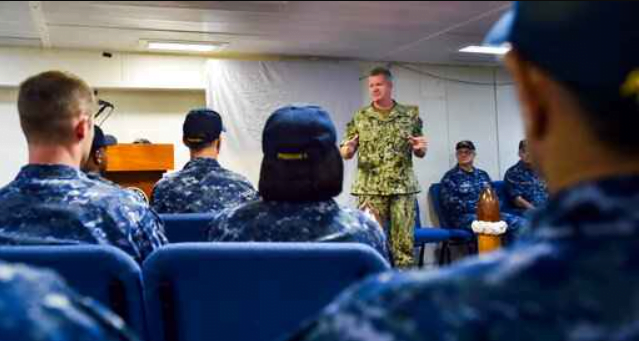
The top U.S. Navy official in the Mideast said Sunday that America has reached an “uneasy deterrence” with Iran after months of regional attacks and seizures at sea, even as tensions remain high between Washington and Tehran over the Islamic Republic’s nuclear program.


Vice Adm. Sam Paparo, who oversees the Navy’s 5th Fleet based in Bahrain, struck an academic tone in comments to the annual Manama Dialogue hosted by the International Institute for Strategic Studies.


He described having a “healthy respect” for both Iran’s regular navy and the naval forces of its paramilitary Revolutionary Guard.


“We have achieved an uneasy deterrence. That uneasy deterrence is exacerbated by world events and by events along the way,” the vice-admiral said.


“But I have found Iranian activity at sea to be cautious and circumspect and respectful, to not risk unnecessary miscalculation or escalation at sea.”


Read the complete article at NewsNow.com


Also Read: IRGC General Claims Artificial Intelligence Used to Slay Iranian Scientist

While Iran has not directly seized or targeted a tanker in recent months as it did last year, a mine struck an oil tanker off Saudi Arabia and a cargo ship near Yemen came under assault in recent days. Suspicion immediately fell on Yemen’s Iranian-backed Houthi rebels for being behind both attacks. The Houthis have not commented on either.Paparo, a former Navy fighter pilot who most recently served as director of operations at the U.S. military’s Central Command, offered a different stance than his immediate predecessor, Vice Adm. James Malloy. In one of his last comments to the journalists in August, Malloy referred to Iran as “reckless and provocative” and always trying in dramatic naval drills to “lower the denominator until they’re sure that they can look like they’ve won something.”

IRGC General Claims Artificial Intelligence Used to Slay Iranian Scientist

0
IRGC General Claims Artificial Intelligence Used to Slay Iranian Scientist
      IRGC General Claims Artificial Intelligence Used to Slay Iranian Scientist


Deputy Commander of the Islamic Revolution Guards Corps has provided more details of the recent assassination of Iranian scientist Mohsen Fakhrizadeh, pointing to a smart satellite-controlled weapon using artificial intelligence.


Addressing a cultural event in the University of Tehran on Sunday, IRGC Deputy Commander Rear Admiral Ali Fadavi said the distinguished figure was assassinated in an unmanned operation on November 27.


Read the complete article at NewsNow.com


Also Read: The Sad Saga of the Iranian Navy, Part II: How Effective is the Revolutionary Guards Navy?

No hitman was present at the scene of the strike, he noted, saying a machine gun equipped with a “satellite-controlled smart system” and installed on a pickup had fired a total of 13 shots in the attack. All other bullets have been fired by the security guards, Fadavi noted. The smart system controlling the machine gun had zeroed in on Fakhrizadeh and utilized artificial intelligence, the general stated. He said the purpose of exploding the gun-laden pickup after the shootout was to kill the 11 IRGC servicemen accompanying the late scientist. The head of the security team has been shot after shielding Fakhrizadeh from bullets, Fadavi added, saying the nuclear scientist was ultimately martyred due to a gunshot wound in his back and spinal cord amputation. Asked about Iran’s response to the American assassination of top commander Lt. General Qassem Soleimani in early January, the IRGC deputy chief said, “We will choose how to take revenge.”The IRGC has gained such great power that the enemy is seeking deterrence in the face of Iran, he added. Fakhrizadeh, a senior nuclear and defense scientist, was assassinated in a small city east of Tehran on November 27. Last week, Secretary of Iran’s Supreme National Security Council Ali Shamkhani said Fakhrizadeh was assassinated in a complicated operation.

The Sad Saga of the Iranian Navy, Part II: How Effective is the Revolutionary Guards Navy?

0
The Sad Saga of the Iranian Navy, Part II How Effective is the Revolutionary Guards Navy
The Sad Saga of the Iranian Navy, Part II: How Effective is the Revolutionary Guards Navy?


The Persian month of Azar, or November-December in the Gregorian calendar, is the official month of the Iranian navy. Before the Islamic Revolution of 1979, the Iranian navy’s national day fell on November 29, marking the reclamation of three islands, Abu Musa and the Greater and Lesser Tunbs, from British forces in 1971.


After the Islamic Republic came to power the national day was shifted to November 27, to commemorate the missile boat Peykan, which was sunk while resisting an Iraqi naval and air attack in 1980.


In a series of three articles, we will explore the establishment and changing fortunes of Iran’s modern navy, from the damage it sustained during World War II to the emergence of the Islamic Revolutionary Guard Corps as a naval power and the struggle to build a fleet of submarines.


This article, the second in the series, focuses on the Revolutionary Guards Navy, which has come up against the US Navy several times over the decades.


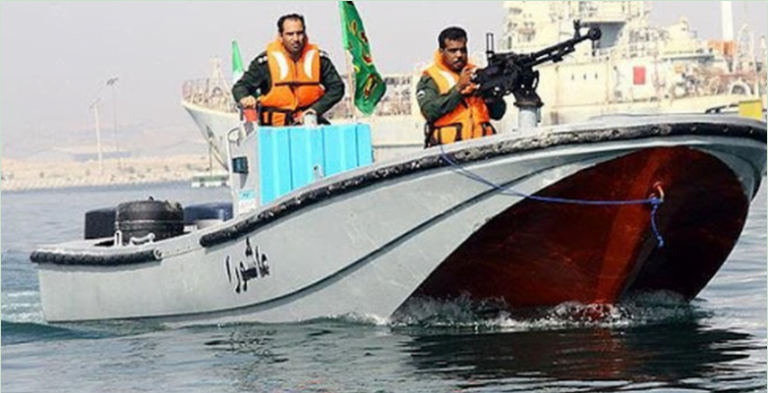
The navy of the Revolutionary Guards has consistently championed speedboats as the force’s most important piece of military equipment.


All Guards’ naval news outlets, whether reporting on the tanker wars of the Iran-Iraq war (1980-1988) or the seizure of foreign vessels in the Persian Gulf, focus on the speedboat as being crucial to the operation.


Initially, the Islamic Republic Guards Corps (IRGC) Navy relied on a simpler model of the speedboats, which transported troops along waterways, including along sea coastlines.


In August 1985, at the request of Mohsen Rezaei, who was then commander of the IRGC, Ayatollah Ruhollah Khomeini, the founder of the Islamic Republic, ordered the formation of “triple forces”, including the IRGC Navy.


Read the complete article at NewsNow.com


Also Read: Iran ambassador confirms IRGC Quds Force chief visit to Iraq

Iran ambassador confirms IRGC Quds Force chief visit to Iraq

0
Iran ambassador confirms IRGC Quds Force chief visit to Iraq
        Iran ambassador confirms IRGC Quds Force chief visit to Iraq


Iran ambassador to Baghdad confirmed that Commander of the Islamic Revolution Guards Corps Quds Force Brigadier General Esmaeil Qaani visited Iraq lately for talks with senior Iraqi officials.


In an interview with Al-Alam News Network, Iranian envoy to Baghdad Iraj Masjedi said General Qaani continues the same mission pursued by his predecessor, Lt. General Qassem Soleimani, who was assassinated in an American attack in Iraq in early January.


The interaction between Iran and Iraq has not changed after the martyrdom of General Soleimani, the ambassador noted, saying General Qaani also pays visits to Baghdad in coordination with the Iraqi authorities to hold meetings with the Iraqi president, prime minister, political and party officials, and various figures.


Read the complete article at NewsNow.com


Also Read: How can Iran retaliate against Israel for Fakhrizadeh’s assassination?

In his recent visit to Iraq, the IRGC Quds Force commander held talks with many Iraqi officials, Masjedi said.The envoy further denounced the US presence as the source of threats to the region, saying American interference that causes regional insecurity must end with the withdrawal of US forces.Masjedi also warned the US that the mistake of taking any action on Iran will draw a decisive response from Tehran.Describing self-defense as an inalienable right, the ambassador cautioned the US against the reaction it will receive in case of a wrong move against the resistance currents, leaders and bases.Iraq’s anti-terror Kata’ib Hezbollah group, a faction of the country’s Popular Mobilization Units (PMU) or Hashd al-Sha’abi, warned last month that a “tougher and stronger” confrontation awaits US forces should they defy a timetable set for their withdrawal from the Arab country.Anti-US sentiment has been running high in Iraq following Washington’s January 3 assassination of top Iranian anti-terror commander Lieutenant General Soleimani and senior Hashd al-Sha’abi commander Abu Mahdi al-Muhandis, in addition to several other comrades.