Home Blog Page 118

How can Iran retaliate against Israel for Fakhrizadeh’s assassination?

How can Iran retaliate against Israel for Fakhrizadeh's assassination
How can Iran retaliate against Israel for the Fakhrizadeh assassination?


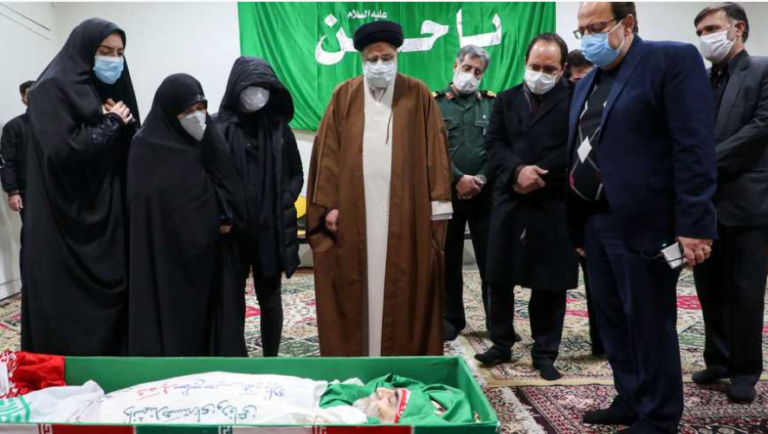
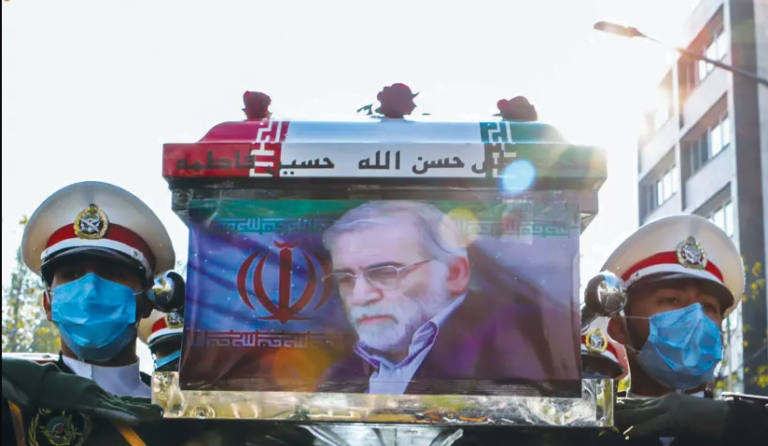
Iranian officials and regime supporters responded to the killing of Dr. Mohsen Fakhrizadeh, widely regarded as the “father” of Iran’s military nuclear program, with a public outpouring of fury. Fakhrizadeh


Many of the responses sought to achieve the difficult rhetorical task of belittling the achievement of Iran’s enemies, while at the same time stressing the magnitude of the loss. All promised vengeance.


Esmail Ghani, commander of the Quds Force of the Islamic Revolutionary Guards Corps, declared that “The enemy is not manly enough to fight a battle with Iran directly.


The demise of Israel is near and these are the last tantrums of Israel. Revenge for Fakhrizadeh’s blood is coming, and it will be with the solidarity of the Iranian forces with all their formations.” (All translations by the Middle East Center for Reporting and Analysis.)


Tasnim, a news website associated with the IRGC, asserted that “If you want to stop the rabid dog, you have to confront him, or he will attack you again.


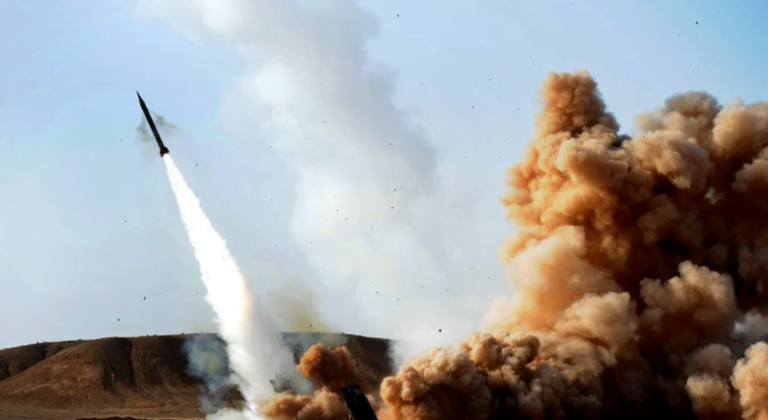
Missiles, as Iran’s main response option, can hit any part of Israel from the depths of the country… In addition to the missile option, the Islamic Republic has other opportunities ahead of it, including Iran’s presence near the borders of the occupied territories in Syria.


In Lebanon, too, Hezbollah is at its best as a powerful arm of the Islamic Republic.”


Hossein Salami, commander-in-chief of the Islamic Revolutionary Guards Corps, said, meanwhile, that “revenge and severe punishment” for the perpetrators of the assassination “are on the agenda.”


The Iranian intention to seek retribution is clear. But what form is Iran’s response likely to take?


Tehran possesses an extensive infrastructure of paramilitary client organizations across the Middle East, one or another of which might be activated to strike at Israel.


Read the complete article at NewsNow.com


Also Read: Shia shrines are Iran’s gates for influence in Iraq

Shia shrines are Iran’s gates for influence in Iraq

Shia shrines are Iran’s gates for influence in Iraq
         Shia shrines are Iran’s gates for influence in Iraq


In September, a senior Iranian commander made an unannounced visit to one of Shia Islam’s holiest sites in the southern Iraqi city of Karbala.


Hassan Pelarak, a top officer in the Islamic Revolutionary Guard Corp’s (IRGC’s) elite Quds Force, had recently been sanctioned by the US for weapons smuggling.


He was checking in on a construction project led by a firm he owns together with other IRGC members, a foundation linked to Iran’s supreme leader that is also under US sanctions.


The vast, $600 million expansion at the Imam Hussein shrine, which is revered as the place of martyrdom of the Prophet Mohammed’s grandson, will swell the capacity of what is already the world’s largest annual pilgrimage, dwarfing the hajj to Saudi Arabia’s Mecca. It is the biggest development at the shrine in 300 years.


An Iraqi worker at the site sent Reuters pictures of Pelarak, wearing a hard hat and sporting a blue surgical mask, having his temperature taken before entering.


The visit, confirmed by an Iraqi employee of the foundation, was not reported by Iranian or Iraqi media. But his visit was not unusual.


Perak and other Guards commanders overseeing the project freely drop-in, workers say, and are given quick tours by the exclusively Iranian companies and engineers they have been contracted to carry out the work.


Qassem Soleimani, the late Quds Force commander who spearheaded Iran’s military and political strategy across the region, was filmed touring the project in 2018, 18 months before he was killed by a US drone strike.


His successor, Esmail Qaani, made an unannounced visit to the shrine two weeks after Pelarak, said an Iranian source in Karbala.


Day and night, Iranian laborers fill in a 40-meter deep, 50,000-square-metre crater next to the shrine with steel girders and cement brought from Iran.


Read the complete article at NewsNow.com


Also Read: CISA Warns of Iran’s Offensive Cyber Capabilities

CISA Warns of Iran’s Offensive Cyber Capabilities

0

CISA Warns of Iran’s Offensive Cyber Capabilities

CISA Warns of Iran’s Offensive Cyber Capabilities

Amid renewed tension between the U.S. and Iran, the Cybersecurity and Infrastructure Security Agency issued a warning to be vigilant for activity from Iranian hackers.

Iran Denies Revolutionary Guards Commander Killed on Syria-Iraq Border

0
Iran Denies Revolutionary Guards Commander Killed on Syria-Iraq Border
     Iran Denies Revolutionary Guards Commander Killed on Syria-Iraq Border


An Iranian Revolutionary Guards commander has been killed on the Syrian-Iraqi border, Iraqi security officials and local militias reported on November 30.


Security forces and fighters from local armed factions said the commander was killed following an airstrike on November 28 or November 29.


But Iranian authorities denied the reports, according to the state-run Islamic Republic News Agency (IRNA).


Read the complete article at NewsNow.com


Also Read: The IRGC’s Dark Horse for Iran’s 2021 Elections: Saeed Mohammad

I have not received any reports about a Revolutionary Guards commander having been targeted by a drone strike on the Syrian-Iraqi border,” Ali Rabiei, a spokesman for the Iranian foreign ministry, said. According to several Iraqi media outlets, officials were not able to identify the commander, who they said was killed on November 28 or November 29, along with three other men who were with him in the same car. Two Iraqi security officials stated separately that the vehicle, which was carrying weapons across the Iraqi border, was hit after entering Syrian territory. The two officials added that Iranian-backed Iraqi armed factions had helped retrieve the bodies, without giving further details or specifying exactly when the incident had occurred. On November 30, the Iraqi Shafaq News Agency said an unnamed source in the Operations Command of the Popular Mobilization Forces (PMF) reported that there had been an explosion on the Syrian side of the border in the Al-Qaim-Albukamal region. The forces were positioned in the city of Al-Qa’im west of Al-Anbar, where they had established an operations unit.”PMF units operating around the border in Husaybah, Al-Rummaneh, Mark Al-Dhabi, Al-Qa’im, and Al-Zawiyah near the Syrian territory had not received any information about the targeting of their forces on the Iraqi-Syrian border strip, and no bodies had been taken to the Al-Qaim crossing,” the agency reported. The alleged killing comes just days after the assassination of Iranian nuclear scientist Mohsen Fakhrizadeh near Tehran.

The IRGC’s Dark Horse for Iran’s 2021 Elections: Saeed Mohammad

0
The IRGC’s Dark Horse for Iran’s 2021 Elections Saeed Mohammad
The IRGC’s Dark Horse for Iran’s 2021 Elections: Saeed Mohammad


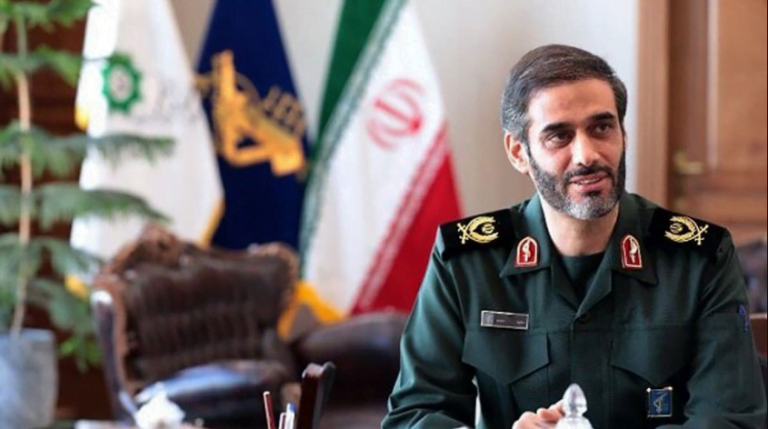
Saeed Mohammad represents a different kind of IRGC member. Could he emerge as the Guard’s ‘dark horse’ in Iran’s 2021 presidential elections?  

2021 will be the first year since 1989 in which first-term presidents will take office in both the United States and Iran.


Yet, unlike the former where every ballot counts, in the Islamic Republic, only one vote matters: that of supreme leader Ayatollah Ali Khamenei, who at 81-years old has ruled for over 31 years.


The stakes could hardly be higher for the aging Ayatollah as he prepares the foundations of a post-Khamenei Islamic Republic and searches for the right man to secure his legacy. 

Earlier this year, Khamenei called for a “young and Hezbollah (ideologically hardline) government”  to become president.


But this was not a consequence of outgoing president Donald Trump’s ‘maximum pressure’ policy against Tehran as is often suggested in West-centric analyses of Iran, nor should we anticipate a shift in Tehran’s calculus with the incoming Biden administration.


Rather, Khamenei is trying to ensure his hardline Islamist vision lives on after his death and, in doing so, he is empowering the most radical elements in the Islamic Republic.  


As a direct result the Islamic Revolutionary Guard Corps (IRGC) – the regime’s ideological army – is increasing its power at an unprecedented rate.


This is hardly surprising given it has consistently shown it is prepared to spill blood on Iran’s streets to uphold Khamenei’s Islamist order.


Today, the IRGC controls the Iranian parliament in all but name and, with less than a year to go until the presidential elections, it has set its eyes on the executive.


There are already a number of high-profile prospective candidates for the presidency, such as Hossein Dehghan, IRGC commander and senior military advisor to Khamenei, and Parviz Fattah, head of the Khamenei-run ideological-charitable organization, Bonyad Mostazafan.


Read the complete article at NewsNow.com


Also Read: Iran moves to ramp up uranium enrichment and ban international inspectors

Iran moves to ramp up uranium enrichment and ban international inspectors

Iran moves to ramp up uranium enrichment and ban international inspectors

Iran moves to ramp up uranium enrichment and ban international inspectors

Following the assassination last week of its top nuclear scientist, Iran on Wednesday imposed a law ordering the country’s Atomic Energy Agency to immediately increase its enrichment of uranium.

Hezbollah’s Nasrallah to move to Iran amid regional tensions

0

Hezbollah’s Nasrallah to move to Iran amid regional tensions

Hezbollah’s Nasrallah to move to Iran amid regional tensions

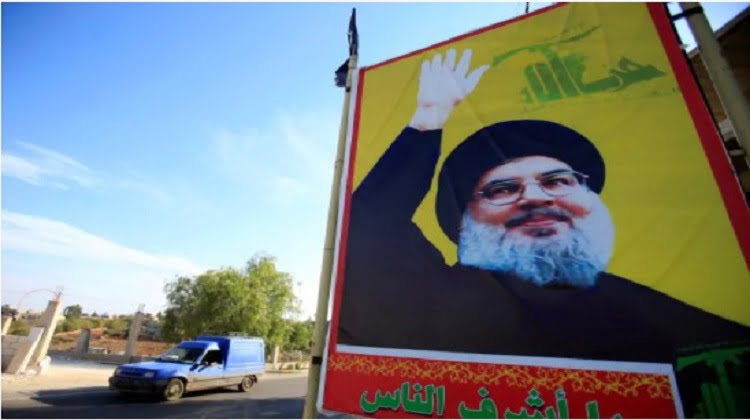
Hezbollah Secretary-General Hassan Nasrallah plans to move to Iran and may have already made the move, an informed source told the Kuwaiti Al-Jarida newspaper on Wednesday.

Iran identifies perpetrators as it probes scientist’s killing

Iran identifies perpetrators as it probes scientist’s killing


The spokesman for the Iranian government, Ali Rabiei, said the country’s Intelligence Ministry has identified those involved in the assassination of its prominent nuclear and missile technology expert, Mohsen Fakhrizadeh, who was gunned down east of the capital iran, Tehran, on Nov. 27.


Rabiei told Iran’s state TV that an investigation into all aspects of the incident is underway, after which Tehran “will work out reciprocation.”


The spokesman did not reveal further details on those individuals or a possible foreign state linked to the attack.


But Iranian officials have from the outset pointed the finger of blame toward Israel, which has not yet confirmed nor denied the allegation, adhering to its typical style in the aftermath of other assassinations targeting a number of Iranian nuclear scientists since 2010.


During a 2012 investigation into some of those killings, Iran arrested over a dozen of its own nationals and sentenced several of them to death before broadcasting their confessions.


All but one of the other detainees, who endured months of detention, were released; intelligence officials issued no public statements at the time as to whether the original claims had been false.


Seven years later, one of those detainees, Maziar Ebrahimi, spoke out in exile, recounting horrifying details of how he and others made confessions under duress about links to Israeli spy agencies and were forced to read out fabricated stories of how they carried out the assassinations.


In reaction to the revelation, the Intelligence Ministry admitted to the faulty nature of the investigations but said the detainees had been paid compensation.


Embarrassing enough for its high-profile nature and the security breaches it revealed, the Nov. 27 attack has put immense pressure on Iran’s security apparatus.


Read the complete article at NewsNow.com


Also Read: Was an IRGC officer really killed near the Syria-Iraq border?

Was an IRGC officer really killed near the Syria-Iraq border?

0
Was an IRGC officer really killed near the Syria-Iraq border
Was an IRGC officer really killed near the Syria-Iraq border?


Just days after the high-profile killing of Iranian nuclear general Mohsen Fakhrizadeh, another Iranian officer was killed in the far-off desert sands between Iraq and Syria. Iranian officer


He was supposedly killed sometime in the evening between Saturday and Sunday, November 28-29. The report appeared in Reuters and other media outlets.


He was alleged to have been involved in the procurement of weapons. Several others may have also been killed.


But there were few details. No name of the man. No reports in Iran. Denials in the border area. It’s the Middle East though – and it took place in an area of the border that is difficult to get to, and where there is no free media.


That means truth and fiction blend together. Rumors spread. Agendas can be set by people who feed information to online media with the goal of laundering the information through other reports.


Many have chimed in as to what may have happened or not happened.


The incident is interesting because it is one of many like this that form part of the narrative of what is, or is not, happening in the shadowy “war between the wars” in Syria.


Read the complete article at NewsNow.com


Also Read: European allies pushed back when Trump sanctioned Iran’s banks

This refers to airstrikes on Iranian and Iranian-allied groups in Syria. Former IDF chief of staff Gadi Eisenkot said in January 2019 that Israel had carried out more than 1,000 strikes on Iranian targets in Syria. Now it is almost two years since that number was announced. In August 2017, former Air Force chief Maj.-Gen. Amir Eshel said Israel had struck arms convoys in Syria nearly 100 times. Most airstrikes in Syria are reported and no one takes credit for them, leaving a lack of clarity as to whether they took place and who did them.

European allies pushed back when Trump sanctioned Iran’s banks

European allies pushed back when Trump sanctioned Iran’s banks

European allies pushed back when Trump sanctioned Iran’s banks

Germany, France and Britain urged the Trump administration in late October to reconsider broad, new sanctions against Iran’s banks, arguing that the move would deter legitimate humanitarian trade and hurt the allies’ common interests, diplomatic correspondence shows.