Home Blog Page 123

The Radicalization of the Shia Community in Italy: A Threat That Should Be Addressed

0
The Radicalization of the Shia Community in Italy A Threat That Should Be Addressed
The Radicalization of the Shia Community in Italy: A Threat That Should Be Addressed


Salafi-jihadi extremism has been considered a security threat in Europe for a long time, but Shia radical groups have shockingly been underestimated by many Western countries.


The main organizations are the Lebanese Hezbollah party, the Iranian Islamic Revolutionary Guard Corps, and several Shia militias from Iraq, Pakistan, Afghanistan, Yemen, and other countries.


Among the countries that have been the most decisive about Hezbollah’s nature are the US, the UK, The Netherlands, Japan, and Canada who have all blacklisted the group.


The United States designated Hezbollah as a Foreign Terrorist Organization in 1997. In 2008, the UK added the group’s military wing to the terrorism list, and later in 2019, the entire organization.


Recently, Serbia also blacklisted Hezbollah, as a concession to Israel and the US within the framework of negotiations with Kosovo mediated by Washington.


In April 2020, Germany declared the entire group a terrorist organization and police subsequently carried out raids on mosques linked to the group.


Other countries have been more reserved. In 2013, the European Union blacklisted the military wing of Hezbollah, but various EU member states have determined their own individual classifications.


For example, France designated Hezbollah’s military wing as a terrorist group, but it is still undecided about how to classify the entire organization.


In Spain, the centrist liberal party Ciudadanos pushed for the terrorism designation, but it has yet to be approved.


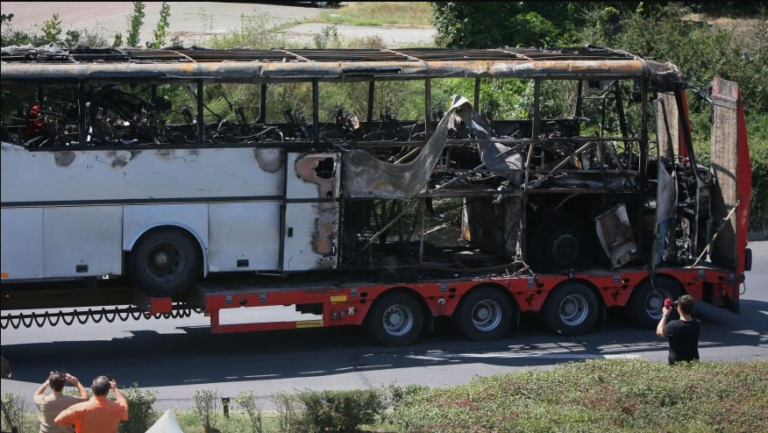
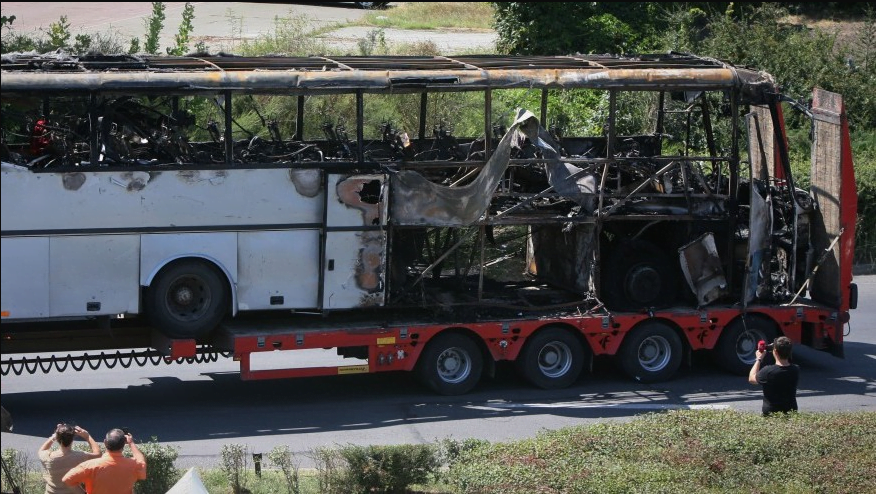
In September 2020, a Bulgarian court sentenced in absentia two Hezbollah operatives to life imprisonment for blowing up a tour bus in July 2012 in Burgas, killing five Israelis and their Bulgarian-Muslim bus driver, but the state prosecutor decided not to charge Hezbollah as an organization.


Shia presence in Italy


Italy, due to the sensitive relations with Lebanon and Iran, has left Hezbollah’s designation in a gray zone. When the then-Minister of Interior Matteo Salvini visited Israel in 2018, he called Hezbollah “Islamic terrorists”.


Read the complete article at NewsNow.com


Also Read: Iran’s Army May be Huge, but the IRGC is Tehran’s Real Power Broker
Iran’s Army May be Huge, but the IRGC is Tehran’s Real Power Broker

0
Iran’s Army May be Huge, but the IRGC is Tehran’s Real Power Broker


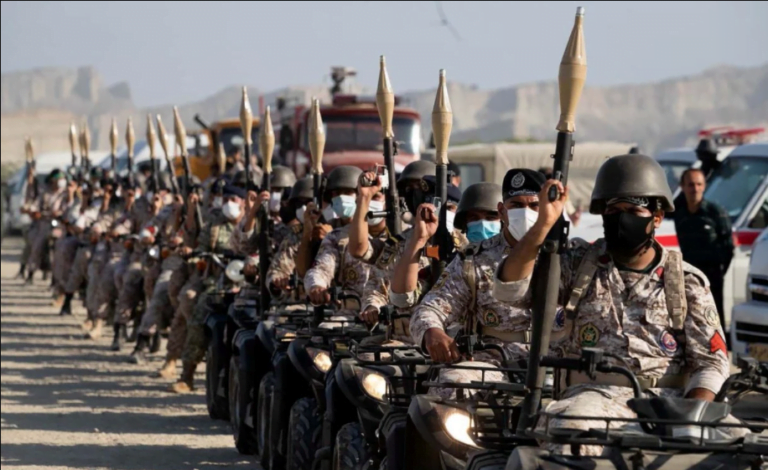
The most important part of the IRGC, and possibly all of the Iranian Armed Forces, is the Quds Force. Consisting of fifteen to thirty thousand of the best IRGC troops, the Quds Force provides Tehran’s regime with an unconventional warfare capability, broadly similar to the CIA and U.S. Special Forces circa 1967.


One of the most powerful and influential countries in the Middle East is undoubtedly Iran. The Islamic Republic of Iran sits astride several key strategic—and often volatile—regions, including the Persian Gulf, Central Asia, the Indian Ocean, and the Caucasus.


Iran is primarily a land power and has invaded and suffered invasion from other peoples and countries over the past several thousand years.


As a result, Iran retains large ground forces, both in the Iranian Army itself and the paramilitary Islamic Revolutionary Guard Corps.


The commander in chief of the Iranian Armed Forces is the Supreme Leader, Ayatollah Ali Khamenei.


Like many states, there are two armies: the Iranian Army, loyal to the country itself, and the IRGC and its Basij militia, which is loyal to the regime and the spirit of the revolution.


Unlike most states with two armies, the Iranian Army and the IRGC suffer from less role and capability duplication to a large extent due to the Iranian Revolution.


The Iranian Revolution of 1979 deposed the monarchy under the shah and imposed a theocratic revolutionary state.


The new rulers of Iran, skeptical of long-standing institutions historically loyal to the shah, allowed the Army to survive as an organization but developed the Islamic Revolutionary Guards Corps as a counterweight.


While the Army would guard the country’s borders and defend against external threats, the IRGC would guard the regime itself.


Read the complete article at NewsNow.com


Also Read: Ukraine says Iran dragging its feet in the plane crash investigation

Ukraine says Iran dragging its feet in plane crash investigation

0

Ukraine says Iran dragging its feet in plane crash investigation

Ukraine says Iran dragging its feet in plane crash investigation

Ukraine has said Iran is dragging its feet on investigating the downing of a Ukrainian airliner near Tehran in January by not sharing information and not responding to requests for cooperation.

A year after the November protests, human rights violators have not been held accountable in Iran

A year after the November protests, human rights violators have not been held accountable in Iran

A year after the November protests, human rights violators have not been held accountable in Iran

Iranians have grown accustomed to turbulent politics. The political fortunes of officials in Iran wax and wane on the whims of Supreme Leader Ayatollah Ali Khamenei, the Islamic Republic’s unelected and unaccountable head of state, who has occupied the office since 1989.

Iran frees 157, thousands remain jailed on protest anniversary

0
Iran frees 157, thousands remain jailed on protest anniversary
        Iran frees 157, thousands remain jailed on protest anniversary


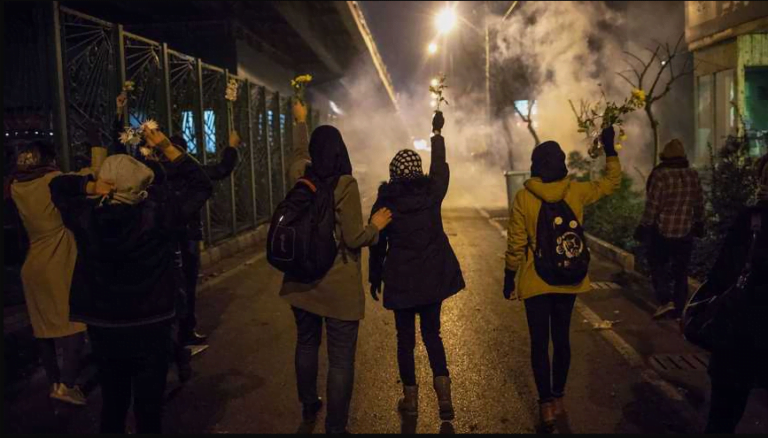
One year after Iran was rattled with deadly unrest over a contentious government fuel subsidy plan, the country’s judiciary said 157 protest have been released.


According to judiciary spokesperson Gholam-Hossein Esmaeili, the pardon was granted by Supreme Leader Ayatollah Ali Khamenei to the “security convicts,” a term Iranian officials apply to most political dissidents and prisoners of conscience.


Every year on different religious occasions, Khamenei issues similar pardons for thousands languishing in Iranian jails. Yet the order has always left out political prisoners.


A newspaper run by the Islamic Revolutionary Guard Corps (IRGC) praised the pardon as a sign of “Islamic compassion” on the anniversary of the “riots.”


Read the complete article at NewsNow.com


Also Read: Iranian press review: IRGC sends a message to Biden with a new missile launcher

The IRGC was at the helm of the violent crackdown on last year’s protests, in which at least 220 Iranians were killed in the streets of over 100 cities nationwide. The bodies of many of those killed were buried under tight security, with families barred from holding public mourning ceremonies. In some cases, according to families and local activists, corpses were recovered from rivers and lakes. The November rallies were triggered by gasoline price hikes introduced by President Hassan Rouhani’s government and approved by the supreme leader. However, with the protests gathering steam, the slogans turned radical, including calls for the overthrow of the Islamic Republic, as many protesters raised demands that had piled up unaddressed over decades. The 157 pardoned protesters leave behind thousands more who are still held in inhumane conditions and suffer various forms of torture, ranging from lashing and electric shocks to sexual abuse, according to an Amnesty International report. Never miss another story the unspecified number of those protesters are on death row.

Iranian press review: IRGC sends message to Biden with new missile launcher

0
Iranian press review IRGC sends message to Biden with new missile launcher
  Iranian press review: IRGC sends a message to Biden with a new missile launcher


While the entire world was focused on the US presidential elections, Iran’s Revolutionary Guard Corps (IRGC) unveiled a new underground ballistic missile launcher platform.


Iranian outlets close to the IRGC reported on the 4 November that the new domestically developed system, dubbed as a ‘missile shower,’ is capable of launching several projectiles in a short period of time.


The reports did not elaborate on the number of missiles the new platform could launch, nor the time the platform needs to create continuous shooting.


Iran willing to take ‘any opportunity’ to lift US sanctions, Rouhani says

A video published by Fars news agency shows five missiles being carried on a rail track to the launch pad.


According to the IRGC-affiliated Tasnim news agency, the new system was developed in Iran to increase the efficiency of missile defence systems by shooting multiple missiles at the same target in a short period of time.


Read the complete article at NewsNow.com


Also Read: Saudi king urges world to take ‘decisive stance’ against Iran

“The new launching system also provides a chance for the IRGC to carry out an intense attack from a single underground platform before the bunker is targeted by the enemies’ counter-attack,” Tasnim said. The projectiles featured in the video are Emad missiles, which use liquid rocket fuel and can hit targets at a range of 1,700km. Emad missiles were first tested in 2015. During the ceremony introducing the new system, Major General Hossein Salami, an IRGC commander, said that Iran’s ballistic missile programme is the country’s most effective means of strategic deterrence and part of its “forward defence” doctrine. Washington sees Tehran’s missile programme as a threat to its regional allies, as well as US Army bases in the Gulf, Iraq, Afghanistan and Turkey. Iran’s missile programme has also been a battleground for domestic political rivals inside the country.

Saudi king urges world to take ‘decisive stance’ against Iran

0

Saudi king urges world to take ‘decisive stance’ against Iran

Saudi king urges world to take ‘decisive stance’ against Iran

Saudi Arabia’s King Salman bin Abdulaziz Al Saud urged the world on Thursday to take “a decisive stance” to address efforts by Iran to develop nuclear and ballistic missile programmes, in his annual address to the top government advisory body.

US envoy insists pressure on Iran will persist under Biden

US envoy insists pressure on Iran will persist under Biden

US envoy insists pressure on Iran will persist under Biden

The U.S. special representative for Iran insisted Thursday that a pressure campaign of sanctions targeting Iran would persist into the administration of Joe Biden, even as the president-elect has pledged to potentially return America to Tehran’s nuclear deal with world powers.

Iran: Porters of misery and injustice under mullah’s rule

Iran Porters of misery and injustice under mullah’s rule
Iran: Porters of misery and injustice under mullah’s rule


In recent weeks, some deprived porters in Iran’s western border areas, particularly Kurdistan province, were murdered and wounded by the suppressive State Security Forces (SSF), Revolutionary Guards (IRGC), and Border Guards.


On October 25, two porter near the cities of Baneh and Piranshahr were shot and wounded by the regime’s Border Guards.


On October 18, in the Chaldean border area of West Azarbaijan province, northwest Iran, SSF units opened fire on a group of porters and killed Amin Shams, a father of two children, one a newborn baby.


On October 17, the regime’s Border Guards in the border area of Baneh opened fire on a group of porter, wounding one.


On October 13, Border Guards opened fire and wounded three porter.


Within October, at least 12 porter were murdered and wounded as a result of SSF and IRGC units opening fire.


“Fifteen porters have been killed within two months” is the title of an article published in the state-run Jahane Sanaat daily on September 8.


“Nearly 15 porters have died over the past two months in border areas of Piranshahr and Sardasht. These incidents have taken place in border areas where passaging was previously free and legal,” the piece reads in part.


Read the complete article at NewsNow.com


Also Read: The man who made it possible

Commanders of SSF and Border Guards are attacking porters under the unfounded pretext of them conducting illegal activities. “We protect legal porters,” claimed the regime’s Border Guards chief on October 14, according to the IRGC-linked Fars news agency. According to this report, the porters who were shot dead by the regime’s criminal Border Guards deserved to be killed. Porters, who are victims of the regime’s corrupt economic policies, have to endure hard labor in mountain trails of Iran’s border areas in order to barely make ends meet.

The man who made it possible

The man who made it possible


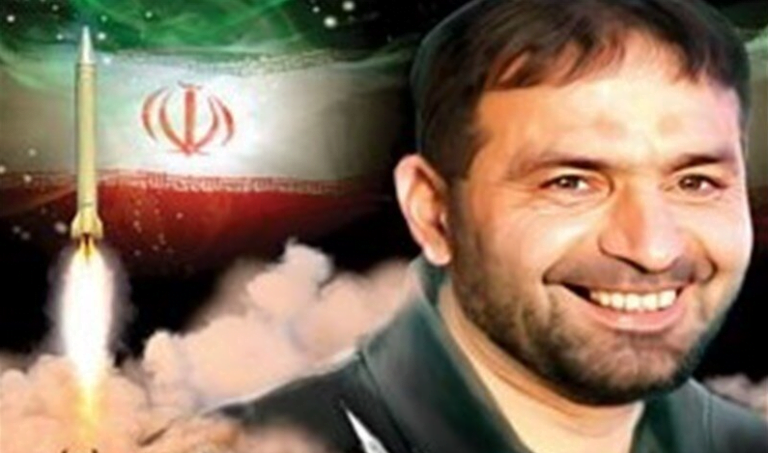
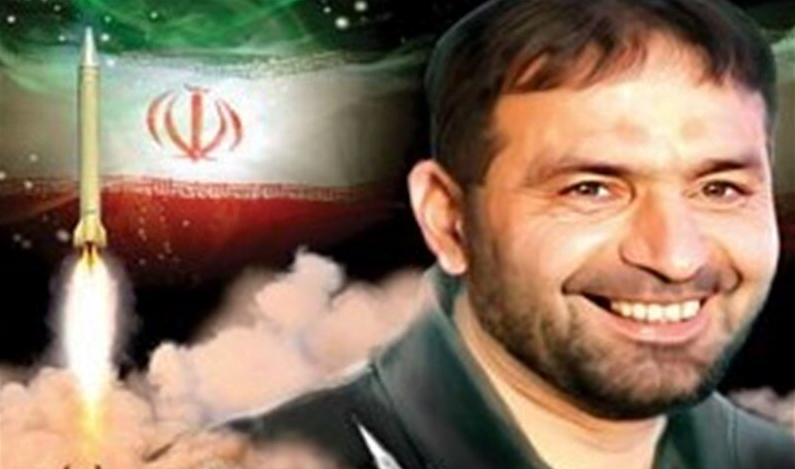
As Iran commemorated the ninth martyrdom anniversary of Hassan Tehrani Moghaddam, a general known for his studious efforts to develop Iran’s missile program, a defense expert tells the Tehran Times that the general has played a crucial role in establishing deterrence against Iran’s enemies. Hassan Tehrani 


Tehrani Moghaddam was born on October 29, 1959, in Tehran. He was admitted to university one year before the 1979 Islamic revolution and when the revolution broke out, he joined anti-Shah protestors while he was 19-year old.


During the revolution, he showed interest in making weapons by providing the revolutionaries with grenades he made in secret.


On February 11, 1979, Tehrani Moghaddam used his grenades to capture a military vehicle driven by a colonel.


Soon after the victory of the Islamic revolution, Tehrani Moghaddam joined the newly established force of the Islamic Revolution Guard Corps (IRGC), which was – and still is- tasked with protecting the revolution.


He served in many positions within the IRGC. Tehrani Moghaddam was one of the main figures that played a leading role in boosting the IRGC missile and artillery capabilities during the Iran-Iraq war in the 1980s, a role that he continued to play years after the war with Iraq was over.


In fact, Tehrani Moghaddam was working to build Iran’s missile capabilities until the last moment of his life.


The general was martyred in a massive explosion at a missile garrison near the capital Tehran on November 12, 2011.


Several IRGC officers were also martyred in the Modarres arsenal explosion along with Tehrani Moghaddam. At the time of his martyrdom, Tehrani Moghaddam was preparing a missile test.


He was appointed as the IRGC commander’s missile advisor and the head of the Self-Reliance Organization of the IRGC in mid-December 2006 and continued to hold the position until he was martyred in 2011.


Tehrani Moghaddam is credited with building Iran’s missile capabilities, a move that earned him the title of Father of Iran’s Missile Program.


Read the complete article at NewsNow.com


Also Read: Inside Iran’s Army of Terror and Oppression: Revolutionary Guards (IRGC)