

U.S. plans sanctions on Iranians for violence against protesters, sources say
U.S. plans sanctions on Iranians for violence against protesters, sources say
U.S. plans sanctions on Iranians for violence against protesters, sources say
The United States is expected to impose sanctions as early as next week on Iranians involved in a violent crackdown against anti-government demonstrations in Iran a year ago, three sources familiar with the matter said on Monday.
Iran’s mullahs celebrate what they hope will be return to their nuclear bomb

Iran’s mullahs celebrate what they hope will be return to their nuclear bomb
Iran’s mullahs celebrate what they hope will be return to their nuclear bomb
The Iranian regime has excitingly announced former Vice-President Joe Biden’s possible victory in the U.S. presidential elections and is celebrating that the next U.S. administration will, they hope, be from the Democrat Party.
Iran’s New Ambassador to Yemen is a High-Ranking Quds Force Commander
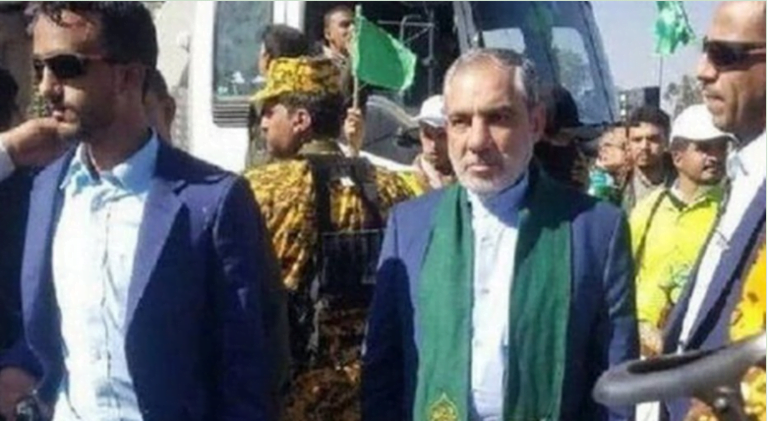
Until three weeks ago, Hassan Irloo was a mysterious figure – associated with the Islamic Revolutionary Guards Corps’s Quds Expeditionary Force – who despite frequently being mentioned in the news was never shown in the media.
There was even doubt as to whether “Hassan Irloo” was real or a pseudonym. But three weeks ago, on October 18, he came into focus when he was appointed as the Islamic Republic of Iran’s ambassador to the Houthi-controlled part of Yemen.
A ceremony was even held for his appointment – with Supreme Leader Ali Khamenei himself attending.
The announcement of Irloo’s departure for Sanaa, the Houthi seat and ancient Yemeni capital, drew a sharp reaction from the US State Department.
”The Iranian regime smuggled Hassan Irloo, a member of the Revolutionary Guards related to the Lebanese Hezbollah, into Yemen,” State Department spokesperson Morgan Ortagus tweeted.
But there was little media coverage until a Twitter account was launched in Irloo’s name which shared photos and videos of him. Igloo has also received a warm reception in Sanaa.
Pictures of this impressive reception were published by Houthi-affiliated media on November 5. According to reports, a military parade was held to welcome Igloo. He then met with Mehdi Al-Mashat, chairman of the Yemeni Supreme Political Council.
Ten days ago Irloo presented his credentials to Hisham Sharaf, the Houthi foreign minister, but according to photographs released from the meeting, it was a more ordinary affair than the military parade.
But who is Hassan Irloo, really?
Little is known about Hassan Irloo’s personal life. Iranian media says he was born in 1959 in the city of Rey in Tehran province.
In the last three weeks, media outlets close to the Revolutionary Guards described him as a “veteran diplomat” and as head of the Yemeni desk at the Foreign Minister.
Read the complete article at NewsNow.com
Also Read: U.S. Seizes 27 Domains Run by Iran’s Regime. Time To Counter Mullahs’ Propaganda
U.S. Seizes 27 Domains Run by Iran’s Regime. Time To Counter Mullahs’ Propaganda


The United States Department of Justice banned 27 additional domain names the Iranian regime’s Revolutionary Guards (IRGC) unlawfully used to spread the regime’s disinformation and push the mullahs’ talking points.
The Department of Justice, in a statement on November 4, announced that “all 27 domains were being used in violation of U.S. sanctions targeting both the Government of Iran and the IRGC.
Four of the domains purported to be genuine news outlets but were actually controlled by the IRGC and targeted audiences in the United States, to covertly influence United States policy and public opinion, in violation of the Foreign Agents Registration Act (FARA).
The remainder targeted audiences in other parts of the world. This seizure warrant follows an earlier seizure of 92 domains used by the IRGC for similar purposes.”
“Within the last month we have announced seizures of Iran’s weapons, fuel, and covert influence infrastructure,” said John C. Demers, Assistant Attorney General for National Security.
“Today’s 29 seizures are another important step against Iran’s worldwide disinformation campaign,” said U.S. Attorney Anderson.
“This work will continue. We cannot allow Iran’s attachment to fake news to overtake our commitment to the rule of law.”
As mentioned by the U.S. Attorney, the Iranian regime has been using fake websites to pursue its campaign of misinformation.
The main target of the regime’s misinformation campaign is the Iranian resistance movement, particularly the People’s Mojahedin Organization of Iran (PMOI/MEK).
Here is an example that can help in understanding how the regime uses its propaganda websites to demonize the MEK and spread false information:
American Herald Tribune
Among the closed domains, there is a website called American Herald Tribune. This website, which had claimed to be a “genuinely independent online media outlet,” was founded in 2015, published in English, and paid Americans to write articles.
Read the complete article at NewsNow.com
Also Read: How the IRGC overtook Iran’s Intelligence Ministry
How the IRGC overtook Iran’s Intelligence Ministry
How the IRGC overtook Iran’s Intelligence Ministry
How the IRGC overtook Iran’s Intelligence Ministry
Since 2009, Iran’s Islamic Revolutionary Guard Corps (IRGC) has completely eclipsed Iran’s Ministry of Intelligence and Security, a new report from the Meir Amit Intelligence and Terrorism Information Center says.
Nasrin Sotoudeh, Iranian Human Rights Lawyer, Freed After Six-Week Hunger Strike

Nasrin Sotoudeh, Iranian Human Rights Lawyer, Freed After Six-Week Hunger Strike
Nasrin Sotoudeh, Iranian Human Rights Lawyer, Freed After Six-Week Hunger Strike
In a huge victory, Iranian women’s rights attorney Nasrin Sotoudeh—unfairly jailed two years ago on spying and propaganda charges—has been temporarily released from Qarchak prison on medical leave. She is now home with her husband, Reza Khandan, as her family seeks urgent medical care.
FBI seizes internet domain names it claims are part of Iranian influence campaign
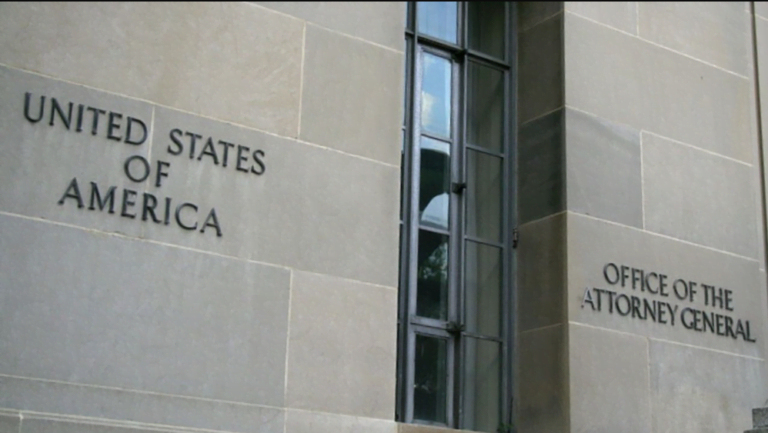

The US Department of Justice (DoJ) announced on Wednesday that the Federal Bureau of Investigation (FBI) seized 27 domain names the agency claimed were used by Iran’s Islamic Revolutionary Guard Corps (IRGC) for the purpose of a “global covert influence campaign.”
The DoJ public affairs statement said, “all 27 domains were being used in violation of U.S. sanctions targeting both the Government of Iran and the IRGC.”
It also said that four of the domains “purported to be genuine news outlets but were actually controlled by the IRGC and targeted audiences in the United States, to covertly influence United States policy and public opinion, in violation of the Foreign Agents Registration Act (FARA).”
The four domains specifically mentioned for violating FARA are “rpfront.com” (Real Progressive Front), “ahtribune.com” (American Herald Tribune), “awdnews.com” (Another Western Dawn News) and “criticalstudies.org” (Critical Studies), and each of these internet locations now hosts a graphic which displays the DoJ and FBI seals and a red headline that that states, “THIS WEBSITE have BEEN SEIZED.”
The latest seizures follow by less than one month an earlier seizure of 92 domains the FBI claimed were used by IRGC for similar purposes.
The Foreign Agents Registration Act is a US law passed in 1938 that requires agents representing the interests of foreign powers in a “political or quasi-political capacity,” to disclose their relationship and provide information about their activities and finances.
The DoJ statement says the FARA law establishes a “registration, reporting, and disclosure regime for agents … so that the U.S. government and the people of the United States are informed of the source of information and the identity of persons attempting to influence US public opinion, policy, and law.”
Read the complete article at NewsNow.com
Also Read: The U.S. Navy Should Be Wary of Iran’s Massive Missile Arsenal
The U.S. Navy Should Be Wary of Iran’s Massive Missile Arsenal
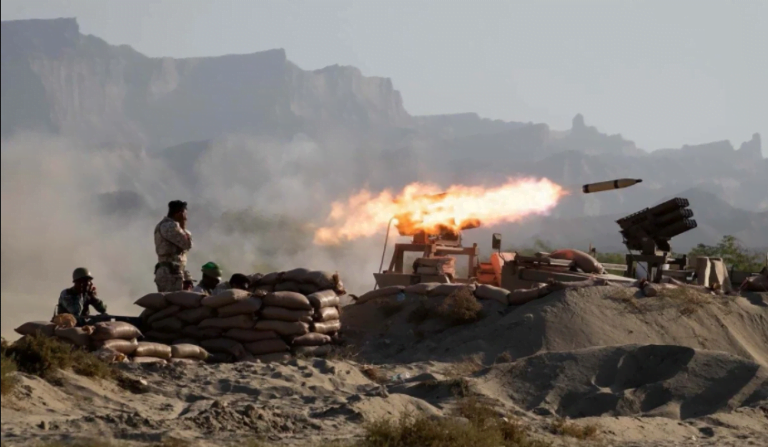

On the morning of January 20, 2019, a six-by-six Mercedes-Benz truck in al-Kiswah, Syria crewed by the Iranian Revolutionary Guard Corps began elevating a missile mounted on its back into firing position.
Once the nearly nine-meter-long missiles attained a roughly seventy-degree angle, it solid-fuel rocket blasted it on an arcing trajectory towards Mount Hermon, twenty-miles to the west on the Israeli-controlled portion of the Golan Height.
Skiers vacationing at the ski-resort there could see the contrails of the Fateh-110 (“Conqueror”) missiles streaking towards them three times the speed of sound.
However, the missiles was also detected by Israeli radars. As Israel’s David’s Sling anti-ballistic missile system was not yet operational, the IDF made do with the Iron Dome, a system designed for swatting slower, unguided artillery shells and rockets.
Two Tamir interceptor missiles rocketed over snowboarders towards the Fateh missile at Mach 2, switched to electro-optical sensors for terminal guidance, and destroyed it.
Israeli website Debka claims the attack was ordered by the head of the Iranian Quds force, General Qassam Suleimani, as a means to test Israeli defenses.
Later that day, the IDF retaliated with an intense series of strikes in Syria detailed in this earlier article.
The domestically-developed Fateh-110 is not Iran’s longest-range missile, but it has nonetheless spearheaded a succession of missile strikes targeting Tehran’s foes since 2017.
During the Iran-Iraq War, Iran relied upon Soviet Scud-B missile purchased from Libya (20), North Korea (120, plus 150 more post-war), and Syria (12) to retaliate against Iraq’s larger ballistic missile force.
Afterward, North Korea assisted Iran in setting up production of a domestic Scud-variant called the Shahib-1. However, the Shahib and its successors are liquid-fuel rockets that required days to gas up, limiting their reactivity and leaving them vulnerable to preemptive strikes.
Read the complete article at NewsNow.com
Also Read: IRGC Unveils New Ballistic Missiles Amid Iran’s Worsening Covid-19 Crisis
IRGC Unveils New Ballistic Missiles Amid Iran’s Worsening Covid-19 Crisis

Amid the worsening coronavirus crisis in Iran and as people are grappling with poverty, the regime’s Revolutionary Guards (IRGC) unveiled a new ballistic missile system.
The state-run Mashreq news on Wednesday reported: “At the presence of Brigadier General Hossein Salami, the IRGC’s Commander in Chief, today, the IRGC Aerospace automatic and intelligent system of long-range ballistic missile launches was unveiled.”
Unveiling new missiles, particularly amid the coronavirus outbreak and on the eve of the November 2019 uprising lights up two issues:
First, despite the regime’s efforts to blame international sanctions for not being able to control the coronavirus and the economic crisis, the production of new ballistic missiles shows the regime has the ability and resources to help people, but it refuses to do so.
In Iran nurses and health professionals, who are on the front line of the fight against Covid-19, unlike other countries, are being harshly treated.
The regime’s own Health Ministry officials have acknowledged that many nurses have not received their salaries for months.
Nurses’ salaries in Iran are less than $150 a month.
The IRGC unveiled the new missile on Wednesday, while according to Said Namaki, the regime’s Health Minister, his ministry has received only 27 percent of the $1 billion supposedly allocated for combating Covid-19.
Second, this new show of power also indicates the regime’s fear of the restive society, amid its rising international isolation.
Read the complete article at NewsNow.com
Also Read: IRGC Forms Three Headquarters in a Row: Will It Resolve Iran’s Crises or Will It Further Oppression?